 Talmud Bavli
The learning on the whole site is dedicated : L'ilui Nishmat Yaakov ben Myriam
The learning on the whole site is dedicated : L'ilui Nishmat Yechayahou ben Moche
The learning on the whole site is dedicated : L'ilui Nishmat Amram ben Itshak Loubaton
Bava Metzia 86a : Youtube
Daf TubeYoutube
1 video class :
Bava Metzia Page 86a
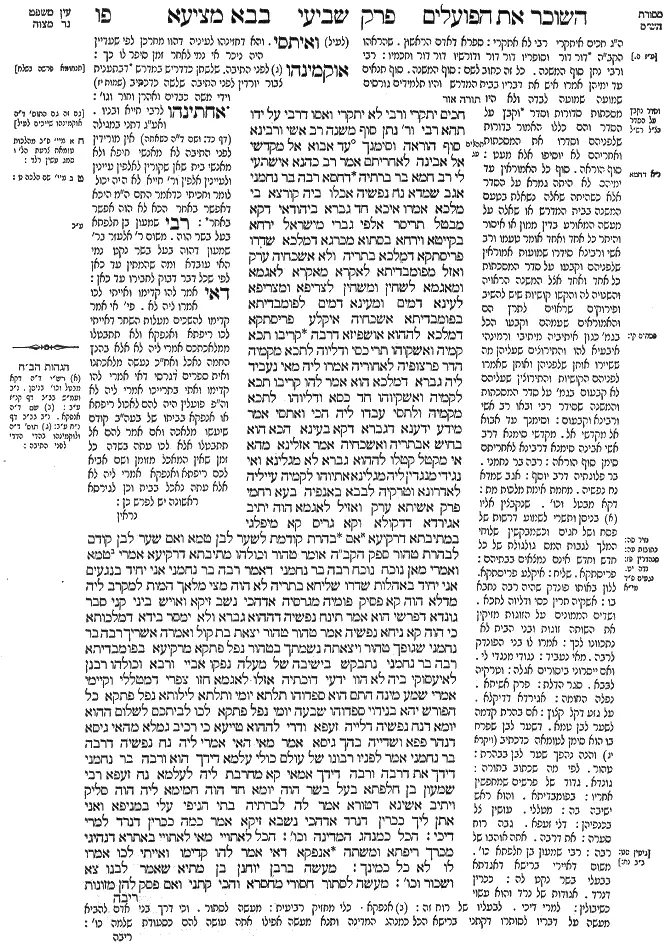
Bava Metzia 86a - Guemara
חכים יתקרי ורבי לא יתקרי ואסו דרבי על ידו תהא רבי ור' נתן סוף משנה רב אשי ורבינא סוף הוראה וסימנך (תהלים עג, יז) עד אבוא אל מקדשי אל אבינה לאחריתם אמר רב כהנא אישתעי לי רב חמא בר ברתיה דחסא רבה בר נחמני אגב שמדא נח נפשיה אכלו ביה קורצא בי מלכא אמרו איכא חד גברא ביהודאי דקא מבטל תריסר אלפי גברי מישראל ירחא בקייטא וירחא בסתוא מכרגא דמלכא שדרו פריסתקא דמלכא בתריה ולא אשכחיה ערק ואזל מפומבדיתא לאקרא מאקרא לאגמא ומאגמא לשחין ומשחין לצריפא ומצריפא לעינא דמים ומעינא דמים לפומבדיתא בפומבדיתא אשכחיה איקלע פריסתקא דמלכא לההוא אושפיזא דרבה קריבו תכא קמיה ואשקוהו תרי כסי ודליוה לתכא מקמיה הדר פרצופיה לאחוריה אמרו ליה מאי נעביד ליה גברא דמלכא הוא אמר להו קריבו תכא לקמיה ואשקיוהו חד כסא ודליוהו לתכא מקמיה ולתסי עבדו ליה הכי ואתסי אמר מידע ידענא דגברא דקא בעינא הכא הוא בחיש אבתריה ואשכחיה אמר אזלינא מהא אי מקטל קטלו לההוא גברא לא מגלינא ואי נגידי מנגדין ליה מגלינא אתיוהו לקמיה עייליה לאדרונא וטרקיה לבבא באנפיה בעא רחמי פרק אשיתא ערק ואזיל לאגמא הוה יתיב אגירדא דדקולא וקא גריס קא מיפלגי במתיבתא דרקיעא אם (ויקרא יג, ב) בהרת קודמת לשער לבן טמא ואם שער לבן קודם לבהרת טהור ספק הקב"ה אומר טהור וכולהו מתיבתא דרקיעא אמרי טמא ואמרי מאן נוכח נוכח רבה בר נחמני דאמר רבה בר נחמני אני יחיד בנגעים אני יחיד באהלות שדרו שליחא בתריה לא הוה מצי מלאך המות למקרב ליה מדלא הוה קא פסיק פומיה מגרסיה אדהכי נשב זיקא ואויש ביני קני סבר גונדא דפרשי הוא אמר תינח נפשיה דההוא גברא ולא ימסר בידא דמלכותא כי הוה קא ניחא נפשיה אמר טהור טהור יצאת בת קול ואמרה אשריך רבה בר נחמני שגופך טהור ויצאתה נשמתך בטהור נפל פתקא מרקיעא בפומבדיתא רבה בר נחמני נתבקש בישיבה של מעלה נפקו אביי ורבא וכולהו רבנן לאיעסוקי ביה לא הוו ידעי דוכתיה אזלו לאגמא חזו צפרי דמטללי וקיימי אמרי שמע מינה התם הוא ספדוהו תלתא יומי ותלתא לילותא נפל פתקא כל הפורש יהא בנידוי ספדוהו שבעה יומי נפל פתקא לכו לביתכם לשלום ההוא יומא דנח נפשיה דלייה זעפא ודרי לההוא טייעא כי רכיב גמלא מהאי גיסא דנהר פפא ושדייה בהך גיסא אמר מאי האי אמרי ליה נח נפשיה דרבה בר נחמני אמר לפניו רבונו של עולם כולי עלמא דידך הוא ורבה בר נחמני דידך את דרבה ורבה דידך אמאי קא מחרבת ליה לעלמא נח זעפא רבי שמעון בן חלפתא בעל בשר הוה יומא חד הוה חמימא ליה הוה סליק ויתיב אשינא דטורא אמר לה לברתיה בתי הניפי עלי במניפא ואני אתן ליך ככרין דנרד אדהכי נשבא זיקא אמר כמה ככרין דנרד למרי דיכי הכל כמנהג המדינה וכו' הכל לאתויי מאי לאתויי באתרא דנהיגי מכרך ריפתא ומשתה אנפקא דאי אמר להו קדימו ואייתי לכו אמרו לו לא כל כמינך מעשה ברבן יוחנן בן מתיא שאמר לבנו צא ושכור וכו' מעשה לסתור חסורי מחסרא והכי קתני ואם פסק להן מזונות
Comments from Rashi on Masechet Bava Metzia Page 86a
ה"ג . חכים איתקרי רבי לא אתקרי: ספרא דאדם הראשון . שהראהו הקב"ה דור דור וסופריו דור דור ודורשיו דור דור וחכמיו: רבי ורבי נתן סוף המשנה . כל זה כתוב לשם: סוף המשנה . סוף תנאים עד ימיהן אמרו איש את דבריו בבית המדרש והיו תלמידים גורסים שמועה שמועה לבדה ולא היו מסכתות סדורות וסדר וקבץ על הסדר והם כללו האמור בדורות שלפניהם וסדרו את המסכתות ואחריהם לא יוסיפו אלא מעט: סוף הוראה . סוף כל האמוראין עד ימיהם לא היתה גמרא על הסדר אלא כשהיתה שאלה נשאלת בטעם המשנה בבית המדרש או שאלה על מעשה המאורע בדין ממון או איסור והיתר כל אחד ואחד אומר טעמו ורב אשי ורבינא סידרו שמועות אמוראין שלפניהם וקבעו על סדר המסכתות כל אחד ואחד אצל המשנה הראויה והשנויה לה והקשו קושיות שיש להשיב ופירוקים שראוים לתרץ הם והאמוראים שעמהם וקבעו הכל בגמ' כגון איתיביה מיתיבי ורמינהי איבעיא להו והתרוצים שעליהן מה ששיירו אותן שלפניהן ואותן שאמרו לפניהם הקושיות והתירוצין שעליהם לא קבעום בגמ' על סדר המסכתות והמשנה שסידר רבי ובאו רב אשי ורבינא וקבעום: וסימנך עד אבוא אל מקדשי אל . מקדשי סימנא דרב אשי אבינה סימנא דרבינא לאחריתם סימן סוף הוראה: רבה בר נחמני . בר פלוגתיה דרב יוסף: אגב שמדא נח נפשיה . מחמת אימת מלכות מת: דקא מבטל וכו' . שנקבצין אליו בניסן ותשרי לשמוע דרשות של פסח ושל חגים וכשמבקשין שלוחי המלך לגבות המס גולגולת של כל חדש וחדש אינם נמצאים בבתיהם: פריסתקא . שליח: איקלע פריסתקא . ללון באותו פונדק שהיה רבה נחבא בו: אשקיה תרין כסי ודליוה לתכא . ושדים הממונים על הזוגות מזיקין את השותה זוגות ובני הבית לא נתכוונו לכך: אמרו לו בני הפונדק לרבה . מאי נעביד: נגודי מנגדי לי . ואם ייסרוני ביסורים אגלה: וטרקיה לבבא . סגר הדלת: פרק אשיתא . נפלה החומה: אגירדא דדיקלא . על גזע דקל קצוץ: אם בהרת קדמה לשער לבן טמא . דשער לבן שפרח בו הוא סימן לטומאה כדכתיב (ויקרא יג) והנה נהפך שער לבן בבהרת: טהור . לפי מה שכתוב בתורה: גונדא . גדוד של פרשים שמחפשין אחריו: בפומבדיתא . והוא ראש ישיבה בה: מטללי . עושין צל בכנפיהן: דלי זעפא . גבה רוח סערה: את דרבה . אתה אוהבו של רבה: רבי שמעון בן חלפתא כו' . משום דאיירי ברישא דאגדתא בבעלי בשר נקט לה: ככרין דנרד . אגודות של נרד והוא עשוי כשיבולין: למרי דיכי . לבעליו של רוח זה: אנפקא . כלי מחזיק רביעית: מעשה לסתור . וכי דרך בני אדם להביא מעשה על דבריו לסותרו דקתני ברישא הכל כמנהג המדינה ותנא מעשה אפילו אתה עושה להם כסעודת שלמה כו':
Comments from Tosafot - Bava Metzia 86a
רבי שמעון בן חלפתא בעל בשר הוה . משום ר' אלעזר בר' שמעון דהוה בעל בשר נקט נמי האי עובדא ומה שהמתין עד כאן לפי שכל דבר דבוק לחבירו עד כאן: דאי אמר להו קדימו ואייתי לכו אמרו ליה לא . פי' אי אמר קדימו להשכים מעלות השחר דאייתי לכו ריפתא ואנפקא ולא תתבטלו ממלאכתכם אמרי ליה לא אלא בהנץ החמה נאכל ואח"כ נעשה מלאכתנו ואית ספרים דגרסי דאי אמרי להו קדימו ואתי בתרייכו אמרי ליה לא וה"פ פועלין היה להם לאכול ריפתא או אנפקא בביתו של בעה"ב קודם שיעשו מלאכה ואם אמר להם אל תתבטלו אלא לכו עתה בשדה כל זמן שאין המאכל מזומן ושם אביא לכם ריפתא ואנפקא אמרי ליה לא אלא עתה נאכל בבית וכן לגירסא ראשונה יש לפרש כן:
Bava Metzia 86a - Mishnah translated into english
shall be called a wise [ḥakim] physician, but he shall not be called rabbi, and Rabbi Yehuda HaNasi’s convalescence shall be through him. I also saw written there: Rabbi Yehuda HaNasi and Rabbi Natan are the end of the Mishna, i.e., the last of the tanna’im, the redactors of the Mishna. Rav Ashi and Ravina are the end of instruction, i.e., the end of the period of the amora’im, the redacting of the Talmud, which occurred after the period of the tanna’im.
And your mnemonic to remember that Rav Ashi and Ravina redacted the Talmud is the verse: “Until I entered into the sanctuary [mikdashei] of God, and considered [avina] their end” (Psalms 73:17). The sanctuary, mikdashei, alludes to Rav Ashi, while the term avina alludes to Ravina, which is a contraction of Rav Avina. The phrase: Their end, is interpreted as a reference to the redacting of the Talmud.
§ The Gemara relates another story discussing the greatness of the Sages. Rav Kahana said: Rav Ḥama, son of the daughter of Ḥasa, told me that Rabba bar Naḥmani died due to the fear of a decree of religious persecution. The Gemara explains: His enemies accused him [akhalu beih kurtza] of disloyalty in the king’s palace, as they said: There is one man from among the Jews who exempts twelve thousand Jewish men from the king’s head tax two months a year, one month in the summer and one month in the winter. Since many people would study in Rabba’s study hall during the months of Adar and Elul, he was being blamed for preventing those people from working during those months.
They sent a messenger [peristaka] of the king after him, but he was not able to find him. Rabba bar Naḥmani fled and went from Pumbedita to Akra, from Akra to Agma, from Agma to Shiḥin, from Shiḥin to Tzerifa, from Tzerifa to Eina Demayim, and from Eina Demayim back to Pumbedita. Ultimately, he was found in Pumbedita, as the king’s messenger arrived by chance at that same inn where Rabba bar Naḥmani was hiding. The inn attendants placed a tray before the messenger and gave him two cups to drink. They then removed the tray from before him and his face was miraculously turned backward.
The attendants said to Rabba bar Naḥmani: What should we do with him? He is the king’s man, and we cannot leave him like this. Rabba bar Naḥmani said to them: Place a tray before him and give him one cup to drink, and then remove the tray from before him and he will be healed. They did this, and he was healed. The messenger said: I am certain that the man I seek is here, as this unnatural event must have befallen me on his account. He searched for Rabba bar Naḥmani and found out where he was. The messenger said that they should tell Rabba bar Naḥmani: I will leave this inn and will not disclose your location. Even if they will kill that man, i.e., me, I will not disclose your location. But if they will beat him, me, I will disclose your whereabouts, as I cannot bear being tortured.
With that guarantee, they brought Rabba bar Naḥmani before the messenger. They took him into a small vestibule [le’idrona] and closed the door before him. Rabba bar Naḥmani prayed for mercy, and the wall crumbled. He fled and went to hide in a swamp. He was sitting on the stump of a palm tree and studying Torah alone. At that moment, the Sages in the heavenly academy were disagreeing with regard to a halakha of leprosy. In general, a leprous spot includes two signs of impurity, a bright white spot and a white hair. The basic halakha is that if the snow-white leprous sore [baheret] preceded the white hair then the afflicted person is ritually impure, but if the white hair preceded the baheret, he is pure.
The heavenly debate concerned a case of uncertainty as to which came first, the spot or the hair. The Holy One, Blessed be He, says: The individual is pure, but every other member of the heavenly academy says: He is impure. And they said: Who can arbitrate in this dispute? They agreed that Rabba bar Naḥmani should arbitrate, as Rabba bar Naḥmani once said: I am preeminent in the halakhot of leprosy and I am preeminent in the halakhot of ritual impurity imparted by tents.
They sent a messenger from heaven after him to take his soul up to the heavenly academy, but the Angel of Death was unable to approach Rabba bar Naḥmani, as his mouth did not cease from his Torah study. In the meantime, a wind blew and howled between the branches. Rabba bar Naḥmani thought that the noise was due to an infantry battalion [gunda] about to capture him. He said: Let that man, i.e., me, die and not be given over to the hands of the government. The Angel of Death was therefore able to take his soul.
As he was dying, he said in response to the dispute in heaven: It is pure; it is pure. A Divine Voice emerged from heaven and said: Happy are you, Rabba bar Naḥmani, as your body is pure and your soul left you with the word: Pure. A note [pitka] fell from heaven and landed in the academy of Pumbedita. The note read: Rabba bar Naḥmani was summoned to the heavenly academy, i.e., he has died. Abaye and Rava and all of the other Rabbis went out to tend to his burial; however, they did not know the location of his body. They went to the swamp and saw birds forming a shade and hovering over a certain spot. The Rabbis said: We can conclude from this that he is there.
The Rabbis lamented him for three days and three nights. A note fell from heaven, upon which was written: Anyone who removes himself from the lamentations shall be ostracized. Accordingly, they lamented him for seven days. Another note fell from heaven, stating: Go to your homes in peace.
On that day when Rabba bar Naḥmani died, a hurricane lifted a certain Arab [taya’a] merchant while he was riding his camel. The hurricane carried him from one side of the Pappa River and threw him onto the other side. He said: What is this? Those present said to him: Rabba bar Naḥmani has died. He said before God: Master of the Universe! The entire world is Yours and Rabba bar Naḥmani is also Yours. You are to Rabba and Rabba is to You, i.e., you are beloved to each other. If so, why are You destroying the world on his account? The storm subsided.
The Gemara concludes its earlier discussion of obese Sages (84a). Rabbi Shimon ben Ḥalafta was obese. One day he was particularly hot and went and sat on a mountain boulder to cool himself off. He said to his daughter: My daughter, fan me with a fan, and as a gift I will give you packages of spikenard. In the meantime, a strong wind blew. He said: How many packages of spikenard do I owe to the overseers of this wind?
§ The Gemara returns to its discussion of the mishna (83a), which teaches that an employer must provide his laborers with sustenance, all in accordance with the regional custom. The Gemara asks: What is added by the inclusive term: All? The Gemara answers: This serves to include a place where it is customary for the laborers to eat bread and drink a quarter-log [anpaka] of wine. As, if in such a case the employer were to say to them: Arise early in the morning and I will bring you this sustenance, so as not to waste work time, they may say to him: It is not in your power to compel us to do so.
§ The mishna teaches that there was an incident involving Rabbi Yoḥanan ben Matya, who said to his son: Go out and hire laborers for us. His son hired the laborers and stipulated that he would provide sustenance for them. The Gemara asks: After the mishna has stated that all practices are in accordance with the regional custom, how can it cite this incident, which seems to contradict the previous ruling, as Rabbi Yoḥanan ben Matya and his son did not follow the regional custom? The Gemara answers: The mishna is incomplete and this is what it is teaching: All practices are in accordance with the regional custom, but if the employer pledged to provide sustenance for them,
Traduction : The William Davidson digital edition of the Koren Noé Talmud, with commentary by Rabbi Adin Even-Israel Steinsaltz.