 Talmud Bavli
The learning on the whole site is dedicated : L'ilui Nishmat Jacques Isaac Ben Amram Loubaton
The learning on the whole site is dedicated : L'ilui Nishmat אסתר בת חיים
The learning on the whole site is dedicated : L'ilui Nishmat Rav Chlomo Ben Jamilla
Bava Metzia 47a : Youtube
Daf TubeYoutube
1 video class :
Bava Metzia Page 47a
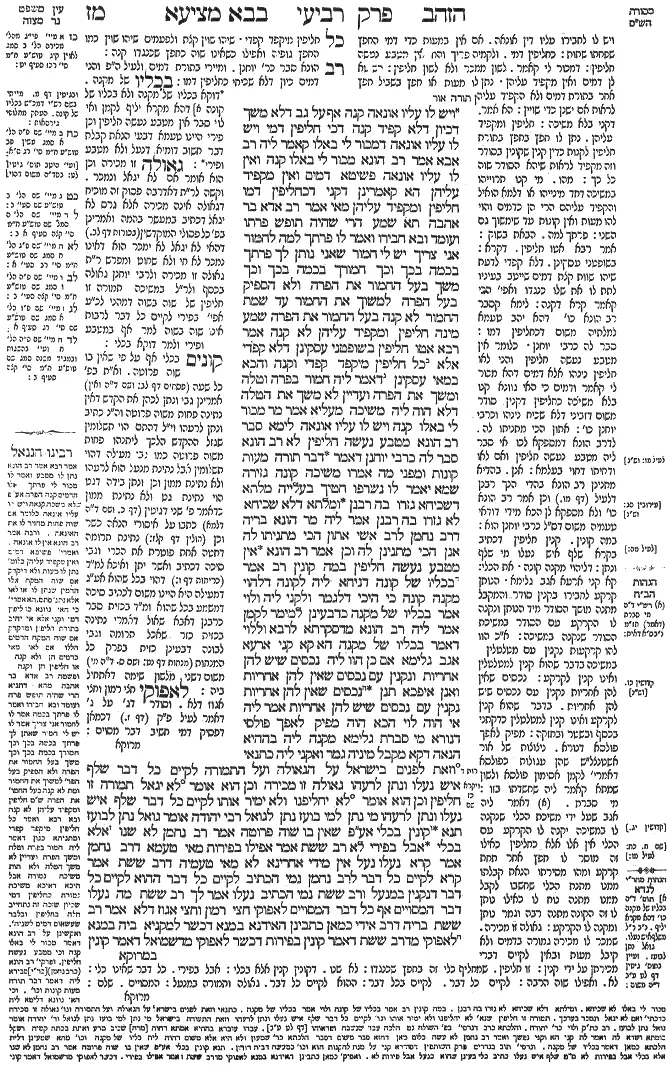
Bava Metzia 47a - Guemara
ויש לו עליו אונאה קנה אף על גב דלא משך דכיון דלא קפיד קנה דכי חליפין דמי ויש לו עליו אונאה דמכור לי באלו קאמר ליה רב אבא אמר רב הונא מכור לי באלו קנה ואין לו עליו אונאה פשיטא דמים ואין מקפיד עליהן הא קאמרינן דקני דכחליפין דמו חליפין ומקפיד עליהן מאי אמר רב אדא בר אהבה תא שמע הרי שהיה תופש פרתו ועומד ובא חבירו ואמר לו פרתך למה לחמור אני צריך יש לי חמור שאני נותן לך פרתך בכמה בכך וכך חמורך בכמה בכך וכך משך בעל החמור את הפרה ולא הספיק בעל הפרה למשוך את החמור עד שמת החמור לא קנה בעל החמור את הפרה שמע מינה חליפין ומקפיד עליהן לא קנה אמר רבא אטו חליפין בשופטני עסקינן דלא קפדי אלא כל חליפין מיקפד קפדי וקנה והכא במאי עסקינן דאמר ליה חמור בפרה וטלה ומשך את הפרה ועדיין לא משך את הטלה דלא הוה ליה משיכה מעליא אמר מר מכור לי באלו קנה ויש לו עליו אונאה לימא סבר רב הונא מטבע נעשה חליפין לא רב הונא סבר לה כרבי יוחנן דאמר דבר תורה מעות קונות ומפני מה אמרו משיכה קונה גזירה שמא יאמר לו נשרפו חטיך בעלייה מלתא דשכיחא גזרו בה רבנן ומלתא דלא שכיחא לא גזרו בה רבנן אמר ליה מר הונא בריה דרב נחמן לרב אשי אתון הכי מתניתו לה אנן הכי מתנינן לה וכן אמר רב הונא אין מטבע נעשה חליפין במה קונין רב אמר בכליו של קונה דניחא ליה לקונה דלהוי מקנה קונה כי היכי דלגמר ולקני ליה ולוי אמ בכליו של מקנה כדבעינן למימר לקמן אמר ליה רב הונא מדסקרתא לרבא וללוי דאמר בכליו של מקנה הא קא קני ארעא אגב גלימא אם כן הוו ליה נכסים שיש להן אחריות ונקנין עם נכסים שאין להן אחריות ואנן איפכא תנן נכסים שאין להן אחריות נקנין עם נכסים שיש להן אחריות אמר ליה אי הוה לוי הכא הוה מפיק לאפך פולסי דנורא מי סברת גלימא מקנה ליה בההיא הנאה דקא מקבל מיניה גמר ואקני ליה כתנאי (רות ד, ז) וזאת לפנים בישראל על הגאולה ועל התמורה לקיים כל דבר שלף איש נעלו ונתן לרעהו גאולה זו מכירה וכן הוא אומר (ויקרא כז, כ) לא יגאל תמורה זו חליפין וכן הוא אומר (ויקרא כז, י) לא יחליפנו ולא ימיר אותו לקיים כל דבר שלף איש נעלו ונתן לרעהו מי נתן למי בועז נתן לגואל רבי יהודה אומר גואל נתן לבועז תנא קונין בכלי אע"פ שאין בו שוה פרוטה אמר רב נחמן לא שנו אלא בכלי אבל בפירי לא רב ששת אמר אפילו בפירות מאי טעמא דרב נחמן אמר קרא נעלו נעל אין מידי אחרינא לא מאי טעמיה דרב ששת אמר קרא לקיים כל דבר לרב נחמן נמי הכתיב לקיים כל דבר ההוא לקיים כל דבר דנקנין במנעל ורב ששת נמי הכתיב נעלו אמר לך רב ששת מה נעלו דבר המסויים אף כל דבר המסויים לאפוקי חצי רמון וחצי אגוז דלא אמר רב ששת בריה דרב אידי כמאן כתבינן האידנא במנא דכשר למקניא ביה במנא לאפוקי מדרב ששת דאמר קונין בפירות דכשר לאפוקי מדשמואל דאמר קונין
Comments from Rashi on Masechet Bava Metzia Page 47a
ויש לו לחבירו עליו דין אונאה . אם אין במעות כדי דמי החפץ שפחתו שתות: כחליפין דמי . ולקמיה פריך והא אין מטבע נעשה חליפין: דמכור לי קאמר . לשון ממכר ולא לשון חליפין: הא אמר . דקני בלא משיכה: דמכור לי קאמר . לשון ממכר ולא לשון חליפין: פשיטא לן דמים ואין מקפיד עליהן . נתן לו מעות או חפץ בשביל חפץ אחר בתורת דמים ולא הקפיד עליהן לראות אם ישנן כדי שויין: חליפין ומקפיד עליהן . נתן לו חפץ בחפץ בתורת חליפין לקנות כדין קנין שקונין בסודר וזה מקפיד לראות שיהא הסודר שוה כל כך: מהו . מי קנו תרוייהו במשיכה דחד מינייהו או דלמא הואיל והקפיד עליהם הרי הן כדמים והוי להו מעות ואין קונות עד שימשוך גם השני: פרתך למה . הבאת בשוק: אמר רבא אטו חליפין . דקרא: בשופטני עסקינן . דלא קפדי לדעת שיהו שוות קצת דמים שייטב בעיניו לתת לו את שלו כנגדו ואפי' הכי קאמר קרא דקנה: לימא קסבר רב הונא כו' . דהא יהב טעמא למלתיה משום דכחליפין דמו: סבר לה כרבי יוחנן . כלומר אין מטבע נעשה חליפין והני לאו חליפין נינהו אלא דמים דהא מכור לי קאמר ודמים כי האי גוונא קנו בלא משיכה כחליפין דקנין סודר משום דזביני דלא שכיח נינהו וכרבי יוחנן כו': אתון הכי מתניתו לה . לדרב הונא דמספקא לכו אי סבר ליה מטבע נעשה חליפין ואם לאו ודחיתו דחוי בעלמא: אנן . בהדיא מתנינן רב הונא בהדי הנך רבנן דלעיל (בבא מציעא דף מו.) וכן אמר רב הונא כו' ולא מספקא לן הכא מידי דודאי טעמיה משום דס"ל כרבי יוחנן הוא: במה קונין . קנין חליפין דכתיב בקרא שלף איש נעלו מי שלף ונתן: דליהוי מקנה קונה . את הכלי: קא קני ארעא אגב גלימא . הנותן קרקע לחבירו בקנין סודר והמקבל מתנה מושך הסודר מיד הנותן ונקנה לו הקרקע עם הסודר במשיכת הסודר שנקנה במשיכה: א"כ הוו להו קרקעות נקנין עם מטלטלין במשיכה בדבר שהוא קנין למטלטלין ואינו קנין לקרקע: נכסים שאין להן אחריות נקנין עם נכסים שיש להן אחריות . בדבר שהוא קנין לקרקע ואינו קנין למטלטלין כדקתני בכסף ובשטר ובחזקה: מפיק לאפך פולסא דנורא . ניצוצות של אור אשטנצל"ש שהן עגולות כפולסא דאמרי' לקמן אסימון פולסא ולשון שמתא קאמר ליה שחשדתו בזו: מי סברת . דאמר ליה אגב שעל ידי משיכת הכלי שנקנה לו במשיכה יקנה לו הקרקע עם הכלי אין אלו אלא כחליפין כאילו זה מוסר לו חפץ אחר תחת קרקע ומהו מסירתו הנאת קבלתו ממנו מתנת הכלי שחשבו לקבל ממנו מתנה נוח לו כאילו נותן לו זה הקונה מתנה רבה וגמר נותן ומקנה לו הקרקע: גאולה זו מכירה . שמכר לו מכירה גמורה בדמים ולא קיבל מעות ובאין לקיים דברי מכירתן על ידי קנין: זו חליפין . שמחליף כלי זה בחפץ שכנגדו: לא שנו . דקונין קנין אלא בכלי: אבל בפירי . כל דבר שאינו כלי: לא . ואפילו שוה הרבה: לקיים כל דבר . לקיים בכל דבר: ההוא לקיים כל דבר . גאולה ותמורה במנעל: המסויים . שלם:
Comments from Tosafot - Bava Metzia 47a
כל חליפין מיקפד קפדי . שיהו שוין קצת ולפעמים שיהו שוין כמו החפץ גופיה ואפילו כשאינו שוה כחפץ שכנגדו קנה: רב הונא סבר כר' יוחנן . ומיירי בתורת דמים ולעיל ה"פ והני דמים כיון דלא שכיחי כחליפין דמו: בכליו של מקנה . דוקא בכליו של מקנה ולא בכליו של קונה דהא מקרא יליף לקמן ואי לוי סבר אין מטבע נעשה חליפין וכן פירי היינו טעמא דבעי הנאת קבלת דבר חשוב דומיא דנעל ולא מטבע ופירי: גאולה זו מכירה וכן הוא אומר אם לא יגאל ונמכר . וקשה לר"ת דאדרבה פסוק זה מוכיח דגאולה אינה מכירה אלא גרס לא יגאל דכתיב במעשר בהמה ואמרינן בפ' כל פסולי המוקדשין (בכורות דף לב.) דהאי לא יגאל לא ימכר הוא דאינו נמכר לא חי ולא שחוט ומפרש ר"ת גאולה זו מכירה ולרבי יוחנן גאולה בכסף ולר"ל במשיכה תמורה זו חליפין של שוה בשוה דמהני לכ"ע אפי' בפירי לקיים כל דבר לרבות אינו שוה בשוה למר אף במטבע ופירי ולמר דוקא בכלי: קונים בכלי אף על פי שאין בו שוה פרוטה . וא"ת בפ' כל שעה (פסחים דף לב: ושם ד"ה ואין) אמרינן גבי ונתן לכהן את הקדש דאין נתינה פחות משוה פרוטה וה"נ כתיב ונתן לרעהו וי"ל דהתם הוי תשלומין שגזל ההקדש הלכך ליתנהו פחות משוה פרוטה כמו גבי מעילה דהוי תשלומין אבל נתינת מנעל הוא לרעהו ולא נתינת ממון וכן ונתן בידה דגט הוי נתינת גט ולא נתינת ממון כדאמר פ' שני דגיטין (דף כ. ושם ד"ה דלמא) כתבו על איסורי הנאה כשר וכן (חולין דף קלז:) נתינת תרומה דחטה אחת פוטרת את הכרי וגבי סיכה דכתיב ואשר יתן ואיכא למ"ד (כריתות דף ו:) דהוי בכל שהוא אע"ג דמעילה היא היינו משום דכתיב סיכה דמשמע בכל שהוא ומ"ד בכזית סבר כרבנן דאבא שאול דאמרי נתינה בכזית כזר שאכל תרומה וגבי לבונה דבעינן כזית בפרק כל המנחות (מנחות דף נט: ושם ס. ד"ה מי) משום דשני מלשון שימה דאתחיל ביה: לאפוקי חצי רמון וחצי אגוז דלא . וסודר דג' על ג' דאמר לעיל פ"ק (בבא מציעא דף ז.) דכמאן דפסיק דמי חשיב דבר מסוים:
Bava Metzia 47a - Mishnah translated into english
And if the sum of money is one-sixth lower than the value of the item, the seller of the item has a claim of exploitation against the buyer, who must pay the difference to the seller.
The Gemara elaborates: The buyer acquires the item even though he did not pull it, because since the seller is not particular about the sum, the buyer acquired the item, as it is similar to a transaction effected by means of exchange. And the seller has a claim of exploitation against the buyer because the buyer said to him: Sell me your item for these coins. The use of the language of sale indicates that it will be for an acceptable price. Rav Abba says that Rav Huna says that if the buyer said: Sell me your item for these coins, the buyer acquired the item; and the seller of the item has no claim of exploitation against the buyer, as it is a full-fledged transaction effected by means of exchange.
The Gemara analyzes these halakhot: It is obvious that in a case where there is a sale of an item for money and the seller is not particular about the sum, we say that the buyer acquires the item immediately upon receiving the money, as it is similar to a transaction effected by means of exchange. But if it is a transaction effected by means of exchange and one of the parties is particular that the value of the items is equal, what is the halakha? Is its legal status that of a sale, or that of a transaction effected by means of exchange?
Rav Adda bar Ahava says: Come and hear a resolution to the dilemma from a baraita: There is a case where one was grasping his cow and standing in place, and another came and said to him: Why is your cow standing here? The owner of the cow replied: I need a donkey, and I hope to exchange this cow for one. The other person said: I have a donkey that I can give you; for how much are you selling your cow? The owner of the cow responded: I am selling it for such and such a price. He then said: For how much are you selling your donkey? The owner of the donkey responded: I am selling it for such and such a price.
If, after this discussion, the owner of the donkey pulled the cow, but the owner of the cow did not manage to pull the donkey before the donkey died, the owner of the donkey did not acquire the cow, even though ostensibly this was a transaction effected by means of exchange, which is typically complete once one of the parties pulls the item he is acquiring.
The Gemara suggests: Learn from it that in a case where there is a transaction effected by means of exchange and one of the parties is particular that the value of the items is equal, he does not acquire the item immediately. In contrast to the standard case of exchange, the owners of the cow and donkey assessed the value of the animals before the transaction. Since they are particular about the price, the acquisition is not completed until each pulls the item he is acquiring.
Rava said: Is that to say that in a standard case of exchange we are dealing with fools, who are not particular about the value of the items that they are acquiring? Rather, in every case of exchange, the parties are particular about the value of the items, and when one party pulls an item the other party acquires the other item immediately and pays for it later. And with what are we dealing here? The case in the baraita is where one party said to the other party: Let us exchange a donkey for a cow and a lamb, and the owner of the donkey pulled the cow and did not yet pull the lamb, as in that case he has not performed a proper act of pulling.
The Master, Rav Huna, said above that if one said to another: Sell me your item for these coins, the buyer acquired the article, and if the sum of money is one-sixth lower than the value of the item, the seller of the item has a claim of exploitation against the buyer. The Gemara suggests: Let us say based on that halakha that Rav Huna holds that a coin can be an item used to effect exchange.
The Gemara rejects this suggestion: No, Rav Huna holds in accordance with the opinion of Rabbi Yoḥanan, who says: By Torah law money effects acquisition. And for what reason did the Sages say that pulling acquires an item and money does not? This is a rabbinic decree lest the seller say to the buyer after receiving the money: Your wheat was burned in the upper story. And it is only with regard to a common matter that the Sages issued a decree, but with regard to an uncommon matter the Sages did not issue a decree. Therefore, in this case there is no decree, and the transaction is governed by Torah law. Mar Huna, son of Rav Naḥman, said to Rav Ashi: You teach this halakha in that manner; we teach it in this manner, not by inference but as an explicit ruling: And likewise, Rav Huna said: Money cannot be the item used to effect a transaction by means of exchange.
§ Above, the Gemara mentioned a form of exchange in which there are not two items of equal value being exchanged, but rather one person attempts to transfer possession of his item to the buyer by means of a symbolic exchange involving, e.g., a cloth. With regard to that symbolic transaction, the Gemara asks: With what vessel does one acquire the item in question, i.e., whose vessel is used in order to effect this symbolic transaction?
Rav says: One effects the transaction with the vessels of the one acquiring the item, who effects the transaction by giving the vessels to the owner of the item. The moment that the owner pulls the vessel into his possession, the transaction is complete and ownership of the item in question is transferred to his counterpart. Rav explains that the one acquiring the item is amenable to having the one transferring ownership of the item acquire his vessel, so that he will resolve to transfer ownership to him. And Levi says: One effects the transaction by having the one acquiring the item pull the vessels of the one transferring ownership, as we seek to explain below.
Rav Huna from Diskarta said to Rava: But according to Levi, who says that one effects the transaction with the vessels of the one transferring ownership, there is a difficulty. In a case where one acquires land by means of symbolic exchange where the item used is a cloak, it turns out that he is acquiring land by means of a cloak. If so, this is a case of property that is guaranteed, i.e., land, and it is acquired with movable property that is not guaranteed, by means of a transaction performed on the latter. And we learned the opposite in a mishna (Kiddushin 26a): Property that is not guaranteed is acquired with property that is guaranteed, i.e., land, by means of a transaction performed on the latter.
Rava said to him: If Levi, whose opinion you questioned, were here, he would take out rods of fire before you and flog you for your unwarranted question. Do you maintain that he said that at the moment he transfers ownership of the cloak he transfers ownership of the land to him? That is not the case; rather, in exchange for that pleasure the owner of the item experiences from the fact that the one acquiring the cloak accepted it from him, he resolves to transfer ownership to him. This is unlike the acquisition of movable items by means of a transaction of land, where both are acquired simultaneously. Here, the transfer of ownership of the cloak effects the subsequent transfer of ownership of the land.
The Gemara comments: This dispute between Rav and Levi is parallel to a dispute between tanna’im. The verse states: “Now this was the custom in former time in Israel concerning redemption and concerning substitution, to confirm all matters; a man drew off his shoe, and gave it to his neighbor” (Ruth 4:7). The verse is interpreted: “Redemption”; that is a sale. And likewise it says: “Neither shall be sold nor shall be redeemed” (Leviticus 27:28). “Substitution”; that is the transaction of exchange. And likewise it says: “He may neither exchange it nor substitute it” (Leviticus 27:10).
With regard to the phrase “To confirm all matters; a man drew off his shoe, and gave it to his neighbor,” the baraita asks: Who gave the shoe to whom? Boaz gave his shoe to the redeemer, the closest relative of Elimelech, who had the right of first refusal to the land that Naomi, Elimelech’s widow, was planning to sell. The redeemer was transferring that right to the land to Boaz, who was acquiring it by means of his shoe. Rabbi Yehuda says: The redeemer gave his shoe to Boaz. The dispute between Rav and Levi is parallel to the dispute between the first tanna and Rabbi Yehuda.
§ It was taught: One can acquire property through a symbolic exchange by using a vessel, even if it does not have the value of one peruta. Rav Naḥman says: The Sages taught that this symbolic exchange can be effected only by using a vessel, but not by using produce, i.e., any item other than a vessel. Rav Sheshet says: It can be effected even by using produce. The Gemara explains: What is the reason for the opinion of Rav Naḥman? The verse states: “His shoe” (Ruth 4:7), from which it is derived: With regard to a shoe and any other item similar to a shoe, i.e., a vessel, yes, the symbolic exchange can be effected; with regard to any item other than a vessel, no, it cannot be effected.
What is the reason for the opinion of Rav Sheshet? The verse in Ruth states: “To confirm all matters,” from which it is derived that all items, even if they are not vessels, can effect the exchange. The Gemara asks: According to Rav Naḥman as well, isn’t it written: “To confirm all matters”? The Gemara explains: In his opinion, that phrase: “To confirm all matters,” is referring to all items that can be acquired through an exchange effected by using a shoe. The Gemara asks: And according to Rav Sheshet as well, isn’t it written: “His shoe”? The Gemara explains: Rav Sheshet could have said to you that from that term it is derived: Just as his shoe is a complete item, so too, every complete item can effect a symbolic exchange, to exclude half a pomegranate and half a nut, which cannot effect a symbolic exchange. A whole pomegranate or nut can be used for that purpose.
Rav Sheshet, son of Rav Idi, said: In accordance with whose opinion do we write today in documents that the transaction was effected with a vessel that is fit to acquire items with it? The Gemara explains: The term with a vessel serves to exclude the opinion of Rav Sheshet, who says: One acquires an item through a transaction of symbolic exchange by using produce. The term that is fit serves to exclude the opinion of Shmuel, who says: One acquires an item
Traduction : The William Davidson digital edition of the Koren Noé Talmud, with commentary by Rabbi Adin Even-Israel Steinsaltz.