 Talmud Bavli
The learning on the whole site is dedicated : For the success of Elyahou ben H'anna & family
The learning on the whole site is dedicated : L'ilui Nishmat אליעזר בן רחל
The learning on the whole site is dedicated : L'ilui Nishmat Ledicia bat David Banoun
Bava Metzia 76a : Youtube
Daf TubeYoutube
1 video class :
Bava Metzia Page 76a
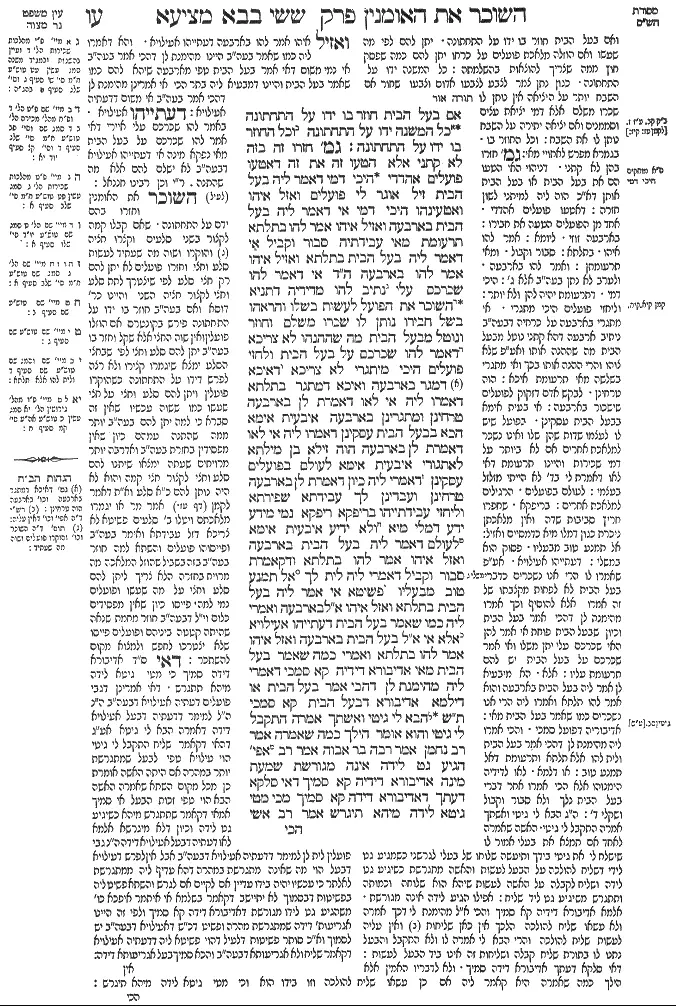
Bava Metzia 76a - Guemara
אם בעל הבית חוזר בו ידו על התחתונה כל המשנה ידו על התחתונה וכל החוזר בו ידו על התחתונה גמ׳ חזרו זה בזה לא קתני אלא הטעו זה את זה דאטעו פועלים אהדדי היכי דמי דאמר ליה בעל הבית זיל אוגר לי פועלים ואזל איהו ואטעינהו היכי דמי אי דאמר ליה בעל הבית בארבעה ואזיל איהו אמר להו בתלתא תרעומת מאי עבידתיה סבור וקביל אי דאמר ליה בעל הבית בתלתא ואזיל איהו אמר להו בארבעה ה"ד אי דאמר להו שכרכם עלי נתיב להו מדידיה דתניא השוכר את הפועל לעשות בשלו והראהו בשל חבירו נותן לו שכרו משלם וחוזר ונוטל מבעל הבית מה שההנהו לא צריכא דאמר להו שכרכם על בעל הבית ולחזי פועלים היכי מיתגרי לא צריכא דאיכא דמגר בארבעה ואיכא דמתגר בתלתא דאמרו ליה אי לאו דאמרת לן בארבעה טרחינן ומתגרינן בארבעה איבעית אימא הכא בבעל הבית עסקינן דאמרו ליה אי לאו דאמרת לן בארבעה הוה זילא בן מילתא לאתגורי איבעית אימא לעולם בפועלים עסקינן דאמרי ליה כיון דאמרת לן בארבעה טרחינן ועבדינן לך עבידתא שפירתא וליחזי עבידתייהו בריפקא ריפקא נמי מידע ידע דמלי מיא ולא ידיע איבעית אימא לעולם דאמר ליה בעל הבית בארבעה ואזל איהו אמר להו בתלתא ודקאמרת סבור וקביל דאמרי ליה לית לך (משלי ג, כז) אל תמנע טוב מבעליו פשיטא אי אמר ליה בעל הבית בתלתא ואזל איהו א"ל בארבעה ואמרי ליה כמו שאמר בעל הבית דעתייהו אעילויא אלא אי א"ל בעל הבית בארבעה ואזל איהו אמר להו בתלתא ואמרי כמה שאמר בעל הבית מאי אדיבורא דידיה קא סמכי דאמרי ליה מהימנת לן דהכי אמר בעל הבית או דילמא אדיבורא דבעל הבית קא סמכי ת"ש הבא לי גיטי ואשתך אמרה התקבל לי גיטי והוא אומר הילך כמה שאמרה אמר רב נחמן אמר רבה בר אבוה אמר רב אפי' הגיע גט לידה אינה מגורשת שמעת מינה אדיבורא דידיה קא סמיך דאי סלקא דעתך דאדיבורא דידה קא סמיך מכי מטי גיטא לידה מיהא תיגרש אמר רב אשי
Comments from Rashi on Masechet Bava Metzia Page 76a
ואם בעל הבית חוזר בו ידו על התחתונה . יתן להם לפי מה שעשו ואם הוזלה מלאכת פועלים על כרחו יתן להם כמה שפסק חוץ ממה שצריך להוצאות בהשלמתה: כל המשנה ידו על התחתונה . כגון נתן צמר לצבע לצבעו אדום וצבעו שחור אם השבח יותר על היציאה. אין נותן לו שכרו משלם אלא דמי יציאת עצים וסממנים ואם יציאה יתירה על השבח נותן לו את השבח: וכל החוזר בו . בגמרא מפרש לאתויי מאי: גמ' חזרו בהן לא קתני . דניהוי האי הטעו הם את בעל הבית או בעל הבית אותן דא"כ הוה ליה למיתני לשון חזרה: דאטעו פועלים אהדדי . אחד מן הפועלים הטעה את חבירו: בארבעה זוזי . ליומא: אמר להו איהו . בתלתא: סבור וקבול . ומאי תרעומתן: ואמר להו בארבעה . ולערב לא נתן בעה"ב אלא ג': היכי דמי . דתרעומת יהיה להן ולא יותר: וליחזי פועלים היכי מתגרי . אי מתגרי בארבעה. על כרחיה דבעה"ב ניתיב ארבעה דהא קתני נוטל מבעל הבית מה שההנה אותו ואע"פ שלא צוהו והרי ההנה אותו בכך ואי מתגרי בשלשה מאי תרעומת איכא: הוה טרחינן . לבקש אדם דזקוק לפועלים שישכור בארבעה: אי בעית אימא בבעל הבית עסקינן . בפועל שיש לו לעצמו שדות שהן שלו ואינו נשכר למלאכת אחרים אם לא ביותר על דמי שכירות והיינו תרעומת דאי לאו דאמרת לי בד' לא הייתי מזלזל בעצמי: לעולם בפועלים . הרגילים למלאכת אחרים: בריפקא . שחפרו חריץ סביבות שדה ואין מלאכתן ניכרת כגון דמלו מיא כדמסיים ואזיל: אל תמנע טוב מבעליו . פסוק הוא במשלי: דעתייהו אעילויא . אע"פ שאמרו לו הרי אנו נשכרים כדבר בעל הבית לא לפחות מקצבתו של זה אמרו אלא להוסיף וכך אמרו מהימנת לן דהכי אמר בעל הבית וכיון שבעל הבית פוחת אי אמר להן האי שכרכם עלי יתן משלו ואי אמר שכרכם על בעל הבית יש להם תרעומת עליו: אלא . הא מיבעיא לן אמר ליה בעל הבית בארבעה והוא אמר להו תלתא ואמרו ליה הרי אנו נשכרים כמו שאמר בעל הבית מאי: אדיבוריה דפועל סמכי . והכי אמרו ליה מהימנת לן דהכי אמר בעל הבית ולית להו אלא תלתא ותרעומת דאל תמנע טוב: או דלמא . לאו לדידיה הימנוהו אלא הכי אמרו אחר דברי בעל הבית נלך ולא סבור וקבול ושקלי ד': ה"ג הבא לי גיטי ואשתך אמרה התקבל לי גיטי . האשה שאמרה לאחד אם תמצא את בעלי אמור לו שישלח לי את גיטי בידך ותיעשה שלוחו של בעלי לגרשני כשמגיע גט לידי דשליח להולכה על הבעל לעשות והאשה מתגרשת כשיגיע גט לידה ושליח לקבלה על האשה לעשות שיהא הוא שלוחה וכמותה ותתגרש משיגיע גט ליד שליח: אפילו הגיע לידה אינה מגורשת . אלמא אדיבורא דידיה קא סמיך והכי א"ל מהימנת לי דכך אמרה ולא עשאו שליח להולכה הלכך אין כאן שליחות ואין עליה לעשות שליח להולכה והרי הבא לי אמרה לו ולא התקבל והבעל נתנו ולא בתורת שליח קבלה ושליחות זה אינו ביד הבעל לעשות: דאי סלקא דעתך אדיבורא דידה סמיך . ולא לדבריו האמין אלא הילך כמה שאמרה היא קאמר ליה אם כן עשאו שליח להולכה וזו בידו הוא וכי מטי גיטא לידה מיהא תיגרש:
Comments from Tosafot - Bava Metzia 76a
ואזיל איהו אמר להו בארבעה דעתייהו אעילויא . והא דאמרו ליה כמו שאמר בעה"ב היינו מהימנת לן דהכי אמר בעה"ב אי נמי משום דאי אמר בעל הבית טפי מארבעה שיהא להם כמו שאמר בעל הבית והיינו דמבעיא ליה בתר הכי אי אמרינן מהימנת לן דהכי אמר בעה"ב אי משום דדעתיה אעילויא: דעתייהו אעילויא . באמר להו שכרכם עלי איירי דאי אמר להו שכרכם על בעל הבית מאי נפקא מינה אי דעתייהו אעילויא דבעה"ב לא ישלם להם אלא מה שהתנה. ר"י וכן רבינו חננאל: דאי ס"ד אדיבורא דידה סמיך כי מטי גיטא לידה מיהא תתגרש . דאי אמרינן דגבי פועלים דעתיה אעילויא דבעה"ב ה"נ ה"ל למימר דדעתיה דבעל אעילויא דידה דאמרה הבא לי גיטא אע"ג דהאי דקאמר שליח התקבל לי גיטי הוי עילויא טפי לבעל שמתגרשת יותר במהרה אם היתה האשה אומרת כן מכל מקום השתא שאמרה האשה הבא הוי טפי זכות הבעל אי סמיך אמאי דקאמר שתתגרש מיהא כשיגיע גט לידה וכיון דלא מיגרשא אלמא לאו דעתיה דבעל אעילויא דידה ה"נ גבי פועלין לית לן למימר דדעתיה אעילויא דבעה"ב אבל אין לפרש דעילויא דבעל הוי מה שאינה מתגרשת במהרה דהא עדיף ליה ממתגרשת לאלתר כי עכשיו יהיה בידו עדיין אם לקיים אם לגרש והשתא פשיט ליה בפשיטות דבסמוך לא יתיישב דקאמר בשלמא אי איתמר איפכא כו' משהגיע גט לידו מגורשת דאדיבורא דידה קא סמיך ולפי זה היינו אגריעות' דידה שמתגרשת מהרה ופשיט דכ"ש דאעילויא דבעה"ב יש לסמוך וא"כ סותר פשיטות דלעיל דהוי פשיטא ליה דדעתיה אעילויא דקאמר שליח ולא אגריעותא דבעה"ב והכא סמיך בעל אגריעותא דידה:
Bava Metzia 76a - Mishnah translated into english
Conversely, if the employer reneges, he is at a disadvantage. These two rulings are in accordance with the principle that whoever changes the terms accepted by both parties is at a disadvantage, and whoever reneges on an agreement is at a disadvantage.
GEMARA: The Gemara starts by analyzing the phrase: And they deceived one another. The Gemara comments: The tanna does not teach: They reneged on the agreement with one another, which would indicate that either the employer or the laborers changed their mind. Rather, it states that they deceived one another, which evidently means that the laborers deceived one another. The Gemara therefore inquires: What are the circumstances? The Gemara explains: This is referring to a case where, for example, the employer said to one of the laborers: Go and hire laborers for me, and that laborer went and deceived those other laborers.
The Gemara again asks: What are the circumstances of this deception? If the employer said to him: Hire for me laborers at four dinars, and he went and told them that they are hired for three dinars, what is the relevance of this grievance? After all, they knew and accepted the conditions of their hire. What grounds for complaint do they have? If the employer said to him to hire laborers for three dinars, and the middleman went and told them it was for four, what are the circumstances? If he told them at the time: The monetary value of your services, i.e., your wage, is incumbent upon me, let that middleman give them the difference from his own pocket.
This is as it is taught in a baraita: With regard to one who hires a laborer to perform work in his own field, and the employer inadvertently showed the laborer a field belonging to another in which he should work, the employer must give the laborer his full wages; and in addition, the employer goes back and takes from the owner of the field in which he worked the value of the benefit that owner received from the laborer. The employer is entitled to claim from the owner of the field the profit that owner gained from the work, but not the entire wages of the laborer. This indicates that one who says: Your wage is incumbent upon me, must pay the specified sum.
The Gemara explains: No, it is necessary to state this halakha where the middleman said to them: The obligation to pay your wages is incumbent upon the employer, and it subsequently became apparent that the employer was not willing to pay that much. In this case the laborers have a grievance only against the laborer who hired them.
The Gemara challenges: But let us see how much laborers are hired for in that place, and the employer should pay them in accordance with the accepted custom. The Gemara answers: No, it is necessary in a place where there are those who hire for four dinars and there are others who hire for three. The reason for their grievance is that the laborers can say to the middleman: Had you not told us that you were hiring us for four dinars, we would have made an effort and found another employer, and we would have hired ourselves out for four dinars. Consequently, you caused us a loss.
If you wish, say that the mishna is referring even to a place where there is a fixed wage for laborers. But here we are dealing with a homeowner, i.e., one usually not accustomed to labor, who was hired for his services. In order to supplement their earnings, such people will occasionally work for others as well. The reason for their grievance is that these laborers who own fields say to the middleman: Had you not told us that we are hired for four, it would have been too demeaning for us to be hired, as it is not worthwhile to work in the field of another for so little when we have our own plots of land. This is the cause of their grievance.
If you wish, say that actually, we are dealing with regular laborers, not a homeowner, and the reason for their grievance is that they say to the middleman: Since you spoke to us of four, we made an effort to do higher-quality work for you. The Gemara challenges: And let us see their work. If it is evident that they performed the task more effectively, they deserve to be paid more money. The Gemara responds: This is referring to tilling the land, where the quality of the work is not immediately apparent. The Gemara asks: With regard to tilling as well, doesn’t the employer know what they have done, as he can examine the earth they tilled? The Gemara answers: The laborers dug a ditch that is now filled with water, and therefore the employer does not know exactly what they have accomplished.
If you wish, say that actually, we are dealing with an employer who said to the middleman: Hire laborers for four, and he went and told them that they were hired for three. And as for that which you said: Why should they have a grievance against him, as they knew and accepted these terms? Although they agreed to those terms, they still have a grievance, as they can say to the one who came to terms with them: Don’t you have respect for the verse: “Do not withhold good from him to whom it is due, when it is in the power of your hand to do it” (Proverbs 3:27)?
§ After analyzing the circumstances of the case in the mishna, the Gemara observes: It is obvious that if the employer said to someone that he should hire laborers for three dinars, and that person went and said to them that they were hired for four, and they said to him: We agree to be paid as the employer says, in that case it is clear that their minds are on any additional sum the employer might have offered, and they certainly did not intend to accept less than the one with whom they spoke proposed.
But if the employer said he would hire them for four dinars, and the middleman went and told them that the offer was for three, and they said to him: We agree to be paid as the employer said, what is the halakha? Is it correct to say that the laborers rely on his statement, as they are effectively saying to him: We trust you that the employer said that which you reported in his name? Or perhaps they rely on the employer’s statement, and therefore they are entitled to the higher wages specified by the employer?
The Gemara suggests: Come and hear a resolution of this dilemma from a halakha concerning a bill of divorce: A woman said to her agent: Bring my bill of divorce for me. Knowing her husband was writing a bill of divorce, she asked the agent to collect the document and transmit it to her. According to the terms of his agency, the wife is divorced only when the document reaches her possession, as he was not appointed as an agent to receive the bill of divorce on her behalf.
But the agent went and told the husband: Your wife said to me: Receive my bill of divorce for me. This statement indicates that the wife had appointed him to receive the bill of divorce in her stead, as an agent of receipt, which would mean that she is divorced as soon as the agent is given the document. And the husband said: Take it in the manner in which my wife said. With regard to this case, Rav Naḥman says that Rabba bar Avuh says that Rav says: Even when the bill of divorce reaches her possession, she is not divorced.
One can learn from this that the husband relies on the agent’s statement. Since the husband was under the mistaken impression that he was interacting with an agent of receipt, he did not instruct him to deliver the document to his wife, and therefore the bill of divorce was not transmitted in the proper manner, which is why she is not divorced at all. As, if it enters your mind that the husband relies on her statement, she should at least be divorced when the bill of divorce reaches her possession, in accordance with the terms of an agent for delivery. This shows that the statement of an agent is accepted as a faithful representation of the wishes of the one who appointed him. Rav Ashi said:
Traduction : The William Davidson digital edition of the Koren Noé Talmud, with commentary by Rabbi Adin Even-Israel Steinsaltz.