 Talmud Bavli
Bava Metzia 36a : Youtube
Daf TubeYoutube
1 video class :
Bava Metzia Page 36a
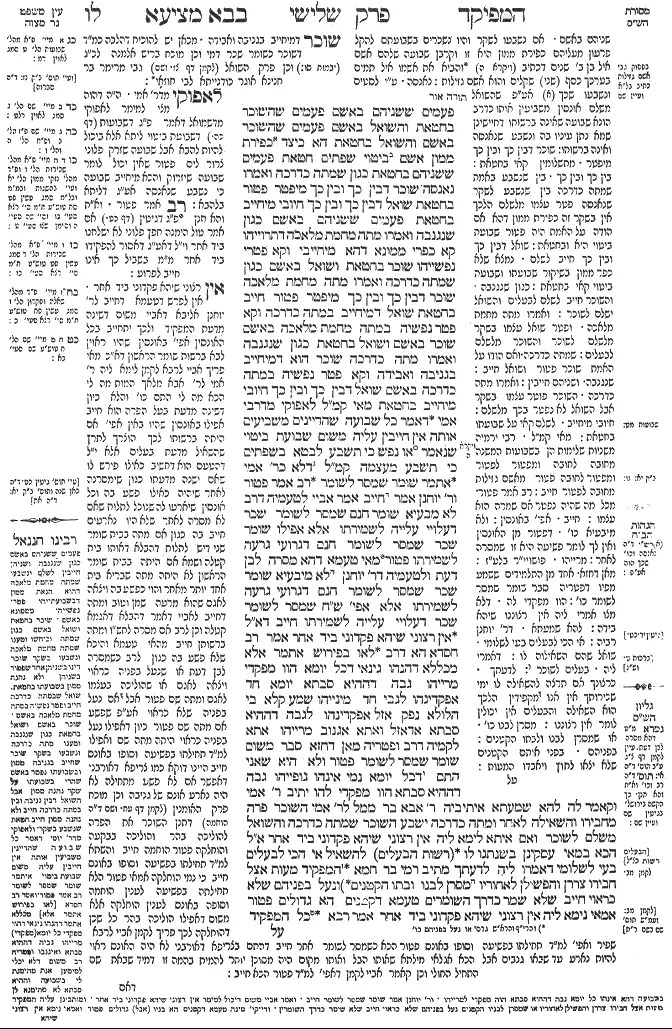
Bava Metzia 36a - Guemara
פעמים ששניהם באשם פעמים שהשוכר בחטאת והשואל באשם פעמים שהשוכר באשם והשואל בחטאת הא כיצד כפירת ממון אשם ביטוי שפתים חטאת פעמים ששניהם בחטאת כגון שמתה כדרכה ואמרו נאנסה שוכר דבין כך ובין כך מיפטר פטור בחטאת שואל דבין כך ובין כך חיובי מיחייב בחטאת פעמים ששניהם באשם כגון שנגנבה ואמרו מתה מחמת מלאכה דתרוייהו קא כפרי ממונא דהא מיחייבי וקא פטרי נפשייהו שוכר בחטאת ושואל באשם כגון שמתה כדרכה ואמרו מתה מחמת מלאכה שוכר דבין כך ובין כך מיפטר פטור חייב בחטאת שואל דמיחייב במתה כדרכה וקא פטר נפשיה במתה מחמת מלאכה באשם שוכר באשם ושואל בחטאת כגון שנגנבה ואמרו מתה כדרכה שוכר הוא דמיחייב בגניבה ואבידה וקא פטר נפשיה במתה כדרכה באשם שואל דבין כך ובין כך חיובי מיחייב בחטאת מאי קמ"ל לאפוקי מדרבי אמי דאמר כל שבועה שהדיינים משביעים אותה אין חייבין עליה משום שבועת ביטוי שנאמר (ויקרא ה, ד) או נפש כי תשבע לבטא בשפתים כי תשבע מעצמה קמ"ל דלא כר' אמי אתמר שומר שמסר לשומר רב אמר פטור ור' יוחנן אמר חייב אמר אביי לטעמיה דרב לא מבעיא שומר חנם שמסר לשומר שכר דעלויי עלייה לשמירתו אלא אפילו שומר שכר שמסר לשומר חנם דגרועי גרעה לשמירתו פטור מאי טעמא דהא מסרה לבן דעת ולטעמיה דר' יוחנן לא מיבעיא שומר שכר שמסר לשומר חנם דגרועי גרעה לשמירתו אלא אפי' ש"ח שמסר לשומר שכר דעלויי עלייה לשמירתו חייב דא"ל אין רצוני שיהא פקדוני ביד אחר אמר רב חסדא הא דרב לאו בפירוש אתמר אלא מכללא דהנהו גינאי דכל יומא הוו מפקדי מרייהו גבה דההיא סבתא יומא חד אפקדינהו לגבי חד מינייהו שמע קלא בי הלולא נפק אזל אפקדינהו לגבה דההיא סבתא אדאזל ואתא אגנוב מרייהו אתא לקמיה דרב ופטריה מאן דחזא סבר משום שומר שמסר לשומר פטור ולא היא שאני התם דכל יומא נמי אינהו גופייהו גבה דההיא סבתא הוו מפקדי להו יתיב ר' אמי וקאמר לה להא שמעתא איתיביה ר' אבא בר ממל לר' אמי השוכר פרה מחבירו והשאילה לאחר ומתה כדרכה ישבע השוכר שמתה כדרכה והשואל משלם לשוכר ואם איתא לימא ליה אין רצוני שיהא פקדוני ביד אחר א"ל הכא במאי עסקינן בשנתנו לו (רשות הבעלים) להשאיל אי הכי לבעלים בעי לשלומי דאמרו ליה לדעתך מתיב רמי בר חמא המפקיד מעות אצל חבירו צררן והפשילן לאחוריו מסרן לבנו ובתו הקטנים ונעל בפניהם שלא כראוי חייב שלא שמר כדרך השומרים טעמא דקטנים הא גדולים פטור אמאי נימא ליה אין רצוני שיהא פקדוני ביד אחר אמר רבא כל המפקיד
Comments from Rashi on Masechet Bava Metzia Page 36a
שניהם באשם . אם נשבעו לשקר והיו נשכרים בשבועתם להקל פרעון מעליהם כפירת ממון היא זו וקרבן שבועה שלהם אשם איל בן ב' שנים דכתיב (ויקרא ה) והביא את אשמו איל תמים בערכך כסף (שני) שקלים והוא אשם גזילות: נאנסה . ע"י לסטים ונשבעו שכך אע"פ שהשואל משלם אונסין משביעין אותו כדרב הונא שבועה שאינה ברשותו דחיישינן שמא נתן עיניו בה ונשבע שנאנסה ואינה ברשותו: שוכר דבין כך ובין כך מיפטר . מתשלומין קאי בחטאת: בין כך ובין כך . בין שנשבע באמת שמתה כדרכה בין שנשבע לשקר שנאנסה פטר עצמו מלשלם הלכך אין בשקר זה כפירת ממון דהא אם הודה על האמת היה פטור שבועת ביטוי היא ובחטאת: שואל דבין כך ובין כך חייב לשלם . נמצא שלא כפר ממון בשיקור שבועתו ושבועת ביטוי קאי בחטאת: כגון שנגנבה . והשוכר חייב לשלם לבעלים והשואל ישלם לשוכר: ואמרו מתה מחמת מלאכה . ופטר שואל עצמו בשקר מלשלם לשוכר והשוכר מלשלם לבעלים: שמתה כדרכה . ואם הודו על האמת שוכר פטור ושואל חייב: שנגנבה . ושניהם חייבין: ואמרו מתה כדרכה . השוכר פוטר עצמו בשקר אבל השואל לא נפטר בכך מלשלם: חיובי מיחייב . לשלם קאי על שבועתו בחטאת: מאי קמ"ל . רבי ירמיה משניות שלימות הן בשבועות המשנה מחובה לחובה ומפטור לפטור ומפטור לחובה פטור מאשם גזילות מחובה לפטור חייב: רב אמר פטור . מכל מה שהיה נפטר אם שמרה הוא עצמו: חייב . אפי' באונסין: ולא מיבעיא כו' . דפטור מן האונסין ואין לך לומר פשיעה היא זו שמסרה לאחר: מרייהו . פושויי"ר בלע"ז: מאן דחזא . אחד מן התלמידים ששמע מפיו דפטריה סבר שומר שמסר לשומר כו': הוו מפקדי לה . דלא מצו אמרי ליה אין רצוננו שיהא בידה: להא שמעתא . דר' יוחנן רביה: אי הכי לבעלים בעי לשלומי . שואל שהם השאילוה לו: דאמרי ליה . בעלים לשוכר: לדעתך . כרצונך אם תרצה להשאילה לו ימי שכירותך אין אנו מקפידין הלכך הוא השאילה והבעלים אין יכולין לומר אין רצוננו: מסרן לבנו כו' . או שמסרן לבנו ולבתו הקטנים: בפניהם . בפני אותם הקטנים שלא יצאו לחוץ ויאבדו המעות:
Comments from Tosafot - Bava Metzia 36a
שוכר דמיחייב בגניבה ואבידה . מכאן יש להוכיח דהלכה כמ"ד דשוכר כשומר שכר דמי וכן מוכח בריש אלמנה לכ"ג (יבמות סו:) וכן פרק השואל (לקמן בבא מציעא דף צז. ושם) גבי מרימר בר חנינא אוגר כודנייתא לבי חוזאי: לאפוקי מדר' אמי . ה"ה דהוה מצי למימר לאפוקי מדשמואל דאמר פ"ג דשבועות (דף כה.) דשבועת ביטוי ליתא אלא ביכול להיות להבא אבל שבועה שזרק פלוני צרור לים פטור שאין יכול לומר שבועה שיזרוק והכא מיחייב שבועה כי נשבע שנאנסה אע"ג דליתא בלהבא: רב אמר פטור . וא"ת והא תנן פ"ג דגיטין (דף כט.) אם אמר טול הימנה חפץ פלוני לא ישלחנו ביד אחר וי"ל דאע"ג דאסור להפקידו ביד אחר מ"מ בשביל כך אינו חייב לפרוע: אין רצוני שיהא פקדוני ביד אחר . אין לפרש דטעמא דחייב לר' יוחנן אליבא דאביי משום דשינה מדעת המפקיד ולכך יתחייב בכל האונסין אפי' באונסין שהיו ראוין לבא ברשות שומר הראשון דא"כ מאי פריך אביי לרבא לקמן לימא ליה ר' אמי לר' אבא מלאך המות מה לי הכא מה לי התם כו' והלא כיון דשינה מדעת בעל הפרה הוא חייב אפילו באונסין שהיו באין אפי' אם היתה ברשותו לכך הוצרך לתרץ שהשאיל מדעת בעלים אלא י"ל דהטעם הוא דחשיב כאילו פירש לו שאם ישנה מדעתו כגון שימסרנה לאחר שיהיה כאילו פשע בה וכל אונסין שיארעו לה שנוכל לתלות שאם לא מסרה לאחר שלא היו נארעים חייב בה כגון אם מתה בבית שומר שני דיש לתלות דהבלא דאותו בית קטלה ושמא אם היתה בבית שומר הראשון לא היתה מתה שבריא בית אחד יותר מאחר והוי כפשע בה ויצאה לאגם שהוא מרעה שמן וטוב ומתה דחייב לאביי דאמר דהבלא דאגמא קטלה וכן לרב אם מסרה לחש"ו ומתה ברשותן חייב מהאי טעמא והיכא שלא פשע בה כגון לרב כשמסרה לבן דעת או שנעל בפניה כראוי ויצאה לאגם או שהוליכה בעצמו לאגם ומתה שם פטור אבל אם נעל בפניה שלא כראוי אע"פ שפשע אם מתה שם פטור כיון דאפילו נעל בפניה כראוי היתה מתה שם ואפילו למ"ד תחילתו בפשיעה וסופו באונס חייב היינו דוקא כמו צריפא דאורבני דאפשר אם לא פשע מתחילה לא היה נארע אונס של גניבה וכן מוכח פרק האומנין (לקמן בבא מציעא דף עח. ושם ד"ה הוחמה) דתנן השוכר את הפרה להוליכה בהר והוליכה בבקעה והוחלקה פטור הוחמה חייב והשתא למ"ד תחילתו בפשיעה וסופו באונס חייב כי נמי הוחלקה אמאי פטור הלא תחילתה בפשיעה לענין הוחמה וסופה באונס לענין הוחלקה אלא משום דאפילו הוליכה בהר כל שכן דהוחלקה לכך פריך לקמן אביי לרבא שפיר ואפי' למ"ד תחילתו בפשיעה וסופו באונס פטור הכא כשמסר לשומר אחר חייב דהתם בצריפא דאורבני לא היה האונס ראוי להיות נארע עד שבאו גנבים אבל הכא אגלאי מילתא שאותו הבל ואותו מקום היה מסוכן יותר להמית בהמה זו דמיד שבאת שם התחיל החולי וכן קאמר אביי לקמן דאפי' למ"ד פטור הכא חייב:
Bava Metzia 36a - Mishnah translated into english
there are times that both are liable to bring a guilt-offering; there are times that the renter is liable to bring a sin-offering and the borrower is liable to bring a guilt-offering; there are times that the renter is liable to bring a guilt-offering and the borrower is liable to bring a sin-offering.
The Gemara elaborates: How so? One who takes a false oath that involves the denial of a monetary matter is liable to bring a guilt-offering. One who takes a false oath on an utterance of the lips that involves no denial of a monetary debt is liable to bring a sin-offering.
The Gemara elaborates: There are times that both are liable to bring a sin-offering. This is in a case where the cow died in its typical manner and the renter and the borrower both said that it died due to circumstances beyond his control. A renter, who in any case is exempt from paying whether it died of natural causes or due to circumstances beyond his control, is liable to bring a sin-offering if he took a false oath. A borrower, who in any case is liable to pay regardless of the circumstances of its death, is liable to bring a sin-offering if he took a false oath. In both cases, the oath involved no denial of monetary debt.
There are times that both are liable to bring a guilt-offering. This is in a case where the cow was stolen from a borrower, and the renter and the borrower both said that it died due to ordinary labor. That is a case where both denied a monetary matter, as they are both liable to pay in a case of theft, and both take an oath on a claim with which they seek to exempt themselves.
There are times when a renter is liable to bring a sin-offering and a borrower is liable to bring a guilt-offering. This is in a case where the cow died in its typical manner and the renter and the borrower both said that it died due to ordinary labor. A renter, who in any case is exempt, as he is exempt from paying in cases where the ox was damaged or died due to circumstances beyond his control, is liable to bring a sin-offering, as the false oath involved no denial of monetary debt. A borrower, who is liable to pay when the cow died in its typical manner and attempted to exempt himself with the claim that it died due to ordinary labor, is liable to bring a guilt-offering.
There are times when a renter is liable to bring a guilt-offering and a borrower is liable to bring a sin-offering. This is in a case where the cow was stolen from the borrower, and the renter and the borrower both said that it died in its typical manner. The renter, who is liable to pay in cases of theft and loss and attempted to exempt himself with the claim that it died in its typical manner, is liable to bring a guilt-offering. A borrower, who in any case is liable to pay, is liable to bring a sin-offering.
The Gemara asks: What is Rabbi Yirmeya teaching us with this systematic presentation of these cases? They are merely details based on established halakhic principles. The Gemara answers: His statement serves to exclude the opinion of Rabbi Ami, who says: With regard to any oath that the judges administer, one is not liable to bring a sin-offering for taking a false oath on an utterance, as it is stated in the passage concerning the obligation to bring an offering for taking a false oath: “Or if a soul takes an oath clearly to utter with lips” (Leviticus 5:4). The Gemara infers: The liability to bring an offering for taking a false oath applies only to one who takes an oath on his own initiative, but not when the oath is administered by others. Rabbi Yirmeya teaches us that the halakha is not in accordance with the opinion of Rabbi Ami, as one is liable to bring a sin-offering for taking a false oath on an utterance even if it was administered by another.
It was stated that there is an amoraic dispute with regard to a bailee who conveyed to another bailee the deposit with which he was entrusted. Rav says: He is exempt from payment in the same cases in which he is exempt when the deposit is in his possession. And Rabbi Yoḥanan said: He is liable to pay even in cases of damage due to circumstances beyond his control.
Abaye says: According to Rav’s line of reasoning, it is not necessary to state his ruling in a case where he was initially an unpaid bailee who conveyed the deposit for safeguarding to a paid bailee, as in that case the unpaid bailee enhanced the level of his safeguarding, since a paid bailee is liable to pay in instances where an unpaid bailee is exempt. But even in the case of a paid bailee who conveyed the deposit for safeguarding to an unpaid bailee, where the paid bailee diminished the level of his safeguarding, he is exempt. What is the reason? He is exempt because he conveyed the deposit to a mentally competent person, thereby effectively safeguarded the deposit.
According to Rabbi Yoḥanan’s line of reasoning, it is not necessary to state his ruling in a case where he was initially a paid bailee who conveyed the deposit for safeguarding to an unpaid bailee, as the paid bailee diminished the level of his safeguarding, since an unpaid bailee is exempt in instances where a paid bailee is liable to pay. But even in the case of an unpaid bailee who conveyed the deposit for safeguarding to a paid bailee, where the unpaid bailee enhanced the level of his safeguarding, he is liable to pay. What is the reason? He is liable because the owner of the deposit said to him: It is not my desire that my deposit be in the possession of another bailee.
Rav Ḥisda said: This statement that is attributed to Rav was not stated explicitly. Rather, it was inferred from another statement of his, as it is related: There were these gardeners who each day would deposit their spades with a certain old woman. One day they deposited their spades with one of gardeners. He heard noise from a wedding hall and set out and went there. He deposited the spades with that old woman. In the time that he went and came back from the wedding, their spades were stolen.
The case came before Rav, and Rav exempted the gardener who deposited the spades with the old woman. One who observed Rav’s ruling thought that Rav issued that ruling due to the fact that a bailee who conveyed a deposit to another bailee is exempt. But that is not so. There, in the case of the spades, it is different, as the gardeners themselves would deposit their spades with that old woman. Since the gardeners cannot claim that it is not their desire for their deposit to be in the possession of this old woman, the gardener who did so is exempt.
The Gemara relates: Rabbi Ami sat and stated this halakha. Rabbi Abba bar Memel raised an objection to Rabbi Ami from the mishna: In the case of one who rents a cow from another, and this renter lends it to another person, and the cow dies in its typical manner in the possession of the borrower, the halakha is that the renter takes an oath to the owner of the cow that the cow died in its typical manner, and the borrower pays the renter for the cow that he borrowed. And if the statement of Rabbi Yoḥanan is so, let the owner say to the renter: It is not my desire that my deposit be in the possession of another bailee, and the renter should be liable to pay because he violated the owner’s wishes. Rabbi Ami said to him: With what are we dealing here? It is a case where the owner gave the renter permission to lend the deposit to another.
The Gemara asks: If so, the borrower should be required to pay the owner, as the owner sanctioned the borrowing. Rabbi Abba bar Memel answers: The case in the mishna is one where the owner said to the renter: Lend this deposit to another at your discretion. Therefore, it is not considered as if the owner lent it to the borrower.
Rami bar Ḥama raises an objection from a mishna (42a): In the case of one who deposited coins with another, and that bailee bound it in a cloth and slung it behind him, or conveyed them to his minor son or daughter for safeguarding, or locked the door before the coins in an inappropriate, i.e., insufficient, manner to secure them, the bailee is liable to pay for the coins, as he did not safeguard the coins in the manner typical of bailees.
The Gemara infers: The reason he is liable to pay is that he conveyed the coins to his minor children, but if he conveyed them to his adult son or daughter he is exempt. Why? Let the owner say to him as Rabbi Yoḥanan said: It is not my desire that my deposit be in the possession of another bailee, and therefore even if the children are adults the bailee should be liable to pay.
Rava said: No proof can be cited, as it is clear that in the case of anyone who deposits an item with another,
Traduction : The William Davidson digital edition of the Koren Noé Talmud, with commentary by Rabbi Adin Even-Israel Steinsaltz.