 Talmud Bavli
The learning on the whole site is dedicated : L'ilui Nishmat Nissim ben Barukh Malka
The learning on the whole site is dedicated : L'ilui Nishmat Yechayahou ben Moche
The learning on the whole site is dedicated : L'ilui Nishmat אסתר בת חיים
Bava Metzia 113a : Youtube
Daf TubeYoutube
1 video class :
Bava Metzia Page 113a
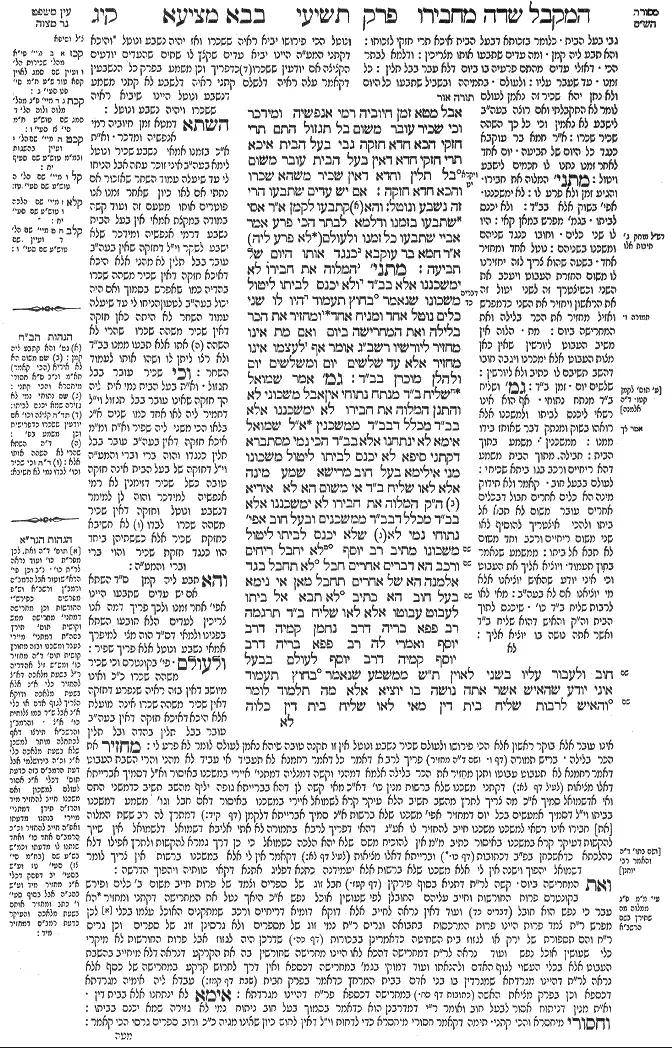
Bava Metzia 113a - Guemara
אבל מטא זמן חיוביה רמי אנפשיה ומידכר וכי שכיר עובר משום בל תגזול התם תרי חזקי הכא חדא חזקה גבי בעל הבית איכא תרי חזקי חדא דאין בעל הבית עובר משום (ויקרא יט, יג) בל תלין וחדא דאין שכיר משהא שכרו והכא חדא חזקה:
אם יש עדים שתבעו הרי זה נשבע ונוטל:
והא קתבעו לקמן א"ר אסי שתבעו בזמנו ודלמא לבתר הכי פרע אמר אביי שתבעו כל זמנו ולעולם לא פרע ליה א"ר חמא בר עוקבא כנגד אותו היום של תביעה:
מתני׳ המלוה את חבירו לא ימשכננו אלא בב"ד ולא יכנס לביתו ליטול משכונו שנאמר (דברים כד, יא) בחוץ תעמוד היו לו שני כלים נוטל אחד ומניח אחד ומחזיר את הכר בלילה ואת המחרישה ביום ואם מת אינו מחזיר ליורשיו רשב"ג אומר אף לעצמו אינו מחזיר אלא עד שלשים יום ומשלשים יום ולהלן מוכרן בב"ד:
גמ׳ אמר שמואל שליח ב"ד מנתח נתוחי אין אבל משכוני לא והתנן המלוה את חבירו לא ימשכננו אלא בב"ד מכלל דבב"ד ממשכנין א"ל שמואל אימא לא ינתחנו אלא בב"ד הכי נמי מסתברא דקתני סיפא לא יכנס לביתו ליטול משכונו מני אילימא בעל חוב מרישא שמע מינה אלא לאו שליח ב"ד אי משום הא לא איריא ה"ק המלוה את חבירו לא ימשכננו אלא בב"ד מכלל דבב"ד ממשכנים ובעל חוב אפי' נתוחי נמי לא שלא יכנס לביתו ליטול משכונו מתיב רב יוסף (דברים כד, ו) לא יחבל ריחים ורכב הא דברים אחרים חבל (דברים כד, יז) לא תחבל בגד אלמנה הא של אחרים תחבל מאן אי נימא בעל חוב הא כתיב (דברים כד, י) לא תבא אל ביתו לעבוט עבוטו אלא לאו שליח ב"ד תרגמה רב פפא בריה דרב נחמן קמיה דרב יוסף ואמרי לה רב פפא בריה דרב יוסף קמיה דרב יוסף לעולם בבעל חוב ולעבור עליו בשני לאוין ת"ש ממשמע שנאמר (דברים כד, יא) בחוץ תעמוד איני יודע שהאיש אשר אתה נושה בו יוציא אלא מה תלמוד לומר (דברים כד, יא) והאיש לרבות שליח בית דין מאי לאו שליח בית דין כלוה
Comments from Rashi on Masechet Bava Metzia Page 113a
גבי בעל הבית . כלומר בזכותא דבעל הבית איכא תרי חזקי לזכותו: והא תבע ליה קמן . ומה עדים שתבעו אותו מצריכין: ודלמא לבתר הכי . דאזלי עדים מהתם פרעיה בו ביום דלא עבר בבל תלין: כל זמנו . עד שעבר עליו: ולעולם . בתמיהה ובשביל שתבעו כל היום ולא נתן יהא שכיר זה נאמן לעולם לומר לא התקבלתי ואם רוצה בעה"ב לישבע לא נאמין וכי כל כך השהה שכיר שכרו: א"ר חמא בר עוקבא כנגד כל היום של תביעה . יום אחד לאחר זמנו נתנו לו חכמים לישבע ויטול: מתני' המלוה את חבירו . והגיע זמן ולא פרע לו: לא ימשכננו . אפי' בשוק אלא בב"ד: ולא יכנס לביתו . בגמ' מפרש במאן קאי: היו ' לו שני כלים . וחובו כנגד שניהם ומשכנו בשניהם: נוטל אחד ומחזיר אחד . בשעה שהוא צריך לזה יחזירנו לו משום החזרת העבוט ויעכב את השני וכשיצטרך זה לשני יטול זה את הראשון ויחזיר את השני כדמפרש ואזיל מחזיר את הכר בלילה ואת המחרישה ביום: מת . הלוה אין משיב העבוט ליורשין שאין כאן מצות העבוט אלא ימכרנו ויגבה חובו דהשב תשיבם לו כתיב ולא ליורשין: שלשים יום . זמן ב"ד: גמ' ושליח ב"ד מנתח נתוחי . אף הוא אינו רשאי ליכנס לביתו ולמשכנו אלא רואהו בשוק ומנתק דבר שאוחז בידו ממנו: ממשכנין . משמע בתוך הבית: חבילה . מתוך הבית משמע דהא ריחיים ורכב בגו ביתא שכיחי: לעולם בבעל חוב . קאמר ולא תידוק מינה הא כלים אחרים חבול דבכלים אחרים עובר משום לא תבא אל ביתו ולהכי איצטריך להוסיף לאו שני משום ריחיים ורכב וחד משום לא תבא אל ביתו: ממשמע שנאמר בחוץ תעמוד . ויוציא אליך את העבוט וכי איני יודע שהאיש יוציאנו אלא מי יוציאנו אם לא בעה"ב: מאי לאו לרבות שליח ב"ד כו' . שיכנס לתוך הבית וה"ק והאיש דהוא שליח ב"ד ואשר אתה נושה בו יוציא אליך:
Comments from Tosafot - Bava Metzia 113a
השתא דמטא זמן חיוביה רמי אנפשיה ומדכר . וא"ת א"כ בזמנו אמאי נשבע שכיר ונוטל לימא בעה"ב איני זוכר עתה אבל הניחו לי עד שיעלה עמוד השחר שאזכור אם נתתי אם לאו כיון שאחר זמנו אנו פוטרים אותו מטעם זה ועוד קשה במודה במקצת אמאי אין בעל הבית נשבע דרמי אנפשיה ומידכר שלא ישבע לשקר וי"ל דחזקה שאין בעה"ב עובר בבל תלין לא מהני אלא היכא דאיכא חזקה דאין שכיר משהה שכרו בהדיה כמו שאפרש בסמוך ואם היה יכול בעה"ב לטעון הניחו לי עד שיעלה עמוד השחר לא היתה כאן חזקה דאין שכיר משהה שכרו שהרי לא השהה אתו אלא תבעו ממנו בב"ד ולא רצו ליתן לו ושהו אותו לעמוד השחר: וכי שכיר עובר בבל תגזול . וא"ת בעל הבית נמי אית ליה הך חזקה שאינו עובר בבל תגזול וי"ל דחמיר ליה לאו אחד כמו שנים א"נ בלאו הכי משני ליה שפיר וא"ת ומ"מ איכא חזקה דאין בעה"ב עובר בבל תלין כנגדו והוה ברי וברי והמע"ה וי"ל דחזקה של בעל הבית אינה חזקה טובה כשל שכיר דזימנין לא רמי אנפשיה למידכר והוה לן למימר דנשבע ונוטל וחזקה דאין שכיר משהה שכרו לבדו לא חשיבא כחזקת שכיר אלא כששתיהן ביחד הוו כנגד חזקת שכיר והוי ברי וברי והמע"ה: והא תבע ליה קמן . ס"ד השתא אם יש עדים שתבעו היינו אפי' אחר זמנו ולכך פריך דמה אנו צריכין לעדים הלא תובעו השתא בפנינו ולמאי דס"ד הוה מצי למיפרך אמאי נשבע ונוטל אלא פריך שפיר: ולעולם . פי' בקונטרס וכי שכיר משהה שכרו כ"כ ואינו מיושב דאין בזה ראיה שנפרע דחזקה דאין שכיר משהה שכרו אינה מועלת אלא היכא דאיכא חזקה דאין בעה"ב עובר בבל תלין בהדה ובל תלין אינו עובר אלא בוקר ראשון אלא הכי פירושו ולעולם שכיר נשבע ונוטל אין זו תקנה טובה שיהא נאמן לעולם לומר לא פרע לי: מחזיר את הכר בלילה . בריש תמורה (דף ו. ושם ד"ה מחזיר) פריך לרבא דאמר כל דאמר רחמנא לא תעביד אי עביד לא מהני והרי השבת העבוט דאמר רחמנא לא תעבוט עבוטו ותנן מחזיר את הכר בלילה אלמא דמהני וקשה דמנליה דמתני' איירי במשכנו באיסור וא"ל דסמיך אברייתא דאלו מציאות (לעיל בבא מציעא דף לא:) דקתני משכנו שלא ברשות מנין כו' דא"כ מאי קשה לן דהא בברייתא גופה יליף מהשב תשיב כדמשני התם ואי אדשמואל סמיך א"כ מה צריך לתרץ מהשב תשיב הלא עיקר קרא לשמואל איירי במשכנו באיסור דאם חבל וגו' משמע דמשכנו בביתו וי"ל דסמיך אמעשים בכל יום דמחזיר אפי' משכנו שלא ברשות א"נ סמיך אברייתא דלקמן (בבא מציעא דף קיד:) דמתרץ לה רב ששת המלוה [את] חבירו אינו רשאי למשכנו משכנו חייב להחזיר לו אע"ג דהאי דפריך לרבא בתמורה לא אתי אליבא דשמואל דלשמואל אין שייך להקשות דעיקר קרא במשכנו באיסור כתיב מ"מ אין להוכיח משם שלא יהא הלכה כשמואל כי כן דרך גמרא להקשות ולתרץ אפילו דלא כהלכתא כדאשכחן בפ"ב דכתובות (דף כו:) וברייתא דאלו מציאות (לעיל בבא מציעא דף לא:) דקאמר אין לי אלא במשכנו ברשות אין צריך לומר דשמואל יהפוך וישנה אין לי אלא משכנו שלא ברשות אלא יעמידנה כתנא דפליג אתנא דקאי כוותיה ויהפוך הדרשה: ואת המחרישה ביום . קשה לר"ת דתניא בסוף פירקין (דף קטז.) חבל זוג של ספרים וצמד של פרות חייב משום ב' כלים ופירש בקונטרס פרות החורשות וחייב עליהם החובלן לפי שעושין אוכל נפש א"כ היאך נטל את המחרישה דקתני ומחזיר הא עבר כי נפש הוא חובל (דברים כד) ועוד דאין נראה לחייב אלא דוקא דומיא דריחיים ורכב שמתקנים האוכל עצמו בכלי לכן מפרש ר"ת צמד פרות היינו פרות המרכסות בתבואה וגריס ר"ת נמי זוג של מספרים ולא גרסינן זוג של ספרים וכן גריס ר"ח והם תספורת של ירק או לגזוז בית השחיטה כדאמרינן בבכורות (דף כה.) שדרכן היה לגזוז אבל פרות החורשות לא מיקרי כלי שעושין אוכל נפש ועוד נראה לר"ת דמחרישה דהכא לאו היינו מחרישה שחורשין בה את הקרקע דנראה דלא מיחייב בהשבת העבוט אלא בכלי העשוי לגוף האדם ולהנאתו ועוד דמוקי בגמ' במחרישה דכספא ואין דרך לחרוש קרקע במחרישה של כסף אלא נראה לר"ת דהיינו מגרדתא שמגרדין בו בני אדם בבית המרחץ כדאמר בפרק חבית (שבת דף קמז:) עבדא ליה אימיה מגרדתא דכספא וכן בפרק מציאת האשה (כתובות דף סח.) במחרישה דכספא פר"ח דהיינו מגרדתא: אימא לא ינתחנו אלא בבית דין . וא"ת מנין דניתוח אסור לבעל חוב ואומר ר"י דמדרבנן הוא כדאמר בסמוך בעל חוב ניתוח נמי לא גזירה שמא יכנס בביתו: וחסורי מיחסרא והכי קתני . תימה דקאמר חסורי מיחסרא כדי לדחות וי"ל דאין לחוש כיון שאינו מגיה כ"כ ורוב ספרים גרסי הכי קאמר:
Bava Metzia 113a - Mishnah translated into english
but when the time of his obligation to pay arrives, he applies himself and remembers all the details, so as not to violate the prohibition of delaying payment of the laborer’s wages.
The Gemara asks: Why would one rely upon the presumption that the employer would not transgress? But is the hired laborer suspected of violating the prohibition of stealing? The Gemara replies: There, concerning the credibility of an employer, there are two presumptions, whereas here, concerning the credibility of a laborer, there is only one presumption. The Gemara explains: Concerning the credibility of an employer there are the following two presumptions: One is that the employer does not violate the prohibition of delaying payment of wages, and the other one is that a hired laborer does not delay the request for his wages. But here, concerning the credibility of the laborer, there is only one presumption, i.e., that the laborer does not violate the prohibition of stealing.
The mishna teaches: If there are witnesses who testify that he claimed the money from him, he takes an oath and receives the money. The Gemara asks: But what need is there for witnesses that he lodged a claim, when he is claiming it from him in front of us? Rabbi Asi said: The tanna is referring to witnesses that testified that he claimed it from him at its proper time. The Gemara challenges: Even if the laborer claimed the money at the proper time, perhaps the employer paid him afterward. Abaye said: The witnesses testify that he claimed it from him the entire time, i.e., from the time he completed his labor until the end of that day.
The Gemara continues: And is it always assumed that the employer did not pay the laborer? Why does the fact that he claimed his money at the proper time mean that his claim against his employer is always accepted? Rav Ḥama bar Ukva said: The tanna means that he is given another day corresponding to that day of his claim during which the laborer can claim that he has not been paid.
MISHNA: With regard to one who lends money to another and the debtor fails to repay it at the end of the term of the loan, the creditor may take collateral from him to ensure payment only by means of an agent of the court, not of his own accord. And he may not enter the debtor’s house to take his collateral, as it is stated: “When you lend your neighbor any manner of loan, you shall not go into his house to take his collateral. You shall stand outside, and the man to whom you lend shall bring forth the collateral to you outside” (Deuteronomy 24:10–11). If the debtor had two utensils of the same kind, the creditor takes one and leaves the other one in the debtor’s possession.
And in addition, the creditor must return a pillow at night, as the debtor requires it for sleeping, and a plow, which is needed for his daytime work, by day. If the debtor died, he is not required to return it to the debtor’s heirs. Rabban Shimon ben Gamliel says: Even to the debtor himself he needs to return the collateral each day only until thirty days have passed, and from thirty days onward, the creditor can sell them in court, with the proceeds going toward payment of the debt.
GEMARA: Shmuel says: An agent of the court who was granted permission to appropriate items from a debtor up to the sum of the loan may seize these items from him in the marketplace, but is not permitted to enter the debtor’s house and take collateral. The Gemara asks: But didn’t we learn in the mishna that one who lends money to another may take collateral from him only by means of an agent of the court, which proves by inference that when it is taken by means of an agent of the court the agent of the court may enter the debtor’s house and take collateral?
The Gemara responds: Shmuel could have said to you: Say that the mishna meant as follows: He may seize it forcibly from him only by means of an agent of the court. The Gemara adds: So, too, it is reasonable that this is correct, as the latter clause of the mishna teaches: And he may not enter the debtor’s house to take his collateral. Who is the tanna referring to here? If we say it is referring to the creditor, this clause is not needed, as this halakha can be concluded from the first clause of the mishna, which states that a creditor has no right to take collateral himself. Rather, is it not referring to the court agent? Accordingly, this teaches that even an agent of the court may not enter the debtor’s house to take the collateral.
The Gemara refutes the above claim: If the argument to understand the mishna in that manner is due to that reason, there is no conclusive argument, as it is possible that this is what the mishna is saying: One who lends money to another may take collateral from him by entering the debtor’s house only by means of an agent of the court, which proves by inference that it is permitted to take collateral by entering the debtor’s house by means of an agent of the court. One can then infer: But as for the creditor himself, he may not even seize collateral outside the debtor’s house. This is a rabbinic decree so that he should not enter the debtor’s house to take his collateral.
Rav Yosef raises an objection to Shmuel’s statement from a baraita: The Torah states: “He may not take the lower or upper millstone as collateral” (Deuteronomy 24:6). But it may be inferred that other items may be taken as collateral. Similarly, it states: “You may not take a widow’s garment as collateral” (Deuteronomy 24:17), but clothing that belongs to others you may take as collateral. The Gemara analyzes these statements: Who is permitted to do so? If we say that the creditor may take these items, that cannot be, as it is written: “You shall not go into his house to take his collateral” (Deuteronomy 24:10). Rather, is it not referring to the agent of the court, which indicates that the agent of the court may enter the debtor’s house and take collateral, although the Torah places limits on which item he can take?
Rav Pappa, son of Rav Naḥman, interpreted the baraita before Rav Yosef; and some say it was Rav Pappa, son of Rav Yosef, who interpreted the baraita before Rav Yosef: Actually, it is referring to a creditor, and the Torah’s additional prohibition against appropriating certain items is given so that he will violate two prohibitions for this action. For example, if he took the lower or upper millstone he violates both the command: “You shall not go into his house,” as well as the more specific prohibition.
The Gemara suggests: Come and hear a different baraita that contradicts Shmuel: From the implication of that which is stated: “You shall stand outside,” do I not know that: “And the man to whom you lend shall bring forth outside” (Deuteronomy 24:11)? Rather, why must the verse state the inclusive phrase “And the man to whom you lend shall bring forth outside”? This serves to include the agent of the court. The Gemara comments: What, is it not that the agent of the court has the same status as the debtor himself, indicating that just as the debtor may enter his own house at any time, the court agent may act likewise?
Traduction : The William Davidson digital edition of the Koren Noé Talmud, with commentary by Rabbi Adin Even-Israel Steinsaltz.