 Talmud Bavli
The learning on the whole site is dedicated : L'ilui Nishmat Margalit bat Ledicia
The learning on the whole site is dedicated : L'ilui Nishmat Jamila bat Chlomo Abensour
The learning on the whole site is dedicated : L'ilui Nishmat Jacques Isaac Ben Amram Loubaton
Bava Metzia 88b : Youtube
Daf TubeYoutube
1 video class :
Bava Metzia Page 88b
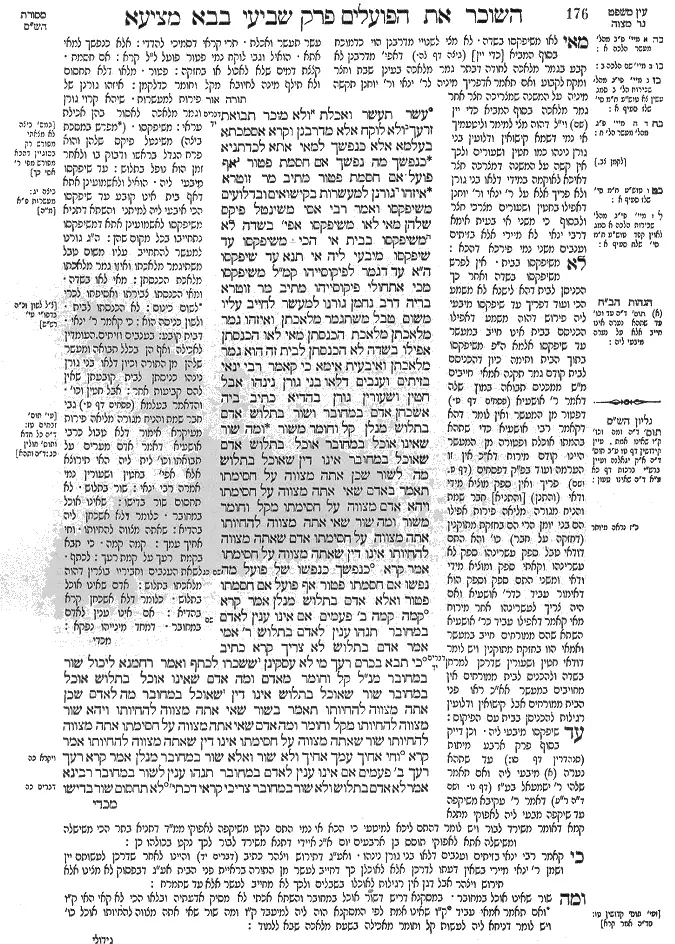
Bava Metzia 88b - Guemara
(דברים יד, כב) עשר תעשר ואכלת ולא מוכר תבואת זרעך ולא לוקח אלא מדרבנן וקרא אסמכתא בעלמא אלא כנפשך למאי אתא לכדתניא כנפשך מה נפשך אם חסמת פטור אף פועל אם חסמת פטור מתיב מר זוטרא איזהו גורנן למעשרות בקישואים ובדלועים משיפקסו ואמר רבי אסי משינטל פיקס שלהן מאי לאו משיפקסו אפי' בשדה לא משיפקסו בבית אי הכי משיפקסו עד שיפקסו מיבעי ליה אי תנא עד שיפקסו ה"א עד דגמר לפיקוסייהו קמ"ל משיפקסו מכי אתחולי פיקוסייהו מתיב מר זוטרא בריה דרב נחמן גורנו למעשר לחייב עליו משום טבל משתגמר מלאכתן ואיזהו גמר מלאכתן מלאכת הכנסתן מאי לאו הכנסתן אפילו בשדה לא הכנסתן לבית זה הוא גמר מלאכתן ואיבעית אימא כי קאמר רבי ינאי בזיתים וענבים דלאו בני גורן נינהו אבל חטין ושעורין גורן בהדיא כתיב ביה אשכחן אדם במחובר ושור בתלוש אדם בתלוש מנל קל וחומר משור ומה שור שאינו אוכל במחובר אוכל בתלוש אדם שאוכל במחובר אינו דין שאוכל בתלוש מה לשור שכן אתה מצווה על חסימתו תאמר באדם שאי אתה מצווה על חסימתו ויהא אדם מצווה על חסימתו מקל וחומר משור ומה שור שאי אתה מצווה להחיותו אתה מצווה על חסימתו אדם שאתה מצווה להחיותו אינו דין שאתה מצווה על חסימתו אמר קרא (דברים כג, כה) כנפשך כנפשו של פועל מה נפשו אם חסמתו פטור אף פועל אם חסמתו פטור ואלא אדם בתלוש מנלן אמר קרא (דברים כג, כו) קמה קמה ב' פעמים אם אינו ענין לאדם במחובר תנהו ענין לאדם בתלוש ר' אמי אמר אדם בתלוש לא צריך קרא כתיב (דברים כג, כה) כי תבא בכרם רעך מי לא עסקינן ששכרו לכתף ואמר רחמנא ליכול שור במחובר מנ"ל קל וחומר מאדם ומה אדם שאינו אוכל בתלוש אוכל במחובר שור שאוכל בתלוש אינו דין שאוכל במחובר מה לאדם שכן אתה מצווה להחיותו תאמר בשור שאי אתה מצווה להחיותו ויהא שור מצווה להחיותו מקל וחומר ומה אדם שאי אתה מצווה על חסימתו אתה מצווה להחיותו שור שאתה מצווה על חסימתו אינו דין שאתה מצווה להחיותו אמר קרא (ויקרא כה, לו) וחי אחיך עמך אחיך ולא שור ואלא שור במחובר מנלן אמר קרא רעך רעך ב' פעמים אם אינו ענין לאדם במחובר תנהו ענין לשור במחובר רבינא אמר לא אדם בתלוש ולא שור במחובר צריכי קראי דכתי' (דברים כה, ד) לא תחסום שור בדישו
Comments from Rashi on Masechet Bava Metzia Page 88b
עשר תעשר ואכלת . תרי קראי דסמיכי להדדי: אלא כנפשך למאי אתא . הואיל וגבי לוקח נמי פטור פועל ל"ל קרא: אם חסמת . קצצת דמים שלא לאכול או בחזקה: פטור . מלאו דלא תחסום ולא תילף מינה לחיובא מקל וחומר כדלקמן: איזהו גורנן של פירות למעשרות . שיהא קרוי גורן וגמר מלאכה לאסור בהן אכילת עראי: משיפקסו . (מפרש במסכת ביצה) משינטל פיקס שלהן והוא פרח הגדל בראשו ודבוק בו ולאחר זמן הוא נופל בתלוש: עד שיפקסו מיבעי ליה . הואיל ולאשמועינן אתא דאף בית אינו קובע עד שיפקסו. הכי איבעי ליה למיתני והשתא דתניא משיפקסו לאשמועינן אתא דמשיפקסו נתחייבו בכל מקום שהן: ה"ג גורנו למעשר להתחייב עליו משום טבל משתיגמר מלאכתו ואיזו גמר מלאכתו מלאכת הכנסתן: מאי לאו בשדה . ומאי הכנסתו צבירתו ואסיפתו לכרי לשום כינוס: לא הכנסתו לבית . ולשון כניסה הוא: כי קאמר ר' ינאי . דבית קובע: בענבים וזיתים . העומדין לאכילה ואף הן בכלל תבואה ומעשר שלהן מן התורה וכיון דלאו בני גורן נינהו כניסתן לבית קובעתן שאין להם קביעות אחר: אבל חטין וכו' . והדאמר בעלמא (פסחים דף ט.) גבי חבר שמת והניח מגורה מליאה פירות מעיקרא אימור דלא טבול כרבי אושעיא דאמר אדם מערים על תבואתו וכו'. לית ליה האי תירוצא אלא אפי' בחטין ושעורין נמי אמרה רבי ינאי: שור בתלוש . לא תחסום שור בדישו: שאינו אוכל במחובר . כלומר דלא אשכחן ליה בהדיא: שאתה מצווה להחיותו . וחי אחיך עמך: קמה קמה . כי תבא בקמת רעך על קמת רעך: לכתף . לשאת הענבים וחביריו בוצרין דהוה מלאכתו בתלוש: אדם שאינו אוכל בתלוש . כלומר דלא אשכחן קרא בהדיא: אם אינו ענין לאדם במחובר . דמחד מינייהו נפקא:
Comments from Tosafot - Bava Metzia 88b
תבואת זרעך ולא לוקח . וא"ת דאמר בסוף פ"ק דבכורות (דף יא: ושם ד"ה טבלים) אמר שמואל ברבי נתן הלוקח טבלים ממורחים מן הנכרי מעשרן והן שלו וקאמר אי מרחינהו נכרי דגנך ולא דיגון נכרי אלא דמרחינהו ישראל פי' אחר שקנאם מן הנכרי מעשרן דאין קנין לנכרי בארץ ישראל להפקיעם מיד מעשר והם שלו דאתינא מכח מאן דלא מצית לאשתעויי דינא בהדיה וליכא למימר מעשרן מדרבנן דא"כ אמאי קאמר דאין קנין לנכרי אפי' יש קנין צריך לעשר מדרבנן כדמוכח בסוף הקומץ רבה (מנחות דף לא. ושם ד"ה קסבר) דתניא אמר ר' שמעון [שזורי] פעם [אחת] נתערב לי טבל בחולין ושאלתי לרבי טרפון ואמר לי לך קח [לך] מן השוק ופריך ולימא ליה קח מן הנכרי קסבר אין קנין כו' והוה ליה מן החיוב על הפטור משמע דאי יש קנין הוה לוקח מן הנכרי דהוי ליה מן הפטור על הפטור דהא תרוייהו דרבנן ואומר ר"ת דהכא איירי בלוקח אחר מירוח אבל לוקח קודם מירוח כי התם תבואת זרעך קרינא ביה וא"ת ובמנחות אמאי לא קאמר ליה לך וקח הממורח דלא הוי חיוב אלא מדרבנן וי"ל דמ"מ דמי מן החיוב על הפטור כיון דאילו הדר מוכר קני ליה הוה חיוב וה"נ משמע התם דאין להפריש מדבר הדומה חיוב על הפטור דאיכא מ"ד שאמר ליה לך וקח מן הנכרי ופריך ולימא ליה קח מן השוק קסבר אין רוב עמי הארץ מעשרים והוה ליה מן החיוב על הפטור והא ליכא למימר דס"ל דודאי הוא דהא ליכא מאן דפליג דתבואת עם הארץ דמאי היא אלא משום דדמי לחיוב על הפטור קאמר וצריך עיון דכי משני התם קסבר אין קנין לנכרי מ"מ לימא ליה קח מן הנכרי (מן) הממורח. דלמ"ד אין קנין מ"מ דריש דגנך ולא דיגון נכרי בס"פ השולח (גיטין דף מז. ושם ד"ה מר) ואם תאמר לפר"ת דהכא משמע דלוקח קודם מירוח פטור מדאורייתא דהא פועל אוכל בדבר שלא נגמרה מלאכתו למעשר היינו קודם מירוח ומתחיל מקחו משעה שעושה מלאכתו ואז אינו מתוקן ואהא פריך ולוקח מדאורייתא מי מחייב וי"ל שהמקח אינו מתחיל עד שאוכל ואותה שעה כבר נתקן ורבינו יצחק ב"ר מרדכי הקשה על פר"ת דהא לוקח תבואה ממורחת מעם הארץ הוי דמאי משום דספק הוא אבל אם ודאי לא עישר חייב לעשר מן התורה אף על פי שנתמרח כבר ולאו פירכא היא דנהי דדמאי לא הוי מ"מ מדאורייתא לא מחייב אלא מעשר ודאי הוי מדרבנן וצריך ליתנו לכהן וללוי אבל לרבי יצחק בר' מרדכי נראה לפרש איפכא בלוקח שאינו ממורח פטור שעדיין לא נתחייב ברשות מוכר אבל לוקח ממורח הואיל ונתחייב ברשות מוכר תו לא פקע שם טבל מיניה כמו בהקדש ובהפקר שאם הקדיש והפקיר קודם מירוח מפקיע מידי מעשר אבל לאחר מירוח אינו מפקיע כמו שפירש ריב"א בבבא קמא ומביא ראיה מן הירושלמי ולוקח מן הנכרי הוי איפכא דאם נתמרח ברשות הנכרי פטור משום דגנך ולא דיגון נכרי וכשלא נתמרח ברשותו חייב דאין קנין לנכרי בא"י להפקיע מידי מעשר ולא מקריא תבואת זרעך של מוכר אלא תבואת הלוקח ממנו ולא חשיב לוקח: מאי לאו משיפקסו בשדה . לא מצי לשנויי מדרבנן הוי כדמוכח בסוף המביא [כדי יין] (ביצה דף לה.) דאפי' מדרבנן לא קבע בגמר מלאכה לחודה דבתר גמר מלאכה בעינן שבת וחצר ומקח לקבוע ואם תאמר אדפריך מיניה לר' ינאי ור' יוחנן תקשה מיניה על המשנה שמצריכה חצר אחר גמר מלאכה בסוף המביא כדי יין (שם) וי"ל דהוה מצי למימר וליטעמיך אי נמי דשמא קישואין ודלועין בני גורן נינהו כמו חטין ושעורים ולכך אין קשה על המשנה דמצרכה חצר דאיכא לאוקמה במידי דלאו בני גורן ולא פריך אלא על ר' ינאי ור' יוחנן דאפילו בחטין ושעורים מצרכי חצר ולבסוף כי משני אי בעית אימא דרבי ינאי לא מיירי אלא בזיתים וענבים משני נמי פירכא דהכא: לא משיפקסו בבית . אין לפרש משיפקסו בשדה ואחר כך הכניסן לבית דהא לישנא לא משמע הכי ועוד דפריך עד שיפקסו מיבעי ליה פירוש דהוה משמע דאפילו הכניסם בבית אינו חייב במעשר עד שיפקסו אלמא ה"פ משיפקסו בתוך הבית ותימה כיון דהכניסם לבית קודם גמר תקנה אמאי חייבים מ"ש ממכניס תבואה במוץ שלה דאמר ר' אושעיא (פסחים דף ט.) דפטור מן המעשר ואין לומר דהא דקאמר רבי אושעיא כדי שתהא בהמתו אוכלת ופטורה מן המעשר היינו קודם מירוח דא"כ אין זו הערמה ועוד בפ"ק דפסחים (דף ט. ושם) פריך ואין ספק מוציא מידי ודאי (והתנן) [והתניא] חבר שמת והניח מגורה מליאה פירות אפילו הם בני יומן הרי הם בחזקת מתוקנין (דחזקה על חבר) כו' והא התם דודאי טבל ספק עשרינהו ספק לא עשרינהו וקאתי ספק ומוציא מידי ודאי ומשני התם ספק וספק הוא דאימור עביד כדר' אושעיא ואם היה צריך לעשרינהו אחר מירוח מאי קאמר דאפילו עביד כר' אושעיא השתא שהם ממורחים חייב במעשר ואמאי הוו בחזקת מתוקנין ויש לומר דודאי חטין ושעורין שדרכן למרחן בשדה ולהכניס לבית ממורחים אין מחויבים במעשר אא"כ ראו פני הבית ממורחים אבל קישואין ודלועין רגילות להכניסן בבית עם הפיקוס: עד שיפקסו מיבעי ליה . וכן דייק בסוף פרק ארבע מיתות (סנהדרין דף סו:) עד שתהא נערה מיבעי ליה ואם תאמר שלהי ר' ישמעאל בע"ז (דף נו. ושם ד"ה ר"ע) דאמר ר' עקיבא משיקפה עד שיקפה מבעי ליה לאפוקי מתנא קמא דאומר משירד לבור ויש לומר דהתם ליכא למיטעי כי הכא אי נמי התם נקט משיקפה לאפוקי ממ"ד דתניא בתר הכי משישלה ומשישלה אתא לאפוקי תוסס בן ארבעים יום א"נ איידי דתנא משירד לבור לכך נקט בכולהו כן: כי קאמר רבי ינאי בזיתים וענבים דלאו בני גורן נינהו . ואע"ג דתירוש ויצהר כתיב (דברים יד) והיינו לאחר שדרכן לעשותם יין ושמן ר' ינאי מיירי בשאין דעתו לדרכן אלא לאוכלן כך דחייב לעשר מן התורה בראיית פני הבית אע"ג דבפסוק לא מצינו אלא תירוש ויצהר אבל דגן אין רגילות לאוכלו בשבלים ולכך לא מחייב לעשר אלא עד שתמרח: ומה שור שאינו אוכל במחובר . במסקנא דריש דשור אוכל במחובר והשתא אכתי לא מסיק אדעתיה ובלאו הכי לא קאי האי ק"ו ואם תאמר אמאי עביד ק"ו שאינו אמת לפי המסקנא הוה ליה למיעבד ק"ו ומה שור שאי אתה מצווה להחיותו אוכל כו' ויש לומר דניחא ליה לעשות קל וחומר מאכילה בשעת מלאכה שבא ללמוד:
Bava Metzia 88b - Mishnah translated into english
that a buyer need not tithe the produce he purchases, as derived from the verses: “You shall tithe all the produce of your planting, which is brought forth in the field year by year, and you shall eat before the Lord, your God” (Deuteronomy 14:22–23). They claimed that the phrases “you shall tithe…and you shall eat” indicate that only the one who eats the produce must tithe it, but not the one who sells it. Likewise, the phrase “the produce of your planting” teaches that the one who performs the planting must separate tithes, but not the one who buys it. Rather, the obligation of a buyer to separate tithes applies by rabbinic law, and the verse is cited as a mere support for this halakha. The residents of Beit Hino did not adhere to this rabbinic law and did not observe the halakha requiring the buyer to separate tithes.
It was stated previously that a buyer is not required to tithe produce by Torah law. If so, the same certainly applies to a laborer. Consequently, the term kenafshekha cannot serve to teach that a laborer may eat without tithing, as claimed earlier. The Gemara asks: Rather, what does kenafshekha come to teach? The Gemara answers: It comes to teach that which is taught in another baraita: Kenafshekha can mean: Like your own person. Just as with regard to your own person, i.e., the owner, if you muzzled yourself and did not eat from your field’s produce, you are exempt from liability for the transgression of: “You shall not muzzle an ox when it is treading out the grain” (Deuteronomy 25:4), so too with regard to a laborer, if you muzzled him, i.e., you did not allow him to eat, you are exempt from liability for the transgression of muzzling an ox while it is working.
Mar Zutra raises an objection from a mishna (Ma’asrot 1:5): With regard to different types of produce, what is the equivalent of their granary, i.e., the point at which the processing of various types of produce is completed so that they become subject to the halakhot of tithes? With regard to cucumbers and gourds, they become obligated from when they lose their blossom; and Rabbi Asi said: This means from when their blossom [pikas] is removed. The Gemara clarifies the objection from the mishna: What, is it not correct to say that the mishna means from when they lose their blossom, even while the produce is still in the field? This would mean that the produce is subject to the halakhot of tithes before it enters the house or the courtyard, which is not in accordance with the opinions of either Rabbi Yannai or Rabbi Yoḥanan.
The Gemara answers: No, the mishna means: From when they lose their blossom specifically in the house or courtyard, i.e., the house or courtyard renders the produce subject to tithes only when the produce loses its blossom. The Gemara asks: If so, the phrase: From when they lose their blossom, is inaccurate, as the mishna should have said: Until they lose their blossom. The expression: From when they lose their blossom, indicates that the obligation applies as soon as that happens, i.e., before the produce enters the courtyard or house. By contrast, the expression: Until they lose their blossom, indicates that the obligation does not come into effect until they lose their blossom, regardless of whatever else is done to them, i.e., only when they are in the house and they lose their blossom.
The Gemara answers: Had the mishna taught: Until they lose their blossom, I would say erroneously that the produce is not subject to tithes until their loss of blossom is complete, i.e., until all of the produce loses its blossoms. The expression: From when they lose their blossom, teaches us that the obligation to separate tithes takes effect from when they begin to lose their blossom.
Mar Zutra, son of Rav Naḥman, raises an objection from a baraita: With regard to produce, its granary for tithes, rendering one who eats it liable for violating the prohibition against untithed produce, is from when its work is completed. And what is meant by the completion of its work? This means the work of its being brought in. The Gemara discusses the meaning of being brought in. What, is it not correct to say that this is referring to its being brought into a pile, even while the produce is still in the field?
The Gemara rejects this suggestion: No, it means that its being brought into the house is considered the completion of its work. And if you wish, say instead: When Rabbi Yannai and Rabbi Yoḥanan say that types of produce are subject to tithes when they are brought into the house or courtyard, they were referring only to olives or grapes, which are not of a granary, i.e., since these types of produce are not processed in a granary, which is the typical criterion for rendering produce subject to tithes, they become subject to tithes when they are brought into a house or courtyard. But in the case of wheat or barley, a granary is explicitly written with regard to them (see Numbers 18:27, 30). Therefore, they are subject to tithes in the granary, even before they are brought into a house or courtyard.
§ The Gemara returns to its discussion with regard to the right of a laborer to eat while working: We found a source for the halakha that a person may eat from attached produce while working in the field; and likewise we found a source that an ox that is threshing must be allowed to eat from detached produce, as the verse states: “You shall not muzzle an ox in its threshing” (Deuteronomy 25:4). From where do we derive that a person, while working, may eat from detached produce?
The Gemara answers: This is derived by an a fortiori inference from the case of an ox. And if an ox, which one need not allow to eat from attached produce, must be allowed to eat from detached produce, then with regard to a person, who may eat from attached produce, is it not right that he may also eat from detached produce? The Gemara rejects this inference: What is notable about an ox? It is notable in that you are commanded concerning its muzzling. Can you say that a similar halakha should apply to a person, as you are not commanded with regard to his muzzling?
The Gemara asks: But let an employer be commanded concerning a person’s, i.e., his laborer’s, muzzling, from an a fortiori inference from an ox: And if with regard to an ox, which you are not commanded to sustain, as there is no mitzva to support ownerless oxen if they do not have food to eat, and yet you are commanded concerning its muzzling, with regard to a Jewish person, whom you are commanded to sustain if he is impoverished (see Leviticus 25:35–36), is it not right that you are commanded concerning his muzzling?
The Gemara answers: The halakha that one is not commanded concerning the muzzling of his laborer is derived from the fact that the verse states: “Kenafshekha,” which indicates that as you treat your own person, so is the halakha with regard to the person of the laborer. In other words, just as with regard to himself, the owner, if you muzzled yourself, you are exempt from punishment for violating the transgression of: “You shall not muzzle an ox in its threshing,” so too with regard to a laborer, if you muzzled him you are exempt from punishment for violating the transgression of muzzling an ox while it is working.
After refuting the a fortiori inference, the Gemara inquires: Rather, from where do we derive that a person may eat from detached produce? The Gemara answers: The verse states the term “standing,” “standing” twice: “When you come into your neighbor’s standing grain…but you shall not move a sickle on your neighbor’s standing grain” (Deuteronomy 23:26). If the second expression is not applied to the matter of the right of a person to eat from attached produce, as that halakha has been derived from the first mention of “standing,” apply it to the matter of the right of a person to eat from detached produce.
Rabbi Ami stated an alternative answer: A verse is not required to teach the right of a person to eat from detached produce, as it is written: “When you come into your neighbor’s vineyard, then you may eat grapes” (Deuteronomy 23:25). Are we not dealing even with a case in which the employer hired the laborer to transport the grapes out of the vineyard, and yet the Merciful One states that he may eat?
The Gemara asks: From where do we derive that an ox must be allowed to eat from attached produce? The Gemara answers: This is derived by an a fortiori inference from the case of a person. And if a person, who may not eat from detached produce, i.e., there is no explicit verse that permits him to do so, nevertheless may eat from attached produce, then with regard to an ox, which must be allowed to eat from detached produce, is it not right that it must also be allowed to eat from attached produce? The Gemara rejects this inference: What is notable about a person? He is notable in that you are commanded to sustain him. Can you say that a similar halakha should apply in a case of an ox, when you are not commanded to sustain it?
The Gemara asks: But let one be commanded to sustain an ox, to prevent the suffering of living creatures, by an a fortiori inference from the case of a person: And if, with regard to a person, where you are not commanded concerning his muzzling, nevertheless you are commanded to sustain him, then in the case of an ox, where you are commanded concerning its muzzling, is it not right that you are commanded to sustain it?
The Gemara rejects this suggestion: This cannot be the case, as the verse states: “And your brother shall live with you” (Leviticus 25:36), which indicates that the mitzva to provide sustenance applies only to your brother, but not to an ox. After refuting the a fortiori inference, the Gemara inquires: Rather, from where do we derive that an ox must be allowed to eat from attached produce? The Gemara answers: The verse states the term “your neighbor,” “your neighbor” twice (Deuteronomy 23:26). If the second expression is not applied to the matter of the right of a person to eat from attached produce, as that halakha has been derived from the first mention of “your neighbor,” apply it to the matter of an ox, that it must be allowed to eat from attached produce.
Ravina said: Verses are not necessary either for the halakha that a person may eat from detached produce, or for the halakha that an ox must be allowed to eat from attached produce, as it is written: “You shall not muzzle an ox in its threshing” (Deuteronomy 25:4).
Traduction : The William Davidson digital edition of the Koren Noé Talmud, with commentary by Rabbi Adin Even-Israel Steinsaltz.