 Talmud Bavli
The learning on the whole site is dedicated : L'ilui Nishmat Ledicia bat David Banoun
The learning on the whole site is dedicated : L'ilui Nishmat Avraham Ben Simha
The learning on the whole site is dedicated : L'ilui Nishmat Reuven ben Rivka SEBBAG
Bava Metzia 44a : Youtube
Daf TubeYoutube
1 video class :
Bava Metzia Page 44a
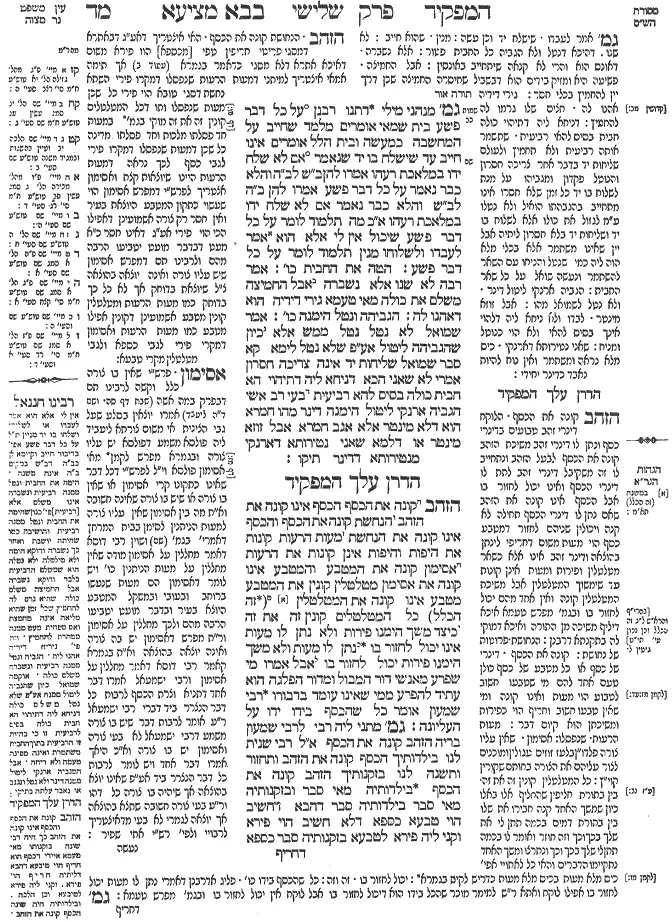
Bava Metzia 44a - Guemara
גמ׳ מנהני מילי דתנו רבנן (שמות כב, ח) על כל דבר פשע בית שמאי אומרים מלמד שחייב על המחשבה כמעשה ובית הלל אומרים אינו חייב עד שישלח בו יד שנאמר (שמות כב, ז) אם לא שלח ידו במלאכת רעהו אמרו להן ב"ש לב"ה והלא כבר נאמר על כל דבר פשע אמרו להן ב"ה לב"ש והלא כבר נאמר אם לא שלח ידו במלאכת רעהו א"כ מה תלמוד לומר על כל דבר פשע שיכול אין לי אלא הוא אמר לעבדו ולשלוחו מנין תלמוד לומר על כל דבר פשע:
הטה את החבית כו':
אמר רבה לא שנו אלא נשברה אבל החמיצה משלם את כולה מאי טעמא גירי דידיה הוא דאהנו לה:
הגביהה ונטל הימנה כו':
אמר שמואל לא נטל נטל ממש אלא כיון שהגביהה ליטול אע"פ שלא נטל לימא קא סבר שמואל שליחות יד אינה צריכה חסרון אמרי לא שאני הכא דניחא ליה דתיהוי הא חבית כולה בסיס להא רביעית בעי רב אשי הגביה ארנקי ליטול הימנה דינר מהו חמרא הוא דלא מינטר אלא אגב חמרא אבל זוזא מינטר או דלמא שאני נטירותא דארנקי מנטירותא דדינר תיקו:
הדרן עלך המפקיד
מתני׳ הזהב קונה את הכסף הכסף אינו קונה את הזהב הנחשת קונה את הכסף והכסף אינו קונה את הנחשת מעות הרעות קונות את היפות והיפות אינן קונות את הרעות אסימון קונה את המטבע והמטבע אינו קונה את אסימון מטלטלין קונין את המטבע מטבע אינו קונה את המטלטלין (זה הכלל) כל המטלטלים קונין זה את זה כיצד משך הימנו פירות ולא נתן לו מעות אינו יכול לחזור בו נתן לו מעות ולא משך הימנו פירות יכול לחזור בו אבל אמרו מי שפרע מאנשי דור המבול ומדור הפלגה הוא עתיד להפרע ממי שאינו עומד בדבורו רבי שמעון אומר כל שהכסף בידו ידו על העליונה:
גמ׳ מתני ליה רבי לרבי שמעון בריה הזהב קונה את הכסף א"ל רבי שנית לנו בילדותיך הכסף קונה את הזהב ותחזור ותשנה לנו בזקנותיך הזהב קונה את הכסף בילדותיה מאי סבר ובזקנותיה מאי סבר בילדותיה סבר דהבא דחשיב הוי טבעא כספא דלא חשיב הוי פירא וקני ליה פירא לטבעא בזקנותיה סבר כספא
Comments from Rashi on Masechet Bava Metzia Page 44a
גמ' אמר לעבדו . שישלח יד וכן עשה: מנין . שהוא חייב: לא שנו . דהיכא דנטל ולא הגביה כל החבית פטור: אלא נשברה . דאונס הוא והרי לא קנאה שיתחייב באונסין: אבל החמיצה . פשיעה היא ומזיק בידים הוא דבשביל שחיסרה החמיצה שכן דרך יין להחמיץ בכלי חסר: גירי דידיה אהנו לה . חצים שלו גרמו לה להחמיץ: דניחא ליה דתיהוי כולה חבית בסיס להאי רביעית . שתשמר אותה רביעית ולא תחמיץ ולעולם שליחות יד בדבר אחר צריכה חסרון והנוטל פקדון ומגביהו על מנת לשלוח בו יד כל זמן שלא חסרו אינו מתחייב בהגבהתו הואיל ולא נטלו ע"מ לגזול את כולו אלא לשלוח בו יד ושליחות יד בלא חסרון ליתיה אבל יין שאינו משתמר אלא בכלי מלא הוה ליה כמי שנטל והניחו עם השאר להשתמר ונעשה שואל על כל שאר החבית: הגביה ארנקי ליטול דינר . ולא נטל לשמואל מהו: אבל זוזא מינטר . לבדו ולא ניחא ליה דלהוי אינך בסיס להאי ולא הוי כנוטל ומניח: שאני נטירותא דארנקי . כיס מלא נראה ומשתמר ואין נוח להיות נאבד כדינר יחידי: מתני' הזהב קונה את הכסף . הלוקח דינרי זהב טבועים בדינרי כסף ונתן לו דינרי זהב משיכת הזהב קונה את הכסף לבעל הזהב ונתחייב לו זה משקיבל דינרי זהב לתת לו דינרי הכסף ואינו יכול לחזור בו אבל הכסף אינו קונה את הזהב שאם נתן לו דינרי הכסף תחילה לא קנה ויכולין שניהם לחזור דמטבע כסף הוי מעות משום דחריפי לינתן בהוצאה ודינר זהב אינו אלא כשאר מטלטלין ופירות ומעות אינן קונות עד שימשוך המטלטלין אבל משיכת המטלטלין קונה ואין אחד מהם יכול לחזור בו ובגמ' מפרש טעמא איכא דיליף משיכה מן התורה ואיכא דמוקי לה בתקנתא דרבנן: הנחושת . פרוטות של נחושת: קונה את הכסף . דינרי של כסף או כל מטבע של כסף כולן טעם אחד להם מי שטבעו חשוב לטבוע הוי מעות ואינו קונה ומי שאין טבעו חשוב וחריף הוי כפירות ומשיכתן הוא קיום דבר: מעות הרעות . שנפסלו: אסימון . שאין עליו צורה פלדו"ן בלעז זוזים עגולין ומוכנים לצור עליהם את הצורה בחותם שקורין קוי"ץ: כל המטלטלין קונין זה את זה . בין בתורת חליפין שהחליף אלו באלו כיון שמשך האחד קנה חבירו את שלו בין בתורת דמים בכמה תתן לי את שלך בכך וכך וזה חוזר ואומר לו בכמה תתן לי שלך בכך וכך ונתרצו ומשך האחד נתקיימו הדברים והאי כל לאתויי אפי' כיס מלא מעות בכיס מלא מעות כדריש לקיש בגמרא: יכול לחזור בו . זה וזה: כל שהכסף בידו כו' . פליג אדרבנן דאמרי נתן לו מעות יכול לחזור בו אפילו לוקח ואתא ר"ש למימר מוכר שהכל בידו הוא דיכול לחזור בו אבל לוקח אין יכול לחזור בו ובגמ' מפרש טעמא:
Comments from Tosafot - Bava Metzia 44a
מתני' הזהב . הנחושת קונה את הכסף. האי איצטריך דאע"ג דבאתרא דמסגי פריטי חריפין טפי [מכספא] הוו פירא משום דאיכא אתרא דלא מסגי כדאמר בגמרא (עמוד ב) אך תימה אמאי איצטריך למיתני דמעות הרעות שנפסלו דמקרו פירי השתא נחשת דסגי טובא הוי פירי כל שכן מעות שנפסלו ותו דכל המטלטלים קונין זה את זה מוקי בגמ'. במעות חד פסלתו מלכות וחד פסלתו מדינה כל שכן דמעות שנפסלו דמקרו פירי לגבי כסף לכך נראה דמעות הרעות היינו שיוצאות קצת ואסימון אצטריך לפרש"י דמפרש אסימון הוי שעשוי כתקון המטבע היוצאת בעיר ואין חסר רק צורה אשמועינן דאפילו הכי הוי פירי אע"ג דאינו חסר כ"א מעט דבדבר מועט יטביעו הרבה מהם ולרבינו תם דמפרש אסימון שיש עליו צורה ואינה יוצאה בהוצאה צ"ל שיוצאת בדוחק אך לא כל כך בדוחק כמו מעות הרעות ומטלטלין קונין מטבע אשמועינן דקונין אפילו מטבע כמו מעות הרעות ואסימון דמקרי פירי לגבי כספא ולגבי מטלטלין מקרי טבעא: אסימון . פרש"י שאין בו צורה כלל וקשה לרבינו תם דבפרק במה אשה (שבת דף סה. ושם ד"ה ליעבד) אמרו יוצאין בסלע שעל גבי הציצית אי משום צורתא ליעביד ליה פולסא משמע דפולסא יש עליו צורה ובגמרא מפרש לקמן מאי אסימון פולסא וי"ל לפרש"י דכל דבר שאינו כתקונו קרי אסימון או שאין בו צורה או שיש בו צורה שאינה חשובה וא"ת מה בין אסימון שאין עליו צורה למעות הניתנין לסימן בבית המרחץ דאמרי' בגמ' (שם) ושוין רבי דוסא דאמר מחללין על אסימון מודה שאין מחללין על מעות הניתנין כו' ויש לומר דאסימון הם מעות שנעשו ברוחב ובעובי ובמשקל המטבע היוצא בעיר ובדבר מועט יטביעו הרבה מהם ולכך מחללין על אסימון ור"ת מפרש דאסימון יש בה צורה ואינה יוצאה בהוצאה וא"ת בגמרא קאמר רבי דוסא דאמר מחללין על אסימון ורבי ישמעאל אמרו דבר אחד דתניא וצרת הכסף לרבות כל דבר הנצרר ביד דברי רבי ישמעאל ר"ע אומר לרבות דבר שיש בו צורה משמע דרבי ישמעאל לא בעי צורה ואסימון יש בו צורה וא"כ היאך אמרו דבר אחד ויש לומר לרבות כל דבר הנצרר ביד אע"פ שאינו יוצא בהוצאה אך שיהיה בו צורה כל דהו ור"ע בעי צורה חשובה שתצא בהוצאה אך יוצאה לגמרי לא בעי מדאיצטריך לרבויי ולפי' רש"י אתי שפיר:
Bava Metzia 44a - Mishnah translated into english
GEMARA: From where are these matters derived, that one is liable to pay for intent to misappropriate a deposit? It is as the Sages taught: It is written with regard to misappropriation: “For every matter of [devar] trespass” (Exodus 22:8). Beit Shammai say: The term devar, literally, word, teaches that one is liable to pay for a thought of misappropriation just as he is for an action. One pays for a matter of trespass even if there is no actual trespass. And Beit Hillel say: He is liable to pay only if he actually misappropriates the deposit, as it is stated: “Whether he has misappropriated his neighbor’s goods” (Exodus 22:7). Beit Shammai said to Beit Hillel: But isn’t it already stated: “For every matter of trespass”? Beit Hillel said to Beit Shammai: But isn’t it already stated: “Whether he has misappropriated his neighbor’s goods”?
If so, what is the meaning when the verse states “for every matter of trespass”? One might have thought: I have derived only that one is liable to pay if he misappropriated the deposit himself, but if he said to his slave or to his agent to misappropriate the deposit in his possession, from where is it derived that he is liable to pay due to their actions? The verse states: “For every matter of trespass,” from which it is derived that one’s speech renders him liable to pay for any misappropriation.
§ The mishna teaches: If he tilted the deposited barrel, he is liable to pay only for the wine that he took. Rabba says: The Sages taught this halakha only if the barrel broke. But if the wine in the barrel fermented and spoiled, he pays for the entire barrel. The Gemara asks: What is the reason for this ruling? He is liable because it was his arrows, i.e., his actions, that were effective in spoiling the wine. Although he took only a quarter-log, the wine fermented and turned rancid as a result of his opening the cask.
§ The mishna teaches: If one lifted the barrel and took from it a quarter-log of wine, he pays the value of the entire barrel. Shmuel says: When the tanna said: And took from it, it is not that he actually took the wine from the barrel. Rather, once he lifted it in order to take wine from it, although he did not yet take wine from it, if it breaks, he is liable to pay.
The Gemara asks: Shall we say that Shmuel holds that misappropriation does not require loss? The Sages say: No, do not draw that conclusion. It is different here, since it is preferable for the bailee that all the wine in this barrel will serve as a base for that quarter-log. Although his intent was to take a small amount of wine, since that small amount is better preserved within the full barrel of wine, it is as though he took the entire barrel.
Rav Ashi raises a dilemma based on that explanation: If one lifts a purse in order to take from it a single dinar, what is the halakha? Is it only with regard to wine, which is preserved only by means of the wine in the barrel, that if one intends to take a quarter-log, it is as though he intended to take all of the wine in the barrel, but with regard to a dinar, which is preserved even alone, intent to take one dinar does not indicate intent to take all of the coins in the purse? Or, perhaps safeguarding a purse is different from safeguarding a dinar. A single coin is easily lost, whereas a purse is not, as it is more easily safeguarded. Therefore, when the bailee intends to take one dinar, he intends to take all of the coins in the purse. The Gemara concludes: The dilemma shall stand unresolved.
MISHNA: There is a halakhic principle that when one purchases an item, the payment of the money does not effect the transaction. The transaction is effected only by means of the buyer’s physically taking the item into his possession, e.g., by pulling the item. Payment of money by the buyer creates only a moral obligation for the seller to sell him the item. When two types of currency are exchanged for each other, one of the types will have the status of the money being paid, and the other will have the status of the item being purchased. Handing over the former will not effect the transaction, while handing over the latter will. The mishna teaches: When one purchases gold coins, paying with silver coins, the gold coins assume the status of the purchased item and the silver coins assume the status of money. Therefore, when one party takes possession of the gold coins, the other party acquires the silver coins. But when one party takes possession of the silver coins, the other party does not acquire the gold coins.
In an exchange of silver coins for copper coins, when one party takes possession of the copper coins, the other party acquires the silver coins. But when one party takes possession of the silver coins, the other party does not acquire the copper coins. In an exchange of flawed coins for unflawed coins, when one party takes possession of the flawed coins, the other party acquires the unflawed coins. But when one party takes possession of the unflawed coins, the other party does not acquire the flawed coins.
In an exchange of an unminted coin for a minted coin, when one party takes possession of an unminted coin [asimon], the other party acquires a minted coin. But when one party takes possession of a minted coin, the other party does not acquire an unminted coin. In an exchange of a coin for movable property, when one party takes possession of the movable property the other party acquires the coin. But when one party takes possession of the coin, the other party does not acquire the movable property.
This is the principle: With regard to those who exchange all forms of movable property, each acquires the property of the other, i.e., the moment that one of the parties to the exchange takes possession of the item that he is acquiring, e.g., by means of pulling, the other party acquires the item from the first party. How so? If the buyer pulled produce from the seller, but the buyer did not yet give the seller their value in money, he cannot renege on the transaction, but if the buyer gave the seller money but did not yet pull produce from him, he can renege on the transaction, as the transaction is not yet complete.
But with regard to the latter case, the Sages said: He Who exacted payment from the people of the generation of the flood, and from the generation of the dispersion, i.e., that of the Tower of Babel, will in the future exact payment from whoever does not stand by his statement. Just as the people of those generations were not punished by an earthly court but were subjected to divine punishment, so too, although no earthly court can compel the person who reneged to complete the transaction, punishment will be exacted at the hand of Heaven for any damage that he caused.
Rabbi Shimon says: Anyone who has the money in his possession has the advantage. The Sages said it is only with regard to the seller that payment of money does not effect a transaction, so that if the buyer paid for the item and did not yet take possession of the purchase item, the seller can renege on the sale and return the money. By contrast, once the buyer paid for the item he cannot renege on his decision and demand return of his money, even if he did not yet take possession of the purchase item.
GEMARA: Rabbi Yehuda HaNasi would teach Rabbi Shimon, his son: When one party takes possession of the gold coins, the other party acquires the silver coins, consistent with the mishna. Rabbi Shimon said to him: My teacher, you taught us in your youth, in the first version of the mishna: When one party takes possession of the silver coins, the other party acquires the gold coins, and do you then teach us in your old age: When one party takes possession of the gold coins, the other party acquires the silver coins?
The Gemara asks: In his youth, what did Rabbi Yehuda HaNasi hold, and in his maturity, what did he hold? What is the basis for his original opinion, and what led him to change his mind? The Gemara explains: In his youth he held: Gold coins, which are more valuable, are currency; silver coins, which are relatively not valuable, are a commodity, i.e., the purchase item. The principle is: When one party takes possession of a commodity the other party acquires the currency. In his old age, he held: Silver coins,
Traduction : The William Davidson digital edition of the Koren Noé Talmud, with commentary by Rabbi Adin Even-Israel Steinsaltz.