 Talmud Bavli
Bava Metzia 103a : Youtube
Daf TubeYoutube
1 video class :
Bava Metzia Page 103a
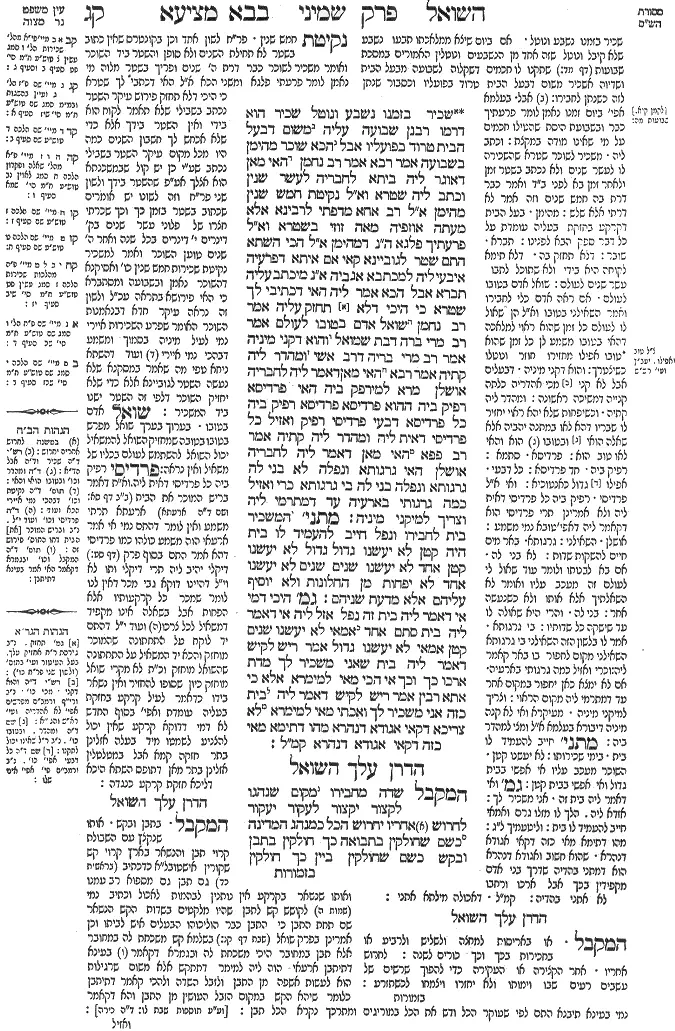
Bava Metzia 103a - Guemara
שכיר בזמנו נשבע ונוטל שכיר הוא דרמו רבנן שבועה עליה משום דבעל הבית טרוד בפועליו אבל הכא שוכר מהימן בשבועה אמר רבא אמר רב נחמן האי מאן דאוגר ליה ביתא לחבריה לעשר שנין וכתב ליה שטרא וא"ל נקיטת חמש שנין מהימן א"ל רב אחא מדפתי לרבינא אלא מעתה אוזפיה מאה זוזי בשטרא וא"ל פרעתיך פלגא ה"נ דמהימן א"ל הכי השתא התם שטר לגוביינא קאי אם איתא דפרעיה איבעי ליה למכתבא אגביה א"נ מיכתב עליה תברא אבל הכא אמר ליה האי דכתיבי לך שטרא כי היכי דלא תחזק עליה אמר רב נחמן שואל אדם בטובו לעולם אמר רב מרי ברה דבת שמואל והוא דקני מיניה אמר רב מרי בריה דרב אשי ומהדר ליה קתיה אמר רבא האי מאן דאמר ליה לחבריה אושלן מרא למירפק ביה האי פרדיסא רפיק ביה ההוא פרדיסא פרדיסא רפיק ביה כל פרדיסא דבעי פרדיסי רפיק ואזיל כל פרדיסי דאית ליה ומהדר ליה קתיה אמר רב פפא האי מאן דאמר ליה לחבריה אושלן האי גרגותא ונפלה לא בני לה גרגותא ונפלה בני לה בי גרגותא כרי ואזיל כמה גרגותי בארעיה עד דמתרמי ליה וצריך למיקני מיניה:
מתני׳ המשכיר בית לחבירו ונפל חייב להעמיד לו בית היה קטן לא יעשנו גדול גדול לא יעשנו קטן אחד לא יעשנו שנים שנים לא יעשנו אחד לא יפחות מן החלונות ולא יוסיף עליהם אלא מדעת שניהם:
גמ׳ היכי דמי אי דאמר ליה בית זה נפל אזל ליה אי דאמר ליה בית סתם אחד אמאי לא יעשנו שנים קטן אמאי לא יעשנו גדול אמר ריש לקיש דאמר ליה בית שאני משכיר לך מדת ארכו כך וכך אי הכי מאי למימרא אלא כי אתא רבין אמר ריש לקיש דאמר ליה בית כזה אני משכיר לך ואכתי מאי למימרא לא צריכא דקאי אגודא דנהרא מהו דתימא מאי כזה דקאי אגודא דנהרא קמ"ל:
הדרן עלך השואל
מתני׳ המקבל שדה מחבירו מקום שנהגו לקצור יקצור לעקור יעקור לחרוש אחריו יחרוש הכל כמנהג המדינה כשם שחולקין בתבואה כך חולקין בתבן ובקש כשם שחולקין ביין כך חולקין
Comments from Rashi on Masechet Bava Metzia Page 103a
שכיר בזמנו נשבע ונוטל . אם ביום שיצא ממלאכתו תבעו נשבע שלא קיבל ונוטל שזה אחד מן הנשבעים ונוטלין האמורים במסכת שבועות (דף מד:) שתקנו לו חכמים דשקלוה לשבועה מבעל הבית ושדיוה אשכיר משום דבעל הבית טרוד בפועליו וכסבור שנתן לזה כשנתן לחבירו: אבל . בעלמא אפי' ביום זמנו נאמן לומר פרעתיך כבר ובשבועת היסת שהטילו חכמים על מי שאינו מודה במקצת: וכתב ליה . משכיר לשוכר שטרא שהשכירה לו לעשר שנים ולא נכתב בשטר זמן ולאחר זמן בא לפני ב"ד ואמר כבר דרת בה חמש שנים וזה אמר לא דרתי אלא שלש: מהימן . בעל הבית דקרקע בחזקת בעליה עומדת על כל דבר דבר ספק הבא לפנינו: תברא . שובר: דלא תחזק בה . דלא תימא לקוחה היא בידי. ולא שתוכל לתבוע עשר שנים לעולם: שואל אדם בטובו לעולם . אם ראה אדם כלי לחבירו ואמר השאילני בטובו וא"ל הן שאול לו לעולם כל זמן שהוא ראוי למלאכה דהאי בטובו משמע לן כל זמן שהוא טובו אפילו מחזירו חוזר ונוטלו כשיצטרך: והוא דקני מיניה . דבעלים אבל לא קני מכי אהדריה כלתה קנייה דמשיכה ראשונה: ומהדר ליה קתיה . וכשיפחות שלא יהא ראוי יחזיר לו שבריו דהא לאו במתנה יהביה אלא שאלה הואי ובטובו הוא והאי לאו טוב הוא: פרדיסא . סתמא: רפיק ביה . חד פרדיסא: כל דבעי . אפילו גדול כאנטוכיא: ואי א"ל פרדיסי . רפיק ביה כל פרדיסי דאית ליה ולא אמרינן תרי פרדיסי הוא דקאמר ליה דאפי' טובא נמי משמע: אושלן . השאילני: גרגותא . באר מים חיים להשקות שדות: לא בני לה . אם בא לבנותו ולומר עוד שאול לי לעולם זה מעכב עליו ואומר לא השאלתיך אלא אותו ולא כשנעשה אחר: בני לה . והרי היא שאולה לו עד שישקה כל שדותיו: בי גרגותא . אמר לו בלשון הזה השאילני בי גרגותא השאילני מקום לחפור בו באר קאמר ליה: וכרי ואזיל כמה גרגותי בארעיה . אם לא ימצא כאן יחפור במקום אחר עד דמתרמי ליה מקום הראוי: וצריך למיקני מיניה . מעיקרא ואי לא קנה מיניה דיבורא בעלמא א"ל ומצי למהדר ביה: מתני' חייב להעמיד לו בית . בימי שכירותו: לא יעשנו קטן . השוכר מעכב עליו אי אפשי בבית גדול ואי אפשי בבית קטן: גמ' ואי דאמר ליה בית זה . אני משכיר לך: אזדא ליה . הלך לו מזלו גרם ואמאי חייב להעמיד לו בית: וליטעמיך ל"ג: מהו דתימא מאי כזה דקאי אגודא דנהרא . שהוא חשוב ואגודא דנהרא הוא דמתני בהדיה שדרך בני אדם מקפידין בכך אבל ארכו ורחבו לא אתני בהדיה: קמ"ל . דאכולה מילתא אתני: מתני' המקבל . או באריסות למחצה ולשליש ולרביע או בחכירות בכך וכך. כורים לשנה: לחרוש אחריו . אחר הקצירה או העקירה כדי להפוך שרשים של עשבים רעים שבו וימותו ולא יחזרו ויצמחו לכשתזרע:
Comments from Tosafot - Bava Metzia 103a
נקיטת חמש שנין . פר"ח לשון אחד וכן בקונטרס שאין כתוב בשטר לא תחילת השנים ולא סופן והשטר ביד השוכר ואומר משכיר לשוכר כבר דרת ה' שנים ופריך בשטר מלוה מי נאמן לומר פרעתי פלגא ומשני הכא א"ל האי דכתבי לך שטרא כי היכי דלא תחזק פירוש עיקר השטר נכתב בשבילי שלא תאמר לקוח הוא בידי ואין השטר בידך אלא כדי שלא אכחש לך חשבון השנים כמה היו מכל מקום עיקר השטר בשבילי נכתב שע"י כן יש קול שבמשכנתא הוא אצלך אע"פ שהשטר בידך ולשון שני פר"ח וזה לשונו יש אומרים שכתוב בשטר בזמן כך וכך שכרתי חצרו של פלוני עשר שנים בק' דינרים י' דינרים בכל שנה ואחר ה' שנים טוען השוכר ואמר למשכיר נקיטת שכירות חמש שנין כו' ואסיקנא דהשוכר נאמן ובשבועה ומסתברא כי האי פירושא בתראה עכ"ל ולשון זה נראה עיקר חדא דבנאמנות השוכר האומר שפרע השכירות איירי נמי לעיל מיניה בסמוך ומשמע דבהכי נמי איירי ועוד דהשתא ניחא טפי מה שאמר במסקנא שלא נעשה השטר לגוביינא אלא כדי שלא יחזיק השוכר דלפי זה השטר ישנו ביד המשכיר: שואל אדם בטובו . בערוך בערך. שואל מפרש בטובו בטובה שמחזיק השואל להמשאיל יכול השואל להשתמש לעולם בכליו של משאיל ואין נראה: פרדיסי רפיק ביה כל פרדיסי דאית ליה . וא"ת דאמר בריש המוכר את הבית (ב"ב דף סא ושם ד"ה ארעתא) ארעתא תרתי משמע ואין לומר דהתם נמי אי אמר ארעאי הוה משמע כולהו כמו פרדיסי דהא אמר התם בסוף פרק (דף סט:) דיקלי יהיב ליה תרי דיקלי ותו לא וי"ל דהיינו דוקא גבי מכר דאין לנו לומר שמכר כל קרקעותיו אלא הפחות אבל בשאלה אינו מקפיד דמשאיל לכל צרכו ועוד י"ל דהתם יד לוקח על התחתונה שהמוכר מוחזק והכא יד המשאיל על התחתונה שהשואל מוחזק וכ"ת לא מקרי שואל מוחזק כיון שסופו להחזיר ואין נשאר בידו כדאמר לעיל קרקע בחזקת בעליה עומדת ואפי' בסוף החדש לא דמי דדוקא קרקע שאין יכול להצניע לשמטו מיד בעלה אזלינן בתר חזקה קמא אבל במטלטלין אזלינן בתר מאן דתופס השתא היכא דליכא חזקת קרקע כנגדה: מתני' המקבל. בתבן ובקש . אותו שנקצץ עם השבולת קרוי תבן והנשאר בארץ קרוי קש שקורין אישטובל"א כדכתיב (בראשית כד) גם תבן גם מספוא רב עמנו ואותו שנשאר בקרקע אין נותנין לבהמות לאכול וכתיב נמי (שמות ה) לקושש קש לתבן שהיו מלקטים בשדות הקש הנשאר שם תחת התבן כי התבן כבר הוליכוהו הבעלים איש לביתו וכן אמרינן בפרק שואל (שבת דף קנ:) בשלמא קש משכחת לה במחובר אלא תבן במחובר היכי משכחת לה ובגמרא דקאמר בעינא דתיתבן ארעאי הוה ליה למימר דתתקש אלא משום שרגילות הוא לעשות אשפה מן התבן ולזבל השדה ולהכי קאמר דתיתבן כלומר שיהא הקש במקום הזבל העושין מן התבן והא דקאמר נמי בעינא תיבנא התם לפי שעוקר הכל ודש את הכל במוריגים ומתרכך נקרא הכל תבן [וע"ע תוספות שבת לו: ד"ה כירה]:
Bava Metzia 103a - Mishnah translated into english
If a hired laborer claims his wages at the proper time, on the day his wages are due, and the employer claims to have already paid him, the laborer takes an oath that he did not receive his wages and takes his wages. So too, in the case of rent, if the landlord demands payment, and the renter claims to have paid, the landlord should be able to take an oath and then take the payment.
The Gemara explains: Generally, one takes an oath to exempt oneself from paying, not to collect. And it is specifically in the case of a hired laborer that the Sages imposed an oath upon him, due to the fact that the employer is busy with his workers and might mistakenly think he paid a particular worker when in fact he had paid a different one. But here, in the case of rent, where there is no such concern, the renter is deemed credible that he already paid the rent, provided that he takes an oath.
§ Rava says that Rav Naḥman says: In the case of one who rented out a house to another for ten years and had written him an undated document attesting to that fact, and later the landlord said to the renter: You have already taken five years of your rental period, he is deemed credible. The burden of proof is not on the landlord, and the renter cannot use the document to demonstrate that he has a right to rent for ten more years. Rav Aḥa of Difti said to Ravina: If that is so, then if one lent a hundred dinars to another, with a promissory note, and later, the borrower said to him: I have already repaid you half the loan, so too should he be deemed credible? This is not the halakha.
Ravina said to him: How can these cases be compared? There, in the case of the loan, the promissory note exists to allow the lender to collect the debt, and if it is so that the borrower repaid part of the debt, the lender should have written that fact on the note itself; alternatively, he could have written a receipt to enable the borrower to prove he had paid. But here, in the case of rent, the landlord could say to the renter: The fact that I wrote the document for your rental of the property was only in order to ensure that you would not be able to establish a presumptive ownership of the property and thereby be able to claim it belongs to you. Therefore, the bill cannot be used to prove that the renter has a right to occupy the property.
§ Rav Naḥman says: A person may borrow another’s utensil in its good working order forever, i.e., if he requests to borrow it as long as it is in good working order, then even after returning it to the owner, he may continue to take it and use it indefinitely and the owner cannot prevent him from doing so.
Rav Mari, son of the daughter of Shmuel, said: And that is only if he performed an act of acquisition concerning this right with the owner. Otherwise, once he returns the utensil to the owner, he can no longer borrow it again without his consent.
Rav Mari, son of Rav Ashi, said: And if the utensil breaks, the borrower may no longer keep it but must return its handle, i.e., the remaining parts, to the owner.
Rava says: In the case of one who says to another: Lend me a hoe in order to dig up this orchard, he may use it only to dig up that orchard that he specified. If he said: Lend it to me to dig up an orchard, then he may use it to dig up any one orchard that he desires. If he said: Lend it to me to dig up orchards, then he may use it to dig up all the orchards he has, however numerous they are. And in all these cases, if it breaks, he must return its handle, i.e., the remaining parts, to the owner.
Rav Pappa says: In the case of one who says to another: Lend me this well for me to use to irrigate my fields, and then its walls fell down, the borrower may not rebuild it and then use it, as he had specified that he was borrowing that particular well. If he said: Lend me a well, and then its walls fell down, the borrower may rebuild that well and use it, but may not take a different well. If he said: Lend me a place in your land for a well, he may continually dig many different wells in the lender’s land until he happens upon a water source that is suitable for his needs. But in order to have this indefinite right, he needs to perform an act of acquisition concerning this right with the owner.
MISHNA: In the case of one who rented out a house to another, and then the house fell, the landlord is obligated to provide the renter with another house. If the original house was small, the landlord may not construct a large house as a replacement, and if the original was large, he may not construct a small house as a replacement. If the original had one room, he may not construct the replacement with two rooms, and if the original had two rooms, he may not construct the replacement with one. He may not reduce the number of windows, nor add to them, except with the agreement of both of them.
GEMARA: What are the circumstances of the mishna’s case? If it is a case where the landlord said to the renter: I am renting this house to you, once it has fallen, it has gone and the rental agreement does not obligate the landlord to provide another one. If it is a case where the landlord said to him: I am renting a house to you, without specification, then even if the original house had one room, why may the landlord not construct its replacement with two rooms, and if the original was small, why may the landlord not construct a large house as a replacement?
Reish Lakish said: The case is where he said to him: The house that I am renting to you, the measurement of its length is such and such, and its width is such and such. Since he did not specify a specific house, he is obligated to provide a replacement, but it must be of a similar size and structure.
The Gemara asks: If that is so, what is the purpose of stating this ruling; it is obvious?
Rather, when Ravin came, he said that Reish Lakish said: The case is where he said: I am renting to you a house like this. The Gemara persists: But still, what is the purpose of stating this ruling; it is obvious. The Gemara answers: No, the ruling is necessary where the house the landlord spoke of was standing on the bank of a river. Lest you say that what the landlord meant by saying: A house like this, was that he would provide the renter with a house that stands on the bank of a river, therefore, the mishna teaches us that if he uses such an expression, it is taken to refer to the dimensions and structure of the house.
MISHNA: With regard to one who receives a field from another to cultivate, either as a tenant farmer, who, in exchange for the right to farm the land, gives a set amount of the produce to the owner, or as a sharecropper, who cultivates the land and receives a set proportion of the produce, the halakha is as follows: In a location where those cultivating the land were accustomed to cut the produce, this one must cut it as well. In a location where they were accustomed to uproot the produce, not to cut it with a sickle or a scythe, this one must uproot it as well. If they were accustomed to plow the land after harvesting the produce, this one must plow as well. All farming of the land shall be conducted in accordance with regional custom. Just as the halakha is that the owner of the field and the one cultivating it divide the produce, so too the halakha is that they divide the stubble and the straw. Just as the halakha is that the owner of the field and the one cultivating it divide the wine, so too the halakha is that they divide
Traduction : The William Davidson digital edition of the Koren Noé Talmud, with commentary by Rabbi Adin Even-Israel Steinsaltz.