 Talmud Bavli
The learning on the whole site is dedicated : L'ilui Nishmat Margalit bat Ledicia
The learning on the whole site is dedicated : L'ilui Nishmat Nissim ben Barukh Malka
The learning on the whole site is dedicated : L'ilui Nishmat Jamila bat Chlomo Abensour
Bava Metzia 118a : Youtube
Daf TubeYoutube
1 video class :
Bava Metzia Page 118a
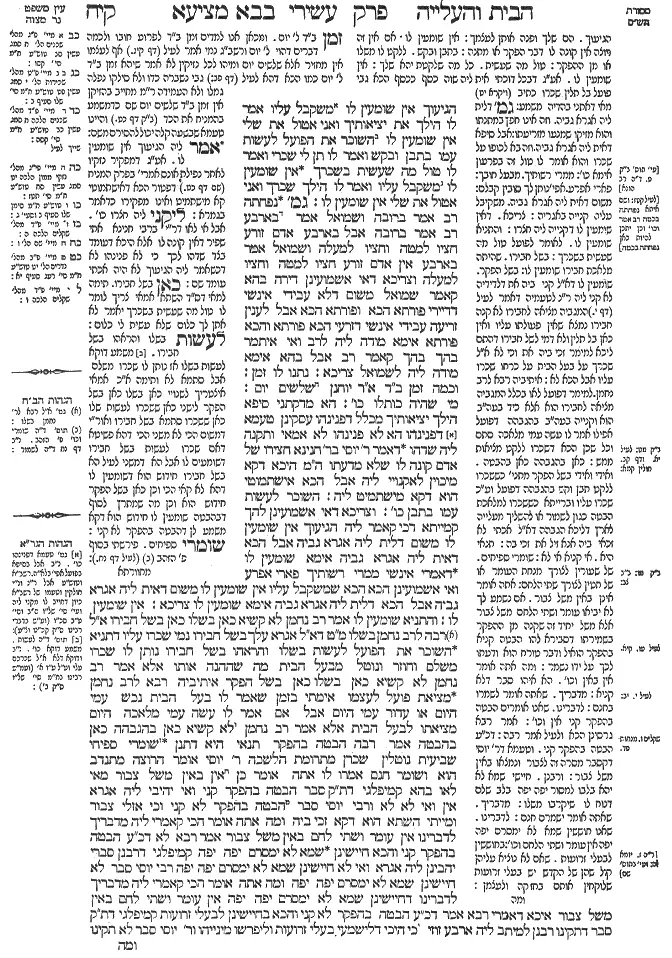
Bava Metzia 118a - Guemara
הגיעוך אין שומעין לו משקבל עליו אמר לו הילך את יציאותיך ואני אטול את שלי אין שומעין לו השוכר את הפועל לעשות עמו בתבן ובקש ואמר לו תן לי שכרי ואמר לו טול מה שעשית בשכרך אין שומעין לו משקבל עליו ואמר לו הילך שכרך ואני אטול את שלי אין שומעין לו:
גמ׳ נפחתה רב אמר ברובה ושמואל אמר בארבע רב אמר ברובה אבל בארבע אדם זורע חציו למטה וחציו למעלה ושמואל אמר בארבע אין אדם זורע חציו למטה וחציו למעלה וצריכא דאי אשמועינן דירה בהא קאמר שמואל משום דלא עבידי אינשי דדיירי פורתא הכא ופורתא הכא אבל לענין זריעה עבידי אינשי דזרעי הכא פורתא והכא פורתא אימא מודה ליה לרב ואי איתמר בהך בהך קאמר רב אבל בהא אימא מודה ליה לשמואל צריכא:
נתנו לו זמן:
וכמה זמן ב"ד א"ר יוחנן שלשים יום:
מי שהיה כותלו כו':
הא מדקתני סיפא הילך יציאותיך מכלל דפנינהו עסקינן טעמא דפנינהו הא לא פנינהו לא אמאי ותקנה ליה שדהו דאמר ר' יוסי בר' חנינא חצירו של אדם קונה לו שלא מדעתו ה"מ היכא דקא מיכוין לאקנויי ליה אבל הכא אישתמוטי הוא דקא מישתמיט ליה:
השוכר לעשות עמו בתבן כו':
וצריכא דאי אשמועינן להך קמייתא דכי קאמר ליה הגיעוך אין שומעין לו משום דלית ליה אגרא גביה אבל הכא דאית ליה אגרא גביה אימא שומעין לו דאמרי אינשי ממרי רשותיך פארי אפרע ואי אשמועינן הכא הכא שמשקבל עליו אין שומעין לו משום דאית ליה אגרא גביה אבל הכא דלית ליה אגרא גביה אימא שומעין לו צריכא:
אין שומעין לו:
והתניא שומעין לו אמר רב נחמן לא קשיא כאן בשלו כאן בשל חבירו א"ל רבה לרב נחמן בשלו מ"ט דא"ל אגרא עלך בשל חבירו נמי שכרו עליו דתניא השוכר את הפועל לעשות בשלו והראהו בשל חבירו נותן לו שכרו משלם וחוזר ונוטל מבעל הבית מה שההנה אותו אלא אמר רב נחמן לא קשיא כאן בשלו כאן בשל הפקר איתיביה רבא לרב נחמן מציאת פועל לעצמו אימתי בזמן שאמר לו בעל הבית נכש עמי היום או עדור עמי היום אבל אם אמר לו עשה עמי מלאכה היום מציאתו לבעל הבית אלא אמר רב נחמן לא קשיא כאן בהגבהה כאן בהבטה אמר רבה הבטה בהפקר תנאי היא דתנן שומרי ספיחי שביעית נוטלין שכרן מתרומת הלשכה ר' יוסי אומר הרוצה מתנדב הוא ושומר חנם אמרו לו אתה אומר כן אין באין משל צבור מאי לאו בהא קמיפלגי דת"ק סבר הבטה בהפקר קני ואי יהיבי ליה אגרא אין ואי לא לא ורבי יוסי סבר הבטה בהפקר לא קני וכי אזלי צבור ומייתי השתא הוא דקא זכי ביה ומה אתה אומר הכי קאמרי ליה מדבריך לדברינו אין עומר ושתי לחם באין משל צבור אמר רבא לא דכ"ע הבטה בהפקר קני והכא חיישינן שמא לא ימסרם יפה יפה קמיפלגי דרבנן סברי יהבינן ליה אגרא ואי לא חיישינן שמא לא ימסרם יפה יפה רבי יוסי סבר לא חיישינן שמא לא ימסרם יפה יפה ומה אתה אומר הכי קאמרי ליה מדבריך לדברינו דחיישינן שמא לא ימסרם יפה יפה אין עומר ושתי לחם באין משל צבור איכא דאמרי רבא אמר דכ"ע הבטה בהפקר לא קני והכא בחיישינן לבעלי זרועות קמיפלגי דת"ק סבר דתקינו רבנן למיתב ליה ארבע זוזי כי היכי דלישמעי בעלי זרועות וליפרשו מינייהו ור' יוסי סבר לא תקינו
Comments from Rashi on Masechet Bava Metzia Page 118a
הגיעוך . הם שלך ופנה אותן לעצמך: אין שומעין לו . אם אין זה רוצה אין קונה לו דבר הפקר או מתנה: בתבן ובקש . ללקט לו משלו או מן ההפקר: טול מה שעשית . כל מה שלקטת יהא שלך: אין שומעין לו . אע"ג דבכל דוכתי אית ליה שוה כסף ככסף הכא גבי פועל בל תלין שכרו כתיב (ויקרא יט) מאי דאתני בהדיה משמע: גמ' דלית ליה אגרא גביה . וזה אינו חפץ במתנתו והוא מזיקו שמנעו מזריעתו: אבל סיפא דאית ליה אגרא גביה . וזה בא לכופו על שכרו והוא אומר לו טול זה בפרעון אימא כו': ממרי רשותיך . מבעל חובך: פארי אפרע . אפי' נותן לך סובין קבלם: משום דאית ליה אגרא גביה . משקיבל עליה קנייה באגריה: צריכא . דאין שומעין לו דקנייה ליה חצרו: והתניא שומעין לו . לאומר לפועל טול מה שעשית בשכרך: בשל חבירו . שהיתה מלאכת חבירו שומעין לו: בשל הפקר . שומעין לו דא"ל קני ביה את דלדידיה לא קני ליה ר"נ לטעמיה דאמר לעיל (בבא מציעא דף י.) המגביה מציאה לחבירו לא קנה חבירו נמצא שאין פעולתו עליו ואין כאן בל תלין ולא דמי לשל חבירו דהתם ליכא למימר זכי ביה את וכי לא א"ל שכרך על בעל הבית על כרחו שכרו עליו אבל הכא לא: איתיביה רבא לרב נחמן . למימר דפועל לאו בכלל המגביה מציאה לחבירו הוא אלא כיד בעה"ב הוא וקנייה בעה"ב בהגבהה דפועל אפילו אמר לו עשה עמי מלאכה סתם וכל שכן הכא דשכרו ללקט מציאות ממש: כאן בהגבהה כאן בהבטה . ואידי ואידי בשל הפקר מתני' כששכרו ללקט תבן וקש בהגבהה דפועל ועל כרחו שכרו עליו וברייתא כששכרו למלאכת הבטה כגון לשמור או להשליך מעלייה לארץ דליכא הגבהה דא"ל אכתי לא זכאי ביה אנא זיל את זכי בה: תנאי היא . אי קניא אי לא: שומרי ספיחים . של שעורין לצורך מנחת העומר או של חטין לצורך שתי הלחם: אתה אומר אינן באין משל צבור . אם נשמע לך לא יביאו עומר ושתי הלחם משל צבור אלא משל יחיד זה שקנה מן ההפקר בשמירתו דסבירא להו הבטה קניא בהפקר הואיל ודבר טורח הוא ודעתו לכך על ידו נשמר: ומה אתה אומר אין באין וכו' . הא איהו סבר דלא קניא: מדבריך . שאתה אומר לשמרו בחנם: לדברינו . שאנו אומרים הבטה בהפקר קני אין וכו': אמר רבא . גרסינן הכא ולעיל אמר רבה: דכ"ע הבטה בהפקר קני . וטעמא דר' יוסי דקסבר מסרה זה לצבור ונמצאו באין משל צבור: ורבנן . חיישי שמא לא יהא בלבו למסור יפה יפה בלב שלם דנוח לו שיקרבו משלו: מדבריך . שאתה אומר ישמרם חנם: לדברינו . שאנו חוששין שמא לא ימסרם יפה יפה אין עומר ושתי הלחם וכו': בחוששין לבעלי זרועות . שאם לא נוציא עליהן קול שהן של הקדש יש בעלי זרועות שלוקחין אותם בחזקה ולעצמן:
Comments from Tosafot - Bava Metzia 118a
אמר ליה הגיעוך אין שומעין לו . אע"ג דמפקיר נזקיו לאחר נפילת אונס אמרי' בפרק המניח (שם דף כט.) דפטור הכא דאישתמוטי קא מישתמיט ואינו מפקירו כדאמר בגמרא: זמן ב"ד ל' יום . ומכאן אנו למדים זמן ב"ד לפרוע חובו ולכמה דברים דהוי ל' יום ורשב"ג נמי אמר לעיל (בבא מציעא דף קיג.) אף לעצמו אין מחזיר אלא שלשים יום ומיהו לכל נזיקין לא אמר שיהא זמן ב"ד ל' יום כמו הכא דהא לעיל (בבא מציעא דף פב:) גבי נשברה כדו ולא סילקו נפלה גמלו ולא העמידה ר"מ מחייב בהזיקן אין זמן ב"ד שלשים יום שם כדמשמע בהמניח את הכד (ב"ק דף כט.) והיינו טעמא שבשעה קלה יכול להסירם משם: ליקני ליה חצרו כו' . אבל אי לאו דר"י ברבי חנינא אתי שפיר דאין קונה לו אלא היכא דעומד בצד שדהו לכך כי לא פנינהו לא דכשאמר ליה הגיעוך לא היה אכתי עומד שם: כאן בשל חבירו . תימה למאי דס"ד השתא אמאי צריך לומר לו טול מה שעשית בשכרך יאמר לא אתן לך כלום שלא עשית לי כלום: לעשות בשלו והראהו בשל חבירו . משמע דוקא לעשות בשלו אז נותן לו שכרו משלם אבל סתמא לא ותימה א"כ אמאי איצטריך לשנויי כאן בשלו כאן בשל הפקר לישני כאן ששכרו לעשות שלו כאן ששכרו סתמא בשל חבירו ואור"י דמשום הכי לא משני הכי דהא פשיטא דאם שכרו לעשות בשל חבירו דשומעים לו אבל הא דמשני לעיל הא בשל חבירו חידוש הוא דשומעין לו דהא לא קאי הכי וכן כאן בשל הפקר חידוש הוא וכן מה שמתרץ לסוף דבהבטה שומעין לו חידוש הוא דקא משמע לן דהבטה בהפקר לא קני: שומרי ספיחים . פירשתי בסוף פ' הזהב (לעיל בבא מציעא דף נח.):
Bava Metzia 118a - Mishnah translated into english
They are yours, as I hereby declare them ownerless, and you can take them for yourself; the court does not listen to him, since he cannot force the other to acquire the stones. If after the owner of the garden voluntarily accepted ownership of the stones upon himself, the owner of the wall said to him: Here you are, take your expenditures for the removal of the stones, and I will take the stones that are mine; the court does not listen to him, as they had already been acquired by the owner of the garden.
The mishna continues: In the case of one who hires a laborer to do work with him with hay or with straw, and after he finished the task, the laborer said to the employer: Give me my wages, and the employer said to him: Take what you have worked with as your wages, i.e., take some of the hay or straw as payment, the court does not listen to him. Although debts can be paid with any item of value, even hay or straw, the wages of a laborer must be paid in accordance with the initial agreement between the laborer and the employer. But if after the laborer accepted upon himself to keep the hay or straw as payment, the employer changed his mind and said to him: Here you are, take your wages and I will take what is mine; the court does not listen to him, since the laborer had already acquired the hay.
GEMARA: With regard to the case of the roof of the olive press that was broken, the Gemara cites a dispute with regard to the amount that collapsed: Rav says: Most of it must have collapsed, and Shmuel says: Even a hole of four handbreadths is sufficient for the ruling of the mishna to apply. Rav says: Most of it must have collapsed, but if it is only a hole of four handbreadths, there is no basis for a claim, since a person can sow partially on a level below, and partially on a level above. And Shmuel says: It is enough if it is a hole of four handbreadths, as a person cannot sow partially on a level below, and partially on a level above.
The Gemara comments: And it is necessary for the dispute between Rav and Shmuel to be stated both here and with regard to the case of an upper story of a house that collapsed (116b). As had the Gemara taught us only that they disagree with regard to a residence, one would have said: It is only in this case that Shmuel is saying his ruling, because people do not tend to live a little here and a little there, but with regard to sowing, people do tend to sow a little here and a little there. Therefore, one might say that he concedes to Rav in the case of the olive press. And if this dispute was stated only with regard to this case of the olive press, one would have said that it is only with regard to this case that Rav is saying his opinion, but with regard to that case involving the house, one might say that he concedes to Shmuel. Therefore, it is necessary to state that their dispute applies to both cases.
§ The mishna teaches: If the court saw that the wall was shaky, or that the tree was tilting, and they gave him time to cut down the tree or to dismantle the wall, and then they fell down, if this occurred during the allotted time, he is exempt, but if they collapsed after the time given to him had elapsed, he is liable to pay. The Gemara asks: And how much time will a court usually allot for this purpose? Rabbi Yoḥanan says: The standard period is thirty days.
§ The mishna teaches: In the case of one whose wall was located next to his friend’s garden and it fell, if the owner of the wall told the owner of the garden to keep the stones, he cannot retract. The Gemara comments: But from the fact that the last clause of the mishna teaches that if the owner of the fallen wall says: Here you are, take your expenditures, the court does not listen to him, it can be understood by inference that we are dealing with a case where the owner of the garden cleared away the stones. It can therefore be deduced that the reason the owner of the fallen wall cannot retract his offer is that the owner of the garden cleared them away, but if he did not clear them away, the stones are not considered his, and they remain in the possession of the owner of the wall.
The Gemara asks: Why do they remain in the possession of the owner of the wall? But shouldn’t the owner of the garden’s field effect acquisition of the stones on his behalf? As Rabbi Yosei, son of Rabbi Ḥanina, says: The courtyard of a person effects acquisition for him of those items that enter it, even without his knowledge.
The Gemara answers: This statement applies only in a case where the giver intends to transfer them to him, in which case the field can effect acquisition of the stones for the receiver without an additional act of acquisition, but here, the owner of the fallen wall is seeking only to evade the owner of the garden. He wants the owner of the garden to take care of the stones, at which point he can collect them from him without much effort on his part, and he does not intend to give the stones to him.
§ The mishna teaches: In the case of one who hires a laborer to do work with him with hay, the employer cannot force him to accept his wages in the form of some of the hay. The Gemara comments: And it is necessary to mention this halakha with regard to both cases.
As had it taught us only with regard to this first case of the stones that fell that when the owner of the fallen wall says to the owner of the garden: They are yours, the court does not listen to him, one would have said that this is the halakha because he does not have a wage owed by him, as they had no prior business dealings together, and the owner of the stones does not owe the owner of the garden anything. But here, in the case of a laborer working with hay, in which the laborer does have a wage owed by the employer, one might say that the court listens to him, as people say the following proverb: When collecting a debt from your debtor, allow yourself to be repaid even in bran [parei], i.e., take whatever you can as payment of a loan.
And had it taught us only over here with regard to the hay, one would have said that it is only here that after the laborer has already accepted ownership upon himself, the court does not listen to the employer who desires to retract, because the laborer has a wage owed by him, and therefore there is reason to say that he receives the hay. But here, with regard to the stones, where the owner of the garden does not have a wage owed by the owner of the fallen wall, one might say that the court listens to him and he can retract. It is therefore necessary for the mishna to teach both cases.
§ The mishna teaches that if an employer seeks to pay his laborer with straw, the court does not listen to him. The Gemara asks: But isn’t it taught in a baraita that the court does listen to him? The Gemara answers: Rav Naḥman said: This is not difficult. The ruling of the mishna here, that the court does not listen to him, is stated with regard to a case of work done with the employer’s own property. And the ruling of the baraita there, that the court does listen to him, is stated with regard to work done with the property of another, and there the employer’s request is accepted.
Rava said to Rav Naḥman: In a case where he is working with his own property, what is the reason that the court does not listen to him? As the laborer can say to the employer: The responsibility of paying my wage is on you. But if he was working with the property of his friend, the responsibility of paying his earnings is also on the employer, as it is taught in a baraita: With regard to one who hires a laborer to perform work in his own field, and the employer inadvertently showed the laborer the field belonging to another in which he should work, the employer must give the laborer his full wages, and in addition, the employer goes back and takes from the owner of the field in which he worked the value of the benefit that owner received from the laborer. The payment of the wages is incumbent upon the employer, not the owner of the field.
Rather, Rav Naḥman said a different explanation: It is not difficult. The ruling of the mishna here, that the court does not listen to him, is stated with regard to work done with the employer’s own property. And the ruling of the baraita there, that the court does listen to him, is stated with regard to work done with ownerless property, e.g., the employer hired him to gather ownerless hay, and later told him to keep some of the hay as his wages. In that case, he can force the laborer to accept the hay as payment.
Rava raised an objection to Rav Naḥman: It was taught in a baraita: The found item of a salaried laborer belongs to himself. When is this so? When the employer told him to perform a specific task, for example if he said: Weed with me today, or if he said: Hoe with me today. If the laborer finds lost property while performing that task, then the item belongs to him. But if the employer says to the laborer: Work with me today, without specifying what labor he wants him to perform, his found item belongs to the employer, as acquiring found items can be considered part of his terms of employment. In the case of Rav Naḥman, since the employer instructed the laborer to gather ownerless hay, the acquisition of the hay is certainly part of the terms of his employment, and belongs to the employer. Since it is the employer’s property, he is not able to force the laborer to accept the hay as payment.
Rather, Rav Naḥman said: Both the ruling of the mishna and the ruling of the baraita are stated with regard to a laborer hired to work with ownerless property, but it is not difficult. The ruling of the mishna here, that the court does not listen to him, is stated with regard to a case where the laborer’s task was to lift up the hay and gather it, and he is therefore considered the employer’s agent and acquires the hay for him. Since the hay then belongs to the employer, he cannot force the laborer to accept it as payment. And the ruling of the baraita there, that the court does listen to him, is stated with regard to a case where his work merely consisted of viewing, e.g., he hired him to make sure that no one takes the ownerless hay. In that case, even the employer does not acquire the straw, and it remains ownerless. Consequently, the employer can tell the laborer to take some hay as payment.
Rabba says: The issue of whether, in the case of ownerless property, viewing effects acquisition of it is a dispute between tanna’im. As we learned in a mishna (Shekalim 9b): The watchmen of the sefiḥim, grain that grew without being purposely planted, of the Sabbatical Year ensured that people did not take this ownerless grain, so that it remained available to be used for the omer offering and the two loaves, i.e., the public offering on Shavuot of two loaves from the new wheat. These watchmen take their wages from the collection of the Temple treasury chamber, as they are employed by the Temple treasury. Rabbi Yosei says: One who so desires can volunteer his services and safeguard the grain, and he has the status of an unpaid bailee. The Rabbis said to him: Do you say so? But according to your view, the omer and the two loaves do not come from communal funds as required, since in reality they come from a private individual, i.e., the bailee.
The Gemara suggests: What, is it not with regard to this that they disagree: The first tanna holds that in the case of ownerless property, viewing effects acquisition of it, and so the watchman, although he did not lift up the grain, acquires the grain by viewing it. And therefore, if he is given a wage from communal funds, then yes, he is safeguarding it on behalf of the community, and he acquires it for them. But if he is not paid, he has not acquired it for the community, but for himself. And, conversely, Rabbi Yosei holds that in the case of ownerless property, viewing does not effect acquisition of it, and when the community goes and brings the grain for the omer offering and the two loaves, it is only now, at this stage, that they acquire it.
And what, according to this explanation, is the meaning of the phrase: Do you say so? This is what they were saying to him: If the opinion from your statement that one may volunteer as an unpaid bailee is applied to our statement that in the case of ownerless property, viewing effects acquisition, the result is that the omer offering and the two loaves do not come from communal funds as required.
Rava said: No; the dispute can be explained differently. It can be explained that everyone agrees that in the case of ownerless property, viewing effects acquisition, and here they disagree with regard to the question of whether we are concerned that perhaps he will not give the grain over wholeheartedly to the community. As the Rabbis hold that we give the watchman a wage, and if we do not pay him, but allow him to act as a volunteer, we are concerned that perhaps he will not give the grain over wholeheartedly to the community, as deep down he might feel that the grain really belongs to him and that he is offering it from his own pocket, which means that the omer offering and two loaves are not properly offered by the community.
Conversely, Rabbi Yosei holds that we are not concerned that perhaps he will not hand the grain over wholeheartedly to the community. And what is the meaning of the phrase: Do you say so? This is what they were saying to him: If the opinion from your statement that one may volunteer as an unpaid bailee is applied to our statement that we are concerned that perhaps he will not give the grain over wholeheartedly, the result is that the omer offering and the two loaves do not come from communal funds as required.
There are those who say that there is a different version of this discussion: Rava said: It can be explained that everyone agrees that in the case of ownerless property, viewing does not effect acquisition of it, and here, concerning the omer offering, they disagree with regard to the question of whether we are concerned about violent people that may come and seize the grain for themselves. As the first tanna holds that the Sages instituted a directive to give him four dinars, or whatever payment is appropriate for his services as a watchman, so that violent people should hear of this and keep away from the grain, since when they hear that the Temple is paying the watchmen, they will certainly not take the grain. And Rabbi Yosei holds that the Sages did not institute this directive, since there is no concern about violent people.
Traduction : The William Davidson digital edition of the Koren Noé Talmud, with commentary by Rabbi Adin Even-Israel Steinsaltz.