 Talmud Bavli
The learning on the whole site is dedicated : L'ilui Nishmat Margalit bat Ledicia
The learning on the whole site is dedicated : L'ilui Nishmat Yaakov ben Myriam
The learning on the whole site is dedicated : L'ilui Nishmat רינה בת לדיסיה
Bava Metzia 34a : Youtube
Daf TubeYoutube
1 video class :
Bava Metzia Page 34a
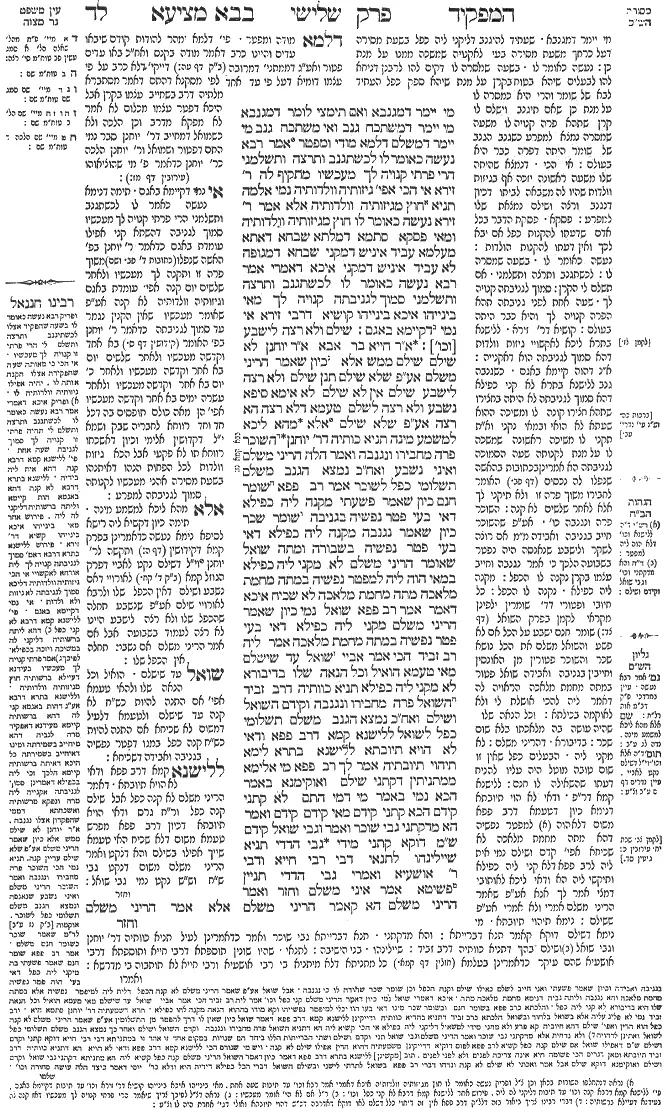
Bava Metzia 34a - Guemara
מי יימר דמגנבא ואם תימצי לומר דמגנבא מי יימר דמשתכח גנב ואי משתכח גנב מי יימר דמשלם דלמא מודי ומפטר אמר רבא נעשה כאומר לו לכשתגנב ותרצה ותשלמני הרי פרתי קנויה לך מעכשיו מתקיף לה ר' זירא אי הכי אפי' גיזותיה וולדותיה נמי אלמה תניא חוץ מגיזותיה וולדותיה אלא אמר ר' זירא נעשה כאומר לו חוץ מגיזותיה וולדותיה ומאי פסקא סתמא דמלתא שבחא דאתא מעלמא עביד איניש דמקני שבחא דמגופה לא עביד איניש דמקני איכא דאמרי אמר רבא נעשה כאומר לו לכשתגנב ותרצה ותשלמני סמוך לגניבתה קנויה לך מאי בינייהו איכא בינייהו קושיא דרבי זירא אי נמי דקיימא באגם:
שילם ולא רצה לישבע [וכו']:
א"ר חייא בר אבא א"ר יוחנן לא שילם שילם ממש אלא כיון שאמר הריני משלם אע"פ שלא שילם תנן שילם ולא רצה לישבע שילם אין לא שילם לא אימא סיפא נשבע ולא רצה לשלם טעמא דלא רצה הא רצה אע"פ שלא שילם אלא מהא ליכא למשמע מינה תניא כותיה דר' יוחנן השוכר פרה מחבירו ונגנבה ואמר הלה הריני משלם ואיני נשבע ואח"כ נמצא הגנב משלם תשלומי כפל לשוכר אמר רב פפא שומר חנם כיון שאמר פשעתי מקנה ליה כפילא דאי בעי פטר נפשיה בגניבה שומר שכר כיון שאמר נגנבה מקנה ליה כפילא דאי בעי פטר נפשיה בשבורה ומתה שואל שאומר הריני משלם לא מקני ליה כפילא במאי הוה ליה למפטר נפשיה במתה מחמת מלאכה מתה מחמת מלאכה לא שכיח איכא דאמרי אמר רב פפא שואל נמי כיון שאמר הריני משלם מקני ליה כפילא דאי בעי פטר נפשיה במתה מחמת מלאכה אמר ליה רב זביד הכי אמר אביי שואל עד שישלם מאי טעמא הואיל וכל הנאה שלו בדיבורא לא מקני ליה כפילא תניא כוותיה דרב זביד השואל פרה מחבירו ונגנבה וקידם השואל ושילם ואח"כ נמצא הגנב משלם תשלומי כפל לשואל ללישנא קמא דרב פפא ודאי לא הויא תיובתא ללישנא בתרא לימא תיהוי תיובתיה אמר לך רב פפא מי אלימא ממתניתין דקתני שילם ואוקימנא באמר הכא נמי באמר מי דמי התם לא קתני קידם הכא קתני קידם מאי קידם קידם ואמר הא מדקתני גבי שוכר ואמר וגבי שואל קידם ש"מ דוקא קתני מידי גבי הדדי תניא שיילינהו לתנאי דבי רבי חייא ודבי ר' אושעיא ואמרי גבי הדדי תניין פשיטא אמר איני משלם וחזר ואמר הריני משלם הא קאמר הריני משלם אלא אמר הריני משלם
Comments from Rashi on Masechet Bava Metzia Page 34a
מי יימר דמגנבא . שעתיד להיגנב דליקני ליה כפל בשעת מסירה דעל כרחך משעת מסירה בעי לאקנויה שמשכה ממנו על מנת כן: נעשה כאומר לו . בשעה שמסרה לו דקים להו לרבנן דניחא להו לבעלים שיהא בטוח בקרן על מנת שיהא ספק כפל העתיד לבא של שומר והרי היא כמסרה לו על מנת כן שאם תיגנב וישלם לו קרן שתהא פרה קנויה לו משעה שמסרה נמצא למפרע כשגנב הגנב של שומר היתה דפרה כבר היא בעולם: אי הכי . דנמצא שהיתה שלו משעה ראשונה יזכה אף בגיזות וולדות שהיו לה משבאה לביתו דכיון דנגנב ורצה ושילם נמצאת שלו למפרע: פסקא . פסקת הדבר בכל אדם שדעתו להקנות כפל אם יבא לכך ואין דעתו להקנות הולדות: נעשה כאומר לו . בשעה שמסרה לו: לכשתגנב ותרצה ותשלמני . אם תשלם לי הקרן: סמוך לגניבתה קנויה לך . שעה אחת לפני גניבתה תהא הפרה קנויה לך והיא כבר היתה בעולם: קושיא דר' זירא . ללישנא בתרא ליכא לאקשויי גיזות וולדות דהא סמוך לגניבתה הוא דאקנייה: א"נ דהוה קיימא באגם . כשגנבה גנב ללישנא בתרא לא קני כפילא דהא סמוך לגניבתה לא היתה בחצירו שתהא חצירו קונה לו ומשיכה ההוא שעתה לא הואי ובמאי נקני וא"ת תקני לו משיכה ראשונה שמשכה לו על מנת לקנותה שעה הסמוכה לגניבתה הא אמרינן בכתובות בהאשה שנפלו לה נכסים (דף פב.) האומר לחבירו משוך פרה זו ולא תיקני לך אלא לאחר שלשים לא קנה: השוכר פרה ונגנבה כו' . אע"פ שהשוכר חייב בגניבה ואבידה מ"מ אם רוצה לשקר ולישבע שנאנסה היה נפטר בשבועה הלכך כי אמר נגנבה וחייב עצמו בקרן נקנה לו הכפל: מקנה ליה כפילא . נקנה לו הכפל: כל חיובי ופטורי דארבעה שומרין ילפינן מקראי לקמן בפרק השואל (בבא מציעא דף צד:): שומר חנם ישבע על הכל אם לא פשע והשואל משלם את הכל נושא שכר והשוכר פטורין מן האונסין וחייבין בגניבה ואבידה שואל פטור במתה מחמת מלאכה הראויה לה דאמר ליה להכי אושלת לי ולא לאוקמה בכילתא: וכל הנאה שלו . שהיה עושה בה מלאכתו בלא שום שכר: בדיבורא . דהריני משלם: לא מקני ליה . הבעלים כפל שאין זו שום טובה מוטל היה עליו להניח דעתו שהשאילה לו חנם: ללישנא קמא דר"פ . ודאי לא הוי תיובתא דנימא כיון דטעמא דרב פפא משום דלא הוה למפטר נפשיה דהא מתה מחמת מלאכה לא שכיחא אפי' קדם ושילם נמי אית ליה לרב פפא דלא קני ליה כפילא ותיקשי ליה הא ודאי ליכא לאותובי דמצי אמר לך אנא אע"פ שאמר הריני משלם אמרי ולא אמרי אע"פ ששילם: נימא תיהוי תיובתא . מי נימא דשילם דוקא קאמר תנא דברייתא: והא מדקתני . תנא דברייתא גבי שוכר ואמר כדאמרינן לעיל תניא כוותיה דר' יוחנן וגבי שואל ושילם בהך דתניא כוותיה דרב זביד: שיילינהו . בני הישיבה: לתנאי . שהיו שונין תוספתא דרבי חייא ותוספתא דרבי אושעיא שהם עיקר כדאמרינן בעלמא (חולין דף קמא.): כל מתניתא דלא מיתניא בי רבי אושעיא ורבי חייא לא תותבוה בי מדרשא:
Comments from Tosafot - Bava Metzia 34a
דלמא מודה ומפטר . פי' דלמא ימהר להודות קודם שיבאו עדים והיינו כרב דאמר מודה בקנס ואח"כ באו עדים פטור ואע"ג דממתני' דמרובה (ב"ק דף עה:) דייקי' דלא כרב על פי עצמו דומיא דעל פי עד אחד לפי מסקנא דהתם דאמר מסתברא מלתיה דרב בשחייב עצמו בקרן אבל היכא דפטר עצמו מכלום לא אמר לא מפקא מדרב וכן הלכה ולא כשמואל דמחייב דר' יוחנן סבר נמי התם דפטור ושמואל ור' יוחנן הלכה כר' יוחנן כדאמר פ' מי שהוציאוהו (עירובין דף מז:): אי נמי דקיימא באגם . תימה דנימא נעשה כאמר לו לכשתגנב ותשלמני הרי פרתי קנויה לך מעכשיו ' סמוך לגניבה דהשתא קני אפילו עומדת באגם כדאמר ר' יוחנן בפ' האשה שנפלו (כתובות ד' פב. ושם) משוך פרה זו ותקנה לך מעכשיו ולאחר שלשים יום קנה אפי' עומדת באגם וגיזותיה וולדותיה לא קנה אע"פ שאומר מעכשיו שאין הקנין נגמר עד סמוך לגניבתה כדאמר ר' יוחנן בפ' האומר (קידושין דף ס.) בא אחד וקדשה מעכשיו ולאחר שלשים יום בא אחר וקדשה מעכשיו ולאחר כ' יום בא אחר וקדשה מעכשיו ולאחר עשרה ימים בא אחר וקדשה מעכשיו אפי' הן מאה כולם תופסים בה דכל חד וחד רווחא לחבריה שבק ושמא י"ל דקדושין אלימי וכיון דאשכחו רווחא תו לא פקעי אבל הכא גיזות וולדות לכל הפחות הנהו דאיתנהו בשעת מסירה אהני מעכשיו לקנותה סמוך לגניבתה למפרע: אלא מהא ליכא למשמע מינה . תימה כיון דקשיא ליה רישא לסיפא נימא נעשה כדאמרינן בפרק קמא דקידושין (דף ה:) ותקשה לר' יוחנן וי"ל דשילם נקט לאביי דפרק הגוזל קמא (ב"ק ד' קח.) לאורויי דאם נשבע ושילם דאין הכפל שלו ולרבא לאורויי שילם אע"פ שנשבע תחלה שהכפל שלו ולא רצה לישבע היינו לא רצה לעמוד בשבועה אבל אם אמר הריני משלם אם נשבע תחלה אין הכפל שלו: שואל עד שישלם . הואיל וכל הנאה שלו ולהאי טעמא אפי' אם התנה להיות כש"ח לא קנה עד שישלם ולטעמא דלעיל דמשום לא שכיחא אם התנה להיות כש"ח קנה כפל במגו דפטר נפשיה בגניבה ואבידה דשכיחא: ללישנא קמא דרב פפא ודאי לא הויא תיובתא . דאמר הריני משלם לא קנה כפל אבל שילם קנה כפל ור"ח גרס ודאי הויא תיובתא דכיון דרב פפא מפרש טעמא משום דלא שכיח האי טעמא שייך אפילו בשילם והא דנקט ואמר הריני משלם משום דנקט גבי ש"ח וש"ש נקט נמי גבי שואל:
Bava Metzia 34a - Mishnah translated into english
who could say that the deposit will be stolen? And if you say it will be stolen, who could say that the thief will be found? And even if the thief will be found, who could say that he will pay the double payment? Perhaps he will confess and will be exempted from the double payment. Rava said in response: It is as though the owner said to the bailee at the time that he gave him the deposit: When it will be stolen, and you will wish to refrain from taking an oath, and you will pay me instead, ownership of my cow is hereby transferred to you from this time, and the cow is an entity that already came into the world. Since ownership of the cow is retroactively transferred to the bailee from the time of the deposit, any profits generated by the cow, e.g., the double payment, belong to the bailee.
Rabbi Zeira objects to this: If so, then even the fleece and offspring of the animal that grew while it was in the bailee’s possession should be the property of the bailee. Why, then, is it taught in a baraita that the bailee receives all profits generated by the animal except for its fleece and its offspring? Rather, Rabbi Zeira says that it is as though the owner said to the bailee: My animal is hereby transferred to you from this time except for its fleece and its offspring.
The Gemara asks: If so, why was this halakha stated in the mishna without qualification? Does every owner necessarily have that condition in mind? The Gemara answers: Typically, profit that comes from elsewhere, e.g., the double payment from a thief, which is difficult to anticipate, a person is apt to transfer to the bailee. But profit that originates from the body of the animal, which can be anticipated, a person is not apt to transfer to the bailee.
Some say that Rava says his response differently. It is as though the owner said to the bailee at the time of the deposit: When it will be stolen, and you will wish to refrain from taking an oath, and you will pay me instead, ownership of my animal is transferred to you adjacent to, i.e., immediately before, its theft. The Gemara asks: What is the difference between the formulations in Rava’s two responses?
The Gemara answers: There is a difference between them with regard to the difficulty raised by Rabbi Zeira with regard to fleece and offspring, which is irrelevant according to the second formulation. Alternatively, there is a difference in a case where the animal is standing in a marsh [ba’agam] at the time of its theft. Since the animal was not on the bailee’s property at that time, he could not acquire it.
§ The mishna teaches that if the bailee paid the owner and did not wish to take an oath, the thief pays the double payment to the bailee. Rabbi Ḥiyya bar Abba says that Rabbi Yoḥanan says: When the mishna says: If the bailee paid, it does not mean that he actually paid. Rather, once the bailee said: I hereby choose to pay, even if he did not yet actually pay, he acquired the double payment and all other profits.
The Gemara raises an objection from that which we learned in the mishna: If the bailee paid the owner and did not wish to take an oath, the thief pays the double payment to the bailee. The Gemara infers: If the bailee paid, yes, he acquires these rights; if the bailee did not pay, he does not. The Gemara answers: Say the latter clause of the mishna: In the case of a bailee who took an oath and did not wish to pay, the thief pays the double payment to the owner. The Gemara infers: The reason that the thief pays the owner is that the bailee did not wish to pay. But if the bailee wished to pay, although he did not actually pay, he acquires the rights to the double payment. Rather, because the inference from the first clause and the inference from the latter clause are contradictory, no inference is to be learned from this mishna.
The Gemara notes: It is taught in a baraita in accordance with the opinion of Rabbi Yoḥanan: In the case of one who rents a cow from another, and it was stolen, and the other party, the renter, said: I hereby choose to pay and I will not take an oath, and the thief was located thereafter, the thief pays the double payment to the renter. Apparently, once the renter chooses to pay, he acquires the rights to the double payment.
Rav Pappa says: In the case of an unpaid bailee, once he stated: I was negligent, thereby rendering himself liable to compensate the owner, the owner transfers rights to the double payment to him, as, if the unpaid bailee wishes, he can exempt himself from that liability with the claim of theft. Admitting negligence is tantamount to agreeing to pay rather than taking an oath. Likewise, in the case of a paid bailee, once he stated: It was stolen, the owner transfers rights to the double payment to him, as, if the paid bailee wishes, he can exempt himself from that liability with the claim that the animal was maimed or died due to circumstances beyond his control.
By contrast, in the case of a borrower who says: I hereby choose to pay, the owner does not transfer the rights to the double payment to him. The borrower’s statement that he chooses to pay is ineffectual, as he is liable to pay even without it. Because the statement is ineffectual, it does not confer any rights. With what claim would a borrower be able to exempt himself from payment? It is only with the claim that the animal died due to ordinary labor. A case of an animal that died due to ordinary labor is uncommon, and this claim is therefore accepted only with corroborating proof.
Some say that Rav Pappa said: In the case of a borrower, once he stated: I hereby choose to pay, the owner transfers rights to the double payment to him, as, if a borrower wishes, he can exempt himself from that liability with the claim that the animal died due to ordinary labor. Rav Zevid said to him that this is what Abaye said: A borrower acquires the rights to the double payment only when he actually pays for the item. What is the reason for this? Since all of the benefit accrues to the borrower, as he enjoys the use of the item without payment, the owner does not transfer the rights to the double payment to the borrower due to his statement that he chooses to pay.
The Gemara notes: It is taught in a baraita in accordance with the opinion of Rav Zevid: In the case of one who borrows a cow from another, and it was stolen, and the borrower went ahead and paid, and the thief was located thereafter, the thief pays the double payment to the borrower. This indicates that the borrower receives the double payment only if he actually paid the owner for the item.
The Gemara comments: According to the first version of the statement of Rav Pappa, that the owner transfers rights to the double payment to the borrower only if he actually pays the owner, this baraita certainly is not a conclusive refutation [teyuvta] of the opinion of Rav Pappa, as the baraita corresponds to his opinion. According to the latter version of Rav Pappa’s statement, that the owner transfers rights to the double payment to the borrower even if the borrower merely says that he chooses to pay, shall we say that this baraita would be a conclusive refutation of the opinion of Rav Pappa?
The Gemara answers: Rav Pappa could have said to you: Is the baraita stronger than the mishna, which teaches that the bailee receives the double payment if he already paid the owner, and nevertheless, we established that the mishna is referring to one who states his intent to pay but has not yet paid? Here, too, establish the baraita as referring to one who states his intent to pay but has not yet paid.
The Gemara questions this: Are these cases comparable? There, in the mishna, it is not taught that he went ahead and paid. Here, in the baraita, it is taught that he went ahead and paid, which indicates that he actually paid and not merely that he agreed to pay. The Gemara responds: What is the meaning of went ahead? It means that he went ahead and stated his intent to pay, although he did not yet actually pay.
The Gemara asks: But from the fact that the tanna teaches the halakha in the baraita cited earlier with regard to a renter with the formulation: And he said that he would pay, and in the baraita with regard to a borrower the tanna uses the formulation: Went ahead, conclude from it that the baraita concerning a borrower is teaching specifically that he actually paid. The Gemara rejects this proof: Are these two baraitot taught together so that one can draw a conclusion based on a discrepancy in their formulation? Perhaps the baraitot are unrelated and are simply formulated in different styles.
The Gemara comments: The Sages asked the tanna’im of the school of Rabbi Ḥiyya and Rabbi Oshaya, experts in mishnayot and baraitot, if these baraitot were formulated together. And they said that the baraitot were taught together as one long baraita, and therefore one can draw a conclusion based on a discrepancy in their formulation.
§ The Gemara comments that it is obvious that if the bailee initially said: I will not pay, and then said: I hereby choose to pay rather than taking an oath, he is entitled to the double payment, as didn’t he ultimately say: I hereby choose to pay? The Gemara raises a dilemma: But if he initially said: I hereby choose to pay,
Traduction : The William Davidson digital edition of the Koren Noé Talmud, with commentary by Rabbi Adin Even-Israel Steinsaltz.