 Talmud Bavli
The learning on the whole site is dedicated : L'ilui Nishmat אסתר בת חיים
The learning on the whole site is dedicated : L'ilui Nishmat Reuven ben Rivka SEBBAG
The learning on the whole site is dedicated : For the success of Elyahou ben H'anna & family
Bava Metzia 10a : Youtube
Daf TubeYoutube
2 video classes :
Bava Metzia Page 10a
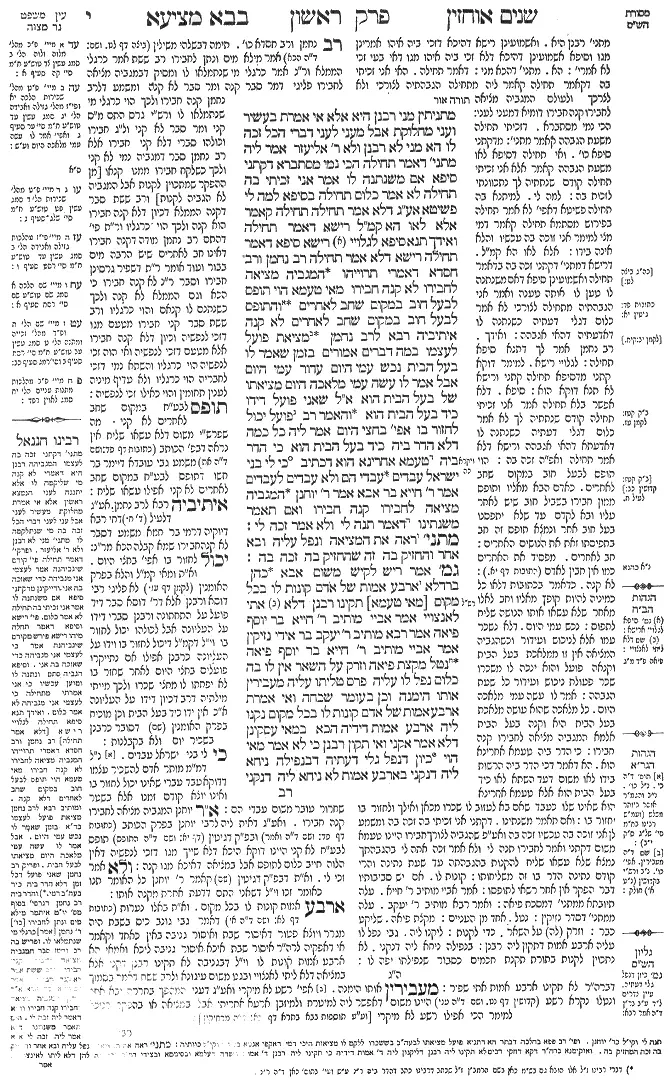
Bava Metzia 10a - Guemara
מתניתין מני רבנן היא אלא אי אמרת בעשיר ועני מחלוקת אבל מעני לעני דברי הכל זכה לו הא מני לא רבנן ולא ר' אליעזר אמר ליה מתני' דאמר תחילה הכי נמי מסתברא דקתני סיפא אם משנתנה לו אמר אני זכיתי בה תחילה לא אמר כלום תחילה בסיפא למה לי פשיטא אע"ג דלא אמר תחילה תחילה קאמר אלא לאו הא קמ"ל רישא דאמר תחילה ואידך תנא סיפא לגלויי רישא סיפא דאמר תחילה רישא דלא אמר תחילה רב נחמן ורב חסדא דאמרי תרוייהו המגביה מציאה לחבירו לא קנה חבירו מאי טעמא הוי תופס לבעל חוב במקום שחב לאחרים והתופס לבעל חוב במקום שחב לאחרים לא קנה איתיביה רבא לרב נחמן מציאת פועל לעצמו במה דברים אמורים בזמן שאמר לו בעל הבית נכש עמי היום עדור עמי היום אבל אמר לו עשה עמי מלאכה היום מציאתו של בעל הבית הוא א"ל שאני פועל דידו כיד בעל הבית הוא והאמר רב פועל יכול לחזור בו אפי' בחצי היום אמר ליה כל כמה דלא הדר ביה כיד בעל הבית הוא כי הדר ביה טעמא אחרינא הוא דכתיב (ויקרא כה, נה) כי לי בני ישראל עבדים עבדי הם ולא עבדים לעבדים אמר ר' חייא בר אבא אמר ר' יוחנן המגביה מציאה לחבירו קנה חבירו ואם תאמר משנתינו דאמר תנה לי ולא אמר זכה לי:
מתני׳ ראה את המציאה ונפל עליה ובא אחר והחזיק בה זה שהחזיק בה זכה בה:
גמ׳ אמר ריש לקיש משום אבא כהן ברדלא ארבע אמות של אדם קונות לו בכל מקום [מאי טעמא] תקינו רבנן דלא אתי לאנצויי אמר אביי מותיב ר' חייא בר יוסף פיאה אמר רבא מותיב ר' יעקב בר אידי נזיקין אמר אביי מותיב ר' חייא בר יוסף פיאה נטל מקצת פיאה וזרק על השאר אין לו בה כלום נפל לו עליה פרס טליתו עליה מעבירין אותו הימנה וכן בעומר שכחה ואי אמרת ארבע אמות של אדם קונות לו בכל מקום נקנו ליה ארבע אמות דידיה הכא במאי עסקינן דלא אמר אקני ואי תקון רבנן כי לא אמר מאי הוי כיון דנפל גלי דעתיה דבנפילה ניחא ליה דנקני בארבע אמות לא ניחא ליה דנקני
Comments from Rashi on Masechet Bava Metzia Page 10a
מתני' רבנן היא . ואשמועינן רישא דהיכא דזכי ביה איהו אמרינן מגו וסיפא אשמועינן דהיכא דלא זכי ביה איהו מגו דאי בעי זכי לא אמרי': הא . מתני' דהכא מני: דאמר תחילה . האי אני זכיתי בה דקאמר תחילה קאמר ליה מתחילה הגבהתיה לצורכי ולא לצרכך ולעולם המגביה מציאה לחבירו קנה חבירו דומיא דמעני לעני: הכי נמי מסתברא . דזכיתי תחילה משעת הגבהה קאמר מתני': מדקתני סיפא כו' . ואי תחילה דסיפא לאו משעת הגבהה קאמר אלא אני זכיתי תחילה קודם שנתתיה לך נתכוונתי לזכות בה: למה לי . למיתנא בה תחילה פשיטא דאפילו לא אמר תחילה בפירוש מסתמא תחילה קאמר דמי מצי למימר אני זוכה בה עכשיו והלא אינה בידו: אלא לאו הא קמ"ל . דרישא דמתני' דקתני זכה בה בדאמר תחילה ואשמועינן סיפא דאם משנתנה לו טען לו אותה טענה ואמר אני הגבהתיה מתחילה לצורכי לא אמר כלום דגלי דעתיה כשנתנה לו דאדעתיה דהאי אגבהה: ואידך . רב נחמן אמר לך דתנא סיפא תחילה: לגלויי רישא . למימר דוקא קתני מדסיפא תחילה קתני ורישא לא תנא דוקא הוא: סיפא . דלא אפשר בלא תחילה אמר אני זכיתי תחילה קודם שנתתיה לך לא אמר כלום דגלי דעתיה כשנתנה לו דאדעתא דהאי אגבהה ורישא דלא אמר תחילה ואפ"ה זכה בה: הוי תופס לבעל חוב במקום שחב לאחרים . כאדם הבא מאליו ותופס ממון חבירו בשביל חוב שיש לאחר עליו ובא לקדם עד שלא יתפסנו בעל חוב אחר ונמצא תופס זה חב בתפיסתו זאת את הנושים האחרים: חב לאחרים . מפסיד את האחרים כמו אין חבין לאדם (כתובות דף יא.): לא קנה . כדאמר בכתובות דלאו כל כמיניה להיות קופץ מאליו וחב לאלו מאחר שלא עשאו אותו הנושה שליח לתפוס: נכש עמי היום . דלא נשכר עמו אלא לניכוש ועידור וכשהגביה המציאה אין זה ממלאכת בעל הבית וקנאה פועל והוא ינכה לו משכרו שכר פעולת ניכוש ועידור כל שעת הגבהה: אמר לו עשה עמי מלאכה היום . כל מלאכה שהוא עושה מלאכת בעל הבית היא וקנה בעל הבית אלמא המגביה מציאה לחבירו קנה חבירו: כי הדר ביה טעמא אחרינא הוא . הא דאמר דכי הדר ביה הרשות בידו לאו משום דעד השתא לאו כיד בעל הבית הוא אלא טעמא אחרינא הוא שאינו שלו כעבד שאם בא לעזוב לו שכרו מכאן ואילך ולחזור בו יחזור בו: ואם תאמר משנתינו . דקתני אני זכיתי בה זכה בה ומשמע לן אני זוכה בה עכשיו זכה בה ואע"פ שהגביה לצורך חבירו היינו טעמא משום דקתני ואמר לחבירו תנה לי ולא אמר זכה אתה לי בהגבהתך נמצא שלא עשאו שליח להקנות בהגבהתה עד שעת נתינה והרי קודם נתינה הדר בו זה משליחותו: קונות לו . אם יש סביבותיו דבר הפקר אין אחר רשאי לתופסו: אמר אביי מותיב ר' חייא . עלה תיובתא ממתניתין דמסכת פיאה: ואמר רבא מותיב ר' יעקב . עלה ממתניתין דסדר נזיקין: נטל . אחד מן העניים: מקצת פיאה . שליקט כבר: וזרק (לה) על השאר . כדי לקנות: ליקנו ליה . גבי נפל לו עליה ארבע אמות דתקון ליה רבנן: בנפילה ניחא ליה דנקני . לא נתכוין לקנות בתורת תקנת חכמים כסבור שנפילתו יפה לו:
Comments from Tosafot - Bava Metzia 10a
רב נחמן ורב חסדא כו' . תימה דבשלהי משילין (ביצה דף לט. ושם: ד"ה הכא) אמר מילא מים ונתן לחבירו רב ששת אמר כרגלי הממלא ור"נ אמר כרגלי מי שנתמלאו לו ומסיק דבמגביה מציאה לחבירו פליגי דמר סבר קנה ומר סבר לא קנה ומשמע דלרב נחמן קנה חבירו ולכך הוי כרגלי מי שנתמלאו לו ורש"י גרס התם מ"ס קני ומר סבר לא קני ול"ג חבירו וכולהו סברי דלא קני חבירו אלא רב נחמן סבר דמגביה נמי לא קני ולכך כשלקח חבירו ממנו קנאו [מן ההפקר שמתכוין לקנות אבל המגביה לא הגביה לקנות] ורב ששת סבר דקנה הממלא דכיון דלא קנה חבירו הוא קנה ולכך הוי כרגליו ור"ת פי' דהתם רב נחמן מודה דקנה חבירו דאינו חב לאחרים שיש הרבה מים בבור ועוד אומר ר"ת דשפיר גרסינן חבירו וסבר ר"נ לא קנה חבירו כי הכא וגם הממלא לא קנה ולכך כשנתנם לו קנאם והוי כרגליו ורב ששת סבר קני חבירו מטעם מגו דזכי לנפשיה וכיון דלא קנה חבירו אלא מטעם דזכי לנפשיה ואי הוה זכי לנפשיה הוי כרגליו והשתא נמי דזכי לחבריה הוי כרגליו ולא עדיף מיניה לענין תחומין והוי כאילו זכי לנפשיה: תופס לבע"ח במקום שחב לאחרים לא קני . מה שפרש"י משום דלא עשאו שליח אין נראה דבפ' הכותב (כתובות דף פד: ושם ד"ה את) משמע גבי עובדא דיימר בר חשו דתופס לבע"ח במקום שחב לאחרים לא קני אפילו עשאו שליח: איתיביה רבא לרב נחמן . אע"ג דלעיל (בבא מציעא ד' ח.) דחי רבא דיוקיה דרמי בר חמא משמע דסבר לא קנה חבירו שמא קבלה הכא מר"נ: יכול לחזור בו אפי' בחצי היום . וא"ת ומאי קמ"ל והלא בפרק האומנין (לקמן בבא מציעא דף עז.) לא פליגי רבי דוסא ורבנן אלא דר' דוסא סבר דיד פועל על התחתונה ורבנן סברי דידו על העליונה אבל לכולהו יכול לחזור בו וי"ל דקמ"ל דיכול לחזור בו וידו על העליונה כרבנן אפילו אם נתייקרו פועלים בחצי היום לאחר שחזר בו לא יפחתו לו מחצי שכרו ולכך מייתי מילתיה דרב דכיון דידו על העליונה א"כ אין ידו כיד בעל הבית וכן מוכיח בפרק האומנין (שם) דסובר כרבנן בשכיר יום ולא בקבלנות: כי לי בני ישראל עבדים . נ"ל דמ"מ מותר אדם להשכיר עצמו דדוקא עבד עברי שאינו יכול לחזור בו ואינו יוצא קודם זמנו אלא בשטר שחרור עובר משום עבדי הם: א"ר יוחנן המגביה מציאה לחבירו קנה חבירו . ואע"ג דאית ליה לרבי יוחנן בפרק הכותב (כתובות דף פד: ושם ד"ה ואמר) ובפ"ק דגיטין (דף יא: ושם ד"ה התופס) תופס לבע"ח לא קני היינו דוקא היכא דלא שייך מגו דזכי לנפשיה דאין הלוה חייב כלום לתופס אבל במציאה דאיכא מגו קנה: ולא אמר זכי לי . וא"ת דבפ"ק דגיטין (שם) קאמר ר' יוחנן כל האומר תנו כאומר זכו וי"ל דשאני התם דדעת אחרת מקנה אותו: ארבע אמות קונות לו בכל מקום . וא"ת באלו נערות (כתובות דף לא: ושם ד"ה אי) דאמר גבי גונב כיס בשבת היה מגרר ויוצא פטור דאיסור שבת ואיסור גניבה באין כאחד וקאמר אי דאפקיה לרה"ר איסור שבת איכא איסור גניבה ליכא ואמאי הא ארבע אמות קונות לו וי"ל דבגניבה לא תקינו רבנן דקני אלא במציאה דלא ליתי לאנצויי ובגט משום עיגונא ולרב ששת דאמר בסמוך דברה"ר לא תקינו ארבע אמות אתי שפיר: מעבירין אותו הימנה . אפי' רשע לא מיקרי ואע"ג דעני המהפך בחררה ובא אחר ונטלו נקרא רשע (קדושין דף נט. ושם ד"ה עני) היינו משום דאפשר ליה למיטרח ולמיזבן ארעא אחריתי אבל במציאה או בהפקר דליכא למימר הכי אפילו רשע לא מיקרי [וע"ע תוספות בבא בתרא דף כא: ד"ה מרחיקין]:
Bava Metzia 10a - Mishnah translated into english
whose opinion is expressed in the mishna? It is the opinion of the Rabbis, who hold that one cannot acquire an item for another in this manner. But if you say that the dispute is specifically in a case of a rich person and a poor person but in a case where the pe’a was gleaned by a poor person on behalf of a poor person everyone agrees that he acquired it on the latter’s behalf, in accordance with whose opinion is this mishna? It is neither in accordance with the opinion of the Rabbis nor in accordance with the opinion of Rabbi Eliezer.
Ulla said to Rav Naḥman: The mishna is referring to a case where the one lifting the item said: I intended to acquire the item for myself at the outset; I never had intention to acquire it on behalf of the rider.
The Gemara adds: So too, it is reasonable to explain the mishna in this manner, as it teaches in the last clause: But if, after giving it to the one riding the animal he said: I acquired it for myself at the outset, he has said nothing and the rider keeps the item. Why do I need the phrase: At the outset, to be mentioned in the last clause? It is obvious that even if he did not explicitly say: At the outset, he meant that he acquired it at the outset, before he gave it to the rider. Rather, isn’t this phrase mentioned to teach us this: The first clause of the mishna is also referring a case where he said: I intended to acquire it for myself at the outset?
And the other Sage, Rav Naḥman, is of the opinion that the mishna taught this phrase in the last clause of the mishna in order to shed light on the first clause. The last clause is referring to a case where he said that he acquired the item at the outset in order to indicate that in the first clause, the one who lifts the item acquires it even in a case where he did not say that he acquired it for himself at the outset. In Rav Naḥman’s opinion, the rider does not acquire the item until it is given to him.
§ The Gemara discusses the opinion of Rav Naḥman and Rav Ḥisda, who both say: In a case of one who performs an act of acquisition by lifting a found item on behalf of another, the other person, i.e., the latter, does not acquire ownership of the item.
What is the reason for this? The reason is that it is a case of one who seizes assets for a creditor in a situation that will result in a disadvantage for others, as the debtor owes money to other creditors as well; and one who seizes assets for a creditor in a situation that will result in a disadvantage for others does not acquire the assets for him. Although a creditor can himself seize the assets as payment for the debt, no one else can take action that will benefit one person at the expense of others. Similarly, since everyone has equal rights to an ownerless item that is found, one person cannot deprive all others of that right on behalf of another person.
Rava raised an objection to the opinion of Rav Naḥman from a baraita: The found item of a laborer, i.e., something that he found, belongs to him and not to the employer for whom he is working at that time.
In what case is this statement, that the item belongs to the laborer, said? It is said when the employer told the laborer to perform a specific task, e.g., he said to him: Weed for me today, or: Till for me today. Since the employer specified the task that he hired the laborer to perform, the laborer has rights to the item that the laborer found. But if the employer said to the laborer: Work for me today, without specifying the nature of the work, the found item is the employer’s, as finding ownerless items is included within the general category of work. This indicates that a laborer can acquire an item for someone else, which contradicts Rav Naḥman’s principle.
Rav Naḥman said to him: A laborer is different, as his hand is like the hand of the employer. He is considered his agent while he is working for him.
Rava responded: But doesn’t Rav say that a laborer may reconsider and quit his job, even at midday? Evidently, the relationship between the employer and the laborer is structured to the benefit of the laborer.
Rav Naḥman said to him: As long as he does not retract his commitment, his hand is like the employer’s hand. When he does retract his commitment, he is able to do so. But this is not because matters are structured to the benefit of the laborer, but for a different reason, as it is written: “For to Me the children of Israel are slaves; they are My slaves whom I brought forth out of the land of Egypt” (Leviticus 25:55), which indicates: They are My slaves, and not slaves of slaves, i.e., of other Jews. Consequently, a Jew can never be enslaved to another Jew with a contract from which he cannot release himself whenever he wishes. Nevertheless, as long as the laborer does not quit the job, he is considered his employer’s agent.
Contrary to the opinion of Rav Naḥman and Rav Ḥisda, Rabbi Ḥiyya bar Abba says that Rabbi Yoḥanan says: In a case of one who performs an act of acquisition by lifting a found item on behalf of another, the other person acquires ownership of the item. And if you say that our mishna seems to suggest otherwise, it is referring to a case where the rider says to the pedestrian: Give it to me, but does not say: Acquire it for me. If he says give it to me, the rider acquires the item only when it reaches his possession. If he says acquire it for me, the rider acquires the item as soon as the pedestrian lifts it.
MISHNA: If one saw a found item and fell upon it, intending to thereby acquire it, but did not employ one of the formal modes of acquisition, and then another came and seized it, the one who seized it acquired it because he employed one of the formal modes of acquisition.
GEMARA: Reish Lakish says in the name of Abba Kohen Bardela: The area of four square cubits surrounding a person has the legal status of his courtyard, and it effects acquisition of every ownerless item located there for him, everywhere. What is the reason for this? The Sages instituted this ordinance so that people would not come to quarrel over an item. Abaye said that Rabbi Ḥiyya bar Yosef raises an objection to this from a mishna in tractate Pe’a. Rava said that Rabbi Ya’akov bar Idi raises an objection to this from a mishna in Nezikin.
The Gemara elaborates: Abaye said that Rabbi Ḥiyya bar Yosef raises an objection to this from a mishna in tractate Pe’a (4:3), which states: If a poor person took some of the pe’a in the field and threw it on the rest of the pe’a in order to acquire it, he has nothing of it. The same is true if he fell upon the pe’a, or if he spread his garment over it; others may remove him or his garment from the pe’a in order to take it for themselves, as he did not acquire it. And the same is true in the case of a forgotten sheaf left for the poor; a poor person cannot acquire it in any of these manners.
Rabbi Ḥiyya bar Yosef continues: And if you say that a person’s area of four square cubits effects acquisition of property for him everywhere, let his area of four square cubits effect acquisition of the pe’a or the forgotten sheaf for him.
The Gemara responds: With what are we dealing here? We are dealing with a case where he did not say: I will acquire the pe’a through this action. He performed the action without revealing his intention; therefore, his acquisition is ineffective.
The Gemara asks: But if the Sages instituted an ordinance that the area of four cubits surrounding a person acquires property for him, then even in a case where he did not say: I will acquire the produce, what of it? Shouldn’t he have acquired it even without expressing his intent to do so?
The Gemara answers: This case is different. Since he fell upon it he thereby revealed his intention: That it is satisfactory for him to acquire the produce by falling on it and it is not satisfactory for him to acquire the produce through the ordinance concerning his four square cubits. Since he decided to forgo the mode of acquisition that the Sages instituted, and falling on the produce is not a valid mode of acquisition, he did not acquire the produce.
Traduction : The William Davidson digital edition of the Koren Noé Talmud, with commentary by Rabbi Adin Even-Israel Steinsaltz.