 Talmud Bavli
The learning on the whole site is dedicated : L'ilui Nishmat אליעזר בן רחל
The learning on the whole site is dedicated : L'ilui Nishmat רינה בת לדיסיה
The learning on the whole site is dedicated : L'ilui Nishmat Avraham Ben Simha
Bava Metzia 81a : Youtube
Daf TubeYoutube
1 video class :
Bava Metzia Page 81a
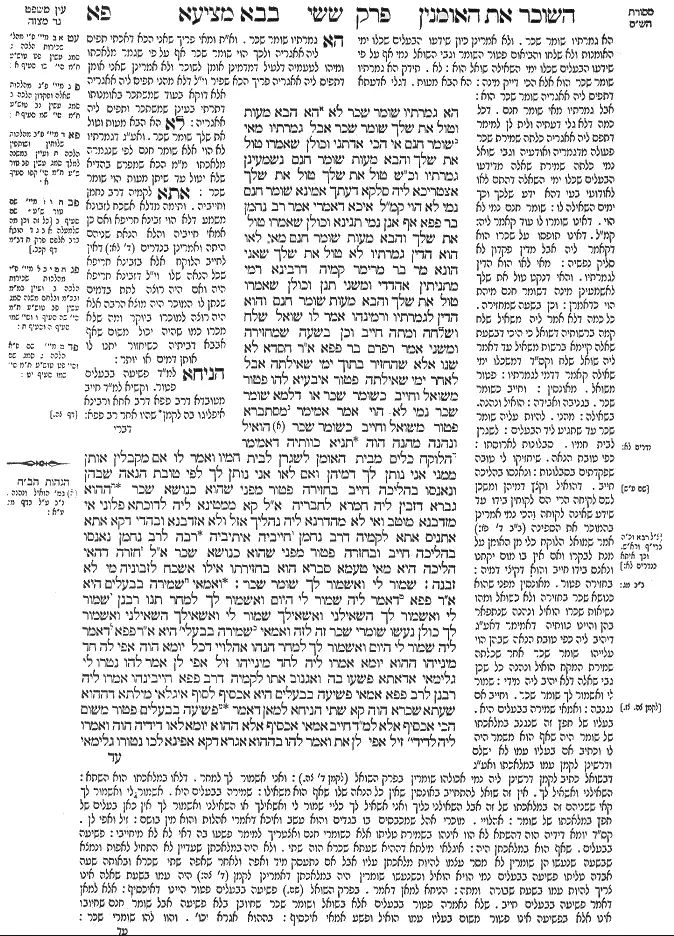
Bava Metzia 81a - Guemara
הא גמרתיו שומר שכר לא הא הבא מעות וטול את שלך שומר שכר אבל גמרתיו מאי שומר חנם אי הכי אדתני וכולן שאמרו טול את שלך והבא מעות שומר חנם נשמעינן גמרתיו וכ"ש טול את שלך טול את שלך אצטריכא ליה סלקא דעתך אמינא שומר חנם נמי לא הוי קמ"ל איכא דאמרי אמר רב נחמן בר פפא אף אנן נמי תנינא וכולן שאמרו טול את שלך והבא מעות שומר חנם מאי לאו הוא הדין גמרתיו לא טול את שלך שאני הונא מר בר מרימר קמיה דרבינא רמי מתניתין אהדדי ומשני תנן וכולן שאמרו טול את שלך והבא מעות שומר חנם והוא הדין לגמרתיו ורמינהו אמר לו שואל שלח ושלחה ומתה חייב וכן בשעה שמחזירה ומשני אמר רפרם בר פפא א"ר חסדא לא שנו אלא שהחזיר בתוך ימי שאילתה אבל לאחר ימי שאילתה פטור איבעיא להו פטור משואל וחייב כשומר שכר או דלמא שומר שכר נמי לא הוי אמר אמימר מסתברא פטור משואל וחייב כשומר שכר הואיל ונהנה מהנה הוה תניא כוותיה דאמימר הלוקח כלים מבית האומן לשגרן לבית חמיו ואמר לו אם מקבלין אותן ממני אני נותן לך דמיהן ואם לאו אני נותן לך לפי טובת הנאה שבהן ונאנסו בהליכה חייב בחזירה פטור מפני שהוא כנושא שכר ההוא גברא דזבין ליה חמרא לחבריה א"ל קא ממטינא ליה לדוכתא פלוני אי מזדבנא מוטב ואי לא מהדרנא ליה נהליך אזל ולא אזדבנא ובהדי דקא אתא אתניס אתא לקמיה דרב נחמן חייביה איתיביה רבה לרב נחמן נאנסו בהליכה חייב ובחזרה פטור מפני שהוא כנושא שכר א"ל חזרה דהאי הליכה היא מאי טעמא סברא הוא בחזירתו אילו אשכח לזבוניה מי לא זבנה שמור לי ואשמור לך שומר שכר ואמאי שמירה בבעלים היא א"ר פפא דאמר ליה שמור לי היום ואשמור לך למחר תנו רבנן שמור לי ואשמור לך השאילני ואשאילך שמור לי ואשאילך השאילני ואשמור לך כולן נעשו שומרי שכר זה לזה ואמאי שמירה בבעלי' היא א"ר פפא דאמר ליה שמור לי היום ואשמור לך למחר הנהו אהלויי דכל יומא הוה אפי לה חד מינייהו ההוא יומא אמרו ליה לחד מינייהו זיל אפי לן אמר להו נטרו לי גלימאי אדאתא פשעו בה ואגנוב אתו לקמיה דרב פפא חייבינהו אמרו ליה רבנן לרב פפא אמאי פשיעה בבעלים היא אכסיף לסוף איגלאי מילתא דההוא שעתא שכרא הוה קא שתי הניחא למאן דאמר פשיעה בבעלים פטור משום הכי אכסיף אלא למ"ד חייב אמאי אכסיף אלא ההוא יומא לאו דידיה הוה ואמרו ליה לדידי' זיל אפי לן את ואמר להו בההוא אגרא דקא אפינא לכו נטורו גלימאי
Comments from Rashi on Masechet Bava Metzia Page 81a
הא גמרתיו שומר שכר . ולא אמרינן כיון שידעו הבעלים שכלו ימי האומנות ולא שלחו והביאום פטור השומר וגבי השואל נמי אף על פי שידעו הבעלים שכלו ימי השאילה. שואל הוא: לא . תידק הא גמרתיו שומר שכר הוא אלא הכי דייק מינה: הא הבא מעות . דגלי אדעתא דתפיס ליה אאגריה שומר שכר הוא: אבל גמרתיו מאי שומר חנם . דכל כמה דלא גלי דעתיה ולית לן למימר דתפס ליה אאגריה כלתה שמירת שכר פעולה מדגמריה ואודעיה וגבי שואל נמי כלתה שמירת שאלה מדידעו הבעלים שכלו ימי השאלה דהתם לאו לאודועי בעי דהא ידע שלכך וכך ימים השאילה לו: שומר חנם נמי לא הוי . דאינו שומרו לו עוד קאמר ליה: קמ"ל . דאינו תופסו על שכרו הוא דקאמר ליה אבל מדין פקדון לא סליק נפשיה: מאי לאו הוא הדין לגמרתיו . והאי דנקט טול את שלך לאשמועינן מינה דשומר חנם מיהת הוי כדאמרן: וכן בשעה שמחזירה . כל כמה דלא אמר ליה משאיל שלח קמה ברשותיה דשואל כי היכי דבשעת שאלה קיימא ברשות משאיל עד דאמר ליה שואל שלח וקס"ד דמשכלו ימי שאילה קאמר דדמי לגמרתיו: פטור משואל . מאונסין: וחייב כשומר שכר . בגניבה ואבידה: הואיל ונהנה . בשאילה: מהני . להיות עליה שומר שכר עד שתגיע ליד הבעלים: לשגרן לבית חמיו . סבלונות לארוסתו: כפי טובת הנאה . שיחזיקו לי טובה שפקדתים בסבלונות: ונאנסו בהליכה חייב . דהואיל וקצץ דמיהן ומשכן לשם לקיחה הרי הם לקוחין בידו עד שידע שאינה לקוחה והכי נמי אמרינן בהמוכר את הספינה (ב"ב דף פז:) אמר שמואל הלוקח כלי מן האומן על מנת לבקרו ואם אין בו מום יקחנו ונאנס בידו חייב והוא דקיצי דמיה: בחזירה פטור . מאונסין מפני שהוא כנושא שכר בחזירה ולא כשואל ומהו נשיאות שכרו הואיל ונהנה שנתפאר בהן והיינו כוותיה דאמימר דאע"ג דיהיב ליה כפי טובת הנאה שבהן הוי עלייהו שומר שכר אחר שכלתה שמירת המקח הואיל ונהנה כל שכן גבי שאלה דלא יהיב ליה מידי: שמור לי ואשמור לך שומר שכר . וחייב אם נגנבה: ואמאי שמירה בבעלים היא . בעליו של חפץ זה שנגנב במלאכתו של שומר היה שאף הוא משמר היה לו וכתיב אם בעליו עמו לא ישלם ודרשינן לקמן עמו במלאכתו ואע"ג דבשואל כתיב לקמן דרשינן ליה נמי אכולהו שומרין בפרק השואל (לקמן בבא מציעא ד' צה.): ואני אשמור לך למחר . דלאו במלאכתו הוא השתא: השאילני ואשאיל לך . אין זה שואל להתחייב באונסין שאין כל הנאה שלו שאף הוא משאילו: שמירה בבעלים היא . אשמור לי ואשמור לך קאי ששניהם זה במלאכתו של זה אבל השאילני כליך ואני אשאיל לך כליי שמור לי ואשאילך או השאילני ואשמור לך אין כאן בעלים של חפץ במלאכתו של שומר: אהלויי . מוכרי אהל שמכבסים בו בגדים והוא עשב ואיכא דאמרי אהלות והוא מין בושם: זיל ואפי לן . קס"ד יומא דידיה הוה דהשתא לא הוו אינהו בשמירת טליתו אלא כשומרי חנם ואצטריך למימר פשעו בה דאי לא לא מיחייבי: פשיעה בבעלים . שאף הוא במלאכתן היה: איגלאי מילתא דההיא שעתא שכרא הוה שתי . ולא היה במלאכתן שעדיין לא התחיל לאפות ונמצא שבשעה שנעשו הן שומרין לא מסר עצמו להיות מלאכתן עליו אבל אם נתעסק מיד ואפה ולאחר שאפה שתי שכרא ובאותה שעה אבדה טליתו פשיעה בבעלים נמי הויא הואיל וכשנעשו שומרין היה במלאכתן דאמרינן לקמן (בבא מציעא ד' צה:) היה עמו בשעת שאלה אינו צריך להיות עמו בשעת שבורה ומתה: הניחא למאן דאמר . בפרק השואל (שם.) פשיעה בבעלים פטור היינו דאיכסיף: אלא למאן דאמר פשיעה בבעלים חייב . שלא נאמרה פטור בבעלים אלא בשואל ושומר שכר שחיובן בלא פשיעה אבל שומר חנם שחיובו אינו אלא בפשיעה אינו פטור משום בעליו עמו הואיל ופשע אמאי איכסיף: בההוא אגרא וכו' . והוו להו שומרי שכר:
Comments from Tosafot - Bava Metzia 81a
הא גמרתיו שומר שכר . וא"ת ומאי פריך שאני הכא דאכתי תפיס ליה אאגריה ולכך הוי שומר שכר אף על פי שגמר מלאכתו ומיהו לטעמיה דלעיל דמדמינן אומן לשוכר ולא אמרינן שאני אומן דתפיס ליה אאגריה פריך הכא שפיר וי"ל דלא מהני תפיס ליה אאגריה אלא דוקא בעוד שמשתכר באומנותו דתרתי בעינן שמשתכר ותפיס ליה אאגריה: לא הא הבא מעות וטול את שלך שומר שכר . ואע"ג דגמרתיו לא הוי אלא שומר חנם לפי שנגמרה מלאכתו מ"מ הכא שמפרש בהדיא שלא יטול עד שיתן מעות הוי שומר שכר: אתא לקמיה דרב נחמן וחייביה . ותימה מדלא אשכח לזבונא משמע דלא הוי זבינא חריפא ואם כן אמאי חייביה והלא הנאת שניהם היתה ואמרינן בנדרים (ד' לא:) דאין לחייב הלוקח אלא בזבינא חריפא שכל הנאה שלו וי"ל דזבינא חריפא היה ואם היה רוצה לתת בדמים שנתן לו המוכר היה מוצא הרבה אלא היה רוצה למוכרו ביוקר ומה שלא מכרו כמו שהיה יכול משום שאף אבבא דביתיה כשיחזור יתנו לו אותן דמים או יותר: הניחא למ"ד פשיעה בבעלים פטור . וקשיא למ"ד חייב מעובדא דרב פפא דרב אחא ורבינא איפליגו בה לקמן שהיו אחר רב פפא:
Bava Metzia 81a - Mishnah translated into english
This indicates that if the skilled laborer said only: I completed the work with it, he is considered a paid bailee, i.e., even after he completes the work the item remains within his responsibility. The Gemara rejects this line of reasoning: No, this is not what should be deduced from the mishna. Rather, the correct deduction is that one who says: Give money first and then take what is yours, is a paid bailee.
The Gemara asks: But if that is the case, when one says only: I completed the work with it, what is the halakha? Is he considered an unpaid bailee? If so, rather than teaching a new halakha in the mishna: And all those who say: Take what is yours and bring money, each of them is considered an unpaid bailee, let it teach us instead the halakha of one who says: I completed the work with it, and it can be deduced that all the more so is this the halakha if he says to him: Take what is yours.
The Gemara rejects this line of reasoning: The case of take what is yours must be taught explicitly. Otherwise, it might enter your mind to say that once he issues this statement, he is not considered even an unpaid bailee and retains no responsibility whatsoever for the item. Therefore, the mishna teaches us that even in this case he is still considered an unpaid bailee and continues to bear certain responsibilities.
There are those who say that there is a different version of this discussion. Rather than challenging that Rav Ḥisda’s opinion is opposed by the ruling of the mishna, Rav Naḥman bar Pappa said: We, too, learn a proof for Rav Ḥisda’s statement from the mishna: And all those who say: Take what is yours and bring money, each of them is considered an unpaid bailee. What, is it not correct to say that the same is true when he says: I have completed the work with it? The Gemara rejects this claim. No, the case of one who says take what is yours is different, as stated above, as one might think that this statement frees the laborer of all responsibility.
The Gemara cites a third version of this discussion. Huna Mar bar Mareimar raised a contradiction between the mishnayot before Ravina and resolved it himself. We learned in the mishna: And all those who say: Take what is yours and bring money, each of them is considered an unpaid bailee. And apparently the same is true for one who said: I completed the work with it. And Huna Mar bar Mareimar raises a contradiction from the aforementioned mishna: If the borrower said to the lender: Send the animal to me, and he sent it to him and it died on the way, the borrower is liable, and similarly when he returns it. And he resolves this contradiction in accordance with that which Rafram bar Pappa said that Rav Ḥisda said: They taught this halakha only when he returned it during the period of its loan. But if he returned it after the period of its loan, he is exempt.
§ A dilemma was raised before the Sages: When Rav Ḥisda said that a borrower who returned the item after the period of the loan is exempt, is he exempt only from the strict obligations of a borrower, but he remains liable as a paid bailee, or perhaps he is also not liable as a paid bailee? Ameimar said: It stands to reason that he is exempt as a borrower but is still liable as a paid bailee. Ameimar’s reasoning is that since he previously had benefit, he must provide benefit in return, by safeguarding the item as a paid bailee until the item reaches the owner’s possession.
It is taught in a baraita (Tosefta, Bava Batra 6:5) in accordance with the opinion of Ameimar: With regard to one who takes vessels from an artisan’s house to send them as a gift to his father-in-law’s house, and he said to the artisan: If they accept them from me as a gift I will give you the money for them, and if not, i.e., if they return the gift, I will give you money in accordance with the financial advantage I received from them, i.e., I will pay you the benefit that I accrued through their knowledge that I tried to send them a gift; and an accident happened to the vessels and they were broken, if this incident occurred on their way to the recipient the customer is liable.
If they broke on the way back he is exempt, because he is like a paid bailee, who is not liable for accidents. If this individual, who pays for the financial advantage he received, is considered a paid bailee, all the more so should this apply to a borrower who returned the item after the period of the loan, in accordance with the opinion of Ameimar, as he did not offer to pay anything.
The Gemara relates: There was a certain man who sold a donkey to another. The buyer said to him: I will bring it to such and such a place; if it is sold, well and good; and if not, I will return it to you. He went and it was not sold, and on his way back the donkey was injured in an accident. The case came before Rav Naḥman, who deemed the buyer liable to pay.
Rabba raised an objection to Rav Naḥman from the baraita: If an accident happened to the vessels on their way to the recipient, the customer is liable; if they broke on the way back he is exempt, because he is like a paid bailee. If so, why did you deem this buyer liable, when the accident occurred on his return?
Rav Naḥman said to Rabba that there is a difference between the cases, as the way back of this one is considered like the way to the recipient. What is the reason for this? It is based on logical reasoning: Even on his way back, if he found an opportunity to sell the donkey, wouldn’t he have sold it? Therefore, as he was in possession of the animal the entire time, the halakha treats his going and returning equally, and he retains the responsibility of a borrower until he actually returns the animal to its owner.
§ The mishna teaches: With regard to one who says to another: Safeguard my property for me and I will safeguard your property for you, each of them is a paid bailee. The Gemara asks: But why is this the halakha? It is a case of safeguarding with the owners. There is a principle that a bailee is exempt from paying for the damage if the owner of the item is present with the bailee or in his employ when he is safeguarding the item. Rav Pappa said: The mishna means that he said to him: Safeguard my property for me today and I will safeguard your property for you tomorrow. At the time of his safeguarding, the owner was not in the bailee’s employ.
The Sages taught in a baraita (Tosefta 7:10): If one said: Safeguard my property for me and I will safeguard your property for you, or: Lend money to me and I will lend money to you, or: Safeguard my property for me and I will lend money to you, or: Lend money to me and I will safeguard your property for you, they all become paid bailees for each other. The Gemara asks: Why are they liable as paid bailees? Is this not a situation of safeguarding with the owners? Rav Pappa again said: This is referring to a case where he said to him: Safeguard my property for me today and I will safeguard your property for you tomorrow.
The Gemara relates: There were certain ice plant dealers [ahaluyei], and every day one of them would have a turn to bake for the group. One day the others said to one of them: Go and bake for us. He said to them: Safeguard my cloak for me. Before he came back they were negligent with it and it was stolen. They came for judgment before Rav Pappa, and he deemed them liable to pay for the cloak.
The Rabbis said to Rav Pappa: Why did you deem them liable to pay? This is akin to a case of negligence by a bailee while he is with the owners, as the owner of the cloak was baking for them at the time the cloak was stolen due to their negligence. Rav Pappa was embarrassed over his apparent mistake. Ultimately, it was discovered that at that time, when the cloak was stolen, the cloak owner was drinking beer and not baking. Since he was not doing work for them, this was not a case of safeguarding with the owner, and therefore Rav Pappa’s ruling was vindicated.
The Gemara comments: This works out well according to the one who says that in a case of negligence by a bailee while he is with the owners he is exempt; due to that reason Rav Pappa was embarrassed. But according to the one who says that in a case of negligence he is liable even while he is with the owners, why was Rav Pappa embarrassed? Rather, this is what actually happened: That day was not his turn to bake, and they said to him: You go and bake for us, and he said to them: As payment for baking for you when it is not my turn, safeguard my cloak. In other words, they were paid bailees.
Traduction : The William Davidson digital edition of the Koren Noé Talmud, with commentary by Rabbi Adin Even-Israel Steinsaltz.