 Talmud Bavli
The learning on the whole site is dedicated : L'ilui Nishmat Jacques Isaac Ben Amram Loubaton
The learning on the whole site is dedicated : L'ilui Nishmat Yechayahou ben Moche
The learning on the whole site is dedicated : L'ilui Nishmat רינה בת לדיסיה
Bava Metzia 19a : Youtube
Daf TubeYoutube
1 video class :
Bava Metzia Page 19a
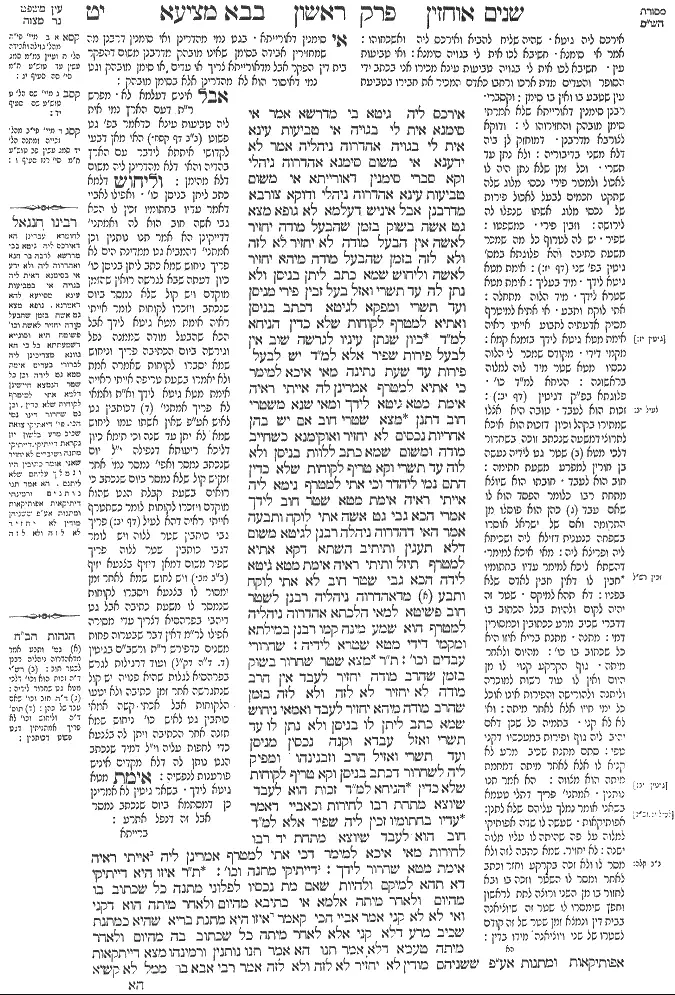
Bava Metzia 19a - Guemara
אירכס ליה גיטא בי מדרשא אמר אי סימנא אית לי בגויה אי טביעות עינא אית לי בגויה אהדרוה ניהליה אמר לא ידענא אי משום סימנא אהדרוה ניהלי וקא סברי סימנין דאורייתא אי משום טביעות עינא אהדרוה ניהלי ודוקא צורבא מדרבנן אבל איניש דעלמא לא גופא מצא גט אשה בשוק בזמן שהבעל מודה יחזיר לאשה אין הבעל מודה לא יחזיר לא לזה ולא לזה בזמן שהבעל מודה מיהא יחזיר לאשה וליחוש שמא כתב ליתן בניסן ולא נתן לה עד תשרי (מתני' בבא בתרא קסז א) ואזל בעל זבין פירי מניסן ועד תשרי ומפקא לגיטא דכתב בניסן ואתיא למטרף לקוחות שלא כדין הניחא למ"ד כיון שנתן עיניו לגרשה שוב אין לבעל פירות שפיר אלא למ"ד יש לבעל פירות עד שעת נתינה מאי איכא למימר כי אתיא למטרף אמרינן לה אייתי ראיה אימת מטא גיטא לידך ומאי שנא משטרי חוב דתנן מצא שטרי חוב אם יש בהן אחריות נכסים לא יחזיר ואוקימנא כשחייב מודה ומשום שמא כתב ללוות בניסן ולא לוה עד תשרי וקא טריף לקוחות שלא כדין התם נמי ליהדר וכי אתי למטרף נימא ליה אייתי ראיה אימת מטא שטר חוב לידך אמרי הכא גבי גט אשה אתי לוקח ותבעה אמר האי דהדרוה ניהלה רבנן לגיטא משום דלא תעגין ותיתיב השתא דקא אתיא למטרף תיזל ותיתי ראיה אימת מטא גיטא לידה הכא גבי שטר חוב לא אתי לוקח ותבע מדאהדרוה ניהליה רבנן לשטר חוב פשיטא למאי הלכתא אהדרוה ניהליה למטרף הוא שמע מינה קמו רבנן במילתא ומקמי דידי מטא שטרא לידיה:
שחרורי עבדים וכו':
ת"ר מצא שטר שחרור בשוק בזמן שהרב מודה יחזיר לעבד אין הרב מודה לא יחזיר לא לזה ולא לזה בזמן שהרב מודה מיהא יחזיר לעבד ואמאי ניחוש שמא כתב ליתן לו בניסן ולא נתן לו עד תשרי ואזל עבדא וקנה נכסין מניסן ועד תשרי ואזיל הרב וזבנינהו ומפיק ליה לשחרור דכתב בניסן וקא טריף לקוחות שלא כדין הניחא למ"ד זכות הוא לעבד שיוצא מתחת רבו לחירות וכאביי דאמר עדיו בחתומיו זכין ליה שפיר אלא למ"ד חוב הוא לעבד שיוצא מתחת יד רבו לחירות מאי איכא למימר דכי אתי למטרף אמרינן ליה אייתי ראיה אימת מטא שחרור לידך:
דייתיקי מתנה וכו':
ת"ר איזו היא דייתיקי דא תהא למיקם ולהיות שאם מת נכסיו לפלוני מתנה כל שכתוב בו מהיום ולאחר מיתה אלמא אי כתיבא מהיום ולאחר מיתה הוא דקני ואי לא לא קני אמר אביי הכי קאמר איזו היא מתנת בריא שהיא כמתנת שכיב מרע דלא קני אלא לאחר מיתה כל שכתוב בה מהיום ולאחר מיתה טעמא דלא אמר תנו הא אמר תנו נותנין ורמינהו מצא דייתקאות אפותיקאות ומתנות אע"פ ששניהם מודין לא יחזיר לא לזה ולא לזה אמר רבי אבא בר ממל לא קשיא
Comments from Rashi on Masechet Bava Metzia Page 19a
אירכס ליה גיטא . שהיה שליח להביא ואירכס ליה ואשכחוהו: אמר אי סימנא . חשיבא לכו אית לי בגויה סימנא: ואי טביעות עין . חשיבא לכו אית לי בגויה טביעות עינא מכירו אני בכתב ידי הסופר והעדים מדת ארכו ורחבו כאדם המכיר את חבירו בטביעת עין שטבע בו ואין בו סימן: וקסברי . רבנן סימנין דאורייתא שלא אמרתי סימן מובהק והחזירוהו לי: ודוקא לצורבא מדרבנן . דמוחזק לן ביה דלא משני בדיבוריה: ולא נתן עד תשרי . וכל זמן שלא נתן היה לו לאכול ולמכור פירי נכסי מלוג שלה שתקנו חכמים לבעל לאכול פירות של נכסי מלוג אשתו שנפלו לה לירושה: וזבין פירי . כמשפטו: שפיר . יש לה לטרוף כל מה שמכר משעת כתיבה והא פלוגתא במסכת גיטין בפ' שני (דף יז:): אימת מטא גיטא לידך . מיד בעליך: אימת מטא שטרא לידך . מיד הלוה מתחלה: אתי לוקח ותבע . אי אתיא למיטרף מסיק אדעתיה לתבוע אייתי ראיה אימת מטא גיטא לידך בזמנא קמא: מקמי דידי . מקודם שמכר לי הלוה נכסיו מטא שטר מיד לוה למלוה בראשונה: הניחא למ"ד כו' . פלוגתא בפ"ק דגיטין (דף יב:): זכות הוא לעבד . טובה היא אצלו שמתירו בקהל וכיון דזכות הוא איכא לתרוצי דמשעה שנכתב זוכה בשחרור דלכי מטא שטר גט לידיה נעשה בן חורין למפרע משעת חתימה: חוב הוא לעבד . חובתו הוא שיוצא מתחת רבו כלומר הפסד הוא לו שאם עבד כהן הוא פוסלו מן התרומה ואם של ישראל אוסרו בשפחה כנענית דזילא ליה ושכיחא ליה ופריצא ליה: מאי איכא למימר . דהשתא ליכא למימר עדיו בחתומיו חבין לו דאין חבין לאדם שלא בפניו: דא תהא למיקם . שטר זה יהיה לקום ולהיות בכל הכתוב בו דדברי שכיב מרע ככתובין וכמסורין דמי: מתנה . מתנת בריא איזו היא כל שכתוב בו כו': מהיום ולאחר מיתה . גוף הקרקע קנוי לו מן היום ואין לו עוד רשות למוכרה וליתנה ולהורישה והפירות אינו אוכל כל ימי חייו אלא לאחר מיתה: ואי לא לא קני . בתמיה כל שכן דאם יהיב ליה גוף ופירות במעכשיו דקני טפי סתם מתנת שכיב מרע לא קניא לו אלא לאחר מיתה דמחמת מיתה הוא מצווה: הא אמר תנו נותנין . אמתני' פריך דתלי טעמא בשאני אומר נמלך עליהם שלא לתנן: אפותיקאות . שעשה לו שדה אפותיקי למלוה על פה שהיתה לו עליו מלוה ישנה: לא יחזיר . שמא כתבה לזה ולא מסר לו ולא זכה בקרקע וחזר וכתב לאחר ומסר לו השטר וזכה בו ובא לחזור בו מן השני ורוצה לתת לראשון וחפץ שימסרו לו שטר זה שיוציאנה בבית דין ונמצא זמן שטר של זה קודם לשטרו של שני ויוציאנה מידו בדין:
Comments from Tosafot - Bava Metzia 19a
אי סימנין דאורייתא . בגט נמי מהדרינן ואי סימנין דרבנן מה שמחזירין אבידה בסימן שאינו מובהק מדרבנן משום דהפקר בית דין הפקר אבל מדאורייתא צריך או עדים או סימן מובהק וגט נמי דאיסור הוא לא מהדרינן אלא בסימן מובהק: אבל איניש דעלמא לא . מפרש ר"ת דעם הארץ נמי אית ליה טביעות עינא כדאמר בפ' גט פשוט (ב"ב דף קסח.) האי מאן דבעי לקדושי איתתא לידבר עם הארץ בהדיה והאי דלא מהדרינן ליה משום דלא מהימן: וליחוש דלמא כתב ליתן בניסן כו' . ואפילו לאביי דאמר עדיו בחתומיו זכין לו הכא גבי אשה חוב הוא לה ואמתני' דדייקינן הא אמר תנו נותנין וכן אמתני' דהמביא גט ממדינת הים לא פריך ניחוש שמא כתב ליתן בניסן כו' כיון דעתה שבא לגרשה רואין שהזמן מוקדם ויש קול שלא נמסר ביום שנכתב ויזכרו לקוחות לומר אייתי ראיה אימת מטא גיטא לידך אבל הכא שהבעל מודה שממנה נפל וגירשה ביום הכתיבה פריך וניחוש שמא יסברו לקוחות שאמרה אמת ולא יאמרו בשעת טריפה אייתי ראייה אימת מטא גיטא לידך וא"ת ואמאי לא פריך אמתני' דכותבין גט לאיש אע"פ שאין אשתו עמו ליחוש שמא לא יתן עד שנה וכי תימא כיון דליכא ריעותא דנפילה י"ל יום שנכתב נמסר ואפי' נמסר נמי אחר זמן יש קול שלא נמסר ביום שנכתב כי רואים בשעת קבלת הגט שהוא מוקדם ויזכרו לקוחות לומר כשתטרף אייתי ראיה דהא לעיל (בבא מציעא דף יב:) פריך גבי כותבין שטר ללוה ויש לומר דגבי כותבין שטר ללוה פריך שפיר משום דמאן דיזיף בצנעא יזיף (ב"ב מב.) ויש לחוש שמא לאחר זמן ימסור לו בצנעא ויסברו לקוחות שנמסר לו משעת כתיבה אבל גט דיהבי בפרהסיא דצריך עדי מסירה אפילו לר"מ דאין דבר שבערוה פחות משנים כדפירש ר"ת ורשב"ם בגיטין (ד. ד"ה דק"ל) ועוד דרגילות לגרש בפרהסיא לגלות שהיא פנויה יש קול שנתגרשה אחר זמן כתיבה ולא יטעו הלקוחות אבל אכתי קשה אמאי כותבין גט לאיש כו' ניחוש שמא תזנה אחר הכתיבה ויתן לה בצנעא כדי לחפות עליה וי"ל דמיד שנכתב הגט נותן לה דלא מקדים איניש פורענות לנפשיה: אימת מטא גיטא לידך . בשאר גיטין לא אמרינן כן דמסתמא ביום שנכתב נמסר אבל זה דנפל אתרע:
Bava Metzia 19a - Mishnah translated into english
lost a bill of divorce, which had been given to him to deliver, in the study hall. When it was found, he said: If they request a distinguishing mark, I have one for it. If it depends on visual recognition, I have methods of recognition for it. They returned the bill of divorce to him. He said afterward: I do not know if they returned it to me due to the distinguishing mark that I supplied, and they hold that distinguishing marks are used to return lost items by Torah law, or if they returned it to me due to my visual recognition, and it was specifically because I am a Torah scholar, as Torah scholars are relied upon when they say that they recognize an item, but an ordinary person would not be relied upon to recognize the item and have it returned to him.
§ The Gemara discusses the matter itself cited above: If one found a woman’s bill of divorce in the marketplace, in a case when the husband admits that he wrote and gave it, the finder must return it to the wife. If the husband does not admit to this, the finder may neither return it to this one, the husband, nor to that one, the wife.
In any event, the baraita states that when the husband admits that he wrote and gave it, the finder must return it to the wife. The Gemara challenges: But let us suspect that perhaps he wrote the bill of divorce intending to give it in Nisan, but did not give it to her until Tishrei, and the husband went and sold the produce of his wife’s property in the interim, between Nisan and Tishrei, since the divorce had not yet taken effect. And the wife might then produce the bill of divorce, which he wrote in Nisan, and come to repossess the produce from the purchasers unlawfully.
This works out well according to the one who says that once he has decided to divorce her, the husband no longer has the rights to his wife’s produce. Since the husband had no right to sell the produce, the wife repossessed it rightfully. But according to the one who says that the husband has rights to his wife’s produce until the actual time of giving the bill of divorce, what is there to say?
The Gemara answers: When she comes to repossess the produce, we say to her: First bring proof as to when the bill of divorce came into your possession, and then we will allow you to repossess the sold produce.
The Gemara asks: But in what way is it different from promissory notes? As we learned in a mishna (12b): With regard to one who found promissory notes, if they include a property guarantee for the loan, he may not return them to the creditor. And we interpreted the mishna as referring to a case where the liable party admits that he has not yet repaid the debt, and the reason the promissory note cannot be returned is due to the possibility that perhaps he wrote it intending to borrow money in Nisan, but ultimately did not borrow it until Tishrei, and the creditor might therefore use the promissory note to unlawfully repossess property that the debtor sold between Nisan and Tishrei from the purchasers.
According to the Gemara’s suggestion with regard to a bill of divorce, there, in the case of a promissory note, it should also be returned, and when the creditor comes to repossess the debtor’s property that was sold in the interim, let the court say to him: First bring proof as to when the promissory note came into your possession.
The Sages say that it is not comparable. Here, with regard to a woman’s bill of divorce, the purchaser will come and demand that the wife prove when it was given to her, as he will say to himself: The fact that the Sages returned the bill of divorce to her was only so that she would not dwell alone as a deserted wife and not be able to remarry for lack of a bill of divorce. Now that she is coming to repossess the property her husband sold me, she should go and bring proof as to when the bill of divorce came into her possession.
By contrast, here, with regard to a promissory note, the purchaser will not come and demand proof, because he will infer from the fact that the Sages returned the promissory note to him that it is obviously valid from the date written in it. After all, for what halakha did the court return it to him? It was clearly in order to repossess property with it. Therefore, he will conclude from it: The Sages clarified the matter and determined that, in fact, this promissory note came into the possession of the creditor prior to my purchase of property from the debtor.
§ The mishna teaches: Bills of manumission of slaves that are found should not to be returned. The Sages taught in a baraita: If one found a bill of manumission in the marketplace, in a case when the master admits that he gave the bill to the slave, one should return it to the slave. If the master does not admit to it, one should neither return it to this person, the master, nor to that person, the slave.
The Gemara asks: In any event, the baraita states that when the master admits that he gave the bill of manumission to the slave, the one who found it should return it to the slave. But why should he return it? Let us suspect that perhaps he wrote the bill of manumission intending to give it to him in Nisan, but he did not give it to him until Tishrei, and the slave went and bought property in the interim, between Nisan and Tishrei, at which time he was still a slave, in which case the property belongs to his master, and the master then went and sold that property. And if the bill of manumission is returned to the slave, he might produce the bill of manumission, which his master wrote in Nisan, in order to claim that the property was not his master’s to sell, and repossess the property from the purchasers unlawfully.
This works out well according to the one who says that it is in a slave’s interest to leave his master’s authority and attain freedom and in accordance with the opinion of Abaye, who says that when a document serves the interests of its intended recipient, its witnesses, with their signatures, acquire it on his behalf. Accordingly, a slave attains freedom at the moment his bill of manumission is signed, even if it is given to him at a later date. Therefore, the halakha in the baraita works out well. But according to the one who says that it is against a slave’s interests to leave his master’s authority and attain freedom, what is there to say?
The Gemara answers that when the slave comes to repossess the property, we say to him: Bring proof as to when the bill of manumission reached your possession and you were freed.
§ The mishna teaches: If one found wills [deyaytiki] or deeds of gift, he should not return them. The Sages taught in a baraita: What is considered a deyaytiki and is collected by the designated recipient after the death of the giver? It is a deed that states: This deed will be to stand [da tehe lemeikam] and exist as proof that if this person dies, his property is to be given to so-and-so. An ordinary deed of gift, by contrast, is any deed in which it is written: This gift is given from today and after the death of the giver.
The Gemara asks: Apparently, only if it is written in the deed: From today and after the death of the giver, the recipient acquires the gift, and otherwise, he does not acquire the gift. Is there no deed of gift that is effective even without the clause: And after my death?
Abaye said that this is what the baraita is saying: What deed of gift of a healthy person is considered like the deed of gift of a person on his deathbed, in that the recipient acquires it only after the death of the giver? It is any deed in which it is written: This gift is given from today and after the giver’s death.
§ The mishna teaches that these documents may not be returned to the one who is presumed to have lost them, as perhaps the one who wrote them reconsidered and decided not to deliver them. The Gemara infers: The reason that these deeds may not be returned is that the one who wrote them doesn’t say to the finder: Give them to their intended recipient. But if he says: Give them, the finder must give them.
And the Gemara raises a contradiction to that inference from a baraita that states that if one found wills, or deeds of designated repayment, or deeds of gift, even if both the one who wrote the deed and its intended recipient agree that it is valid, he should return it neither to this person nor to that person.
Rabbi Abba bar Memel said: This is not difficult.
Traduction : The William Davidson digital edition of the Koren Noé Talmud, with commentary by Rabbi Adin Even-Israel Steinsaltz.