 Talmud Bavli
The learning on the whole site is dedicated : L'ilui Nishmat רינה בת לדיסיה
The learning on the whole site is dedicated : L'ilui Nishmat יוסף בן מושה
The learning on the whole site is dedicated : L'ilui Nishmat Yechayahou ben Moche
Bava Metzia 93b : Youtube
Daf TubeYoutube
1 video class :
Bava Metzia Page 93b
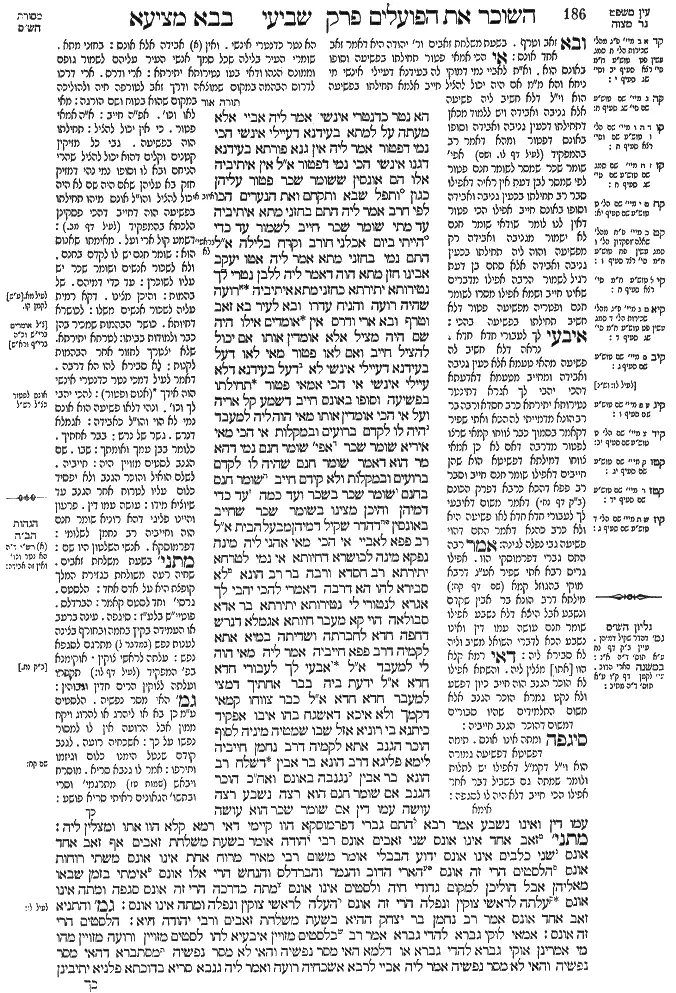
Bava Metzia 93b - Guemara
הא נטר כדנטרי אינשי אמר ליה אביי אלא מעתה על למתא בעידנא דעיילי אינשי הכי נמי דפטור אמר ליה אין גנא פורתא בעידנא דגנו אינשי הכי נמי דפטור א"ל אין איתיביה אלו הם אונסין ששומר שכר פטור עליהן כגון (איוב א, טו) ותפל שבא ותקחם ואת הנערים הכו לפי חרב אמר ליה התם בחזני מתא איתיביה עד מתי שומר שכר חייב לשמור עד כדי (בראשית לא, מ) הייתי ביום אכלני חורב וקרח בלילה א"ל התם נמי בחזני מתא אמר ליה אטו יעקב אבינו חזן מתא הוה דאמר ליה ללבן נטרי לך נטירותא יתירתא כחזני מתא איתיביה רועה שהיה רועה והניח עדרו ובא לעיר בא זאב וטרף ובא ארי ודרס אין אומדים אילו היה שם היה מציל אלא אומדין אותו אם יכול להציל חייב ואם לאו פטור מאי לאו דעל בעידנא דעיילי אינשי לא דעל בעידנא דלא עיילי אינשי אי הכי אמאי פטור תחילתו בפשיעה וסופו באונס חייב דשמע קל אריה ועל אי הכי אומדין אותו מאי הוה ליה למעבד היה לו לקדם ברועים ובמקלות אי הכי מאי איריא שומר שכר אפי' שומר חנם נמי דהא מר הוא דאמר שומר חנם שהיה לו לקדם ברועים ובמקלות ולא קידם חייב שומר חנם בחנם שומר שכר בשכר ועד כמה עד כדי דמיהן והיכן מצינו בשומר שכר שחייב באונסין דהדר שקיל דמיהן מבעל הבית א"ל רב פפא לאביי אי הכי מאי אהני ליה מינה נפקא מינה לכושרא דחיותא אי נמי לטרחא יתירתא רב חסדא ורבה בר רב הונא לא סבירא להו הא דרבה דאמרי להכי יהבי לך אגרא לנטורי לי נטירותא יתירתא בר אדא סבולאה הוי קא מעבר חיותא אגמלא דנרש דחפה חדא לחברתה ושדיתה במיא אתא לקמיה דרב פפא חייביה אמר ליה מאי הוה לי למעבד א"ל אבעי לך לעבורי חדא חדא א"ל ידעת ביה בבר אחתיך דמצי למעבר חדא חדא א"ל כבר צווחו קמאי דקמך ולא איכא דאשגח בהו איבו אפקיד כיתנא בי רוניא אזל שבו שמטיה מיניה לסוף הוכר הגנב אתא לקמיה דרב נחמן חייביה לימא פליגא דרב הונא בר אבין דשלח רב הונא בר אבין נגנבה באונס ואח"כ הוכר הגנב אם שומר חנם הוא רצה נשבע רצה עושה עמו דין אם שומר שכר הוא עושה עמו דין ואינו נשבע אמר רבא התם גברי דפרמוסקא הוו קיימי דאי רמא קלא הוו אתו ומצלין ליה:
מתני׳ זאב אחד אינו אונס שני זאבים אונס רבי יהודה אומר בשעת משלחת זאבים אף זאב אחד אונס שני כלבים אינו אונס ידוע הבבלי אומר משום רבי מאיר מרוח אחת אינו אונס משתי רוחות אונס הלסטים הרי זה אונס הארי הדוב והנמר והברדלס והנחש הרי אלו אונס אימתי בזמן שבאו מאליהן אבל הוליכן למקום גדודי חיה ולסטים אינו אונס מתה כדרכה הרי זה אונס סגפה ומתה אינו אונס עלתה לראשי צוקין ונפלה הרי זה אונס העלה לראשי צוקין ונפלה ומתה אינו אונס:
גמ׳ והתניא זאב אחד אונס אמר רב נחמן בר יצחק ההיא בשעת משלחת זאבים ורבי יהודה היא הלסטים הרי זה אונס אמאי לוקי גברא להדי גברא אמר רב בלסטים מזויין איבעיא להו לסטים מזויין ורועה מזויין מהו מי אמרינן אוקי גברא להדי גברא או דלמא האי מסר נפשיה והאי לא מסר נפשיה מסתברא דהאי מסר נפשיה והאי לא מסר נפשיה אמר ליה אביי לרבא אשכחיה רועה ואמר ליה גנבא סריא בדוכתא פלניא יתיבינן
Comments from Rashi on Masechet Bava Metzia Page 93b
הא נטר כדנטרי אינשי . ואין אבידה אלא אונס: בחזני מתא . שומרי העיר בלילה שכל סמך אנשי העיר עליהם לשמור גופם וממונם הנהו ודאי בעו נטירותא יתירתא: ארי ודרס . ארי דרכו לדרוס הבהמה במקום שמוצאה ודרך זאב לטורפה חיה ולהוליכה במקום שהוא בטוח ושם הורגה: מאי לאו וכו' . אפ"ה חייב: א"ה אמאי פטור . כי אין יכול להציל: תחילתו הוה בפשיעה . גבי כל מזיקין קטנים וקלים דהוא יכול להציל שהרי הניחם ובא לו וסופו נמי נהי דמזיק חזק בא עליהן שאם היה שם לא היה יכול להציל והו"ל אונס מיהו תחילתו בפשיעה הוה דחייב דהכי פסקינן הלכתא בהמפקיד (לעיל בבא מציעא דף מב:): דשמע קול ארי ועל . מאימתו שאנוס הוא: שומר חנם יש לו לקדם בחנם . ולא לשכור אנשים ושומר שכר יש עליו לשוכרן: עד כדי דמיהם . של בהמות: והיכן מצינו . דקא רמית עליה לשכור אנשים משלו: לכושרא דחיותא . כושר הבהמות שמכיר בהן כבר ולמודות בביתו: לטרחא יתירתא . שלא יצטרך לחזור אחר הבהמות לקנות: לא סבירא להו הא דרבה . דאמר לעיל דמכי נטר כדנטרי אינשי הוה אידך (אנוס ופטור): להכי יהבי לך וכו' . ונהי דלאו פשיעה הוא אונס נמי לא הוי והו"ל כאבידה: אגמלא דנרש . גשר של נרש: בבר אחתיך . כלומר בבן עמך ואומתך: שבו . שם הגנב לסטים מזויין היה: חייביה . לשלם הואיל והוכר הגנב ולא יפסיד כלום. עליו לטרוח אחר הגנב עד שיוציא מידו: עושה עמו דין . פרעון והיינו פליגי דהא רוניא שומר חנם הוה וחייביה רב נחמן לשלומי: דפרמוסקא . אנשי השלטון היו שם: מתני' בשעת משלחת זאבים . שחיה רעה משולחת בגזירת המלך קופצת היא על אדם אחד: הלסטם . גרסינן וחד לסטם קאמר: הברדלס . פוטיי"ש בלעז: סיגפה . עינה ברעב או העמידה בקיץ בחמה ובחורף בצינה לענות נפש (במדבר ל) מתרגם לסגפא נפש: עלתה לראשי צוקין . אוקימנא בפרק המפקיד (לעיל בבא מציעא דף לו:) תקפתו ועלתה לצוקין הרים חדין וגבוהין: גמ' האי מסר נפשיה . הלסטים ע"מ כן בא או ליהרג או להרוג ויקח ממון אבל הרועה אין לו למסור נפשו על כך: אשכחיה רועה . לגנב קודם שנטל הימנו כלום וגיזמו וחירפו: אמר לו גנבא סריא . מוסרח ויבאש (שמות טז) מתרגמינן וסרי ובתשובות הגאונים ראיתי סריא פושע:
Comments from Tosafot - Bava Metzia 93b
ובא זאב וטרף . בשעת משלחת זאבים ור' יהודה היא דאמר זאב אחד אונס: אי הכי אמאי פטור תחילתו בפשיעה וסופו באונס הוא . וא"ת לאביי נמי דמוקי לה בעידנא דעיילי אינשי מי ניחא והא מ"מ אם היה יכול להציל חייב אלמא תחילתו בפשיעה הוא וי"ל דלא חשיב ליה פשיעה אלא גניבה ואבידה ויש ללמוד מכאן דתחילתו דכעין גניבה ואבידה וסופו באונס דפטור ומהא דאמר רב בהמפקיד (לעיל בבא מציעא דף לו ושם) אפי' שומר שכר שמסר לשומר חנם פטור לפי שמסר לבן דעת אין ראיה דאפילו סבר רב תחילתו בכעין גניבה ואבידה וסופו באונס חייב אפילו הכי פטור דאין לנו לומר שודאי שומר חנם לא ישמור מגניבה ואבידה רק מפשיעה והוה ליה תחילתו בכעין גניבה ואבידה אלא סתם בן דעת רגיל לשמור הרבה אפילו מדברים שאינו חייב ושמא אפילו מסרו לשומר חנם ופטריה מפשיעה פטור דלא חשיב תחילתו בפשיעה בהכי: איבעי לך לעבורי חדא חדא . נראה דלא חשיב לה פשיעה מהאי טעמא אלא כעין גניבה ואבידה ומחייב מטעמא דאדעתא דהכי יהבי לך אגרא דתינטר נטירותא יתירתא כרב חסדא ורבה בר רב הונא מדמייתי לה הכא ואתי שפיר דקאמר בסמוך כבר צווחו קמאי שרצו לפטור מדרבה דאם לא כן אמאי צווחו דמילתא דפשיטא הוא שהן חייבים דאפילו שומר חנם חייב וסבר רב פפא דהכא כרבא דפרק הכונס (ב"ק דף נח.) דאמר משום דאיבעי לך לעבורי חדא חדא לאו פשיעה היא ולא כרב כהנא דאמר התם דהוי פשיעה גבי נפלה לגינה: אמר רבה התם גברי דפרמוסקי הוו . אפילו גריס רבא אתי שפיר אע"ג דרבא מוקי בהגוזל קמא (שם דף קח:) מילתא דרב הונא בר אבין שקדם ונשבע אבל היכא דלא נשבע אפילו שומר חנם עושה עמו דין ואינו נשבע הכא לדברי השואל משיב וליה לא סבירא ליה: דאי רמא קלא הוו [אתו] מצלין ליה . והשתא אפילו לא הוכר הגנב הוה חייב כיון דפשע ולא נקט גמרא הוכר הגנב אלא משום התלמידים שהיו סבורים דמשום דהוכר הגנב חייביה: סיגפה ומתה אינו אונס . תימה דפשיטא דפשיעה גמורה הוא וי"ל דקמ"ל דאפילו יש לתלות ולומר שמתה גם בשביל דבר אחר אפילו הכי חייב דלא היה לו לסגפה:
Bava Metzia 93b - Mishnah translated into english
He safeguarded them in the manner that people safeguard, and he is not required to do anything more. Abaye said to him: If that is so, in a case where he entered the city at a time when other people enter, as shepherds normally do, when their animals are grazing in a quiet and safe place, and a theft occurred at that hour, so too will you say that he is exempt? Rabba said to him: Yes. Abaye raised a further difficulty: If he slept a little at a time when people generally sleep, so too is he exempt? Rabba said to him: Yes.
Abaye raised an objection to him from a baraita: These are the circumstances beyond one’s control for which a paid bailee is exempt: For example, as it is stated in the verse: “The oxen were plowing, and the donkeys feeding beside them. And the Sabeans made a raid and took them away, and they have slain the servants with the edge of the sword” (Job 1:15). This teaches that only a robbery by an army is considered a circumstance beyond his control, but nothing less. Rabba said to him: There it is referring to city watchmen, i.e., professionals hired to watch over city property, who are exempt due to an occurrence on that scale, i.e., a military incursion.
Abaye raised an objection to Rabba from another baraita: To what extent is a paid bailee obligated to safeguard? He is obligated to the extent that Jacob said to Laban: “Thus I was: In the day the drought consumed me, and the frost by night” (Genesis 31:40). Rava said to him: There too, the baraita is speaking of city watchmen, whose responsibility extends further. Abaye said to him: Is that to say that Jacob, our forefather, whose statement is the source of this halakha, was a city watchman? Rava replied: It means that Jacob said to Laban: I safeguarded for you an extra level of safeguarding, like that of city watchmen.
Abaye raised an objection to Rabba from another baraita: With regard to a shepherd who was herding the animals of others, and he left his flock and came to the town, if in the meantime a wolf came and tore an animal to pieces, or a lion came and trampled one of his flock, we do not say definitively that had he been there he would have rescued them and therefore he is liable due to his absence. Rather, the court estimates with regard to him: If he could have rescued his animal by chasing a beast of this kind away, he is liable, as his departure from the scene was certainly a contributing factor to the damage. If not, he is exempt from liability.
Abaye continues: What, is this baraita not referring to a case when the shepherd enters the town at a time when other people usually enter? If so, it presents a difficulty to the opinion of Rabba. Rabba responds: No, it is speaking of one who enters at a time when other people do not usually enter. Abaye retorts: If so, why is he exempt even if he could not have rescued the animal? This is a mishap that came about initially through negligence and ultimately by accident, and in a case of this kind he is liable due to his negligence.
Rabba explains: It is referring to one who heard the sound of a lion roaring and entered the city to save himself. In such a case, his actions were not initially negligent, but rather, it was a circumstance beyond his control. Abaye questions this response: If so, what is the relevance of the statement: The court estimates with regard to him? What could he have done to prevent an attack by a lion? Rabba replies: He should have faced the lion with other shepherds and with sticks to chase it away.
Abaye asks: If so, why specifically state this halakha with regard to a paid bailee? The same would hold true even for an unpaid bailee, as wasn’t it you, Master, who said that an unpaid bailee who had the option of facing an animal with other shepherds and with sticks and did not face it in this manner is liable, as he is considered negligent in his duty? Rabba answers: An unpaid bailee is liable only if he could have gathered together other shepherds to help him defend his animals free of charge, whereas a paid bailee is obligated to do so even for payment.
The Gemara asks: And up to how much must a paid bailee pay for this extra protection? The Gemara answers: Up to the sum of the value of the animals he is responsible to safeguard. The Gemara further asks: But in that case, it seems that a paid bailee must pay from his own pocket to protect the animals from marauding beasts; where have we found with regard to a paid bailee that he is liable for circumstances beyond his control? Everyone agrees that this loss was caused by circumstances beyond the bailee’s control, and yet he must bear the expenses indirectly. The Gemara responds: The halakha is that he may return and take the money that he paid for these additional guards from the owner.
Rav Pappa said to Abaye: If so, what benefit does the owner of the animals receive from this? Any potential loss he avoided from the lion must be paid to the extra guards. Abaye replied: The practical difference concerns the fitness of and his familiarity with the animals. Although it makes no difference to him financially, if he had to purchase other animals he would lose those animals that he knows, and he would rather keep his own livestock. Alternatively, it matters with respect to the additional effort involved in the acquisition of new animals.
As demonstrated in the above discussion, Rabba maintains that even a paid bailee is required to safeguard and take care of the animals only in the normal fashion. By contrast, Rav Ḥisda and Rabba bar Rav Huna do not hold in accordance with this opinion of Rabba, as they say that the owner can tell the bailee: It was for this reason that I gave you a wage, so that you should safeguard for me with an additional level of safeguarding, not for you to go and eat and sleep like other people.
The Gemara relates: Bar Adda the porter was transporting animals across the narrow bridge of Neresh when one animal pushed another and cast it into the water, and it drowned. The case came before Rav Pappa, who deemed him liable. Bar Adda said to him: What should I have done? Rav Pappa said to him: You should have transported them one by one. The porter said to him: Do you know of the son of your sister who can transport them one by one? In other words, are you aware of anyone who can do such a thing? It is virtually impossible. Rav Pappa said to him: The very earliest scholars before you already shouted and complained about this, but none paid attention to them. Since you are an expert and were hired for this purpose, the responsibility is yours.
The Gemara relates another incident: Aivu deposited flax with a bailee in the house of Ronya. A robber called Shabbu went and forcibly snatched the flax from him. Eventually the thief was identified and caught. The matter came before Rav Naḥman, who rendered the bailee liable. The Gemara asks: Shall we say that Rav Naḥman disagrees with the opinion of Rav Huna bar Avin?
The Gemara explains: As Rav Huna bar Avin sent this ruling: In a case where an animal was stolen in a circumstance beyond his control, and the thief was subsequently identified and captured, if the bailee is an unpaid bailee, the following distinction applies: If he wishes, he takes an oath that he did not misappropriate the animal before it was stolen, and the owners must claim its value from the thief; if he wishes, he enters into judgment with the thief, by claiming the money directly from him. If he is a paid bailee, he enters into judgment with the thief and does not take an oath. Since the ruling of Rav Naḥman was in the case of an unpaid bailee, why did he have to deal with the thief?
Rava said: The cases are not the same, as there, in the ruling of Rav Naḥman, men from the government were standing there, which means that if he had raised his voice they would have come and rescued him. Since it was his own negligence that caused the robbery, he must find a way to collect the money from the robber.
MISHNA: One wolf that approaches a flock and attacks is not considered a circumstance beyond one’s control, as the shepherd can drive it away, but an attack by two wolves is considered a circumstance beyond one’s control. Rabbi Yehuda says: At a time of wolf attacks, when many wolves come out of hiding and pounce on animals at every corner, even an attack by one wolf is considered a circumstance beyond one’s control.
An attack by two dogs is not considered a circumstance beyond one’s control. Yadua the Babylonian says in the name of Rabbi Meir: If the two dogs came and attacked from one direction it is not considered a circumstance beyond one’s control, but if they attacked from two directions, this is considered a circumstance beyond one’s control, as the shepherd cannot protect his flock from both of them at once. If bandits came, this is considered a circumstance beyond one’s control. Likewise, with regard to an attack by a lion, a bear, a leopard, a cheetah, and a snake, these are each considered a circumstance beyond one’s control.
When is an attack by one of the above considered beyond his control, which means that a paid bailee is exempt? It is when the dangerous beasts or bandits came of their own accord to the usual grazing spot. But if the shepherd led his flock to a place of groups of beasts or bandits, this is not considered a circumstance beyond one’s control, as he is at fault.
If the animal died in its normal manner, this is considered a circumstance beyond one’s control; if he afflicted it by overworking it or by negligent treatment and it died, this is not considered a circumstance beyond one’s control. If the animal ascended to the top of a cliff and fell down and died, this is considered a circumstance beyond one’s control. If the shepherd himself brought it up to the top of a cliff and it fell down and died, this is not considered a circumstance beyond one’s control.
GEMARA: The Gemara asks: But isn’t it taught in a baraita that an attack by one wolf is considered a circumstance beyond one’s control? Rav Naḥman bar Yitzḥak said: That baraita is speaking of a time of wolf attacks, and it is the opinion of Rabbi Yehuda in the mishna.
The mishna teaches that if bandits came, this is considered a circumstance beyond one’s control. The Gemara asks: Why? Let one man stand against another man. The shepherd should defend his flock and fight the bandit, as that is what he was hired to do. Rav said: The mishna is referring to armed bandits, against whom the shepherd cannot reasonably defend the flock.
A dilemma was raised before the Sages: If the case involved an armed bandit and an armed shepherd, what is the halakha? Do we say, let one man stand and fight against another man, or perhaps this bandit is willing to risk his life and that shepherd is not prepared to risk his life? The Gemara answers: It stands to reason that this one will risk his life and that one would not risk his life. Consequently, the shepherd is not held responsible if he refuses to fight the bandit. Abaye said to Rava: What is the halakha if the shepherd found a known thief and said to him: You dirty thief! In such and such a place we shepherds sit;
Traduction : The William Davidson digital edition of the Koren Noé Talmud, with commentary by Rabbi Adin Even-Israel Steinsaltz.