 Talmud Bavli
The learning on the whole site is dedicated : L'ilui Nishmat אסתר בת חיים
The learning on the whole site is dedicated : L'ilui Nishmat Rav Chlomo Ben Jamilla
The learning on the whole site is dedicated : L'ilui Nishmat יוסף בן מושה
Bava Metzia 71a : Youtube
Daf TubeYoutube
1 video class :
Bava Metzia Page 71a
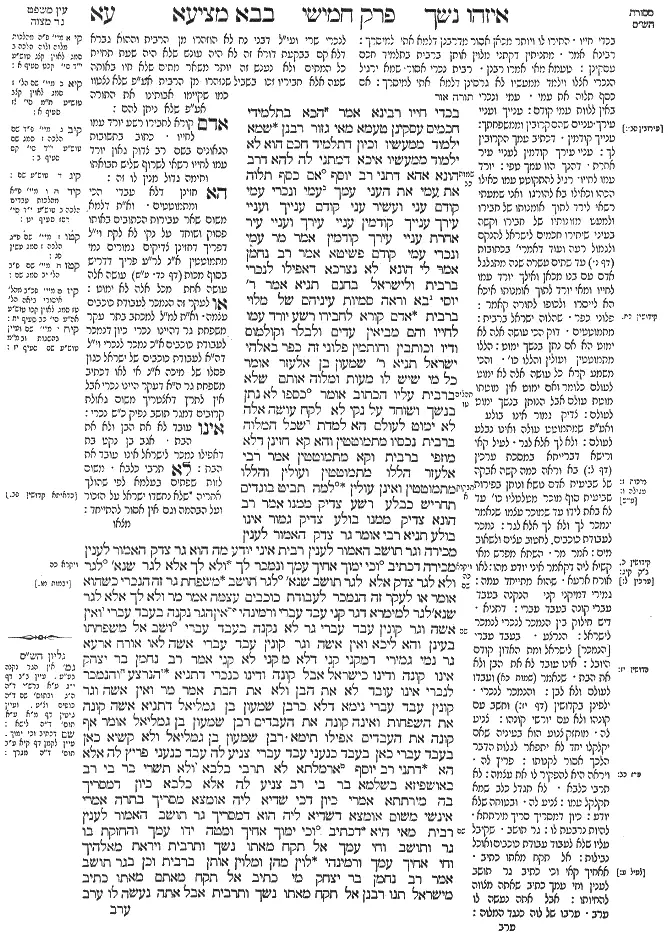
Bava Metzia 71a - Guemara
בכדי חייו רבינא אמר הכא בתלמידי חכמים עסקינן טעמא מאי גזור רבנן שמא ילמוד ממעשיו וכיון דתלמיד חכם הוא לא ילמוד ממעשיו איכא דמתני לה להא דרב הונא אהא דתני רב יוסף (שמות כב, כד) אם כסף תלוה את עמי את העני עמך עמי ונכרי עמי קודם עני ועשיר עני קודם ענייך ועניי עירך ענייך קודמין עניי עירך ועניי עיר אחרת עניי עירך קודמין אמר מר עמי ונכרי עמי קודם פשיטא אמר רב נחמן אמר לי הונא לא נצרכא דאפילו לנכרי ברבית ולישראל בחנם תניא אמר ר' יוסי בא וראה סמיות עיניהם של מלוי ברבית אדם קורא לחבירו רשע יורד עמו לחייו והם מביאין עדים ולבלר וקולמוס ודיו וכותבין וחותמין פלוני זה כפר באלהי ישראל תניא ר' שמעון בן אלעזר אומר כל מי שיש לו מעות ומלוה אותם שלא ברבית עליו הכתוב אומר (תהלים טו, ה) כספו לא נתן בנשך ושוחד על נקי לא לקח עושה אלה לא ימוט לעולם הא למדת שכל המלוה ברבית נכסיו מתמוטטין והא קא חזינן דלא מוזפי ברבית וקא מתמוטטין אמר רבי אלעזר הללו מתמוטטין ועולין והללו מתמוטטין ואינן עולין (חבקוק א, יג) למה תביט בוגדים תחריש כבלע רשע צדיק ממנו אמר רב הונא צדיק ממנו בולע צדיק גמור אינו בולע תניא רבי אומר גר צדק האמור לענין מכירה וגר תושב האמור לענין רבית איני יודע מה הוא גר צדק האמור לענין מכירה דכתיב (ויקרא כה, לט) וכי ימוך אחיך עמך ונמכר לך ולא לך אלא לגר שנא' (ויקרא כה, מז) לגר ולא לגר צדק אלא לגר תושב שנא' (ויקרא כה, מז) לגר תושב משפחת גר זה הנכרי כשהוא אומר או לעקר זה הנמכר לעבודת כוכבים עצמה אמר מר ולא לך אלא לגר שנא' לגר למימרא דגר קני עבד עברי ורמינהי אין הגר נקנה בעבד עברי ואין אשה וגר קונין עבד עברי גר לא נקנה בעבד עברי (ויקרא כה, מא) ושב אל משפחתו בעינן והא ליכא ואין אשה וגר קונין עבד עברי אשה לאו אורח ארעא גר נמי גמירי דמקני קני דלא מקני לא קני אמר רב נחמן בר יצחק אינו קונה ודינו כישראל אבל קונה ודינו כנכרי דתניא הנרצע והנמכר לנכרי אינו עובד לא את הבן ולא את הבת אמר מר ואין אשה וגר קונין עבד עברי נימא דלא כרבן שמעון בן גמליאל דתניא אשה קונה את השפחות ואינה קונה את העבדים רבן שמעון בן גמליאל אומר אף קונה את העבדים אפילו תימא רבן שמעון בן גמליאל ולא קשיא כאן בעבד עברי כאן בעבד כנעני עבד עברי צניע לה עבד כנעני פריץ לה אלא הא דתני רב יוסף ארמלתא לא תרבי כלבא ולא תשרי בר בי רב באושפיזא בשלמא בר בי רב צניע לה אלא כלבא כיון דמסריך בה מירתתא אמרי כיון דכי שדיא ליה אומצא מסריך בתרה אמרי אינשי משום אומצא דשדיא ליה הוא דמסריך גר תושב האמור לענין רבית מאי היא דכתיב (ויקרא כה, לה) וכי ימוך אחיך ומטה ידו עמך והחזקת בו גר ותושב וחי עמך אל תקח מאתו נשך ותרבית ויראת מאלהיך וחי אחיך עמך ורמינהי לוין מהן ומלוין אותן ברבית וכן בגר תושב אמר רב נחמן בר יצחק מי כתיב אל תקח מאתם מאתו כתיב מישראל תנו רבנן אל תקח מאתו נשך ותרבית אבל אתה נעשה לו ערב
Comments from Rashi on Masechet Bava Metzia Page 71a
בכדי חייו . התירו לו ויותר מכאן אסור מדרבנן דלמא אתי למיסרך: רבינא אמר . מתניתין דקתני מלוין אותן ברבית בתלמיד חכם עסקינן: טעמא מאי אמרו רבנן . רבית נכרי אסור שמא ירגיל הנכרי אצלו וילמד ממעשיו לא גרסינן דלמא אתי למיסרך: אם כסף תלוה את עמי . עמי ונכרי באין ללוות. עמי קודם: ענייך ועניי עירך . עניים שהם קרובין וממשפחתך: ענייך קודמין . דכתיב עמך. הקרובין לך: עניי עירך קודמין לעניי עיר אחרת . דהנך הוו עמך טפי: יורד עמו לחייו . רגיל להתקוטט עמו כאילו הכהו וכאילו בא להורגו ואני שמעתי רשאי לירד לתוך אומנותו של חבירו ולמעט מזונותיו של חבירו וקשה בעיני שיתירו חכמים לישראל להנקם ולגמול רעה ועוד דאמרי' בכתובות (דף נ.) עד שתים עשרה שנה מתגלגל אדם עם בנו מכאן ואילך יורד עמו לחייו ומאי יורד לתוך אומנותו איכא הא לייסרו ולכופו לתורה קאמר: פלוני כפר . שהלוה ישראל ברבית: מתמוטטים . דוק הכי עושה אלה לא ימוט הא אם נתן בנשך ימוט: הללו מתמוטטין ועולין והללו וכו' . והכי משמע קרא כל עושה אלה לא ימוט לעולם כלומר ואם ימוט אין מוטתו מוטת עולם אבל הנותן בנשך ימוט לעולם: צדיק גמור אינו בולע . ואע"פ שמתמוטט. עולה ואינו נבלע לעולם: ולא לך אלא לגר . לעיל קאי ורישא דברייתא במסכת ערכין (דף ל:) בא וראה כמה קשה אבקה של שביעית אדם נושא ונותן בפירות שביעית סוף מוכר מטלטליו כו' עד לא באת לידו עד שמוכר עצמו שנאמר ונמכר לך ולא לך אלא לגר: נמכר לעבודת כוכבים . לחטוב עצים ולשאוב מים: אמר מר . השתא מפרש מאי קשיא ליה דקאמר איני יודע מהו: לאו אורח ארעא . שהוא מתייחד עמה: גמירי דמיקני קני . הנקנה בעבד עברי. קונה בעבד עברי: דתניא . דיש חילוק בין הנמכר לנכרי לנמכר לישראל: הנרצע . בעבד עברי [הנמכר] לישראל ומת האדון קודם היובל: אינו עובד לא את הבן ולא את הבת . שנאמר (שמות כא) ועבדו לעולם ולא לבן: והנמכר לנכרי . ילפינן בקדושין (דף יז:) וחשב עם קונהו ולא עם יורשי קונהו: צניע לה . מוחזק צנוע הוא בעיניה שאם יקלקלו יחד לא יתפאר לגלות הדבר הלכך אסור לקנותו: פריץ לה . ויראה היא להפקיר לו את עצמה: לא תרבי כלבא . לא תגדל כלב שמא תקלקל עמו: צניע לה . ובטוחה שלא יודע: כיון דמסריך סריך מירתתא . להיות נרבעת לו: גר תושב . שקיבל עליו לא לעבוד עבודת כוכבים ואוכל נבילות: אל תקח מאתו כתיב . אאחיך קאי וכי כתיב גר תושב לענין וחי עמך כתיב שאתה מצווה להחיותו: אבל אתה נעשה לו ערב . ערבו של לוה כנגד המלוה:
Comments from Tosafot - Bava Metzia 71a
אדם קורא לחבירו רשע יורד עמו לחייו . כתוב בתשובות הגאונים בשם רב צדוק גאון יורד עמו לחייו רשאי לשרוף שליש תבואתו ותימה גדול מנין לו זה: הא חזינן דלא עבדי הכי ומתמוטטים . וא"ת דלמא משום שאר עבירות הכתובים באותו פסוק ושוחד על נקי לא לקח וי"ל דפריך דחזינן צדיקים גמורים נמי מתמוטטין א"נ לר"ע פריך דדריש בסוף מכות (דף כד. ע"ש) עושה אלה עושה אחת מכל אלה לא ימוט: או לעקר זה הנמכר לעבודת כוכבים עצמה . וא"ת למ"ל למכתב בתר עקר משפחת גר דהיינו נכרי כיון דנמכר לעבודת כוכבים א"כ נמכר לנכרי וי"ל דה"א לעבודת כוכבים של ישראל כגון פסלו של מיכה א"נ אי לאו דכתיב משפחת גר ה"א דעקר היינו נכרי אבל אין לתרץ דאצטריך משום גאולת קרובים דמגר תושב נפיק כ"ש נכרי: אינו עובד לא את הבן ולא את הבת . אגב בן נקט בת דאפילו נמכר לישראל אינו עובד את הבת: לא תרבי כלבא . משום לזות שפתים בעלמא לפי שהולך אחריה שלא נחשדו ישראל על הזכור ועל הבהמה וגם אין אסור להתייחד:
Bava Metzia 71a - Mishnah translated into english
to teach that one may lend money with interest to a ger toshav only to the extent required to provide a livelihood to the lender, but not to do so as a regular business.
Ravina said: Here in the mishna we are dealing with Torah scholars, for whom it is permitted to lend money to a gentile with interest. The Gemara explains: What is the reason the Sages decreed that one should not lend money to a gentile with interest? The reason is that perhaps the Jew will learn from the gentile’s actions. Continuous interactions with gentiles for the sake of financial dealings may have a negative influence on a Jew. And since in this case the lender is a Torah scholar, he will not learn from the gentile’s actions.
There are those who teach that which Rav Huna said in connection with that which Rav Yosef taught: The verse states: “If you lend money to any of My people, even to the poor person who is with you” (Exodus 22:24). The term “My people” teaches that if one of My people, i.e., a Jew, and a gentile both come to borrow money from you, My people take precedence. The term “the poor person” teaches that if a poor person and a rich person come to borrow money, the poor person takes precedence. And from the term: “Who is with you,” it is derived: If your poor person, meaning one of your relatives, and one of the poor of your city come to borrow money, your poor person takes precedence. If it is between one of the poor of your city and one of the poor of another city, the one of the poor of your city takes precedence.
The Master said above: If one of My people and a gentile come to you for a loan, My people take precedence. The Gemara asks: Isn’t this obvious? Is there any reason to think that a gentile would take precedence over a Jew? Rav Naḥman said that Rav Huna said to me: It is necessary only to teach that even if the choice is to lend money to a gentile with interest or to a Jew for free, without interest, one must still give preference to the Jew and lend the money to him, even though this will entail a lack of profit.
It is taught in a baraita: Rabbi Yosei says: Come and see the blindness in the eyes of those who lend money with interest. If a person calls another a wicked person in public, the other becomes insulted and he harasses him in all aspects of his life because he called him by this disgraceful name. But they who lend with interest bring witnesses and a scribe [velavlar] and a pen [vekulmos] and ink and write and sign a document that testifies: So-and-so denies the existence of the God of Israel, as the very fact that he lent with interest in defiance of the Torah is tantamount to a denial of the existence of God.
It is taught in a baraita: Rabbi Shimon ben Elazar says: Concerning anyone who has money and lends it without interest, the verse says about him: “He who has not given his money with interest and who has not taken a bribe against the innocent, he who does these shall never collapse” (Psalms 15:5). From this statement, the opposite can also be inferred: You learn from this that concerning anyone who lends his money to others with interest, his property, i.e., his financial standing, collapses. The Gemara asks: But we see people who do not lend money with interest and nevertheless their property collapses. Rabbi Elazar says: There is still a difference: Those who do not lend money with interest collapse but then ultimately rise, but these, who lend with interest, collapse and do not rise again.
Referring to the subject of honest people who collapse temporarily, it is said: “Why do You observe the treacherous, and remain silent while the wicked swallows the one who is more righteous than he?” (Habakkuk 1:13). Rav Huna says about this verse: One who is more righteous than he, he swallows for the moment, but he does not swallow a completely righteous person at all.
§ The Gemara returns to the clarification of the mishna, which mentioned the subject of a gentile who resides in Eretz Yisrael and observes the seven Noahide mitzvot [ger toshav]. It is taught in a baraita: Rabbi Yehuda HaNasi says: With regard to the convert that is mentioned concerning the sale of a Hebrew slave and the ger toshav that is mentioned concerning interest, I do not know what the meaning of each of these references is.
The Gemara explains: The convert that is mentioned concerning the sale of a Hebrew slave is referring to the following, as it is written: “If your brother waxes poor with you and is sold unto you” (Leviticus 25:39), and it was expounded in a baraita: And not only will he be sold to you, a born Jew, but he will be sold even to a convert, as it is stated: “And sells himself to a stranger [leger]” (Leviticus 25:47).
And this sale to a ger is referring to a sale not only to a righteous convert [leger tzedek], but even to a ger toshav, as it is stated: “And sells himself to a stranger who is a settler [leger toshav]” (Leviticus 25:47). With regard to the continuation of the verse: “Or to an offshoot of a stranger’s family,” this is referring to a gentile, i.e., he will reach a state where he has no choice but to sell himself to a gentile. When it states: “Or to an offshoot of a stranger’s family,” this is referring to one sold for idol worship itself, i.e., he is forced to sell himself as a slave to work in a temple of idol worship.
The Gemara clarifies the baraita. The Master said: And not only will he be sold to you, a born Jew, but he will be sold even to a convert, as it is stated: “And sells himself to a stranger.” Is this to say that a convert may acquire a Hebrew slave? The Gemara raises a contradiction from a baraita: A convert cannot be acquired as a Hebrew slave, and a woman or a convert may not acquire a Hebrew slave.
The Gemara explains the baraita. A convert cannot be acquired as a Hebrew slave, as we require the fulfillment of the verse: “Then he shall go out from you, he and his children with him, and shall return to his own family” (Leviticus 25:41), and a convert is not able to do this, since upon conversion the convert severs his relationship with his gentile family, and he therefore has no family. The baraita teaches: And a woman or a convert may not acquire a Hebrew slave. With regard to a woman, the reason is that it is not proper conduct, since people may say that she is purchasing him to engage in sexual intercourse with him. With regard to a convert as well, it is learned as a tradition: Only one who can be acquired as a Hebrew slave can acquire a Hebrew slave, and one who cannot be acquired as a Hebrew slave cannot acquire a Hebrew slave. Since a convert cannot be acquired as a Hebrew slave, he also cannot acquire one.
Rabbi Yehuda HaNasi’s question was that since it has been established that a convert may not acquire a Hebrew slave, why was he mentioned in the verse? Rav Naḥman bar Yitzḥak said: He cannot acquire a Hebrew slave and have his halakha be like that of a Jew who owns a Hebrew slave, but he can acquire a Hebrew slave and have his halakha be like that of a gentile who owns a Hebrew slave.
This is as it is taught in a baraita: A Hebrew slave who had his ear pierced by his own request in order to remain a slave after his six-year period of servitude was over, and therefore is emancipated only during the Jubilee Year, and also a Hebrew slave who was sold to a gentile, does not serve his master’s son and does not serve his master’s daughter after his master’s death, but rather is emancipated. The same halakha would apply to a Hebrew slave sold to a convert, whose status in this respect is similar to that of a gentile.
The Master said above: And a woman or a convert may not acquire a Hebrew slave. The Gemara suggests: Let us say that this baraita is not in accordance with the opinion of Rabban Shimon ben Gamliel. As it is taught in a baraita: A woman may acquire maidservants but may not acquire male slaves, in order to preserve standards of modesty. Rabban Shimon ben Gamliel says: She may also acquire male slaves. The Gemara rejects this suggestion: Even if you say that this baraita is in accordance with the opinion of Rabban Shimon ben Gamliel, it is not difficult. Here, where it is prohibited, the ruling is stated with regard to a Hebrew slave, and there, where Rabban Shimon ben Gamliel renders it permitted, the ruling is stated with regard to a Canaanite slave.
The Gemara explains the difference: A Hebrew slave is regarded as discreet in her eyes, and since she trusts that a Hebrew slave will not reveal their actions to others if they engage in sexual intercourse, it is prohibited for her to acquire a male Hebrew slave. By contrast, a Canaanite slave is regarded as indiscreet in her eyes, so she will be deterred from transgressing with him.
The Gemara asks: But this seems to contradict the baraita that Rav Yosef teaches: A widow may not raise a dog, due to suspicion that she may engage in bestiality, and she may not allow a student of Torah to dwell as a lodger in her home. Granted, it makes sense that it is prohibited for her to have a student of Torah lodging in her home, as he is regarded as discreet in her eyes. But concerning a dog, since it would follow her around afterward if she would engage in bestiality with it, she is afraid to sin with it. Therefore, it should be permitted for her to raise it. The Sages say in response: Since it will also follow her around if she throws it a piece of meat [umtza], people will say: It is following her due to the meat she threw to it, and they will not suspect her of sinning. Consequently, she will not be deterred from transgressing.
The Gemara discusses Rabbi Yehuda HaNasi’s second difficulty: The ger toshav that was mentioned concerning interest, what is it? What was Rabbi Yehuda’s difficulty? As it is written: “And if your brother waxes poor, and his means fail with you, then you shall strengthen him, as a stranger and a resident [ger vetoshav] shall he live with you. You may not take interest or increase from him, but fear your God, and your brother should live with you” (Leviticus 25:35–36). This indicates that interest may not be taken from a ger toshav. And the Gemara raises a contradiction from the mishna: One may borrow money from them, i.e., from gentiles, and lend money to them with interest, and similarly, one may borrow money from and lend money to a ger toshav with interest.
Rav Naḥman bar Yitzḥak says: Is it written: Do not take from them? No, it is written: “Do not take from him,” in the singular, and it means: Do not take interest from a Jew.
With regard to this verse the Sages taught: “You may not take interest or increase from him,” but you may become a guarantor for him for a transaction involving interest.
Traduction : The William Davidson digital edition of the Koren Noé Talmud, with commentary by Rabbi Adin Even-Israel Steinsaltz.