 Talmud Bavli
The learning on the whole site is dedicated : L'ilui Nishmat Avraham Ben Simha
The learning on the whole site is dedicated : L'ilui Nishmat Yaakov ben Myriam
The learning on the whole site is dedicated : L'ilui Nishmat אסתר בת חיים
Bava Metzia 90b : Youtube
Daf TubeYoutube
1 video class :
Bava Metzia Page 90b
Bava Metzia 90b - Guemara
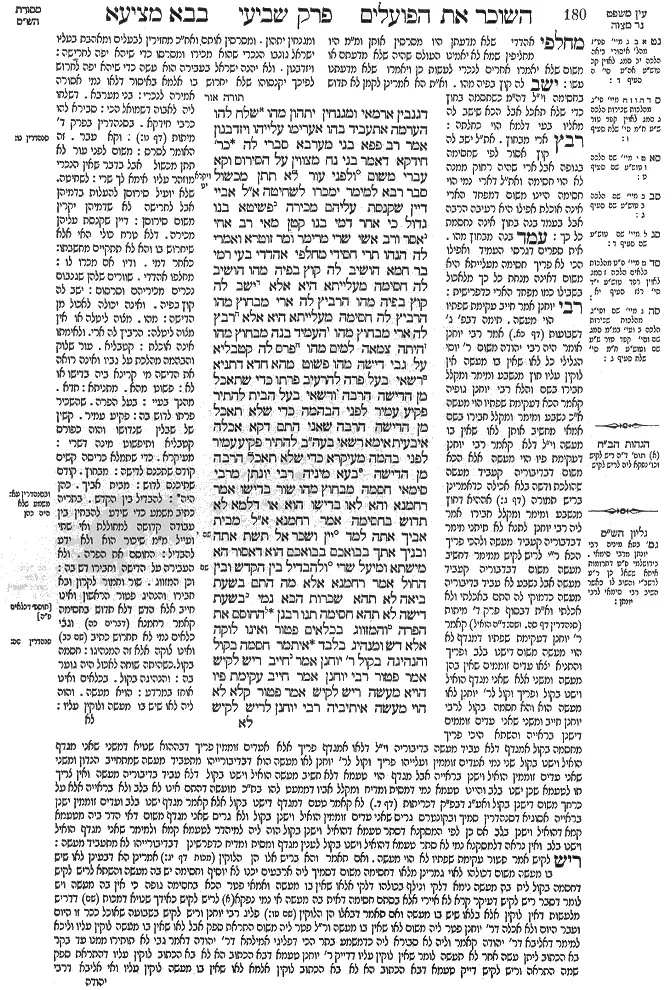
דגנבין ארמאי ומגנחין יתהון מהו שלח להו הערמה אתעביד בהו אערימו עלייהו ויזדבנון אמר רב פפא בני מערבא סברי לה כר' חידקא דאמר בני נח מצווין על הסירוס וקא עברי משום (ויקרא יט, יד) ולפני עור לא תתן מכשול סבר רבא למימר ימכרו לשחיטה א"ל אביי דיין שקנסת עליהם מכירה פשיטא בנו גדול כי אחר דמי בנו קטן מאי רב אחי אסר ורב אשי שרי מרימר ומר זוטרא ואמרי לה הנהו תרי חסידי מחלפי אהדדי בעי רמי בר חמא הושיב לה קוץ בפיה מהו הושיב לה חסימה מעלייתא היא אלא ישב לה קוץ בפיה מהו הרביץ לה ארי מבחוץ מהו הרביץ לה חסימה מעלייתא היא אלא רבץ לה ארי מבחוץ מהו העמיד בנה מבחוץ מהו היתה צמאה למים מהו פרס לה קטבליא על גבי דישה מהו פשוט מהא חדא דתניא רשאי בעל פרה להרעיב פרתו כדי שתאכל מן הדישה הרבה ורשאי בעל הבית להתיר פקיע עמיר לפני הבהמה כדי שלא תאכל מן הדישה הרבה שאני התם דקא אכלה איבעית אימא רשאי בעה"ב להתיר פקיע עמיר לפני בהמה מעיקרא כדי שלא תאכל הרבה מן הדישה בעא מיניה רבי יונתן מרבי סימאי חסמה מבחוץ מהו שור בדישו אמר רחמנא והא לאו בדישו הוא או דלמא לא תדוש בחסימה אמר רחמנא א"ל מבית אביך אתה למד (ויקרא י, ט) יין ושכר אל תשת אתה ובניך אתך בבואכם בבואכם הוא דאסור הא מישתא ומיעל שרי (ויקרא י, י) ולהבדיל בין הקדש ובין החול אמר רחמנא אלא מה התם בשעת ביאה לא תהא שכרות הכא נמי בשעת דישה לא תהא חסימה תנו רבנן החוסם את הפרה והמזווג בכלאים פטור ואינו לוקה אלא דש ומנהיג בלבד איתמר חסמה בקול והנהיגה בקול ר' יוחנן אמר חייב ריש לקיש אמר פטור רבי יוחנן אמר חייב עקימת פיו הויא מעשה ריש לקיש אמר פטור קלא לא הוי מעשה איתיביה רבי יוחנן לריש לקיש
Comments from Rashi on Masechet Bava Metzia Page 90b
ומנגחין יתהון . ומסרסין אותם ואח"כ מחזירין לבעלים ומאהבת בעליו ישראל גונבו הנכרי שהוא מכירו ומסרסו כדי שיהא יפה לחרישה: ויזדבנון . ולא יהנה ישראל בעבירה הוא עשה כדי שיהא יפה לחרוש לפיכך יקנסוהו שלא יחרוש בו אלמא באיסור דלאו נמי אסורה אמירה לנכרי: בני מערבא . דשלחו ליה לאבוה דשמואל הכי: סבירא להו כרבי חידקא . בסנהדרין בפרק ד' מיתות (דף נו:): וקא עבר . זה האומר לסרס: משום לפני עור לא תתן מכשול . אבל בדבר שאין הנכרי מוזהר עליו אימא לך שרי: לשחיטה . שלא יועיל סירוסן להעלות בדמיהן אבל לחרישה לא שדמיהן יקרין משום סירוסן: דיין שקנסת עליהן מכירה . דלא טרח כולי האי אלא שיחרוש בו והא לא תתקיים מחשבתו: כאחר דמי . ודיו אם מכרו לו: מחלפו אהדדי . שוורים שלהן שגנבום נכרים מכיריהם וסרסום: ישב לה קוץ בפיה . ואינה יכולה לאכול מן הדישה: מהו . מצוה ליטלה או אין מצוה ליטלה: הרביץ לה ארי . ולאימתו אינה אוכלת: קטבליא . עור שלוק והבהמה מהלכת על גביו ואינה רואה את הדישה מי קרינא ביה בדישו או לא: פשוט מהא . מתניתא: חדא . מהנך בעיי: בעל הפרה . שהשכיר פרתו לדוש בה: פקיע עמיר . קשין של שבלין שנדושו והוה כפורס קטבליא ותיפשוט מינה דשרי: מעיקרא . כדי שתמלא כריסה קשים קודם שתכנס לדישה: מבחוץ . קודם שתיכנס לדוש: מבית אביך . כהן היה.: להבדיל בין הקדש . בתריה כתיב משמע כדי שידע להבחין בין עבודה קדושה למחוללת ואי שתי ועייל מ"מ שיכור הוא ולא ידע להבדיל: החוסם את הפרה . ולא העבירה על הדישה וחבירו דש בה: וכן המזווג . שור וחמור לקרון ובא חבירו והנהיג פטור הראשון ואינו חייב אלא הדש דלא תדוש בחסימה קאמר רחמנא (דברים כה) וגבי כלאים נמי לא תחרוש כתיב (שם כב) ואינו לוקה אלא זה המנהיגו: חסמה בקול . כשהיתה שוחה לאכול היה גוער בה: והנהיגה בקול . בכלאים ואינו אוחז במרדע: הויא מעשה . והוה ליה לאו שיש בו מעשה ולוקין עליו:
Comments from Tosafot - Bava Metzia 90b
דגנבין להו ארמאי . בשאלתות דרב אחאי מפרש שהיו קושרין דינר בכיס של בהמה בחזקה והנכרי גונב הדינר ותולש הכיס ומסרסו ולשון גנבין להו לא משמע הכי שלא באין לגנוב רק הדינר: מחלפי אהדדי . שלא מדעתן היו מסרסין אותן ומ"מ היו מחליפין שמא לא יאמינו העולם שהיה שלא מדעתם או משום שלא יאמרו אחרים לנכרי לעשות כן ויאמרו שלא מדעתנו עשו: ישב לה קוץ בפיה מהו . וא"ת הא אמרינן לקמן לא תדוש בחסימה וי"ל דה"מ כשחסמה בחוץ כדי שלא תאכל אבל הכא שישב לה מאליו בעי דלמא הוי כחלתה: רבץ ארי מבחוץ . את"ל ישב לה קוץ אסור לפי שחסימה בגופה אבל ארי שהיה רחוק ממנה לא הוי חסימה ואת"ל דארי נמי הוי חסימה היינו משום דמפחד הארי אינה אוכלת אפילו היא רעיבה הרבה אבל בעמד בנה בחוץ אינה נחסמת כל כך: עמד בנה מבחוץ מהו . אית ספרים דגרסי העמיד ואפילו הכי לא פריך חסימה מעלייתא היא משום דאינה מנחת כל כך מלאכול בשבילו כמו מפחד הארי כדפרישית: רבי יוחנן אמר חייב עקימת שפתיו הוי מעשה . תימה דבפ' ג' דשבועות (דף כא.) אמר רבי יוחנן אומר היה רבי יהודה משום ר' יוסי הגלילי כל לאו שאין בו מעשה אין לוקין עליו חוץ מנשבע ומימר ומקלל חבירו בשם והלא רבי יוחנן גופיה קאמר הכא דעקימת שפתיו הוי מעשה א"כ נשבע ומימר ומקלל חבירו בשם אמאי מחשיב אותן לאו שאין בו מעשה וי"ל דלא קאמר רבי יוחנן דעקימת פיו הוי מעשה אלא הכא משום דבדיבוריה קעביד מעשה שהולכת ודשה בלא אכילה כדאמרינן בריש תמורה (דף ג:) אההיא דחוץ מנשבע ומימר ומקלל חבירו אמר ליה רבי יוחנן לתנא לא תיתני מימר דבדבוריה קעביד מעשה ולהכי פריך הכא ר"י לריש לקיש ממימר דחשיב מעשה משום דבדבוריה קעביד מעשה אבל נשבע לא עביד בדיבוריה מעשה כדמוקי לה התם באכלתי ולא אכלתי וא"ת דבסוף פרק ד' מיתות (סנהדרין דף סה ושם: ד"ה הואיל) קאמר ר' יוחנן דעקימת שפתיו דמגדף לא הוי מעשה משום דישנו בלב ופריך והתניא יצאו עדים זוממים שאין בהן מעשה ומשני אלא שאני מגדף הואיל וישנו בקול ופריך וקול לר' יוחנן לאו מעשה הוא והא חסמה בקול לרבי יוחנן חייב ומשני שאני עדים זוממים דישנן בראייה והשתא היכי פריך מחסמה בקול אמגדף דלא עביד מעשה בדיבוריה וי"ל דלאו אמגדף פריך אלא אעדים זוממין פריך דבההוא שנויא דמשני שאני מגדף הואיל וישנו בקול שני נמי אעדים זוממין ועלייהו פריך וקול לר' יוחנן לאו מעשה הוא דבדיבורייהו מתעביד מעשה שמתחייב הנדון ומשני שאני עדים זוממין הואיל וישנן בראייה אבל מגדף הוי טעמא דלא חשיב מעשה הואיל וישנו בקול דלא עביד בדיבוריה מעשה ואין צריך תו לטעמא שכן ישנו בלב והיינו טעמא נמי דמסית ומדיח ומקלל אביו דממעט להו בת"כ מועשה דהתם אינו לא בלב ולא בראייה אלא על כרחך משום דישנן בקול ואע"ג דבפ"ק דכריתות (דף ד.) לא קאמר טעם דמגדף דישנו בקול אלא קאמר מגדף ישנו בלב ועדים זוממין ישנן בראייה אסוגיא דסנהדרין סמיך ובקונטרס גריס שאני עדים זוממין הואיל וישנן בקול ולא גריס שאני מגדף משום דאי הדר ביה מטעמא קמא דהואיל וישנן בלב אם כן לפי המסקנא דסתר טעמא דהואיל וישנן בקול הוה ליה למיהדר לטעמא קמא ולמימר שאני מגדף הואיל וישנו בלב ואין נראה דלמסקנא נמי לא סתר טעמא דהואיל וישנו בקול לענין מגדף ומסית ומדיח כדפרשינן דבדיבורייהו לא מתעביד מעשה: ריש לקיש אמר פטור עקימת שפתיו לא הוי מעשה . ואם תאמר והא בריש אלו הן הלוקין (מכות דף יג:) אמרינן הא דבעינן לאו שיש בו מעשה משום דכולהו לאוי גמרינן מלאו דחסימה משום דסמיך ליה ארבעים יכנו לא יוסיף וחסימה יש בה מעשה והשתא לריש לקיש דחסמה בקול לית בה מעשה נימא דלקי ונילף בכולהו דלקי אלאו שאין בו מעשה ואמאי פטר הכא בחסימה גופה כי אין בה מעשה ויש לומר דסבר ריש לקיש דעיקר קרא לא איירי אלא בסתם חסימה דאית בה מעשה אי נמי נפקא לריש לקיש כאידך שנויא דמכות (שם) דדריש מלעשות דאין לוקין אלא בלאו שיש בו מעשה ואם תאמר דבאלו הן הלוקין (שם טו:) פליג רבי יוחנן וריש לקיש בשבועה שאוכל ככר זו היום ועבר היום ולא אכלה דר' יוחנן פטר ליה משום לאו שאין בו מעשה ור"ל פטר ליה משום התראת ספק אבל לאו שאין בו מעשה לוקין עליו וליכא למימר דאליבא דר' יהודה קאמר וליה לא סבירא ליה כדמשמע בתר הכי דפליגי אמילתא דר' יהודה דאמר גבי לא תותירו ממנו עד בקר בא הכתוב ליתן עשה אחר לא תעשה לומר שאין לוקין עליו דדייק ר' יוחנן טעמא דבא הכתוב הא לא בא הכתוב לוקין עליו דהתראת ספק שמה התראה וריש לקיש דייק טעמא דבא הכתוב הא לא בא הכתוב לוקין אלמא לאו שאין בו מעשה לוקין עליו ואי אליבא דרבי יהודה קאמר אמאי לא דייק נמי ממילתיה דהתראת ספק שמה התראה כדדייק רבי יוחנן אלא קאמר התם דסבר לה כאידך דרבי יהודה דאמר לא שמה התראה אלא ודאי משמע דסבר הכי ובפ"ג דשבועות (דף כא.) נמי פריך מהתם דרבי יוחנן אדר' יוחנן משמע דאליבא דנפשייהו פליגי וי"ל דריש לקיש לא פטר הכא אלא אליבא דמאן דבעי לאו שיש בו מעשה אבל איהו ודאי סבר כר' יהודה והא דקאמר בסמוך הא מני ר' יהודה היא ה"ק ר' יהודה היא וסבירא ליה כוותיה:
Bava Metzia 90b - Mishnah translated into english
which gentiles steal and castrate. Since it is prohibited for Jews to castrate animals, they would sometimes arrange for a gentile to pretend to steal the animal and subsequently return it after castrating it, as it is easier to handle a castrated animal. What is the halakha with regard to a case of this kind? Shmuel’s father sent to him: They used artifice; therefore, you should use artifice with them and make them sell it as a punishment. This shows that it is prohibited to instruct a gentile to perform a prohibition on one’s behalf.
Rav Pappa said: This provides no conclusive proof, as the inhabitants of the West, i.e., Eretz Yisrael, who are the ones who raised this question, hold in accordance with the opinion of Rabbi Ḥideka, who says: The descendants of Noah are commanded with regard to castration. They too are prohibited from performing this practice. And consequently, those Jews who cause them to do it transgress the prohibition of: “Nor put a stumbling block before the blind” (Leviticus 19:14).
Rava thought to say that it is not enough that the owners may not use these animals castrated for them by gentiles, but they must even sell the animals for slaughter, but not for plowing, so that they would derive no benefit at all from the increase in the value of their property that resulted from a transgression. A castrated animal is worth more if it is sold for plowing, but not if it is sold for slaughter. Abaye said to him: It is enough for them that you penalized them by requiring them to sell the animals.
With regard to the same issue, the Gemara comments: It is obvious that if one sold the castrated animal to his adult son, the son is considered like another person, i.e., there is no need to sell to a complete stranger. If the buyer was his minor son, what is the halakha? Rav Aḥai prohibited this, and Rav Ashi permitted it. Mareimar and Mar Zutra, and some say it was a certain pair of unknown pious men, would exchange such oxen with each other.
§ Rami bar Ḥama raises a dilemma: If one placed a thorn in the mouth of a threshing animal, what is the halakha? The Gemara is puzzled by this question: If he placed the thorn in its mouth, this is certainly considered proper muzzling. Rather, the dilemma should be formulated as follows: If a thorn settled in its mouth and one did not remove it, what is the halakha?
The Gemara poses a similar question: If one made a lion crouch over it from outside, to frighten the animal and stop it from eating, what is the halakha? The Gemara responds as it did before: If he made the lion crouch over it, this is considered proper muzzling. Rather, if a lion was crouching over it and he did not get rid of it, what is the halakha? Similarly, if he placed its young on the outside, so that the animal looks toward its young and does not eat, what is the halakha? Or, if it was thirsty for water, what is the halakha? If he spread a leather blanket [katavliya] for it over the produce it was threshing, so that the animal cannot see the food, what is the halakha?
The Gemara comments: Resolve at least one of the abovementioned dilemmas, as it is taught in a baraita: The owner of a cow who lent his animal to thresh the field of another is permitted to starve his cow so that it will eat plenty of the crop it is threshing, and a homeowner is permitted to untie a bundle of straw before an animal so that it will not eat plenty of the produce it is threshing. This is similar to spreading a blanket over the produce.
The Gemara refutes this comparison: No proof can be brought from here, because there it is different, as it at least gets to eat the produce. If you wish, say instead that the baraita should be explained as follows: A homeowner is permitted to untie a bundle of straw before an animal at the outset, before the threshing begins, so that it will fill itself with straw beforehand and will not eat plenty of the crop it is threshing.
§ Rabbi Yonatan raised a dilemma before Rabbi Simai: If one muzzled the animal from the outside, i.e., before it began to thresh, what is the halakha? The Gemara clarifies the sides of the dilemma: One can argue that the Merciful One states: “An ox in its threshing” (Deuteronomy 25:4), and this animal is not in its threshing, as it was muzzled before it was taken to thresh. Or perhaps the Merciful One states that one may not have the animal thresh while it is muzzled.
Rabbi Simai said to him: You can learn from your father’s house, i.e., you can derive this halakha from the case of priests, being a priest yourself. As the Torah states: “Drink no wine nor strong drink, you nor your sons with you, when you come into the Tent of Meeting” (Leviticus 10:9). Doesn’t a straightforward reading of this verse lead to the conclusion that it is only when you come into the Sanctuary that it is prohibited, whereas to drink wine and then enter is permitted?
This interpretation is not tenable, as with regard to the same matter the Merciful One states: “That you may make a difference between the sacred and the non-sacred” (Leviticus 10:10), which indicates that the priest must be capable of making these distinctions when he enters the Temple. Rather, just as there, with regard to the prohibition against drinking wine in the Sanctuary, the Torah means that at the time of entry there must be no drunkenness, whether the wine was drunk inside or outside the Sanctuary, here too it means that at the time of threshing there must be no muzzling.
§ The Sages taught: With regard to one who muzzles a cow that someone else is using for threshing, and similarly, one who plows with animals of diverse kinds together, e.g., with an ox and a donkey on the same plow, he is exempt, as only one who threshes a muzzled animal and one who leads diverse kinds of animals together are flogged.
§ It was stated that the amora’im disagreed about the following case: If one muzzled an animal with his voice, by berating it whenever it tried to eat, and similarly, if he led diverse kinds of animals together by means of his voice, without performing any action, what is the halakha? Rabbi Yoḥanan says he is liable; Reish Lakish says he is exempt. The Gemara explains the reasoning behind their opinions: Rabbi Yoḥanan says he is liable, as he maintains that the twisting of one’s mouth to speak is considered an action, albeit a slight one, whereas Reish Lakish says he is exempt, because a mere voice is not considered an action.
Rabbi Yoḥanan raised an objection to the opinion of Reish Lakish:
Traduction : The William Davidson digital edition of the Koren Noé Talmud, with commentary by Rabbi Adin Even-Israel Steinsaltz.