 Talmud Bavli
The learning on the whole site is dedicated : L'ilui Nishmat יוסף בן מושה
The learning on the whole site is dedicated : L'ilui Nishmat Jacques Isaac Ben Amram Loubaton
The learning on the whole site is dedicated : L'ilui Nishmat Nissim ben Barukh Malka
Bava Metzia 107a : Youtube
Daf TubeYoutube
1 video class :
Bava Metzia Page 107a
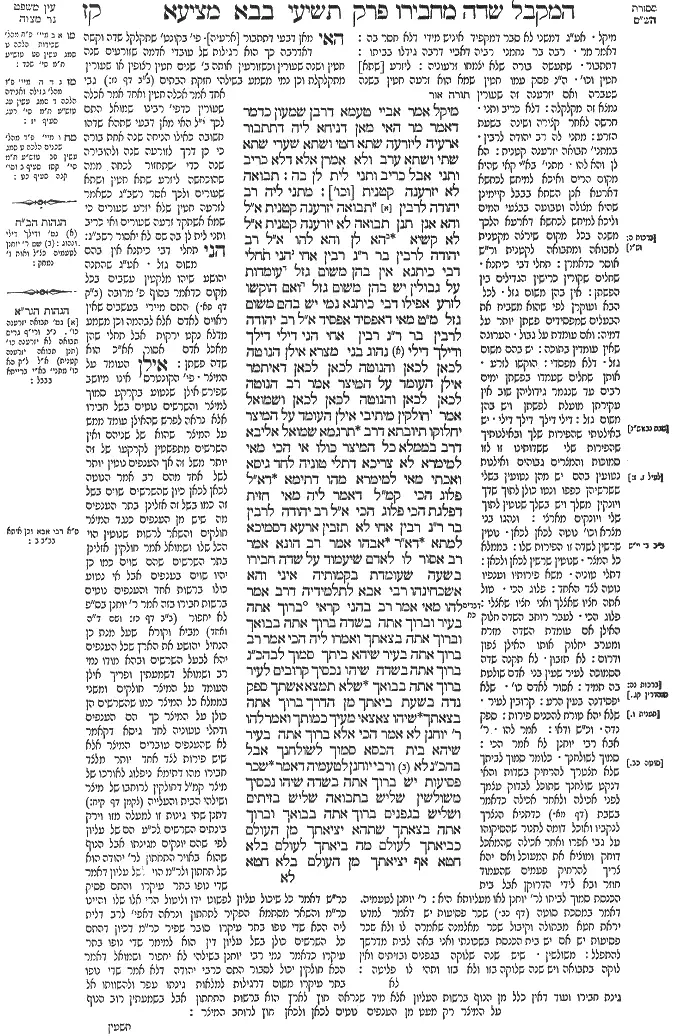
Bava Metzia 107a - Guemara
מיקל אמר אביי טעמא דרבן שמעון כדמר דאמר מר האי מאן דניחא ליה דתתבור ארעיה ליזרעה שתא חטי ושתא שערי שתא שתי ושתא ערב ולא אמרן אלא דלא כריב ותני אבל כריב ותני לית לן בה:
תבואה לא יזרענה קטנית [וכו']:
מתני ליה רב יהודה לרבין תבואה יזרענה קטנית א"ל והא אנן תנן תבואה לא יזרענה קטנית א"ל לא קשיא הא לן והא להו א"ל רב יהודה לרבין בר ר"נ רבין אחי הני תחלי דבי כיתנא אין בהן משום גזל עומדות על גבולין יש בהן משום גזל ואם הוקשו לזרע אפילו דבי כיתנא נמי יש בהם משום גזל מ"ט מאי דאפסיד אפסיד א"ל רב יהודה לרבין בר ר"נ רבין אחי הני דילי דילך ודילך דילי נהוג בני מצרא אילן הנוטה לכאן לכאן והנוטה לכאן לכאן דאיתמר אילן העומד על המיצר אמר רב הנוטה לכאן לכאן והנוטה לכאן לכאן ושמואל אמר חולקין מיתיבי אילן העומד על המיצר יחלוקו תיובתא דרב תרגמא שמואל אליבא דרב בממלא כל המיצר כולו אי הכי מאי למימרא לא צריכא דתלי טוניה לחד גיסא ואכתי מאי למימרא מהו דתימא דא"ל פלוג הכי קמ"ל דאמר ליה מאי חזית דפלגת הכי פלוג הכי א"ל רב יהודה לרבין בר ר"נ רבין אחי לא תזבין ארעא דסמיכא למתא דא"ר אבהו אמר רב הונא אמר רב אסור לו לאדם שיעמוד על שדה חבירו בשעה שעומדת בקמותיה איני והא אשכחינהו רבי אבא לתלמידיה דרב אמר להו מאי אמר רב בהני קראי (דברים כח, ג) ברוך אתה בעיר וברוך אתה בשדה ברוך אתה בבואך וברוך אתה בצאתך ואמרו ליה הכי אמר רב ברוך אתה בעיר שיהא ביתך סמוך לבהכ"נ ברוך אתה בשדה שיהו נכסיך קרובים לעיר ברוך אתה בבואך שלא תמצא אשתך ספק נדה בשעת ביאתך מן הדרך ברוך אתה בצאתך שיהו צאצאי מעיך כמותך ואמר להו ר' יוחנן לא אמר הכי אלא ברוך אתה בעיר שיהא בית הכסא סמוך לשולחנך אבל בהכ"נ לא ורבי יוחנן לטעמיה דאמר שכר פסיעות יש ברוך אתה בשדה שיהו נכסיך משולשין שליש בתבואה שליש בזיתים ושליש בגפנים ברוך אתה בבואך וברוך אתה בצאתך שתהא יציאתך מן העולם כביאתך לעולם מה ביאתך לעולם בלא חטא אף יציאתך מן העולם בלא חטא
Comments from Rashi on Masechet Bava Metzia Page 107a
גמ' מיקל . אע"ג דמשני לא סבר דמקפיד איניש מידי דלא חסר בה: דאמר מר . רבה בר נחמני רביה דאביי דרבה גידלו בביתו: דתתבור . שתעשה בורה שלא יצמחו זרעוניה: ליזרע [שתא] חטין וכו' . ה"נ פסק עמו חטין שמא הוא זרעה חטין בשנה שעברה ואם יזרענה זה שעורין נמצא זה מקלקלה: דלא כריב ותני . חרשה לאחר קצירה ושינה בשעת הזרע: מתני לה רב יהודה לרבין . במתני' תבואה יזרענה קטנית: הא לן והא להו . מתני' בא"י קאי שהיא מקום הרים ואיכא למיחש לכחשא דארעא אנן השתא בבבל קיימינן שהיא מצולה וטבועה בבצעי המים וליכא למיחש לכחשא דארעא הלכך משנה בכל מקום שירצה מקטנית לתבואה ומתבואה לקטנית ורבי שמעון אוסר כדאמרן: תחלי דבי כיתנא . שחלים שקורין כרישי"ן הגדילים בין הפשתן: אין בהם משום גזל . לכל הבא ועוקרן לפי שהוא משביח את הבעלים שמפסידים פשתן יותר על דמיה: ואם עומדת על גבול . הערוגה שאין עומדים בתוכה: יש בהם משום גזל . דלא מפסדי: הוקשו לזרע . אותן שחלים שעמדו בפשתן ימים רבים עד שנגמר גידוליהן שוב אין עקירתן מועלת לפשתן ויש בהם משום גזל: דילי דילך דילך דילי . יש באילנותי שהפירות שלך ובאילנותיך שהפירות שלי ששדותינו זו לזו סמוכות והמצרים גבוהים ואילנות נטועין בהם יש מהם נטועין בשלי ששרשיהן כפפו ונטו כולן לתוך שדך ויונקים משלך ויש בשלך שנוטין לתוך שלי ויונקים מארצי: ונהגו בני מצרא וכו' נוטה לכאן ולכאן . נוטין שרשין לשדה זו הפירות שלו: בממלא כל המצר . שנוטין שרשין לכאן ולכאן: דתלי טוניה . משא פירותיו וענפיו נוטה לצד האחד: פלוג הכי . טול אתה חציו שאצלך ואני חציו שאצלי: פלוג הכי . לעבר רוחב השדה חלוק האילן אם עומדת השדה מזרח ומערב יחלוק אותו האילן צפון ודרום: לא תזבון . לא תקנה שדה הסמוכה לעיר שעין בני האדם שולטת בה תמיד: אסור לאדם כו' . שלא יפסידנה בעין הרע: קרובין לעיר . שלא יהא טורח להכניס פירות: ספק נדה . וכ"ש ודאי: אמר להו . רב אבא רבי יוחנן לא אמר הכי: סמוך לשולחנך . כלומר סמוך לביתך שלא תצטרך להרחיק בשדות והאי דנקט שולחנך שתוכל לבדוק עצמך לפני אכילה ולאחר אכילה כדאמר בשבת (דף מא.) כדתניא הנצרך לנקביו ואוכל דומה לתנור שהסיקוהו על גבי אפרו ואחר אכילה שהמאכל דוחק ומוציא את המעוכל ואם יהא צריך להרחיק פעמים שהעמוד חוזר ובא לידי הדרוקן אבל בית הכנסת סמוך לביתו לר' יוחנן לאו מעליותא היא: ר' יוחנן לטעמיה . דאמר במסכת סוטה (דף כב.) שכר פסיעות יש דאמר למדנו יראת חטא מבתולה וקיבול שכר מאלמנה שאמרה לו ולא שכר פסיעות יש אם יש בית הכנסת בשכונתי ואני באה לבית מדרשך להתפלל: משולשין . שיש שנה שלוקה בגפנים ובזיתים ואין לוקה בתבואה ויש שנה שלוקה בזו ולא בזו ותהי לו פליטה:
Comments from Tosafot - Bava Metzia 107a
האי מאן דבעי דתתבור [ארעיה] . פי' בקונט' שתקלקל שדה וקשה דאדרבה כך הוא רגילות של עובדי אדמה שזורעים שנה חטין ושנה שעורין וכשזורעין אותה ב' שנים חטין רצופין או שעורין מתקלקלת וכן נמי משמע בשילהי חזקת הבתים (ב"ב דף נז:) גבי אחד אמר אכלה חטין ואחד אמר אכלה שעורין כדפי' רבינו שמואל התם לכך י"ל האי מאן דבעי שתהא שדהו חשובה כאילו הניחה שנה אחת בורה כי כן דרך לזורעה שנה ולהובירה שנה כדי שתחזור לכחה ממה שהוכחשה ליזרע שתא חטין ושתא שעורים ולכך אסר רשב"ג כשאמר לזרעה חטין שלא יזרע שעורים כי שמא אשתקד זרעה שעורים ואי כריב ותני לית לן בה שם לא יאסור רשב"ג: הני תחלי דבי כיתנא אין בהם משום גזל . אע"ג שהתנה יהושע שיהו מלקטין עשבים בכל מקום כדאמר בסוף פ' מרובה (ב"ק דף פא.) התם מיירי בעשבים שאין ראוים לאדם אלא לבהמה וכן משמע מדלא נקט ירקות אבל תחלי שהן מאכל אדם אסור אא"כ הוא שדה פשתן: אילן העומד על המיצר . פי' הקונטרס אינו מיושב שפירש אילן שנטוע בקרקע סמוך למיצר והשרשים נוטים בשל חבירו אלא נראה לפרש שהאילן עומד ממש על המיצר שהוא של שניהם ואין השרשים מתפשטין לקרקעו של זה יותר משל זה אך הענפים נוטין יותר לשל אחד מהם רב אמר הנוטה לכאן לכאן כיון שהשרשים שוים בשל זה כמו בשל זה אזלינן בתר הענפים מה שיש מן הענפים כנגד המיצר חולקים והשאר לרשות שנוטין הוי הכל שלו ושמואל אמר חולקין אזלינן בתר השרשים שהם שוים כמו כן יהיו שוים בענפים אבל אי נטוע כולו ברשות אחד והענפים נוטים ברשות חבירו בזה אמר ר' יוחנן בס"פ לא יחפור (ב"ב דף כז: ושם ד"ה ואחד) מביא וקורא שעל מנת כן הנחיל יהושע את הארץ שכל הענפים יהא לבעל השרשים ובהא מודו נמי רב ושמואל דשמעתין ופריך אילן העומד על המיצר חולקים ומשני בממלא כל המיצר כמו שהשרשים הן כולן על המיצר כך הם הענפים ודתלי טעוניה לחד גיסא דקאמר לא שהענפים עוברים המיצר אלא שיש פירות לצד אחד יותר מלצד חבירו מהו דתימא ניפלוג לאורכו של מיצר קמ"ל דחולקין לרוחבו של מיצר ושילהי הבית והעלייה (לקמן בבא מציעא דף קיח:) דתנן שתי גינות זו למעלה מזו וירק בינתים השרשים לכ"ע הם של עליון לפי שהם יונקים מגינתו אבל הנוף שהוא באויר התחתון לר' יהודה הוא של תחתון ולר"מ הוי לשל עליון דאמר שדי נופו בתר עיקרו והתם פסיק כר"ש דאמר כל שיכול עליון לפשוט ידו וליטול הרי אלו שלו והיינו כר"מ והשאר מסתמא הפקיר לתחתון ונראה דאפי' לרב דלית ליה הכא שדי נופו בתר עיקרו סובר שפיר כר"מ דכיון דהתם כל השרשים כולן בשל עליון דין הוא למימר שדי נופו בתר עיקרו כדאמר נמי רבי יוחנן בשילהי לא יחפור ושמואל דאמר הכא חולקין יכול לסבור התם כרבי יהודה דלא אמר שדי נופו בתר עיקרו משום דרגילות למלאות גינתו עפר ולהשוותו אל גינת חבירו ועוד דאין כלל מן הנוף ברשות העליון אלא מיד שנראה חוץ לארץ הוא ברשות התחתון אבל בשמעתין רוב הנוף על המיצר רק מעט מן הענפים נוטים לכאן ולכאן חוץ לרוחב המיצר:
Bava Metzia 107a - Mishnah translated into english
is lenient, as he maintains that donors are not particular in this regard. This shows that Rabban Shimon ben Gamliel is not bothered by a change of mind if no harm results.
Abaye said: Rabban Shimon ben Gamliel’s reason is as explained by the Master, Abaye’s teacher Rabba, as the Master says: One for whom it is preferable to grow crops and yet have his land remain as fertile as if it lay fallow should plant wheat one year and barley the next year. In addition, he should plant one year lengthwise and the following year crosswise. In this manner, he will prevent the field from being weakened.
The Gemara comments: And we said that his use of the land with-out following these dictates would weaken it only where he does not plow and repeat his plowing, i.e., plow the field twice before reseeding it, but if he plows and repeats his plowing, we have no problem with it. Consequently, the reasoning of Rabban Shimon ben Gamliel is that a change of crops at the wrong time can weaken the field.
§ The mishna states that one who receives a field to plant it with grain may not plant it with legumes. Rav Yehuda taught Ravin that the halakha is that one who receives a field to plant it with grain may plant it with legumes. Ravin said to him: But didn’t we learn in the mishna that one who receives a field to plant it with grain may not plant it with legumes? Rav Yehuda said to him: This is not difficult, as this halakha is for us, the residents of Babylonia, and that halakha is for them, the residents of Eretz Yisrael. Since what type of seed to plant depends on the quality of the land, in Eretz Yisrael, where the land is weak, there is concern that the land will be weakened. This concern does not apply to Babylonian fields.
Rav Yehuda said to Ravin bar Rav Naḥman: Ravin my brother, those cress plants that grow among flax are not subject to the prohibition of robbery, as the one taking them is effectively weeding the field, and the owner prefers that the cress not grow so as to not affect the growing flax. But if the plants stand on the boundary of where the flax is growing, so that their remaining there would not have a negative impact on the growing flax, they are subject to the prohibition of robbery, as it is assumed that the owner grew the plants there intentionally.
And if the cress plants were sufficiently grown to the point that they were hardened with seed growing inside, i.e., they were fully grown, then even if they were among the flax, they are subject to the prohibition of robbery. What is the reason? Concerning that flax to which they have already caused a loss, they have already caused the loss. Since the flax has already been damaged, by removing the cress now he does nothing to improve the crop and merely takes something from the owner.
Ravin bar Rav Naḥman and Rav Yehuda owned adjacent fields, and their trees leaned over the boundaries. Rav Yehuda said to Ravin bar Rav Naḥman: Ravin my brother, these that are mine are yours, and those that are yours are mine. This is because it is customary with regard to those whose fields border on the field of their neighbors that with regard to a tree that tilts to here, i.e., to the property of one of them, its fruit belongs to the owner of the field here, to where it is tilting, and with regard to one that tilts to there, i.e., to the other side, its fruit belongs to the owner of the field there, as neighbors are not particular which portion of the land actually grew the fruit.
As a dispute was stated about this issue between amora’im: With regard to a tree that stands on the border between fields, Rav says: That which tilts to here, i.e., to this field, its fruit belongs to the owner of the field here, and that which tilts to there belongs to the owner of the field there. And Shmuel says: The owners of the two fields divide all the fruit.
The Gemara raises an objection from a baraita: With regard to a tree that stands on the border between fields, they divide its fruit. This is apparently a conclusive refutation of Rav. The Gemara responds: Shmuel interpreted the baraita so that it should be in accordance with the opinion of Rav as referring to a case where the tree fills the entire boundary, and consequently it belongs to both of them.
The Gemara asks: If so, this is obvious; what is the purpose of the baraita stating its ruling? The Gemara answers: No, it is necessary in a situation where its boughs hang more to one side. The Gemara asks: But still, what is the purpose of stating it? The novelty of this halakha remains unclear. The Gemara explains: It is necessary, lest you say that the owner of the field above which the boughs hang can say to the owner of the other field: Let us divide the fruit in this manner, where each of us receives the fruit that grows over his land. The tanna therefore teaches us that the owner of the other field may say to him: What did you see to make you prefer to divide the fruit in this manner, based on bisecting the tree in one direction; divide the fruit instead in that manner, i.e., based on bisecting the tree in the other direction, so that we each receive an equal share.
§ Rav Yehuda said to Ravin bar Rav Naḥman: Ravin my brother, do not buy land that is near a town, as Rabbi Abbahu says that Rav Huna says that Rav says: It is prohibited for a person to stand by another’s field when its ripe grain is standing, i.e., when its produce is ready for harvest, as he might harm the produce with the evil eye. Similarly, land near a town may be harmed by the people of the town watching it.
The Gemara asks: Is that so? But when Rabbi Abba encountered Rav’s students he said to them: What does Rav say with regard to the meaning of these verses of blessing: “Blessed shall you be in the city, and blessed shall you be in the field” (Deuteronomy 28:3), and: “Blessed shall you be when you enter, and blessed shall you be when you exit” (Deuteronomy 28:6)?
And they said to him: This is what Rav said: “Blessed shall you be in the city” means that your house should be adjacent to a synagogue, and the phrase: “Blessed shall you be in the field” means that your property should be near the city. “Blessed shall you be when you enter” means that you will not find your wife in a state where it is uncertain whether she has the halakhic status of a menstruating woman when you come in from a journey, which would render her forbidden to you. “Blessed shall you be when you go out” means that those who emerge from you, i.e., your descendants, should be like you.
And Rabbi Abba said to them: Rabbi Yoḥanan did not say this, but he interpreted the verse as follows: “Blessed shall you be in the city,” means that there should be a bathroom near your table, but he did not refer to a synagogue. The Gemara adds: And Rabbi Yoḥanan conforms to his line of reasoning in this regard, as he says: There is a reward for the steps one takes to reach the location of a mitzva, and one who lives adjacent to a synagogue will not have the opportunity to earn this reward.
The Gemara returns to Rabbi Yoḥanan’s exposition of the verses: “Blessed shall you be in the field” means that your property should be divided into thirds: One-third should be invested in grain, one-third in olives, and one-third in grapevines. “Blessed shall you be when you enter and blessed shall you be when you exit” means that your exit from the world should be like your entry into the world: Just as your entry into the world was without sin, so too your exit from the world should be without sin.
Traduction : The William Davidson digital edition of the Koren Noé Talmud, with commentary by Rabbi Adin Even-Israel Steinsaltz.