 Talmud Bavli
The learning on the whole site is dedicated : L'ilui Nishmat Reuven ben Rivka SEBBAG
The learning on the whole site is dedicated : L'ilui Nishmat Yaakov ben Myriam
The learning on the whole site is dedicated : For the success of Elyahou ben H'anna & family
Bava Metzia 38a : Youtube
Daf TubeYoutube
1 video class :
Bava Metzia Page 38a
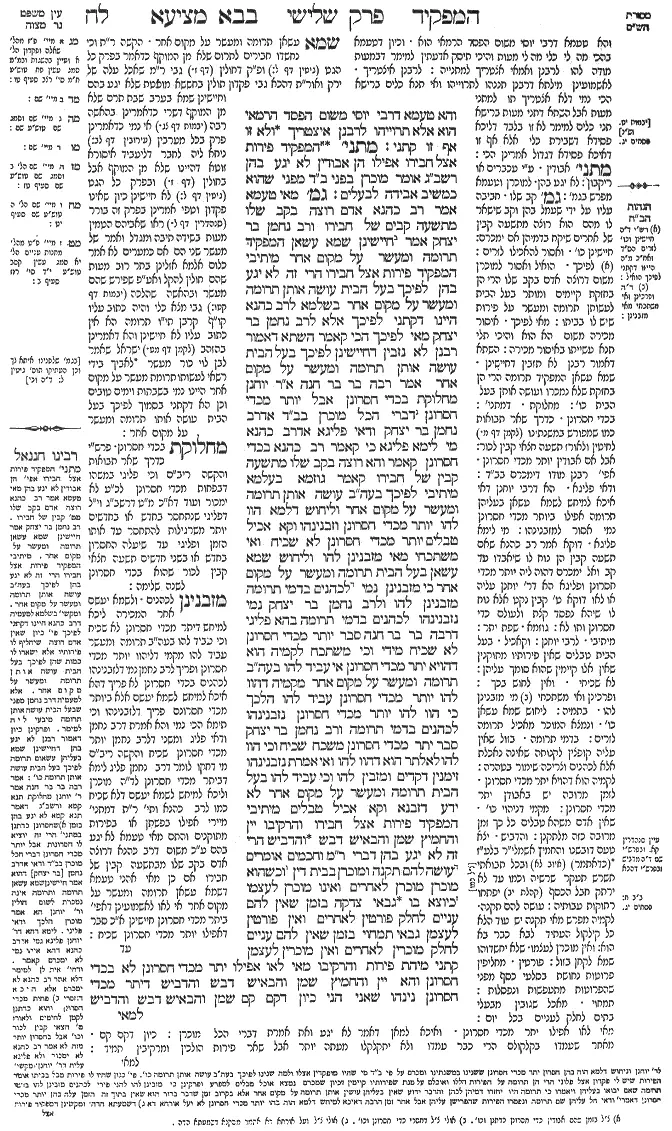
Bava Metzia 38a - Guemara
והא טעמא דרבי יוסי משום הפסד הרמאי הוא אלא תרוייהו לרבנן איצטריך ולא זו אף זו קתני:
מתני׳ המפקיד פירות אצל חבירו אפילו הן אבודין לא יגע בהן רשב"ג אומר מוכרן בפני ב"ד מפני שהוא כמשיב אבידה לבעלים:
גמ׳ מאי טעמא אמר רב כהנא אדם רוצה בקב שלו מתשעה קבים של חבירו ורב נחמן בר יצחק אמר חיישינן שמא עשאן המפקיד תרומה ומעשר על מקום אחר מיתיבי המפקיד פירות אצל חבירו הרי זה לא יגע בהן לפיכך בעל הבית עושה אותן תרומה ומעשר על מקום אחר בשלמא לרב כהנא היינו דקתני לפיכך אלא לרב נחמן בר יצחק מאי לפיכך הכי קאמר השתא דאמור רבנן לא נזבין דחיישינן לפיכך בעל הבית עושה אותן תרומה ומעשר על מקום אחר אמר רבה בר בר חנה א"ר יוחנן מחלוקת בכדי חסרונן אבל יותר מכדי חסרונן דברי הכל מוכרן בב"ד אדרב נחמן בר יצחק ודאי פליגא אדרב כהנא מי לימא פליגא כי קאמר רב כהנא בכדי חסרונן קאמר והא רוצה בקב שלו מתשעה קבין של חבירו קאמר גוזמא בעלמא מיתיבי לפיכך בעה"ב עושה אותן תרומה ומעשר על מקום אחר וליחוש דלמא הוו להו יותר מכדי חסרונן וזבנינהו וקא אכיל טבלים יותר מכדי חסרונן לא שכיח ואי משתכחי מאי מזבנינן להו וליחוש שמא עשאן בעל הבית תרומה ומעשר על מקום אחר כי מזבנינן נמי לכהנים בדמי תרומה מזבנינן להו ולרב נחמן בר יצחק נמי נזבנינהו לכהנים בדמי תרומה בהא פליגי דרבה בר בר חנה סבר יותר מכדי חסרונן לא שכיח מידי וכי משתכח לקמיה הוא דהויא יתר מכדי חסרונן אי עביד להו בעה"ב תרומה ומעשר על מקום אחר מקמיה דהוו להו יותר מכדי חסרונן עביד להו הלכך כי הוו להו יותר מכדי חסרונן נזבנינהו לכהנים בדמי תרומה ורב נחמן בר יצחק סבר יתר מכדי חסרונן משכח שכיח וכי הוו להו לאלתר הוא דהוו להו ואי אמרת נזבנינהו זימנין דקדים ומזבין להו וכי עביד להו בעל הבית תרומה ומעשר על מקום אחר לא ידע דזבנא וקא אכיל טבלים מיתיבי המפקיד פירות אצל חבירו והרקיבו יין והחמיץ שמן והבאיש דבש והדביש הרי זה לא יגע בהן דברי ר"מ וחכמים אומרים עושה להם תקנה ומוכרן בבית דין וכשהוא מוכרן מוכרן לאחרים ואינו מוכרן לעצמו כיוצא בו גבאי צדקה בזמן שאין להם עניים לחלק פורטין לאחרים ואין פורטין לעצמן גבאי תמחוי בזמן שאין להם עניים לחלק מוכרין לאחרים ואין מוכרין לעצמן קתני מיהת פירות והרקיבו מאי לאו אפילו יתר מכדי חסרונן לא בכדי חסרונן והא יין והחמיץ שמן והבאיש דבש והדביש דיתר מכדי חסרונן נינהו שאני הני כיון דקם קם שמן והבאיש דבש והדביש
Comments from Rashi on Masechet Bava Metzia Page 38a
והא טעמא דרבי יוסי משום הפסד הרמאי הוא . וכיון דטעמא בהכי מה לי כלי מה לי מעות והיכי תיסק אדעתין למימר דבמעות מודה להו לרבנן ואמאי אצטריך למתנייה: לרבנן איצטריך . לאשמועינן מילתא דרבנן תננהו לתרוייהו ואי תנא כלים ברישא הכי נמי דלא אצטריך תו למתני מעות אבל השתא דתני מעות ברישא תני כלים למימר לא זו בלבד דליכא פסידא דשבירת כלי אלא אף זו דאיכא פסידא דגדול אמרינן הכי: מתני' אבודין . ע"י עכברים או ריקבון: לא יגע בהן . למוכרן וטעמא מפרש בגמ': גמ' קב שלו . חביבה עליו על ידי שעמל בהן וקב שישאר לו מהם הוא רוצה מתשעה קבין של אחרים שיקח בדמיהן אם ימכרם: חיישינן כו' . ואסור להאכילו לזרים: לפיכך . הואיל ואסור למוכרן משום דרוצה אדם בקב שלו הרי הן בחזקת קיימים ומותר בעל הבית לעשותן תרומה ומעשר על פירות שיש לו בביתו: מאי לפיכך . איסור מכירה משום הא הוא והיכי תלי תנא עשייתו באיסור מכירה: השתא דאמור רבנן לא תזבין דחיישינן . שמא עשאן המפקיד תרומה הרי הן בחזקת שלא נמכרו ועושה אותן בעל הבית כו': מחלוקת . דמתני': בכדי חסרונן . כדרך שאר תבואות כמו שמפורש במשנתינו (לקמן בבא מציעא דף מ.) לחיטין ולאורז תשעה חצאי קבין לכור: אבל אם אבודין יותר מכדי חסרונן . אפילו רבנן מודו דימכרם בב"ד: ודאי פליגא . הא דרבי יוחנן דאי איכא למיחש לשמא עשאן בעליהן תרומה אפילו ביותר מכדי חסרונן נמי אסור למזבנינהו: מי לימא פליגא . דוקא אמר רב כהנא שאם תשעה קבין הן נוח לו שיאבדו עד קב ואל ימכרם דהוה ליה יותר מכדי חסרונן ופליגא הא דר' יוחנן עליה או לאו דוקא ט' קבין נקט אלא נוח לו שיהא נפסד קצת ולעולם כדי חסרונן ותו לא: גוזמא . שפת יתר: מיתיבי . לרבי יוחנן: וקאכיל . בעל הבית טבלים שאין פירותיו מתוקנין שאין אלו קיימין שהוא סומך עליהן: לא שכיחי . ואין לחוש בכך: ופרכינן ואי משתכחי מי מזבנינן להו. בתמיה: ליחוש שמא עשאן כו' . ונמצא המוכר מאכיל תרומה לזרים: בדמי תרומה . בזול שאין עליה קופצין לקנותה שאינה נאכלת אלא לכהנים וצריכה שימור בטהרה: לקמיה הוא דהויא יתר מכדי חסרונן . לזמן מרובה יש באבודן יתר מכדי חסרונן: מקמי דניהוי כו' . שאין אדם משהא טבלים כל כך זמן מרובה כזה מלתקנן: והדביש . יצא טעם דובשנו והחמיץ אשמלי"ר בלע"ז (כדאתמר) (איוב לא) ובכל תבואתי תשרש תעקר שרשיה וכמו עד לא ירתק חבל הכסף (קהלת יב) יפתחו רתוקות עבותיה: עושה להם תקנה . לקמיה מפרש מאי תקנה יש עוד הלא כל קילקול העתיד לבא כבר בא הוא: ואין מוכרן לעצמו . שלא יחשדוהו שמא לקחן בזול: פורטין . מחליפין פרוטות נחושת בסלעי כסף מפני שהפרוטות מתעפשות ונפסלות: תמחוי . מאכל שגובין מבעלי בתים לחלק לעניים בכל יום: מאי לאו אפילו יתר מכדי חסרונן . ואיכא למאן דאמר לא יגע ואת אמרת דברי הכל מוכרן: אבל אם אבודין יותר מכדי חסרונן . אפילו רבנן מודו דימכרם בב"ד: כיון דקם קם . מאחר שעמדו בקלקולם הרי כבר עמדו ולא יתקלקלו מעתה יותר אבל שאר פירות הולכין ומרקיבין תמיד:
Comments from Tosafot - Bava Metzia 38a
שמא עשאן תרומה ומעשר על מקום אחר . הקשה ר"ת וכי נחשדו חבירים לתרום שלא מן המוקף כדאמר בפרק כל הגט (גיטין דף ל:) ופ"ק דחולין (דף ז.) גבי ר"מ שאכל עלה של ירק ואור"ת דהכא גבי פקדון תולין בחששא מועטת שלא יגע בהם וחיישינן שמא בערב שבת תרם שלא מן המוקף דשרי כדאמרינן בהאשה רבה (יבמות דף צג.) אי נמי כדאמרינן פרק בכל מערבין (עירובין דף לב:) ניחא ליה לחבר דליעביד איסורא זוטא דהיינו שלא מן המוקף אבל בחולין (דף ז.) ובפרק כל הגט (גיטין דף ל:) לא חיישינן כיון שאינו פקדון וטפי אמרינן בפרק זה בורר (סנהדרין דף ל.) ראו שאביהם הטמין מעות בשידה תיבה ומגדל ואמר של מעשר שני הם אם כמערים לא אמר כלום אלמא אזלינן בתר רוב מעות שהם חולין להקל ואע"פ שפירש שהם מעשר ובהאשה שהלכה (יבמות דף קטו:) גבי מצא כלי והיה כתוב עליו קו"ף קרבן תי"ו תרומה הא אין כתוב עליו לא חיישינן והא דאמרינן בהזהב (לקמן בבא מציעא דף מט.) ישראל שאמר לבן לוי כור מעשר. לאביך בידי רשאי לעשותו תרומת מעשר על מקום אחר היינו נמי בשבתות וימים טובים וכן הא דקתני בסמוך לפיכך בעל הבית עושה אותו תרומה ומעשר על מקום אחר: מחלוקת בכדי חסרונן . פרש"י כדרך שאר תבואות והקשה ריב"ם וכי פליגי במשהו דבפחות מכדי חסרונן לכ"ע לא ימכור ועוד דא"כ מ"ט דרשב"ג וי"ל דפליגי שנתחסר בחדש או בחדשים יותר משרגילות להתחסר עד אותו הזמן ופליגי עד שיעלה החסרון בחדש או בשני חדשים תשעה חצאי קבין לכור שהוא בכדי חסרונן לשנה שלימה: מזבנינן לכהנים . ולשמא יעשם אחר המכירה ליכא למיחש דיתר מכדי חסרונן לא שכיח וכי עביד להו בעה"ב תרומה ומעשר עביד להו מקמי דליהוו יותר מכדי חסרונן ופריך לרב נחמן נמי דלזבנינהו לכהנים בכדי חסרונן לא פריך דהא איכא למיחש לשמא יעשם אלא ביותר מכדי חסרונם פריך דלזבנינהו וכי תימא הכי נמי והא אמרת דרב נחמן ודאי פליג ומשני דלרב נחמן יותר מכדי חסרונן שכיח והקשה ריב"ם מי דחקו לומר דרב נחמן פליג לימא דביתר מכדי חסרונן לד"ה מוכרן וליכא למיחש לשמא יעשם דלא שכיח כמו לרב כהנא ותי' ר"ת דמתני' מיירי אפילו בפשתן או בפירות מתוקנים והתם מאי טעמא לא יגע בהם ע"כ משום דרב כהנא דרוצה אדם בקב שלו מבתשעה קבין של חבירו אם כן מאי אהני טעמא דשמא עשאן תרומה ומעשר על מקום אחר אי לאו לאשמועינן דאפי' ביתר מכדי חסרונן חיישינן א"כ סבר דאפילו יותר מכדי חסרונן שכיח:
Bava Metzia 38a - Mishnah translated into english
The Gemara asks: But isn’t the reason for the opinion of Rabbi Yosei as he stated in the mishna: Due to the loss of the fraud? It is not due to the fact that the vessel will not remain intact. Consequently, there is no reason to believe that Rabbi Yosei would concede to the Rabbis in the instance where money was deposited. Rather, both of the cases are necessary according to the Rabbis. And although the first case could have been inferred from the second case, the tanna teaches the mishna employing the style of: Not only this but also that, i.e., the mishna began with an obvious example and continued with a more novel one.
MISHNA: In the case of one who deposits produce with another, even if it is lost due to spoilage or vermin, the bailee may not touch it, as it is not his. Rabban Shimon ben Gamliel says: He sells it before the court, as by doing so he is like one returning a lost item to the owner, since through its sale he prevents the owner from losing the value of his produce.
GEMARA: What is the reason that the first tanna said that the bailee should not touch the produce? Rav Kahana says that it is based on the principle: A person prefers a kav of his own produce to nine kav of another’s produce. Consequently, despite the spoilage, the owner prefers that the bailee not touch the produce. Rav Naḥman bar Yitzḥak says: We are concerned that perhaps the one who deposited the produce rendered it teruma and tithe for produce in another place, resulting in the buyer consuming produce that is teruma and tithe inappropriately.
The Gemara raises an objection from a baraita: In the case of one who deposits produce with another, the bailee may not touch it, and therefore the owner may render it teruma or tithe for produce in another place. Granted, according to Rav Kahana, this is the reason that the tanna teaches: And therefore the owner renders them teruma. The concern that the owner may render the produce teruma and tithe is not the reason why the bailee may not sell it, and the halakha that the owner may render the produce teruma and tithe results from the halakha that the bailee may not sell it.
But according to Rav Naḥman bar Yitzḥak, what is the meaning of the term therefore? According to his explanation, the fact that the owner may render the produce teruma and tithe is the very reason why the bailee may not sell the produce. The Gemara explains: This is what the tanna is saying: Now that the Sages said that the bailee may not sell the produce due to the fact that we are concerned that perhaps the owner had rendered it teruma, the owner can be confident that the produce is still in the possession of the bailee. Therefore, the owner may render it teruma and tithe for produce in another place even ab initio.
§ Rabba bar bar Ḥana says that Rabbi Yoḥanan says: The dispute in the mishna is in a case where the produce deteriorates at its standard rate of deterioration. But if the produce deteriorates at a rate greater than its standard rate of deterioration, everyone agrees that the bailee sells it before the court.
The Gemara comments: Rabbi Yoḥanan certainly disagrees with the opinion of Rav Naḥman bar Yitzḥak, as the concern that the owner might have rendered the produce teruma or tithe applies regardless of the rate of deterioration. The Gemara asks: Shall we say that Rabbi Yoḥanan disagrees with the opinion of Rav Kahana? The Gemara answers: When Rav Kahana says that one prefers his own produce, it was in a case where the produce deteriorates at its standard rate of deterioration that he says it. When the rate of deterioration is accelerated, he would agree that the bailee sells the produce.
The Gemara asks: But didn’t Rav Kahana say: A person prefers a kav of his own produce to nine kav of another’s produce? This indicates that even if the rate of deterioration was accelerated, one prefers his own produce, as in the case he describes eight-ninths of the produce is lost. The Gemara answers: This expression is merely an exaggeration, and actually one prefers his own produce only when its rate of deterioration is standard.
The Gemara raises an objection from a baraita: Therefore, the owner renders it teruma or tithe for produce in another place. And let the owner be concerned that perhaps the produce deteriorated at a rate greater than its standard rate of deterioration, and the bailee sold it, in which case the owner would be eating untithed produce. The Gemara answers: Deterioration at a rate greater than its standard rate of deterioration is uncommon, and the Sages do not issue decrees for uncommon cases.
The Gemara asks: And if it is found that more of the produce is missing than would be lost according to the standard rate of deterioration, what should be done? According to the opinion of Rabbi Yoḥanan, do we sell it? But let us be concerned that perhaps the owner already rendered this produce teruma and tithe for produce in another place. The Gemara answers: Even when we sell the produce, it is to priests at the price of teruma that we sell it. Consequently, even if the owner rendered it teruma, it is consumed by priests and therefore there is no concern.
The Gemara asks: And according to Rav Naḥman bar Yitzḥak as well, since the concern is that perhaps the owner rendered the produce teruma, let the bailee sell the produce to priests at the price of teruma. The Gemara answers: It is with regard to this that they disagree, as Rabba bar bar Ḥana holds: Deterioration at a rate greater than its standard rate of deterioration is not common at all. And when it occurs that the produce deteriorates at the greater rate, it is only from now on that it is assumed that it became deteriorated at a rate greater than its standard rate of deterioration. Therefore, if the owner had rendered the produce teruma and tithe for produce in another place, it is assumed that it was before it deteriorated at a rate greater than its standard rate of deterioration that he did it. Therefore, when the produce deteriorated at a rate greater than its standard rate of deterioration, the bailee should sell the produce to priests at the price of teruma, as it may be teruma.
And Rav Naḥman bar Yitzḥak holds: Deterioration at a rate greater than its standard rate of deterioration is common. And when the produce became deteriorated at a rate greater than its standard rate of deterioration, it may be immediately that it became deteriorated to that extent. And if you say: Let us sell it, the concern is that at times the bailee will sell it early. And when the owner renders the produce teruma and tithe for produce in another place, he does not know that the bailee already sold the produce, and the owner eats untithed produce.
The Gemara raises an objection from a baraita: In the case of one who deposits produce with another and it rotted, wine and it fermented, oil and it putrefied, honey and it spoiled, the bailee may not touch them; this is the statement of Rabbi Meir. And the Rabbis say: He effects a remedy for these items and sells them in court. The baraita adds: And when he sells them, he sells them to others and does not sell them to himself, even for the same price, so no one will suspect that he bought it at a discount.
On a similar note, with regard to charity collectors, when they do not have poor people to whom to distribute charity, they change copper perutot that they collected for more valuable silver coins only for other people, but they do not change the coins for themselves, to avoid suspicion. If collectors for the charity plate collected ready-made food for the poor, at a time where there are no poor people to whom to distribute the food, they sell the food only to others but do not sell the food to themselves.
In any event, it is taught: Produce and it rotted. What, is it not referring even to a case where they all rotted at a rate greater than its standard rate of deterioration? The Gemara rejects this: No; it is referring to a case where they deteriorated at their standard rate of deterioration. The Gemara asks: But aren’t the cases of wine and it fermented, oil and it putrefied, and honey and it spoiled cases where these items deteriorated at a rate greater than their standard rate of deterioration, as there is a significant difference in the price of wine before and after fermentation, and in the price of oil before and after putrefaction? The Gemara rejects that proof: Those cases are different. Once they become spoiled, they remain spoiled but do not continue to deteriorate. Therefore, although their deterioration was significant, there is nothing gained by selling it.
On a related note, the Gemara asks: Concerning the cases of oil and it putrefied, honey and it spoiled,
Traduction : The William Davidson digital edition of the Koren Noé Talmud, with commentary by Rabbi Adin Even-Israel Steinsaltz.