 Talmud Bavli
The learning on the whole site is dedicated : L'ilui Nishmat Margalit bat Ledicia
The learning on the whole site is dedicated : For the success of Elyahou ben H'anna & family
The learning on the whole site is dedicated : L'ilui Nishmat Ledicia bat David Banoun
Bava Metzia 12a : Youtube
Daf TubeYoutube
2 video classes :
Bava Metzia Page 12a
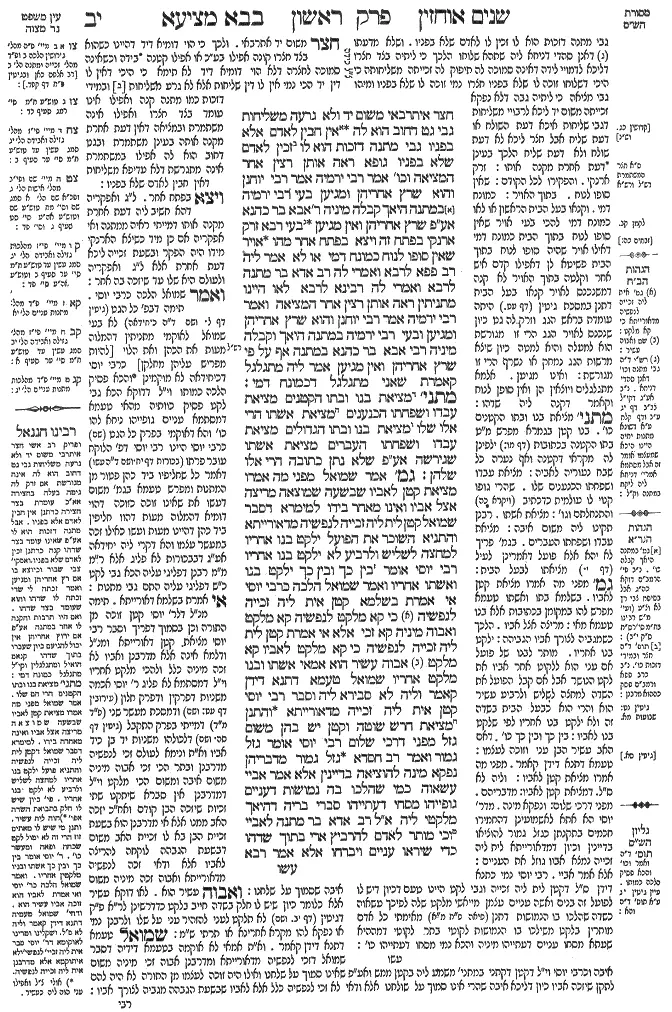
Bava Metzia 12a - Guemara
חצר איתרבאי משום יד ולא גרעה משליחות גבי גט דחוב הוא לה אין חבין לאדם אלא בפניו גבי מתנה דזכות הוא לו זכין לאדם שלא בפניו גופא ראה אותן רצין אחר המציאה וכו' אמר רבי ירמיה אמר רבי יוחנן והוא שרץ אחריהן ומגיען בעי רבי ירמיה במתנה היאך קבלה מיניה ר' אבא בר כהנא אע"פ שרץ אחריהן ואין מגיען בעי רבא זרק ארנקי בפתח זה ויצא בפתח אחר מהו אויר שאין סופו לנוח כמונח דמי או לא אמר ליה רב פפא לרבא ואמרי לה רב אדא בר מתנה לרבא ואמרי לה רבינא לרבא לאו היינו מתניתין ראה אותן רצין אחר המציאה ואמר רבי ירמיה אמר רבי יוחנן והוא שרץ אחריהן ומגיען ובעי רבי ירמיה במתנה היאך וקבלה מיניה רבי אבא בר כהנא במתנה אף על פי שרץ אחריהן ואין מגיען אמר ליה מתגלגל קאמרת שאני מתגלגל דכמונח דמי:
מתני׳ מציאת בנו ובתו הקטנים מציאת עבדו ושפחתו הכנענים מציאת אשתו הרי אלו שלו מציאת בנו ובתו הגדולים מציאת עבדו ושפחתו העברים מציאת אשתו שגירשה אע"פ שלא נתן כתובה הרי אלו שלהן:
גמ׳ אמר שמואל מפני מה אמרו מציאת קטן לאביו שבשעה שמוצאה מריצה אצל אביו ואינו מאחר בידו למימרא דסבר שמואל קטן לית ליה זכייה לנפשיה מדאורייתא והתניא השוכר את הפועל ילקט בנו אחריו למחצה לשליש ולרביע לא ילקט בנו אחריו רבי יוסי אומר בין כך ובין כך ילקט בנו ואשתו אחריו ואמר שמואל הלכה כרבי יוסי אי אמרת בשלמא קטן אית ליה זכייה לנפשיה כי קא מלקט לנפשיה קא מלקט ואבוה מיניה קא זכי אלא אי אמרת קטן לית ליה זכייה לנפשיה כי קא מלקט לאביו קא מלקט אבוה עשיר הוא אמאי אשתו ובנו מלקט אחריו שמואל טעמא דתנא דידן קאמר וליה לא סבירא ליה וסבר רבי יוסי קטן אית ליה זכייה מדאורייתא והתנן מציאת חרש שוטה וקטן יש בהן משום גזל מפני דרכי שלום רבי יוסי אומר גזל גמור ואמר רב חסדא גזל גמור מדבריהן נפקא מינה להוציאה בדיינין אלא אמר אביי עשאוה כמי שהלכו בה נמושות דעניים גופייהו מסחי דעתייהו סברי בריה דהיאך מלקטי ליה א"ל רב אדא בר מתנה לאביי וכי מותר לאדם להרביץ ארי בתוך שדהו כדי שיראו עניים ויברחו אלא אמר רבא
Comments from Rashi on Masechet Bava Metzia Page 12a
גבי מתנה דזכות הוא לו זכין לו לאדם שלא בפניו . ושלא מדעתו דאנן סהדי דניחא ליה שתהא שלוחו הלכך כי ליתיה בצד חצרו דליכא לדמויי לידה דאינה סמוכה לה תיפוק לה זכייתה משליחותה כי היכי דשלוחו זוכה לו שלא בפניו חצרו נמי זוכה לו שלא בפניו ומיהו גבי מציאה כי ליתיה גבה דלא נפקא זכייתה משום יד ליכא לרבויי משליחות דגבי שליחות איכא דעת השולח או דעת שליח אבל חצר ליכא לא דעת שולח ולא דעת שליח הלכך בעינן דעת אחרת מקנה אותו: זרק ארנקי . והפקירו לכל הקודם: שאין סופו לנוח . בתוך האויר: כמונח דמי . וקנאו בעל הבית הראשון או לאו כמונח דמי להכי בעי אויר שאין סופו לנוח בתוך הבית כמונח דמי דאילו אויר שהיה סופו לנוח בתוך הבית פשיטא לן דאפילו קדם איש אחר וקלטה בתוך האויר לא קנה דמשנכנס לאויר קנאו בעל הבית דתנן במסכת גיטין (דף עט.) היתה עומדת בראש הגג וזרק לה גט כיון שנכנס לאויר הגג הרי זו מגורשת הוא למעלה והיא למטה כיון שיצא מרשות הגג נמחק או נשרף הרי זו מגורשת: ואינו מגיען . אלמא מתגלגלים ויוצאין הן ואין סופן לנוח וקאמר דקנה ליה שדהו: מתני' מציאת בנו ובתו הקטנים כו' . בנו קטן בגמרא מפרש מ"ט בתו הקטנה בכתובות (דף מו:) ילפינן לה מקראי דקטנה ואף נערה כל שבח נעוריה לאביה: מציאת עבדו ושפחתו הכנענים שלו . שהרי גופו קנוי לו עולמית כדכתיב (ויקרא כה) והתנחלתם וכו': מציאת אשתו . רבנן תקינו ליה משום איבה: מציאת עבדו ושפחתו העברים . בגמ' פריך לא יהא אלא פועל דאמרינן לעיל (בבא מציעא דף י.) מציאתו לבעל הבית: גמ' מפני מה אמרו מציאת קטן לאביו . בשלמא בתו ואשתו טעמא מפרש להו במקומן בכתובות אלא בנו טעמא מאי: מריצה אצל אביו . הלכך כשמגביה לצורך אביו הגביהה: ילקט בנו אחריו . מותר לבנו של פועל אם עני הוא ללקוט אחר אביו לקט הנושר אבל אם קבל הפועל את השדה למחצה לשליש ולרביע עשיר הוא והרי הוא כבעל הבית בשדה זה ולא ילקט בנו אחריו לפי שלקט בנו לאביו: בין כך ובין כך כו' . דאם האב עשיר הבן עני וזוכה לעצמו: טעמא דתנא דידן קאמר . מפני מה אמרו מציאת קטן לאביו: וליה לא ס"ל . דמציאת קטן לאביו: מדבריהם . מפני דרכי שלום: ונפקא מינה . מדר' יוסי הא אתא לאשמועינן דהחמירו חכמים בתקנתן כגזל גמור להוציאו בדיינין וכיון דמדאורייתא לית ליה זכייה נמצא אביו גוזל את העניים: אלא אמר אביי . רבי יוסי נמי כתנא דידן ס"ל דקטן לית ליה זכייה וגבי לקט היינו טעם דכיון דיש לו לפועל זה בנים ואשה עניים עצמן מייאשי מלקט שלה לפיכך עשאוה כשדה שהלכו בו הנמושות דתנן (פיאה פ"ח מ"א) מאימתי כל אדם מותרין בלקט משילכו בו הנמושות לקוטי בתר לקוטי דמההיא שעתא מסחו עניים דעתייהו מיניה והכא נמי מסחו דעתייהו כו':
Comments from Tosafot - Bava Metzia 12a
חצר משום יד אתרבאי ולכך כי הוי דומיא דיד דהיינו כשהוא . בצד חצרו קונה אפילו בע"כ או אפילו קטנה בידה וכשאינה סמוכה לחצרה דלא הוי דומיא דיד לא תימא כי היכי דאין לו דין יד הכי נמי אין לו דין שליחות אלא לא גרע משליחות ובמידי דזכות כמו מתנה קנה ואפילו אינו עומד בצד חצרו ואפילו אינה משתמרת ובמציאה דאין דעת אחרת מקנה אותה בעינן משתמרת ובגט דחוב הוא לה אפילו במשתמרת אינה מתגרשת דלא עדיפא משליחות דאין חבין לאדם שלא בפניו: ויצא בפתח אחר . ל"ג ואפקריה דהא חשיב ליה דעת אחרת מקנה אותו דמייתי ראיה ממתנה ואי אפקריה אם כן מיד כשיצא הארנקי מידו היה הפקר ובשעת זכייה ליכא דעת אחרת אלא ל"ג ואפקריה ולעולם היא שלו עד שיזכה בה אחר: ואמר שמואל הלכה כרבי יוסי . תימה דבפ' כל הגט (גיטין דף ל. ושם ד"ה כיחידאה) לא בעי שמואל לאוקמי מתניתין דהמלוה מעות את הכהן ואת הלוי [להיות מפריש עליהן מחלקן] כרבי יוסי דכיחידאה לא מוקמינן והכא פסיק הלכה כמותו וי"ל דדוקא הכא גבי לקט פסיק כוותיה מהאי טעמא דמסתמא עניים גופייהו ניחא להו כו' והא דאוקמי בפרק כל הגט (שם) כרבי יוסי היינו רבי יוסי דפ' הלוקח עובר פרתו (בכורות דף יח. ושם ד"ה עשו) דאמר כל שחליפיו ביד כהן פטור מן המתנות ומפרש טעמא בגמ' משום דעשו את שאינו זוכה כזוכה דהוי דומיא דהמלוה מעות דהוו חליפין ביד כהן דהיינו מעות ועשו כאילו זכה במעשר עצמו והא דקרי ליה יחידאה אע"ג דבבכורות לא פליג אלא ר"מ מ"מ רבנן דפליגי עליה הכא גבי לקט כ"ש דפליגי עליה התם גבי מתנות: אי אמרת בשלמא דאורייתא . תימה מנ"ל דלר' יוסי קטן זוכה מן התורה וכן בסמוך דפריך וסבר רבי יוסי מציאת קטן דאורייתא ומנ"ל ודלמא אינה אלא מדרבנן ואביו לא זכה מיניה כלל ולהכי מלקט אחריו וי"ל דמסתמא לא פליג ר' יוסי אכמה משניות דפרקין ודפרק חלון (עירובין דף עט: ושם) ודמסכת מעשר שני (פ"ד מ"ד) דמייתי בפרק התקבל (גיטין דף סה. ושם) דלכולהו משניות יד בן כיד אביו וא"ת ונימא לעולם זכי לנפשיה מדרבנן ובתר הכי זכי אבוה מיניה משום איבה ומשום הכי מלקט וי"ל דמדרבנן אין סברא שיתקנו שתי זכיות שיזכה הבן קודם ואח"כ יזכה האב ממנו אלא אי מדרבנן הוא בשעת זכיית הבן בא לו זכיית האב משום דבשעת הגבהה לוקחה להריצה לאביו אלא ודאי זכה לנפשיה מדאורייתא ואבוה זכה מיניה משום איבה שסמוך על שלחנו: ואבוה עשיר הוא . לאו דוקא עשיר אלא כלומר כיון שיש לו חלק בשדה חייב בלקט כדדרשינן לר"א פ"ק דגיטין (דף יב. ושם) לא תלקט לעני להזהיר עני על שלו ולרבנן נמי או נפקא להו מקרא אחרינא או תרתי ש"מ: שמואל טעמא דתנא דידן קאמר . וא"ת אמאי לא אוקמה בטעמא דידיה דסבר שמואל דזכי לנפשיה מדאורייתא ומדרבנן אבוה זכי מיניה משום איבה וכרבי יוסי וי"ל דקטן דקתני במתני' משמע ליה בקטן ממש ואע"פ שאינו סמוך על שלחנו ואילו היה זוכה לעצמו מן התורה לא היה להם לתקן שיזכה אביו כיון דליכא איבה שהרי אינו סמוך על שולחנו אלא ודאי לא זכי לנפשיה כלל אלא לאביו שבשעת הגבהה מגביה לצורך אביו:
Bava Metzia 12a - Mishnah translated into english
One’s courtyard is included as a valid means of acquisition due to the fact that it acts as his hand; but it is no less effective than agency. Therefore, with regard to a bill of divorce, which is considered detrimental to the wife, one cannot transfer it to her by placing it in her courtyard in her absence, as one cannot act against the interests of a person unless it is in his presence. By contrast, with regard to a gift, which is beneficial for the recipient, one can give it to him by placing it in his courtyard in the recipient’s absence, as one can act in a person’s interest in his absence.
§ The Gemara returns to discuss the matter itself. The mishna teaches: If one saw people running after a found ownerless animal, and said: My field has effected acquisition of this animal for me, it has effected acquisition of it for him. Rabbi Yirmeya says that Rabbi Yoḥanan says: And this halakha is true only in a case where he would be able to run after them and catch them. Rabbi Yirmeya raises a dilemma: Does one acquire animals that are given to him as a gift in such a scenario? Rabbi Abba bar Kahana accepted the premise of the dilemma of Rabbi Yirmeya, and ruled that in the case of a gift one acquires the animals even if he would not be able to run after them and catch them.
Rava raises a dilemma: If one threw a purse through this entrance of a house and it went through the house and exited through another entrance, what is the halakha? Does the owner of the house acquire the purse during the course of its flight? The dilemma is: Is an item in the airspace [avir] of a courtyard that will not eventually come to rest in the courtyard itself regarded as though it has come to rest, or is it not regarded as though it has come to rest?
Rav Pappa said to Rava, and some say that it was Rav Adda bar Mattana who said this to Rava, and some say that it was Ravina who said this to Rava: Isn’t this the same as the halakha in the mishna? As it is stated: If one saw people running after a found ownerless animal, and said: My field has effected acquisition of this animal for me, it has effected acquisition of it for him. And Rabbi Yirmeya says that Rabbi Yoḥanan says: And this halakha is true only in a case where he would be able to run after them and catch them. Rabbi Yirmeya raises a dilemma: Does one acquire animals that are given to him as a gift in such a scenario? Rabbi Abba bar Kahana accepted the premise of the dilemma of Rabbi Yirmeya, and ruled that in the case of a gift one acquires the animals even if he would not be able to run after them and catch them.
Rava said to him: Are you saying that a purse flying through the air is comparable to an item that is rolling, i.e., moving on the ground? A rolling item is different, as it is regarded as though it has come to rest. At any given instant throughout its movement, the item rests on the ground. Therefore, the dilemma cannot be resolved from the mishna.
MISHNA: With regard to the found item of one’s minor son or daughter, i.e., an ownerless item that they found; the found item of his Canaanite slave or maidservant; and the found item of his wife, they are his. By contrast, with regard to the found item of one’s adult son or daughter; the found item of his Hebrew slave or maidservant; and the found item of his ex-wife, whom he divorced, even if he has not yet given her payment of the marriage contract that he owes her, they are theirs.
GEMARA: Shmuel says: For what reason did the Sages say that the found item of one’s minor son or daughter belongs to his father? It is because the minor does not intend to acquire it for himself, as when he finds it, he runs with it to his father and does not retain it in his possession.
The Gemara asks: Is this to say that Shmuel holds that a minor does not have the capability of acquiring property for himself by Torah law? But isn’t it taught in a baraita: With regard to one who hires a salaried laborer to harvest his field, the son of the laborer may glean fallen stalks from behind the laborer like all poor people who have a right to the stalks left in the field. But if one hires a laborer as a sharecropper, whether the laborer receives one-half, one-third, or one-quarter of the produce, his son may not glean stalks after him, as the laborer himself is considered a partial owner of the field and is consequently not considered poor. Rabbi Yosei says: In both this case and that case the laborer’s son and wife may glean after him. And Shmuel says that the halakha is in accordance with the opinion of Rabbi Yosei.
Granted, if you say that a minor has the capability of acquiring property for himself, Shmuel’s opinion is understood, as when the son gleans stalks, he gleans them for himself and acquires them, and his father subsequently acquires them from him as a gift. Since the minor has no property of his own, his status is that of a poor person and it is permitted for him to glean stalks. But if you say that a minor does not have the capability of acquiring property for himself, then when he gleans the stalks, he gleans them for his father. Since his father is considered wealthy and is not entitled to the gleanings because he owns a portion of the produce, why may his wife and son glean stalks after him?
The Gemara answers: In Shmuel’s explanation, Shmuel is stating the reason of the tanna of our mishna, but he himself does not hold accordingly. Rather, Shmuel holds in accordance with the opinion of Rabbi Yosei that a minor can acquire property for himself.
The Gemara asks: And does Rabbi Yosei hold that a minor has the capability of acquiring property by Torah law? But didn’t we learn in a mishna (Gittin 59b): With regard to the found items of a deaf-mute, an imbecile, or a minor, i.e., lost items that they found, although they are not considered to be halakhically competent and are unable to acquire found items by Torah law, taking such items from them is considered robbery, by rabbinic law, for the sake of the ways of peace. Rabbi Yosei says: This is full-fledged robbery.
And Rav Ḥisda says that Rabbi Yosei means that it is full-fledged robbery by rabbinic law. And the practical difference between the opinion of the first tanna and Rabbi Yosei’s opinion is that according to Rabbi Yosei, if the robber refuses to return the stolen item, it is appropriated by the judges and returned to its owner. In any event, it is evident from here that Rabbi Yosei also holds that a minor cannot acquire property for himself by Torah law.
Rather, Abaye rejected the above explanation of Rabbi Yosei’s opinion in the baraita with regard to gleaning, and said: The reason that according to Rabbi Yosei a sharecropper’s son may glean after him despite the fact that he does not acquire property by Torah law is that in such a case the Sages rendered the field like one through which the last gleaners have walked. Once the poor people have finished gleaning stalks from a field, even wealthy people are permitted to collect whatever remains. In this case, since the sharecropper’s son is walking behind him, the poor people themselves dismiss the notion of gleaning in this field from their minds; they assume that the son of this sharecropper is gleaning for him and that they will therefore not find any gleanings in this field. Since the poor people themselves have finished taking stalks from the field, the sharecropper’s son can glean for his father.
Rav Adda bar Mattana said to Abaye: But how is it permitted for one to allow his son to follow him in the field, thereby causing all the poor people to leave? Is a person permitted to have a lion crouch in his field so that the poor people will see it and flee?
Rather, Rava stated an alternative explanation:
Traduction : The William Davidson digital edition of the Koren Noé Talmud, with commentary by Rabbi Adin Even-Israel Steinsaltz.