 Talmud Bavli
The learning on the whole site is dedicated : L'ilui Nishmat Margalit bat Ledicia
The learning on the whole site is dedicated : For the success of Elyahou ben H'anna & family
The learning on the whole site is dedicated : L'ilui Nishmat Amram ben Itshak Loubaton
Bava Metzia 43b : Youtube
Daf TubeYoutube
1 video class :
Bava Metzia Page 43b
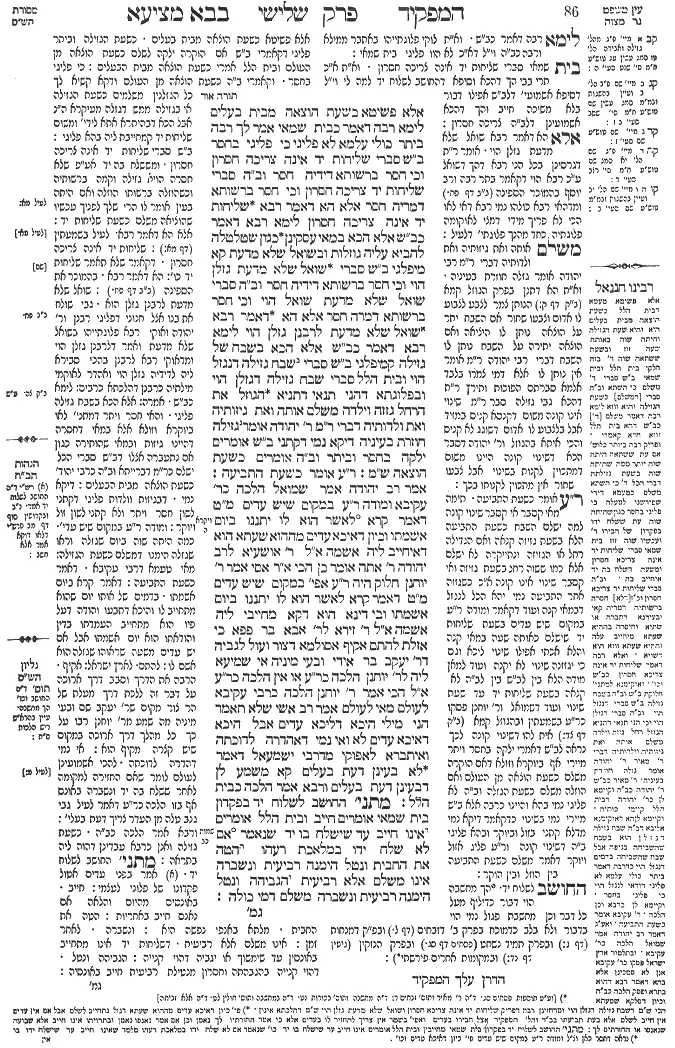
Bava Metzia 43b - Guemara
אלא פשיטא כשעת הוצאה מבית בעלים לימא רבה דאמר כבית שמאי אמר לך רבה ביתר כולי עלמא לא פליגי כי פליגי בחסר ב"ש סברי שליחות יד אינה צריכה חסרון וכי חסר ברשותא דידיה חסר וב"ה סברי שליחות יד צריכה חסרון וכי חסר ברשותא דמריה חסר אלא הא דאמר רבא שליחות יד אינה צריכה חסרון לימא רבא דאמר כב"ש אלא הכא במאי עסקינן כגון שטלטלה להביא עליה גוזלות ובשואל שלא מדעת קא מיפלגי ב"ש סברי שואל שלא מדעת גזלן הוי וכי חסר ברשותא דידיה חסר וב"ה סברי שואל שלא מדעת שואל הוי וכי חסר ברשותא דמרה חסר אלא הא דאמר רבא שואל שלא מדעת לרבנן גזלן הוי לימא רבא דאמר כב"ש אלא הכא בשבח של גזילה קמיפלגי ב"ש סברי שבח גזילה דנגזל הוי ובית הלל סברי שבח גזילה דגזלן הוי ובפלוגתא דהני תנאי דתניא הגוזל את הרחל גזזה וילדה משלם אותה ואת גיזותיה ואת ולדותיה דברי ר"מ ר' יהודה אומר גזילה חוזרת בעיניה דיקא נמי דקתני ב"ש אומרים ילקה בחסר וביתר וב"ה אומרים כשעת הוצאה ש"מ:
ר"ע אומר כשעת התביעה:
אמר רב יהודה אמר שמואל הלכה כר' עקיבא ומודה ר"ע במקום שיש עדים מ"ט דאמר קרא (ויקרא ה, כד) לאשר הוא לו יתננו ביום אשמתו וכיון דאיכא עדים מההוא שעתא הוא דאיחייב ליה אשמה א"ל ר' אושעיא לרב יהודה ר' אתה אומר כן הכי א"ר אסי אמר ר' יוחנן חלוק היה ר"ע אפי' במקום שיש עדים מ"ט דאמר קרא לאשר הוא לו יתננו ביום אשמתו ובי דינא הוא דקא מחייבי ליה אשמה א"ל ר' זירא לר' אבא בר פפא כי אזלת להתם אקיף אסולמא דצור ועול לגביה דר' יעקב בר אידי ובעי מיניה אי שמיעא ליה לר' יוחנן הלכה כר"ע או אין הלכה כר"ע א"ל הכי אמר ר' יוחנן הלכה כרבי עקיבא לעולם מאי לעולם אמר רב אשי שלא תאמר הני מילי היכא דליכא עדים אבל היכא דאיכא עדים לא ואי נמי דאהדרה לדוכתה ואיתברא לאפוקי מדרבי ישמעאל דאמר לא בעינן דעת בעלים קא משמע לן דבעינן דעת בעלים ורבא אמר הלכה כבית הלל:
מתני׳ החושב לשלוח יד בפקדון בית שמאי אומרים חייב ובית הלל אומרים אינו חייב עד שישלח בו יד שנאמר (שמות כב, ז) אם לא שלח ידו במלאכת רעהו הטה את החבית ונטל הימנה רביעית ונשברה אינו משלם אלא רביעית הגביהה ונטל הימנה רביעית ונשברה משלם דמי כולה
Comments from Rashi on Masechet Bava Metzia Page 43b
אלא פשיטא כשעת הוצאה מבית בעלים . כשעת הגזילה וביתר פליגי דקאמרי ב"ש אם הוקרה ילקה לשלם כשעת הוצאה מן העולם ובית הלל אמרי כשעת הוצאה מבית הבעלים: כי פליגי בחסר . וקאמרי ב"ה כשעת הוצאה מן העולם ודקא קשיא לך כל הגזלנין משלמים כשעת הגזילה אי בגזילה ממש דגזלה מעיקרא ה"נ אבל הכא דבהיתרא אתא לידי' ומשום שליחות יד קמחייבת ליה בהא פליגי: ב"ש סברי שליחות יד אינה צריכה חסרון . ומששלח בה יד אע"פ שלא חסרה הויא גזילה וקמה ברשותיה וכשהוזלה ברשותו הוזלה ואם היתה בעין אומר לו הרי שלך לפניך עכשיו שהוציאה משלם כשעת שליחות יד: אלא הא דאמר רבא . לעיל בשמעתין (בבא מציעא דף מא:): שליחות יד אינה צריכה חסרון . דקאמר שלא תאמר שליחות יד כו': הא דאמר רבא . בהמוכר את הספינה (ב"ב דף פח.): שואל שלא מדעת לרבנן גזלן הוא . גבי שולח את בנו אצל חנוני דפליגי רבנן ור' יהודה ואוקי רבא פלוגתייהו בשואל שלא מדעת ואמר דלרבנן גזלן הוי ומדאוקי רבא לרבנן בהכי סבירא ליה לדידיה גזלן הוי ואהדר לאוקמי מילתיה כרבנן דהלכתא כרבים: לימא כב"ש . אמרה: אלא הכא בשבח גזילה פליגי . והאי חסר ויתר דמתני' לאו ביוקרא וזולא אלא במאי דחסרה דהיינו גיזות ובמאי שהותירה כגון אם נתעברה אצלו דב"ש סברי הכל ישלם כר"מ דברייתא וב"ה כרבי יהוד' כשעת הוצאה מבית הבעלים: דיקא נמי . דבגיזות וולדות פליגי דקתני לשון חסר ויתר ולא קתני לשון זול ויוקר: ומודה ר"ע במקום שיש עדים . כמה היתה שוה ביום שגזלה וראו שגזלה הימנו דמשלם כשעת הגזילה: מאי טעמא דרבי עקיבא . דאמר כשעת התביעה: דאמר קרא ביום אשמתו . בדמים של אותו יום שהוא מתחייב לו והיכא דתבעו והודה דעל פיו הוא מתחייב העמדתו בדין והודאתו הוא יום אשמתו אבל אם יש עדים משעה שראוהו שגזלה הוא אשם לו: להתם . לארץ ישראל: אקיף . הרבה את הדרך וסבב דרך ארוכה על דבר זה ללכת דרך מעלת של הר צור מקום שר' יעקב שם ובעי מינה מה שמע מר' יוחנן רבו על כך כל מהלך דרך ארוכה במקום שיש קצרה מקיף הוא: אי נמי דהדרה לדוכתה . להכי אשמועינן לעולם לומר שאם החזירה למקומה לאחר ששלח בה יד ונשברה באונס אף בזו הלכה כר"ע דאמר לעיל גבי גנב טלה מן העדר צריך דעת בעלי': ורבא אמר הלכה כב"ה . כשעת גזילה ואנן כרבא עבדינן דהוה ליה בתראה: מתני' החושב לשלוח יד . אמר בפני עדים אטול פקדונו של פלוני לעצמי: חייב . באונסים מהיום והלאה אם נאנס חייב באחריות: הטה את החבית . מלתא באנפי נפשה היא: ונשברה . לאחר זמן: אינו משלם אלא רביעית . דשליחות יד אינו מתחייב באונסין עד שיסמוך או יגביה דהוי קנייה: הגביהה ונטל . דהוי קנייה בהגבהתה וחסרון מנטילת רביעית חייב באונסיה:
Comments from Tosafot - Bava Metzia 43b
לימא רבה דאמר כב"ש . וא"ת לוקי פלוגתייהו באתבר ממילא ורבה כב"ה וי"ל דא"כ לא הוו פליגי בית שמאי: בית שמאי סברי שליחות יד אינה צריכה חסרון . וא"ת א"כ תרי בבי הך דהכא וסיפא דהחושב לשלוח יד למה לי וי"ל דסיפא אשמועי' דלב"ש אפילו דבור בלא משיכה חייב והך דהכא אשמועינן דלב"ה צריכה חסרון: אלא הא דאמר רבא שואל שלא מדעת גזלן הוי . אומר ר"ת דגרסינן בכל הני רבא דהך דשואל ע"כ רבא הוי דקאמר בתר רבה ורב יוסף בהמוכר הספינה (ב"ב דף פח.) ומדהאי רבא כולהו נמי רבא דאי לאו הכי לא פריך מידי דמצי לאוקומה פלוגתיה כחד מהנך פלוגתי' דלעיל: משלם אותה ואת גיזותיה ואת ולדותיה דברי ר"מ רבי יהודה אומר גזלה חוזרת בעיניה . וא"ת הא דתנן בפרק הגוזל קמא (ב"ק דף ק:) הנותן צמר לצבע לצבוע לו אדום וצבעו שחור אם השבח יתר על הוצאה נותן לו היציאה ואם הוצאה יתירה על השבח נותן לו השבח דברי רבי יהודה ר"מ אומר אין נותן לו אלא דמי צמרו בלבד אלמא סברתם הפוכות ותירץ ר"ת דהכא גבי גזילה סבר ר"מ שינוי אינו קונה משום דקנסא קניס במזיד אבל בלצבוע לו אדום דשוגג לא קניס והכי איתא בהגוזל ור' יהודה דסבר הכא דשינוי קונה היינו משום דמתכוין לקנות בשינוי אבל צבעו שחור אין מתכוין לקנותו בכך: ר"ע אומר כשעת התביעה . תימה מאי קסבר אי קסבר שינוי קונה למה ישלם השבח כשעת התביעה הלא בשעת גזיזה קנאה ואם הגדילה רחל או הגזיזה ונתייקרה לא ישלם אלא כמו ששוה רחל בשעת גזיזה ואי קסבר שינוי אינו קונה א"כ כשגזזה אחר התביעה נמי יהא הכל לנגזל דבמאי קנה ועוד דקאמר ומודה ר"ע במקום שיש עדים בשעת שליחות יד שישלם כאותה שעה במאי קנה והלא אכתי אפילו שינוי ליכא וגם כי יגזזנה שינוי לא יקנה ועוד למאן מודה הלא בין לב"ש בין לב"ה לא קנאה בשעת שליחות יד עד שעת שינוי ועוד דשמואל ור' יוחנן פסקו כר"ע בשמעתין ובהגוזל קמא (ב"ק דף צד:) אית להו דשינוי קונה לכך נראה לב"ש דאמרי ילקה בחסר ויתר מיירי אף ביוקרא וזולא דאם הוקרה משלם כשעת הוצאה מן העולם ואם הוזלה משלם כשעת הגזלה וב"ה לא פליגי נמי בהא והיינו כרבה אלא ב"ש מיירי נמי בשינוי כדקאמר דיקא נמי מדלא קתני בזול וביוקר ובהא פליגי ב"ה דשינוי קונה ור"ע פליג אזול ויוקר דאמר משלם כשעת התביעה בין הוזל ובין הוקר: החושב לשלוח יד . הך מחשבה הוי דבור כדיליף מעל כל דבר וכן מחשבת פגול נמי הוי בדבור ולא בלב כדמוכח בפרק ב' דזבחים (דף ל.) ובפ"ק דמנחות (דף ג:) ובפרק תמיד נשחט (פסחים דף סג.) ובפרק הנזקין (גיטין דף נד:) ובמקומות אחרים פירשתי:
Bava Metzia 43b - Mishnah translated into english
Rather, it is obvious that Beit Hillel hold that the bailee pays in accordance with its value at the time of its removal from the owner’s house, i.e., at the time of the misappropriation. The Gemara asks: If so, shall we say that Rabba stated his opinion in accordance with the opinion of Beit Shammai and not the opinion of Beit Hillel? The Gemara rejects this: Rabba could have said to you: With regard to a subsequent increase in the value of the misappropriated deposit, everyone, Beit Shammai and Beit Hillel, agrees that the bailee pays in accordance with its value when the deposit was destroyed. When they disagree, it is in the case of a subsequent decrease in the value of the misappropriated deposit.
Rabba clarifies: Beit Shammai hold that misappropriation does not require loss, and even if the deposit remains intact, his legal status is that of a robber from the moment of misappropriation. And therefore, when the value of the misappropriated deposit decreases, it decreases in his possession. Therefore, he pays in accordance with its value at the time of misappropriation. And Beit Hillel hold that misappropriation requires loss, and only when the deposit decreases in value after the misappropriation is the bailee liable to pay. And therefore, when the value of the misappropriated deposit decreases, it decreases in the possession of its owner. Therefore, he pays in accordance with its value at the time that it was damaged.
The Gemara asks: But according to that explanation, concerning this halakha that Rava says: Misappropriation does not require loss, shall we say that the opinion that Rava stated is in accordance with the opinion of Beit Shammai? Rather, with what are we dealing here? It is with a case where the bailee moved the barrel to stand upon it and bring fledglings from a nest in a tree. And they disagree with regard to one who borrows an item without the knowledge of the owner.
Beit Shammai hold: The legal status of one who borrows an item without the knowledge of the owner is that of a robber in terms of responsibility. He is accorded that legal status the moment he moves the barrel. And therefore, when the value of the misappropriated deposit decreases, it decreases in his possession. Consequently, he pays in accordance with its value at the time that he borrowed the barrel. And Beit Hillel hold: The legal status of one who borrows without the knowledge of the owners is that of a borrower, and only when the barrel is broken is the bailee rendered liable to pay. And therefore, when the value of the barrel decreases, it decreases in the possession of its owner. Consequently, he pays in accordance with the barrel’s value at the time that it was damaged.
The Gemara asks: But according to that explanation, concerning this halakha that Rava says: The legal status of one who borrows an item without the knowledge of the owner, according to the opinion of the Rabbis, is that of a robber in terms of responsibility, shall we say that the opinion that Rava stated is in accordance with the opinion of Beit Shammai? Rather, contrary to the previous explanations, the terms decrease and increase are not referring to changes in market value. They are referring to the decrease in the value of the animal when its wool is sheared and the increase in its value due to the birth of offspring. And here, it is with regard to the enhancement of stolen property that they disagree. Beit Shammai hold: The enhancement of stolen property belongs to the one who was robbed. And Beit Hillel hold: The enhancement of stolen property belongs to the robber.
And it is with regard to the issue that is the subject of the dispute between these tanna’im that they disagree, as it is taught in a baraita: With regard to one who robs another of a ewe, if he sheared it or if it gave birth, the robber pays the owner for it and for its fleece or for its offspring; this is the statement of Rabbi Meir. Rabbi Yehuda says: The stolen property returns to the owner in its current state.
The Gemara comments: The language of the mishna is also precise, as it is taught that Beit Shammai say: He is penalized for its decrease and its increase. And Beit Hillel say: He pays in accordance with the time of removal. When recording the opinion of Beit Shammai, the mishna does not state: He is penalized for its rise and fall in value. The Gemara affirms: Learn from the wording of the mishna that they disagree with regard to fleece and offspring.
§ The mishna teaches that Rabbi Akiva says: He pays in accordance with its value at the time of the claim. Rav Yehuda says that Shmuel says: The halakha is in accordance with the opinion of Rabbi Akiva. And Rabbi Akiva concedes in a case where there are witnesses to the misappropriation, as in that case the payment is calculated in accordance with the value of the deposit at the time of the misappropriation. What is the reason for that halakha? It is as the verse states concerning, among others, one who misappropriated a deposit: “To whom it appertains shall he give it on the day of his being guilty” (Leviticus 5:24). And in this case, since there are witnesses to the robbery, from that moment he is liable to pay him for his guilt. He is rendered guilty at the moment the witnesses saw him misappropriate the deposit.
Rav Oshaya said to Rav Yehuda: My teacher, is that what you say? This is what Rabbi Asi says that Rabbi Yoḥanan says: Rabbi Akiva was in disagreement even in a case where there are witnesses to the misappropriation. What is the reason for that halakha? It is as the verse states: “To whom it appertains shall he give it on the day of his being guilty,” and it is the court, not the witnesses, that renders him liable to pay him for his guilt.
Rabbi Zeira said to Rabbi Abba bar Pappa: When you go there, to Eretz Yisrael, take a circuitous route to the Ladder of Tyre, and enter before Rabbi Ya’akov bar Idi, and ask of him if he heard whether according to Rabbi Yoḥanan the halakha is in accordance with the opinion of Rabbi Akiva or whether the halakha is not in accordance with the opinion of Rabbi Akiva. He went and asked. Rabbi Ya’akov bar Idi said to him: This is what Rabbi Yoḥanan says: The halakha is always in accordance with the opinion of Rabbi Akiva.
The Gemara asks: What is the meaning of always? Rav Ashi said: Rabbi Yoḥanan used this term so that you will not say the following: This statement, that the halakha is in accordance with the opinion of Rabbi Akiva, applies specifically in a case where there are no witnesses, but in a case where there are witnesses, no, payment is calculated in accordance with the value of the deposit when they witnessed the misappropriation.
Or alternatively, the halakha will not be in accordance with the opinion of Rabbi Akiva in a case where he returns the barrel to its place and it broke. Rabbi Yoḥanan stated that the halakha is always in accordance with the opinion of Rabbi Akiva, to exclude the opinion of Rabbi Yishmael, who says that if one stole from another and returned it we do not require the knowledge of the owners for the item to be considered returned. Rabbi Yoḥanan teaches us that the halakha is that we require the knowledge of the owners, in accordance with the opinion of Rabbi Akiva (see 40b). And Rava says: Contrary to the opinion of Rabbi Yoḥanan, the halakha is in accordance with the opinion of Beit Hillel.
MISHNA: With regard to one who intends to misappropriate a deposit and voices that intent in the presence of witnesses, Beit Shammai say: He is liable to pay for any damage to the deposit from that point forward, and Beit Hillel say: He is liable to pay only if he actually misappropriates the deposit, as it is stated concerning a bailee: “Whether he has misappropriated his neighbor’s goods” (Exodus 22:7). If he tilted the deposited barrel and took from it a quarter-log of wine for his own use, and the barrel broke, then he pays only for that quarter-log. If he lifted the barrel and took from it a quarter-log of wine, and the barrel broke, since he acquired the barrel by lifting it, he pays the value of the entire barrel.
Traduction : The William Davidson digital edition of the Koren Noé Talmud, with commentary by Rabbi Adin Even-Israel Steinsaltz.