 Talmud Bavli
Shabbat 91b : Youtube
Daf TubeYoutube
3 video classes :
Shabbat Page 91b
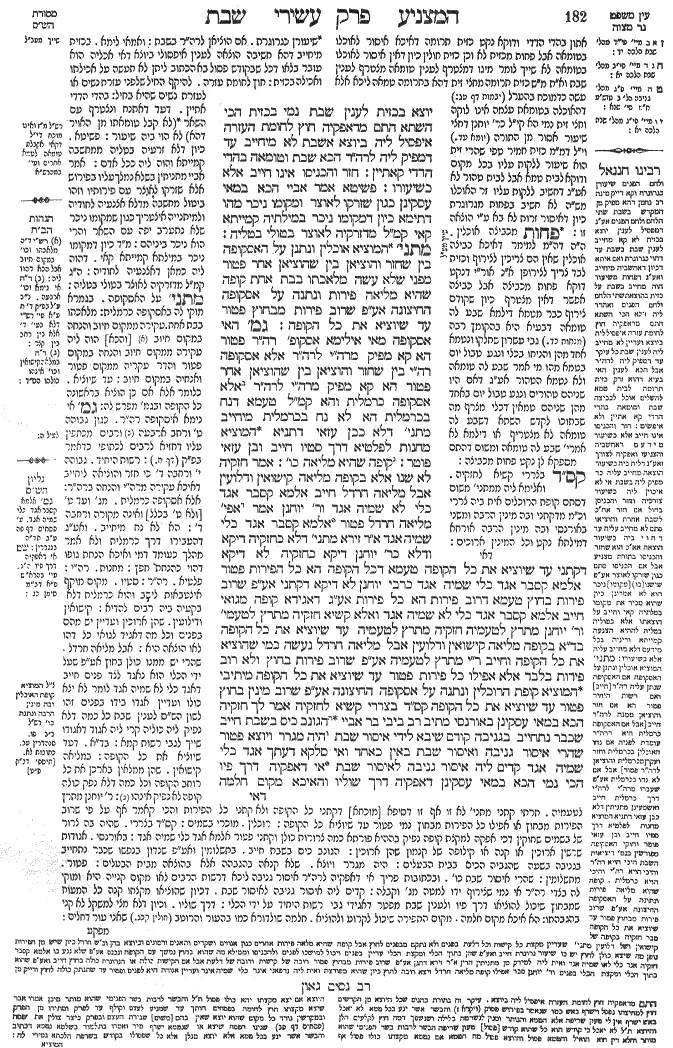
Shabbat 91b - Guemara
יוצא בכזית לענין שבת נמי בכזית הכי השתא התם מדאפקיה חוץ לחומת העזרה איפסיל ליה ביוצא אשבת לא מיחייב עד דמפיק ליה לרה"ר הכא שבת וטומאה בהדי הדדי קאתיין:
חזר והכניסו אינו חייב אלא כשיעורו:
פשיטא אמר אביי הכא במאי עסקינן כגון שזרקו לאוצר ומקומו ניכר מהו דתימא כיון דמקומו ניכר במילתיה קמייתא קאי קמ"ל מדזרקיה לאוצר בטולי בטליה:
מתני׳ המוציא אוכלין ונתנן על האסקופה בין שחזר והוציאן בין שהוציאן אחר פטור מפני שלא עשה מלאכתו בבת אחת קופה שהיא מליאה פירות ונתנה על אסקופה החיצונה אע"פ שרוב פירות מבחוץ פטור עד שיוציא את כל הקופה:
גמ׳ האי אסקופה מאי אילימא אסקופ' רה"ר פטור הא קא מפיק מרה"י לרה"ר אלא אסקופה רה"י בין שחזר והוציאן בין שהוציאן אחר פטור הא קא מפיק מרה"י לרה"ר אלא אסקופה כרמלית והא קמ"ל טעמא דנח בכרמלית הא לא נח בכרמלית מיחייב מתני' דלא כבן עזאי דתניא המוציא מחנות לפלטיא דרך סטיו חייב ובן עזאי פוטר:
קופה שהיא מליאה כו':
אמר חזקיה לא שנו אלא בקופה מליאה קישואין ודלועין אבל מליאה חרדל חייב אלמא קסבר אגד כלי לא שמיה אגד ור' יוחנן אמר אפי' מליאה חרדל פטור אלמא קסבר אגד כלי שמיה אגד א"ר זירא מתני' דלא כחזקיה דיקא ודלא כר' יוחנן דיקא כחזקיה לא דיקא דקתני עד שיוציא את כל הקופה טעמא דכל הקופה הא כל הפירות פטור אלמא קסבר אגד כלי שמיה אגד כרבי יוחנן לא דיקא דקתני אע"פ שרוב פירות בחוץ טעמא דרוב פירות הא כל פירות אע"ג דאגידא קופה מגואי חייב אלמא קסבר אגד כלי לא שמיה אגד ואלא קשיא חזקיה מתרץ לטעמי' ור' יוחנן מתרץ לטעמיה חזקיה מתרץ לטעמיה עד שיוציא את כל הקופה בד"א בקופה מליאה קישואין ודלועין אבל מליאה חרדל נעשה כמי שהוציא את כל הקופה וחייב ר"י מתרץ לטעמיה אע"פ שרוב פירות בחוץ ולא רוב פירות בלבד אלא אפילו כל פירות פטור עד שיוציא את כל הקופה מיתיבי המוציא קופת הרוכלין ונתנה על אסקופה החיצונה אע"פ שרוב מינין בחוץ פטור עד שיוציא את כל הקופה קס"ד בצררי קשיא לחזקיה אמר לך חזקיה הכא במאי עסקינן באורנסי מתיב רב ביבי בר אביי הגונב כיס בשבת חייב שכבר נתחייב בגניבה קודם שיבא לידי איסור שבת היה מגרר ויוצא פטור שהרי איסור גניבה ואיסור שבת באין כאחד ואי סלקא דעתך אגד כלי שמיה אגד קדים ליה איסור גניבה לאיסור שבת אי דאפקיה דרך פיו הכי נמי הכא במאי עסקינן דאפקיה דרך שוליו והאיכא מקום חלמה
Comments from Rashi on Masechet Shabbat Page 91b
חוץ לחומת עזרה . להיקף החיל שלפני עזרת נשים או לעזרת נשים שהיא בחיל: בהדי הדדי אתיין . דעד דאתנח ונצטרף עם השאר (לא קבל טומאתו מן האויר דהא) לא הוי ביה שיעור: פשיטא . כיון דלא זרעיה בטליה ממחשבה קמייתא והוה ליה ככל אדם: אמר אביי . מתניתין בשלא נמלך עליו בפירוש אלא שזרקו לאוצר עם פירותיו וזהו ביטול מחשבה מדלא אצנעיה לחודיה ולמיתנייה איצטריך כגון שמקומו ניכר שלא נתערב יפה עם השאר והרי הוא ניכר ביניהם: מ"ד כיון דמקומו ניכר במילתא קמייתא קאי . דהוה ליה כמאן דאצנעיה לחודיה: ה"ג קמ"ל מדזרקיה לאוצר בטולי בטליה: מתני' על האסקופה . בגמרא מוקי לה באסקופה כרמלית: מלאכתו בבת אחת . עקירה ממקום חיוב והנחה במקום חיוב [והכא] הוה ליה עקירה ממקום חיוב והנחה במקום פטור והדר עקריה ממקום פטור ואנחיה במקום חיוב: עד שיוציא . כלומר אלא אם כן הוציא בראשונה כל הקופה ובגמ' מפרש לה: גמ' אי נימא איסקופה רה"ר . כגון גבוהה ט' ורחב ארבעה ורבים מכתפין עליו דחזיא לרבים לכתופי כדאמר בפ"ק (דף ח.): רשות היחיד . גבוהה י' ורחבה ד' כי חזר והוציאה ליחייב דאיכא עקירה מרה"י והנחה ברה"ר: אלא אסקופה כרמלית . מג' ועד ט' [ולא ט' בכלל] ואינה מקורה ורחבה ד': הא לא נח מיחייב . ואע"ג דהעבירו דרך כרמלית ולא אמר מהלך כעומד דמי ואיכא הנחת גופו דהוי כהנחת חפץ: מחנות . רה"י: פלטיא . רה"ר: סטיו . מקום מוקף איצטבאות לישב והוא כרמלית דלא בקעיה ביה רבים להדיא: קישואין ודילועין . שהן ארוכין ועדיין יש מהם בפנים וכל מה דאגיד לגואי כל דהו לאו הוצאה היא: אבל מליאה חרדל . שהרי יש ממנו כולן בחוץ אע"פ שעל ידי הכלי הוא נאגד לצד פנים חייב דאגד כלי לא שמיה אגד לומר לא יצא כולו ועדיין אגדו בידו בפנים זהו לשון הש"ס לענין שבת כל כמה דלא נפיק ליה כוליה קרי ליה אגוד דאגודו שייך לגבי רשות קמא בד"א . דעד שיוציא את כל הקופה: במליאה קישואין . שהן ממלאין בארכן את כל רוחב הקופה וכל כמה דלא נפק כולה קופה לא נפיק אינהו: ר' יוחנן מתרץ לטעמיה . תרתי קתני מתניתין לא זו אף זו דסיפא [מוכחא] דקתני כל הקופה ולא קתני כל הפירות והכי קאמר אף על פי שרוב הפירות מבחוץ או אפילו כל הפירות מבחוץ נמי פטור עד שיוציא כל הקופה: רוכלין . מוכרי בשמים: קס"ד בצררי . שהיה בה צרור של בשמים שחוקין דכי אפקה למקצת קופה נפיק בההיא פורתא כמה צרורות כולן וקתני פטור אלמא אגד כלי שמיה אגד: באורנסי . אגודות שרשין ארוכין או קנה או קילופה של קנמון שהן ארוכין: הגונב כיס בשבת חייב . בתשלומין ואע"פ שנדון בנפשו שכבר נתחייב בגניבה בשעה שהגביה הכיס בבית הבעלים: היה מגרר ויוצא . שלא קנאה בהגבהה אלא בהוצאה מבית הבעלים: פטור . מתשלומין: שהרי איסור שבת כו' . ובכתובות פריך אי דאפקיה לרה"ר איסור גניבה ליכא דרשות הרבים לאו מקום קנייה היא ומוקי לה בצדי רה"ר אי נמי שצירוף ידו למטה מג' וקבלה: קדים ליה איסור גניבה לאיסור שבת . דכיון שהוציאו מקצתו קנה כל המעות שמבחוץ שיכול להוציאו דרך פיו ולענין שבת מפטר דאגידי גבי רשות היחיד על ידי הכלי: דרך שוליו . וכיון דלא מצי למשקל לא קני בהגבהתו: הא איכא מקום חלמה . מקום התפירה שיכול לקרוע ולהוציא. חלמה שולדורא כמו בהעור והרוטב (חולין קכג.) שאני עור דחלים:
Comments from Tosafot - Shabbat 91b
קס"ד בצררי קשיא לחזקיה . ואלימא ליה ממתני' משום דסתם קופת הרוכלים אית ביה צררי וכ"מ מדקתני ובה מינין הרבה ומשני באורנסי ובה מינין הרבה אורחא דמילתא נקט וכל המינין ארוכים:
Shabbat 91b - Mishnah translated into english
disqualification of consecrated items due to leaving the Temple courtyard, the significant measure is an olive-bulk, as one who eats that measure of disqualified consecrated items is liable; with regard to Shabbat, its measure for liability should also be an olive-bulk. The Gemara rejects this: How can you make that comparison? There, in the case of the consecrated items, from the moment that he took it beyond the courtyard wall it was disqualified due to the prohibition of leaving. However, with regard to Shabbat, he is only liable when he takes it into the public domain, which is far beyond the courtyard walls. Here, in the case where one threw teruma into the house on Shabbat, the prohibition of Shabbat and the impurity of the teruma come simultaneously. Since the olive-bulk is significant in terms of impurity, it is similarly significant with regard to Shabbat.
We learned in the mishna: If one stored the seed, carried it out, and then brought it back in, he is only liable if he brought in its measure for liability. The Gemara asks: This is obvious. By bringing it back into the house he indicates that he no longer considers it significant, and the object then assumes the legal status of an object belonging to anyone else. Abaye said: With what are we dealing here? We are dealing with a case where he threw it into the storehouse and its place is clearly discernible to the one who threw it, in that he knows where it landed. Lest you say that because its location is discernible it maintains its original status, the mishna teaches us that from the fact that he threw it into the storehouse, he indicated that he nullified the object’s previous significance.
MISHNA: One who carries out food from his house on Shabbat and placed it on the threshold of the door, whether he then carried it out from the threshold into the public domain or another person carried it out, he is exempt because he did not perform his prohibited labor of carrying from domain to domain all at once. Similarly, if one placed a basket that is full of fruit on the outer threshold, which is in the public domain, and part of the basket remained inside, even though most of the fruit is outside in the public domain, he is exempt until he carries out the entire basket.
GEMARA: The Gemara begins by asking: What is the nature of this threshold in terms of Shabbat? If you say that it is a threshold that has the legal status of the public domain, in that it does not extend above nine handbreadths, and its area is four by four handbreadths, and it is suitable for use by the multitudes, why is he exempt? Didn’t he carry out food from the private domain to the public domain? Rather, say that it is a threshold that has the legal status of the private domain, in that it extends above ten handbreadths, and its area is four by four handbreadths. In that case, why does the mishna say: Whether he then carried it out from the threshold into the public domain or another person carried it out, he is exempt? Why should he be exempt? Didn’t he carry out food from the private domain to the public domain?
Rather, the mishna is referring to a threshold that is a karmelit. And it teaches us the following: The reason that he is exempt is due to the fact that the object came to rest in a karmelit. However, if the object did not come to rest in a karmelit, he is liable even if it passed through a karmelit. This comes to teach that the mishna is not in accordance with the opinion of ben Azzai, as it was taught in a baraita: One who carries out an object from a store, which is a private domain, to a plaza, which is a public domain, via a colonnade, which is a karmelit, is liable because he lifted the object in a private domain and placed it in a public domain. And ben Azzai deems him exempt because, in his opinion, an exempt domain separates between the private and public domains.
We learned in the mishna: If one placed a basket that is full of fruit on the outer threshold, he is only liable if he carries out the entire basket. Ḥizkiya said: They only taught this halakha with regard to a basket full of cucumbers and gourds, both of which are long. Part of each fruit remains inside even when most of the basket is in the public domain. However, if the basket was full of mustard seeds, he is liable for carrying out a measure of individual mustard seeds to the public domain. The Gemara concludes: Apparently, he holds that the fusion of several objects in a single vessel is not considered fusion. Even though several objects are in a single basket, they do not have the legal status of a single unit. And Rabbi Yoḥanan said: Even if the basket were full of mustard seeds, he is exempt. Apparently, he holds that the fusion of several objects in a single vessel is considered fusion.
Rabbi Zeira said: The language of the mishna does not precisely correspond with the opinion of Ḥizkiya, and it does not precisely correspond with the opinion of Rabbi Yoḥanan. The Gemara explains: It does not precisely correspond with the opinion of Ḥizkiya, as the mishna taught: Until he carries out the entire basket. The Gemara infers: The reason that he is liable is because he carried out the entire basket. However, if part of the basket remained inside, even if he carried out all the fruit, he is exempt. Apparently, the mishna holds that fusion of several objects in a single vessel is considered fusion. Since the vessel fuses the fruit into one entity, when part of the basket remains inside, by extension its fruit is also considered to have remained inside. And it does not precisely correspond with the opinion of Rabbi Yoḥanan, as the mishna taught: Even though most of the fruit is outside. The Gemara infers: The reason that he is exempt is because only most of the fruit is outside. However, if all the fruit were outside, then even though part of the basket remains bound inside, he is liable. Apparently, the mishna holds that the fusion of several objects in a single vessel is not considered fusion.
The Gemara asks: However, that is difficult. The inferences of the mishna are contradictory. The Gemara explains: Ḥizkiya resolves the contradiction in accordance with his reasoning, and Rabbi Yoḥanan resolves the contradiction in accordance with his reasoning. The Gemara elaborates: According to both of the Sages, the mishna is referring to two distinct cases. Ḥizkiya resolves the contradiction according to his reasoning. The phrase: Until he carries out the entire basket; in what case is this statement said? It is said in the case of a basket full of cucumbers and gourds. However, in the case of a basket full of mustard seeds, he becomes as one who carried out the entire basket, and he is liable for carrying out the mustard seeds. And Rabbi Yoḥanan resolves the contradiction according to his reasoning: When we learned: Even though most of the fruit is outside, he is exempt; and that ruling is true not only if he carried out most of the fruit, but even if he carried out all the fruit he is also exempt, until he carries out the entire basket.
The Gemara raises an objection from that which was taught in a baraita: One who carries out the merchant’s basket on Shabbat that contains different items, primarily spices, and placed it on the outer threshold of the house, even though most of the types of items in the basket are outside, he is exempt until he carries out the entire basket. It might enter your mind to say that this is referring to a basket full of bundles of different spices. That is difficult according to the opinion of Ḥizkiya, as even though most of the bundles entered the public domain, he is exempt. The Gemara answers: Ḥizkiya could have said to you: With what are we dealing here? With stalks [urnasei]. The spices are in the form of stalks that fill the entire length of the basket. As long as part of the basket remains inside, part of each stalk remains inside as well.
And Rav Beivai bar Abaye also raised an objection from that which we learned: One who steals a purse on Shabbat is liable for the theft. Based on the principle that one who is liable to receive two punishments receives the greater of the two, in this case one should be exempt from payment for the theft, since performing a prohibited labor on Shabbat is punishable by stoning. However, this case is different because he was already liable for theft as soon as he lifted the purse. This took place before he came to violate the prohibition of performing prohibited labor on Shabbat by carrying it into the public domain. However, if he did not lift the purse, but was dragging it on the ground and exiting the private domain, he is exempt from paying for the theft, as in that case, he is only liable for the theft when he drags the purse out of the owner’s property into the public domain. The prohibition of theft and the prohibition of Shabbat are violated all at once. For the purposes of this discussion: And if it enters your mind to say that fusion of several objects within a single vessel is considered fusion, in this case the prohibition of theft precedes the prohibition of Shabbat. At the moment that the mouth of the purse enters the public domain, he is liable for theft because it is as if the money inside had been carried out. With regard to Shabbat, he would not be liable until the entire purse entered the public domain.
The Gemara explains: If this is referring to a case where he carried it out by way of its mouth, indeed that is so, he would be liable for theft. However, with what are we dealing here? We are dealing with a case where he carried it out by the underside of the purse. Since none of the money is accessible until the entire purse is in the public domain, he violated the prohibitions simultaneously. The Gemara asks: Isn’t there the area of the seam? He could gain access to the money even if he dragged out the purse by way of its underside,
Traduction : The William Davidson digital edition of the Koren Noé Talmud, with commentary by Rabbi Adin Even-Israel Steinsaltz.