 Talmud Bavli
The learning on the whole site is dedicated : L'ilui Nishmat Rav Chlomo Ben Jamilla
The learning on the whole site is dedicated : L'ilui Nishmat Yechayahou ben Moche
The learning on the whole site is dedicated : L'ilui Nishmat Reuven ben Rivka SEBBAG
Shabbat 104a : Youtube
Daf TubeYoutube
3 video classes :
Shabbat Page 104a
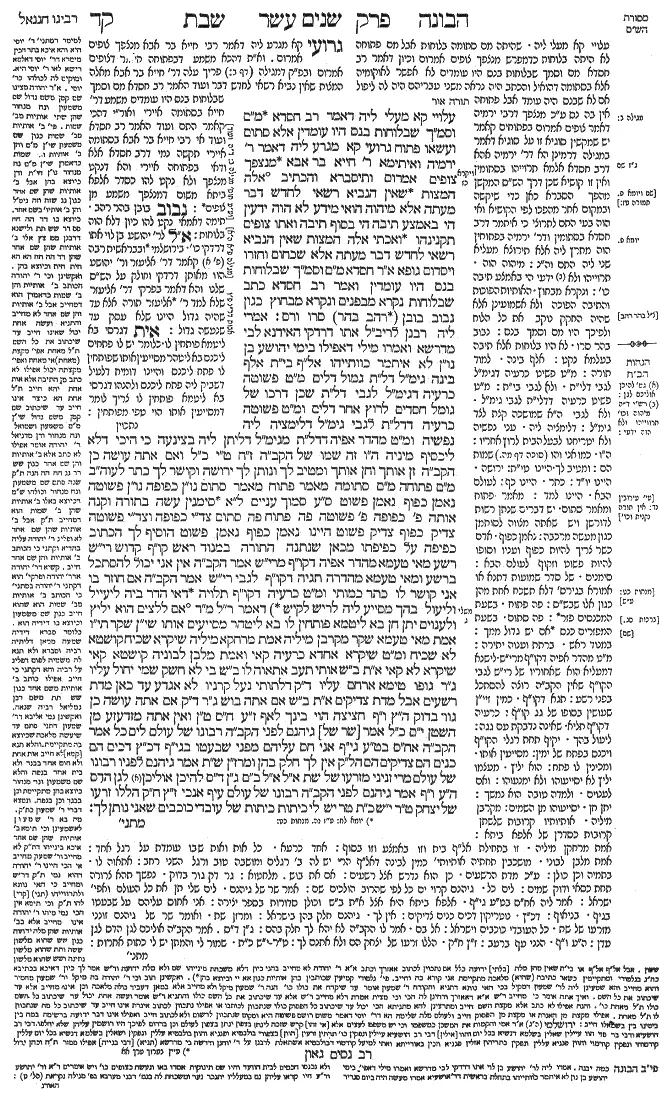
Shabbat 104a - Guemara
עלויי קא מעלי ליה דאמר רב חסדא מ"ם וסמ"ך שבלוחות בנס היו עומדין אלא סתום ועשאו פתוח גרועי קא מגרע ליה דאמר ר' ירמיה ואיתימא ר' חייא בר אבא מנצפך צופים אמרום ותיסברא והכתיב (ויקרא כז, לד) אלה המצות שאין הנביא רשאי לחדש דבר מעתה אלא מיהוה הואי מידע לא הוה ידעין הי באמצע תיבה הי בסוף תיבה ואתו צופים תקנינהו ואכתי אלה המצות שאין הנביא רשאי לחדש דבר מעתה אלא שכחום וחזרו ויסדום גופא א"ר חסדא מ"ם וסמ"ך שבלוחות בנס היו עומדין ואמר רב חסדא כתב שבלוחות נקרא מבפנים ונקרא מבחוץ כגון נבוב בובן (רהב בהר) סרו ורס:
אמרי ליה רבנן לריב"ל אתו דרדקי האידנא לבי מדרשא ואמרו מילי דאפילו בימי יהושע בן נו"ן לא איתמר כוותייהו אל"ף בי"ת אלף בינה גימ"ל דל"ת גמול דלים מ"ט פשוטה כרעיה דגימ"ל לגבי דל"ת שכן דרכו של גומל חסדים לרוץ אחר דלים ומ"ט פשוטה כרעיה דדל"ת לגבי גימ"ל דלימציה ליה נפשיה ומ"ט מהדר אפיה דדל"ת מגימ"ל דליתן ליה בצינעה כי היכי דלא ליכסיף מיניה ה"ו זה שמו של הקב"ה ז"ח ט"י כ"ל ואם אתה עושה כן הקב"ה זן אותך וחן אותך ומטיב לך ונותן לך ירושה וקושר לך כתר לעוה"ב מ"ם פתוחה מ"ם סתומה מאמר פתוח מאמר סתום נו"ן כפופה נו"ן פשוטה נאמן כפוף נאמן פשוט ס"ע סמוך עניים ל"א סימנין עשה בתורה וקנה אותה פ' כפופה פ' פשוטה פה פתוח פה סתום צד"י כפופה וצד"י פשוטה צדיק כפוף צדיק פשוט היינו נאמן כפוף נאמן פשוט הוסיף לך הכתוב כפיפה על כפיפתו מכאן שנתנה התורה במנוד ראש קו"ף קדוש רי"ש רשע מאי טעמא מהדר אפיה דקו"ף מרי"ש אמר הקב"ה אין אני יכול להסתכל ברשע ומאי טעמא מהדרה תגיה דקו"ף לגבי רי"ש אמר הקב"ה אם חוזר בו אני קושר לו כתר כמותי ומ"ט כרעיה דקו"ף תלויה דאי הדר ביה ליעייל וליעול בהך מסייע ליה לריש לקיש) דאמר ר"ל מ"ד (משלי ג, לד) אם ללצים הוא יליץ ולענוים יתן חן בא ליטמא פותחין לו בא ליטהר מסייעים אותו שי"ן שקר תי"ו אמת מאי טעמא שקר מקרבן מיליה אמת מרחקא מיליה שיקרא שכיח קושטא לא שכיח ומ"ט שיקרא אחדא כרעיה קאי ואמת מלבן לבוניה קושטא קאי שיקרא לא קאי א"ת ב"ש אותי תעב אתאוה לו ב"ש בי לא חשק שמי יחול עליו ג"ר גופו טימא ארחם עליו ד"ק דלתותי נעל קרניו לא אגדע עד כאן מדת רשעים אבל מדת צדיקים א"ת ב"ש אם אתה בוש ג"ר ד"ק אם אתה עושה כן גור בדוק ה"ץ ו"ף חציצה הוי בינך לאף ז"ע ח"ס ט"ן ואין אתה מזדעזע מן השטן י"ם כ"ל אמר [שר של] גיהנם לפני הקב"ה רבונו של עולם לים כל אמר הקב"ה אח"ס בט"ע גי"ף אני חס עליהם מפני שבעטו בגי"ף דכ"ץ דכים הם כנים הם צדיקים הם הל"ק אין לך חלק בהן ומרז"ן ש"ת אמר גיהנם לפניו רבונו של עולם מרי זניני מזרעו של שת א"ל א"ל ב"ם ג"ן ד"ס להיכן אוליכן לגן הדס ה"ע ו"ף אמר גיהנם לפני הקב"ה רבונו של עולם עיף אנכי ז"ץ ח"ק הללו זרעו של יצחק ט"ר י"ש כ"ת טר יש לי כיתות כיתות של עובדי כוכבים שאני נותן לך:
Comments from Rashi on Masechet Shabbat Page 104a
עלויי קא מעלי ליה . שהיתה מם סתומה בלוחות אבל מם פתוחה לא היתה בלוחות כדמפרש מנצפך צופים אמרום וכיון דאמר רב חסדא מם וסמך שבלוחות בנס היו עומדים לא אפשר לאוקומיה אלא בסתומה דהואיל והכתב היה נראה משני עבריהם היה לה ליפול אם לא שבנס היה עומד אבל פתוחה אין בה נס ע"כ מנצפך דרבי ירמיה דאמר צופין אמרום בפתוחים קאמר יש שמקשין סוגיא זו על סוגיא דאמר במגילה דרמינן הא דר' ירמיה אהא דרב חסדא אלמא תרוייהו בסתומין ואין זו קושיא שכן דרך הש"ס מהפך הסברא כאן כדי שיקשה ובמקום אחר מהפכו לפי הקושיא ואי הוה בעי התם לתרוצי כי איתמר דרב חסדא בסתומין ודר' ירמיה בפתוחין הוה מתרץ ליה אלא תירוצא מעליא שני ליה התם וה"נ: מיהוה הוה . תרוייהו ולא ידעי הי באמצע תיבה כו': ונקרא מבחוץ . האותיות הפוכות והתיבה הפוכה ולא אשמועינן אלא שהיה החקק נוקב את כל הלוח ולפיכך היו מם וסמך בנס: נבוב בהר סרו . לא היו בלוחות אלא תיבה בעלמא נקט: אלף בינה . למוד תורה: מ"ט פשיט כרעיה דגימ"ל לגבי דלי"ת . ולא לגבי בי"ת: מ"ט פשיט כרעיה דדלי"ת לגבי גימ"ל . ולא לגבי ה"א שמושכה קצת לצד גימ"ל: דלימציה ליה . עני נפשיה ולא יטריחנו לבעל הבית לרוץ אחריו: ה"ו . כמו אני והו (סוכה דף מה.) שמות הם: ומטיב לך . היינו טי"ת: ירושה . היינו יו"ד: כתר . היינו כף: לעולם הבא . היינו למד: מאמר פתוח ומאמר סתום . יש דברים שנתן רשות לדורשן ויש שאתה מצווה לסותמן כגון מעשה מרכבה: נאמן כפוף . אדם כשר צריך להיות כפוף ועניו וסופו להיות פשוט וזקוף לעולם הבא: סימנים . של סדר שמועות דתנא או אמורא בגירס' דלא תשכח אחת מהן כגון אלו שבש"ס: פה פתוח . בשעת המכנסים פזר: פה סתום . בשעת המפזרים כנס אם יש גדול ממך: במנוד ראש . ברתת וענוה יתירה: מ"ט מהדר אפיה דקו"ף מרי"ש . לישנא דמעליא הוא שאחוריו של רי"ש לגבי הקו"ף שאין הקב"ה רוצה להסתכל בפני רשע: תגא דקו"ף . כמין זיי"ן שעושין בסופו של גג קו"ף: כרעיה דקו"ף תליא . שאינה נדבקת עם גגה: ליעול בהך . יקיף תחת רגלי הקו"ף ויכנס בפתח של ימין: מסייעין אותו . ומכינין לו פתח: הוא יליץ . מעצמו יליץ לא יסייעוהו ולא ימנעוהו: ואם לענוים . ולמדה טובה הוא נמשך: יתן חן . יסייעוהו מן השמים: מקרבן מיליה . אותיות קרובות שלשתן קרובות כסדרן של אלפא ביתא. אמת מרחקן מיליה . זו בתחילת אל"ף בית וזו באמצע וזו בסוף: אחד כרעא . כל אות ואות שבו עומדת על רגל אחד: אמת מלבן לבוני . מושכבין תחתיה אותיותי' כמין לבינה דאל"ף הרי יש לה ב' רגלים ומושבה טוב ורגל השני רחב: אתאוה לו . בתמיה וכן כולן: ע"כ מדת הרשעים . כן הוא נדרש אצל רשעים: אם את בוש . מלחטוא: גר דק גור בדוק . נפשך תהא צרורה תחת כסאי ודוק שמים: לים כל . גיהנם קרוי ים כל לפי שהרוב הולכים שם: אמר שר של גיהנם . לים שלי תן את כל העולם ואפילו ישראל: ג"ן ד"ס . אמר הקב"ה אוליכם לגן הדס לגן עדן: אמר ליה אח"ס בט"ע גי"ף . אלפא ביתא היא אצל א"ת ב"ש וכולן סדורות בספר יצירה: אני אחוס עליהם על שבעטו בגיף . בניאוף: דכ"ץ . נוטריקון דכים כנים צדיקים: אין לך . גיהנם חלק בהן בישראל: ומרזן שת . ואומר שר של גיהנם זונני מזרעו של שת. כל העובדי כוכבים וישראל: אל בם . אמר לו הקב"ה לא יהא לך חלק בהם: ג"ן ד"ס . אמר הקב"ה אוליכם לגן הדס לגן עדן: ה"ע ו"ף . הנני עף ברעב: ז"ץ ח"ק . הללו זרעו של יצחק הם ולא אתנם לך: ט"ר י"ש כ"ת . שמור לי והמתן יש לי כתות אחרות:
Comments from Tosafot - Shabbat 104a
גרועי קא מגרע ליה דאמר רבי חייא בר אבא מנצפך צופים אמרום . וא"ת דהכא משמע דבפתוחה קאמר דצופים אמרום ובפ"ק דמגילה (דף ב:) פריך עלה דר' חייא בר אבא מאלה המצות שאין נביא רשאי לחדש דבר ועוד האמר רב חסדא מם וסמך שבלוחות בנס היו עומדים משמע דר' חייא בסתומה איירי ואור"י דהכי קאמר התם. ועוד האמר רב חסדא ועוד אי רבי חייא בר אבא בסתומה איירי תקשה נמי דרב חסדא אלא ודאי בפתוחה איירי והא דנקט מנצפך ולא נקט להו כסדר אלפא ביתא משום דמנצפך משמע מן צופים: נבוב בובן בהר רהב . תימה דאמאי נקט להו כיון דלא הוה בלוחות: א"ל לר' יהושע בן לוי אתו דרדקי כו' . בירושלמי ובבראשית רבה (ס' א) קאמר דר' אליעזר ור' יהושע הוו מאותן דרדקי וחולק על הש"ס שלנו והא דאמר בפרקי דר' אליעזר שלא למד ר' אליעזר תורה אלא עד שהיה גדול היינו שלא עסק עד שנעשה גדול: אית דגרסי בא ליטמא פותחין לו . כלומר יש לו פתחים ליכנס בא ליטהר מסייעין אותו שפותחין לו פתח ליכנס והיינו דומיא דלעיל דשביק ליה פתח ליכנס ולהנהו דגרסי בא ליטמא פותחין לו צריך לומר דמסייעין אותו הוי טפי מפותחין:
Shabbat 104a - Mishnah translated into english
he elevates its status, as Rav Ḥisda said: The letters mem and samekh that were in the tablets were standing miraculously. Each letter was chiseled all the way through the tablets. In that case, the segment of the tablets at the center of the samekh and final mem, letters that are completely closed, should have fallen. Miraculously, they remained in place. Consequently, rendering an open mem closed elevates its status. However, if one rendered a closed letter open, he diminishes its status, as Rabbi Yirmeya said, and some say that it was Rabbi Ḥiyya bar Abba who said: The prophets instituted the difference between the open and closed forms of the letters mem, nun, tzadi, peh, kaf. Since the closed letters date back to the Ten Commandments, apparently the prophets introduced the open versions of the letters, which are therefore less significant.
The Gemara rejects this: And is that reasonable? Isn’t it written: “These are the commandments that the Lord commanded Moses to tell the children of Israel at Mount Sinai” (Leviticus 27:34). The word “these” underscores that a prophet is not permitted to introduce any new element related to the Torah and its mitzvot from here on. Rather, the prophets did not innovate these forms. Both the open and closed versions existed before then. However, people did not know which form appeared in the middle of a word and which form at the end of a word. And the prophets came and instituted their set positions. The Gemara asks: And still the question remains: Didn’t the Sages derive from the verse: “These are the commandments,” that a prophet is not permitted to introduce any new element from here on? How could they institute the position of the letters? Rather, over the course of time, the people forgot their positions in the words and the prophets then reestablished their positions. Apparently, closed letters are no more significant than the open ones.
The Gemara returns to discuss the matter itself. Rav Ḥisda said: The letters mem and samekh that were in the tablets were standing miraculously. And furthermore, Rav Ḥisda said: The writing on the tablets was read from the inside, from one side of the tablets, and read from the outside, the other side of the tablets, in reverse order. The Gemara cites words that appear elsewhere in the Bible: Nevuv was read as bet, vav, bet, nun; rahav as beit, heh, reish; and saru as vav, reish, samekh.
The Sages said to Rabbi Yehoshua ben Levi: Young students came today to the study hall and said things the likes of which were not said even in the days of Joshua bin Nun. These children who only knew the Hebrew alphabet interpreted the letters homiletically.
Alef beit means learn [elaf] the wisdom [bina] of the Torah.
Gimmel dalet means give to the poor [gemol dalim]. Why is the leg of the gimmel extended toward the dalet? Because it is the manner of one who bestows loving-kindness to pursue the poor. And why is the leg of the dalet extended toward the gimmel? It is so that a poor person will make himself available to him who wants to give him charity. And why does the dalet face away from the gimmel? It is to teach that one should give charity discreetly so that the poor person will not be embarrassed by him.
The children continued to interpret the letters.
Heh vav: That is the principal name of the Holy One, Blessed be He.
Zayin ḥet, tet yod, kaf lamed: And if you do so, the Holy One, Blessed be He, feeds [zan] you, and shows you favor [ḥan], and bestows goodness [meitiv] upon you, and gives you an inheritance [yerusha], and ties a crown [keter] for you in the World to Come [la’olam haba].
The open mem and closed mem indicate that the Torah contains an open statement, understood by all, and an esoteric statement.
The bent nun and the straight nun at the end of a word refer to a faithful person who is bent [ne’eman kafuf] and is modest now, who will ultimately become a well-known faithful person [ne’eman pashut].
Samekh ayin: Support the poor [semokh aniyyim] to prevent them from falling further. Another version: Make mnemonic signs [simanim aseh] to remember the Torah and acquire it.
The bent peh and the straight peh: Sometimes one needs to have an open mouth [peh patuaḥ] and speak, and sometimes one needs to have a closed mouth [peh satum].
The bent tzadi and the straight tzadi indicate that a righteous person who is bent and humble [tzaddik kafuf] now will ultimately become a well-known righteous person [tzaddik pashut] whose righteousness is apparent to all. The Gemara asks: That is identical to the interpretation of the bent and straight nun: Ne’eman kafuf, ne’eman pashut. The Gemara explains: The verse added the bending of the righteous person to the bending of the faithful person. From here it is derived that the Torah was given in an atmosphere of gravity. One must receive the Torah with a sense of awe and extreme humility.
The children continued:
Kuf: Holy [kadosh], referring to God.
Reish: A wicked person [rasha]. Why is the kuf facing away from the reish? This question was phrased euphemistically, as it is the reish that is facing away from the kuf. The Holy One, Blessed be He, said: I am unable look at a wicked person, i.e., the wicked person does not want to look toward God. And why is the crown of the letter kuf turned toward the reish? The Holy One, Blessed be He, said: If the wicked person repents his evil ways I will tie a crown for him like My own. And why is the leg of the kuf suspended and not connected to the roof of the letter? Because if the wicked person repents he can enter through this opening if he so desires.
The Gemara asks: Let him enter through that opening, as the kuf is open on both sides at the bottom. The Gemara answers: This supports the statement of Reish Lakish, as Reish Lakish said: What is the meaning of that which is written: “If it concerns the scorners, He scorns them, and unto the humble He gives grace” (Proverbs 3:34)? One who comes in order to become impure, i.e., to sin, they, in Heaven, provide him with an opening to do so, and he is not prevented from sinning. However, if he comes in order to become purified, not only is he allowed to do so, but they, in Heaven, assist him.
They further taught:
Shin: Falsehood [sheker]. Tav: Truth [emet].
Why are the letters of the word sheker adjacent to one another in the alphabet, while the letters of emet are distant from one another? That is because while falsehood is easily found, truth is found only with great difficulty. And why do the letters that comprise the word sheker all stand on one foot, and the letters that comprise the word emet stand on bases that are wide like bricks? Because the truth stands eternal and falsehood does not stand eternal.
The Gemara cites another midrash that also deals with the letters of the alphabet. This one uses a code in which the first letter is paired with the last letter, the second letter with the penultimate one, and so on [alef tav, beit shin]. Alef tav, God said: If he despised Me [oti ti’ev] would I desire [etaveh] him? Beit shin: If he does not desire to worship Me [bi], shall My name [shemi] rest upon him? Gimmel reish: He defiled his body [gufo]; shall I have mercy [araḥem] on him? The word comprised of the letters gimmel and reish in Aramaic means licentiousness. Dalet kuf: He locked My doors [daltotai], shall I not cut off his horns [karnav]? To this point, the Gemara interpreted the letters as referring to the attribute of the wicked.
However, with regard to the attribute of the righteous it is taught differently. Alef tav, beit shin: If you have shame [ata bosh], gimmel reish, dalet kuf: If you do so, you will reside [gur] in the heavens [bedok], as the verse says: “Who stretches out the Heavens like a curtain [dok]” (Isaiah 40:22). Heh tzadi, vav peh: There is a partition [ḥatzitza havei] between you and anger [af]. Zayin ayin, ḥet samekh, tet nun: And you will not be shaken [mizdaze’a] by the Satan. Yod mem, kaf lamed: The minister of Gehenna said before the Holy One, Blessed be He: Master of the Universe, send the righteous as well into the sea to which all go [yam kol], Gehenna.
The interpretation of the alphabet continues with other combinations of letters. The Holy One, Blessed be He, said: Alef ḥet samekh, bet tet ayin, gimmel yod peh: I have mercy on them [Ani ḥas aleihem] because they spurned [ba’atu] adultery [gif]. The Gemara continues with this combination of the letters: Dalet kaf tzadi: They are pure [dakkim], they are honest [kenim], they are righteous [tzaddikim]. Heh lamed kuf: You have no portion [ḥelek] with them, based on the interchange of the letters ḥet and heh. Vav mem reish zayin nun, shin tav: The minister of Gehenna said [amar], based on vav mem reish, before Him: Master of the Universe, my Master [Mari], sustain me [zaneini] with the seed of Seth [Shet], which refers to all humankind, including the Jewish people.
The Holy One, Blessed be He, said to him using another configuration of the alphabet: Alef lamed, beit mem: Not with them [al bam], i.e., you will have no portion of them. Gimmel nun, dalet samekh: To where will I lead them? I will lead them to the garden of myrtle [gan hadas], i.e., the Garden of Eden. Heh ayin, vav peh: The minister of Gehenna said before the Holy One, Blessed be He: Master of the Universe, I am tired [ayef anokhi] and thirsty and need people to care for me. The Holy One, Blessed be He, responded: Zayin tzadi, ḥet kuf: These are the descendants [zaro] of Isaac [Yitzḥak]. Tet reish, yod shin, kaf tav: Wait [tar], I have groups upon groups [yesh li kittot kittot] of other nations that I will give you instead.
Traduction : The William Davidson digital edition of the Koren Noé Talmud, with commentary by Rabbi Adin Even-Israel Steinsaltz.