 Talmud Bavli
The learning on the whole site is dedicated : L'ilui Nishmat Nissim ben Barukh Malka
The learning on the whole site is dedicated : L'ilui Nishmat Ledicia bat David Banoun
The learning on the whole site is dedicated : L'ilui Nishmat רינה בת לדיסיה
Shabbat 49a : Youtube
Daf TubeYoutube
3 video classes :
Shabbat Page 49a
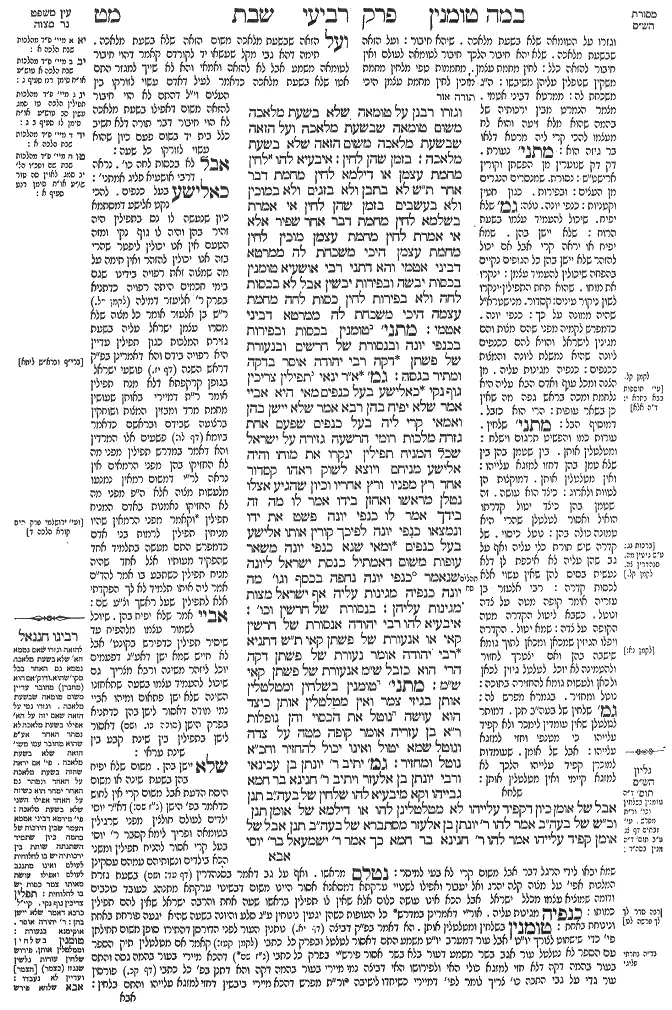
Shabbat 49a - Guemara
וגזרו רבנן על טומאה שלא בשעת מלאכה משום טומאה שבשעת מלאכה ועל הזאה שבשעת מלאכה משום הזאה שלא בשעת מלאכה:
בזמן שהן לחין:
איבעיא להו לחין מחמת עצמן או דילמא לחין מחמת דבר אחר ת"ש לא בתבן ולא בזגים ולא במוכין ולא בעשבים בזמן שהן לחין אי אמרת בשלמא לחין מחמת דבר אחר שפיר אלא אי אמרת לחין מחמת עצמן מוכין לחין מחמת עצמן היכי משכחת לה ממרטא דביני אטמי והא דתני רבי אושעיא טומנין בכסות יבשה ובפירות יבשין אבל לא בכסות לחה ולא בפירות לחין כסות לחה מחמת עצמה היכי משכחת לה ממרטא דביני אטמי:
מתני׳ טומנין בכסות ובפירות בכנפי יונה ובנסורת של חרשים ובנעורת של פשתן דקה רבי יהודה אוסר בדקה ומתיר בגסה:
גמ׳ א"ר ינאי תפילין צריכין גוף נקי כאלישע בעל כנפים מאי היא אביי אמר שלא יפיח בהן רבא אמר שלא יישן בהן ואמאי קרי ליה בעל כנפים שפעם אחת גזרה מלכות רומי הרשעה גזירה על ישראל שכל המניח תפילין ינקרו את מוחו והיה אלישע מניחם ויוצא לשוק ראהו קסדור אחד רץ מפניו ורץ אחריו וכיון שהגיע אצלו נטלן מראשו ואחזן בידו אמר לו מה זה בידך אמר לו כנפי יונה פשט את ידו ונמצאו כנפי יונה לפיכך קורין אותו אלישע בעל כנפים ומאי שנא כנפי יונה משאר עופות משום דאמתיל כנסת ישראל ליונה שנאמר (תהלים סח, יד) כנפי יונה נחפה בכסף וגו' מה יונה כנפיה מגינות עליה אף ישראל מצות מגינות עליהן:
בנסורת של חרשין וכו':
איבעיא להו רבי יהודה אנסורת של חרשין קאי או אנעורת של פשתן קאי ת"ש דתניא רבי יהודה אומר נעורת של פשתן דקה הרי הוא כזבל ש"מ אנעורת של פשתן קאי ש"מ:
מתני׳ טומנין בשלחין ומטלטלין אותן בגיזי צמר ואין מטלטלין אותן כיצד הוא עושה נוטל את הכסוי והן נופלות ר"א בן עזריה אומר קופה מטה על צדה ונוטל שמא יטול ואינו יכול להחזיר וחכ"א נוטל ומחזיר:
גמ׳ יתיב ר' יונתן בן עכינאי ורבי יונתן בן אלעזר ויתיב ר' חנינא בר חמא גבייהו וקא מיבעיא להו שלחין של בעה"ב תנן אבל של אומן כיון דקפיד עלייהו לא מטלטלינן להו או דילמא של אומן תנן וכ"ש של בעה"ב אמר להו ר' יונתן בן אלעזר מסתברא של בעה"ב תנן אבל של אומן קפיד עלייהו אמר להו ר' חנינא בר חמא כך אמר ר' ישמעאל בר' יוסי
Comments from Rashi on Masechet Shabbat Page 49a
וגזרו על הטומאה שלא בשעת מלאכה . שיהא חיבור: ועל הזאה שבשעת מלאכה . שלא יהא חיבור הלכך חיבור לטומאה לעולם ואין חיבור להזאה כלל: לחין מחמת עצמן . מחממות טפי מלחין מחמת משקין שנופלין עליהן משיבשו: ה"ג מוכין לחין מחמת עצמן היכי משכחת לה: ממרטא דביני אטמי . מצמר הנמרט מבין ירכותיה של בהמה שהוא מלא זיעה והוא לח מעצמו להכי קרי ליה מרטא דלאו בר גיזה הוא: מתני' נעורת . דק דק שנוערין מן הפשתן וקורין ארישט"ש: נסורת . שמנסרים הנגרים מן העצים: ובפירות . כגון חטין וקטניות: כנפי יונה . נוצה: גמ' שלא יפיח . שיכול להעמיד עצמו בשעת הרוח: שלא יישן בהן . שמא יפיח או יראה קרי אבל אם יכול להזהר שלא יישן בהן כל הגופים נקיים בהפחה שיכולין להעמיד עצמן: ינקרו את מוחו . שהוא תחת התפילין. ינקרו לשון ניקור עינים: קסדור . מנישטרא"ל שהיה ממונה על כך: כנפי יונה . כדמפרש לקמיה מפני שהם מצות והם מגינין לישראל והויא להם ככנפים ליונה שהיא נמשלת ליונה והמצות ככנפים: כנפיה מגינות עליה . מן הצנה ומכל עוף ואדם הבא עליה היא נלחמת ומכה בראש גפה מה שאין כן בשאר עופות: הרי הוא כזבל . דמוסיף הבל: מתני' שלחין . עורות כמו והפשיט תרגום וישלח: ומטלטלין אותן . בין שטמן בהן בין שלא טמן בהן דחזו למזגא עלייהו: ואין מטלטלין אותן . דמוקצות הן לטוות ולארוג: כיצד הוא עושה . זה שטמן בהן כיצד יטול קדרתו הואיל ואסור לטלטלן שהרי היא טמונה כולה בהן: נוטל כיסוי . של קדרה שיש תורת כלי עליה ואף על גב שהן עליה לא איכפת לן דלא נעשית בסיס להן שאין עשוי אלא לכסות קדרה: רבי אלעזר בן עזריה אומר קופה מטה על צדה ונוטל . כשבא ליטול הקדרה מטה הקופה על צדה: שמא יטול . הקדרה ויפלו הגיזין שמכאן ומכאן לתוך גומא שישבה בהן ואם יצטרך לחזור ולהטמינה לא יוכל לטלטל גיזין לכאן ולכאן ולעשות גומא להחזירה בתוכה: נוטל ומחזיר . בגמרא מפרש לה: גמ' שלחין של בעה"ב תנן . דמותר לטלטלן שאין עומדין לימכר ולא קפיד עלייהו כי מטנפי וחזי למזגא עלייהו: אבל של אומן . שעומדות למוכרן קפיד עלייהו הלכך לא למזגא קיימי ואין מטלטלין אותן:
Comments from Tosafot - Shabbat 49a
ועל הזאה שבשעת מלאכה משום הזאה שלא בשעת מלאכה . תימה דהא גבי מקל שעשאו יד לקורדם קאמר דהוי חיבור לטומאה משמע אבל לא להזאה ואמאי והא לא שייך למגזר התם אטו שלא בשעת מלאכה כדאמר לעיל דאדם עשוי לזורקו בין העצים וי"ל דהתם לא הוי חיבור להזאה משום דאפילו בשעת מלאכה לא הוי חיבור דבר תורה דלא חשיב כלל בית יד בשום פעם כיון שהוא עשוי לזורקו כל שעה: אבל לא בכסות לחה כו' . נראה דרבי אושעיא פליג אמתני': כאלישע בעל כנפים . להכי נקט אלישע דמסתמא כיון שנעשה לו נס בתפילין היה זהיר בהן והיה לו גוף נקי ומזה הטעם אין אנו יכולין ליפטר שהרי בזה אנו יכולין להזהר ואין תימה על מה שמצוה זאת רפויה בידינו שגם בימי חכמים היתה רפויה כדתניא בפרק ר' אליעזר דמילה (לקמן שבת ל.) ר"ש בן אלעזר אומר כל מצוה שלא מסרו עצמן ישראל עליה בשעת גזירת המלכות כגון תפילין עדיין היא רפויה בידם והא דאמרינן בפ"ק דראש השנה (דף יז.) פושעי ישראל בגופן קרקפתא דלא מנח תפילין אומר ר"ת דמיירי באותן שעושין מחמת מרד ומבזין המצות ושוחקין ברצועה שבידם ובראשם כדאמר ביומא (דף לו:) פשעים אלו המרדין והא דאמר במדרש תפילין מפני מה לא החזיקו בהן מפני הרמאים אין נראה לר"י דמשום רמאין נמנעו מלעשות מצוה אלא ה"פ מפני מה לא החזיקו נאמנות באדם המניח תפילין וקאמר מפני הרמאין שהיו מניחין תפילין לרמות בני אדם כדמפרש התם מעשה בתלמיד אחד שהפקיד מעותיו אצל אחד שהיה מניח תפילין כשתבע בו אמר להד"ם אמר ליה אותו תלמיד לא לך הפקדתי אלא לתפילין שעל ראשך וצ"ע שם: אביי אמר שלא יפיח בהן . שיוכל לשמור עצמו מלהפיח עד שיסיר תפילין כדפירש בקונט' אבל לא חייש שמא ישן דאע"ג דפעמים יוכל ליזהר משינה ורבא מצריך גם שיכול להעמיד עצמו בשעה שתאחזנו השינה שלא ישן פתאום ומיהו אביי נמי מודה דאסור לישן בהן כדתניא בפרק הישן (סוכה כו. ושם) דאסור לישן בתפילין בין שינת קבע בין שינת עראי: שלא יישן בהן . משום שלא יפיח בהן בשעת שינה או משום היסח הדעת אבל משום קרי אין לחוש כדאמר בפ' הישן (ג"ז שם:) דא"ר יוסי ילדים לעולם חולצין מפני שרגילין בטומאה ופריך לימא קסבר ר' יוסי בעל קרי אסור להניח תפילין ומשני הכא בילדים ונשותיהם עמהם עסקינן שמא יבאו לידי הרגל דבר אבל משום קרי לא בעי למיסר: נטלם מראשו . ואף על גב דאמר בסנהדרין (דף עד: ושם) בשעת גזרת המלכות אפי' על מצוה קלה יהרג ואל יעבור ואפילו לשנויי ערקתא דמסאנא אסור היינו משום דבשינוי ערקתא מתנהג כעובד כוכבים ודומה שמוציא עצמו מכלל ישראל אבל הכא אינו עושה כלום אלא שאין לו תפילין בראשו שעה אחת והרבה ישראל שאין להם תפילין כמותו: כנפיה מגינות עליה . אור"י דאמרינן במדרש כל העופות כשהן יגעין נינוחין ע"ג סלע והיונה בשעה שהיא יגעה פורחת באחת ונינוחת באחת: טומנין בשלחין ומטלטלין אותן . הא דאמר בפ"ק דביצה (דף יא.) נותנין העור לפני הדורסן דהתירו סופן משום תחילתן פי' כדי שישחוט לצורך יו"ט אבל עור דמערב יו"ט משמע התם דאסור לטלטל ובפרק כל כתבי (לקמ קטז:) קאמר אם מטלטלין תיק הספר עם הספר לא נטלטל עור אגב בשר משמע דעור בלא בשר אסור פירש"י בפרק כל כתבי (ג"ז שם) דהכא מיירי בעור בהמה גסה והתם בעור בהמה דקה דלא חזי למזגא כולי האי ולפירושו האי דביצה נמי מיירי בעור בהמה דקה והא דתנן בפ' כל כתבי (דף ק.) פורסין עור גדי על גבי התבה כו' צריך לומר לפי' דמיירי כשיחדו לישיבה ור"ת מפרש דהכא מיירי ביבשין דחזי למזגא עלייהו והתם בלחין:
Shabbat 49a - Mishnah translated into english
And the Sages issued a decree that it should be considered a connection with regard to ritual impurity even when not in use, due to ritual impurity when in use. If one component becomes ritually impure, the other component becomes ritually impure as well. And, as a further stringency, they issued a decree that it is not considered a connection with regard to sprinkling even when in use, due to sprinkling when not in use. The water of purification must be sprinkled on each part individually.
The mishna listed several materials in which food may not be insulated on Shabbat eve when those materials are moist. A dilemma was raised before the Sages: Is the mishna referring specifically to materials that are moist due to their own natural state, or is it referring perhaps even to materials that are now moist due to something else, e.g., because they were soaked by liquid?
Come and hear a resolution to this dilemma from the materials listed in the mishna: And one may neither insulate a pot in straw, nor in the residue of grapes that have been pressed for their juice, nor in soft materials, nor in grass, when these materials are moist. Granted, if you say that the mishna is referring to materials that are moist due to something else, this can be well understood, as all of these materials can get wet. However, if you say that it is referring to materials that are moist due to their own natural state, where do you find soft materials that are moist due to their own natural state? Wool is dry in its natural state. The Gemara rejects this argument: The mishna is referring to a case where the material is made from wool plucked from between the thighs of the animal, as that wool is usually damp from sweat.
The Gemara continues with a similar question: And that which Rabbi Oshaya taught in a baraita: One may insulate a pot of hot food on Shabbat eve in a dry garment and in dry produce, but not in a moist garment or in moist produce. Where do you find a ruling pertaining to a cloth that is moist due to its own natural state? The Gemara answers: Here too, the baraita is referring to a case where the cloth was made from wool plucked from between the thighs of the animal. The wool was spun and the cloth was woven while the wool was still moist. Consequently, there is no conclusive proof whether the materials listed in the mishna are prohibited only when naturally moist or even if they are moist due to another source.
MISHNA: One may insulate a pot of hot food on Shabbat eve in clothing, in produce, in doves’ wings, in a carpenter’s wood-shavings, and in the chaff of fine flax. Rabbi Yehuda prohibits doing so when it is fine, and permits doing so when it is coarse.
GEMARA: Since doves’ wings were mentioned in the mishna, the Gemara cites a related story: Rabbi Yannai said: Donning phylacteries requires a clean body, like that of Elisha, Man of Wings. The Gemara asks: What is the meaning of the statement that donning phylacteries requires a clean body? Abaye said: It means that one may not break wind while donning them. Rava said: It means that one may not sleep in them.
The Gemara asks: And why did they call Elisha Man of Wings? Because on one occasion the evil kingdom of Rome issued a decree against Israel that, as punishment, they would pierce the brain of anyone who dons phylacteries. Nevertheless, Elisha would don them and defiantly go out to the marketplace. One day, an official [kasdor] who was appointed to enforce the decree saw him; Elisha ran away from him, and the official ran after him. When the official reached him, Elisha removed the phylacteries from his head and held them in his hand. The officer asked him: What is that in your hand? Elisha said to him: It is merely a dove’s wings. A miracle was performed: He opened his hand, and, indeed, it was found to be a dove’s wings. Therefore, in commemoration of this miracle, they would call him Elisha, Man of Wings.
The Gemara asks: And what is different about doves’ wings from those of other birds that led Elisha to say that he had doves’ wings in his hand? The Gemara answers: Because the congregation of Israel is likened to a dove, as it is stated: “You shall shine as the wings of a dove covered with silver and her pinions with yellow gold” (Psalms 68:14). Just as this dove, only its wings protect it and it has no other means of protection, so too the Jewish people, only mitzvot protect them.
We learned in the mishna: One may insulate food on Shabbat eve in a carpenter’s wood-shavings, and in the chaff of fine flax. Rabbi Yehuda prohibits doing so when it is fine, and permits doing so when it is coarse. A dilemma was raised before the Sages: Is the statement of Rabbi Yehuda referring to the carpenter’s wood-shavings, or is it referring to the chaff of flax?
The Gemara answers: Come and hear proof as it was taught in a baraita: Rabbi Yehuda says: The legal status of the chaff of fine flax is like that of manure, i.e., it adds heat. The Gemara comments: Conclude from it that Rabbi Yehuda is referring to the chaff of flax. The Gemara concludes: Indeed, conclude from it.
MISHNA: One may insulate cooked food on Shabbat eve in animal hides and may move those hides on Shabbat. So too, one may insulate food in wool fleece and, in contrast to hides, one may not move the fleece. How, then, does one act if he insulated food in fleece, and now wishes to remove the pot? He lifts the cover, which he is permitted to move, and the fleece falls by itself. He need not even touch it.
Rabbi Elazar ben Azarya says: If he placed the pot in a basket filled with fleece, he leans the basket on its side so that the fleece will fall to the side and takes the pot. Otherwise, there is concern lest the wool collapse when he lifts the pot from the basket. And then, he will be unable to replace the pot, as it is prohibited to move the wool to make room for the pot, since the wool is set-aside. And the Rabbis disagree and say: He may take the pot and afterward replace it.
GEMARA: The Gemara relates that Rabbi Yonatan ben Akhinai and Rabbi Yonatan ben Elazar sat, and Rabbi Ḥanina bar Ḥama sat with them, and they raised the following dilemma: Did we learn the halakha in the mishna that only the hides of a common homeowner may be moved; however, the hides of a craftsman, whose profession is processing hides, since he is particular that they not be ruined because they are essential to his work, one may not move them on Shabbat? Or, perhaps, we learned the halakha in the mishna that even the hides of a craftsman may be moved, and all the more so that hides of a common homeowner may be moved.
Rabbi Yonatan ben Elazar said to them: It stands to reason that we learned the halakha in the mishna with regard to the hides of a common homeowner; however, hides of a craftsman may not be moved, since he is particular about them. Rabbi Ḥanina bar Ḥama said to them that Rabbi Yishmael, son of Rabbi Yosei, said as follows:
Traduction : The William Davidson digital edition of the Koren Noé Talmud, with commentary by Rabbi Adin Even-Israel Steinsaltz.