 Talmud Bavli
The learning on the whole site is dedicated : L'ilui Nishmat Avraham Ben Simha
The learning on the whole site is dedicated : L'ilui Nishmat יוסף בן מושה
The learning on the whole site is dedicated : L'ilui Nishmat Reuven ben Rivka SEBBAG
Shabbat 45a : Youtube
Daf TubeYoutube
3 video classes :
Shabbat Page 45a
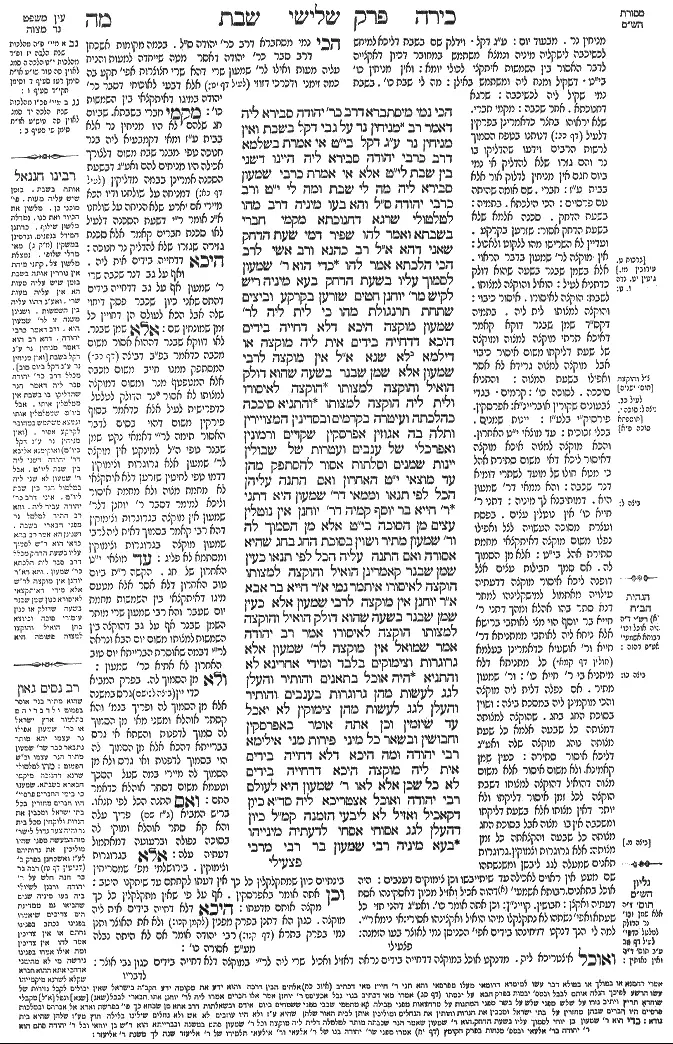
Shabbat 45a - Guemara
הכי נמי מיסתברא דרב כר' יהודה סבירא ליה דאמר רב מניחין נר על גבי דקל בשבת ואין מניחין נר ע"ג דקל בי"ט אי אמרת בשלמא דרב כרבי יהודה סבירא ליה היינו דשני בין שבת לי"ט אלא אי אמרת כרבי שמעון סבירא ליה מה לי שבת ומה לי י"ט ורב כרבי יהודה ס"ל והא בעו מיניה דרב מהו לטלטולי שרגא דחנוכתא מקמי חברי בשבתא ואמר להו שפיר דמי שעת הדחק שאני דהא א"ל רב כהנא ורב אשי לרב הכי הלכתא אמר להו כדי הוא ר' שמעון לסמוך עליו בשעת הדחק בעא מיניה ריש לקיש מר' יוחנן חטים שזרען בקרקע וביצים שתחת תרנגולת מהו כי לית ליה לר' שמעון מוקצה היכא דלא דחייה בידים היכא דדחייה בידים אית ליה מוקצה או דילמא לא שנא א"ל אין מוקצה לרבי שמעון אלא שמן שבנר בשעה שהוא דולק הואיל והוקצה למצותו הוקצה לאיסורו ולית ליה הוקצה למצותו והתניא סיככה כהלכתה ועיטרה בקרמים ובסדינין המצויירין ותלה בה אגוזין אפרסקין שקדים ורמונין ואפרכלי של ענבים ועטרות של שבולין יינות שמנים וסלתות אסור להסתפק מהן עד מוצאי י"ט האחרון ואם התנה עליהן הכל לפי תנאו וממאי דר' שמעון היא דתני ר' חייא בר יוסף קמיה דר' יוחנן אין נוטלין עצים מן הסוכה בי"ט אלא מן הסמוך לה ור' שמעון מתיר ושוין בסוכת החג בחג שהיא אסורה ואם התנה עליה הכל לפי תנאו כעין שמן שבנר קאמרינן הואיל והוקצה למצותו הוקצה לאיסורו איתמר נמי א"ר חייא בר אבא א"ר יוחנן אין מוקצה לרבי שמעון אלא כעין שמן שבנר בשעה שהוא דולק הואיל והוקצה למצותו הוקצה לאיסורו אמר רב יהודה אמר שמואל אין מוקצה לר' שמעון אלא גרוגרות וצימוקים בלבד ומידי אחרינא לא והתניא היה אוכל בתאנים והותיר והעלן לגג לעשות מהן גרוגרות בענבים והותיר והעלן לגג לעשות מהן צימוקין לא יאכל עד שיזמין וכן אתה אומר באפרסקין וחבושין ובשאר כל מיני פירות מני אילימא רבי יהודה ומה היכא דלא דחייה בידים אית ליה מוקצה היכא דדחייה בידים לא כל שכן אלא לאו ר' שמעון היא לעולם רבי יהודה ואוכל אצטריכא ליה סד"א כיון דקאכיל ואזיל לא ליבעי הזמנה קמ"ל כיון דהעלן לגג אסוחי אסחי לדעתיה מינייהו בעא מיניה רבי שמעון בר רבי מרבי
Comments from Rashi on Masechet Shabbat Page 45a
מניחין נר . מבעוד יום: ע"ג דקל . וידלק שם בשבת דליכא למיחש לכשיכבה לישקליה מיניה ונמצא משתמש במחובר דכיון דאקצייה לדבר האסור בין השמשות איתקצי לכולי יומא: ואין מניחין כו' בי"ט . דשקיל ומנח ליה ומשתמש באילן: מה לי שבת כו' . בשבת נמי שקיל ליה לכשיכבה: שרגא דחנוכתא . אחר שכבה: מקמי חברי . שלא יראוהו בחצר כדאמרינן בפרקין דלעיל (שבת דף כב:) דנותנו בטפח הסמוך לרשות הרבים וידעו שהדליקו בו נר והם גזרו שלא להדליק אי נמי ביום חגם אין מניחין לדלוק אור אלא בבית ע"ז: חברי . שם אומה שהיתה עם פרסיים: הכי הילכתא . בתמיה: בשעת הדחק . סכנה אלמא שלא בשעת הדחק אסור: שזרען בקרקע . ועדיין לא השרישו מהו ללקוט ולאכול: אין מוקצה לר' שמעון בדבר הראוי . אלא בשמן שבנר בשעה שהוא דולק כדתניא לעיל: הואיל והוקצה למצותו . לשבת: הוקצה לאיסורו . איסור כיבוי: והוקצה למצותו לית ליה . בתמיה דקס"ד שמן שבנר דוקא קאמר דאיכא תרתי מוקצה למצוה ומוקצה של שעת דליקתו משום איסור כיבוי אבל מוקצה למצוה גרידא לא אסר ואפילו בשעת המצוה: והתניא סיככה . לסוכה כו': קרמים . בגדי צבעונים שקורין אובריינ"א: אפרסקין . פירסיק"י בלע"ז: יינות שמנים . בכלי זכוכית: עד מוצאי יו"ט האחרון . והכא מוקצה למצוה איכא מוקצה דאיסור ליכא דאי משום סתירת אהל כי מטא חולו של מועד לשתרי דומיא דנר שכבה: והא ממאי דר' שמעון היא . דמותיבנא לך מיניה: דתני ר' חייא כו' אין נוטלין עצים . בפסח ועצרת מסוכה העשויה לצל ואפילו נפלו משום מוקצה דאיתקצאי מחמת סתירת אהל בי"ט: אלא מן הסמוך לה . אם סמך חבילות עצים אצל דופנה ליכא איסור מוקצה דדעתיה עילויה מאתמול למישקלינהו למחר דלא סתר בהו אהלא ומהך דתני ר' חייא בר יוסף הוי מצי לאותבי ברישא אלא ניחא ליה לאותבי ממתניתא דר' חייא ור' אושעיא כדאמרינן בעלמא (חולין דף קמא.) כל מתניתא דלא מיתניא בי ר' חייא כו': ור' שמעון מתיר . אם נפלה דלית ליה מוקצה והכי מוקמינן ליה במסכת ביצה: ושוין בסוכת החג בחג . שהוקצה למצותה דמצותה כל שבעה אלמא כל שעת מצותה נוהג מוקצה שלה ואע"ג דליכא איסור סתירה: כעין שמן קאמינא . ולא משום איסור אלא משום מצוה דהואיל דהוקצה למצותו דשבת הוקצה לכל זמן איסור דליקתו ולא יותר דאין מצותו אלא בשעת דליקתו ומשכבה אין בו מצוה אבל בסוכת החג מצותה כל שבעה והקצאתה כל זמן מצותה: אלא גרוגרות וצמוקין . גרוגרות תאנים שמעלה לגג ליבשן ומשנשתהו שם מעט אין ראוים לאכילה עד שיתייבשו וכן צימוקים דענבים: היה אוכל בתאנים . רבותא אשמעי' דהוה אכיל ואזיל מכיון דאסקינהו אסח דעתיה ואקצן: חבושין . קויינ"ץ: וכן אתה אומר כו' . ואע"ג דהני חזי כל שעתא ואפי' נשתהו לא נתקלקלו מיהו הואיל ואקצינהו אסירי: אי נימא ר"י . למה לי הנך דנקט דדחינהו בידים אפי' הכניסן נמי לאוצר בעו הזמנה:
Comments from Tosafot - Shabbat 45a
הכי נמי מסתברא דרב כר' יהודה ס"ל . בכמה מקומות אשכחן דרב סבר כר' יהודה דאסר מטה שייחדה למעות והניח עליה מעות ואילו לר' שמעון שרי דהא שרי חצוצרות אפי' תקע בה כמה זימני ודכרכי דזוזי (לעיל שבת דף יט:) אלא דבעי לאוכוחי דסבר כר' יהודה במיגו דאיתקצאי בין השמשות כו': מקמי חברי בשבתא . שביום חג שלהם לא היו מניחין נר אלא בבית ע"ז ומאי דקמבעיא ליה בנר חנוכה טפי מבנר שבת משום דלצורך אכילה היו מניחים להם ואע"ג דבשעת הסכנה אמרינן בבמה מדליקין (לעיל שבת דף כא:) דמניחה על שולחנו ודיו הכא מיירי אם יארע שלא הניחה על שולחנו א"נ אומר ר"י דשעת הסכנה דלעיל לאו סכנת חברים קאמר אלא סכנת גזירה שגזרו שלא להדליק נר חנוכה: היכא דדחייה בידים אית ליה . ואף על גב דנר שכבה שרי ר' שמעון אף על גב דדחייה בידים דהתם שאני כיון שכבר פסק דיחוי שלה אבל הכא לעולם הן דחויין כל זמן שמונחין שם: אלא שמן שבנר . לאו דווקא שבנר דההוא אסור משום מכבה כדאמר בפ"ב דביצה (דף כב.) המסתפק ממנו חייב משום מכבה אלא המטפטף מנר ומשום דמוקצה למצותו לא אסור נר הדולק לטלטל כדפרישית לעיל אלא כדאמר בסוף פירקין משום דהוי בסיס לדבר האסור תימה לר"י דאמאי נקט שמן שבנר טפי ה"ל למינקט אין מוקצה לר' שמעון אלא גרוגרות וצימוקין דדמו טפי לחיטין שזרען דלא איתקצאי לא מחמת מצוה ולא מחמת איסור וליכא למימר דסבר ר' יוחנן דלר' שמעון אין מוקצה בגרוגרות וצימוקין דהא רבי קאמר בסמוך דאית ליה לרבי שמעון מוקצה בגרוגרות וצימוקין ומסתמא לא פליג: עד מוצאי י"ט האחרון של חג . הקשה ר"ת ביום טוב האחרון דלא אסר אלא מטעם מיגו דאיתקצאי בין השמשות מחמת יום שעבר והא רבי שמעון שרי מותר השמן שבנר אף על גב דהוקצה בין השמשות למצותו משום יום הבא ונראה לר"י דבמה שאוסרת הברייתא יום טוב האחרון לא אתיא כר' שמעון: ולא מן הסמוך לה . בפרק המביא כדי יין (ב. צה ל: ושם) גרס במשנה אלא מן הסמוך לה ופריך בגמ' והא קסתר אוהלא ומשני מאי מן הסמוך לה סמוך לדפנות והשתא אי גרס בברייתא דהכא אלא מן הסמוך לה הוי בסמוך לדפנות ואי גרס ולא מן הסמוך לה מיירי במה שעל הסכך וטעמא משום דסתר אוהלא כדאמר התם: ואם התנה הכל לפי תנאו . בריש המביא (ג"ז שם) פריך עלה והא קא סתר אוהלא ומוקי לה בסוכה נפולה וברעועה דמאתמול דעתיה עלה: אלא בגרוגרות וצימוקין . בירושלמי פ' שמסריחין בינתיים כיון שמתקלקלין כל כך אין דעתו לקחתם עד שיתקנו היטב: וכן אתה אומר באפרסקין . אף על פי שאין מתקלקלין כל כך מקצה אותם מדעתו: היכא דלא דחייה בידים אית ליה מוקצה . כגון הא דתנן בפרק מפנין (לקמן שבת קכו:) ולא את האוצר ותנן נמי בפרק בתרא (דף קנו:) רבי יהודה אומר אם לא היתה נבלה מע"ש אסורה כו': ואוכל איצטריכא ליה . מדנקט אוכל במוקצה דדחייה בידים נראה דאזיל ואכיל שרי ליה לר"י במוקצה דלא דחייה בידים כגון גבי אוצר:
Shabbat 45a - Mishnah translated into english
The Gemara adds: So too, it is reasonable to say that Rav holds in accordance with the opinion of Rabbi Yehuda, as Rav said: One may place a lamp atop a palm tree on Shabbat eve to burn on Shabbat, and one may not place a lamp atop a palm tree on a Festival. Granted, if you say that Rav holds in accordance with the opinion of Rabbi Yehuda in this matter; that is why there is a distinction between Shabbat and a Festival. Since the lamp is set-aside [muktze] on Shabbat one will not come to carry it. Since one is permitted to carry a lamp on a Festival, there is concern that one might climb the palm tree or make use of the tree on the Festival and thereby transgress the rabbinic prohibition against making use of something connected to the ground on a Festival. However, if you say that Rav holds in accordance with the opinion of Rabbi Shimon, who maintains that the lamp is not set-aside even on Shabbat, what difference is there to me between Shabbat and a Festival? Ostensibly, there should be no distinction between the two.
The Gemara asks: And does Rav really hold in accordance with the opinion of Rabbi Yehuda that it is prohibited to move an object that is set-aside? Didn’t they raise a dilemma before Rav: What is the ruling with regard to moving a Hanukkah candle from before the ḥabarei, Persian Zoroastrian fire priests, on Shabbat? Those priests prohibited lighting fires on certain days. In order to prevent them from discovering that he lit Hanukkah candles it was necessary to quickly move them. And he said to them: One may well do so. Apparently, Rav does not hold that there is a prohibition of set-aside. The Gemara answers: This is not a proof, as exigent circumstances are different and Rav permitted this due to the danger involved. As Rav Kahana and Rav Ashi said to Rav on this matter: Is that the halakha? He said to them: Rabbi Shimon is worthy to rely upon in exigent circumstances like this one.
On this same matter Reish Lakish raised a dilemma before Rabbi Yoḥanan: Wheat kernels that he sowed in the ground that have not yet taken root and he could still gather them, and eggs that were placed beneath the hen and the incubation process has begun, what is the halakha in these cases? Would Rabbi Shimon agree that in these cases it is prohibited for use on Shabbat? One side of the dilemma is: When is Rabbi Shimon not of the opinion that there is a prohibition of set-aside? In a case where one did not reject the object with his own hands, i.e., he did not perform an action setting the object aside. However, in a case where he rejected it with his own hands, he is of the opinion that there is a prohibition of set-aside. When he sowed the wheat, he rejected it with his own hands. The same is true with regard to the egg; by placing it under the hen to hatch, he actively rejected it. The other side of the dilemma is: Or, perhaps there is no difference between the cases and Rabbi Shimon holds that there is no prohibition of set-aside in either case. Rabbi Yoḥanan said to him: There is only a prohibition of set-aside, according to Rabbi Shimon, in the case of oil that is in the lamp while it is burning. Since it was set aside for its mitzva, the lighting of Shabbat candles, and it was also set aside for its prohibition, it is prohibited due to the concern that one might inadvertently extinguish the flame if he moves it while it is burning.
The Gemara asks: And does he not hold that the prohibition of set-aside applies to an object set aside only for its mitzva without any prohibition? Wasn’t it taught in a baraita: One who roofed the sukka in accordance with its halakhic requirements and decorated it for aesthetic purposes with colored hangings and tapestries, and hung as decorations nuts, peaches, almonds and pomegranates, and grape branches, and wreaths made of stalks, wine, oils, and fine flour, it is prohibited to supply himself from them until the conclusion of the last day of the Festival. Since they were all set aside for the mitzva of sukka, all other uses are prohibited. And if one stipulated at the time that he hung them in the sukka that he is not designating them exclusively for this purpose, but he intends to use them for other purposes as well, their use is entirely in accordance with his stipulation. He is permitted to use them as he chooses.
And from where do we know that this unattributed baraita is in accordance with the opinion of Rabbi Shimon? We ascertained this from a comparison to a baraita that was taught by Rabbi Ḥiyya bar Yosef. As Rabbi Ḥiyya bar Yosef taught before Rabbi Yoḥanan: One may not take wood from the sukka that was constructed for shade on any Festival, even if the wood fell from the sukka on the Festival. Because it is prohibited to destroy the sukka on the Festival, it was set aside before the Festival for the entire duration of the Festival. Rather, one may take wood only from what is beside the sukka, i.e., bundles of wood that are not being used for the sukka. When he placed them there, his intention was to use them during the Festival. And Rabbi Shimon permits taking wood even from the sukka itself, since he holds that there is no prohibition of set-aside. And Rabbi Yehuda and Rabbi Shimon agree that taking wood from the sukka constructed for the Sukkot festival is prohibited during the Festival. And if one stipulated about the wood that he will be able to use it during the Festival, everything is in accordance with his stipulation. Apparently, Rabbi Shimon prohibits using an object that was set aside due only to a mitzva, even though it was not set aside due to a prohibition. Therefore, the Gemara emends Rabbi Yoḥanan’s statement: There is no halakha of set-aside according to Rabbi Shimon except in a case similar to oil in the candle. It is not necessary that there be both a prohibited labor and a prohibition due to the mitzva. Rather, since it was set aside for the mitzva alone, it is thereby set aside for the prohibition. It was also stated: Rabbi Ḥiyya bar Abba said that Rabbi Yoḥanan said: There is only a prohibition of set-aside according to Rabbi Shimon in a case similar to oil in the candle while it is burning; since it was set aside for its mitzva, it was set aside for its prohibition.
Rav Yehuda said that Shmuel said: There is only a prohibition of set-aside according to Rabbi Shimon in the cases of dried figs and raisins alone. The case of one who takes figs and raisins up to his roof in order to dry them in the sun is the only situation in which Rabbi Shimon holds that they are prohibited on Shabbat due to the prohibition of set-aside. Since in the initial stages of the process they emit a bad odor and are unfit for consumption, one consciously sets them aside. The Gemara challenges: And other items are not included in the prohibition of set-aside? Wasn’t it taught in a baraita: One who was eating figs and left some over and took them up to the roof to make them into dried figs, and likewise one who was eating grapes and left some over and took them up to the roof to make them into raisins, one may not eat them on Shabbat unless he designates them to be eaten before Shabbat. Otherwise, they are prohibited as set-aside. And you would say the same with regard to peaches, and quinces, and all other types of fruit that one left out to dry. It is prohibited to eat them all on Shabbat due to set-aside.
The Gemara seeks to clarify: Whose opinion is it in the baraita? If you say that it is the opinion of Rabbi Yehuda, this baraita is superfluous. If in a case where one did not reject it with his own hands, he holds that there is a prohibition of set-aside, in a case where he rejected it by his own hand, all the more so that it is prohibited. There is no need to articulate the halakha in this unique case.
Rather, isn’t this baraita in accordance with the opinion of Rabbi Shimon? Apparently, he expands the halakhot of set-aside beyond dried figs and raisins. The Gemara rejects this: Actually, this halakha is in accordance with Rabbi Yehuda who holds that there is a prohibition of set-aside. And the case cited here, where he was eating figs, is necessary in order to teach us a novel halakha. It may enter your mind to say that since one was in the course of eating, he does not require prior designation; and if he changed his mind he may immediately retrieve the dried figs that he placed on the roof. Therefore, the baraita teaches us that since he brought them up to the roof, he diverted his attention from them and they are completely set-aside.
On the same topic: Rabbi Shimon bar Rabbi Yehuda HaNasi, raised a dilemma before his father, Rabbi Yehuda HaNasi:
Traduction : The William Davidson digital edition of the Koren Noé Talmud, with commentary by Rabbi Adin Even-Israel Steinsaltz.