 Talmud Bavli
Shabbat 120a : Youtube
Daf TubeYoutube
2 video classes :
Shabbat Page 120a
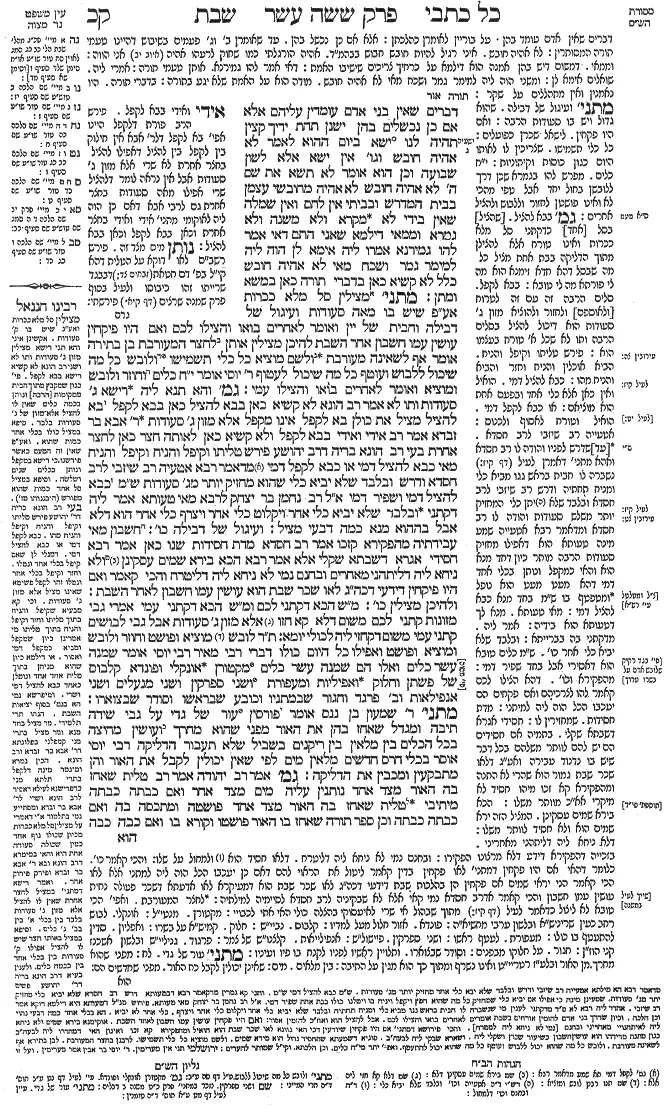
Shabbat 120a - Guemara
דברים שאין בני אדם עומדין עליהם אלא אם כן נכשלים בהן ישנן תחת ידיך קצין תהיה לנו (ישעיהו ג, ז) ישא ביום ההוא לאמר לא אהיה חובש וגו' אין ישא אלא לשון שבועה וכן הוא אומר לא תשא את שם ה' לא אהיה חובש לא אהיה מחובשי עצמן בבית המדרש ובביתי אין לחם ואין שמלה שאין בידי לא מקרא ולא משנה ולא גמרא וממאי דילמא שאני התם דאי אמר להו גמירנא אמרו ליה אימא לן הוה ליה למימר גמר ושכח מאי לא אהיה חובש כלל לא קשיא כאן בדברי תורה כאן במשא ומתן:
מתני׳ מצילין סל מלא ככרות אע"פ שיש בו מאה סעודות ועיגול של דבילה וחבית של יין ואומר לאחרים בואו והצילו לכם ואם היו פיקחין עושין עמו חשבון אחר השבת להיכן מצילין אותן לחצר המעורבת בן בתירה אומר אף לשאינה מעורבת ולשם מוציא כל כלי תשמישו ולובש כל מה שיכול ללבוש ועוטף כל מה שיכול לעטוף ר' יוסי אומר י"ח כלים וחוזר ולובש ומוציא ואומר לאחרים בואו והצילו עמי:
גמ׳ והא תנא ליה. רישא ג' סעודות ותו לא אמר רב הונא לא קשיא כאן בבא להציל כאן בבא לקפל בא להציל מציל את כולן בא לקפל אינו מקפל אלא מזון ג' סעודות ר' אבא בר זבדא אמר רב אידי ואידי בבא לקפל ולא קשיא כאן לאותה חצר כאן לחצר אחרת בעי רב הונא בריה דרב יהושע פירש טליתו וקיפל והניח וקיפל והניח מאי כבא להציל דמי או כבא לקפל דמי מדאמר רבא אטעיה רב שיזבי לרב חסדא ודרש ובלבד שלא יביא כלי שהוא מחזיק יותר מג' סעודות ש"מ כבא להציל דמי ושפיר דמי א"ל רב נחמן בר יצחק לרבא מאי טעותא אמר ליה דקתני ובלבד שלא יביא כלי אחר ויקלוט כלי אחר ויצרף כלי אחר הוא דלא אבל בההוא מנא כמה דבעי מציל:
ועיגול של דבילה כו':
חשבון מאי עבידתיה מהפקירא קזכו אמר רב חסדא מדת חסידות שנו כאן אמר רבא חסידי אגרא דשבתא שקלי אלא אמר רבא הכא בירא שמים עסקינן ולא ניחא ליה דליתהני מאחרים ובחנם נמי לא ניחא ליה דליטרח והכי קאמר ואם היו פיקחין דידעי דכה"ג לאו שכר שבת הוא עושין עמו חשבון לאחר השבת:
ולהיכן מצילין כו':
מ"ש הכא דקתני לכם ומ"ש הכא דקתני עמי אמרי גבי מזונות קתני לכם משום דלא קא חזו אלא מזון ג' סעודות אבל גבי לבושים קתני עמי משום דקחזי ליה לכולי יומא:
ת"ר לובש מוציא ופושט וחוזר ולובש ומוציא ופושט ואפילו כל היום כולו דברי רבי מאיר רבי יוסי אומר שמנה עשר כלים ואלו הם שמנה עשר כלים מקטורן אונקלי ופונדא קלבוס של פשתן וחלוק ואפיליות ומעפורת ושני ספרקין ושני מנעלים ושני אנפילאות וב' פרגד וחגור שבמתניו וכובע שבראשו וסודר שבצוארו:
מתני׳ ר' שמעון בן ננס אומר פורסין עור של גדי על גבי שידה תיבה ומגדל שאחז בהן את האור מפני שהוא מחרך ועושין מחיצה בכל הכלים בין מלאין בין ריקנים בשביל שלא תעבור הדליקה רבי יוסי אוסר בכלי חרס חדשים מלאין מים לפי שאין יכולין לקבל את האור והן מתבקעין ומכבין את הדליקה:
גמ׳ אמר רב יהודה אמר רב טלית שאחז בה האור מצד אחד נותנין עליה מים מצד אחר ואם כבתה כבתה מיתיבי טלית שאחז בה האור מצד אחד פושטה ומתכסה בה ואם כבתה כבתה וכן ספר תורה שאחז בו האור פושטו וקורא בו ואם כבה כבה
Comments from Rashi on Masechet Shabbat Page 120a
דברים שאין אדם עומד בהן . על בוריין לאומרן כהלכתן: אלא אם כן נכשל בהן . עד שאומרן ב' וג' פעמים בשיבוש דהיינו טעמי תורה המסותרין: לא אהיה חובש . איני רגיל להיות חובש חבוש בבהמ"ד. אהיה הורגלתי כמו שחוק לרעהו אהיה (איוב יב) אני הווה: וממאי . דמשום דיש בהן אמנה הוא דילמא על כרחיך צריכים שישיבו האמת: דאי אמר להו גמירנא . אותן טעמי תורה: אמרי ליה . שואלים אימא לן: ומשני הוה ליה למימר גמר ושכח מאי לא אהיה חובש . מודה הוא על האמת שלא יגע בתורה: בדברי תורה . היו נאמנין ואין מתהללים על שקר: מתני' ועיגול של דבילה . שהוא גדול ויש בו סעודות הרבה: ואם היו פקחין . לישאל שכרן כפועלים: לחצר המעורבת . ואפי' הכי טובא לא ליצול כדאמר לעיל (שבת דף קיז:) מתוך שבהול אי שרי לאיעסוקי בהצלה כולי האי אתי לכבויי: כל כלי תשמישו . שצריכין לו לאותו היום כגון כוסות וקיתוניות: י"ח כלים . מפרש להו בגמרא שכן דרך ללובשן בחול יחד אבל טפי מהכי לא ואינו פושטן לחזור וללבוש ולהציל אחרים: גמ' בבא להציל . [שהציל] בסל [אחד] כדקתני סל מלא ככרות ואינו טורח אלא להצילן מתוך הדליקה בבת אחת מציל כל מה שבסל דהא חדא זימנא הוא מה לי פורתא מה לי טובא: בבא לקפל . סלים הרבה זה עם זה לטרוח [ולאוספם] ולחזור ולהוציא מזון ג' סעודות הוא דיכול להציל בסלים הרבה ותו לא שכל א' טורח בעצמו הוא: פירש טליתו וקיפל והניח . הביא אוכלין והניח וחזר והביא והניח מהו: כבא להציל דמי . הואיל ואין כאן אלא כלי אחד ובפעם אחת הוא מוציאם: או כבא לקפל דמי . הואיל וטורח לאסוף ולכנוס: אטעייה רב שיזבי לרב חסדא . שדרש לפניו והודה לו רב חסדא ואהא מתני' דאמרן לעיל (שבת דף קיז:) נשברה לו חבית בראש גגו מביא כלי ומניח תחתיה ודרש רב שיזבי לרב חסדא ובלבד שלא יתן כלי המחזיק יותר משלש סעודות והודה לו רב חסדא ומדאמר רבא אטעייה שמע מינה טעותא הוא דאפילו מחזיק סעודות הרבה מותר כיון דחד מנא הוא והאי כמקפל ונותן בכלי אחד דמי דהא מעט מעט הוא נופל ומטפטף בו ש"מ בחד מנא כבא להציל דמי: מאי טעותא . מנא לך דטעותא הוא בידיה: אמר ליה . מדקתני בה בברייתא: ובלבד שלא יביא כלי אחר וכו' . ש"מ כלים טובא הוא דאסירי אבל בחד שפיר דמי: מהפקירא וכו' . דהא הצילו לכם קאמר להו לצרכיהם ואם פקחים הם יעכבו הכל הוה ליה למיתני: מדת חסידות . שמחזירין לו: חסידי אגרא דשבתא שקלי . בתמיה אם חסידים הם יש להם לוותר משלהם בכל דבר שיש בו נדנוד עבירה ואע"ג דלאו שכר שבת גמור הוא שהרי לא התנה ומהפקירא קא זכו מיהו חסיד לא מיקרי אא"כ מוותר משלו: הכא בירא שמים עסקינן . המציל הזה ירא שמים הוא ולא חסיד לוותר משלו: דלא ניחא ליה דליתהני מאחריני . בזכייה דהפקירא דידע דלא מרצונו הפקירו: ובחנם נמי לא ניחא ליה דליטרח . דלאו חסיד הוא ולמחול על שלו: והכי קאמר כו' . כלומר דהאי אם היו פקחין דמתני' לאו פקחין בדין קאמר ליטול את הראוי להם דאם כן יעכבו הכל הוה ליה למתני אלא לאו הכי קאמר הני יראי שמים אם פקחין הן בהלכות שבת דידעי דכה"ג לאו שכר שבת הוא דמעיקרא לאו אדעתא דשכר פעולה נחית עושין עמו חשבון והכי קאמר אדרב חסדא נמי קאי אלא לא שבקיניה לרב חסדא לסיימיה למילתיה: מקטורן . מנטי"ל : אונקלי . לבוש רחב כעין שריניש"א ובלשון ערבי מחשיא"ה: פונדא . אזור חלול מעל למדיו: קלבוס . נביי"ש: חלוק . קמי"שא על בשרו: ואפליון . סדין להתעטף בו כולו: מעפורת . לעטף ראשו: ושני ספרקין . פיישול"ש: אנפילייאות . קלצנו"ש של צמר: פרגוד . גניליי"ש ובלשון אשכנז קני הוז"ן: חגור . על חלוקו מבפנים: וסודר שבצוארו . ותלויין ראשיו לפניו לקנח בו פיו ועיניו: מתני' עור של גדי . לח: מפני שהוא מחרך . מן האור ובלע"ז רטריי"ט ואינו נשרף ומתוך כך הוא מגין על התיבה: בין מלאים . מים: שאינן יכולין לקבל כח האור . מפני שחדשים הם:
Comments from Tosafot - Shabbat 120a
אידי ואידי בבא לקפל . פירש הרב פורת דלקפל היינו אפי' בא לקפל דלר' אבא אין חילוק בין לקפל בין להציל דאפילו להציל בחצר אחרת לא שרי אלא מזון ג' סעודות אבל אין נראה לומר דלהציל שרי אפילו מאה סעודות בחצר אחרת גם לרבי אבא דאם כן הוה ליה לאוקומי מתני' אידי ואידי בחצר אחרת וכאן בבא לקפל וכאן בבא להציל: נותן מים מצד זה . פירש רשב"ם לאו דוקא על הטלית דהא קי"ל בפ' דם חטאת (זבחים צד:) דבבגד שרייתו זהו כיבוסו ולעיל בסוף פרק שמנה שרצים (שבת דף קיא.) פירשתי:
Shabbat 120a - Mishnah translated into english
Matters of Torah that people do not ascertain unless they misunderstand them are in your hands; therefore, be a chief over us. It is stated later on in that passage: “He will rise [yissa] on that day, saying, I will not be a ruler while in my house there is no bread and no garment, you shall not appoint me as chief of the people” (Isaiah 3:7). The term rise [yissa] means nothing other than an oath, as it says: “Do not raise [tissa] the name of the Lord your God in vain” (Exodus 20:17). I will not be a ruler, means: I will not be one of those who close themselves up in the study hall, as I do not regularly do so, while in my house there is no bread and no garment, for I have neither Bible nor Mishna nor Gemara in my hands. According to this explanation, there were people of faith who truthfully admitted that they did not study Torah, even during the time of the destruction of Jerusalem. The Gemara rejects this: And from what do you conclude that this admission was due to their faithfulness? Perhaps it is different in that case, as had he told them: I studied Torah, they would have said to him: Tell us what you studied. As he would not know to respond, he would have no choice other than to admit that he did not study. The Gemara rejects this: That is not difficult, as he could have at least said he learned and forgot. The Gemara asks: Therefore, what is: I will not be a ruler? It means that he is telling the truth and although he could have lied, he admits that he did not study Torah at all. The Gemara answers: This is not difficult. Here, where it was taught that they were faithful, that was with regard to matters of Torah; whereas here, where it was taught that there were no more people of faith in Jerusalem, that was with regard to matters of business.
MISHNA: One may rescue a basket full of loaves and the like from a fire on Shabbat, even if there is food for one hundred meals in it. And one may rescue a round cake of dried figs, even though it is very large, and one may rescue a barrel full of wine. And one may even say to others: Come and rescue for yourselves. And if the people who rescue with him were clever, they make a calculation with him after Shabbat in order to receive payment for the items that they rescued.
To where may one rescue items moved from the fire? One may do so to a courtyard where an eiruv was established, and it is permitted to carry. Ben Beteira says: One may do so even to a courtyard where an eiruv was not established. And one may carry there all the utensils, and put on all the garments that he can wear, and one may wrap all the cloths that he can wrap around himself in order to rescue his property. Rabbi Yosei says: One may put on only eighteen garments at once, as people sometimes wear that number of garments, but not more. However, one may again put on that number of garments and carry it out. And he may say to others: Come and rescue with me.
GEMARA: The Gemara asks: Wasn’t it taught in the first clause, i.e., the preceding mishna, that one may rescue three meals and no more? Rav Huna said: This is not difficult. This current mishna permitted rescuing a greater amount when one comes to rescue a basket or round cake of figs; that previous mishna permitted rescuing food for only three meals in a case where one comes to collect the food. When one comes to rescue, he may rescue everything; when one comes to collect, he may collect food for only three meals. However, Rabbi Abba bar Zavda said that Rav said: Both this and that are referring to a case where one comes to collect, and this is not difficult. This current mishna permitted rescuing a greater amount when one moves the objects to the same courtyard; that, the previous mishna, permitted saving food for only three meals when one transfers it to a different courtyard. Rav Huna, son of Rav Yehoshua, raised a dilemma: If one spread his cloak on the ground and collected and placed objects in the cloak, and collected and placed objects inside it, what is the ruling? Is he considered as one who comes to rescue or is he like one who comes to collect?
The Gemara attempts to resolve the dilemma from that which Rava said: Rav Sheizvi misled Rav Ḥisda, and Rav Ḥisda taught (Rabbeinu Ḥananel) a halakha with regard to a barrel that breaks on a roof, and added: And it is permitted provided that one does not bring a vessel that holds more than three meals. Conclude from the fact that Rava said that Rav Ḥisda’s restriction of the amount that can be rescued to food sufficient for three meals is mistaken, that one who takes a large amount all at once is like one who comes to rescue, and he may well do so. Rav Naḥman bar Yitzḥak said to Rava: What is the error in Rav Ḥisda’s statement? Perhaps it is actually prohibited. He said to him, as it is taught: Provided that he does not bring another vessel and place it on the ground to catch the liquid, another vessel and attach the vessel next to the roof. Apparently it is another vessel that one may not bring, but in that same vessel, one may rescue as much as he wants, and the Sages did not establish a maximum size for the vessel.
And we learned in the mishna that one is permitted to rescue a round cake of dried figs from a fire, and one may even say to others: Come and rescue for yourselves. And if the people who rescue with him are clever, they make a calculation with him after Shabbat. The Gemara is surprised at this: What is the mention of a calculation doing here? Aren’t they acquiring food from ownerless property? What calculation is necessary here? Whatever they rescue is theirs, and they do not need to return it to the original owner. Rav Ḥisda said: They taught an attribute of piety here. These are pious people. They want to return the objects to their owner even though they are not legally obligated to do so, and they were permitted to receive payment for their efforts. Rava said: And do pious people take payment for work they do on Shabbat? Rather, Rava said: Here, we are dealing with one who is Heaven-fearing but not completely pious. And it is uncomfortable for him to benefit from the property of others, and it is also uncomfortable for him to exert himself for free. And this is what the mishna is saying: And if they are clever and know that in a situation of this kind it is not technically payment for Shabbat labor, and it is permitted because they are only receiving a small portion of the value of the objects that they rescued, they may make a calculation with him after Shabbat.
We learned in the mishna that one may say to others: Come and rescue for yourselves. We also learned: And to where may one rescue the food? According to the first tanna, one may rescue to a courtyard in which an eiruv was established. According to ben Beteira, one may rescue even to a courtyard in which an eiruv was not established. The Gemara asks: What is different here, with regard to rescuing food, that it is taught that one may say to others: Come and rescue for yourselves, and what is different here, with regard to rescuing clothing, that it is taught that one may say to others: Come and rescue with me? The Gemara answers: With regard to food, it taught: For yourselves, because only food for three meals is suited for him, and only others can benefit from the rest. However, with regard to the garments, it is taught: With me, because it is suited for him to continue rescuing garments all day, since he is permitted to wear other clothes.
The Sages taught in a baraita: If one wants to rescue objects from a fire and there are many garments there, he may wear them, and take them out to a safe place, and remove them there, and return to the fire, and wear other clothes, and take them out and remove them. And he may even do so all day long; this is the statement of Rabbi Meir. Rabbi Yosei says: One may wear only eighteen garments, and these are the eighteen garments: A cloak [miktoren], a cape [unkali], a broad garment worn on one’s shoulders, and a large hollow belt worn over the clothes, a wide linen garment [kalbus], and a robe worn against the skin, a robe wrapped above, and a kerchief on one’s head, and two straps, i.e., belts, and two shoes, and two socks [anpilaot], and two tall boots [pargod], and a belt around one’s loins over the robe, and a hat on one’s head, and a scarf around one’s neck.
MISHNA: Rabbi Shimon ben Nannas says: One may spread out a moist goat’s hide over a box, a chest, or a closet that caught fire, because the fire singes and does not burn it. The fire does not burn the wet goat’s hide but merely singes it, and by doing so the wooden vessels are preserved. And one may establish a barrier against the fire with all vessels, both full and empty, so that the fire will not pass. Rabbi Yosei prohibits using new earthenware vessels full of water, because they cannot withstand the heat of the fire and they will burst and extinguish the fire, and it is prohibited to cause the fire to be extinguished on Shabbat even indirectly.
GEMARA: Rav Yehuda said that Rav said: If a garment caught fire on one side, one may place water on its other side, and if as a result the fire is extinguished, it is extinguished. The Gemara raises an objection based on the following Tosefta: If a garment caught fire on one side, one may stretch it out and cover himself with it, and if the fire is extinguished, it is extinguished. And so too, if a Torah scroll caught fire, one may open it and read it, and if the fire is extinguished, it is extinguished. Apparently, it is prohibited to actually pour water, but one may perform a permitted act that will incidentally extinguish.
Traduction : The William Davidson digital edition of the Koren Noé Talmud, with commentary by Rabbi Adin Even-Israel Steinsaltz.