 Talmud Bavli
Shabbat 115a : Youtube
Daf TubeYoutube
2 video classes :
Shabbat Page 115a
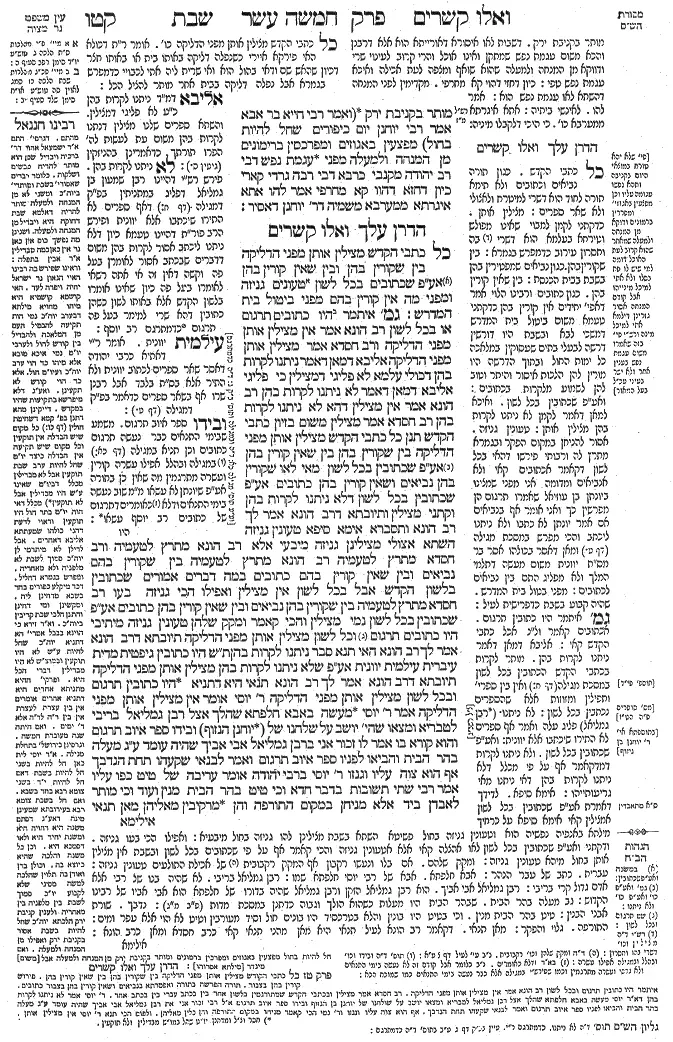
Shabbat 115a - Guemara
מותר בקניבת ירק (ואמר רבי חייא בר אבא אמר רבי יוחנן יום כיפורים שחל להיות בחול) מפצעין באגוזים ומפרכסין ברימונים מן המנחה ולמעלה מפני עגמת נפש דבי רב יהודה מקנבי כרבא דבי רבה גרדי קארי כיון דחזא דהוו קא מחרפי אמר להו אתא איגרתא ממערבא משמיה דר' יוחנן דאסיר:
הדרן עלך ואלו קשרים
מתני׳ כל כתבי הקדש מצילין אותן מפני הדליקה בין שקורין בהן ובין שאין קורין בהן אע"פ שכתובים בכל לשון טעונים גניזה ומפני מה אין קורין בהם מפני ביטול בית המדרש:
גמ׳ איתמר היו כתובים תרגום או בכל לשון רב הונא אמר אין מצילין אותן מפני הדליקה ורב חסדא אמר מצילין אותן מפני הדליקה אליבא דמאן דאמר ניתנו לקרות בהן דכולי עלמא לא פליגי דמצילין כי פליגי אליבא דמאן דאמר לא ניתנו לקרות בהן רב הונא אמר אין מצילין דהא לא ניתנו לקרות בהן רב חסדא אמר מצילין משום בזיון כתבי הקדש תנן כל כתבי הקדש מצילין אותן מפני הדליקה בין שקורין בהן בין שאין קורין בהן אע"פ שכתובין בכל לשון מאי לאו שקורין בהן נביאים ושאין קורין בהן כתובים אע"פ שכתובין בכל לשון דלא ניתנו לקרות בהן וקתני מצילין ותיובתא דרב הונא אמר לך רב הונא ותסברא אימא סיפא טעונין גניזה השתא אצולי מצילינן גניזה מיבעי אלא רב הונא מתרץ לטעמיה ורב חסדא מתרץ לטעמיה רב הונא מתרץ לטעמיה בין שקורין בהם נביאים ובין שאין קורין בהם כתובים במה דברים אמורים שכתובין בלשון הקדש אבל בכל לשון אין מצילין ואפילו הכי גניזה בעו רב חסדא מתרץ לטעמיה בין שקורין בהן נביאים ובין שאין קורין בהן כתובים אע"פ שכתובין בכל לשון נמי מצילין והכי קאמר ומקק שלהן טעונין גניזה מיתיבי היו כתובים תרגום וכל לשון מצילין אותן מפני הדליקה תיובתא דרב הונא אמר לך רב הונא האי תנא סבר ניתנו לקרות בהן ת"ש היו כתובין גיפטית מדית עיברית עילמית יוונית אע"פ שלא ניתנו לקרות בהן מצילין אותן מפני הדליקה תיובתא דרב הונא אמר לך רב הונא תנאי היא דתניא היו כתובין תרגום ובכל לשון מצילין אותן מפני הדליקה ר' יוסי אומר אין מצילין אותן מפני הדליקה אמר ר' יוסי מעשה באבא חלפתא שהלך אצל רבן גמליאל בריבי לטבריא ומצאו שהי' יושב על שלחנו של (יוחנן הנזוף) ובידו ספר איוב תרגום והוא קורא בו אמר לו זכור אני ברבן גמליאל אבי אביך שהיה עומד ע"ג מעלה בהר הבית והביאו לפניו ספר איוב תרגום ואמר לבנאי שקעהו תחת הנדבך אף הוא צוה עליו וגנזו ר' יוסי ברבי יהודה אומר עריבה של טיט כפו עליו אמר רבי שתי תשובות בדבר חדא וכי טיט בהר הבית מנין ועוד וכי מותר לאבדן ביד אלא מניחן במקום התורפה והן מרקיבין מאליהן מאן תנאי
Comments from Rashi on Masechet Shabbat Page 115a
מותר בקניבת ירק . דשבות לאו איסורא דאורייתא הוא אלא דרבנן והכא משום עגמת נפש שמתקן ואינו אוכל והרי קרוב לעינוי שרי ודווקא מן המנחה ולמעלה שהוא שואף ומצפה לעת אכילה ואיכא עגמת נפש טפי: כיון דחזי דהוי קא מחרפי . מקדימין לפני המנחה דהשתא לאו עגמת נפש הוא: אמר להו . לאינשי ביתיה: אתא איגרתא ממערבא כו' . כי היכי דלקבלו מיניה: מתני' כל כתבי הקדש . כגון תורה נביאים וכתובים ולא תימא תורה לחוד הוא דשרי למיטרח ולאצולי ולא שאר ספרים: מצילין אותן . כדקתני לקמן למבוי שאינו מפולש וטירחא בעלמא הוא דשרי בה וחסרון עירוב כדמפרש בגמרא: בין שקורין בהן . כגון נביאים שמפטירין בהן בשבת בבית הכנסת: בין שאין קורין בהן . כגון כתובים ורבינו הלוי אמר דאפי' יחידים אין קורין בהן כדקתני טעמא משום ביטול בית המדרש דמשכי לבא ובשבת היו דורשין דרשה לבעלי בתים שעסוקין במלאכה כל ימות החול ובתוך הדרשה היו מורין להן הלכות איסור והיתר וטוב להן לשמוע מלקרות בכתובים: ואע"פ שכתובין בכל לשון . ואיכא למאן דאמר לקמן לא ניתנו לקרות בהן מצילין אותן: טעונין גניזה . אסור להניחן במקום הפקר ובגמרא מתרץ לה ורבותי פירשו דהאי בכל לשון דקאמר אכתובים קאי ולא אנביאים ומדומה אני מפני שמצינו ביונתן בן עוזיאל שאמרו תרגום הן מפרשין כך ואני אומר אף בנביאים אם אמר יונתן לא כתבו ולא ניתנו ליכתב והכי מפרש במסכת מגילה (דף ט.) ומאן דאסר בכולהו אסר בר מס"ת יוונית משום מעשה דתלמי המלך ולא מפליג התם בין נביאים לכתובים: מפני בטול בית המדרש . שהיה קבוע בשבת כדפרישית לעיל: גמ' איתמר היו כתובין תרגום . אכתובים קאמר ול"נ אכל כתבי הקדש קאי: אליבא דמאן דאמר ניתנו לקרות בהן . מותר לקרות בכתבי הקדש הכתובין בכל לשון במסכת מגילה (דף ח:) ואין בין ספרי' ותפילין ומזוזות אלא שהספרים נכתבין בכל לשון: לא ניתנו . (רבן גמליאל) פליג עלה ואמר אף ספרים לא התירו שיכתבו אלא יוונית: ואע"פ שכתובין בכל לשון . ולא ניתנו לקרות דמדקאמר אף על פי מכלל דלא ניתנו לקרות בהן דאי ניתנו מאי גריעותייהו: אימא סיפא . לדידך דאמרת אע"פ שכתובין בכל לשון אמצילין קאי אימא סיפא על כרחיך מילתא באנפיה נפשיה הוא וטעונין גניזה בחול פשיטא השתא בשבת מצילינן להו גניזה בחול מיבעיא: ואפילו הכי בעו גניזה . ודקתני ואע"פ שכתובין בכל לשון לאו אהצלה קאי אלא אטעונין גניזה והכי קאמר אף על פי שכתובים בכל לשון ובשבת אין מצילין אותן בחול מיהא טעונין גניזה: ומקק שלהם . אם בלו ונעשו רקבון אף המקק רקבובית של אכילת התולעים טעונין גניזה: עברית . כתב של עבר הנהר: אבא חלפתא . אבא של רבי יוסי חלפתא שמו: רבן גמליאל בריבי . לא שהיה בנו של רבי אלא אדם גדול קרי בריבי: רבן גמליאל אבי אביך . הוא רבן גמליאל הזקן ורבן גמליאל שהיה בדורו של חלפתא הוא אבי אביו של רבינו הקדוש: גב מעלה בהר הבית . שבהר הבית היו מעלות כשהוא הולך וגבוה כדתנן במסכת מדות (פ"ב מ"ג): נדבך . שורת אבני הבנין: טיט בהר הבית מנין . וכי בטיט היו בונין והלא בטרכסיד היו בונים חול וסיד מעורבין וטיט לא הוי אלא עפר ומים: התורפה . גלוי והפקר: מאן תנאי . דקאמר רב הונא לעיל תנאי היא מאן מהני תנאי קאי כרב חסדא ומאן כרב הונא:
Comments from Tosafot - Shabbat 115a
מתני' כל כתבי הקדש מצילין אותן מפני הדליקה כו' . אומר ר"ת דכולא האי פירקא איירי כשנפלה דליקה באותו בית או באותו חצר דכיון שהאש שם ודאי בהול הוא ואי שרית ליה אתי לכבויי כדמפרש בגמרא אבל נפלה דליקה בבית אחר מותר להציל הכל: אליבא דמ"ד ניתנו לקרות בהן כ"ע לא פליגי דמצילין . והשתא ספרים שלנו מצילין דנתנו לקרות בהן משום עת לעשות לה' הפרו תורתך כדאמרינן בהניזקין (גיטין ס.): לא ניתנו לקרות בהן . פירש רש"י דהיינו רבן שמעון בן גמליאל דפליג במתניתין בפ"ק דמגילה (דף ח:) דאף ספרים לא התירו שיכתבו אלא יוונית ופירש הרב פור"ת דהיינו טעמא כיון דלא ניתנו ליכתב אסור לקרות בהן משום דדברים שבכתב אסור לאומרן בעל פה וקשה דאין זה אי אתה רשאי לאומרו בעל פה כיון שאינו אומרו בלשון הקדש אלא באותו לשון כשהן כתובין דהא שרי למימר בעל פה תרגום כדמתרגם רב יוסף: עילמית יוונית . אומר ר"י דאתיא כרבי יהודה דאסר שאר ספרים לכתוב יוונית ולא התיר אלא בס"ת בלבד אבל רבנן שרו אף בשאר ספרים כדאמר בפ"ק דמגילה (דף מ.): ובידו ספר איוב תרגום . משמע שבימי התנאים כבר נעשה תרגום כתובים וכן תניא במגילה (דף כא:) במגילה ובהלל אפילו עשרה קורין ועשרה מתרגמין מה שאין כן בתורה אע"פ שיונתן לא עשאו מ"מ שוב נעשה בימי התנאים ודלא כאומרים דתרגום של כתובים רב יוסף עשאו:
Shabbat 115a - Mishnah translated into english
trimming vegetables is permitted. And Rabbi Ḥiyya bar Abba said that Rabbi Yoḥanan said: If Yom Kippur occurs on a weekday, one may crack nuts and remove pomegranate seeds from the late afternoon and onward, because doing so involves no actual labor and due to anxiety, i.e., if a person does not know that there is food prepared for when the fast ends, he suffers more during the final hours of the day (Rabbi Zeraḥia HaLevi). The Gemara relates: The members of Rav Yehuda’s house would trim cabbage. The members of Rabba’s house would scrub gourds. Once Rabba saw that they were doing this early, before the late afternoon, he said to them: A letter came from the West, i.e., from Eretz Yisrael, in the name of Rabbi Yoḥanan, saying that doing so is prohibited.
MISHNA: With regard to all sacred writings, one may rescue them from the fire on Shabbat, whether they are read in public, e.g., Torah or Prophets scrolls, or whether they are not read in public, e.g., Writings scrolls. This ruling applies even though they were written in any foreign language. According to the Rabbis, those scrolls are not read in public, but they are still sacred and require burial. And why does one not read the Writings on Shabbat? Due to suspension of Torah study in the study hall. People came to the study hall at specific times on Shabbat to hear words of halakha, and other texts were not allowed at those times.
GEMARA: It was stated that amora’im debated the status of sacred writings written in Aramaic translation or in any other language. Rav Huna said: One may not rescue them from the fire on Shabbat. And Rav Ḥisda said: One may rescue them from the fire on Shabbat. The Gemara adds: According to the one who said that sacred writings written in other languages may be read, everybody agrees that one may rescue them. Where they argue is according to the one who said that they may not be read. Rav Huna said: One may not rescue them, as they may not be read. Whereas Rav Ḥisda said: One may rescue them due to disgrace to sacred writings that will result. We learned in the mishna: With regard to all sacred writings, one may rescue them from the fire on Shabbat whether they are read in public or whether they are not read in public, even if they are written in any foreign language. What, is it not that the phrase: “That they are read” is referring to the books of the Prophets, and the phrase: “That they are not read” is referring to the Writings? Even though these are books written in any foreign language, which may not be read, it is taught that one may save them. This then is a conclusive refutation of the opinion of Rav Huna.
Rav Huna could have said to you: And do you understand the mishna that way? Say the latter clause of the mishna, which states: They require burial. This is unnecessary, as now, that it was mentioned that we rescue them from the fire, is it necessary to say that they require burial? Rather, the mishna must be emended. Rav Huna reconciles the mishna in accordance with his reasoning, and Rav Ḥisda reconciles the mishna in accordance with his reasoning. Rav Huna reconciles this in accordance with his reasoning: Whether they are read is referring to the Prophets, and whether they are not read is referring to the Writings. In what case is this statement said? It is in a case where they are written in the holy tongue, but if they are not written in Hebrew but in any other language, they are not rescued from the fire on Shabbat, and even so, they require burial. Rav Ḥisda reconciles the mishna in accordance with his reasoning: Whether they are read is referring to the Prophets, and whether they are not read is referring to the Writings, even if they are written in any language other than Hebrew, they are also rescued. And this is what the mishna is saying: And even the decayed sections of parchment require burial.
The Gemara raises an objection from that which was taught in a baraita: If they were written in Aramaic translation or in any language other than Hebrew, they are rescued from the fire on Shabbat. And this is a conclusive refutation of the opinion of Rav Huna, who states that these are not rescued. Rav Huna could have said to you: This tanna holds that sacred writings not written in Hebrew may be read, whereas Rav Huna stated his ruling in accordance with the opinion of the tanna who holds that they may not be read, and therefore may not be rescued. Come and hear another proof from that which was taught in a different baraita: Sacred writings that were written in Coptic, Egyptian; Median; Ivrit, i.e., ancient Hebrew script; Eilamitic; or Greek are rescued from the fire on Shabbat, even though they may not be read. This is a conclusive refutation of the opinion of Rav Huna, who holds that they are not rescued. Rav Huna could have said to you: This is a dispute between tanna’im, as it was taught in a baraita: If they were written in Aramaic translation or in any language other than Hebrew, one may rescue them from the fire on Shabbat. Rabbi Yosei says: One may not rescue them from the fire.
Rabbi Yosei said: There was an incident involving my father, Ḥalafta, who went to the esteemed Rabban Gamliel of Yavne in Tiberias, where he found him sitting at the table of Yoḥanan HaNazuf and in his hand there was a translation of the book of Job, and he was reading from it. Yoḥanan said to Rabban Gamliel of Yavne: I remember Rabban Gamliel, your father’s father, who was standing on top of a step on the Temple Mount. And they brought before him a translation of the book of Job, and he said to the builder: Bury this book under the course of bricks. When he heard of that incident, Rabban Gamliel of Yavne ordered that it be buried and he buried it. Rabbi Yosei, son of Rabbi Yehuda, says that on the Temple Mount they overturned a large bowl of mortar on it. Rabbi Yehuda HaNasi said: There are two responses to this that prove that it did not happen: One, from where would they get mortar on the Temple Mount? Construction on the Temple Mount was performed with other materials, not with mortar. And furthermore, is it permitted to actively destroy even sacred writings that are not read, with one’s hands? Rather, at the very least they leave them in a neglected place, where they are likely to decompose quickly, and they decay on their own. The Gemara seeks to clarify: Who are the tanna’im who dispute this halakha according to Rav Huna?
Traduction : The William Davidson digital edition of the Koren Noé Talmud, with commentary by Rabbi Adin Even-Israel Steinsaltz.
Shabbat 115a : Significance
Next step
Finished studying Shabbat 115a? Carry on with the rest of the tractate.
Study Shabbat 115bFrequently asked questions: Shabbat 115a
Where is Shabbat 115a in tractate Shabbat?
Shabbat 115a is page 227 of 312 in tractate Shabbat (Seder Moed).
When is daf 115 of Shabbat studied in Daf Yomi?
Daf Yomi covers one daf a day, both sides. Daf 115 of Shabbat will be studied on December 1, 2027.
Is there a video class on Shabbat 115a?
Yes, by Daf Tube, Rabbi Dr. Moshe Weisblum. These classes were published on YouTube by their authors and are gathered on this site.
What is tractate Shabbat about?
The Masechet Shabbat is the first tractate of the Seder Moed. The Gemara Shabbat is the study of the laws concerning the Shabbat day during which one must suspend all work according to what is written in the Torah. The preparations before the start of Shabbos, the 39 Melachot that the Torah forbids to be performed on Shabbos, as well as the rabbinical decrees intended to avoid transgressing them. The Shabbat tractate has 24 chapters.
Your study is also dedicated to them
- L'ilui Nishmat Yechayahou ben Moche
- L'ilui Nishmat Reuven ben Rivka SEBBAG
- L'ilui Nishmat אליעזר בן רחל