 Talmud Bavli
Shabbat 55a : Youtube
Daf TubeYoutube
3 video classes :
Shabbat Page 55a
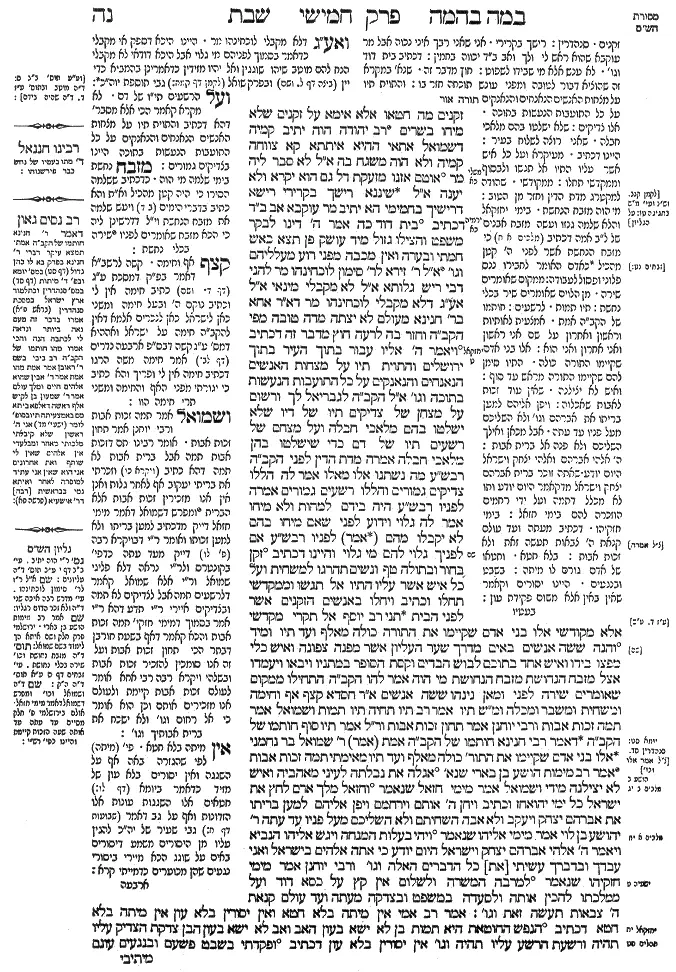
Shabbat 55a - Guemara
זקנים מה חטאו אלא אימא על זקנים שלא מיחו בשרים רב יהודה הוה יתיב קמיה דשמואל אתאי ההיא איתתא קא צווחה קמיה ולא הוה משגח בה א"ל לא סבר ליה מר (משלי כא, יג) אוטם אזנו מזעקת דל גם הוא יקרא ולא יענה א"ל שיננא רישך בקרירי רישא דרישיך בחמימי הא יתיב מר עוקבא אב ב"ד דכתיב (ירמיהו כא, יב) בית דוד כה אמר ה' דינו לבקר משפט והצילו גזול מיד עושק פן תצא כאש חמתי ובערה ואין מכבה מפני רוע מעלליהם וגו' א"ל ר' זירא לר' סימון לוכחינהו מר להני דבי ריש גלותא א"ל לא מקבלי מינאי א"ל אע"ג דלא מקבלי לוכחינהו מר דא"ר אחא בר' חנינא מעולם לא יצתה מדה טובה מפי הקב"ה וחזר בה לרעה חוץ מדבר זה דכתיב (יחזקאל ט, ד) ויאמר ה' אליו עבור בתוך העיר בתוך ירושלים והתוית תיו על מצחות האנשים הנאנחים והנאנקים על כל התועבות הנעשות בתוכה וגו' א"ל הקב"ה לגבריאל לך ורשום על מצחן של צדיקים תיו של דיו שלא ישלטו בהם מלאכי חבלה ועל מצחם של רשעים תיו של דם כדי שישלטו בהן מלאכי חבלה אמרה מדת הדין לפני הקב"ה רבש"ע מה נשתנו אלו מאלו אמר לה הללו צדיקים גמורים והללו רשעים גמורים אמרה לפניו רבש"ע היה בידם למחות ולא מיחו אמר לה גלוי וידוע לפני שאם מיחו בהם לא יקבלו מהם (אמר) לפניו רבש"ע אם לפניך גלוי להם מי גלוי והיינו דכתיב (יחזקאל ט, ו) זקן בחור ובתולה טף ונשים תהרגו למשחית ועל כל איש אשר עליו התיו אל תגשו וממקדשי תחלו וכתיב ויחלו באנשים הזקנים אשר לפני הבית תני רב יוסף אל תקרי מקדשי אלא מקודשי אלו בני אדם שקיימו את התורה כולה מאלף ועד תיו ומיד (יחזקאל ט, ב) והנה ששה אנשים באים מדרך שער העליון אשר מפנה צפונה ואיש כלי מפצו בידו ואיש אחד בתוכם לבוש הבדים וקסת הסופר במתניו ויבאו ויעמדו אצל מזבח הנחושת מזבח הנחושת מי הוה אמר להו הקב"ה התחילו ממקום שאומרים שירה לפני ומאן נינהו ששה אנשים א"ר חסדא קצף אף וחימה ומשחית ומשבר ומכלה ומ"ש תיו אמר רב תיו תחיה תיו תמות ושמואל אמר תמה זכות אבות ורבי יוחנן אמר תחון זכות אבות ור"ל אמר תיו סוף חותמו של הקב"ה דאמר רבי חנינא חותמו של הקב"ה אמת (אמר) ר' שמואל בר נחמני אלו בני אדם שקיימו את התור' כולה מאלף ועד תיו מאימתי תמה זכות אבות אמר רב מימות הושע בן בארי שנא' (הושע ב, יב) אגלה את נבלתה לעיני מאהביה ואיש לא יצילנה מידי ושמואל אמר מימי חזאל שנאמר (מלכים ב יג, כב) וחזאל מלך ארם לחץ את ישראל כל ימי יהואחז וכתיב ויחן ה' אותם וירחמם ויפן אליהם למען בריתו את אברהם יצחק ויעקב ולא אבה השחיתם ולא השליכם מעל פניו עד עתה ר' יהושע בן לוי אמר מימי אליהו שנאמר (מלכים א יח, לו) ויהי בעלות המנחה ויגש אליהו הנביא ויאמר ה' אלהי אברהם יצחק וישראל היום יודע כי אתה אלהים בישראל ואני עבדך ובדברך עשיתי [את] כל הדברים האלה וגו' ורבי יוחנן אמר מימי חזקיהו שנאמר (ישעיהו ט, ו) למרבה המשרה ולשלום אין קץ על כסא דוד ועל ממלכתו להכין אותה ולסעדה במשפט ובצדקה מעתה ועד עולם קנאת ה' צבאות תעשה זאת וגו':
אמר רב אמי אין מיתה בלא חטא ואין יסורין בלא עון אין מיתה בלא חטא דכתיב (יחזקאל יח, כ) הנפש החוטאת היא תמות בן לא ישא בעון האב ואב לא ישא בעון הבן צדקת הצדיק עליו תהיה ורשעת הרשע עליו תהיה וגו' אין יסורין בלא עון דכתיב (תהלים פט, לג) ופקדתי בשבט פשעם ובנגעים עונם
Comments from Rashi on Masechet Shabbat Page 55a
זקנים . סנהדרין: רישך בקרירי . אני שאני רבך איני נכוה אבל מר עוקבא שהוא ראש לי ולך ואב ב"ד יכווה בחמין: דכתיב בית דוד וגו' . לא ענש אלא מי שבידו לשפוט: חוץ מדבר זה . שנא' במקרא זה שהוציא דבור לטובה ומפני עונש תוכחה חזר בו: והתוית תיו על מצחות האנשים הנאנחים והנאנקים על כל התועבות הנעשות בתוכה . אלו צדיקים: שלא ישלטו בהם מלאכי חבלה . שאני רוצה לשלוח בעיר: היינו דכתיב . מעיקרא ועל כל איש אשר עליו התיו אל תגשו ולבסוף וממקדשי תחלו: ממקודשי . שהודה למקטרג מדת הדין וחזר מן הטוב: מי הוה מזבח הנחשת . בימי יחזקאל והלא שלמה גנזו ועשה מזבח אבנים של ל"ב אמה דכתיב (מלכים א ח) כי מזבח הנחשת אשר לפני ה' קטן מהכיל כאדם האומר לחבירו ננס פלוני ופסול לעבודה: ממקום שאומרים שירה . מן הלוים שאומרים שיר בכלי נחשת: תיו תמות . לרשעים: חותמו של הקב"ה אמת . אמצעית לאותיות וראשון ואחרון על שם אני ראשון ואני אחרון ואני הוא: אלו בני אדם שקיימו התורה כולה . התיו סימן להם שקיימו התורה מראש עד סוף: ואיש לא יצילנה . שאין עוד זכות לאבות שאכלוה: ויפן אליהם למען בריתו את אברהם וגו' ולא השליכם מעל פניו עד עתה . אבל מכאן ואילך השליכם ולא פנה אל ברית אבות: ה' אלהי אברהם ואלהי יצחק וישראל היום יודע . שאתה זוכר ברית אברהם יצחק וישראל מדקאמר היום יודע ותו לא מכלל דתמה ועל ידי רחמים הוזכרה להם בימי חזאל: בימי חזקיהו . דכתיב מעתה ועד עולם קנאת ה' צבאות תעשה זאת ולא זכות אבות: בלא חטא . וחטאו של אדם גורם לו מיתה: בשבט ובנגעים . היינו יסורים וקאמר שאין באין אלא משום פקידת עון:
Comments from Tosafot - Shabbat 55a
ואע"ג דלא מקבלי לוכחינהו מר . היינו היכא דספק אי מקבלי כדאמר בסמוך לפניהם מי גלוי אבל היכא דודאי לא מקבלי הנח להם מוטב שיהו שוגגין ואל יהיו מזידין כדאמרינן בהמביא כדי יין (ביצה דף ל. ושם) ובפרק שואל (לקמן שבת דף קמה:) גבי תוספת יוה"כ: ועל הרשעים תי"ו של דם . לא מקרא קאמר הכי אלא מסבר' דהא דכתיב והתוית תיו על מצחות האנשים הנאנחים והנאנקים על כל התועבות הנעשות בתוכה היינו בצדיקים גמורים: ושמואל אמר תמה זכות אבות ורבי יוחנן אמר תחון זכות אבות . אומר רבינו תם דזכות אבות תמה אבל ברית אבות לא תמה דהא כתיב (יקרא כו) וזכרתי את בריתי יעקוב אף לאחר גלות ואנן אין אנו מזכירין זכות אבות אלא הברית ומפרש דשמואל דאמר מימי חזאל דייק מדכתיב למען בריתו ולא למען זכותו ואומר ר"י דבויקרא רבה (פ' לו) דייק מעד עתה כדפי' בקונטרס ולר"י נראה דלא פליגי שמואל ור"י אלא שמואל קאמר דלרשעים תמה אבל לצדיקים לא תמה ובצדיקים איירי ר"י תדע דהא ר"י אמר בסמוך דמימי חזקי' תמה זכות אבות והכא קאמר דאף בשעת חורבן דבתר הכי תחון זכות אבות ועל זה אנו סומכין להזכיר זכות אבות ובשלהי ויקרא רבה רבי אחא אומר לעולם זכות אבות קיימת ולעולם אנו מזכירים אותם וכן הוא אומר כי אל רחום וגו' ולא ישכח את ברית אבותיך וגו': מזבח נחשת בימי שלמה מי הוה . כדכתיב ששלמה הסירו כי היה קטן מהכיל וא"ת והא כתיב בדברי הימים (ב ') ויעש שלמה את מזבח הנחשת וי"ל דדרשינן ליה כי הכא מזבח שאומרים לפניו שירה בכלי נחשת: קצף אף וחימה . קשה לרשב"א דאמר בפ"ק דמסכת ע"ג (דך ד. ושם) כתיב חימה אין לי וכתיב נוקם ה' ובעל חימה ומשני כאן לישראל כאן לנכרים אלמא דאין להקב"ה חימה על ישראל ואההיא דמס' ע"ג קשה דבס"פ ארבעה נדרים (דף לב.) אמר חימה משה הרגו דכתיב חימה אין לי ופריך והא כתיב כי יגורתי מפני האף והחימה ומשני תרי חימה הוו: אין מיתה בלא חטא . פי' (מיתה) לפי שהגזרה באה אף על השגגה ואין יסורים בלא עון של מזיד כדאמר ביומא (דף ו:) חטאים אלו השגגות עונות אלו הזדונות ואף על גב דאמר (שבועות דף ח:) גבי שעיר של יה"כ להגין עליו מן היסורים משמע דיסורים באים על שוגג הכא מיירי ביסורי נגעים שהן מכוערים כדמייתי קרא:
Shabbat 55a - Mishnah translated into english
what did the Elders, i.e., the Sages of that generation, do that was considered a sin? Rather, say: God will enter into judgment with the Elders because they did not protest the sinful conduct of the princes.
The Gemara relates: Rav Yehuda was sitting before Shmuel when this woman came and cried before Shmuel about an injustice that had been committed against her, and Shmuel paid no attention to her. Rav Yehuda said to Shmuel: Doesn’t the Master hold in accordance with the verse: “Whoever stops his ears at the cry of the poor, he also shall cry himself, but shall not be heard” (Proverbs 21:13)? He said to him: Big-toothed one, your superior, i.e., I, your teacher, will be punished in cold water. The superior of your superior will be punished in hot water. Mar Ukva, who sits as president of the court, is responsible for those matters.
And from where is it derived that this responsibility is incumbent upon the house of the Exilarch? As it is written: “House of David, so says the Lord: Execute judgment in the morning, and deliver him that is robbed out of the hand of the oppressor, lest My fury go forth like fire, and burn so that none can quench it because of the evil of your doings” (Jeremiah 21:12). The Exilarch is a direct descendant of the house of David.
With regard to the issue of reprimand, it was related that Rabbi Zeira said to Rabbi Simon: Let the Master reprimand the members of the house of the Exilarch, as Rabbi Simon had some influence over them. Rabbi Simon said to him: They will not accept reprimand from me. Rabbi Zeira said to him: Let my master reprimand them even if they do not accept it.
As Rabbi Aḥa, son of Rabbi Ḥanina, said: Never did a promise manifesting a good attribute emerge from the mouth of the Holy One, Blessed be He, and He later retracted it and rendered it evil, except with regard to this matter, as it is written: “And the Lord said to him: Go through the midst of the city, through the midst of Jerusalem, and set a mark [tav] upon the foreheads of the men that sigh and that cry on account of all the abominations that are done in her midst” (Ezekiel 9:4).
The Holy One, Blessed be He, said to the angel Gabriel: Go and inscribe a tav of ink on the foreheads of the righteous as a sign so that the angels of destruction will not have dominion over them. And inscribe a tav of blood on the foreheads of the wicked as a sign so that the angels of destruction will have dominion over them.
The attribute of justice said before the Holy One, Blessed be He: Master of the Universe, how are these different from those? He said to that attribute: These are full-fledged righteous people and those are full-fledged wicked people. The attribute of justice said to Him: Master of the Universe, it was in the hands of the righteous to protest the conduct of the wicked, and they did not protest.
He said to that attribute: It is revealed and known before Me that even had they protested the conduct of the wicked, they would not have accepted the reprimand from them. They would have continued in their wicked ways. The attribute of justice said before Him: Master of the Universe, if it is revealed before You that their reprimand would have been ineffective, is it revealed to them? The Holy One, Blessed be He, retracted His promise to protect the righteous and decided that those who failed to protest would also be punished.
And that is the meaning of that which is written: “Slay utterly old and young, both maid, and little children, and women; but come not near any man upon whom is the mark; and begin at My Sanctuary” (Ezekiel 9:6). And it is written in that same verse: “Then they began with the elderly men who were before the house.” Rav Yosef taught: Read not: My Sanctuary [mikdashi], rather: Those sanctified to Me [mekudashai]. These are people who observed the whole Torah in its entirety from alef through tav. And immediately: “And, behold, six men came from the way of the higher gate, which lies toward the north, and every man with his weapon of destruction in his hand; and one man among them was clothed in linen, with a writer’s inkwell by his side; and they went in and stood beside the bronze altar” (Ezekiel 9:2).
The Gemara asks: Was there a bronze altar in the Temple in the time of Ezekiel? Already in the days of Solomon there was only a stone altar. Rather, this should be understood as a figure of speech. The Holy One, Blessed be He, said to them: Begin from the place where they recite songs of praise before Me. This is a reference to the Levites in the Temple whose musical instruments are made of bronze. And who are the six men mentioned here? Rav Ḥisda said: Fury, Wrath, and Rage, and Destroyer, and Breaker, and Annihilator, six angels of destruction.
The Gemara asks further: And what is different about the letter tav, that it was inscribed on the foreheads of the righteous? Rav said: Tav is the first letter of the word tiḥye, you shall live, indicating that the righteous shall live. Tav is also the first letter of the word tamut, you shall die, indicating that the wicked shall die. And Shmuel said: The letter tav is the first letter of the word tama, ceased, indicating that the merit of the Patriarchs has ceased and will not help the wicked. Rabbi Yoḥanan said: The letter tav is the first letter of the word taḥon, will have mercy, indicating that due to the merit of the Patriarchs God will have mercy on the righteous.
And Reish Lakish said: The letter tav is the last letter of the seal of the Holy One, Blessed be He, as Rabbi Ḥanina said: The seal of the Holy One, Blessed be He, is truth [emet], which ends with the letter tav. Rabbi Shmuel bar Naḥmani said: The letter tav teaches that these are people who observed the entire Torah from alef through tav.
With regard to the statement that the merit of the Patriarchs has ceased, the Gemara asks: From when did the merit of the Patriarchs cease? Rav said: From the days of the prophet Hosea, son of Beeri, as it is stated: “And now I will uncover her lewdness in the sight of her lovers, and none shall deliver her out of My hand” (Hosea 2:12). Israel will no longer be saved by the merit of the Patriarchs.
And Shmuel said: The merit of the Patriarchs ceased since the days of Hazael, as it is stated: “And Hazael, king of Aram, oppressed Israel all the days of Jehoahaz” (II Kings 13:22). And it is written there: “And the Lord was gracious to them, and had compassion on them, and turned toward them because of His covenant with Abraham, Isaac, and Jacob and would not destroy them; neither has He till now cast them away from His presence” (II Kings 13:23). That was the last time that the merit of the Patriarchs was mentioned.
Rabbi Yehoshua ben Levi said: The merit of the Patriarchs ceased since the days of Elijah the Prophet, as it is stated: “And it came to pass at the time of the evening sacrifice, that Elijah the Prophet came near and said, Lord, God of Abraham, Isaac, and Israel, let it be known this day that you are God in Israel, and that I am Your servant, and that I have done all these things at Your word” (I Kings 18:36). By inference: Let it be known this day and not afterward because the merit of the Patriarchs will cease today.
And Rabbi Yoḥanan said: The merit of the Patriarchs ceased since the days of Hezekiah, as it is stated: “For the increase of the realm and for peace without end, upon the throne of David, and upon his kingdom to order it, and to establish it with judgment and with justice; from now and forever the zeal of the Lord of hosts performs this” (Isaiah 9:6). That is to say, from this point on, the merit of the Patriarchs will not protect Israel, leaving only the zeal of the Lord.
The Gemara continues its discussion of punishment in general and the relationship between a person’s actions and the punishments meted out against him in particular: Rav Ami said: There is no death without sin; were a person not to sin, he would not die. And there is no suffering without iniquity.
The Gemara adduces proof to these assertions: There is no death without sin, as it is written: “The soul that sins, it shall die. The son shall not bear the iniquity of the father, neither shall the father bear the iniquity of the son; the righteousness of the righteous shall be upon him, and the wickedness of the wicked shall be upon him” (Ezekiel 18:20). A person dies only because of his own sins and not because of some preexistent sin. And there is no suffering without iniquity, as it is written: “Then I will punish their transgression with the rod and their iniquity with strokes” (Psalms 89:33).
Traduction : The William Davidson digital edition of the Koren Noé Talmud, with commentary by Rabbi Adin Even-Israel Steinsaltz.