 Talmud Bavli
Shabbat 145a : Youtube
Daf TubeYoutube
2 video classes :
Shabbat Page 145a
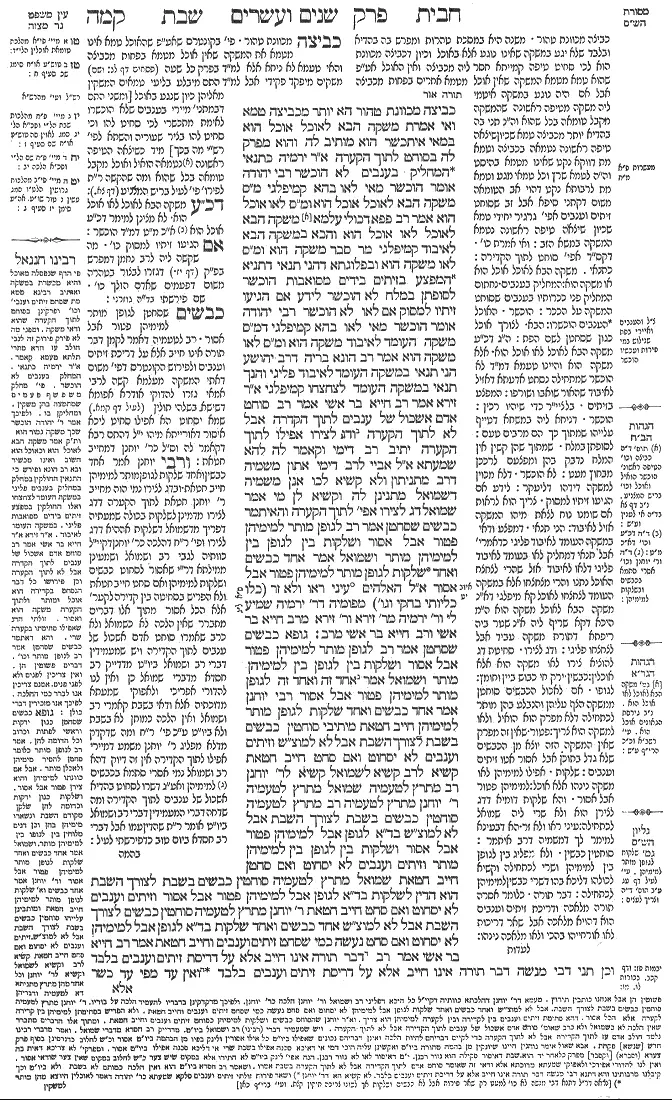
Shabbat 145a - Guemara
כביצה מכוונת טהור הא יותר מכביצה טמא ואי אמרת משקה הבא לאוכל אוכל הוא במאי איתכשר הוא מותיב לה והוא מפרק לה בסוחט לתוך הקערה א"ר ירמיה כתנאי המחליק בענבים לא הוכשר רבי יהודה אומר הוכשר מאי לאו בהא קמיפלגי מ"ס משקה הבא לאוכל אוכל הוא ומ"ס לאו אוכל הוא אמר רב פפא דכולי עלמא משקה הבא לאוכל לאו אוכל הוא והכא במשקה הבא לאיבוד קמיפלגי מר סבר משקה הוא ומ"ס לאו משקה הוא ובפלוגתא דהני תנאי דתניא המפצע בזיתים בידים מסואבות הוכשר לסופתן במלח לא הוכשר לידע אם הגיעו זיתיו למסוק אם לאו לא הוכשר רבי יהודה אומר הוכשר מאי לאו בהא קמיפלגי דמ"ס משקה העומד לאיבוד משקה הוא ומ"ס לאו משקה הוא אמר רב הונא בריה דרב יהושע הני תנאי במשקה העומד לאיבוד פליגי והנך תנאי במשקה העומד לצחצחו קמיפלגי א"ר זירא אמר רב חייא בר אשי אמר רב סוחט אדם אשכול של ענבים לתוך הקדרה אבל לא לתוך הקערה ודג לצירו אפילו לתוך הקערה יתיב רב דימי וקאמר לה להא שמעתא א"ל אביי לרב דימי אתון משמיה דרב מתניתון ולא קשיא לכו אנן משמיה דשמואל מתנינן לה וקשיא לן מי אמר שמואל דג לצירו אפי' לתוך הקערה והאיתמר כבשים שסחטן אמר רב לגופן מותר למימיהן פטור אבל אסור ושלקות בין לגופן בין למימיהן מותר ושמואל אמר אחד כבשים ואחד שלקות לגופן מותר למימיהן פטור אבל אסור א"ל האלהים (איוב יט, כז) עיני ראו ולא זר (כלו כליותי בחקי וגו') מפומיה דר' ירמיה שמיע לי ור' ירמיה מר' זירא ור' זירא מרב חייא בר אשי ורב חייא בר אשי מרב:
גופא כבשים שסחטן אמר רב לגופן מותר למימיהן פטור אבל אסור ושלקות בין לגופן בין למימיהן מותר ושמואל אמר אחד זה ואחד זה לגופן מותר למימיהן פטור אבל אסור רבי יוחנן אמר אחד כבשים ואחד שלקות לגופן מותר למימיהן חייב חטאת מיתיבי סוחטין כבשים בשבת לצורך השבת אבל לא למוצ"ש וזיתים וענבים לא יסחוט ואם סחט חייב חטאת קשיא לרב קשיא לשמואל קשיא לר' יוחנן רב מתרץ לטעמיה שמואל מתרץ לטעמיה ר' יוחנן מתרץ לטעמיה רב מתרץ לטעמיה סוחטין כבשים בשבת לצורך השבת אבל לא למוצ"ש בד"א לגופן אבל למימיהן פטור אבל אסור ושלקות בין לגופן בין למימיהן מותר וזיתים וענבים לא יסחוט ואם סחטן חייב חטאת שמואל מתרץ לטעמיה סוחטין כבשים בשבת לצורך השבת הוא הדין לשלקות בד"א לגופן אבל למימיהן פטור אבל אסור וזיתים וענבים לא יסחוט ואם סחט חייב חטאת ר' יוחנן מתרץ לטעמיה סוחטין כבשים לצורך השבת אבל לא למוצ"ש אחד כבשים ואחד שלקות בד"א לגופן אבל למימיהן לא יסחוט ואם סחט נעשה כמי שסחט זיתים וענבים וחייב חטאת אמר רב חייא בר אשי אמר רב דבר תורה אינו חייב אלא על דריסת זיתים וענבים בלבד וכן תני דבי מנשה דבר תורה אינו חייב אלא על דריסת זיתים וענבים בלבד ואין עד מפי עד כשר
Comments from Rashi on Masechet Shabbat Page 145a
טמא מת שסחט זיתים וענבים כביצה מכוונת טהור . משנה היא במסכת טהרות ומפרש בה בהדיא ובלבד שלא יגע במשקה שאינו נוגע אלא באוכל וכיון דכביצה מכוונת הוא לכי סחיט טיפה קמייתא חסר ליה מכביצה ואין האוכל אע"פ שהוא טמא מטמא המשקה שאין אוכל מטמא אחרים בפחות מכביצה אבל אם היה נוגע במשקה איטמי ליה משקה מטיפה ראשונה שהמשקה מקבל טומאה בכל שהוא וה"נ תני בה בהדיא יותר מכביצה טמא שכיון שיצאה טיפה ראשונה נטמאה בכביצה וטמא מת דווקא נקט שאינו מטמא בהיסט וה"ה לטמא שרץ וכל טמאי מגע וטמא מת לרבותא נקט דהוי אב הטומאה משום דקתני סיפא אבל זב שסוחט זיתים וענבים אפי' גרגיר יחידי טמא שכיון שיצאה טיפה ראשונה נטמא המשקה במשא הזב: ואי אמרת כו' . דקס"ד אפי' סוחט לתוך הקדירה: כתנאי . משקה הבא לאוכל אוכל הוא או משקה הוא: המחליק בענבים . נחתום המחליק פני ככרותיו בענבים שסוחט המשקה על הככר: הוכשר . האוכל הענבים הוכשרו: הבא . לצורך אוכל כגון שסחטן לשם הפת: ה"ג דכ"ע משקה הבא לאוכל לאו אוכל הוא . אלא משקה הוא והיינו טעמא דמ"ד לא הוכשר שמתחילה נסחט אדעתא דאזיל לאיבוד שהאור שואבו ושורפו: המפצע בזיתים . בלציי"ר כדי שיהיו רכין: הוכשר . דניחא ליה במשחא דטייף עלייהו שמתוך כך הם מרבים טעם: לסופתן במלח . שמתוך שהן קשין אין המלח נדבק בהן ומפצעם לרככן מבחוץ מעט: לא הוכשר . דלא מכוין למשקה דידהו דליעקר: לידע אם הגיעו זיתיו למסוק . צריך הוא לראות אם שומנו נוח לצאת מיהו המשקה אזיל לאיבוד: הני תנאי . דמפצע ודאי במשקה העומד לאיבוד פליגי כדאמרי' אבל תנאי דמחליק לאו בעומד לאיבוד פליגי דלאו לאיבוד אזל שהרי לצחצח האוכל נתנו והרי מצחצחו אלא במשקה העומד לצחצחו לאוכל קא מיפלגי דא"נ משקה הבא לאוכל משקה הוא ה"מ היכא דקא שריף ליה א"נ שטר ביה ריפתא דתורת משקה עביד אבל לצחצחו פליגי: ודג לצירו . סחיטת דג להוציא צירו לאו משקה הוא אלא אוכלין: כבשין . ירק חי כבוש ביין וחומץ: לגופו . אם לאכול הכבשים סוחטן ממשקה הצף עליהן והנבלע בהן מותר לכתחילה דלא מפרק הוא הואיל ולאו למשקה הוא צריך: פטור . שאין זה מפרק שאין המשקה הזה יוצא מן הכבשים שלא גדל בתוכן אבל אסור אטו זיתים וענבים: שלקות . אפילו למימיהן לאו משקה נינהו אלא אוכל: למימיהן פטור אבל אסור . והא שלקות דומיא דדג לצירן הוא ולא שרי ליה שמואל לכתחילה: עיני ראו ולא זר . הא דבעינא למימר לך דמשמיה דרב איתמר: סוחטין כבשין . ולא מפליג בין לגופן בין למימיהן ושרי לכתחילה וקשיא לכולהו דליכא בהו דשרי כבשין למימיהן לכתחילה: דבר תורה . כלומר אסרה תורה מלאכה ודריכת זיתים וענבים הוא דהויא מלאכה אבל שאר דריכות לאו אורחייהו בהכי ולאו מלאכה נינהו:
Comments from Tosafot - Shabbat 145a
כביצה מכוונת טהור . פי' בקונטרס שאע"פ שהאוכל טמא אינו מטמא את המשקה שאין אוכל מטמא בפחות מכביצה והאי טעמא לא ניחא אלא למ"ד בפרק כל שעה (פסחים דף לג: ושם) משקים מיפקד פקידי אבל למ"ד התם מיבלע בליעי טמאים המשקין מאליהן כיון שנגע באוכל [ומשני התם דבמתני' מיירי בענבים שלא הוכשרו לאימת מתכשרי לכי סחיט להו וכי סחיט להו בציר שעוריה והשתא לפי' רש"י מה בכך] מיד כשיצאה הטיפה ראשונה נטמאה הואיל ואוכל מקבל טומאה בכל שהוא ומה שהקשה ר"ת . לפירו' פי' לעיל בריש המצניע (שבת דף צא.): דכ"ע משקה הבא לאוכל לאו אוכל הוא . לא מצינן למימר דכ"ע אוכל הוא א"כ מ"ט דמ"ד הוכשר: אם הגיעו זיתיו למסוק כו' . מה שקשה ליה לרב נחמן דמפרש בפ"ק (דף יז.) דגזרו לבצור בטהרה משום דפעמים שאדם הולך כו'. שם פירשתי בד"ה גוזרני: כבשים שסחטן לגופן מותר למימיהן פטור אבל אסור . רב לטעמיה דאמר לקמן דבר תורה אינו חייב אלא על דריכת זיתים וענבים ולפירוש הקונטרס דפי' משום דאתי המשקה מעלמא קשה לרבי אמאי גזרו להדוקי אודרא אפומא דשישא בשלהי תולין (לעיל שבת דף קמא.) שמא יסחוט הא אפילו סחיט ליכא איסור דאורייתא מיהו י"ל דהתם רבא דקאמר לה וס"ל כר' יוחנן דמחייב חטאת:
Shabbat 145a - Mishnah translated into english
in the exact amount of an egg-bulk, the liquid is ritually pure. Even though the ritually impure individual touched the food, less than an egg-bulk of food cannot become ritually impure. Once the first drop of liquid is squeezed out, less than an egg-bulk of food remains, and it cannot render the liquid impure. By inference, if he squeezed more than an egg-bulk, the liquid is ritually impure. And if you say that liquid that comes into food is considered food, in what manner was this liquid rendered susceptible to ritual impurity? He raised the objection and he resolved it: It is referring to a case where one squeezes into an empty bowl, in which case the juice is considered a liquid.
Rabbi Yirmeya said: The question of whether liquid squeezed directly from one food into another is considered liquid or food is parallel to the following dispute between tanna’im. We learned in a mishna: In the case of one who smooths bread before baking it by squeezing grapes onto it, the bread was not rendered susceptible to ritual impurity. Rabbi Yehuda says: It was rendered susceptible to ritual impurity. What, do they not disagree about this? One Sage held that liquid that comes into food is food, and therefore it cannot render bread susceptible to ritual impurity, and one Sage held that it is not food but rather a liquid, and therefore it renders the bread susceptible to ritual impurity.
Rav Pappa said that the disputes are not necessarily parallel; it can be explained that everyone agrees that liquid that comes into food is not food, and here they disagree with regard to liquid that goes to waste, as the liquid that dripped onto the bread eventually evaporates due to the heat of the oven. One Sage, Rabbi Yehuda, held that it is nonetheless a liquid and therefore can render the bread susceptible to ritual impurity, and one Sage held that it is not a liquid. And they disagree in the dispute between these tanna’im, as it was taught in a baraita: In the case of one who cuts olives with soiled, i.e., ritually impure, hands, the olives are rendered susceptible to ritual impurity through the liquid that comes from them, and his hands render the olives ritually impure. If he cut them in order to dip them in salt, the olives are not rendered susceptible to ritual impurity, because if that liquid emerged from the olives against the owner’s will, the liquid cannot render food susceptible to ritual impurity.
If he was cutting in order to ascertain whether his olives have reached the stage of ripeness at which they are fit to be harvested or not, they are not rendered susceptible to ritual impurity. Rabbi Yehuda said: They are rendered susceptible to ritual impurity. What, do they not disagree with regard to this? One Sage, Rabbi Yehuda, held that liquid that emerges when one tests the olives but which stands to go to waste, is liquid and renders food susceptible to ritual impurity; and one Sage held that it is not liquid and does not render food susceptible to ritual impurity.
Rav Huna, son of Rav Yehoshua, said: The last two disputes are not necessarily parallel. These tanna’im, who disagreed with regard to olives, disagreed with regard to liquid that stands to go to waste, and those tanna’im, who disagreed with regard to the liquid on the bread, disagreed with regard to liquid that stands to be used to shine it.
Rabbi Zeira said that Rav Ḥiyya bar Ashi said that Rav said: A person may squeeze a cluster of grapes into a pot with food in it on Shabbat, because liquid that is squeezed directly into food is considered food rather than liquid; however, one may not do so into a bowl that is empty or that contains liquid. And squeezing a fish for its brine is permitted even into a bowl.
Rav Dimi sat and stated this halakha. Abaye said to Rav Dimi: You teach this halakha in the name of Rav and it is not difficult for you; we teach it in the name of Shmuel and it is difficult for us for the following reason: Did Shmuel say that it is permitted to squeeze a fish for its brine even into a bowl? Wasn’t it stated that there was a dispute with regard to pickled vegetables that one squeezed? Rav said: If he wants to squeeze them because he needs the vegetables themselves without the liquid, it is permitted to do so even ab initio on Shabbat. And if he squeezes them because he needs their liquid, he is exempt from bringing a sin-offering, but it is prohibited to do so ab initio.
And with regard to boiled vegetables, whether he needs the vegetables themselves without their liquid or whether he wants to squeeze the vegetables for their liquids, it is permitted to squeeze them on Shabbat. And Shmuel said: With regard to both pickled vegetables and boiled vegetables, if he squeezes them for the vegetables themselves, it is permitted, and if he squeezes them for their liquids, he is exempt from bringing a sin-offering, but it is prohibited to do so ab initio. Apparently, squeezing fish for its brine falls into the category of squeezing boiled items for their liquid, which according to Shmuel is prohibited. As such, Shmuel’s two statements appear contradictory.
He said to him: You can certainly rely on my version of this statement. To underscore his point, he uttered the oath-like expression: By God! and applied the verse: “Whom I shall see for myself; my eyes have seen it, and not another’s” (Job 19:27). I heard this tradition from the mouth of Rabbi Yirmeya, and Rabbi Yirmeya heard it from Rabbi Zeira, and Rabbi Zeira heard it from Rav Ḥiyya bar Ashi, and Rav Ḥiyya bar Ashi heard it from Rav, and each transmitter of this tradition is a reliable source.
Apropos the topic of squeezing pickled vegetables, the Gemara addresses the matter itself. We learned that with regard to pickled vegetables that one squeezed, Rav said that if he squeezes them for themselves, it is permitted, and if he squeezes them for their liquids he is exempt from bringing a sin-offering, but it is prohibited to do so ab initio; and with regard to boiled vegetables, if he squeezes them both for themselves and for their liquids it is permitted. And Shmuel said: With regard to both this, pickled vegetables, and that, boiled vegetables, squeezing for the vegetables themselves without liquid is permitted; squeezing them for their liquids, one is exempt, but it is prohibited to do so ab initio. Rabbi Yoḥanan said: With regard to both pickled vegetables and boiled vegetables, if one squeezes them for the vegetables themselves it is permitted; if one squeezes them for their liquids, he is liable to bring a sin-offering for having performed a labor prohibited by Torah law.
The Gemara raises an objection based on that which was taught in a baraita: One may squeeze pickled vegetables on Shabbat for the purpose of using them on Shabbat but not for the conclusion of Shabbat. And one may not squeeze olives and grapes at all on Shabbat, and if one squeezed them unwittingly, he is liable to bring a sin-offering. Apparently, it is permitted to squeeze pickled vegetables ab initio on Shabbat for any purpose, even for their juice, and if so, it is difficult according to the opinion of Rav, it is difficult according to the opinion of Shmuel, and it is difficult according to the opinion of Rabbi Yoḥanan, which all assert that squeezing pickled vegetables for their juice is prohibited on some level. The Gemara responds that Rav interprets the baraita according to his line of reasoning, Shmuel interprets the baraita according to his line of reasoning, and Rabbi Yoḥanan interprets the baraita according to his line of reasoning. The Gemara proceeds to elucidate how the baraita is explained according to each opinion.
Rav interprets the baraita according to his line of reasoning by emending the baraita and adding to it: One may squeeze pickled vegetables on Shabbat for the purpose of Shabbat, but not for the conclusion of Shabbat. In what case is this statement said? When one squeezes the vegetables for themselves; however, if one squeezes them for their liquid, he is exempt from bringing a sin-offering, but it is prohibited to do so. And with regard to boiled vegetables, whether one squeezes them for themselves or whether he does so for their liquid, it is permitted. And with regard to olives and grapes, one may not squeeze them at all, and if one squeezed them unwittingly he is liable to bring a sin-offering.
Shmuel interprets the baraita according to his line of reasoning by emending the baraita and adding to it: One may squeeze pickled vegetables on Shabbat for the purpose of Shabbat, and the same is true for boiled vegetables. In what case is this statement said? When one squeezes them for themselves; however, if he squeezes them for their liquids, he is not liable to bring a sin-offering, but it is prohibited to do so. And with regard to olives and grapes, one may not squeeze them at all, and if one squeezed them unwittingly, he is liable to bring a sin-offering.
And Rabbi Yoḥanan also interprets the baraita according to his line of reasoning by emending the baraita and adding to it: One may squeeze pickled vegetables for the purpose of Shabbat but not for the conclusion of Shabbat, and that ruling applies both to pickled vegetables and to boiled vegetables. In what case is this statement said? When one squeezes them for themselves, but if he does so for their liquids, one may not squeeze them, and if one squeezed them unwittingly, he becomes like one who squeezed olives or grapes, and he is liable to bring a sin-offering.
Rav Ḥiyya bar Ashi said that Rav said: By Torah law, one is only liable for stomping on olives and grapes, and all other prohibitions related to squeezing or juicing are rabbinic decrees and protective measures. And similarly, it was taught in the school of Menashe: By Torah law, one is only liable for stomping on olives and grapes. And it was taught in the school of Menashe: And testimony of one witness based solely on what he learned from the mouth of another witness, i.e., hearsay testimony, is valid
Traduction : The William Davidson digital edition of the Koren Noé Talmud, with commentary by Rabbi Adin Even-Israel Steinsaltz.