 Talmud Bavli
The learning on the whole site is dedicated : L'ilui Nishmat Yechayahou ben Moche
The learning on the whole site is dedicated : L'ilui Nishmat Amram ben Itshak Loubaton
The learning on the whole site is dedicated : L'ilui Nishmat יוסף בן מושה
Shabbat 92b : Youtube
Daf TubeYoutube
3 video classes :
Shabbat Page 92b
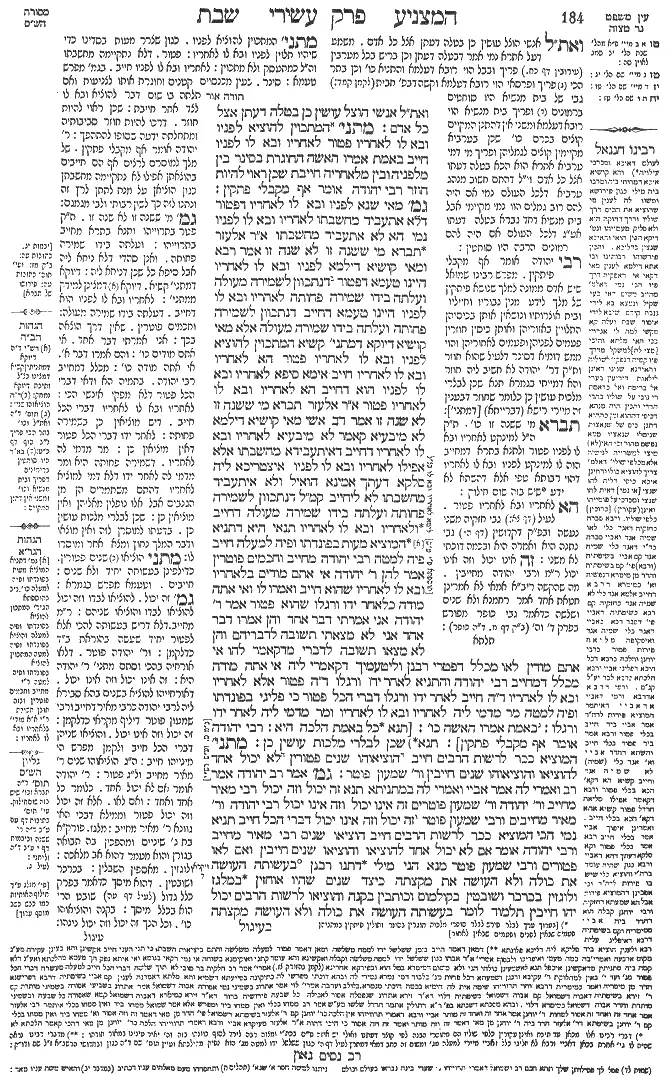
Shabbat 92b - Guemara
ואת"ל אנשי הוצל עושין כן בטלה דעתן אצל כל אדם:
מתני׳ המתכוין להוציא לפניו ובא לו לאחריו פטור לאחריו ובא לו לפניו חייב באמת אמרו האשה החוגרת בסינר בין מלפניה ובין מלאחריה חייבת שכן ראוי להיות חוזר רבי יהודה אומר אף מקבלי פתקין:
גמ׳ מאי שנא לפניו ובא לו לאחריו דפטור דלא אתעביד מחשבתו לאחריו ובא לו לפניו נמי הא לא אתעביד מחשבתו א"ר אלעזר תברא מי ששנה זו לא שנה זו אמר רבא ומאי קושיא דילמא לפניו ובא לו לאחריו היינו טעמא דפטור דנתכוון לשמירה מעולה ועלתה בידו שמירה פחותה לאחריו ובא לו לפניו היינו טעמא דחייב דנתכוון לשמירה פחותה ועלתה בידו שמירה מעולה אלא מאי קושיא דיוקא דמתני' קשיא המתכוין להוציא לפניו ובא לו לאחריו פטור הא לאחריו ובא לו לאחריו חייב אימא סיפא לאחריו ובא לו לפניו הוא דחייב הא לאחריו ובא לו לאחריו פטור א"ר אלעזר תברא מי ששנה זו לא שנה זו אמר רב אשי מאי קושיא דילמא לא מיבעיא קאמר לא מיבעיא לאחריו ובא לו לאחריו דחייב דאיתעבידא מחשבתו אלא אפילו לאחריו ובא לו לפניו איצטריכא ליה סלקא דעתך אמינא הואיל ולא איתעביד מחשבתו לא ליחייב קמ"ל דנתכוון לשמירה פחותה ועלתה בידו שמירה מעולה דחייב ולאחריו ובא לו לאחריו תנאי היא דתניא [המוציא מעות בפונדתו ופיה למעלה חייב פיה למטה רבי יהודה מחייב וחכמים פוטרין אמר להן ר' יהודה אי אתם מודים בלאחריו ובא לו לאחריו שהוא חייב ואמרו לו ואי אתה מודה כלאחר ידו ורגלו שהוא פטור אמר ר' יהודה אני אמרתי דבר אחד והן אמרו דבר אחד אני לא מצאתי תשובה לדבריהם והן לא מצאו תשובה לדברי מדקאמר להו אי אתם מודין לאו מכלל דפטרי רבנן וליטעמיך דקאמרי ליה אי אתה מודה מכלל דמחייב רבי יהודה והתניא לאחר ידו ורגלו ד"ה פטור אלא לאחריו ובא לו לאחריו ד"ה חייב לאחר ידו ורגלו דברי הכל פטור כי פליגי בפונדתו ופיה למטה מר מדמי ליה לאחריו ובא לו לאחריו ומר מדמי ליה לאחר ידו ורגלו:
באמת אמרו האשה כו':
[תנא כל באמת הלכה היא:
רבי יהודה אומר אף מקבלי פתקין]:
תנא) שכן לבלרי מלכות עושין כן מתני׳ המוציא ככר לרשות הרבים חייב הוציאוהו שנים פטורין לא יכול אחד להוציאו והוציאוהו שנים חייבין ור' שמעון פוטר:
גמ׳ אמר רב יהודה אמר רב ואמרי לה אמר אביי ואמרי לה במתניתא תנא זה יכול וזה יכול רבי מאיר מחייב ור' יהודה ור' שמעון פוטרים זה אינו יכול וזה אינו יכול רבי יהודה ור' מאיר מחייבים ורבי שמעון פוטר זה יכול וזה אינו יכול דברי הכל חייב תניא נמי הכי המוציא ככר לרשות הרבים חייב הוציאו שנים רבי מאיר מחייב ורבי יהודה אומר אם לא יכול אחד להוציאו והוציאו שנים חייבין ואם לאו פטורים ורבי שמעון פוטר מנא הני מילי דתנו רבנן (ויקרא ד, כז) בעשותה העושה את כולה ולא העושה את מקצתה כיצד שנים שהיו אוחזין במלגז ולוגזין בכרכר ושובטין בקולמוס וכותבין בקנה והוציאו לרשות הרבים יכול יהו חייבין תלמוד לומר בעשותה העושה את כולה ולא העושה מקצתה
Comments from Rashi on Masechet Shabbat Page 92b
מתני' המתכוין להוציא לפניו . כגון שצרר מעות בסדינו כדי שיהיו תלוין לפניו ובא לו לאחריו: פטור . דלא נתקיימה מחשבתו וה"ל כמתעסק ולא מתכוין: לאחריו ובא לו לפניו חייב . בגמ' מפרש טעמא: סינר . כעין מכנסיים קטנים וחוגרת אותו לצניעות ואם תלתה בו שום דבר להוציא ובא לו לצד אחר חייבת: שכן ראוי להיות חוזר . דרכו להיות חוזר סביבותיה ומתחלתה ידעה שסופו להתהפך: ר' יהודה אומר אף מקבלי פתקין . של מלך למוסרם לרצים אף הם חייבים בהוצאתן אפילו לא נתקיימה מחשבתן כגון הוציאן על מנת לתתן לרץ זה ונתנו לזה כך לשון רבותי ולבי מגמגם: גמ' מי ששנה זו לא שנה זו . ת"ק פטר בתרוייהו ותנא בתרא מחייב בתרוייהו: ועלתה בידו שמירה פחותה . ואנן סהדי דלא ניחא ליה אבל סיפא כל שכן דניחא ליה: דיוקא דמתני' קשיא . דיוקא דמצינן למידק ממתני': לאחריו ובא לו לפניו הוא דחייב . דעלתה בידו שמירה מעולה: וחכמים פוטרין . שאין דרך הוצאה בכך: אני אמרתי דבר אחד . אי אתם מודים כו': והם אמרו דבר א' . אי אתה מודה כו': מכלל דמחייב רבי יהודה . בתמיה הא ודאי דברי הכל פטור דלא מפקי אינשי הכי: לאחריו ובא לו לאחריו דברי הכל חייב . דיש מוציאין כן בשמירה פחותה: לאחר ידו דברי הכל פטור . דאין מוציאין כן: מר מדמי לה לאחריו . דשמירה פחותה היא ומר מדמי לה לאחר ידו דלא דמי למוציא לאחריו דהתם משתמרים הן מן הגנבים אבל אלו נופלין מאליהן ואין מוציאין כן: שכן לבלרי מלכות עושין כן . בדעתו למוסרן לזה ואין מוצאו ודבר המלך נחוץ ומצא אחר ומוסרו לו: מתני הוציאו שנים פטורין . כדילפינן בעשותה יחיד ולא שנים: חייבים . וטעמא מפרש בגמרא: זה יכול . להוציאו לבדו וזה יכול להוציאו לבדו והוציאו שניהם: ר"מ מחייב . דלא דריש בעשותה להכי אלא לפטור יחיד שעשה בהוראת ב"ד כדלקמן: ור' יהודה פוטר . דלאו אורחיה בהכי וסתם מתני' ר' יהודה היא: זה אינו יכול וזה אינו יכול . דאורחייהו להוציא בשנים בהא סבירא ליה לרבי יהודה כרבי מאיר דחייב ורבי שמעון פוטר דיליף מקראי כדלקמן: זה יכול וזה אינו יכול . והוציאו שניהן דברי הכל חייב ולקמן מפרש הי מינייהו חייב: ה"ג הוציאוהו שנים ר' מאיר מחייב ול"ג פטור: ר' יהודה אומר אם לא יכול אחד . כלומר כל אחד ואחד: ואם לאו . אלא זה יכול וזה יכול פטור וממילא דבכי האי גוונא ר' מאיר מחייב: מלגז . פורק"א בת ג' שיניים ומהפכין בה תבואה בגורן והוא מעמר דהוא אב מלאכה: ולוגזין . מאספין השבלין: בכרכר ושובטין . דהוא מיסך כדאמר בפרק כלל גדול (לעיל שבת דף עה) שובט הרי הוא בכלל מיסך: בקנה והוציאוהו כו' . וכל הנך זה יכול וזה יכול נינהו:
Comments from Tosafot - Shabbat 92b
ואת"ל אנשי הוצל עושין כן בטלה דעתן אצל כל אדם . משמע דעל אתרא נמי אמר דבטלה דעתן וכן בריש בכל מערבין (עירובין דף כח.) פריך ובבל הוי רובא דעלמא והתניא כו' וכן בתר הכי פריך ופרסאי הוי רובא דעלמא וקשה דבפ' חבית (לקמן שבת קמד:) גבי של בית מנשיא היו סוחטים ברמונים ופריך בית מנשיא הוי רובא דעלמא ומשני אין דהתנן המקיים קוצים בכרם כו' שכן בערביא מקיימין קוצים לגמליהן ופריך מי דמי ערביא אתרא הוא הכא בטלה דעתו אצל כל אדם וי"ל דהתם חשוב מנהג ערביא דלכל העולם נמי אם היה להם רוב גמלים הוו נמי מקיימי אבל בית מנשיא דחד גברא בטלה דעתו אע"ג דלכל העולם אם היה להם רמונים הרבה היו סוחטין: רבי יהודה אומר אף מקבלי פיתקין . מפרש רבינו שמואל שיש אדם ממונה למלך שנושא פיתקין של מלך לידע מנין גבוריו וחייליו ובית אוצרותיו ונושאין אותן בכיסיהן התלויין באזוריהן ואותן כיסין חוזרין פעמים לפניהן ופעמים לאחוריהן והוי ממש דומיא דסינר דלעיל שהוא חוזר ות"ק דר' יהודה לא חשיב ליה חוזר והא דמייתי בגמרא תנא שכן לבלרי מלכות עושין כן כלומר שחוזר דבענין זה מיירי רישא (דברייתא) [דמתני']: תברא מי ששנה זו כו' . ת"ק ה"ל למינקט לאחריו ובא לו לפניו פטור ולתנא בתרא דמחייב הוה לו למינקט לפניו ובא לו לאחריו דהוי רבותא טפי אלא דהשתא לא ידע שיש בזה שום חילוק: הא לאחריו ובא לאחריו פטור . לעיל (שבת דף צא:) גבי חזקיה משני נעשה ובפ"ק דקדושין (דף ה.) גבי נתנה היא ואמרה היא ובכמה דוכתי לא משני: זה אינו יכול וזה אינו יכול ר"מ ורבי יהודה מחייבין . מה שהקשה ריב"א אמאי לא אמרינן חטאת אחד אמר רחמנא ולא שנים ושלשה כדאמר גבי כופר מפורש בפרק ד' וה' (ב"ק דף מ. ד"ה כופר):
Shabbat 92b - Mishnah translated into english
And if you say that the people of Hotzal do so and therefore they should be liable, their intention is rendered irrelevant by the opinions of all other people.
MISHNA: One who intends to carry out an object with the object before him, and as he was walking the object came to be carried behind him, is exempt. However, if he intended to carry it out behind him and it came to be carried before him, he is liable. In truth they said: A woman who girded herself in a pants-like sinar worn beneath the outer garments, whether she placed an object before her or behind her, and it came to be carried on the other side, she is liable, as it is common for the sinar to be reversed. Rabbi Yehuda says: Even those royal couriers, who receive notes [pittakin], carry those notes in their belts, and are not particular where on their belt they carry the notes (Rav Hai Gaon), are liable for carrying out the notes whether they carried them before them or behind them.
GEMARA: The Gemara asks: What is different about the case of one who intended to carry an object before him and it came to be carried behind him that he is exempt? The reason is that his intention was not realized. Since he did not perform the act that he intended to perform, he is exempt. If so, then even in the case of one who intended to carry an object behind him, and it came to be carried before him, he should also be exempt because his intention was not realized. Rabbi Elazar said: This mishna is disjointed, in the sense that it cites the opinions of two different Sages. He who taught this halakha did not teach that halakha. Rava said: And what difficulty is there here? Perhaps it can be explained as follows. With regard to one who intended to carry an object before him, and it came to be carried behind him, this is the reason that he is exempt: He intended to provide the object with outstanding protection, seeing it at all times, and ultimately he managed to provide the object with reduced protection. Since that was not his intention, it is not considered a prohibited labor and he is exempt. Whereas one who intended to carry an object behind him, and it came to be carried before him, this is the reason he is liable: He intended to provide the object with reduced protection, and ultimately he managed to provide the object with outstanding protection.
Rather, what is the difficulty here? It is the inference inferred from the mishna that is difficult. One who intends to carry out an object before him, and the object came to be carried behind him, is exempt. By inference: One who intends to carry out an object behind him, and indeed, the object came to be carried behind him, is liable. Say the latter clause of the mishna: One who intends to carry out an object behind him, and it came to be carried before him, is the case where he is liable. By inference: One who intends to carry out an object behind him, and indeed, the object came to be carried behind him, is exempt. The inference from the first clause contradicts the inference from the latter clause. Rabbi Elazar said: This mishna is disjointed. He who taught this halakha did not teach that halakha.
Rav Ashi said: What difficulty is there here? Perhaps the mishna is stating the halakha utilizing the following didactic style: It was not necessary, and it should be understood as follows. It was not necessary to teach that a person who intended to carry the object behind him, and it came to be carried behind him, is liable. That is obvious because his intention was realized. However, it was necessary for the mishna to teach that even in a case where he intended to carry the object behind him, and it came to be carried before him, he is liable. It would have entered your mind to say: Since his intention was not realized, he should not be liable. Therefore, the mishna teaches us: Since he intended to provide the object with reduced protection, and ultimately he managed to provide the object with outstanding protection, he is liable.
And the case where one intended to carry out the object behind him, and it came to be carried behind him, is the subject of a dispute between the tanna’im, as it was taught in a baraita: One who carried out coins in his money belt, and its opening was facing up, is liable because this is the typical method of carrying coins. However, if one carried it out with its opening facing down, Rabbi Yehuda deems him liable, and the Rabbis deem him exempt. Rabbi Yehuda said to the Rabbis: Do you not agree that in a case where one intends to carry the object behind him, and it came to be carried behind him, that he is liable? Apparently, one who intended to provide his object with reduced protection and realized that intention is liable. And they said to him: And do you not agree that one who carries out an object in a backhanded manner or with his foot is exempt? Apparently, carrying out an object in an atypical manner is not considered carrying.
Rabbi Yehuda said: I said one thing to the Rabbis in support of my opinion, and they said one thing to me. I did not find a response to their statement, and they did not find a response to my statement. From the fact that he said to them: Do you not agree that in a case where one intends to carry the object behind him, and it came to be carried behind him, he is liable? Can it not be inferred that the Sages deem one exempt in that case? Apparently, Rabbi Yehuda and the Rabbis dispute this matter. The Gemara asks: And according to your reasoning, from the fact that the Rabbis said to Rabbi Yehuda: Do you not agree that one who carries out an object in a backhanded manner is exempt, can it not be inferred that Rabbi Yehuda deems one liable, even for carrying out in a backhanded manner? Wasn’t it taught explicitly in a baraita: With regard to one who carries an object out in a backhanded manner or with his foot, everyone agrees that he is exempt?
Rather, the baraita should be understood as follows. With regard to one who intended to carry an object behind him, and the object came to be carried out behind him, everyone agrees that he is liable. With regard to one who carried out an object in a backhanded manner or with his foot, everyone agrees that he is exempt. Where they disagree is in a case where one carried coins in his money belt with its opening facing down. This Master, Rabbi Yehuda, likens it to the case of one who intended to carry an object behind him and the object came to be carried out behind him, and deems him liable; and this Master, the Rabbis, liken it to the case of one who carried out an object in a backhanded manner or with his foot, and deems him exempt.
We learned in the mishna: In truth they said: A woman who girded herself in a pants-like sinar, whether she placed an object before her or behind her, and it came to be carried on the other side, she is liable. It was taught in the Tosefta: In every instance that the mishna employs the phrase: In truth, that is the undisputed halakha. And we learned in the mishna: Rabbi Yehuda says that even those who receive notes, i.e., royal couriers who transmit messages, place notes in their belts, and are not particular about which side the note is on (Rav Hai Gaon), are liable for carrying out notes, whether they carry the notes out in front of them or behind them. We learned a different explanation: Because the royal scribes do this, they place their notes on all sides of their belts.
MISHNA: One who carries a large mass out to the public domain on Shabbat is liable. If two carried it out together, they are exempt because neither performed a complete prohibited labor. However, if one person is unable to carry it out alone, and therefore two people carried it out, they are liable. And Rabbi Shimon deems them exempt even in that case.
GEMARA: Rav Yehuda said that Rav said, and some say that Abaye said this, and some say that it was taught in a baraita: With regard to an action performed by two people, when this person is capable of performing it alone, and that person is capable of performing it alone, Rabbi Meir deems them liable, and Rabbi Yehuda and Rabbi Shimon deem them exempt. If both this person is incapable and that person is incapable of performing the action alone, and therefore they performed it together, Rabbi Yehuda and Rabbi Meir deem them liable, and Rabbi Shimon deems them exempt. If this person is capable, and that person is incapable, and they performed it together, everyone agrees that he is liable.
That was also taught in a baraita: One who carries a large mass out to the public domain on Shabbat is liable. If two carried it out together, Rabbi Meir deems them liable, and Rabbi Yehuda says: If one is incapable of carrying it out, and two carried it out, they are liable. And if not, if each person is capable of carrying it out himself, and nevertheless they carried it out together, they are exempt. And Rabbi Shimon deems them exempt even if neither was capable of performing the action alone. The Gemara asks: From where are these matters derived? What is the biblical source of these halakhot? The Gemara answers that the source is as our Sages taught in Torat Kohanim, the halakhic midrash on Leviticus. It is written: “And if one person among the common people sins unwittingly by performing it, any one of God’s commandments not to be done, and be guilty” (Leviticus 4:27). The Gemara interpreted: “By performing it,” means that one who performs a transgression in its entirety is liable, and not one who performs part of it. How so? If two people were holding a pitchfork and gathering the stalks, or holding a shuttle and weaving the threads of the warp, or holding a quill and writing, or holding a reed and carrying it out to the public domain, I might have thought they are liable, therefore the verse states: “By performing it.” One who performs a transgression in its entirety is liable, and not one who performs only part of it.
Traduction : The William Davidson digital edition of the Koren Noé Talmud, with commentary by Rabbi Adin Even-Israel Steinsaltz.