 Talmud Bavli
Shabbat 132a : Youtube
Daf TubeYoutube
2 video classes :
Shabbat Page 132a
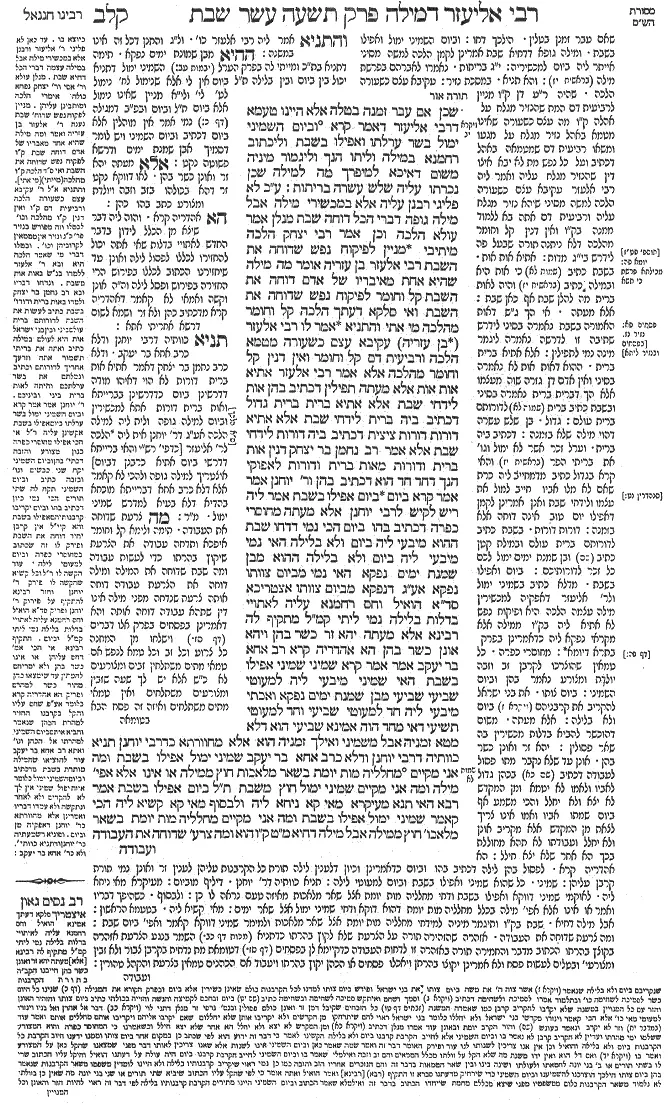
Shabbat 132a - Guemara
שכן אם עבר זמנה בטלה אלא היינו טעמא דרבי אליעזר דאמר קרא (ויקרא יב, ג) וביום השמיני ימול בשר ערלתו ואפילו בשבת וליכתוב רחמנא במילה וליתו הנך וליגמור מיניה משום דאיכא למיפרך מה למילה שכן נכרתו עליה שלש עשרה בריתות:
ע"כ לא פליגי רבנן עליה אלא במכשירי מילה אבל מילה גופה דברי הכל דוחה שבת מנלן אמר עולא הלכה וכן אמר רבי יצחק הלכה מיתיבי מניין לפיקוח נפש שדוחה את השבת רבי אלעזר בן עזריה אומר מה מילה שהיא אחת מאיבריו של אדם דוחה את השבת קל וחומר לפיקוח נפש שדוחה את השבת ואי סלקא דעתך הלכה קל וחומר מהלכה מי אתי והתניא אמר לו רבי אלעזר (בן עזריה) עקיבא עצם כשעורה מטמא הלכה ורביעית דם קל וחומר ואין דנין קל וחומר מהלכה אלא אמר רבי אלעזר אתיא אות אות אלא מעתה תפילין דכתיב בהן אות לידחי שבת אלא אתיא ברית ברית גדול דכתיב ביה ברית לידחי שבת אלא אתיא דורות דורות ציצית דכתיב ביה דורות לידחי שבת אלא אמר רב נחמן בר יצחק דנין אות ברית ודורות מאות ברית ודורות לאפוקי הנך דחד חד הוא דכתיב בהן ור' יוחנן אמר אמר קרא ביום ביום אפילו בשבת אמר ליה ריש לקיש לרבי יוחנן אלא מעתה מחוסרי כפרה דכתיב בהו ביום הכי נמי דדחו שבת ההוא מיבעי ליה ביום ולא בלילה האי נמי מיבעי ליה ביום ולא בלילה ההוא מבן שמנת ימים נפקא האי נמי מביום צוותו נפקא אע"ג דנפקא מביום צוותו אצטריכא סד"א הואיל וחס רחמנא עליה לאתויי בדלות בלילה נמי ליתי קמ"ל מתקיף לה רבינא אלא מעתה יהא זר כשר בהן ויהא אונן כשר בהן הא אהדריה קרא רב אחא בר יעקב אמר אמר קרא שמיני שמיני אפילו בשבת האי שמיני מיבעי ליה למעוטי שביעי שביעי מבן שמנת ימים נפקא ואכתי מיבעי ליה חד למעוטי שביעי וחד למעוטי תשיעי דאי מחד הוה אמינא שביעי הוא דלא מטא זמניה אבל משמיני ואילך זמניה הוא אלא מחוורתא כדרבי יוחנן תניא כוותיה דרבי יוחנן ודלא כרב אחא בר יעקב שמיני ימול אפילו בשבת ומה אני מקיים (שמות לא, יד) מחלליה מות יומת בשאר מלאכות חוץ ממילה או אינו אלא אפי' מילה ומה אני מקיים שמיני ימול חוץ משבת ת"ל ביום אפילו בשבת אמר רבא האי תנא מעיקרא מאי קא ניחא ליה ולבסוף מאי קא קשיא ליה הכי קאמר שמיני ימול אפילו בשבת ומה אני מקיים מחלליה מות יומת בשאר מלאכו' חוץ ממילה אבל מילה דחיא מ"ט ק"ו הוא ומה צרע' שדוחה את העבודה
Comments from Rashi on Masechet Shabbat Page 132a
שאם עבר זמנן בטלין . הילכך דחו: וביום השמיני ימול ואפילו בשבת . ומילה גופה דדחיא שבת אמרינן לקמן הלכה למשה מסיני אייתר ליה ביום למכשיריה: י"ג בריתות . נאמרו לאברהם בפרשת מילה (בראשית יז): והא תניא . במסכת נזיר: עקיבא עצם כשעורה הלכה . שהיה ר"ע דן ק"ו מניין לרביעית דם המת שהנזיר מגלח על אהלה ק"ו מה עצם כשעורה שאינו מטמא באהל נזיר מגלח על מגעו ומשאו רביעית דם שמטמאה באהל דכתיב ועל כל נפש מת לא יבא אינו דין שהנזיר מגלח עליה ואמר ליה רבי אלעזר עקיבא עצם כשעורה הלכה למשה מסיני שיהא נזיר מגלח עליה ורביעית דם אתה בא ללמוד ממנה בק"ו ואין דנין קל וחומר מהלכה דלא ניתנה תורה שבעל פה לידרש בי"ג מדות: אתיא אות אות . בשבת כתיב (שמות לא) כי אות היא ובמילה כתיב (בראשית יז) והיה לאות ברית מה להלן שבת אף כאן שבת: אלא מעתה . אי הך ג"ש דאות האמורה בשבת נאמרה בסיני לידרש שתיבה זו לדרשה נאמרה ליגמר מינה נמי לתפילין: אלא אתיא ברית ברית . ההוא דאות אות לא נאמרה בסיני ואין אדם דן גזרה שוה מעצמו אלא הך דברית ברית נאמרה בסיני ובשבת כתיב ברית (שמות לא) לדורותם ברית עולם: גדול . בן שלש עשרה דהוי מילה שלא בזמנה: דכתיב ביה ברית . וערל זכר אשר לא ימול וגו' את בריתי הפר (בראשית יז) והאי קרא בגדול כתיב מדמחייב ליה כרת שאם לא מלו אביו חייב למול את עצמו ולידחי שבת ואנן אמרינן לקמן דאפילו יום טוב אינה דוחה אלא בזמנה: דורות דורות . בשבת כתיב לדורותם ברית עולם ובמילת קטן כתיב (שם) ובן שמנת ימים ימול לכם כל זכר לדורותיכם: ביום ואפילו בשבת . מדלא כתיב בשמיני ימול ולר' אליעזר דאפקיה למכשירין מילה עצמה הלכה היא ופיקוח נפש לא אתיא ליה בק"ו ממילה אלא מקראי נפקא ליה כדאמרינן בפרק בתרא דיומא: מחוסרי כפרה . כל טמאין שהוצרכו לקרבן זב וזבה יולדת ומצורע נאמר בהן וביום השמיני: ביום צותו . את בני ישראל להקריב את קרבניהם (ויקרא ז) ביום ולא בלילה: אלא מעתה . משום דהוכשר להביא בדלות מכשירין בה שאר פסולין: יהא זר ואונן כשר בהן . אונן עד שלא נקבר מתו פסול לעבודה דכתיב (שם כא) בכהן גדול לאביו ולאמו לא יטמא ומן המקדש לא יצא ולא יחלל והכי משמע אף ביום שמתו אביו ואמו אינו צריך לצאת מן המקדש אלא מקריב אונן ולא יחלל ועבודתו לא תהא מחוללת בכך הא אחר שלא יצא חילל: הא אהדריה קרא . לפסול בהן לילה דכתיב בהו וביום כדאמרינן וכיון דלענין לילה תורת כל הקרבנות עליהן לענין זר ואונן נמי תורת קרבן עליהן: שמיני . כל שהוא שמיני ואפילו בשבת וביום למעוטי לילה: תניא כוותיה דר' יוחנן . דיליף מוביום: מעיקרא מאי ניחא ליה . לאוקמי שמיני דווקא ואפילו בשבת ודחי מחלליה מות יומת אצל שאר מלאכות מאיזה טעם נראה לו כן: ולבסוף . כשהיפך דבריו ואמר או אינו אלא אפי' מילה בכלל מחלליה מות יומת דהוא דוקא ודחי שמיני ימול אצל שאר ימים: מאי קשיא ליה . בטעמא הראשון: אבל מילה דחיא . שבת בק"ו ותיגמר מיניה למידחי מחלליה מות יומת אצל שאר מלאכות ולמימר שמיני דווקא קאמר ואפי' ביום שבת: ומה צרעת שדוחה את העבודה . אזהרה שהזהירה תורה על הצרעת שלא לקוץ בהרתו כדתניא (מכות דף כב.) השמר בנגע הצרעת אזהרה בקוצץ בהרתו הכתוב מדבר והחמירה תורה באזהרה זו לדחות העבודה כדקיימא לן בפסחים (דף סז.) דטומאת מת נדחית בקרבן צבור ולא זבין ומצורעי' ובטלים לעשות פסח ולא אמרינן יקוצו בהרתן ויאכלו פסחים או הכהן יקוץ בהרתו ויעבוד אם הכהנים טמאין בצרעת והקהל טהורין:
Comments from Tosafot - Shabbat 132a
והתניא אמר ליה רבי אלעזר כו' . ול"ג והתנן דכל זה אינו במשנה: אלא מעתה יהא זר ואונן כשר בהן . לאו דווקא נקט זר דהא בכולהו בזב וזבה ויולדת ומצורע כתב בהו כהן: ההיא מבן שמונת ימים נפקא . תימה דתניא בת"כ ומייתי לה בפרק הערל (יבמות עב:) השמיני ימול דתניא יכול בין ביום ובין בלילה ת"ל ביום אין לי אלא שנימול לח' נימול לט' לי' ולי"א מניין שאינו נימול אלא ביום ת"ל וביום ובפ"ב דמגילה (דף כ:) נמי אמר אין מוהלין אלא ביום דכתיב וביום השמיני ויש לומר דסמיך אבן שמנת ימים ודרשא פשוטה נקט: הא אהדריה קרא . והוה ליה דבר שיצא מן הכלל לידון בדבר החדש לאתויי בדלות שאי אתה יכול להחזירו לכללו לפסול לילה ואונן עד שיחזירנו הכתוב לכללו בפירוש הרי החזירה בפירוש ופסל לילה וה"ה אונן וקשה ואמאי לא קאמר דאהדריה קרא מדכתיב כהן ולא זר ושמא לשום דרשא אחריתי אתא: תניא כוותיה דרבי יוחנן ודלא כרב אחא בר יעקב . ודלא כרב נחמן בר יצחק דאמר אתיא אות ברית דורות לא הוי דאיהו מודה דדרשינן ביום כדדרשינן בברייתא ואות ברית דורות אתא למכשירין וביום למילה גופה ולית ליה למילה הלכה אע"ג דר' יוחנן אית ליה הלכה לר' אליעזר [כדפי' רש"י והאי ברייתא דדרשי ביום אתיא כרבנן דביום] איצטריך למילה גופה ולהכי לא קאמר אלא דלא כרב אחא דברייתא מוכחא בהדיא דלא בעיא למדרש שמיני ימול. מ"ר: מה צרעת שדוחה את העבודה . תימה ולימא קל וחומר איפכא ותדחה עבודה את הצרעת שיקוץ בהרתו כדי לעשות עבודה ומה שבת שדוחה את המילה ומילה דוחה את הצרעת עבודה דוחה אותה צרעת שנדחה מפני מילה אינו דין שתהא עבודה דוחה אותה והא דאמרינן בפסחים בפרק אלו דברים (דף סז.) וישלחו מן המחנה כל צרוע וכל זב וכל טמא לנפש אם טמאי מתים משתלחין זבים ומצורעים לא כ"ש אלא יש לך שעה שזבין ומצורעים משתלחים ואין טמאי מתים משתלחים ואיזה זה פסח הבא בטומאה אלמא דצרעת דוחה את העבודה נימא דהיינו כל זמן שהיא עליו ובק"ו נילף שיקוץ בהרתו כדי לעשות עבודה ועוד קשה לימא רציחה תוכיח שדוחה את העבודה ואינו דוחה שבת אף אני אביא מילה וכי תימא מילה עדיפא שדוחה צרעת הדוחה את העבודה אכתי נימא קבורת מת מצוה תוכיח דעדיפא ממילה שדוחה את המילה מולאחותו הדוחה את הצרעת הדוחה את העבודה הדוחה את השבת אפילו הכי לא דחיא שבת ויש לומר דהכי נמי הוה מצי למימר איפכא ורציחה תוכיח או קבורת מת מצוה תוכיח אלא דניחא ליה לומר שיהא דוחה דנפקא ליה מביום דמילה דחיא שבת ועושה מתחילה ק"ו להעמיד דבריו וסותרו אחר כך שאינו ק"ו כלל ופריך ליה מיניה וביה:
Shabbat 132a - Mishnah translated into english
in each, as if its time passed, it is void, unlike the mitzva of circumcision, which can be fulfilled at a later date if the child is not circumcised on the eighth day. Rather, this is the reason for the opinion of Rabbi Eliezer, as the verse says: “And on the eighth day the flesh of his foreskin shall be circumcised” (Leviticus 12:3), indicating that he is circumcised on the eighth day even if it falls on Shabbat.
The Gemara asks: And let the Torah write this principle only with regard to the mitzva of circumcision, and let these other mitzvot come and derive their halakhot from it. The Gemara answers: Because this suggestion can be refuted: What is unique about the mitzva of circumcision? That thirteen covenants were established over it, as the word covenant is mentioned thirteen times in the passage dealing with the circumcision of Abraham (Genesis 17). Owing to its great significance, other mitzvot cannot be derived from it.
The Gemara departs from the facilitators of circumcision to the halakha of circumcision itself and asks: The Rabbis only disagree with Rabbi Eliezer with regard to actions that facilitate circumcision, which, in their view, do not override Shabbat; however, with regard to circumcision itself, everyone agrees that it overrides Shabbat. From where do we derive this halakha? Ulla said: This is a halakha transmitted to Moses from Sinai, but there is no biblical basis for it. And so too, Rabbi Yitzḥak said: It is a halakha transmitted to Moses from Sinai.
The Gemara raises an objection from that which was taught in the Tosefta: From where is it derived that saving a life overrides Shabbat? Rabbi Elazar ben Azarya says it is derived from the mitzva of circumcision: Just as circumcision, which pertains to only one of a person’s limbs, overrides Shabbat, all the more so it is an a fortiori inference that saving a life, which is a mitzva that pertains to the entire person, overrides Shabbat.
And if it should enter your mind to say that circumcision may be performed on Shabbat based on a halakha transmitted to Moses from Sinai, is an a fortiori inference derived from a halakha transmitted to Moses from Sinai? Wasn’t it taught explicitly in a baraita that an a fortiori inference cannot be derived from a halakha transmitted to Moses from Sinai? Rabbi Akiva sought to derive that a nazirite who comes into contact with a quarter log of blood from a corpse becomes ritually impure and is required to shave his hair. He sought to do this based on an a fortiori inference from the halakha of the bone from a dead person the size of a grain of barley, as he had a received tradition that a nazirite is required to shave his hair due to that contact. Rabbi Elazar ben Azarya said to him: Akiva, the halakha that a bone the size of a grain of barley transmits ritual impurity is a halakha transmitted to Moses from Sinai, and you would derive from it that a quarter of a log of blood transmits ritual impurity based upon an a fortiori inference, and one does not derive an a fortiori inference from a halakha transmitted to Moses from Sinai. The Tosefta explicitly states that Rabbi Elazar ben Azarya himself derived an a fortiori inference from the halakha of circumcision on Shabbat. Clearly, then, it is derived from the Torah itself and not from a halakha transmitted to Moses from Sinai.
Rather, Rabbi Elazar said: This halakha is derived by means of a verbal analogy between the word sign that appears with regard to circumcision: “And you shall be circumcised in the flesh of your foreskin; and it shall be a sign of the covenant between Me and you” (Genesis 17:11), and sign that appears with regard to Shabbat: “However, you shall keep My Shabbatot, for it is a sign between Me and you throughout your generations” (Exodus 31:13). From this verbal analogy, it is derived that circumcision, which is a sign, may be performed even on Shabbat, which is itself a sign.
The Gemara asks: But if what you say is so, phylacteries, with regard to which the term sign is also written: “And it shall be for a sign on your hand and for frontlets between your eyes” (Exodus 13:16), should also override Shabbat, and they should be donned on that day.
Rather, this principle is derived by means of a different verbal analogy from the word covenant that appears with regard to circumcision: “And you shall be circumcised in the flesh of your foreskin; and it shall be a sign of the covenant between Me and you” (Genesis 17:11), and the word covenant that appears with regard to Shabbat: “The children of Israel shall keep the Shabbat, to observe the Shabbat throughout their generations for a perpetual covenant” (Exodus 31:16).
The Gemara raises a difficulty: If this is so, then the circumcision of an adult should also be permitted on Shabbat and it should not be limited to a child on the eighth day, as the term covenant is written with regard to him as well, as it applies to any Jewish male not yet circumcised. Therefore, let his circumcision override Shabbat. The halakha, however, is that only circumcision at its proper time on the eighth day overrides Shabbat.
Rather, this halakha is derived by means of a verbal analogy between the word generations that appears with regard to Shabbat: “Throughout their generations for a perpetual covenant” (Exodus 31:16), and the word generations that appears with regard to circumcision: “And I shall establish My covenant between Me and you, and between your seed after you throughout their generations, for an everlasting covenant” (Genesis 17:7).
The Gemara asks: If so, let ritual fringes too, with regard to which the term generations is also written, override Shabbat, and it should be permitted to affix ritual fringes to a garment on Shabbat.
Rather, Rav Naḥman bar Yitzḥak said: This halakha is derived not from one common word alone, but one derives it based upon the three words sign, covenant, and generations that appear with regard to circumcision, from sign, covenant, and generations that appear with regard to Shabbat, to the exclusion of these, i.e., ritual fringes and phylacteries, that with regard to each of them, one of these is written but not all three words together.
And Rabbi Yoḥanan said: The verse says: “And on the eighth day…shall be circumcised” (Leviticus 12:3), which means that the child is circumcised on the eighth day whenever it occurs, even on Shabbat.
Reish Lakish said to Rabbi Yoḥanan: But if what you say is so, then, with regard to those lacking atonement, such as a zav or a healed leper, who must after their immersion still bring an atonement offering in order to complete their purification process, with regard to whom the term on the day is also written, as in the verse: “And on the eighth day he shall take two he-lambs without blemish, and one ewe-lamb of the first year without blemish” (Leviticus 14:10), sacrificing their atonement offerings should also override Shabbat. Rabbi Yoḥanan responded: That verse is necessary to teach that the sacrifice must be brought during the day and not at night.
Reish Lakish asked: This verse with regard to the mitzva of circumcision is also necessary to teach that circumcision must be performed during the day and not at night. Rabbi Yoḥanan replied: That is derived from a different verse, which states: “And he that is eight days old shall be circumcised among you throughout your generations” (Genesis 17:12). That circumcision must take place during the day is derived from that verse.
Reish Lakish says: That matter, that the atonement offering must be sacrificed during the day, can also be derived from a different verse, as it is stated: “This is the law of the burnt-offering, of the meal-offering, and of the sin-offering, and of the guilt-offering, and of the consecration-offering, and of the sacrifice of the peace-offerings; which the Lord commanded Moses at Mount Sinai on the day He commanded the children of Israel to present their offerings to the Lord in the wilderness of Sinai” (Leviticus 7:37–38), and from here it is derived that all offerings are sacrificed by day and not at night.
The Gemara answers: Although this halakha is derived from: “On the day He commanded,” an additional source is necessary for those lacking atonement. It might have entered your mind to say that since the Torah shows him mercy by allowing him to bring an offering of poverty, as if one cannot afford to sacrifice the regular atonement offering, the Torah enables him to sacrifice a less costly one, let him also bring it at night, as perhaps the Torah shows him mercy and allows him to hasten his atonement. Therefore, it teaches us that he too must bring his offering only by day and not at night.
Ravina strongly objects to this reasoning: But if what you say is so, that the Torah has compassion on a person lacking atonement and is lenient with regard to the halakhot of the atonement offering, a non-priest should be fit to sacrifice them, and similarly, a priest who is an acute mourner, i.e., one whose relative died that same day and has not yet been buried, should be fit to sacrifice them. The Gemara answers: The verse has restored this. The additional verse that teaches that even one lacking atonement must sacrifice during the day, also teaches that the Torah was lenient with regard to this offering only in the ways explicitly stated in the Torah.
Rav Aḥa bar Ya’akov said: There is a different proof from the Torah that circumcision is performed even on Shabbat, for the verse said: “On the eighth day,” underscoring that circumcision is performed specifically on the eighth day and indicating that it is performed even on Shabbat.
The Gemara raises a difficulty: This usage of the term eighth is necessary to exclude the seventh day, i.e., a child may not be circumcised before the eighth day. The Gemara answers: The fact that one may not circumcise on the seventh day is derived from a different verse, as it is stated: “And he that is eight days old shall be circumcised among you throughout your generations” (Genesis 17:12).
The Gemara raises a further difficulty: Both verses are still necessary, one to exclude the seventh day and one to exclude the ninth day. As if it were derived from one verse alone, I would have said: It is on the seventh day that one may not circumcise, since the time to circumcise this child has not yet arrived and the obligation of circumcision is not yet in effect; however, from the eighth day and onward is its time, and therefore it is permissible to postpone a circumcision until the ninth day. No answer was found to this question, and the Gemara concludes: Rather, the derivation is clear according to Rabbi Yoḥanan.
It was taught in a baraita in accordance with the opinion of Rabbi Yoḥanan and not in accordance with the opinion of Rav Aḥa bar Ya’akov, as the tanna interprets the phrase: “On the eighth day he shall be circumcised” to mean that the circumcision must be performed even on Shabbat. And how do I fulfill the prohibition against performing prohibited labor explicit in the Torah in the verse: “And you shall guard the Shabbat, for it is holy to you; he who desecrates it shall surely die” (Exodus 31:14)? That is referring to other prohibited labors besides circumcision. The tanna questions his previous statement: Or perhaps that is not the case, and the prohibition of performing prohibited labor on Shabbat includes even circumcision, and, on the contrary, how do I fulfill the verse: “On the eighth day he shall be circumcised”? It applies when the eighth day is any day other than Shabbat. The verse states: “On the day,” meaning on that very day when he turns eight days old, even on Shabbat. The tanna of this baraita rejects Rav Aḥa bar Ya’akov’s proof and accepts Rabbi Yoḥanan’s assertion that the phrase “On the day” conclusively establishes that circumcision is performed even on Shabbat.
With regard to this baraita, Rava said: Initially, what did this tanna find acceptable, and ultimately, what did he find difficult? Initially he suggested that: “On the eighth day he shall be circumcised” is a valid source for the fact that circumcision overrides Shabbat, but ultimately, he deemed that difficult and turned to an alternative source, yet provided no reason, neither for his initial statement nor for his second statement.
Rather, we can explain that this is what he is saying: “On the eighth day he shall be circumcised” applies even on Shabbat. And how do I fulfill: “He who desecrates it shall surely die”? That is referring to the other prohibited labors besides circumcision; however, circumcision overrides Shabbat.
What is the reason for this? It is derived by means of an a fortiori inference: Just as leprosy, which overrides the Temple service, as a priest who is a leper may not serve in the Temple and it is prohibited to cut off the symptoms of leprosy,
Traduction : The William Davidson digital edition of the Koren Noé Talmud, with commentary by Rabbi Adin Even-Israel Steinsaltz.