 Talmud Bavli
Shabbat 90a : Youtube
Daf TubeYoutube
3 video classes :
Shabbat Page 90a
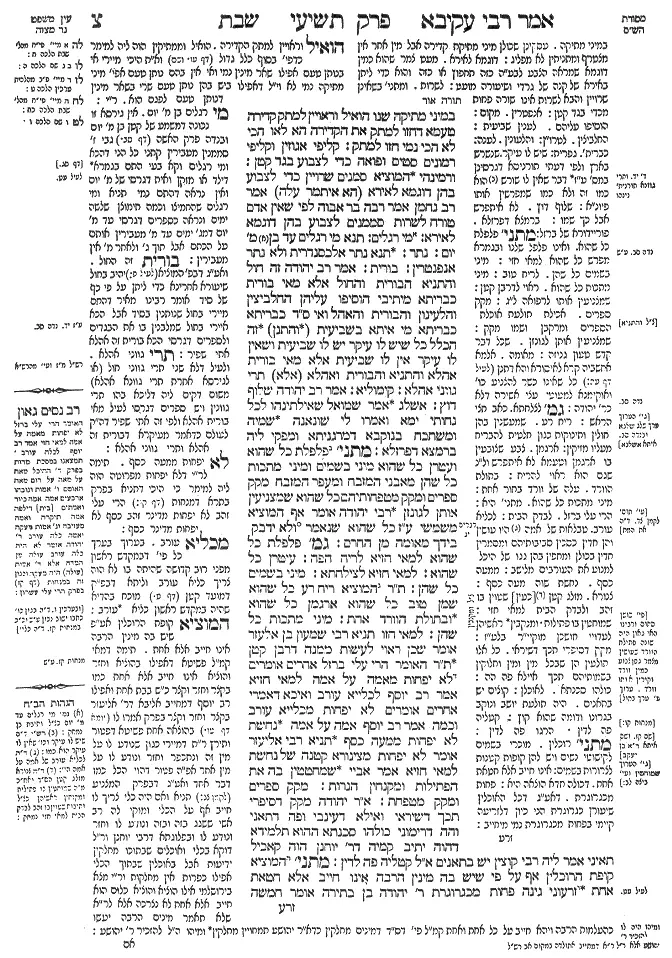
Shabbat 90a - Guemara
במיני מתיקה שנו הואיל וראויין למתק קדירה טעמא דחזו למתק את הקדירה הא לאו הכי לא הכא נמי חזו למתק:
קליפי אגוזין וקליפי רמונים סטיס ופואה כדי לצבוע בגד קטן:
ורמינהי המוציא סמנים שרויין כדי לצבוע בהן דוגמא לאירא (הא איתמר עלה) אמר רב נחמן אמר רבה בר אבוה לפי שאין אדם טורח לשרות סממנים לצבוע בהן דוגמא לאירא:
מי רגלים:
תנא מי רגלים עד בן מ' יום:
נתר:
תנא נתר אלכסנדרית ולא נתר אנפנטרין:
בורית:
אמר רב יהודה זה חול והתניא הבורית והחול אלא מאי בורית כבריתא מיתיבי הוסיפו עליהן החלביצין והלעינון והבורית והאהל ואי ס"ד כבריתא כבריתא מי איתא בשביעית (והתנן) זה הכלל כל שיש לו עיקר יש לו שביעית ושאין לו עיקר אין לו שביעית אלא מאי בורית אהלא והתניא והבורית ואהלא (אלא) תרי גווני אהלא:
קימוליא:
אמר רב יהודה שלוף דוץ:
אשלג אמר שמואל שאילתינהו לכל נחותי ימא ואמרו לי שונאנה שמיה ומשתכח בנוקבא דמרגניתא ומפקי ליה ברמצא דפרזלא:
מתני׳ פלפלת כל שהוא ועטרן כל שהוא מיני בשמים ומיני מתכות כל שהן מאבני המזבח ומעפר המזבח מקק ספרים ומקק מטפחותיהם כל שהוא שמצניעין אותן לגונזן רבי יהודה אומר אף המוציא משמשי ע"ז כל שהוא שנאמר (דברים יג, יח) ולא ידבק בידך מאומה מן החרם:
גמ׳ פלפלת כל שהוא למאי חזיא לריח הפה:
עיטרן כל שהוא:
למאי חזיא לצילחתא:
מיני בשמים כל שהן:
ת"ר המוציא ריח רע כל שהוא שמן טוב כל שהוא ארגמן כל שהוא ובתולת הוורד אחת:
מיני מתכות כל שהן:
למאי חזו תניא רבי שמעון בן אלעזר אומר שכן ראוי לעשות ממנה דרבן קטן ת"ר האומר הרי עלי ברזל אחרים אומרים לא יפחות מאמה על אמה למאי חזיא אמר רב יוסף *לכלייא עורב ואיכא דאמרי אחרים אומרים לא יפחות מכלייא עורב וכמה אמר רב יוסף אמה על אמה נחשת לא יפחות ממעה כסף תניא רבי אליעזר אומר לא יפחות מצינורא קטנה של נחשת למאי חזיא אמר אביי שמחטטין בה את הפתילות ומקנחין הנרות:
מקק ספרים ומקק מטפחת:
א"ר יהודה מקק דסיפרי תכך דשיראי ואילא דעינבי ופה דתאני והה דרימוני כולהו סכנתא ההוא תלמידא דהוה יתיב קמיה דר' יוחנן הוה קאכיל תאיני אמר ליה רבי קוצין יש בתאנים א"ל קטליה פה לדין:
מתני׳ המוציא קופת הרוכלין אף על פי שיש בה מינין הרבה אינו חייב אלא חטאת אחת זרעוני גינה פחות מכגרוגרת ר' יהודה בן בתירה אומר חמשה
Comments from Rashi on Masechet Shabbat Page 90a
במיני מתיקה . עסקינן שכולן מיני מתיקת קדירה אבל מין אחר אין מצטרף ומתניתין לא מפליג: דוגמא לאירא . מעט צמר שהוא כמין דוגמא שמראה הצבע לבע"ה כזה תחפוץ או כזה והוא כדי ליתן באירא של קנה של גרדי ושיעורה מועט: לשרות . ומתני' בשאינן שרויין והבא לשרות אינו שורה פחות מכדי בגד קטן: אנפטרין . מקום: הוסיפו עליהם . לענין שביעית: החלביצין . לטרו"ן: והלעונין . לענה: כברית' . גפרית: שיש לו עיקר . שנשרש בארץ ולפי דעתי תורניסא דגרסינן במס' ע"ז דבר שאין לו שורש הוא כמו זה ולא כמו שמפרשין אותו פיונ"א: שלוף דוץ . לא איתפרש אבל כך שמו: ברמצא דפרזלא . פוריידורא של ברזל: מתני' פלפלת כל שהוא . ואינו פלפל שלנו ובגמרא מפרש כל שהוא למאי חזי: מיני בשמים כל שהן . לריח טוב: מיני מתכות כל שהוא . ראוי לדרבן קטן: שמצניעין אותו לרפואה ל"ג: מקק ספרים . אכילת תולעת אוכלת הספרים ומרקבן ושמו מקק: שמצניעין אותן לגונזן . שכל דבר קדש טעון גניזה: מאומה . אלמא אחשביה קרא לאיסורא והא דתנן (לעיל שבת דף עה.) כל שאינו כשר להצניע כו' ואוקימנא למעוטי עצי אשירה דלא כר' יהודה: גמ' לצלחתא . כאב חצי הראש: ריח רע . שמעשנין בהן חולין ותינוקות כגון חלטית להבריח מעליו מזיקין: ארגמן . צבע שצובעין בו ארגמן וטעמא לא איתפרש ול"נ שגם הוא ראוי להריח: בתולת הוורד . עלה של וורד בחור אחת: מיני מתכות כל שהוא . מתני' היא: הרי עלי ברזל . לבדק הבית: לכליא עורב . טבלאות של אמה היו עושין והן חדין כסכין סביבותיהם ומסמרין חדין בכולן ומחפין בהן גגו של היכל למנוע את העורבים מלישב: ממעה כסף . נחשת שוה מעה כסף: צנורא . מזלג קטן [כעין] שטוין בו זהב ולבדק הבית למאי חזי: שמוחטין בו פתילות . ומנקבין ראשיהן לעדויי חושכן מוקיי"ר: מקק דסיפרי תכך דשיראי . כל אלו תולעין הן שבכל מין ומין וחלוקין בשמותיהם תכך איילא פה הה: כולהו סכנתא . לאוכלן: קוצים יש בתאנים . היה תולעת יושב ונוקב בגרונו ודומה שהוא קוץ: קטליה פה לדין . הרגו פה לדין: מתני' רוכלין . מוכרי בשמים לקישוטי נשים ויש להן קופות קטנות לצרורות בשמים: אינו חייב אלא חטאת אחת . דכולה חדא הוצאה היא: פחות מכגרוגרת . דאע"ג דכל האוכלין שיעורן כגרוגרת הני כיון דלזריעה קיימי בפחות מכגרוגרת נמי מיחייב:
Comments from Tosafot - Shabbat 90a
הואיל וראויין למתק הקדירה . הואיל וממתיקין הוה ליה למימר כדפי' בסוף כלל גדול (דף עו. ושם) וא"ת היכי מיירי אי בנותן טעם אפילו שאר מינין נמי ואי אין בהם נותן טעם אפי' מיני מתיקה נמי לא וי"ל דאפילו ביש בהן נותן טעם שרי בשאר מינין דנותן טעם לפגם הוא. ר"י: מי רגלים בן מ' יום . אין גירסא זו נכונה דמשמע של קטן בן מ' יום ובנדה פרק האשה (דף סב.) גבי ז' סממנין מעבירין קתני כל הני דהכא ומי רגלים וקא בעי התם בגמרא דילד או מזקן ואית דגרסי של מ' יום ואין נראה דהתם נמי תניא ומי רגלים שהחמיצו וכמה חימוצן שלשה ימים ונראה כספרים דגרסי עד מ' יום דמג' ימים עד מ' מעבירין אותם על הכתם אבל תוך ג' ולאחר מ' אין מעבירין: בורית זה החול . ואע"ג דבפ' המוציא (לעיל שבת פ:) יהיב בחול שיעורא אחרינא כדי ליתן על פי כף של סיד אומר רבינו מאיר דהתם מיירי בחול שנותנין בסיד אבל הכא איירי בחול שמלבנין בו את הבגדים ולספרים דגרסי הכא בורית זה אהלא אתי שפיר: תרי גווני אהלא . ולעיל דלא שני תרי גווני חול (או לגירסא אחרת תרי גוונא אהלא) משום דקים ליה דליכא בהו תרי גוונין ויש ספרים דגרסי לעיל מאי בורית אהלא ולפי זה אתי שפיר דה"ק לעולם כדאמר מעיקרא דבורית זה אהלא ותרי גווני אהלא: מכליא עורב . בערוך בערך כל פי' דבמקדש ראשון מפני רוב קדושה שהיתה בו לא הוה צריך כליא עורב וליתא דבפ"ק דמועד קטן (דף ט.) מוכח בהדיא שהיה במקדש ראשון כליא עורב: לא יפחות ממעה כסף . תימה לר"י דלא יפחות מפרוטה הוה ליה למימר כי היכי דתניא בפרק בתרא דמנחות (דף קו:) הרי עלי זהב לא יפחות מדינר זהב כסף לא יפחות מדינר כסף: המוציא קופת הרוכלין אע"פ שיש בה מינין הרבה אינו חייב אלא אחת . תימה דמאי קמ"ל פשיטא דאפילו בהוציא וחזר והוציא אינו חייב אלא אחת כמו בקצר וחזר וקצר כ"ש בבת אחת ואפילו רב יוסף דמחייב אליבא דר' אליעזר בקצר וחזר וקצר בפרק אמרו לו (יומא דף טו.) בהוצאה אחת פשיטא דפטור ותירץ ר"ת דמיירי כגון שנודע לו על מין זה ונתכפר וחזר ונודע לו על מין אחר אפ"ה פטור דהוי הכל כמו דבר אחד ואע"ג דבפרק המצניע (לקמן שבת צג:) תניא ואם היה כלי צריך לו חייב אף על הכלי ומוקי לה רב אשי ששגג בזה ובזה ונודע לו וחזר ונודע לו ובפלוגתא דרבי יוחנן ור"ל דוקא בכלי ואוכלים שבתוכו מחלקין ידיעות אבל באוכלין שבתוך הכלי אפילו כפרות אין מחלקות ור"י מצא בירושלמי אילו הוציא והוציא כלום הוא חייב אלא אחת לא נצרכה אלא לר"א שלא תאמר מינים הרבה יעשו כהעלמות הרבה ויהא חייב על כל אחת ואחת קמ"ל פי' דס"ד דמינים מחלקין כדא"ר יהושע תמחויין מחלקין ומיהו ה"ל להזכיר ר' יהושע:
Shabbat 90a - Mishnah translated into english
They taught this halakha in the case of sweet types, because they are fit to be mixed together to sweeten the food in a pot. The Gemara infers: The reason that they join together with one another is that they are suitable to sweeten the food in a pot together. However, if that is not so, then they do not join together with one another. Apparently, spices, in general, do not join together to constitute a complete measure. The Gemara answers: Here, too, the mishna is referring to a case where they are suitable to sweeten the food in a pot.
We learned in the mishna: The measure that determines liability for carrying out nutshells, pomegranate peels, safflower and madder, which are used to produce dyes, is equivalent to that which is used to dye a small garment that is placed atop a woman’s hairnet. And the Gemara raised a contradiction from what we learned elsewhere in a mishna: One who carries out herbs that were soaked in water is liable if he carried out a measure equivalent to the amount used to dye a sample the size of a stopper, for the shuttle of a loom. This refers to a small swath of wool that a weaver places on the loom, as a color sample. The herbs were soaked in water because this was how they were prepared for use as dyes. Apparently, according to this Gemara, the measure for liability is not the amount used to dye a small garment. The Gemara replies: Wasn’t it stated with regard to that mishna that Rav Naḥman said that Rabba bar Avuh said: In the case of soaked dyes, the measure for liability is smaller because a person does not go to the trouble to soak herbs just to dye a sample for the shuttle of a loom. He will only begin soaking herbs to dye a more significant garment. However, for herbs that are soaking and are ready for use as a dye, the measure for liability is smaller, i.e., sufficient to dye a sample.
The mishna mentioned abrasive materials used for laundry, among them urine. The Gemara clarifies the nature of the listed materials. The Sages taught in a baraita: The urine mentioned in the mishna is urine that is up to forty days old. After that, its acidity weakens, rendering it unsuitable for that purpose. With regard to the natron, the Sage taught in a baraita: This refers to Alexandrian natron from the city in Egypt, and not to natron from Anpantrin, which is of a different quality. With regard to the borit mentioned in the mishna, Rav Yehuda said: That is sand. The Gemara asks: Wasn’t it taught in a baraita: Borit and sand? Since both terms are listed, borit cannot be sand. Rather, what is borit? It is sulphur.
The Gemara raises an objection based on plants whose use is prohibited during the Sabbatical year. They added bulbs of ornithogalum and wormwood, and borit, and aloe. And if it would enter your mind to say that borit is sulphur, is there sulphur that is subject to the halakhot of the Sabbatical year? Didn’t we learn in a mishna that this is the principle: Anything that has a root and grows is subject to the halakhot of the Sabbatical year, and anything that does not have a root is not subject to the halakhot of the Sabbatical year. Rather, what is the borit? It is aloe. The Gemara asks: Wasn’t it taught in a baraita: And borit and aloe? Since both terms are listed, borit cannot be aloe. Rather, there are two types of aloe. One of them is called borit.
With regard to the cimolian earth mentioned in the mishna, Rav Yehuda said: This is the earth referred to as pull out stick in [shelof dotz]. With regard to the eshlag mentioned in the mishna, Shmuel said: I asked all of the seafarers with regard to the identity of eshlag, and they told me that it is called shonana, and can be found in the shell of the pearl, and is removed using an iron skewer.
MISHNA: The measure that determines liability for carrying out pepper on Shabbat is any amount. Similarly, the measure that determines liability for carrying out tar is any amount. The measure that determines liability for carrying out various kinds of perfumes and various kinds of metals is any amount. The measure that determines liability for carrying out stones of the altar or earth of the altar, sacred scrolls or their coverings that became tattered due to an insect called mekek that destroys scrolls, and mekek that destroys their coverings, is any amount. That is because people store them in order to bury them, due to their sanctity, and accord significance to even a small measure of those items. Rabbi Yehuda says: Even one who carries out accessories of idolatry on Shabbat is liable for carrying out any amount, as it is stated: “And there shall cleave nothing of the proscribed items to your hand” (Deuteronomy 13:18). Since even the smallest amount is prohibited and must be burned, any amount is significant.
GEMARA: The Gemara asks: For what use is any amount of pepper suited? The Gemara answers: For dispelling mouth odor. For what use is any amount of tar suited? It is suited for curing a headache. We learned in the mishna that one is liable for carrying out any amount of various kinds of perfumes on Shabbat. The Sages taught in a baraita: Even one who carries out an object with a foul odor on Shabbat for medicinal or similar purposes, is liable for carrying out any amount. The measure that determines liability for carrying out fine perfumed oil is any amount. The measure that determines liability for carrying out purple dye is any amount. The measure that determines liability for carrying out a virgin rosebud on Shabbat is one bud.
We learned in the mishna: The measure that determines liability for carrying out various kinds of metals is any amount. The Gemara asks: For what use is any amount of metal suited, that it renders one liable for carrying it out? It was taught in a baraita: Rabbi Shimon ben Elazar says: Because a small amount of iron is fit to make a small nail.
Since the Gemara is discussing the measure that determines liability for carrying out metal on Shabbat, it discusses the related halakhot of objects consecrated to the Temple. The Sages taught in a baraita: In the case of one who vows without specifying an amount, and says: It is incumbent upon me to donate iron to the Temple, Aḥerim say: He must donate no less than a cubit by a cubit of iron. The Gemara asks: For what use is metal that size suited? Rav Yosef said: For a raven impediment. The roof of the Temple was covered with iron surfaces with protruding nails to prevent ravens from perching there. And some say a slightly different version. Aḥerim say: He must donate no less than the iron necessary for a raven impediment. And how much iron is that? Rav Yosef said: A cubit by a cubit. One who vows to donate copper must donate no less than the value of a ma’a of silver. It was taught in a baraita that Rabbi Eliezer says: One must donate no less than the amount needed to forge a small copper hook. The Gemara asks: For what Temple use is that suited? Abaye said: They use it to scrape the wicks from the candelabrum, and clean the lamps with it.
We learned in the mishna: The measure that determines liability for carrying out sacred scrolls or their coverings that became tattered due to an insect called mekek that destroys scrolls, and another type of mekek that destroys their coverings, is any amount. Rabbi Yehuda said: These insects, the mekek that destroys scrolls, the tekhakh that attacks silk, and the ila that eats grapes, and the pe that eats figs, and the ha that eats pomegranates, all pose danger to one who swallows them. The Gemara relates: A certain student was sitting before Rabbi Yoḥanan and was eating figs. The student said to Rabbi Yoḥanan: My teacher, are there thorns in figs? Rabbi Yoḥanan said to him: The pe killed that fellow. The insect in the fig had punctured the student’s throat.
MISHNA: One who carries out a merchant’s basket, even if there are many types of spices and jewelry in it, is obligated to bring only one sin-offering, because he performed only one act of carrying out. The measure that determines liability for carrying out garden seeds on Shabbat is less than a fig-bulk. Rabbi Yehuda ben Beteira says: The measure for liability is five seeds.
Traduction : The William Davidson digital edition of the Koren Noé Talmud, with commentary by Rabbi Adin Even-Israel Steinsaltz.