 Talmud Bavli
Shabbat 100a : Youtube
Daf TubeYoutube
3 video classes :
Shabbat Page 100a
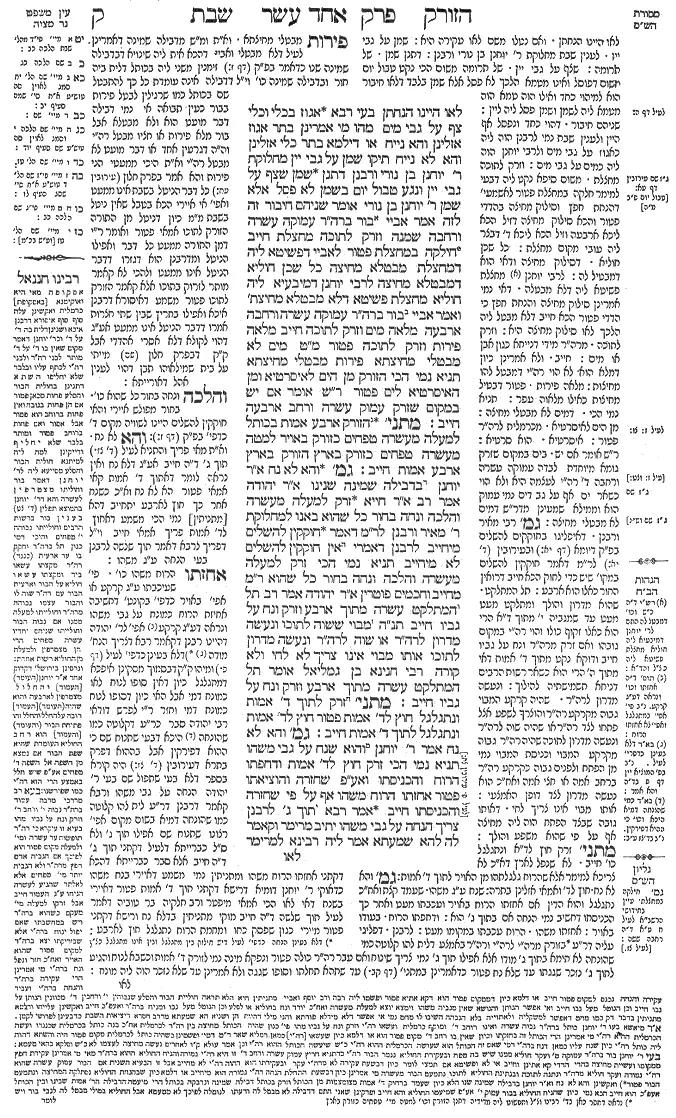
Shabbat 100a - Guemara
לאו היינו הנחתן בעי רבא אגוז בכלי וכלי צף על גבי מים מהו מי אמרינן בתר אגוז אזלינן והא נייח או דילמא בתר כלי אזלינן והא לא נייח תיקו שמן על גבי יין מחלוקת ר' יוחנן בן נורי ורבנן דתנן שמן שצף על גבי יין ונגע טבול יום בשמן לא פסל אלא שמן ר' יוחנן בן נורי אומר שניהם חיבור זה לזה אמר אביי בור ברה"ר עמוקה עשרה ורחבה שמנה וזרק לתוכה מחצלת חייב חילקה במחצלת פטור לאביי דפשיטא ליה דמחצלת מבטלא מחיצה כל שכן חוליא דמבטלא מחיצה לרבי יוחנן דמיבעיא ליה חוליא מחצלת פשיטא דלא מבטלא מחיצת' ואמר אביי בור ברה"ר עמוקה עשרה ורחבה ארבעה מלאה מים וזרק לתוכה חייב מלאה פירות וזרק לתוכה פטור מ"ט מים לא מבטלי מחיצתא פירות מבטלי מחיצתא תניא נמי הכי הזורק מן הים לאיסרטיא ומן האיסרטיא לים פטור ר"ש אומר אם יש במקום שזרק עמוק עשרה ורחב ארבעה חייב:
מתני׳ הזורק ארבע אמות בכותל למעלה מעשרה טפחים כזורק באויר למטה מעשרה טפחים כזורק בארץ הזורק בארץ ארבע אמות חייב:
גמ׳ והא לא נח א"ר יוחנן בדבילה שמינה שנינו א"ר יהודה אמר רב א"ר חייא זרק למעלה מעשרה והלכה ונחה בחור כל שהוא באנו למחלוקת ר' מאיר ורבנן לר"מ דאמר חוקקין להשלים מיחייב לרבנן דאמרי אין חוקקין להשלים לא מיחייב תניא נמי הכי זרק למעלה מעשרה והלכה ונחה בחור כל שהוא ר"מ מחייב וחכמים פוטרין א"ר יהודה אמר רב תל המתלקט עשרה מתוך ארבע וזרק ונח על גביו חייב תנ"ה מבוי ששוה לתוכו ונעשה מדרון לרה"ר או שוה לרה"ר ונעשה מדרון לתוכו אותו מבוי אינו צריך לא לחי ולא קורה רבי חנינא בן גמליאל אומר תל המתלקט עשרה מתוך ארבע וזרק ונח על גביו חייב:
מתני׳ זרק לתוך ד' אמות ונתגלגל חוץ לד' אמות פטור חוץ לד' אמות ונתגלגל לתוך ד' אמות חייב:
גמ׳ והא לא נח אמר ר' יוחנן והוא שנח על גבי משהו תניא נמי הכי זרק חוץ לד' אמות ודחפתו הרוח והכניסתו ואע"פ שחזרה והוציאתו פטור אחזתו הרוח משהו אף על פי שחזרה והכניסתו חייב אמר רבא תוך ג' לרבנן צריך הנחה על גבי משהו יתיב מרימר וקאמר לה להא שמעתא אמר ליה רבינא למרימר
Comments from Rashi on Masechet Shabbat Page 100a
לאו היינו הנחתן . ואם נטלו משם לאו עקירה היא: שמן על גבי יין . לענין שבת מחלוקת ר' יוחנן בן נורי ורבנן: דתנן שמן . של תרומה: שצף על גבי יין . של תרומה משום הכי נקט טבול יום משום דפוסל ואינו מטמא הלכך לא פסל אלא שמן בלבד דלאו חיבור הוא למיהוי כחד ואילו הוה טמא הוה מטמא ליה לשמן ושמן פסל ליה ליין: שניהם חיבור . דהוי כחד ונפסל אף היין ולענין שבת נמי לרבנן הוה ליה כאגוז על גבי מים ולרבי יוחנן הוה ליה כמים על גבי מים: וזרק לתוכה מחצלת . משום סיפא נקט ליה דבעי למימר חלקה במחצלת פטור לאשמעי' דהנחת חפץ וסילוק מחיצה בהדדי פטור והכא סילוק מחיצה דזיל הכא ליכא ארבעה וזיל הכא ליכא ד' דבצר ליה עובי מקום מחצלת: כל שכן חוליא . דסילוק מחיצה ודאי הוא דמבטיל לה: לרבי יוחנן מחצלת פשיטא ליה דלא מבטלה . דאי נמי אמרינן סילוק מחיצה והנחת חפץ כי הדדי פטור הכא חייב דלא מבטל ליה הלכך לאו סילוק מחיצה היא: וזרק לתוכה . מרה"ר מידי דנייחא כגון אבן או מים: חייב . ולא אמרינן כיון דמלא הוא לא הוי רה"י דמבטל להו מחיצות: מלאה פירות . פטור דבטיל מחיצות כאילו מלאוה עפר: תניא נמי הכי . דמים לא מבטלי מחיצה: מן הים לאיסרטיא . מכרמלית לרה"ר פטור: איסרטיא . הוא סרטיא: ר"ש אומר אם יש . בים במקום שזרק גומא מיוחדת לבדה עמוקה עשרה ורחבה ד' רה"י לעצמה היא ולא הוי כשאר ים אף על גב דים נמי עמוק הוא וממילא שמעינן מדר"ש דמים לא מבטלי מחיצה: גמ' רבי מאיר ורבנן . דאיפליגו בחוקקים להשלים בפ"ק דיומא (דף יא:) ובעירובין (ד' יא:) לר"מ דאמר חוקקין להשלים במקו' שיש כדי לחוק הכא חייב דרואין החור כאלו הוא ארבע: תל המתלקט . שהוא מדרון והולך ומתלקט מעט מעט עד שמגביה י' מתוך ד"א הרי הוא כאלו זקוף כולו והוי רה"י במקום גובהו ואם זרק מרה"ר ונח על גביו חייב ודוקא נקט מתוך ד' אמות דאי מתוך ה' הרי הוא כשאר רשות הרבים דניחא תשמישתיה להילוך: ונעשה מדרון לרה"ר . שהיה קרקע המבוי גבוה מקרקע רה"ר והוצרך לשפע אצל פתחו לצד רה"ר או שהיה שוה לרה"ר ונעשה מדרון לתוכה שהיה רה"ר גבוה מקרקע המבוי וכניסת המבוי נמי מן הפתח ולפנים גבוה כקרקע רה"ר ברחב אמה או חצי אמה ואח"כ הוא נעשה מדרון לצד דופן האמצעי: אותו מבוי אינו צריך לחי . דאותו גובה שבצד הפתח הוה ליה מחיצה אף על פי שהוא משפע והולך: מתני' זרק חוץ לד"א ונתגלגל כו' חייב . לא שנפל לארץ דא"כ לא צריכא למימר אלא שהרוח גלגלתהו מן האויר לתוך ד' אמות: גמ' והא לא נח . חוץ לד' ואמאי אזלינן בתרה שנח ע"ג משהו . שעמד קצת ואח"כ נתגלגל והוא הדין אם אחזתן הרוח באויר ועכבתו מעט ואחר כך הכניסתו דחשיב נמי הנחה אם בתוך ג' הוא: ודחפתו הרוח . בעודו באויר: אחזתו משהו . הרוח עכבתו במקומו מעט: לרבנן . דפליגי עליה דר"ע בזורק מרה"י לרה"י ורה"ר באמצע דלית להו קלוטה כמי שהונחה לא תימא בתוך ג' מודו אלא אפילו תוך ג' נמי צריך שינוח ואם עבר רה"ר כולה פטור ונפקא מינה נמי לזורק ד' אמות וכשבא לנוח והגיע לתוך ג' נזכר שגגתו עד שלא נח פטור כדאמרינן במתני' (דף קב.) עד שתהא תחלתו וסופו שגגה ולא אמרינן עד שלא נזכר הוה ליה מונח:
Comments from Tosafot - Shabbat 100a
פירות מבטלי מחיצתא . וא"ת ומ"ש מדבילה שמינה דאמרינן לעיל דלא מבטלי ואביי דהכא אית ליה שינויא דבדבילה שמינה שנו כדאמר בפ"ק (דף ז:) זימנין משני ליה בכותל דלית ביה חור ובדבילה שמינה כו' וי"ל דדבילה אינה עומדת כל כך להתבטל שם בכותל כמו שרגילין לבטל פירות בבור כעין תבואה אי נמי דבילה דבר מועט הוא ולא מבטלא אבל בור מלא פירות או חציו מבטל רה"י וה"ה דגרעין אחד או דבר מועט לא מבטל רה"י וא"ת היכי ממעטי הני פירות והא אמר בפרק חלון (עירובין עח:) כל דבר הניטל בשבת אינו ממעט ואפי' אי איירי הכא בטבל שאין ניטל בשבת מ"מ כיון דניטל מן התורה הזורק לתוכו אמאי פטור ואומר ר"י דמן התורה ממעט כל דבר ואפילו הניטל ומדרבנן הוא דגזרו דדבר הניטל אינו ממעט ולהכי לא קאמר מותר לזרוק בתוכו אלא קאמר הזורק לתוכו פטור משמע דאיסורא דרבנן איכא ואפילו בחריץ שבין שתי חצרות אמרו דדבר הניטל אינו ממעט אע"ג דהוי לקולא דלא אסרי אהדדי אבל ק"ק דבפרק חלון (שם) מייתי על בית שמילאוהו תבן דהוי לענין אהל דאורייתא: והא לא נח . וא"ת מאי פריך והתניא לעיל (שבת ד' צז.) תוך ג' ד"ה חייב אע"ג דלא נח ואין נראה לומר דאתוך ד' אמות קאי אמאי פטור הא לא נח וא"כ כשנח אחר כך חוץ לארבע יתחייב דהא (מתניתין) נמי הכי משמע דאחוץ לד' אמות פריך אמאי חייב וי"ל דפריך לרבא דאמר תוך שלשה לרבנן בעי הנחה ע"ג משהו: והלכה ונחה בחור כל שהוא כו' . בחור מפולש איירי והאי חוקקין להשלים היינו לשוויה מקום ד' כדפי' בפ"ק (דף ז:): אחזתו הרוח משהו כו' . פי' שעיכבתו ע"ג קרקע או אפי' באויר כדפי' בקונט' דחשיבה אחיזת הרוח כמונח על גבי משהו ונראה דע"ג קרקע אפי' לר' יהודה דהיינו רבנן דקאמר רבא דצריך הנח' מודה דלא בעינן כדפי' לעיל (שבת דף פ.) ומיהו ק"ק דבסמוך מסקינן איפכא דמתגלגל כיון דאין סופו לנוח לאו כמונח דמי אבל האי כיון דסופו לנוח כמונח דמי וחזר ר"י לפרש דודאי רבי יהודה סבר כר"ע דקלוטה כמו שהונחה היכא דבעי שתנוח שם כי ההוא דפירקין אבל בההוא דפרק בתרא דעירובין (ד' צז:) היה קורא בספר דלא בעי שתפול שם בעי ר' יהודה הנחה על גבי משהו ורבא קאמר דרבנן דר"ע לית להו קלוטה כמו שהונחה דמיא בשום מקום אפי' רצונו שתנוח שם אפילו תוך ג' ולא ס"ל כברייתא דלעיל דקתני תוך ג' ד"ה חייב אלא סבר כברייתא דהכא דקתני אחזתו הרוח משהו ומתניתין נמי משמע דאיירי בנח משהו כדאוקי ר' יוחנן דומיא דרישא דקתני תוך ד' אמות פטור דאיירי בשנח דאי לאו הכי אמאי מיפטר ורב חלקיה בר טוביה דאמר לעיל תוך שלשה ד"ה חייב מוקי מתניתין בדלא נח ורישא דקתני פטור מיירי כגון שפסק כחו ומחמת הרוח נתגלגל חוץ לארבע:
Shabbat 100a - Mishnah translated into english
it is not considered its placement. However, Rava raised a dilemma: In a case where there is a nut in a vessel and the vessel is floating on water, what is the ruling? Is it permitted to lift the nut on Shabbat if one is in another domain? The two sides of the dilemma are: Do we say that we go according to the status of the nut, and it is at rest in the vessel? Or perhaps we go according to the status of the vessel, and it is not at rest. No resolution was found to this dilemma. Therefore, let it stand unresolved as well.
However, with regard to oil floating on wine, there is a dispute between Rabbi Yoḥanan ben Nuri and the Rabbis. As we learned in a mishna: In the case of oil floating on wine, and one who immersed himself during the day, i.e., one who was impure, immersed himself in a ritual bath, but will not become completely pure until sunset, touched the oil, he invalidated only the oil and not the wine. Rabbi Yoḥanan ben Nuri says: With regard to the two, i.e., the oil and the wine, they are considered to have a connection to each other. Since he made the oil impure, the wine is also impure. Their dispute is whether or not the oil is considered to be placed atop the wine.
Abaye said: In the case of a pit in the public domain that is ten handbreadths deep and precisely eight handbreadths wide, and one threw a mat into it, he is liable. However, if he divided the pit with a mat that split it in two, each one slightly less than four handbreadths wide, he is exempt because neither part is considered a private domain. The Gemara comments: According to the opinion of Abaye, for whom it is obvious that the mat eliminates the partition of the pit, all the more so that a segment of dirt thrown into a pit that is ten handbreadths deep, rendering it less than ten handbreadths, eliminates the partition, and he has no dilemma with regard to Rabbi Yoḥanan’s case. According to Rabbi Yoḥanan, who raised a dilemma with regard to a segment of dirt, it is obvious that a mat does not eliminate the partition.
Abaye said: With regard to a pit in the public domain that is ten handbreadths deep and four handbreadths wide and filled with water, and one threw an object into it on Shabbat, one is liable because the pit is considered a private domain. And if the pit was filled with fruit and one threw an object into it, he is exempt. What is the reason for the different rulings? Water is not significant enough to eliminate the partition; fruit eliminates the partition. This was also taught in a baraita: One who throws an object from the sea to the street or from the street to the sea is exempt because the sea is considered a karmelit, and one is not liable according to Torah law in that case. Rabbi Shimon says: If the area in the sea where he threw it is ten handbreadths deep and four handbreadths wide, he is liable, as he is considered as one who threw an object into a private domain. Apparently, the water in the sea does not eliminate the status of a private domain.
MISHNA: With regard to one who throws an object four cubits in the public domain, if the object hits the wall above ten handbreadths from the ground, which is an exempt domain, it is as if one threw it in the air, and he is exempt. If it hits the wall below ten handbreadths from the ground, it is as if he threw it and it landed on the ground, and one who throws an object four cubits and it lands on the ground is liable.
GEMARA: We learned in the mishna that if one throws an object in the public domain a distance of four cubits and it hits a wall below ten handbreadths from the ground, he is liable if he threw it. The Gemara asks: And we discussed it: How could he be liable for carrying in that case? Since the object did not come to rest on the wall, there was no placement. And Rabbi Yoḥanan said: It is with regard to the case of a juicy cake of figs that sticks to the wall when thrown against it that we learned in the mishna.
Rav Yehuda said that Rav said that Rabbi Ḥiyya said: If one threw a stone at a wall above ten handbreadths from the ground, and it went and came to rest in a hole in the wall of any size less than four handbreadths, we have come to the dispute between Rabbi Meir and the Rabbis. According to the opinion of Rabbi Meir, who said: One carves out the space to complete it, he is liable. We complete the hole by conceptually carving it to four handbreadths because doing so is theoretically possible. Since the hole is considered ten handbreadths high and four handbreadths wide, one is liable for transferring an object from a public domain to a private one. According to the opinion of the Rabbis, who say: One does not carve out the space to complete it, the thrower is not liable because the hole is actually less than four handbreadths wide at present. That was also taught in a baraita: If one threw an object above ten handbreadths, and it went and came to rest in a small hole, Rabbi Meir deems him liable, while the Rabbis deem him exempt.
Rav Yehuda said that Rav said: In the case of a mound that is an inclined plane that gradually attains a height of ten handbreadths over a horizontal space of four cubits, and one threw an object from the public domain and it came to rest atop that mound, he is liable because it is considered a partition. That was also taught in a baraita: An alleyway that is level inside and becomes an inclined or declined plane as it enters the public domain, which is higher or lower than the alleyway, or if the entrance to the alleyway is level when entering the public domain and inside it is inclined, that alleyway requires neither a post alongside its entrance or a beam across its entrance in order to distinguish it from the public domain because the incline itself is considered a partition. Rabbi Ḥanina ben Gamliel says: In the case of a mound that gradually attains a height of ten handbreadths over a horizontal space of four cubits, and one threw an object from the public domain and it came to rest atop that mound, he is liable.
MISHNA: If one threw an object in the public domain, intending for it to land within four cubits, meaning that he had no intention of violating the Torah prohibition of carrying, and the object rolled and went beyond four cubits, he is exempt. However, if one threw an object with the intention of it landing beyond four cubits, and the object rolled back within four cubits, he is liable from when he originally threw the object.
GEMARA: We learned in the mishna that if one threw an object beyond four cubits and it rolled back within four cubits, he is liable. The Gemara asks: The object did not come to rest beyond four cubits, so how can the one who threw it be liable? Rabbi Yoḥanan said: And that liability was established when the object came to rest atop something. That was also taught in a baraita: If one threw an object beyond four cubits and the wind blew it while still in the air and brought it within four cubits, he is exempt even though it, i.e., the wind, then brought it back out because the object did not come to rest in the place where it was thrown. However, if the wind seized it briefly and it stayed on the ground for a brief period of time (Tosafot), even though the wind then brought it in, the individual is liable.
Rava said: Despite the principle of lavud, which states that within three handbreadths of the ground an object is considered to be attached to it, according to the Rabbis, who maintain that an object in airspace is not considered at rest, the object must come to rest atop something to establish liability. The Gemara relates that Mareimar sat and stated this halakha. Ravina said to Mareimar:
Traduction : The William Davidson digital edition of the Koren Noé Talmud, with commentary by Rabbi Adin Even-Israel Steinsaltz.