 Talmud Bavli
Shabbat 140a : Youtube
Daf TubeYoutube
2 video classes :
Shabbat Page 140a
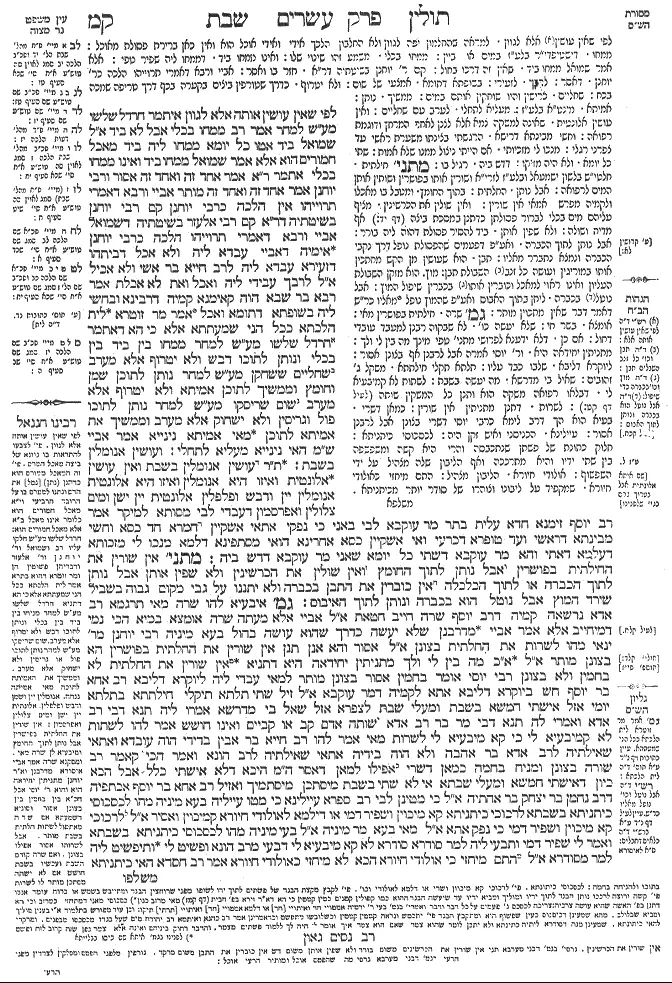
Shabbat 140a - Guemara
לפי שאין עושין אותה אלא לגוון איתמר חרדל שלשו מע"ש למחר אמר רב ממחו בכלי אבל לא ביד א"ל שמואל ביד אטו כל יומא ממחו ליה ביד מאכל חמורים הוא אלא אמר שמואל ממחו ביד ואינו ממחו בכלי אתמר ר"א אמר אחד זה ואחד זה אסור ורבי יוחנן אמר אחד זה ואחד זה מותר אביי ורבא דאמרי תרוייהו אין הלכה כרבי יוחנן קם רבי יוחנן בשיטתיה דר"א קם רבי אלעזר בשיטתיה דשמואל אביי ורבא דאמרי תרוייהו הלכה כרבי יוחנן אימיה דאביי עבדא ליה ולא אכל דביתהו דזעירא עבדא ליה לרב חייא בר אשי ולא אכיל א"ל לרבך עבידי ליה ואכל ואת לא אכלת אמר רבא בר שבא הוה קאימנא קמיה דרבינא ובחשי ליה בשופתא דתומא ואכל אמר מר זוטרא לית הלכתא ככל הני שמעתתא אלא כי הא דאתמר חרדל שלשו מע"ש למחר ממחו בין ביד בין בכלי ונותן לתוכו דבש ולא יטרוף אלא מערב שחליים ששחקן מע"ש למחר נותן לתוכן שמן וחומץ וממשיך לתוכן אמיתא ולא יטרוף אלא מערב שום שריסקו מע"ש למחר נותן לתוכו פול וגריסין ולא ישחוק אלא מערב וממשיך את אמיתא לתוכן מאי אמיתא נינייא אמר אביי ש"מ האי נינייא מעליא לתחלי:
ועושין אנומלין בשבת:
ת"ר עושין אנומלין בשבת ואין עושין אלונטית ואיזו היא אנומלין ואיזו היא אלונטית אנומלין יין ודבש ופלפלין אלונטית יין ישן ומים צלולין ואפרסמון דעבדי לבי מסותא למיקר אמר רב יוסף זימנא חדא עלית בתר מר עוקבא לבי באני כי נפקי אתאי אשקיין חמרא חד כסא וחשי מבינתא דראשי ועד טופרא דכרעי ואי אשקיין כסא אחרינא הואי מסתפינא דלמא מנכו לי מזכותא דעלמא דאתי והא מר עוקבא דשתי כל יומא שאני מר עוקבא דדש ביה:
מתני׳ אין שורין את החילתית בפושרין אבל נותן לתוך החומץ ואין שולין את הכרשינין ולא שפין אותן אבל נותן לתוך הכברה או לתוך הכלכלה אין כוברין את התבן בכברה ולא יתננו על גבי מקום גבוה בשביל שירד המוץ אבל נוטל הוא בכברה ונותן לתוך האיבוס:
גמ׳ איבעיא להו שרה מאי תרגמא רב אדא נרשאה קמיה דרב יוסף שרה חייב חטאת א"ל אביי אלא מעתה שרה אומצא במיא הכי נמי דמיחייב אלא אמר אביי מדרבנן שלא יעשה כדרך שהוא עושה בחול בעא מיניה רבי יוחנן מר' ינאי מהו לשרות את החלתית בצונן א"ל אסור והא אנן תנן אין שורין את החלתית בפושרין הא בצונן מותר א"ל א"כ מה בין לי ולך מתניתין יחידאה היא דתניא אין שורין את החלתית לא בחמין ולא בצונן רבי יוסי אומר בחמין אסור בצונן מותר למאי עבדי ליה ליוקרא דליבא רב אחא בר יוסף חש ביוקרא דליבא אתא לקמיה דמר עוקבא א"ל זיל שתי תלתא תיקלי חילתתא בתלתא יומי אזל אישתי חמשא בשבת ומעלי שבת לצפרא אזל שאל בי מדרשא אמרו ליה תנא דבי רב אדא ואמרי לה תנא דבי מר בר רב אדא שותה אדם קב או קביים ואינו חושש אמר להו לשתות לא קמיבעיא לי כי קא מיבעיא לי לשרות מאי אמר להו רב חייא בר אבין בדידי הוה עובדא ואתאי שאילתיה לרב אדא בר אהבה ולא הוה בידיה אתאי שאילתיה לרב הונא ואמר הכי קאמר רב שורה בצונן ומניח בחמה כמאן דשרי אפילו למאן דאסר ה"מ היכא דלא אישתי כלל אבל הכא כיון דאישתי חמשא ומעלי שבתא אי לא שתי בשבת מיסתכן מיסתמיך ואזיל רב אחא בר יוסף אכתפיה דרב נחמן בר יצחק בר אחתיה א"ל כי מטינן לבי רב ספרא עיילינא כי מטו עייליה בעא מיניה מהו לכסכוסי כיתניתא בשבתא לרכוכי כיתניתא קא מיכוין ושפיר דמי או דילמא לאולודי חיורא קמיכוין ואסיר א"ל לרכוכי קא מיכוין ושפיר דמי כי נפק אתא א"ל מאי בעא מר מיניה א"ל בעי מיניה מהו לכסכוסי כיתניתא בשבתא ואמר לי שפיר דמי ותבעי ליה למר סודרא סודרא לא קא מיבעיא לי דבעי מרב הונא ופשיט לי ותיפשיט ליה למר מסודרא א"ל התם מיחזי כי אולודי חיורא הכא לא מיחזי כאולודי חיורא אמר רב חסדא האי כיתניתא
Comments from Rashi on Masechet Shabbat Page 140a
לפי שאין עושין אלא לגוון . למראה שהחלמון יפה לגוון ולא החלבון הלכך אידי ואידי אוכל הוא ואין כאן ברירת פסולת מאוכל: ממחו . דישטיפדי"ר בלע"ז במים או ביין: ממחו בכלי . משמע זהו שינוי שלו: ואינו ממחו ביד . דממחו ליה שפיר טפי: אלא אמר שמואל ממחו ביד . שאין זה דרכו בחול: קם ר' יוחנן בשיטתיה דר"א . חזר בו ואסר: אביי ורבא דאמרי תרוייהו הלכה כר' יוחנן . דאסר: לרבך . לזעירי: בשופתא דתומא . אמצעי של שום: ולא יטרוף . כדרך שטורפין ביצים בקערה בכף דרך טריפה שמכה בכח: שחליים . כרישין והיו שוחקין אותם במים: ממשיך . נותן: אמיתא . מינט"א בלע"ז: אמיתא . מינט"א בלע"ז: מעליא לתחלי . לערב עם שחליים: ואין עושין אלונטית . שאינה למשקה צמא אלא לצנן לאחר המרחץ ודוגמת רפואה: וחשי מבינתא דרישא . הרגשתי בצינתו משערת ראשי עד צפרני רגלי: מנכו לי מזכיותי . אם הייתי ניצול ממנו שלא אמות: שתי כל יומא . ולא היה מזיקו: דדש ביה . רגיל בו: מתני' חילתית . חלטי"ש בלשון ישמעאל ובלע"ז לזרי"א ושורין אותו בפושרין ושותין אותן המים לרפואה: אבל נותן . החלתית: בתוך החומץ . ומטבל בו מאכלו ולקמיה מפרש אמאי אין שורין: ואין שולין את הכרשינין . מציף עליהם מים בכלי לברור פסולתן כדתנן במסכת ביצה (דף יד:) אף מדיח ושולה: ולא שפין אותן . ביד להסיר פסולת דהוה ליה בורר: אבל נותן לתוך הכברה . ואע"פ דפעמים שהפסולת נופל דרך נקבי הכברה ונמצא נתברר מאליו: תבן . הוא שעושין מן הקש מחתכין אותו במוריגין ועושה כל זנב השבולת תבן: מוץ . הוא מזקן השבולת העליון ואינו ראוי למאכל וכוברין אותו בכברין שיפול המוץ: אבל נוטל בכברה . ליתן בתוך האבוס ואע"פ שהמוץ נופל מאליו כר"ש דאמר דבר שאין מתכוין מותר: שרה . חילתית בפושרין מאי: אומצא . בשר חי: שלא יעשה כו' . לא שבקוה רבנן למעבד עובדי דחול: אם כן . דלא ידענא לפרושי מתני' טפי מינך מה בין לי ולך: מתניתין יחידאה היא . ור' יוסי אמרה אבל לרבנן אף בצונן אסור: ליוקרא דליבא . שלבו כבד עליו: תלתא תקלי חילתתא . משקל ג' זהובים: שאיל בי מדרשא . מה יעשה בשבת: לשתות לא קמיבעיא לי . דבלאו רפואה משקה הוא ותנן כל המשקין שותה (לעיל שבת דף קט:): לשרות . דתנן מתניתין אין שורין: כמאן דשרי . בעיא הוא הך דרב לימא כרבי יוסי דשרי בצונן אבל לרבנן אסור: עיילינא . הכניסני ואיש זקן היה: לכסכוסי כיתניתא . חלוק כתונת של פשתן שנתכבסה והרי היא קשה ומשפשפה בין שתי ידיו והיא מתרככה ואף הליבון שלה מצהיל על ידי השפשוף: אולודי חיורא . הליבון מצהיל: התם מיחזי כאולודי חיורא . שמקפיד על ליבונו וצוהרו של סודר יותר מכיתניתא.
Shabbat 140a - Mishnah translated into english
Because it is only made to enhance the color of the food. That does not negate the egg-white as significant food in the sense that it would be considered waste, and therefore, no actual selection is performed.
It is stated: With regard to mustard that one kneaded on Shabbat eve, on the following day, Shabbat, Rav said: One may dissolve it in wine or water with a vessel, but not with his hand, as using a vessel diverges from the normal method of preparation.
Shmuel said to him: Why may he not dissolve it with his hand? Is that to say that he dissolves it with his hand every day? If it is prepared in that manner, it is donkey food. Certainly dissolving by hand is not the manner in which mustard is prepared during the week. Therefore, dissolving mustard with a vessel should not be permitted on Shabbat. Rather, Shmuel said the opposite: He may dissolve it with his hand as a divergence from the typical method of preparation, but he may not dissolve it in the usual manner, with a vessel.
It is stated that amora’im from Eretz Yisrael also disputed this issue, as Rabbi Elazar said: Both this and that, dissolving by hand and with a vessel, are prohibited; while Rabbi Yoḥanan said: Both this and that are permitted. Abaye and Rava both said: The halakha is not in accordance with the lenient opinion of Rabbi Yoḥanan.
Subsequently, Rabbi Yoḥanan stood and adopted the opinion of Rabbi Elazar and prohibited both methods of dissolving. Rabbi Elazar stood and adopted the opinion of Shmuel, who prohibited using a vessel but permitted it by hand. Given these stances, Abaye and Rava both said: The halakha is in accordance with the opinion of Rabbi Yoḥanan, who prohibited both methods.
The Gemara relates: Abaye’s mother, actually his foster mother, prepared mustard for him, and he did not eat it. Ze’eira’s wife prepared mustard for Rav Ḥiyya bar Ashi, her husband’s student, and he did not eat it. She said to him: I made this for your rabbi and he ate it, and you do not eat it? Rava bar Shabba said: I was standing before Ravina, and they stirred mustard for him with the inner part of the garlic, and he ate it.
Mar Zutra said: The halakha is not in accordance with any of these statements. Rather, it is in accordance with this one, as it was stated: Mustard that one kneaded on Shabbat eve, on the following day he may dissolve it either by hand or with a vessel, and he may place honey in it. And when he dissolves it he may not beat it forcefully as would a craftsman, but he may mix it gently.
Cress that one ground on Shabbat eve, on the following day he may place oil and vinegar in it, and add amita into the mixture, and he may not beat it, but he may mix it. Similarly, garlic that one crushed on Shabbat eve, on the following day, he may place beans and grits in it, and he may not pound, but mix, and he may add amita into the mixture. The Gemara asks: What is amita? The Gemara answers: It is mint. Abaye said: Learn from this that adding mint is beneficial for cress.
We also learned in the mishna: One may prepare anumlin on Shabbat. The Sages taught in a baraita: One may prepare anumlin on Shabbat. However, one may not prepare aluntit. The baraita explains: And what is anumlin and what is aluntit? Anumlin is a drink, which is a mixture of wine, honey, and pepper. Aluntit is a mixture of aged wine and clear water and balsam, which they prepare for use after bathing in a bathhouse to cool down from the heat of the bathhouse. It is prohibited to prepare it on Shabbat because it is a form of remedy.
Rav Yosef said: On one occasion, I followed Mar Ukva into a bathhouse. When I exited, he came and gave me one cup of this wine to drink, and I felt its chill from the hairs on my head down to the toenails on my feet. And if he had given me another cup to drink, and if I would have survived it, I would have feared a reduction of my merit in the World-to-Come. The Gemara asks: Didn’t Mar Ukva drink this wine every day? How was he not harmed? The Gemara answers: Mar Ukva was different, as he grew accustomed to it.
MISHNA: One may not soak asafoetida in lukewarm water to prepare a medicinal drink from it; however, one may place it into vinegar like a standard spice. And one may not soak vetches in water in order to separate them from their chaff, nor rub them by hand so as to remove their chaff. However, one may place them into a sieve or into a basket, and if the chaff gets removed, so be it.
One may not sift straw in a sieve, and similarly, one may not place it on a high place so that that the chaff blows away in the wind; however, one may take the straw in a sieve and place it into the trough of an animal, and one need not be concerned if the chaff is removed in the process.
GEMARA: A dilemma was raised before the Sages: If one unwittingly soaked asafoetida on Shabbat, what is the halakha? Rav Adda from the city of Naresh interpreted it before Rav Yosef: If one soaked it, he is liable to bring a sin-offering.
Abaye said to him: But if that is so, if one soaked a piece of meat in water, would you also say that he is liable? No cooking was performed at all. Rather, Abaye said: It is prohibited by rabbinic decree, so that one will not conduct himself on Shabbat in the manner in which he conducts himself during the week.
Rabbi Yoḥanan raised a dilemma before Rabbi Yannai: What is the halakha with regard to soaking asafoetida in cold water on Shabbat? Rabbi Yannai said to him: It is prohibited. Rabbi Yoḥanan asked: Didn’t we learn in the mishna: One may not soak asafoetida in lukewarm water, indicating that it is permitted to soak it in cold water?
Rabbi Yannai said to him: If so, that is the difference between my knowledge and yours, as I am able to analyze the halakha more profoundly. In this case, the mishna is not a reliable source, as the mishna expresses an individual opinion. As it was taught in the Tosefta: One may neither soak asafoetida in hot water nor in cold water. Rabbi Yosei says: In hot water it is prohibited; in cold water it is permitted. The mishna that does not prohibit cold water is in accordance with the individual opinion of Rabbi Yosei, but the halakha is not ruled based on that opinion.
The Gemara asks: For what purpose is soaked asafoetida prepared? The Gemara answers: As a cure for heaviness of the heart. One who feels a pain in his heart drinks asafoetida. The Gemara relates: Rav Aḥa bar Yosef felt heaviness in his heart. He came before Mar Ukva to ask his advice. Mar Ukva said to him: Go drink the weight of three shekels of asafoetida in three days. He went and drank on Thursday and Shabbat eve. In the morning, he went and asked in the study hall if he could drink it on Shabbat. They said to him: The Sage from the school of Rav Adda taught, and others say, that the Sage from the school of Mar bar Rav Adda taught: A person may drink asafoetida on Shabbat, even a kav or two kav, and he need not be concerned about the decree prohibiting medicine, because asafoetida is drunk by healthy people as well.
Rav Aḥa bar Yosef said to them: With regard to drinking, I have no dilemma. When I raised a dilemma, it is with regard to soaking asafoetida; what is the halakha? Rav Ḥiyya bar Avin said to them: There was an incident that happened with me, and I came and asked that question to Rav Adda bar Ahava, and he did not have an answer for it. I came and asked Rav Huna, and he said that this is what Rav is saying: One may soak asafoetida in cold water and place it in the sun to warm it so it will be fit to drink.
The Gemara asks: Was Rav’s ruling according to the opinion of the one who permitted soaking asafoetida in cold water? The Gemara answers: His ruling could be even according to the opinion of the one who prohibited doing so; this prohibition applies only when he had not drunk asafoetida at all; however, here, since he drank it on Thursday and on Shabbat eve, if he does not drink on Shabbat he would thereby be endangered. Therefore, he is permitted even to soak the asafoetida.
The Gemara relates another incident involving Rav Aḥa bar Yosef: Rav Aḥa bar Yosef was walking and leaning on the shoulder of Rav Naḥman bar Yitzḥak, his sister’s son. Rav Aḥa said to him: When we arrive at Rav Safra’s house, bring me in. When they arrived, Rav Naḥman brought him in. Rav Aḥa then raised a dilemma before Rav Safra: What is the halakha pertaining to rubbing and thereby softening a linen shirt that is hard after being laundered on Shabbat? Does one intend to soften the shirt, and one may well do so? Or perhaps he intends to generate whiteness in the shirt, and it is prohibited? Rav Safra said to him: He intends to soften, and one may well do so.
When Rav Aḥa emerged and came from Rav Safra’s house, Rav Naḥman said to him: What dilemma did the Master raise before Rav Safra? Rav Aḥa said to him: I raised the following dilemma before him: What is the halakha pertaining to rubbing and thereby softening a linen shirt on Shabbat, and he said to me: One may well do so.
Rav Naḥman bar Yitzḥak asked: And let the Master raise the same dilemma with regard to rubbing a scarf. He replied: I did not raise the dilemma with regard to a scarf, as I raised it before Rav Huna. And he resolved it for me and said that it is permitted (Rif).
Rav Naḥman asked him: And let the Master resolve the dilemma with regard to a shirt from Rav Huna’s ruling with regard to a scarf. Rav Aḥa said to him: There is a difference between the cases: There, in the case of a shirt, it appears that one is generating whiteness, whereas here, in the case of a scarf, it does not appear that one is generating whiteness, as people are not so particular with the whiteness of a scarf, and one’s intention is undoubtedly to soften it.
Rav Ḥisda said: With regard to this linen shirt,
Traduction : The William Davidson digital edition of the Koren Noé Talmud, with commentary by Rabbi Adin Even-Israel Steinsaltz.