 Talmud Bavli
Shabbat 74a : Youtube
Daf TubeYoutube
3 video classes :
Shabbat Page 74a
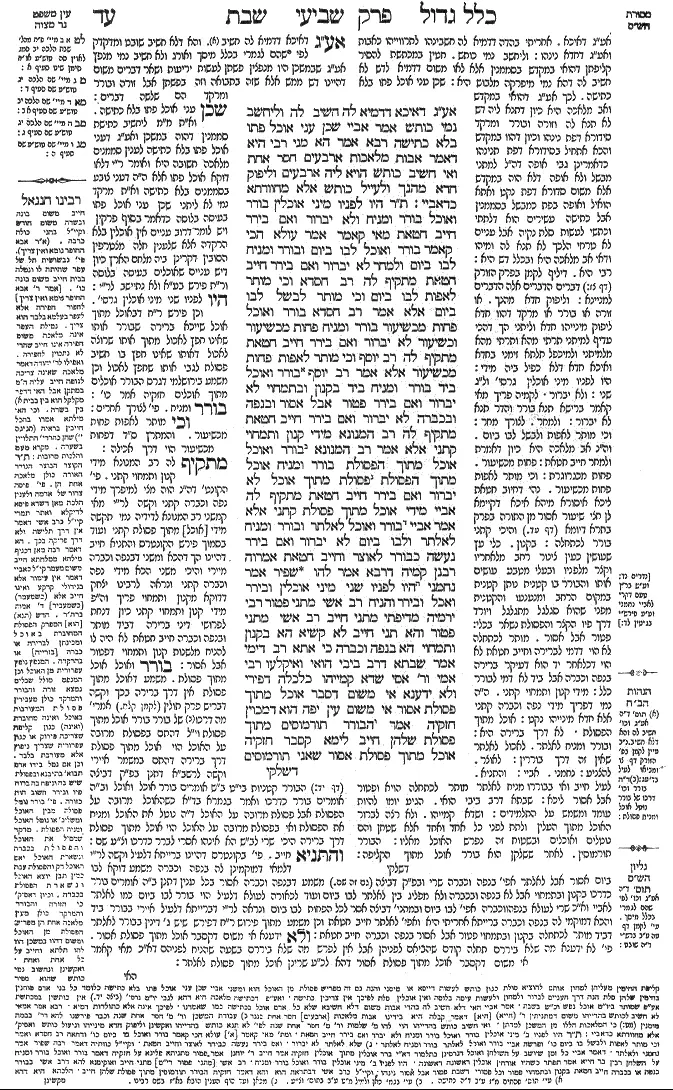
Shabbat 74a - Guemara
אע"ג דאיכא דדמיא לה חשיב לה וליחשב נמי כותש אמר אביי שכן עני אוכל פתו בלא כתישה רבא אמר הא מני רבי היא דאמר אבות מלאכות ארבעים חסר אחת ואי חשיב כותש הויא ליה ארבעים וליפוק חדא מהנך ולעייל כותש אלא מחוורתא כדאביי:
ת"ר היו לפניו מיני אוכלין בורר ואוכל בורר ומניח ולא יברור ואם בירר חייב חטאת מאי קאמר אמר עולא הכי קאמר בורר ואוכל לבו ביום ובורר ומניח לבו ביום ולמחר לא יברור ואם בירר חייב חטאת מתקיף לה רב חסדא וכי מותר לאפות לבו ביום וכי מותר לבשל לבו ביום אלא אמר רב חסדא בורר ואוכל פחות מכשיעור בורר ומניח פחות מכשיעור וכשיעור לא יברור ואם בירר חייב חטאת מתקיף לה רב יוסף וכי מותר לאפות פחות מכשיעור אלא אמר רב יוסף בורר ואוכל ביד בורר ומניח ביד בקנון ובתמחוי לא יברור ואם בירר פטור אבל אסור ובנפה ובכברה לא יברור ואם בירר חייב חטאת מתקיף לה רב המנונא מידי קנון ותמחוי קתני אלא אמר רב המנונא בורר ואוכל אוכל מתוך הפסולת בורר ומניח אוכל מתוך הפסולת פסולת מתוך אוכל לא יברור ואם בירר חייב חטאת מתקיף לה אביי מידי אוכל מתוך פסולת קתני אלא אמר אביי בורר ואוכל לאלתר ובורר ומניח לאלתר ולבו ביום לא יברור ואם בירר נעשה כבורר לאוצר וחייב חטאת אמרוה רבנן קמיה דרבא אמר להו שפיר אמר נחמני היו לפניו שני מיני אוכלין ובירר ואכל ובירר והניח רב אשי מתני פטור רבי ירמיה מדיפתי מתני חייב רב אשי מתני פטור והא תני חייב לא קשיא הא בקנון ותמחוי הא בנפה וכברה כי אתא רב דימי אמר שבתא דרב ביבי הואי ואיקלעו רבי אמי ור' אסי שדא קמייהו כלכלה דפירי ולא ידענא אי משום דסבר אוכל מתוך פסולת אסור אי משום עין יפה הוא דמכוין חזקיה אמר הבורר תורמוסים מתוך פסולת שלהן חייב לימא קסבר חזקיה אוכל מתוך פסולת אסור שאני תורמוסים
Comments from Rashi on Masechet Shabbat Page 74a
אע"ג דאיכא . אחריתי בהדה דדמיא לה חשבינהו לתרווייהו כאבות ואע"ג דחדא נינהו: וליחשב נמי כותש . חטין במכתשת להסיר קליפתן דהואי במקדש בסממנין אלא לאו משום דדמיא לדש לא חשיב לה דהא נמי מיפרקה מלבוש היא: שכן עני אוכל פתו בלא כתישה . לכך אע"ג דהואי במקדש ואב מלאכה היא כיון דתנא ליה דש לא תנא לה וזורה ובורר ומרקד סידורא דפת נינהו וכיון דהוו במקדש והכא אתחיל בסידורא דפת תנינהו כדאמרינן גבי אופה דה"ל למתני מבשל ולא אופה דלא הוה במקדש אלא משום סדורא דפת נקט ואתא הואיל ואופה בפת כמבשל בסממנין אבל כתישה עשירים הוא דלתתי וכתשי לעשות סלת נקיה אבל עניים לא טרחי הלכך לא תנא לה ומיהו ודאי אב מלאכה היא ובכלל דש היא: רבי היא . דיליף לקמן בפרק הזורק (שבת דף צז:) דברים הדברים אלה הדברים למניינא: וליפוק חדא מהנך . או זורה או בורר או מרקד דהוו חדא ליפוק מינייהו חדא וליתני הך דהכי עדיף למיתני תרתי מהא ותרתי מהא מלמיתני ולמיכפל תלתא זימני בחדא ואיכא חדא דלא כפיל ביה מידי: היו לפניו מיני אוכלין גרסי' ול"ג שני: ולא יברור . לקמיה פריך מאי קאמר ברישא תנא בורר והדר תנא לא יברור: ולמחר . לצורך מחר: וכי מותר לאפות ולבשל לבו ביום . וה"נ אב מלאכה היא כיון דאמרת ולמחר חייב חטאת: פחות מכשיעור . פחות מכגרוגרת: וכי מותר לאפות פחות מכשיעור . נהי דחיוב חטאת ליכא איסורא מיהא איכא דקיימא לן חצי שיעור אסור מן התורה בפרק בתרא דיומא (דף עד.) והיכי קתני בורר לכתחלה: בקנון . כלי עץ שעושין כעין צינור רחב מלאחריו וקצר מלפניו ובעלי מטבע עושים אותו והבורר בו קטנית נותן קטנית במקום הרחב ומנענעו והקטנית מפני שהוא סגלגל מתגלגל ויורד דרך פיו הקצר והפסולת נשאר בכלי: פטור אבל אסור . מותר לכתחלה לא הוי דדמי לברירה וחייב חטאת לא הוי דכלאחר יד הוא דעיקר ברירה בנפה וכברה אבל ביד לא דמי לבורר כלל: מידי קנון ותמחוי קתני . ה"ה נמי דפריך מידי נפה וכברה קתני אלא חדא מינייהו נקט: אוכל מתוך הפסולת . לא דרך ברירה היא: ובורר ומניח לאלתר . לאכול לאלתר שאין זה דרך בוררין: לאוצר . להצניע: נחמני . אביי: והתניא . לעיל חייב ואי בבורר ומניח לאלתר מותר לכתחלה הויא ופטור אבל אסור ליכא: שבתא דרב ביבי הואי . הגיע יומו להיות עומד ומשמש על התלמידים: ושדא קמייהו . ולא רצה לברור האוכל מתוך העלין ולתת לפני כל אחד ואחד אלא שטחן והם נוטלים ואוכלים ובשטוח זה נפרש האוכל מאליו: הבורר תורמוסין . לאחר ששלקן הוא בורר אוכל מתוך הקליפה:
Comments from Tosafot - Shabbat 74a
אע"ג דאיכא דדמיא לה חשיב . והא דלא חשיב שובט ומדקדק לפי שהם לגמרי בכלל מיסך ואורג ולא חשיב נמי מנפץ אע"ג שבמשכן היו מנפצין פשתן לעשות יריעות ושאר דברים משום דהיינו דש ממש אלא שזה בתבואה וזה בפשתן אבל זורה ובורר ומרקד הם שלשה דברים: שכן עני אוכל פתו בלא כתישה . וא"ת מ"מ ליחשיב כתישת סממנין דהוה במשכן ואע"ג דעני אוכל פתו בלא כתישה לענין סממנים מלאכה חשובה היא ואומר ר"י דלאו דוקא אוכל פתו אלא ה"ה דעני צובע בסממנים בלא כתישה וא"ת מרקד נמי לא ליתני שכן עני אוכל פתו בעיסה בלוסה כדאמר בסוף פרקין ויש לומר דרוב עניים אין אוכלין בלא הרקדה אלא שלענין חלה מצטרפין הסובין דקרינן ביה מלחם הארץ כיון דיש עניים שאוכלים בעיסה בלוסה ור"ת פירש בע"א ולא נתיישב לר"י: היו לפניו שני מיני אוכלין גרסי' . וכן פירש ר"ח דבאוכל מתוך אוכל שייכא ברירה שבורר אותו שאינו חפץ לאכול מתוך אותו שרוצה לאכול דאותו שאינו חפץ בו חשיב פסולת לגבי אותו שחפץ לאכול וכן משמע בירושלמי דגרס הבורר אוכלים מתוך אוכלים חזקיה אמר כו': בורר ומניח . פי' לצורך אחרים: וכי מותר לאפות פחות מכשיעור . והמתרץ ס"ד דפחות מכשיעור הוי דרך אכילה: מתקיף לה רב המנונא מידי קנון ותמחוי קתני . פי' הקונט' דה"נ הוה מצי למיפרך מידי נפה וכברה קתני וקשה לר"י מאי קמשני רב המנונא לדידיה נמי תקשה מידי [אוכל] מתוך פסולת קתני ועוד בסמוך פירש הקונטרס והתניא חייב דהיינו הך דהכא ומשני דבנפה וכברה מיירי והיכי משני הכא מידי נפה וכברה קתני ונראה לרבינו יצחק דדוקא מקנון ותמחוי פריך וה"פ מידי קנון ותמחוי קתני כיון דנחת לפרושי דיני ברירה דביד מותר ובנפה וכברה חייב חטאת לא היה לו להניח מלשנות קנון ותמחוי דפטור אבל אסור: בורר ואוכל אוכל מתוך פסולת . משמע דאוכל מתוך פסולת אין דרך ברירה בכך וקשה דבריש פרק תולין (לקמן שבת קלח.) אמרי' מה דרכו של בורר בורר אוכל מתוך פסולת וי"ל דהתם בפסולת מרובה על האוכל הוי אוכל מתוך פסולת דרך ברירה דהתם במשמר איירי וקשה לרשב"א דתנן בפ"ק דביצה (דף יד:) הבורר קטניות בי"ט ב"ש אומרים בורר אוכל ואוכל וב"ה אומרים בורר כדרכו ואמר בגמרא בד"א כשהאוכל מרובה על הפסולת אבל פסולת מרובה על האוכל ד"ה נוטל את האוכל ומניח את הפסולת ואי בפסולת מרובה על האוכל הוי אוכל מתוך פסולת דרך ברירה היכי שרי לב"ש הא אינהו אסרי לברר כדרכו וצ"ע שם: והתניא חייב . פי' בקונטרס דהיינו ברייתא דלעיל וקשה לר"י דלמאי דמוקמינן לה בנפה וכברה משמע דוקא לבו ביום אסור אבל לאלתר אפי' בנפה וכברה שרי ובפ"ק דביצה (גם זה שם.) משמע דבנפה וכברה אסור בכל ענין דתנן ב"ה אומרים בורר כדרכו בקנון ובתמחוי אבל לא בנפה ובכברה ולא מפליג בין לאלתר לבו ביום ועוד לכאורה לעולא דלעיל הוי בורר לבו ביום כמו לאלתר לאביי וא"כ שרי לעולא בנפה וכברה אפי' לבו ביום ובמתני' דביצה אסר לכל הפחות לבו ביום ונראה לר"י דברייתא דלעיל איירי בבורר ביד והכא דמוקמי לה בנפה וכברה ברייתא אחריתי היא ואפי' לאלתר חייב חטאת וכן משמע מתוך פירוש ר"ח דפירש שיש ג' דינין בבורר לאלתר דביד מותר לכתחלה בקנון ובתמחוי פטור אבל אסור בנפה וכברה חייב חטאת: ולא ידענא אי משום דקסבר אוכל מתוך פסולת אסור . פי' לא ידענא מה שלא ביררם תחלה קודם שהביאם לפניהן אבל אין לפרש מה שלא ביררם בשעה שהניח לפניהם דא"כ מאי קאמר אי משום דקסבר אוכל מתוך פסולת אסור דהא לכ"ע שרינן אוכל מתוך פסולת לאלתר:
Shabbat 74a - Mishnah translated into english
even though there is a different labor that is similar to it, the mishna enumerated it. Every labor that was performed in the Tabernacle is significant. The Gemara asks: And let him enumerate the labor of pounding as well, as wheat was pounded to remove its outer kernel in the Tabernacle. Abaye said: The labor of pounding is not one of the essential stages in the baking of bread, as paupers eat their bread without pounding the wheat to remove the bran. Therefore, since the tanna enumerated threshing, there was no need to include pounding among the labors enumerated in the breadmaking process. Rava said a different explanation: Who is the tanna of this mishna? It is Rabbi Yehuda HaNasi, who said: The primary categories of labor are forty-less-one, a number derived from a textual allusion. Therefore, the list cannot be expanded. And had the tanna enumerated pounding, there would be forty labors rather than thirty-nine. The Gemara asks: And let him take out one of these, selecting or winnowing, and insert pounding, thereby leaving the number intact. Rather, the reason that the tanna did not include pounding is clear, according to the explanation of Abaye.
The Sages taught in a baraita with regard to the laws of selecting: If there were several types of food before him, and he wants to remove one or more from the mixture, one selects and eats, selects and puts aside. And one may not select, and if one did select, he is liable to bring a sin-offering. The Gemara asks: What is the baraita saying? The end of this baraita contradicts the beginning. Ulla said: It is saying as follows: One selects and eats if he is doing so for the purpose of that day, Shabbat. And he selects and puts aside food for the purpose of that day. And one may not select for the purpose of the next day. And if one did select for the next day, he is liable to bring a sin-offering. Rav Ḥisda strongly objects to this explanation: And is it permitted to bake for that day, and is it permitted to cook for that day? No other labor prohibited on Shabbat may be performed for the purpose of Shabbat, and the same should hold true for selecting.
Rather, Rav Ḥisda said it is to be understood as follows: One selects and eats less than the measure of a dried fig-bulk, which is the smallest amount for which one is liable by Torah law. One selects and puts aside less than that measure. And one may not select the measure of a dried fig-bulk, and if one did select that measure, he is liable to bring a sin-offering. Rav Yosef strongly objects to this explanation: And is it permitted to bake less than the measure for liability ab initio? Although performing a prohibited labor on a minute measure does not engender liability, it is prohibited. Therefore, the baraita cannot be interpreted as saying that one may ab initio select an amount that is less than the measure for liability. Rather, Rav Yosef said: One selects and eats by hand, selects and put aside by hand. However, with a basket [kanon] or with a plate, both of which are large, flat vessels used for sorting sizeable quantities, one may not select ab initio. And if he did select, he is exempt from bringing a sin-offering if he did so unwittingly. If he did so intentionally he is exempt from stoning. However, it is prohibited. And one may not select with a sieve or with a sifter. And if he did select with those utensils, he is liable to bring a sin-offering.
Rav Hamnuna strongly objects to this: Does the mishna teach anything about a basket or a plate? Rav Yosef’s explanation is based on the addition of details that do not appear in the baraita either. Rather, Rav Hamnuna said: One selects and eats if he is removing food from the waste, and similarly, selects and puts aside if he is removing food from the waste. However, one may not select waste from food, and if he did select in that manner, he is liable to bring a sin-offering. The typical method of selecting is the removal of waste from the food. An individual who alters the procedure is not liable. Abaye strongly objects to this: Does the mishna teach anything about food from waste? That detail is not mentioned in the baraita either. Rather, Abaye said: One selects and eats if he is removing food for immediate use, and similarly one selects and puts aside for immediate use. However, one may not select for use later that same day. And if he did select, he is considered like one who selects for storage, and he is liable to bring a sin-offering. This explanation requires no emendation of the mishna. It is merely an interpretation of the phrase: One selects and eats, as referring to selecting for immediate use. The Gemara relates that the Sages stated Abaye’s explanation of the baraita before Rava. He said to them: Naḥmani, Abaye, spoke well.
Until this point, the Gemara discussed selecting food from waste. The Gemara proceeds to discuss a different case. If there were two types of foods before him, and he selected and ate one type, and selected and put aside one type, Rav Ashi taught: He is exempt. Rav Yirmeya from Difti taught: He is liable. Rav Ashi taught: He is exempt. The Gemara asks: Wasn’t it taught in a baraita that in that case he is liable? The Gemara answers: This is not difficult: This, where Rav Ashi said that he is exempt, is referring to a case where he selects by means of a basket or a plate, as that method of selecting is not considered expert work; and that, where the baraita said he is liable, is in a case where he selects by means of a sieve or a sifter, as that method of selecting is considered expert work.
The Gemara relates that when Rav Dimi came from Eretz Yisrael to Babylonia he said: It was the Shabbat of Rav Beivai to serve food to the students, and Rabbi Ami and Rabbi Asi happened to come to his house. He placed before them a basket of fruits without removing the leaves and the stems. And I do not know whether he did so because he holds that it is prohibited to select food from waste when it is not for immediate consumption, or whether he did so because he intended to show generosity to his guests by creating the impression that the basket was full. A fruit-filled basket conveys to the guests that there is plenty and that they may take as much as they wish. Therefore, there is no clear proof from this incident.
Ḥizkiya said: One who selects lupines from their waste after boiling them is liable for performing the prohibited labor of selecting. The Gemara asks: Let us say, based on this statement, that Ḥizkiya holds that even selecting food from waste is prohibited. The Gemara rejects this proof: Lupines are different,
Traduction : The William Davidson digital edition of the Koren Noé Talmud, with commentary by Rabbi Adin Even-Israel Steinsaltz.