 Talmud Bavli
The learning on the whole site is dedicated : L'ilui Nishmat Yaakov ben Myriam
The learning on the whole site is dedicated : L'ilui Nishmat Rav Chlomo Ben Jamilla
The learning on the whole site is dedicated : L'ilui Nishmat אסתר בת חיים
Shabbat 52a : Youtube
Daf TubeYoutube
3 video classes :
Shabbat Page 52a
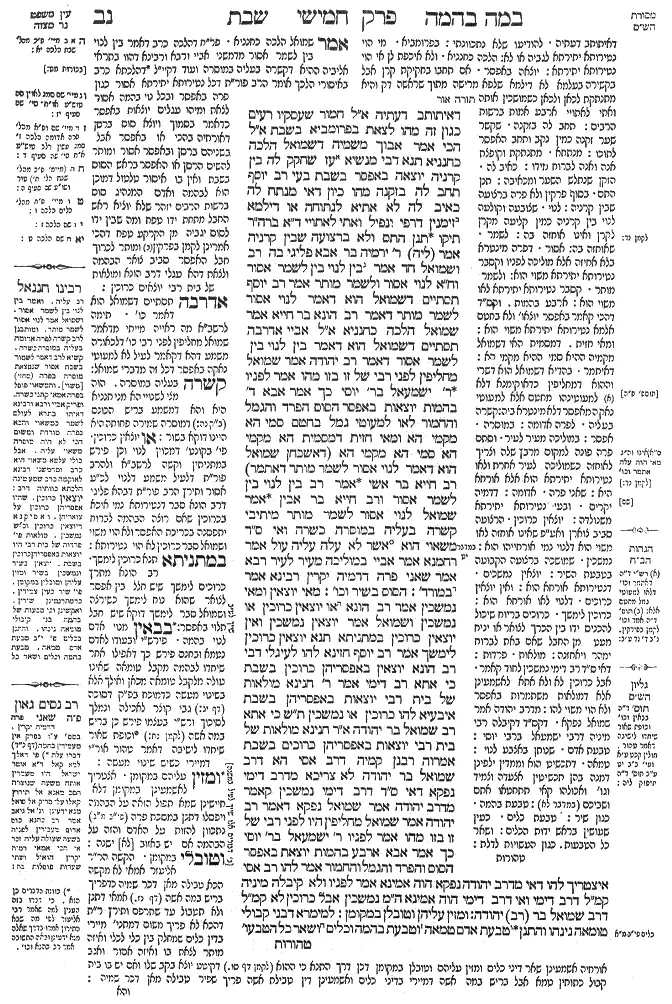
Shabbat 52a - Guemara
דאיתותב דעתיה א"ל חמור שעסקיו רעים כגון זה מהו לצאת בפרומביא בשבת א"ל הכי אמר אבוך משמיה דשמואל הלכה כחנניא תנא דבי מנשיא עז שחקק לה בין קרניה יוצאה באפסר בשבת בעי רב יוסף תחב לה בזקנה מהו כיון דאי מנתח לה כאיב לה לא אתיא לנתוחה או דילמא זימנין דרפי ונפיל ואתי לאתויי ד"א ברה"ר תיקו תנן התם ולא ברצועה שבין קרניה אמר (ליה) ר' ירמיה בר אבא פליגי בה רב ושמואל חד אמר בין לנוי בין לשמר אסור וח"א לנוי אסור ולשמר מותר אמר רב יוסף תסתיים דשמואל הוא דאמר לנוי אסור לשמר מותר דאמר רב הונא בר חייא אמר שמואל הלכה כחנניא א"ל אביי אדרבה תסתיים דשמואל הוא דאמר בין לנוי בין לשמר אסור דאמר רב יהודה אמר שמואל מחליפין לפני רבי של זו בזו מהו אמר לפניו ר' ישמעאל בר' יוסי כך אמר אבא ד' בהמות יוצאות באפסר הסוס הפרד והגמל והחמור לאו למעוטי גמל בחטם סמי הא מקמי הא ומאי חזית דמסמית הא מקמי הא סמי הא מקמי הא (דאשכחן שמואל הוא דאמר לנוי אסור לשמר מותר דאתמר) רב חייא בר אשי אמר רב בין לנוי בין לשמר אסור ורב חייא בר אבין אמר שמואל לנוי אסור לשמר מותר מיתיבי קשרה בעליה במוסרה כשרה ואי ס"ד משאוי הוא (במדבר יט, ב) אשר לא עלה עליה עול אמר רחמנא אמר אביי במוליכה מעיר לעיר רבא אמר שאני פרה דדמיה יקרין רבינא אמר במורד':
הסוס בשיר וכו':
מאי יוצאין ומאי נמשכין אמר רב הונא או יוצאין כרוכין או נמשכין ושמואל אמר יוצאין נמשכין ואין יוצאין כרוכין במתניתא תנא יוצאין כרוכין לימשך אמר רב יוסף חזינא להו לעיגלי דבי רב הונא יוצאין באפסריהן כרוכין בשבת כי אתא רב דימי אמר ר' חנינא מולאות של בית רבי יוצאות באפסריהן בשבת איבעיא להו כרוכין או נמשכין ת"ש כי אתא רב שמואל בר יהודה א"ר חנינא מולאות של בית רבי יוצאות באפסריהן כרוכים בשבת אמרוה רבנן קמיה דרב אסי הא דרב שמואל בר יהודה לא צריכא מדרב דימי נפקא דאי ס"ד דרב דימי נמשכין קאמר מדרב יהודה אמר שמואל נפקא דאמר רב יהודה אמר שמואל מחליפין היו לפני רבי של זו בזו מהו אמר לפניו ר' ישמעאל בר' יוסי כך אמר אבא ארבע בהמות יוצאת באפסר הסוס והפרד והגמל והחמור אמר להו רב אסי איצטריך להו דאי מדרב יהודה נפקא הוה אמינא אמר לפניו ולא קיבלה מיניה קמ"ל דרב דימי ואי דרב דימי הוה אמינא ה"מ נמשכין אבל כרוכין לא קמ"ל דרב שמואל בר (רב) יהודה:
ומזין עליהן וטובלן במקומן:
למימרא דבני קבולי טומאה נינהו והתנן טבעת אדם טמאה וטבעת בהמה וכלים ושאר כל הטבעו'
Comments from Rashi on Masechet Shabbat Page 52a
דאיתותב דעתיה . להודיעו שלא נתכוונתי: בפרומביא . מי הוי נטירותא יתירתא לגביה או לא: הלכה כחנניא . ולא איכפת לן אי הוי נטירותא יתירתא: יוצאה באפסר . אם תחבו בחקיקת קרן אבל בקשירה בעלמא לא דילמא שלפא מרישה מתוך שראשה דק והיא מתנתקת לכאן ולכאן כשמושכין אותה ואתי לאתויי ארבע אמות ברשות הרבים: תחב לה בזקנה . שקשר שער זקנה כמין נקב ותחב האפסר לתוכו: מנתחא . מתנתקת וקופצת אנה ואנה לברוח מידו: כאיב לה . הזקן שנתלש השער ומכאיבה: תנן התם . בסוף פרקין ולא פרה ברצועה שבין קרניה: לנוי . שצובעה וקולעה לנוי בין קרניה כמין קליעה מקרן לקרן ואינו אוחזה בה: לשמר . שאוחזה בה: אסור . דפרה מינטרא בלא אחיזה אלא מוליכה לפניו וקסבר נטירותא יתירתא משוי הוא: ולשמר מותר . קסבר נטירותא יתירתא לאו משוי הוא: ארבע בהמות . וקס"ד דהכי קאמר באפסר יוצאו' ולא בחטם אלמא נטירותא יתירתא משוי הוא: ומאי חזית . דמסמית הא דשמואל מקמיה ההיא סמי ההיא מקמי הא: דאיתמר . בהדיא דשמואל הוא דשרי וההוא דמחליפין כדאוקימנא דלא למעוטינהו מחטם אלא למעוטי נאקה מאפסר דלא מינטרא ביה: קשרה בעליה . לפרה אדומה: במוסרה . אפסר: במוליכה מעיר לעיר . וסתם פרה פונה למקום מרבץ שלה וצריך לאוחזה כשמוליכה לעיר אחרת ולאו נטירותא יתירתא הוא אלא אורחא היא: שאני פרה . אדומה: דדמיה יקרים . ובעי נטירותא יתירתא משנולדה: יוצאין כרוכין . הרצועה סביב צוארן ואע"פ שאינו אוחזה לאו משוי הוא דלנוי נמי אורחייהו הוא נמשכין. שמושכה ברצועה הקבועה בטבעת השיר: נמשכין . שמושכה ברצועה הקבועה בטבעת השיר: יוצאין נמשכים . דנטירותא אורחא הוא: ואין יוצאין כרוכים . דלנוי לאו אורחא הוא: כרוכין לימשך . כרוכים בריוח שיכול להכניס ידו בין הכרך לצואר או יניח מעט מן החבל שאם באת לברוח ימהר ויאחזנה: מולאות . פרדות: דאי ס"ד דרב דימי נמשכין לחוד קאמר . אבל כרוכין לא ולא אתא לאשמעינן אלא דמולאות משתמרות באפסר ולא הוי משוי להו: מדרב יהודה אמר שמואל נפקא . דקס"ד דקיבלה רבי מיניה דרבי ישמעאל ברבי יוסי: טבעת אדם . שנותן באצבע לנוי: טמאה . דתכשיט הוא וממדין ילפינן דמנה בהן תכשיטין אצעדה וצמיד וגו' ואכולהו קאי תתחטאו אתם ושביכם (במדבר לא): טבעת בהמה . כגון שיר: טבעת כלים . כעין שעושין בראש ידות הכלים: ושאר כל הטבעות . כגון העשויות לדלת:
Comments from Tosafot - Shabbat 52a
אמר שמואל הלכה כחנניא . פר"ח דהלכה כרב דאמר בין לנוי בין לשמר אסור מדמשני אביי ורבא ורבינא דהוו בתראי אליביה ההיא דקשרה בעליה במוסרה ועוד דקיי"ל דהלכתא כרב באיסורי הלכך אומר הרב פור"ת דכל נטירותא יתירתא אסור כגון פרה באפסר ובכל נוי בהמה אסור לצאת ומיהו עגלים יוצאות באפסר כדאמר בסמוך ויוצא סוס ברסן דאורחיה בהכי או באפסר אבל בשניהם ברסן ובאפסר אסור ומותר להשים הרסן או האפסר בראש הסוס בשבת ואין בו איסור טלטול דמוכן הוא לבהמה ואדם המנהיג סוס ברשות הרבים יזהר שלא יוציא ראש החבל מתחת ידו טפח ומה שבין ידו לסוס יגביה מן הקרקע טפח דהכי אמרינן לקמן בפרקין ומותר לכרוך חבל האפסר סביב צואר הבהמה ולצאת דהא עגלי דרב הונא ומולאות של בית רבי יוצאים כרוכין: אדרבה תסתיים דשמואל הוא דאמר כו' . תימה לרשב"א מה ראייה מייתי מדאמר שמואל מחליפין לפני רבי כו' דלכאורה משמע דהא דקאמר לעיל לא למעוטי נאקה באפסר דכל זה מדברי שמואל: קשרה בעליה במוסרה . הוה מצי לשנויי הא מני חנניא היא והא דמשמע בריש הכונס (ב"ק נה:) דמוסרה שמירה פחותה היא היינו דוקא בשור: או יוצאין כרוכין . פי' בקונט' דמכוין לנוי וכן פירש במתניתין וקשה לרשב"א ולהרב פור"ת דלעיל משמע דלנוי לכ"ע אסור ותירץ הרב פור"ת דבהא פליגי דרב הונא סבר דנטירותא נמי איכא בכרוכין שאם רוצה הבהמה לברוח יתפסנה בכריכת האפסר ולא הוי משוי ושמואל סבר כרוכין לא הוי נטירותא: במתניתא תנא כרוכין לימשך . רב הונא מתרץ כרוכים לימשך שיש חלל בין אפסר לצואר שהוא נוח לימשך כשירצה ושמואל סבר לימשך דוקא שיש חבל תלוי באפסר: ומזין עליהם במקומן . אצטריך לאשמעינן במקומן דלא חיישינן שמא תפול הזאה על הבהמה ויפסלו דתנן במסכת פרה (סי"ב מ"ג) נתכוון להזות על האדם והזה על הבהמה אם יש באזוב [לא] ישנה: וטובלי' במקומן . הקשה הר"ר אליעזר אמאי לא מקשה הכא טבילה מאן דכר שמיה כדפריך בריש במה אשה (' ף נז.) אמאי דתנן ולא תטבול עד שתרפם ותירץ ר"ת דהכא לא פריך משום דמתני' מיירי בדין כלים שמחלק בין כלי לכלי ואיזה מותר לצאת בו ואיזה אסור ואגב אורחיה אשמעינן שאר דיני כלים ומזין עליהם וטובלן במקומן דכן דרך התנא כי ההוא (לקמן דף סי.) דקיטע יוצא בקב שלו ואם יש בו בית קבול כתותין טמא אבל בריש במה אשה דמיירי בדיני כלים ואשמעינן דין טבילת אשה פריך שפיר טבילה מאן דכר שמיה:
Shabbat 52a - Mishnah translated into english
he will be placated and will understand that it was not my intention to disrespect him. He said to him: An undisciplined donkey whose conduct is wicked like this one that I am riding, what is the ruling with regard to having it go out with a halter on Shabbat? Typically, in order to secure a donkey, a bit suffices and it does not require a halter. A halter constitutes excessive security. However, the question is whether or not a halter that provides excessive security for a wild donkey like this one is considered a burden with which it is prohibited to go out to the public domain on Shabbat. Rabba bar Rav Huna said to him: Even if the security is considered extraneous, your father said the following in the name of Shmuel: The halakha is in accordance with the opinion of Ḥananya, who said that a device that provides excessive security is not considered a burden.
A Sage of the school of Menashiya taught a baraita: A goat in which one carved out a hole between its horns may go out with a bit on Shabbat. Because the bit is inserted through the hole, it will not become detached. Rav Yosef raised a dilemma: What is the ruling in a case where one inserted the bit through the goat’s beard? The Gemara explains the dilemma: Is the halakha that since, if the goat attempts to sever itself from the bit, it would cause it pain because the bit is attached to its beard, and therefore it will not come to sever it and the bit will remain in place? Or perhaps is the halakha that sometimes the knot will loosen and the bit will fall, and the goat’s owner will come to bring the bit and carry it four cubits in the public domain? No resolution was found to this dilemma. Let it stand unresolved.
We learned there in a mishna: And neither may a cow go out with a strap between its horns. Rabbi Yirmeya bar Abba said: Rav and Shmuel disagreed about this: One said: Whether it was placed for beauty, as an ornament, or whether it was placed to secure the cow, it is prohibited for the cow to go out with the strap between its horns. And the other one said: For beauty, it is prohibited; however, if it was placed to secure the cow, it is permitted.
Rav Yosef said: Conclude that Shmuel is the one who said that if the strap was placed for beauty it is prohibited; however, if it was placed to secure the cow it is permitted. As Rav Huna bar Ḥiyya said that Shmuel said: The halakha is in accordance with the opinion of Ḥananya: A device that provides excessive security is not considered a burden. Therefore, an animal may go out on Shabbat with straps that provide excessive security.
Abaye said to him: On the contrary, conclude that Shmuel is the one who said that whether it was placed for beauty, as an ornament, or whether it was placed to secure the cow, it is prohibited. As Rav Yehuda said that Shmuel said: The students exchanged the details in the mishna before Rabbi Yehuda HaNasi and asked: What is the halakha with regard to this animal going out into the public domain with that which is permitted for that animal? And Rabbi Yishmael, son of Rabbi Yosei, said before Rabbi Yehuda HaNasi: So said father, Rabbi Yosei: Four animals may go out with a bit: The horse, the mule, and the camel, and the donkey. Does this list not come to exclude a camel going out with a nose ring, as a nose ring provides excessive security beyond that required for a camel? Apparently, according to Shmuel, an animal may not go out on Shabbat with a device that provides excessive security, as it is considered a burden. Rav Yosef said to him: Delete this latter statement of Shmuel due to that first one.
The Gemara asks: And what did you see that led you to delete this latter statement due that first one? Delete that first statement due to this latter one. The Gemara explains: The first statement is supported as we find that Shmuel is the one who said : For beauty, it is prohibited; however, if it was placed to secure the cow, it is permitted, as it was stated that Rav Ḥiyya bar Ashi said that Rav said: Whether the strap was placed for beauty, or whether it was placed to secure the cow, it is prohibited. And Rav Ḥiyya bar Avin said that Shmuel said: For beauty, it is prohibited; however, if it was placed to secure the cow, it is permitted.
The Gemara raises an objection from a baraita: If its owner tied a red heifer with its reins that are attached to the bit, it remains fit for use in the purification ritual. And if it should enter your mind to say that a bit is considered a burden, why does a red heifer remain fit for use? The Torah explicitly stated: “Speak to the children of Israel, that they bring you a red heifer without defect, in which there is no blemish, and upon which never came a yoke” (Numbers 19:2). A red heifer is disqualified by a burden.
Abaye said: There, the baraita is referring to the case of a red heifer whose owner is leading it from city to city. When the animal is removed from its habitat, it requires additional security. In that case, tying the heifer with its reins is conventional rather than excessive security. Therefore, the bit is not considered a burden. Rava said: A red heifer, whose monetary value is high, is different and therefore secured more carefully than other cows. Ravina said: The baraita is referring to a red heifer that is rebellious and headstrong. Therefore, it requires added security.
We learned in the mishna: A horse may go out with a chain around its neck, and so too, all animals that typically have chains around their necks when they go out to the public domain may go out with chains on Shabbat and may be pulled by the chains. The Gemara asks: What is the meaning of: May go out, and what is the meaning of: May be pulled? Rav Huna said: These animals may go out either with the chain wrapped around their necks as an ornament, or they may be pulled by the chain. And Shmuel said: These animals may go out pulled by the chain; however, they may not go out with the chain wrapped around their necks as an ornament.
It was taught in a baraita: They may go out with the chains loosely wrapped around their necks, so that if the need arises, the animals will be able to be pulled by their chains. Rav Yosef said: I saw the calves of the house of Rav Huna go out into the public domain on Shabbat with their bits and with the reins wrapped around their necks.
When Rav Dimi came from Eretz Yisrael to Babylonia, he said that Rabbi Ḥanina said: The mules of the house of Rabbi Yehuda HaNasi go out into the public domain with their bits on Shabbat. A dilemma was raised before the Sages: Does this mean that the mules went out with their bits and reins wrapped around their necks; or, does it mean that they were pulled by the reins?
Come and hear a resolution to this dilemma from the following incident: When Rav Shmuel bar Yehuda came from Eretz Yisrael to Babylonia, he said that Rabbi Ḥanina said: The mules [molaot] of the house of Rabbi Yehuda HaNasi went out on Shabbat with their bits with the reins wrapped around their necks.
The Sages said before Rav Asi: That statement of Rav Shmuel bar Yehuda is not necessary. It may be derived from the statement of Rav Dimi. As, if it would enter your mind to say that Rav Dimi said that the mules of the house of Rabbi Yehuda HaNasi went out on Shabbat pulled by their bits, it is difficult. There is nothing novel in that statement, as it may be derived from the statement that Rav Yehuda said that Shmuel said.
As Rav Yehuda said that Shmuel said: The students switched the details in the mishna before Rabbi Yehuda HaNasi, and asked: What is the halakha with regard to this animal going out into the public domain with that which is permitted for that animal? And Rabbi Yishmael, son of Rabbi Yosei, said before Rabbi Yehuda HaNasi: So said father, four animals may go out with a bit: The horse, and the mule, and the camel, and the donkey. Apparently, according to Rabbi Yehuda HaNasi, a mule may go out on Shabbat pulled by its bit.
Rav Asi said to them: This statement of Rav Shmuel bar Yehuda is necessary, as if it were derived from the statement of Rav Yehuda, who related that which Rabbi Yishmael, son of Rabbi Yosei, said before Rabbi Yehuda HaNasi, I would have said that Rabbi Yishmael, son of Rabbi Yosei, said that before him, and Rabbi Yehuda HaNasi did not accept it from him. Therefore, that statement of Rav Dimi teaches us that Rabbi Yehuda HaNasi indeed accepted it from Rabbi Yishmael and his mules went out with their bits on Shabbat.
And if it had been derived only from the statement of Rav Dimi, I would have said that this applies only when the mule is pulled by its bit; however, if the reins are merely wrapped around the animal’s neck, no, the animal may not go out with it. Therefore, that statement of Rav Shmuel bar Rav Yehuda teaches us that the mules of the house of Rabbi Yehuda HaNasi went out on Shabbat with their reins wrapped around their necks.
It was further taught in our mishna: If these chains contracted ritual impurity, one may sprinkle water of purification on them and immerse them in their place on the animal. The Gemara asks: Is that to say that these chains are fit to contract ritual impurity? Didn’t we learn in a mishna: A ring worn by a person is ritually impure. However, the ring of an animal, and rings of utensils, and all other rings not worn by people
Traduction : The William Davidson digital edition of the Koren Noé Talmud, with commentary by Rabbi Adin Even-Israel Steinsaltz.