 Talmud Bavli
Shabbat 145b : Youtube
Daf TubeYoutube
2 video classes :
Shabbat Page 145b
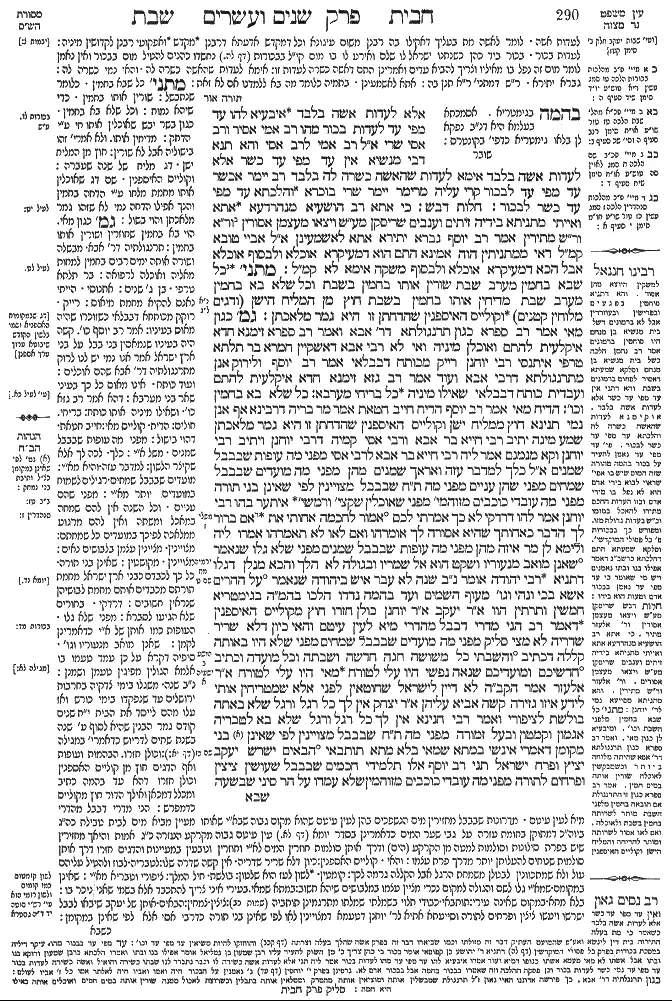
Shabbat 145b - Guemara
אלא לעדות אשה בלבד איבעיא להו עד מפי עד לעדות בכור מהו רב אמי אסיר ורב אסי שרי א"ל רב אמי לרב אסי והא תנא דבי מנשיא אין עד מפי עד כשר אלא לעדות אשה בלבד אימא לעדות שהאשה כשרה לה בלבד רב יימר אכשר עד מפי עד לבכור קרי עליה מרימר יימר שרי בוכרא והלכתא עד מפי עד כשר לבכור:
חלות דבש:
כי אתא רב הושעיא מנהרדעא אתא ואייתי מתניתא בידיה זיתים וענבים שריסקן מע"ש ויצאו מעצמן אסורין ור"א ור"ש מתירין אמר רב יוסף גברא יתירא אתא לאשמעינן א"ל אביי טובא קמ"ל דאי ממתניתין הוה אמינא התם הוא דמעיקרא אוכלא ולבסוף אוכלא אבל הכא דמעיקרא אוכלא ולבסוף משקה אימא לא קמ"ל:
מתני׳ כל שבא בחמין מערב שבת שורין אותו בחמין בשבת וכל שלא בא בחמין מערב שבת מדיחין אותו בחמין בשבת חוץ מן המליח הישן (ודגים מלוחין קטנים) וקולייס האיספנין שהדחתן זו היא גמר מלאכתן:
גמ׳ כגון מאי אמר רב ספרא כגון תרנגולתא דר' אבא ואמר רב ספרא זימנא חדא איקלעית להתם ואוכלן מיניה ואי לא רבי אבא דאשקיין חמרא בר תלתא טרפי איתנסי רבי יוחנן רייק מכותח דבבלאי אמר רב יוסף ולירוק אנן מתרנגולתא דרבי אבא ועוד אמר רב גזא זימנא חדא איקלעית להתם ועבדית כותח דבבלאי שאילו מיניה כל בריחי מערבא:
כל שלא בא בחמין וכו':
הדיח מאי אמר רב יוסף הדיח חייב חטאת אמר מר בריה דרבינא אף אנן נמי תנינא חוץ ממליח ישן וקולייס האיספנין שהדחתן זו היא גמר מלאכתן שמע מינה יתיב רבי חייא בר אבא ורבי אסי קמיה דרבי יוחנן ויתיב רבי יוחנן וקא מנמנם אמר ליה רבי חייא בר אבא לרבי אסי מפני מה עופות שבבבל שמנים א"ל כלך למדבר עזה ואראך שמנים מהן מפני מה מועדים שבבבל שמחים מפני שהן עניים מפני מה ת"ח שבבבל מצויינין לפי שאינן בני תורה מפני מה עובדי כוכבים מזוהמי' מפני שאוכלין שקצי' ורמשי' איתער בהו רבי יוחנן אמר להו דרדקי לא כך אמרתי לכם (משלי ז, ד) אמור לחכמה אחותי את אם ברור לך הדבר כאחותך שהיא אסורה לך אומרהו ואם לאו לא תאמרהו אמרו ליה ולימא לן מר איזה מהן מפני מה עופות שבבבל שמנים מפני שלא גלו שנאמר (ירמיהו מח, יא) שאנן מואב מנעוריו ושקט הוא אל שמריו ובגולה לא הלך והכא מנלן דגלו דתניא רבי יהודה אומר נ"ב שנה לא עבר איש ביהודה שנאמר (ירמיהו ט, ט) על ההרים אשא בכי ונהי וגו' מעוף השמים ועד בהמה נדדו הלכו בהמ"ה בגימטריא חמשין ותרתין הוו א"ר יעקב א"ר יוחנן כולן חזרו חוץ מקולייס האיספנין דאמר רב הני מדרי דבבל מהדרי מיא לעין עיטם והאי כיון דלא שריר שדריה לא מצי סליק מפני מה מועדים שבבבל שמחים מפני שלא היו באותה קללה דכתיב (הושע ב, יג) והשבתי כל משושה חגה חדשה ושבתה וכל מועדה וכתיב (ישעיהו א, יד) חדשיכם ומועדיכם שנאה נפשי היו עלי לטורח מאי היו עלי לטורח א"ר אלעזר אמר הקב"ה לא דיין לישראל שחוטאין לפני אלא שמטריחין אותי לידע איזו גזירה קשה אביא עליהן א"ר יצחק אין לך כל רגל ורגל שלא באתה בולשת לציפורי ואמר רבי חנינא אין לך כל רגל ורגל שלא בא לטבריה אגמון וקמטון ובעל זמורה מפני מה ת"ח שבבבל מצויינין לפי שאינן בני מקומן דאמרי אינשי במתא שמאי בלא מתא תותבאי (ישעיהו כז, ו) הבאים ישרש יעקב יציץ ופרח ישראל תני רב יוסף אלו תלמידי חכמים שבבבל שעושין ציצין ופרחים לתורה מפני מה עובדי כוכבים מזוהמין שלא עמדו על הר סיני שבשעה
Comments from Rashi on Masechet Shabbat Page 145b
לעדות אשה . לומר לאשה מת בעליך דאקילו בה רבנן משום עיגונא וכל דמקדש אדעתא דרבנן מקדש ואפקועי רבנן לקדושין מיניה: לעדות בכור . בכור ביד כהן כשנתנו ישראל לו שלם ואירע לו בו מום קי"ל בבכורות (דף לה.) נחשדו כהנים להטיל מום בבכור ואין נאמן לומר מום זה נפל בו מאיליו וצריך להביא עדים ואמרינן התם דאשה כשרה לעדות זו: אימא לעדות שהאשה כשרה לה . והאי נמי כשרה לה: גברא יתירא . ר"ש דמתני' ר"א תנן בה: אתא לאשמעינן . בתמיה כלומר מה בא ללמדנו אם לא זאת: מתני' כל שבא בחמין . כלומר שנתבשל: שורין אותו בחמין . כדי שיהא נמוח: וכל שלא בא בחמין . כגון בשר יבש שאוכלין אותו חי ע"י הדחק: מדיחין אותו . ולא אמרי' זהו בישוליה אבל לא שורין: חוץ מן המליח ישן . דג מליח של שנה שעברה: וקולייס האיספנין . שם דג שאוכלין אותו מחמת מלחו ע"י הדחה בחמין והנך אפילו הדחה נמי לא שזהו גמר מלאכתן והוי בשול: גמ' כגון מאי . הוי בא בחמין שחוזרין ושורין אותו בחמין: תרנגולתיה דר' אבא . מבשלה ושורה אותה ימים רבים בחמין למחות מאליה ואוכלה לרפואה: בר תלתא טרפי . בן ג' שנים: אתנוסי . הייתי נאנס להקיא מחמת מיאוס: רייק . רוקק מכותחא דבבלאי כשזוכרו שהיה מאוס בעיניו: אמר רב יוסף כו' . קשה היה בעיניו שנמאסין בני בבל על בני ארץ ישראל אמר אנו נמי יש לנו לרוק מתרנגולתיה דר' אבא שהם אוכלים: ועוד כותח . אינו מאוס כל כך בעיני שאר בני מערבא: דהא אמר רב גזא כו' . ושאילו מיניה אותו כותח: בריחי . חולים: הדיח . קולייס מאי: חייב חטאת . דהוי בישול: מפני מה עופות שבבבל שמנים . משל א"י: כלך . לכה לך אלא שקיצר הלשון: למדבר עזה . והיא מא"י: מועדים שבבבל שמחים . רגילים לשמוח במועדים יותר מא"י: מפני שהם עניים . וכל השנה אין להם שמחה במאכל ומשתה ואין להם מרגוע ממלאכה לפיכך במועדים כל שמחתם: מצויינין . מציינין עצמן בלבושים נאים: מצויינין . מקושטין: שאינן בני תורה . כל כך לכבדם כבני ארץ ישראל מחמת תורתם מכבדים אותם מחמת לבושיהן שנראין חשובים: דרדקי . בחורים שלא הגיעו לסברא: מפני שלא גלו . העופות כמו אותן של א"י כדאמרינן לקמן: שאנן מואב מנעוריו וגו' . סיפיה דקרא על כן עמד טעמו בו אלמא הגולין מפיגין טעמן ושמנן: נ"ב שנה . משגלו בימי צדקיה בחרבות ירושלים עד שנפקדו בימי כורש ואז עלו מהם לייסד את הבית י"ח שנים קודם גמר הבנין שהיא לסוף ע' שנה בשנת שתים לדריוש כדאמרי' במגילה (דף יא:): וכולן חזרו . הבהמות ועופות ואף הדגים חוץ מן קולייס האספנין וכולן חזרו דהא עד בהמה כתיב ומכלל דמכאן ואילך הדור חוץ מקולייס כדמפרש: הני מדרי דבבל מהדרי מיא לעין עיטם . מדרונות שבבבל מחזירין מים הנשפכים בהן לעין עיטם שהוא מקום גבוה שבא"י שאותו מעיין מביא מים לבית טבילת כה"ג ביה"כ דמתוקן בחומת עזרה על גבי שער המים כדאמרינן בסדר יומא (דף לא.) עין עיטם גבוה מקרקע העזרה כ"ג אמות והיאך מחזירין שיש בפרת סילונות וסולמות למטה מן הקרקע (הים) ודרך אותן סולמות חוזרין המים לא"י וחוזרין ונובעין במעיינות והדגים חזרו דרך אותן סולמות שנוחים להעלותן יותר מדרך פרת עצמו: והאי . קולייס האספנין: כיון דלא שריר שדריה . אין קשה שדרה שלו: בולשת . חיל המלך: ציפורי וטבריא מא"י: לטבריה . לבוז ולהטיל עליהם עול ולא שמתכוונין לבטלן משמחת הרגל אבל הקללה גרמה לכך: קומטין . לעז היא שלטון: שאינן במקומם . שמא"י גלו לשם והגולה למקום נכרי מציין עצמו במלבושים שיהא חשוב: במתא שמאי . בעירי איני צריך להתכבד אלא בשמי שאני ניכר בו: בלא מתא . במקום שאינה עירי: תותבאי . כבודי תלוי בשמלתי שמלתו מתרגמינן תותביה (שמות כב): הבאים . אותן של יעקב שיבאו לבבל ישרשו ויעשו ציצין ופרחים לתורה וסייעתא אתיא לר' יוחנן דטעמא דמצויינין לאו לפי שאינן בני תורה כדרבי אסי אלא לפי שאינן במקומן: ציצין . צמחין:
Comments from Tosafot - Shabbat 145b
ורבי יוחנן אמר אחד כבשין ואחד שלקות לגופן מותר למימיהן חייב חטאת . ובדג לצירו נמי הוה מחייב ר' יוחנן חטאת לתוך הקערה דדג לצירו מדמינן לשלקות בכולה שמעתיה דפריך מדשמואל דשלקות אההיא דדג לצירו ופי' ר' דהלכה כר' יוחנן דקיי"ל כוותיה לגבי רב ושמואל ושמעינן ממילתא דר"י שאסור לסחוט כבשים ושלקות למימיהן ואם סחט חייב חטאת ולא הפריש בסחיטה בין קדירה לקער' אלא הכל אסור מתוך אלו דברים מתברר שאין הלכה לא כשמואל ולא כרב שאמרו סוחט אדם אשכול של . ענבים לתוך הקדירה ויש שמעמידין דברי רב ושמואל ביו"ט מדדייק רב חסדא מדברי שמואל כן ואין לנו להדורי אפריכי ולאפוקי שמעתא מדוכתיה אלא ודאי בשבת קאמרי רב ושמואל ואין הלכה כמותן לא בשבת ולא ביו"ט ע"כ פי' ר"ח ומה שדקדק מדלא מפליג ר' יוחנן משמע דמיירי אפילו לתוך הקדירה אין זה דיוק דהא רב ושמואל נמי אסרי סתמא בכבשים למימיהן ואע"ג דשרו לסחוט בהדיא אשכול של ענבים לתוך הקדירה ומה שדחה דברי המעמידין דברי רב ושמואל ביו"ט אומר ר"ת שהדין עמו אבל דברי רב חסדא ביום טוב כדפירשתי לעיל: בהמה בגימטריא . אסמכתא בעלמא היא דנ"ב נפקא לן בלאו גימטריא כדפי' בקונטרס:
Shabbat 145b - Mishnah translated into english
only for testimony that a woman’s husband died, enabling her to remarry. Only in that case can a ruling rely on hearsay testimony, and that is specifically so the woman will be allowed to remarry.
A dilemma was raised before the Sages about a related matter: With regard to hearsay testimony in testimony permitting a priest to eat a firstborn animal, what is the halakha? After the destruction of the Temple, the Sages decreed that if a priest has the firstborn offspring of a kosher animal and it becomes blemished, he must bring witnesses to testify that he did not cause the blemish. Priests were suspected of violating the prohibition against inflicting a wound on firstborn animals to enable them to eat the animals. The question here pertains to a case in which there is no one available who can testify that he saw firsthand how the animal was blemished, but there is someone who heard from an eyewitness how the blemish was caused. Rav Ami prohibited accepting hearsay testimony in this case, and Rav Asi permitted doing so.
Rav Ami said to Rav Asi: Didn’t the school of Menashya teach that hearsay testimony is only valid in testimony enabling a woman to remarry, indicating that it is not accepted in the case of a firstborn animal? Rav Asi answered: Emend the previously cited ruling and say: Hearsay testimony is only valid in testimony for which the testimony of a woman is valid. A woman’s testimony is accepted with regard to the death of a man, enabling his wife to remarry, and it is also accepted with regard to a firstborn animal. Rav Yeimar deemed hearsay testimony valid in permitting the slaughter of a firstborn animal that developed a blemish. Mareimar called him: Yeimar who permits the firstborn; Mareimar was of the opinion that testimony of that kind is invalid and cannot provide the basis to allow the animal to be slaughtered. The Gemara concludes: And the halakha is that hearsay testimony is valid with regard to a firstborn animal.
We learned in the mishna that according to Rabbi Eliezer, honey that flows on its own from honeycombs is permitted on Shabbat. When Rav Hoshaya came from Neharde’a, he came and brought a baraita with him: With regard to olives and grapes that one crushed before Shabbat and their juices seeped out on their own on Shabbat, the juices are prohibited for use on Shabbat; and Rabbi Elazar and Rabbi Shimon permit using them.
Rav Yosef said rhetorically: Did he merely come to teach us an additional person? This opinion already appears in the mishna in the name of Rabbi Elazar. Did Rav Hoshaya cite the baraita merely to add the name of Rabbi Shimon? Abaye said to him: He is teaching us a great deal, as if we learned this matter from the mishna alone, I would have said: It is there that it is permitted, because initially it was food and ultimately it remained food, since it is possible to assert that the honey that seeped is a food rather than a liquid. However, here, with regard to olives and grapes, which initially were food and ultimately became liquid, say that it is not permitted even according to Rabbi Elazar. Therefore, he is teaching us that Rabbi Elazar rules leniently even in the case of olives and grapes.
MISHNA: Any salted food item that was already placed in hot water, i.e., cooked, before Shabbat, one may soak it in hot water even on Shabbat. And anything that was not placed in hot water before Shabbat, one may rinse it in hot water on Shabbat but may not soak it, with the exception of old salted fish and small salted fish and the kolyas ha’ispanin fish, for which rinsing with hot water itself is completion of the prohibited labor of cooking.
GEMARA: We learned in the mishna that an item that was cooked before Shabbat may be soaked in hot water on Shabbat. The Gemara asks: In what case would soaking in hot water be required after the item was already cooked? Rav Safra said: In the case of the chicken of Rabbi Abba, which for medical reasons was cooked so thoroughly that it completely dissolved. And Rav Safra said: One time I happened to come there and he fed me chicken prepared that way, and if not for the fact that Rabbi Abba gave me three-leaf-, i.e., year, old wine to drink, I would have been forced to vomit.
The Gemara relates that Rabbi Yoḥanan would spit from the thought of Babylonian kutaḥ, because he found it so disgusting. Rav Yosef said: Then we should spit from the thought of Rabbi Abba’s chicken, which is even more disgusting to people from Babylonia. And furthermore, Rav Gaza said: On one occasion I happened to come there, to Eretz Yisrael, and I prepared Babylonian kutaḥ, and all of the sick people of the West, Eretz Yisrael, asked me for it. Apparently, not everyone in Eretz Yisrael found it disgusting.
We learned in the mishna: Anything that was not cooked in hot water before Shabbat, one may rinse it in hot water on Shabbat except for salted fish and kolyas ha’ispanin. The Gemara asks: If one unwittingly rinsed it, what is the halakha? Rav Yosef said: If one rinsed these foods, he is liable to bring a sin-offering for having performed the prohibited labor of cooking. Mar, son of Ravina, said: We, too, have also learned this ruling in the mishna, which states: Except for old salted fish and kolyas ha’ispanin, rinsing itself is completion of their prohibited labor of cooking. One who rinses these items is considered to have performed a prohibited labor. The Gemara concludes: Indeed, learn from this that this is the ruling.
Apropos relations between the Jews of Eretz Yisrael and Babylonia, the Gemara relates: Rabbi Ḥiyya bar Abba and Rabbi Asi were sitting before Rabbi Yoḥanan, and Rabbi Yoḥanan was sitting and dozing. In the meantime the two of them conversed. Rabbi Ḥiyya bar Abba said to Rabbi Asi: For what reason are the fowl in Babylonia fatter than those in Eretz Yisrael? He said to him: This is not at all the case; go to the desert of Gaza in Eretz Yisrael, and I will show you fowl that are fatter than them. Rabbi Ḥiyya bar Abba then asked: For what reason are Festivals in Babylonia more joyous than those in Eretz Yisrael? Rabbi Asi answered him: Because in Babylonia they are poor, and it is only on Festivals that they have a lot to eat, which causes them to rejoice. Rabbi Ḥiyya then asked: For what reason are Torah scholars in Babylonia distinguished by their special rabbinic garb? Rabbi Asi answered: Because they are not well-versed in Torah. If they would not distinguish themselves by dressing differently, they would not be respected for their Torah knowledge. He then asked: For what reason are gentiles ethically contaminated? He answered: Because they eat abominable creatures and crawling things, and that causes bad character traits.
Rabbi Yoḥanan woke up due to their discussion and said to them: You children, did I not tell you this, that the verse “Say to wisdom: You are my sister, and call understanding your kin” (Proverbs 7:4) means that if the matter is as clear to you as the fact that your sister is forbidden to you, say it, and if not, do not say it; and these explanations that you offered are unfounded. They said to him: Then will the Master tell us the answers to some of them? He said to them: Why are the fowl in Babylonia fatter than those in Eretz Yisrael? Because they were not exiled, as it says: “Moab has been at ease since his youth and he has settled on his lees, and he was not emptied from vessel to vessel and did not go into captivity; therefore his taste remained in him and his scent did not change” (Jeremiah 48:11). Apparently, one who is not exiled retains his strength.
And here in Eretz Yisrael, from where do we derive that even the animals and birds were exiled? As it was taught in a baraita: Rabbi Yehuda says that no person passed through the land of Judea for fifty-two years, as it is stated: “I will raise crying and wailing for the mountains and a lamentation for the pastures of the wilderness, for they have been burned, with no person passing through, and they do not hear the voice of the cattle, from the bird of the heavens to the beast [behema, spelled beit, heh, mem, heh], all have fled and gone” (Jeremiah 9:9). Behema has a numerical value of fifty-two, alluding to the fact that no one passed through for fifty-two years. From the verse cited in this baraita, it is clear that even the animals and birds were exiled, as it states: “All have fled and gone.”
Rabbi Ya’akov said that Rabbi Yoḥanan said: They all returned except for the kolyas ha’ispanin, as Rav said: Those inclines of Babylonia return the water through underground watercourses to the spring of Eitam in Eretz Yisrael, and the fish also returned through these watercourses. And this fish, the kolyas, because its spine is not strong, it could not ascend these watercourses and did not return to Eretz Yisrael.
Rabbi Yoḥanan continued to answer the questions of Rabbi Ḥiyya bar Abba and Rabbi Asi: For what reason are the Festivals in Babylonia more joyous than those in Eretz Yisrael? Because they were not included in that curse with which Eretz Yisrael was cursed, as it is written: “And I will cause all of her happiness to cease, her Festival, her New Moon, and her Shabbat and all her Festivals” (Hosea 2:13). And it is also written: “My soul hates your New Moons and your Festivals; they are a burden to Me; I am weary to bear them” (Isaiah 1:14). What is the meaning of the phrase: “They are a burden to me”? Rabbi Elazar said that the Holy One, Blessed be He, said: Is it not enough for the Jewish people that they sin before Me, that they also burden Me to know which harsh decree I will bring upon them? Rabbi Yitzḥak said: Because of this curse, there is not a single Festival on which troops did not come to Tzippori to conduct searches or to collect taxes. And Rabbi Ḥanina said: There is not a single Festival on which an egmon and a kamton and a branch bearer, Roman officials, did not come to Tiberias to collect taxes, thereby disrupting the festive celebrations.
For what reason are the Torah scholars in Babylonia distinguished by special garb? Because they are not native to that place and therefore require special dress to distinguish themselves, as people say in the folk expression: In my own city, I am honored for my name; in a place that is not my own city, I am honored for my clothing. The Gemara then praised the Sages of Babylonia by interpreting the verse “In days to come Jacob will take root, Israel will bud and blossom” (Isaiah 27:6). Rav Yosef taught: These are the Torah scholars in Babylonia, who add buds and blossoms to the Torah.
Rabbi Yoḥanan then explained to them: Why are gentiles ethically contaminated? It is because they did not stand on Mount Sinai. As when
Traduction : The William Davidson digital edition of the Koren Noé Talmud, with commentary by Rabbi Adin Even-Israel Steinsaltz.