 Talmud Bavli
Shabbat 149b : Youtube
Daf TubeYoutube
2 video classes :
Shabbat Page 149b
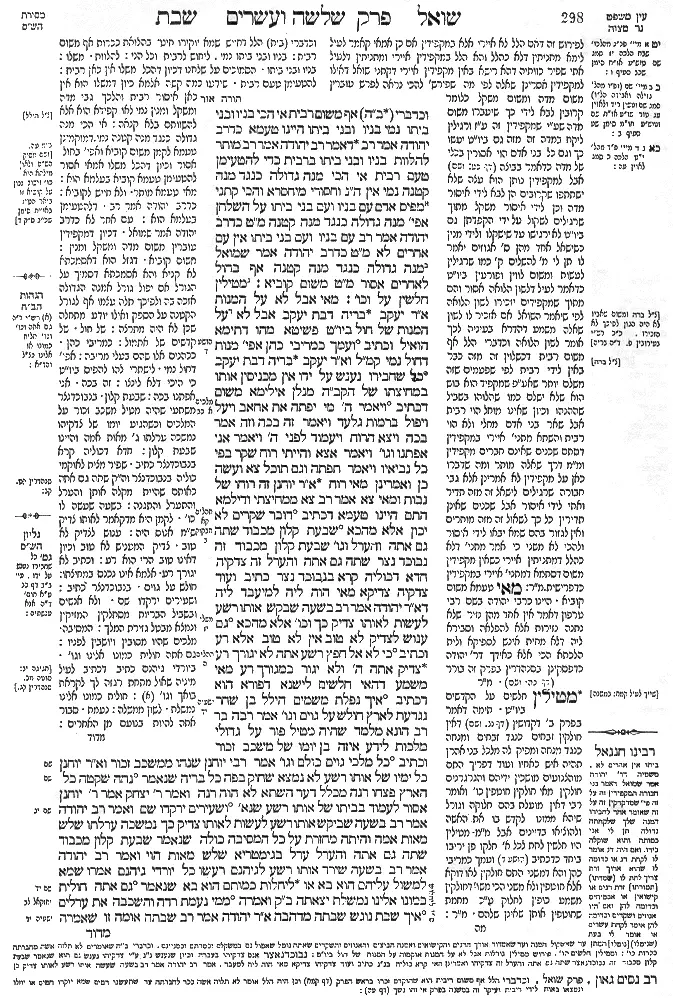
Shabbat 149b - Guemara
וכדברי (ב"ה) אף משום רבית אי הכי בניו ובני ביתו נמי בניו ובני ביתו היינו טעמא כדרב יהודה אמר רב דאמר רב יהודה אמר רב מותר להלוות בניו ובני ביתו ברבית כדי להטעימן טעם רבית אי הכי מנה גדולה כנגד מנה קטנה נמי אין ה"נ וחסורי מיחסרא והכי קתני מפיס אדם עם בניו ועם בני ביתו על השלחן אפי' מנה גדולה כנגד מנה קטנה מ"ט כדרב יהודה אמר רב עם בניו ועם בני ביתו אין עם אחרים לא מ"ט כדרב יהודה אמר שמואל מנה גדולה כנגד מנה קטנה אף בחול לאחרים אסור מ"ט משום קוביא:
מטילין חלשין על וכו':
מאי אבל לא על המנות א"ר יעקב בריה דבת יעקב אבל לא על המנות של חול ביו"ט פשיטא מהו דתימא הואיל וכתיב (הושע ד, ד) ועמך כמריבי כהן אפי' מנות דחול נמי קמ"ל וא"ר יעקב בריה דבת יעקב כל שחבירו נענש על ידו אין מכניסין אותו במחיצתו של הקב"ה מנלן אילימא משום דכתיב (מלכים א כב, כ) ויאמר ה' מי יפתה את אחאב ויעל ויפול ברמות גלעד ויאמר זה בכה וזה אמר בכה ויצא הרוח ויעמוד לפני ה' ויאמר אני אפתנו וגו' ויאמר אצא והייתי רוח שקר בפי כל נביאיו ויאמר תפתה וגם תוכל צא ועשה כן ואמרינן מאי רוח א"ר יוחנן זה רוחו של נבות ומאי צא אמר רב צא ממחיצתי ודילמא התם היינו טעמא דכתיב (תהלים קא, ז) דובר שקרים לא יכון אלא מהכא (חבקוק ב, טז) שבעת קלון מכבוד שתה גם אתה והערל וגו' שבעת קלון מכבוד זה נבוכדנצר שתה גם אתה והערל זה צדקיה חדא דכוליה קרא בנבוכדנצר כתיב ועוד צדקיה צדיקא מאי הוה ליה למיעבד ליה דא"ר יהודה אמר רב בשעה שבקש אותו רשע לעשות לאותו צדיק כך וכו' אלא מהכא (משלי יז, כו) גם ענוש לצדיק לא טוב אין לא טוב אלא רע וכתיב (תהלים ה, ה) כי לא אל חפץ רשע אתה לא יגורך רע צדיק אתה ה' ולא יגור במגורך רע מאי משמע דהאי חלשים לישנא דפורא הוא דכתיב (ישעיהו יד, יב) איך נפלת משמים הילל בן שחר נגדעת לארץ חולש על גוים וגו' אמר רבה בר רב הונא מלמד שהיה מטיל פור על גדולי מלכות לידע איזה בן יומו של משכב זכור וכתיב (ישעיהו יד, יח) כל מלכי גוים כולם וגו' אמר רבי יוחנן שנחו ממשכב זכור וא"ר יוחנן כל ימיו של אותו רשע לא נמצא שחוק בפה כל בריה שנאמר (ישעיהו יד, ז) נחה שקטה כל הארץ פצחו רנה מכלל דעד השתא לא הוה רנה ואמר ר' יצחק אמר ר' יוחנן אסור לעמוד בביתו של אותו רשע שנא' (ישעיהו יג, כא) ושעירים ירקדו שם ואמר רב יהודה אמר רב בשעה שביקש אותו רשע לעשות לאותו צדיק כך נמשכה ערלתו שלש מאות אמה והיתה מחזרת על כל המסיבה כולה שנאמר שבעת קלון מכבוד שתה גם אתה והערל ערל בגימטריא שלש מאות הוי ואמר רב יהודה אמר רב בשעה שירד אותו רשע לגיהנם רעשו כל יורדי גיהנם אמרו שמא למשול עליהם הוא בא או ליחלות כמותם הוא בא שנאמר (ישעיהו יד, י) גם אתה חולית כמונו אלינו נמשלת יצאתה ב"ק ואמרה (יחזקאל לב, יט) ממי נעמת רדה והשכבה את ערלים (ישעיהו יד, ד) איך שבת נוגש שבתה מדהבה א"ר יהודה אמר רב שבתה אומה זו שאמרה
Comments from Rashi on Masechet Shabbat Page 149b
וכדברי (בית) הלל . דחייש שמא יוקירו חיטי בהלואת ככרות אף משום רבית: בניו ובני ביתו נמי . ליחוש לרבית וכל הני: בניו ובני ביתו . הסמוכים על שלחנו דכיון דהכל משלו אין כאן רבית: להלוות . משלו: להטעימן טעם רבית . שידעו כמה קשה אלמא כיון דמשלו הוא אין כאן איסור רבית והלכך גבי מדה ומשקל ומנין נמי לאו קפידא הוא אלא להשוותם בלא קנאה: אי הכי מנה גדולה כנגד מנה קטנה נמי . דמוקמינן טעמא לקמן משום קוביא ואפי' בחול אסור וכיון דהכל משלו אמאי אסור להטעימן טעמא קוביא בעלמא הוא: מאי טעמא מותר . ולא חייש לקוביא: כדרב יהודה אמר רב . דלהטעימן בעלמא הוא: עם אחר לא כדרב יהודה אמר שמואל . דכיון דמקפידין עוברין משום מדה ומשקל ומנין: משום קוביא . דגזל הוא דאסמכתא לא קניא והא אסמכתא דסמיך על הגורל אם יפול גורל אמנה הגדולה אזכה בה ולפיכך תלה עצמו אף לגורל הקטנה על הספק ואילו יודע מתחלה שכן לא היה מתרצה: של חול . של קדשים של אתמול: כמריבי כהן . ככהנים אלו שהם בעלי מריבה: אפי' דחול נמי . לישתרי להו להפיס ביו"ט כי היכי דלא לינצו: זה בכה . אני אפתנו בכה: שבעת קלון . בנבוכדנצר משתעי שהיה מטיל משכב זכור על המלכים וכשהגיע יומו של צדקיהו נמשכה ערלתו ג' מאות אמה והיינו שבעת קלון: חדא דכוליה קרא בנבוכדנצר כתיב . שפיר מצית לאוקמי כוליה בנבוכדנצר וה"ק שתה גם אתה כאותם שהיית מקלה אותן והערל והתערל והתגנה: בשעה שעשה לו כו' . לקמן היא מדקאמר לאותו צדיק ש"מ אנוס היה: ענוש לצדיק לא טוב . צדיק המעניש לא טוב וכיון דאינו טוב הרי הוא רע: וכתיב לא יגורך רע . אלמא אינו נכנס במחיצתו: חולש על גוים . בנבוכדנצר כתיב: ושעירים ירקדו שם . ולא אנשים ובשביל הבריות מסתלקין המזיקין ונמצא מבטל גזירת המלך: המסיבה . מלכים שהיו מסובין ויושבין לפניו: גם אתה חולית כמונו אלינו וגו' . ביורדי גיהנם כתיב דכתיב לעיל מיניה שאול מתחת רגזה לך לקראת בואך וגו': חולית כמונו אלינו נמשלת . לשון ממשלה: נעמת . סבור אתה להיות בנועם מן האחרים:
Comments from Tosafot - Shabbat 149b
מאי טעמא משום קוביא . היינו כרבי יהודה בשם רבי טרפון דאמר אין אחד מהן נזיר שלא נתנה נזירות אלא להפלאה וסבירא ליה דלא מחית אינש לספיקא ולית הלכתא הכי אלא כאידך דר' יהודה כדפסקינן בסנהדרין בפרק זה בורר (דף כה. ושם). מ"ר:
Shabbat 149b - Mishnah translated into english
And according to Beit Hillel, they even violate the prohibition of interest. In Beit Hillel’s view, it is prohibited to loan or return objects without determining their monetary value, lest the object rise in value and the borrower end up returning an item that is more expensive than the one he borrowed.
The Gemara asks: If this is so, and one violates so many prohibitions when drawing lots, it should be prohibited to do so with one’s children and family members also. The Gemara answers: With regard to one’s children and family members, this is the reason that it is permitted: It is like the ruling that Rav Yehuda said that Rav said, for Rav Yehuda said that Rav said: It is permitted to loan to one’s children and family members with interest, in order to let them experience a taste of how difficult it is to repay a loan taken with interest. Also, in the case of family members, all the money, including the money used to repay the loan, belongs to the same person. Therefore, there is no real prohibition of interest.
The Gemara asks: If this is so, and everything in this case actually belongs to the father, and he uses a lottery system in order to educate his family, it should be permitted to cast lots for a big portion against a small portion also.
The Gemara answers: Yes, it is indeed so, and the mishna is incomplete and it teaches the following: A person may draw lots with his children and his family members at the table, and he may even do so with a large portion against a small portion. What is the reason for this? It is in accordance with the ruling that Rav Yehuda said that Rav said. Although with one’s children and family members, yes, this is permitted, with others it is not. What is the reason for this? It is in accordance with the ruling that Rav Yehuda said that Shmuel said: Raffling a large portion against a small portion is prohibited to do for other people, even on a weekday. What is the reason? Due to the prohibition against gambling with dice, which is prohibited by rabbinic law as a form of theft.
The mishna taught that one may draw lots for the sacrifices but not for the specific portions. This statement is not entirely clear, and the Gemara asks: What is the meaning of the phrase: But not for the specific portions? Rabbi Ya’akov, son of the daughter of Ya’akov, said that it means: But one may not draw lots for the weekday [ḥol] portions on a Festival. The Gemara challenges: This is obvious. The Gemara answers: Lest you say that since the priests are naturally quarrelsome, which the Sages derive from that which is written: “Yet let no man strive, neither let any man reprove, for your people are like those that strive with the priest” (Hosea 4:4), and in order to maintain peace between them even lotteries for weekday portions were also permitted, therefore, the mishna teaches us that this is not the case.
Having quoted Rabbi Ya’akov, son of the daughter of Ya’akov, the Gemara brings another teaching of this amora. And Rabbi Ya’akov, son of the daughter of Ya’akov, said: Anyone who causes another to be punished on his account, they do not bring him within the partition of the Holy One, Blessed be He, even if he is right. The Gemara asks: From where do we know this? If you say it is because of what is written in the prophecy of Micaiah, that proof can be disputed. It is written: “And the Lord said: Who will entice Ahab to go up and fall at Ramot Gilad? And one said: In this manner, and another said: In that manner. And the spirit came out and stood before the Lord and said: I will entice him. And the Lord said to it: With what? And it said: I will go out and will be a lying spirit in the mouth of all of his prophets. And He said: You shall entice him and will prevail. Go out and do this” (I Kings 22:20–22).
And we said: What is this spirit? Rabbi Yoḥanan said: This is the spirit of Naboth the Jezreelite, who asked to avenge his death at the hands of Ahab. And what is the meaning of the words: Go out, which God commanded him? Rav said: It means that he was given permission to entice Ahab, but God said: Leave from within My partition. Therefore, it seems that the spirit of Naboth was told to leave God’s area because it caused Ahab to be punished. The Gemara rejects this proof: But perhaps there, the reason is as it is written: “One who speaks lies shall not dwell before My eyes” (Psalms 101:7), and this is the only reason that the spirit of Naboth was removed from within God’s partition.
Rather, it is derived from here: “You are filled with shame instead of honor. Drink, you, and be like one who is uncircumcised, the cup of the Lord’s right hand will turn to you and filthiness shall be upon your glory” (Habakkuk 2:16). The verse is expounded: “You are filled with shame instead of honor”; this is referring to Nebuchadnezzar. “Drink, you, and be like one who is uncircumcised”; this is referring to Zedekiah, who was also punished for being the cause of Nebuchadnezzar’s punishment, as will be explained. The Gemara rejects this proof: One objection to this is that the entire verse is written about Nebuchadnezzar. And furthermore, with regard to Zedekiah, the righteous one, what could he have done to him? For Rav Yehuda said that Rav said about this matter: When that wicked man wanted to do this to that righteous man, his foreskin was stretched, as will be explained.
Rather, the basis for this idea is from here: “Punishment is also not good for the righteous” (Proverbs 17:26), meaning that it is not good for a righteous person to issue punishment. There is no meaning of not good other than evil. And it says: “For You are not a God that desires wickedness, evil will not dwell with You” (Psalms 5:5), meaning that You, God, are righteous and evil shall not dwell with You in Your place of dwelling. Even a righteous person who punishes someone and is called evil and cannot dwell within God’s partition.
The Gemara asks: From where may it be inferred that this term used in the mishna, ḥalashim, is a word for lots? As it is written: “How have you fallen from heaven, O day-star, son of the morning! How have you been cut down to the ground, casting lots [ḥolesh] over the nations!” (Isaiah 14:12), and Rabba bar Rav Huna said: This verse teaches us that he, Nebuchadnezzar, would cast lots [ḥolesh] for the royal leaders of the nations he had captured, in order to know whose day it was to service him with homosexual relations. And it is written: “All the kings of the nations, all of them sleep in glory, every one in his own house” (Isaiah 14:18). And Rabbi Yoḥanan said: The meaning of this verse is that they rested from homosexual relations.
And Rabbi Yoḥanan said: All of the days of the life of that wicked man, laughter could not be found in the mouth of any creature, as it is stated: “The whole earth is at rest and is quiet; they break forth into singing” (Isaiah 14:7). This proves by inference that until now there was not any song.
And Rabbi Yitzḥak said that Rabbi Yoḥanan said: It is prohibited even nowadays to stand in the ruins of the house of that wicked man, Nebuchadnezzar, in Babylonia, for it is stated about that place: “And demons shall dance there” (Isaiah 13:21). There is concern that one may be injured by the harmful forces there (Maharsha).
And Rav Yehuda said that Rav said: At the time when that wicked man, Nebuchadnezzar, wanted to do to that righteous man, Zedekiah, this act of sodomy, his foreskin was stretched three hundred cubits, and it surrounded the entire company at Nebuchadnezzar’s feast, as it is stated: “Woe to one who gives his neighbor drink, who puts your venom in and also makes him drunk so that you may look upon their nakedness. You are filled with shame instead of honor. Drink, you, and be like one who is uncircumcised [vehe’arel]” (Habakkuk 2:15–16). The word arel, which refers here to one who is uncircumcised and also connotes the foreskin, has a numerical value of three hundred.
And Rav Yehuda also said that Rav said: When that wicked man descended into Gehenna, everyone who had already descended to Gehenna trembled, and they said, referring to themselves in third person: Perhaps he is coming to rule over them; or is he coming to be weakened like them? As it is stated: “They all answer and say to you: Have you also become weak like us? Have you become like us [eleinu nimshalta]?” (Isaiah 14:10). The Hebrew phrase: Eleinu nimshalta, can mean: Have you become like us, or alternatively: Have you come to rule over us. A Divine Voice emerged and said: “Whom do you pass in beauty? Go down and be laid with the uncircumcised” (Ezekiel 32:19). This confirmed that Nebuchadnezzar has the same status in Gehenna as everyone else.
On a related note, the verse states: “And you shall take up this parable against the king of Babylonia and you shall say: How has the oppressor ceased. The exactor of gold has ceased” (Isaiah 14:4). Rav Yehuda said that Rav said: The meaning of this verse is that this nation that said:
Traduction : The William Davidson digital edition of the Koren Noé Talmud, with commentary by Rabbi Adin Even-Israel Steinsaltz.