 Talmud Bavli
The learning on the whole site is dedicated : L'ilui Nishmat Yechayahou ben Moche
The learning on the whole site is dedicated : L'ilui Nishmat Ledicia bat David Banoun
The learning on the whole site is dedicated : L'ilui Nishmat Jacques Isaac Ben Amram Loubaton
Hullin 70b : Youtube
Rabbi Dr. Moshe WeisblumYoutube
1 video class :
Hullin Page 70b
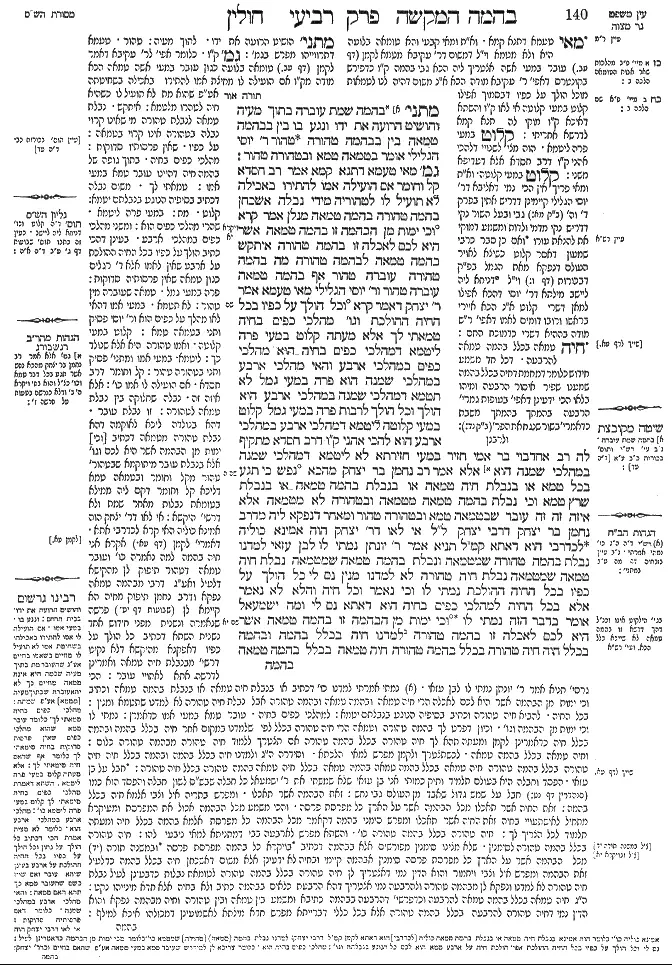
Hullin 70b - Guemara
מתני׳ בהמה שמת עוברה בתוך מעיה והושיט הרועה את ידו ונגע בו בין בבהמה טמאה בין בבהמה טהורה טהור ר' יוסי הגלילי אומר בטמאה טמא ובטהורה טהור:
גמ׳ מאי טעמא דתנא קמא אמר רב חסדא קל וחומר אם הועילה אמו להתירו באכילה לא תועיל לו לטהוריה מידי נבלה אשכחן בהמה טהורה בהמה טמאה מנלן אמר קרא (ויקרא יא, לט) וכי ימות מן הבהמה זו בהמה טמאה אשר היא לכם לאכלה זו בהמה טהורה איתקש בהמה טמאה לבהמה טהורה מה בהמה טהורה עוברה טהור אף בהמה טמאה עוברה טהור ור' יוסי הגלילי מאי טעמא אמר ר' יצחק דאמר קרא (ויקרא יא, כז) וכל הולך על כפיו בכל החיה ההולכת וגו' מהלכי כפים בחיה טמאתי לך אלא מעתה קלוט במעי פרה ליטמא דמהלכי כפים בחיה הוא מהלכי כפים במהלכי ארבע והאי מהלכי ארבע במהלכי שמנה הוא פרה במעי גמל לא תטמא דמהלכי שמנה במהלכי ארבע הוא הולך וכל הולך לרבות פרה במעי גמל קלוט במעי קלוטה ליטמא דמהלכי ארבע במהלכי ארבע הוא להכי אהני ק"ו דרב חסדא מתקיף לה רב אחדבוי בר אמי חזיר במעי חזירתא לא ליטמא דמהלכי שמנה במהלכי שמנה הוא אלא אמר רב נחמן בר יצחק מהכא (ויקרא ה, א) נפש כי תגע בכל טמא או בנבלת חיה טמאה או בנבלת בהמה טמאה או בנבלת שרץ טמא וכי נבלת בהמה טמאה מטמאה ובטהורה לא מטמאה אלא איזה זה זה עובר שבטמאה טמא ובטהורה טהור ומאחר דנפקא ליה מדרב נחמן בר יצחק דרבי יצחק ל"ל אי לאו דר' יצחק הוה אמינא כוליה לכדרבי הוא דאתא קמ"ל תניא אמר ר' יונתן נמתי לו לבן עזאי למדנו נבלת בהמה טהורה שמטמאה ונבלת בהמה טמאה שמטמאה נבלת חיה טמאה שמטמאה נבלת חיה טהורה לא למדנו מנין נם לי כל הולך על כפיו בכל החיה ההולכת נמתי לו וכי נאמר וכל חיה והלא לא נאמר אלא בכל החיה למהלכי כפים בחיה הוא דאתא נם לי ומה ישמעאל אומר בדבר הזה נמתי לו (ויקרא יא, לט) וכי ימות מן הבהמה זו בהמה טמאה אשר היא לכם לאכלה זו בהמה טהורה למדנו חיה בכלל בהמה ובהמה בכלל חיה חיה טהורה בכלל בהמה טהורה חיה טמאה בכלל בהמה טמאה
Comments from Rashi on Masechet Hullin Page 70b
מתני' הושיט הרועה את ידו . לתוך מעיה: טהור . טעמא דתרווייהו מפרש בגמ': גמ' ק"ו . כלומר אפי' לר' עקיבא דאמר לקמן (חולין דף עב.) טומאה בלועה כגון עובר במעי אשה טמאה הכא מודה מק"ו אם הועילה לו מחיצת אמו להתירו באכילה בשחיטתה אע"פ שהוא מת לא תועיל לו כשהיא חיה לטהרו מלטמא: איתקש . נבלת טמאה לנבלת טהורה מי שאינו קרוי נבלה בטהורה אינו קרוי בטמאה: על כפיו . שאין פרסותיו סדוקות: מהלכי כפים בחיה . בתוך גופה של בהמה חיה דהיינו עובר טמא במעי אמו: טמאתי לך . משום נבלה דכתיב בסיפיה הנוגע בנבלתם יטמא: קלוט . מת: במעי פרה ליטמא . שהרי מהלכי כפים הוא: ומשני מהלכי כפים במהלכי ארבע . בעינן דהכי כתיב הולך על כפיו בכל החיה ההולכת על ארבע שאין לאמו אלא ד' רגלים כגון טמאה שאין פרסותיה סדוקות: פרה במעי גמל . טמאה שעוברה מין טהור: לא תטמא . במעי אמו דהאי לאו מהלך על כפים הוא ור' יוסי פסיק ותני בטמאה טמא: קלוט במעי קלוטה . ואמו טהורה היא אלא שנולד כך: ליטמא . במעי אמו ומתני' פסיק ותני בטהורה טהור: קל וחומר דרב חסדא . אם הועילה לו אמו כו': אלא איזה זה . נבלה שחלוקה בין נבלת טמאה לטהורה: זו נבלת עובר . דהא בנולדה ליכא לאוקמה דהא נבלת טהורה מטמאה דכתיב [וכי] ימות מן הבהמה אשר היא לכם וגו' אלא בנבלת עובר מיתוקמא שבטהור' טהור מקל וחומר ובטמאה טמא דליכא קל וחומר דקם ליה ממילא בטומאת נבלות מאחר שמת ולא דרשי' היקשא: אי לאו דר' יצחק הוה אמינא כוליה האי קרא לכדרבי אתא . דאמרי' לקמן (חולין דף עא.) אקרא אני חיה בהמה למה נאמרה כו' ועובר טמאה דטהור תיפוק לן מהקישא דלעיל ואע"ג דרבי מבהמה טמאה נפקא ודרב נחמן תיפוק מחיה הא קיימא לן (שבועות דף יט.) פרשה שנאמרה ונשנית מפני חידוש אחד נשנית השתא דכתיב כל הולך על כפיו דאפקנא מהיקשא דלא נקיט דרשי' מבנבלת חיה טמאה ואמרינן לדרשה אתא לאתויי עובר: הכי גרסי' תניא אמר ר' יונתן נמתי לו לבן עזאי . נמתי אמרתי למדנו כו' דכתיב או בנבלת חיה טמאה או בנבלת בהמה טמאה וכתיב וכי ימות מן הבהמה אשר היא לכם לאכלה הרי חיה טמאה ובהמה טמאה ובהמה טהורה אבל נבלת חיה טהורה לא למדנו שתטמא ומנין: בכל החיה . להביא חיה טהורה וכתיב בסיפיה הנוגע בנבלתם יטמא: למהלכי כפים בחיה . עובר טמא במעי אמו כדאמרן: נמתי לו וכי ימות מן הבהמה וגו' . וכיון דפרט לך בהמה טהורה וטמאה הרי חיה טהורה בכלל לפי שלמדנו במקום אחר חיה בכלל בהמה ובהמה בכלל חיה כדאמרינן לקמן ומעתה תהא לך חיה טהורה בכלל בהמה טהורה אם תצטרך ללמוד חיה טהורה מבהמה טהורה כלום: וחיה טמאה בכלל בהמה טמאה . לכשתצטרך. ולקמן מפרש למאי הלכתא. וסידרה ה"ג ולמדנו חיה בכלל בהמה ובהמה בכלל חיה חיה טהורה בכלל בהמה טהורה חיה טמאה בכלל בהמה טמאה בהמה טמאה בכלל חיה טמאה בהמה טהורה בכלל חיה טהורה:
Comments from Tosafot - Hullin 70b
מאי טעמא דתנא קמא . וא"ת ומאי קבעי והא טומאה בלועה היא ולא מטמא וי"ל דמשום דר' עקיבא מטמא לקמן (חולין דף עב.) עובר במעי אשה אצטריך ליה הכא גבי בהמה ק"ו כדפירש בקונטרס דאפי' ר' עקיבא מודה הכא א"נ משום דהיה לנו לטמאות מוכל הולך על כפיו דבסמוך אפילו קלוט במעי קלוטה אי לאו ק"ו והשתא דאיכא ק"ו מוקי לה תנא קמא לדרשא אחריתי: קלוט במעי פרה ליטמא . הוה מצי לשמויי דלהכי אהני ק"ו דרב חסדא אלא דעדיפא משני: קלוט במעי קלוטה . וא"ת ומאי פריך אין הכי נמי דאליבא דר' יוסי הגלילי קיימינן דדריש אתין בפרק ד' וה' (ב"ק מא:) גבי ובעל השור נקי דדריש נקי מדמי ולדות ומשמע דמוקי את להנאת עורו ואם כן סבר כרבי שמעון דאסר קלוט כשיצא לאויר העולם דנפקא מאת הגמל בפ"ק דבכורות (דף ו:) וי"ל דניחא ליה ליישב מילתא דר' יוסי דהכא אפילו למאן דשרי קלוט א"נ הכא איירי בראשו ורובו דומים לאמו דאפי' ר"ש מודה בההיא דשרי כדמוכח התם:
Hullin 70b - Mishnah translated into english
MISHNA: With regard to an animal whose fetus died in its womb and the shepherd reached his hand into the womb and touched the fetus, both in the case of a non-kosher animal and in the case of a kosher animal the fetus does not have the status of an animal carcass that imparts ritual impurity, and the shepherd remains ritually pure. Rabbi Yosei HaGelili says: In the case of a non-kosher animal it is impure, and in the case of a kosher animal it is pure.
GEMARA: The Gemara asks: What is the reason for the ruling of the first tanna? Rav Ḥisda said: It is apparent through an a fortiori inference: If being inside its mother is effective to permit it for consumption through the slaughter of its mother even if the fetus was found dead inside the womb, then should being inside its mother not also be effective to render it pure from the impurity of an animal carcass?
The Gemara asks: We found a rationale for this halakha with regard to a kosher animal; from where do we derive that the same applies to a non-kosher animal? The Gemara answers that the verse states: “And when a domesticated animal dies, of those that you eat, one who touches its carcass shall be impure until the evening” (Leviticus 11:39). The Gemara interprets the verse as follows: “And when a domesticated animal dies,” this is referring to a non-kosher animal; “of those that you eat,” this is referring to a kosher animal. The verse thereby juxtaposes a non-kosher animal to a kosher animal with regard to imparting impurity of a carcass, and teaches that just as with regard to a kosher animal, its fetus that died in its womb is pure, as derived above through an a fortiori inference, so too, with regard to a non-kosher animal, its dead fetus is pure.
The Gemara asks: And as for Rabbi Yosei HaGelili, what is the reason for his ruling? Rabbi Yitzḥak said that the verse states with regard to non-kosher animals that do not have cloven hooves: “And whatever walks on its paws, among any [bekhol] undomesticated animal [ḥayya] that walks on all fours, they are impure for you; whoever touches their carcass shall be impure until the evening” (Leviticus 11:27). Rabbi Yosei HaGelili expounds this verse as follows: Those animals that walk on their paws, i.e., that do not have cloven hooves, which are inside the body of an animal, I rendered impure for you. Rabbi Yitzḥak interprets the term bekhol as meaning: Inside the body of, and the word ḥayya as meaning: A live animal. Accordingly, he understands the verse to be referring to a dead fetus found inside a living animal.
The Gemara objects: If that is so, then a dead fetus with non-cloven hooves found inside a cow should be impure, despite the fact that it is from a kosher species, as it is an animal that walks on its paws that is inside the body of a kosher animal. The Gemara explains: The verse renders impure an animal that walks upon its four paws that is inside an animal that walks on four paws. But this is a case of an animal that walks on four inside an animal that walks on eight. Since the mother cow’s hooves are entirely split into two parts, it actually walks on eight parts and is not the animal referred to by the verse.
The Gemara raises another objection: If that is so, then a dead fetus in the form of a cow, which has eight parts to its legs, inside the womb of a camel, a non-kosher animal with non-cloven hooves, should not be impure, as it is an animal that walks on eight inside an animal that walks on four, and the verse is not referring to it. The Gemara responds that the verse could have stated: Walks upon, but instead states: “And whatever walks upon,” i.e., the addition of the word “whatever” serves to include a dead cow fetus in the womb of a camel, teaching that it is impure.
The Gemara objects: If that is so, then a dead fetus with non-cloven hooves inside the womb of a cow with non-cloven hooves should be impure, as it is an animal that walks on four inside an animal that walks on four, but the halakha is that since the mother is a kosher species, it is pure. The Gemara explains: It is to that end that the a fortiori inference of Rav Ḥisda is effective, as it renders pure the fetuses of all kosher animals, even if their hooves are not fully cloven.
Rav Aḥadvoi bar Ami objects to this explanation that the verse renders impure only animals that walk on four inside animals that walk on four: If that is so, a dead pig fetus inside the womb of a female pig should not be impure, as a pig has cloven hooves, and so it is an animal that walks on eight inside an animal that walks on eight, and so the verse is not referring to it.
Rather, Rav Naḥman bar Yitzḥak said that Rabbi Yosei HaGelili’s opinion is derived from here: The verse states with regard to the sliding-scale offering brought by one who was unaware that he was impure when he ate consecrated food or entered the Temple: “A person who touched anything impure, or the carcass of a non-kosher undomesticated animal, or the carcass of a non-kosher domesticated animal, or the carcass of an impure creeping animal, and is guilty, it having being hidden from him that he is impure” (Leviticus 5:2).
The verse presents a difficulty: Does only a carcass of a non-kosher animal impart impurity, and that of a kosher animal not impart impurity? The halakha is that both do. Rather, what is this animal to which the verse is referring? This is a fetus, which if inside a non-kosher animal is impure, and if inside a kosher animal is pure.
The Gemara asks: And since this halakha is derived from the statement of Rav Naḥman bar Yitzḥak, why do I need the proof of Rabbi Yitzḥak from the verse: “And whatever walks on its paws, among any undomesticated animal that walks on all fours” (Leviticus 11:27)? The Gemara explains: Were it not for the derivation of Rabbi Yitzḥak, I would say that the entire verse expounded by Rav Naḥman bar Yitzḥak comes to teach only that which Rabbi Yehuda HaNasi derived from it, as cited by the Gemara later on. Rabbi Yitzḥak’s statement teaches us that the verse is also to be expounded as Rav Naḥman bar Yitzḥak explained.
§ It is taught in a baraita that Rabbi Yonatan, a student of Rabbi Yishmael, says: I said [namti] to ben Azzai: We learned that a carcass of a kosher domesticated animal imparts impurity from the verse: “And when a domesticated animal dies, of those that you eat, one who touches its carcass shall be impure until the evening” (Leviticus 11:39). And we learned that a carcass of a non-kosher domesticated animal imparts impurity, and that a carcass of a non-kosher undomesticated animal imparts impurity, from the verse: “A person who touched anything impure, or the carcass of a non-kosher undomesticated animal, or the carcass of a non-kosher domesticated animal” (Leviticus 5:2).
But we did not yet learn about a carcass of a kosher undomesticated animal. From where is it derived that it imparts impurity? Ben Azzai said to me that this is derived from the verse: “And whatever walks on its paws, among any undomesticated animal that walks on all fours” (Leviticus 11:27). The inclusive term “among any” serves to include even a carcass of a kosher undomesticated animal among those that impart impurity.
Rabbi Yonatan continues. I said to ben Azzai: But does it state: And any undomesticated animal? Isn’t it stated only: “Among any undomesticated animal”? And as explained earlier, this comes to teach that a dead fetus in the form of any of the animals that walk on their paws inside an undomesticated animal imparts impurity. He said to me: And what does Rabbi Yishmael, your teacher, say about this matter?
I said to him that Rabbi Yishmael derives all these halakhot from the verse: “And when a domesticated animal dies, of those that you eat, one who touches its carcass shall be impure until the evening” (Leviticus 11:39), as follows: “And when a domesticated animal [habehema] dies,” this is referring to a non-kosher animal; “of those that you eat,” this is referring to a kosher animal. And we learned that a ḥayya is included in the category of a behema, i.e., the term behema can also refer collectively to both domesticated and undomesticated animals. And likewise, a behema is included in the category of a ḥayya.
Furthermore, a kosher ḥayya is included when the Torah makes reference to a kosher behema, and a non-kosher ḥayya is included when the Torah makes reference to a non-kosher behema.
Traduction : The William Davidson digital edition of the Koren Noé Talmud, with commentary by Rabbi Adin Even-Israel Steinsaltz.