 Talmud Bavli
The learning on the whole site is dedicated : L'ilui Nishmat אסתר בת חיים
The learning on the whole site is dedicated : L'ilui Nishmat Yechayahou ben Moche
The learning on the whole site is dedicated : L'ilui Nishmat Chemouel Eliezer ben Batcheva
Sanhedrin 20b : Youtube
Daf TubeYoutube
2 video classes :
Sanhedrin Page 20b
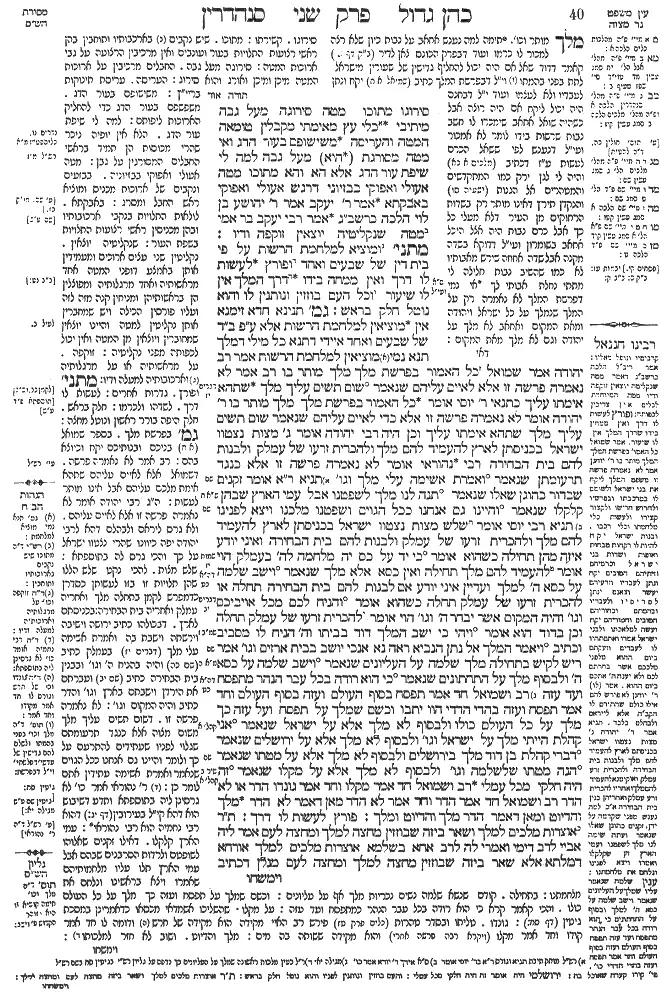
Sanhedrin 20b - Guemara
סירוגו מתוכו מטה סירוגה מעל גבה מיתיבי כלי עץ מאימתי מקבלין טומאה המטה והעריסה משישופם בעור הדג ואי מטה מסורגת (היא) מעל גבה למה לי שיפת עור הדג אלא הא והא מתוכו מטה אעולי ואפוקי בבזיוני דרגש אעולי ואפוקי באבקתא אמר ר' יעקב אמר ר' יהושע בן לוי הלכה כרשב"ג אמר רבי יעקב בר אמי מטה שנקליטיה יוצאין זוקפה ודיו:
מתני׳ ומוציא למלחמת הרשות על פי בית דין של שבעים ואחד ופורץ לעשות לו דרך ואין ממחה בידו דרך המלך אין לו שיעור וכל העם בוזזין ונותנין לו והוא נוטל חלק בראש:
גמ׳ תנינא חדא זימנא אין מוציאין למלחמת הרשות אלא ע"פ ב"ד של שבעים ואחד איידי דתנא כל מילי דמלך תנא נמי מוציאין למלחמת הרשות אמר רב יהודה אמר שמואל כל האמור בפרשת מלך מלך מותר בו רב אמר לא נאמרה פרשה זו אלא לאיים עליהם שנאמר (דברים יז, טו) שום תשים עליך מלך שתהא אימתו עליך כתנאי ר' יוסי אומר כל האמור בפרשת מלך מלך מותר בו ר' יהודה אומר לא נאמרה פרשה זו אלא כדי לאיים עליהם שנאמר שום תשים עליך מלך שתהא אימתו עליך וכן היה רבי יהודה אומר ג' מצות נצטוו ישראל בכניסתן לארץ להעמיד להם מלך ולהכרית זרעו של עמלק ולבנות להם בית הבחירה רבי נהוראי אומר לא נאמרה פרשה זו אלא כנגד תרעומתן שנאמר (דברים יז, יד) ואמרת אשימה עלי מלך וגו' תניא ר"א אומר זקנים שבדור כהוגן שאלו שנאמר (שמואל א ח, ו) תנה לנו מלך לשפטנו אבל עמי הארץ שבהן קלקלו שנאמר (שמואל א ח, כ) והיינו גם אנחנו ככל הגוים ושפטנו מלכנו ויצא לפנינו תניא רבי יוסי אומר שלש מצות נצטוו ישראל בכניסתן לארץ להעמיד להם מלך ולהכרית זרעו של עמלק ולבנות להם בית הבחירה ואיני יודע איזה מהן תחילה כשהוא אומר (שמות יז, טז) כי יד על כס יה מלחמה לה' בעמלק הוי אומר להעמיד להם מלך תחילה ואין כסא אלא מלך שנאמר (דברי הימים א כט, כג) וישב שלמה על כסא ה' למלך ועדיין איני יודע אם לבנות להם בית הבחירה תחלה או להכרית זרעו של עמלק תחלה כשהוא אומר (דברים יב, י) והניח לכם מכל אויביכם וגו' והיה המקום אשר יבחר ה' וגו' הוי אומר להכרית זרעו של עמלק תחלה וכן בדוד הוא אומר (שמואל ב ז, א) ויהי כי ישב המלך דוד בביתו וה' הניח לו מסביב וכתיב (שמואל ב ז, ב) ויאמר המלך אל נתן הנביא ראה נא אנכי יושב בבית ארזים וגו' אמר ריש לקיש בתחילה מלך שלמה על העליונים שנאמר (דברי הימים א כט, כג) וישב שלמה על כסא ה' ולבסוף מלך על התחתונים שנאמר (מלכים א ה, ד) כי הוא רודה בכל עבר הנהר מתפסח ועד עזה רב ושמואל חד אמר תפסח בסוף העולם ועזה בסוף העולם וחד אמר תפסח ועזה בהדי הדדי הוו יתבו וכשם שמלך על תפסח ועל עזה כך מלך על כל העולם כולו ולבסוף לא מלך אלא על ישראל שנאמר (קהלת א, יב) אני קהלת הייתי מלך על ישראל וגו' ולבסוף לא מלך אלא על ירושלים שנאמר (קהלת א, א) דברי קהלת בן דוד מלך בירושלים ולבסוף לא מלך אלא על מטתו שנאמר (שיר השירים ג, ז) הנה מטתו שלשלמה וגו' ולבסוף לא מלך אלא על מקלו שנאמר (קהלת ב, י) זה היה חלקי מכל עמלי רב ושמואל חד אמר מקלו וחד אמר גונדו הדר או לא הדר רב ושמואל חד אמר הדר וחד אמר לא הדר מאן דאמר לא הדר מלך והדיוט ומאן דאמר הדר מלך והדיוט ומלך:
פורץ לעשות לו דרך:
ת"ר אוצרות מלכים למלך ושאר ביזה שבוזזין מחצה למלך ומחצה לעם אמר ליה אביי לרב דימי ואמרי לה לרב אחא בשלמא אוצרות מלכים למלך אורחא דמלתא אלא שאר ביזה שבוזזין מחצה למלך ומחצה לעם מנלן דכתיב
Comments from Rashi on Masechet Sanhedrin Page 20b
סירוגו . קשירתו: מתוכו . שיש נקבים בארכבותיו ותוחבין בהן ראשי רצועות התלויות בעור ועונבים ואין מרכיבין הרצועה על גבי ארוכות המטה: סירוגה מעל גבה . החבלים מרכיבין על ארוכות המטה מיכן ומיכן ואורג והוא סירוג: העריסה . עריסת תינוקות בריי"ץ: משישופם בעור הדג . משפשפם בעור הדג כדי להחליק הארוכות ליפותם: למה לי שיפת עור הדג . הלא אין יופיה ניכר שהרי מכוסות הן תמיד בראשי החבלים המסורגין על גבן: מטה אעולי ואפוקי בבזיוניה . בבזעים ונקבים של ארוכות מכניס ומוציא ראש החבל ומסרג: באבקתא . לולאות התלויות בנקבי ארכובותיו ובהן מכניסין ראשי רצועות התלויות בשפת העור: שנקליטיה יוצאין . נקליטין שני עצים ארוכים ומעמידין אותן באמצע דופני המטה אחד מראשותיה ואחד מרגלותיה ומפוצלין הן בראשותיהן ומניחין קנה מזה לזה ועליו פורסין הכילה ויש שמחברין אותן נקליטין למטה והיינו יוצאין שמחוברין ויוצאין מן המטה ואין יכול לכפותה מפני נקליטיה: זוקפה . על מראשותיה או על מרגלותיה וארכובותיה למעלה ודיו: מתני' ופורץ . גדרות אחרים: לעשות לו דרך . לשדהו ולכרמו: חלק בראש . חלק היפה בורר ראשון ונוטל מחצה: גמ' בפרשת מלך . בספר שמואל (א ח) בניכם ובנותיכם יקח וכיוצא בהם: רב אמר לא נאמרה פרשה . דשמואל אלא לאיים עליהם שתהא אימת מלכם עליהם אבל אינו מותר לעשות: ה"ג רבי יהודה אומר לא נאמרה פרשה זו אלא לאיים עליהם . ולא גרס ליראם ולבהלם דהא לרבי יהודה יפה כיוונו שהרי נצטוו ישראל על כך והכי גרס לה בתוספתא: שלש מצות . להכי נקט שלש הללו שהן תלויות זו בזו לעשותן כסדרן כדמפרש לקמן בתחלה מלך ואחריה עמלק ואחריה בית הבחירה: בכניסתם לארץ . דבכולהו כתיב ירושה וישיבה וירשתה וישבת בה ואמרת אשימה עלי מלך (דברים יז) בעמלק כתיב (שם כה) והיה בהניח ה' וגו' ובבנין בית הבחירה כתיב (שם יב) ועברתם את הירדן וישבתם בארץ וגו' והדר כתיב והיה המקום וגו': לא נאמרה פרשה זו . דשום תשים עליך מלך משום מצוה אלא כנגד תרעומתם שגלוי לפניו שעתידים להתרעם על כך ולומר והיינו גם אנחנו ככל הגוים שנאמר ואמרת אשימה עתידין אתם לומר כן: ר' נהוראי אמר כו' לא גרסינן ליה בתוספתא ותדע דשיבוש הוא דהא קי"ל בעירובין (דף יג:) דהוא רבי נחמיה הוא רבי נהוראי: עמי הארץ קלקלו . דאילו זקנים שאלוהו לשופטם ולרדות הסרבנים שבהם אבל עמי הארץ תלו עליו מלחמותיהם שאמרו ויצא בראשינו ונלחם את מלחמתנו: בתחילה . קודם שנשא שלמה נשים נכריות מלך אף על עליונים: וכשם שמלך על תפסח ועזה כך מלך על כל העולם כולו . והכי קאמר קרא כי הוא רודה בכל עבר הנהר כמתפסח ועד עזה: על מקלו . שהשליכו אשמדאי מכסאו כדאמרינן במסכת גיטין (דף סח:): גונדו . טליתו ובסדר טהרות (כלים פרק טז) פירש רב האיי מקידה הוא מקידה של חרש ודומה לו חד אמר קודו וחד אמר מקלו (ויקרא רבה פרשה אחרי) והוא מקידה ששותה בה מים: מלך והדיוט . ושוב לא חזר למלכותו:
Comments from Tosafot - Sanhedrin 20b
מלך מותר וכו' . תימה למה נענש אחאב על נבות כיון שלא רצה למכור לו כרמו ועוד דבפרק הכונס צאן לדיר (ב"ק דף ס.) קאמר דדוד שאל אם היה יכול להחליף גדישין של שעורין מישראל לתת בפני בהמתו וי"ל דבפרשת המלך כתיב (שמואל א ח) יקח ונתן לעבדיו ולא לעצמו ועוד י"ל דבחנם היה יכול ליקח אם היה רוצה אבל כשהיה שואל אחאב שימכרו לו חשב נבות שרשות בידו לומר לא אמכור ועי"ל דנענש לפי ששאל הכרם לעשות ע"ז דכתיב (מלכים א כא) והיה לי לגן ירק כמו המתקדשים והמטהרים אל הגנות (ישעיהו סו) והנקדן תירץ דאינו מותר רק בשדות הרחוקים מן העיר דלא מעלי כל כך אבל כרם נבות היה אצל היכל אחאב בשומרון ועי"ל דדוקא בשדה מקנה אבל שדה אחוזה שירש מאבותיו לא כמו שהשיב נבות חלילה לי מתתי נחלת אבותי לך אי נמי דפרשת המלך לא נאמרה רק על המלך שנמלך על כל ישראל ויהודה ומאת המקום ואחאב לא מלך על יהודה וגם לא מלך מאת המקום:
Sanhedrin 20b - Mishnah translated into english
has its weaving on its inside, in that the straps woven to hold the bedding are tied in holes inside the bed posts, while a bed has its weaving on its outside, in that its straps are tied around the posts.
The Gemara raises an objection from the mishna (Kelim 16:1): From when are wooden vessels considered complete and susceptible to impurity? In the case of a bed or a crib, this happens once they are rubbed with fish skin, which smoothens the wood. The Gemara asks: And if a bed is woven on its back side, as Rabbi Yoḥanan claimed, why do I need rubbing with fish skin? Doesn’t the weaving cover the smooth part of the bed? Rather, instead of Rabbi Yoḥanan’s explanation, say that the weaving of both this and that, a dargash and a bed, is on its inside, and the difference between them is that on a bed, the straps go in and out of holes on the posts, whereas on a dargash, they go in and out of loops.
Rabbi Ya’akov says that Rabbi Yehoshua ben Levi says: The halakha is in accordance with the opinion of Rabban Shimon ben Gamliel that a mourner is not required to overturn a dargash, but only to untie the straps around its posts to let it fall on its own. In connection with this matter Rabbi Ya’akov bar Ami says: In the case of a bed whose posts [naklitim] on which the canopy is spread extend, meaning that they are very long, so that the bed will remain high off the ground even if it is overturned, the mourner stands it up in the time of mourning and that is sufficient.
MISHNA: And the king brings out people for conscription in an optional war, i.e., a war that is not mandated by the Torah and is not a war of defense, on the basis of a court of seventy-one, and breaches fences of anyone in his way to create a pathway for himself for his various needs, and no one can protest his power. The pathway of the king has no measure, neither lengthwise nor widthwise, and one cannot protest that this pathway is wider than necessary. And all the people take spoils in war and give them to him, and he takes the first portion of the spoils.
GEMARA: We already learn this on another occasion in the mishna (2a): And the king may bring out the nation to an optional war only on the basis of a court of seventy-one judges. Why did the mishna need to repeat it here? The Gemara explains: Since in the mishna here the tanna taught all matters pertaining to the king, he also taught the halakha of bringing out the nation to an optional war, although this halakha was taught at the beginning of the tractate in the context of the halakhot of the court of seventy-one judges.
With regard to the king’s rights, the Sages engaged in a dispute: Rav Yehuda says that Shmuel says: Concerning all the actions that are stated in the biblical passage about the king (see I Samuel 8:11–17), it is permitted for a king to perform them. Rav says: This biblical passage was stated only in order to threaten the Jewish people, so that they would accept the king’s sovereignty with reverence, as it is stated: “You shall set a king over you” (Deuteronomy 17:15), meaning, it is necessary that his fear should be upon you. But the king is not actually permitted to perform the actions stated there.
The Gemara comments that this dispute is parallel to a dispute between tanna’im, as it is taught in a baraita: Rabbi Yosei says: Concerning all the actions that are stated in the biblical passage about the king, it is permitted for a king to perform them. Rabbi Yehuda says: This biblical passage was stated only in order to threaten the Jewish people, as it is stated: “You shall set a king over you” (Deuteronomy 17:15), meaning, it is necessary that his fear should be upon you.
The baraita continues: And so would Rabbi Yehuda say: Three mitzvot were commanded to the Jewish people upon their entrance into Eretz Yisrael, which apply only in Eretz Yisrael: They were commanded to establish a king for themselves (see Deuteronomy 17:14–15), and to cut off the seed of Amalek in war (see Deuteronomy 25:17–19), and to build the Chosen House, i.e., the Temple, in Jerusalem (see Deuteronomy 12:10–12).
The baraita continues: Rabbi Nehorai says: This biblical passage about appointing a king was stated only in response to the Jewish people’s complaint, as it is stated: “When you come unto the land that the Lord your God gives you, and shall possess it, and shall dwell therein, and shall say: I will set a king over me, like all the nations that are around me” (Deuteronomy 17:14). The verse indicates that appointing a king is not a mitzva and that when Samuel spoke to them, he intended to frighten them so that they might regret their complaint and retract their request for a king.
It is taught in a baraita: Rabbi Eliezer says: The elders of Samuel’s generation asked appropriately, as it is stated: “Give us a king to judge us” (I Samuel 8:6), since they wanted a steady leader in place of Samuel. But the ignoramuses among them ruined it, as it is stated: “But the people refused to heed the voice of Samuel; and they said: No, but there shall be a king over us, that we also may be like all the nations, and that our king may judge us, and emerge before us, and fight our battles” (I Samuel 8:19–20).
It is taught in a baraita: Rabbi Yosei says: Three mitzvot were commanded to the Jewish people upon their entrance into Eretz Yisrael: To establish a king for themselves, and to cut off the seed of Amalek in war, and to build for themselves the Chosen House in Jerusalem. But I do not know which one they are obligated to do first.
When the verse states: “The hand upon the throne [kes] of the Lord: The Lord will have war with Amalek from generation to generation” (Exodus 17:16), you must say that this means they are obligated to establish a king for themselves first, before waging war with Amalek, and the verse is interpreted as follows: “Throne of the Lord” is nothing other than a symbolic name for a king, as it is stated: “Then Solomon sat on the throne [kisei] of the Lord as king” (I Chronicles 29:23), indicating that a king sits on “the throne of the Lord.”
The baraita continues: And still I do not know whether building them the Chosen House is first, or cutting off the seed of Amalek is first, i.e., after the appointing of the king. When the verse states: “And He will give you rest from all your enemies round about, so that you dwell in safety; then it shall come to pass that the place that the Lord your God shall choose to cause His name to dwell there, there shall you bring all that I command you” (Deuteronomy 12:10–11), you must say that the Jewish people were to cut off the seed of Amalek first.
The baraita continues: And so the verse states concerning David: “And it came to pass, when King David dwelled in his house and the Lord had given him rest round about from all his enemies” (II Samuel 7:1). And it is written immediately afterward: “That the king said to Nathan the prophet: See now, I dwell in a house of cedar but the Ark of God dwells within curtains” (II Samuel 7:2), and King David then began seeking a site to build the Temple.
§ The Gemara cites another tradition about Solomon’s kingdom. Reish Lakish says: Initially, Solomon ruled even over the supernal worlds, as it is stated: “Then Solomon sat on the throne of the Lord” (I Chronicles 29:23), indicating that his kingdom was like the Lord’s kingdom, reigning over all worlds. But ultimately, after he married foreign wives, he ruled over only the lower worlds, as it is stated: “For he had dominion over all the region on this side of the river, from Tiphsah even to Gaza” (I Kings 5:4).
Rav and Shmuel disagreed with regard to the meaning of this verse: One says that Tiphsah is a name of a place at the end of the world, at one end of Solomon’s kingdom, and Gaza is at the other end of the world. And one says that Tiphsah and Gaza sat next to each other, and the verse serves to teach that just as he ruled over Tiphsah and over Gaza, so he ruled over the whole world.
Reish Lakish continues: And ultimately, Solomon declined further still in that he ruled only over Israel, as it is stated: “I, Koheleth, have been king over Israel in Jerusalem” (Ecclesiastes 1:12). And ultimately, he ruled over only Jerusalem, as it is stated: “The words of Koheleth, the son of David, king in Jerusalem” (Ecclesiastes 1:1). And ultimately, he ruled over only his bed, as it is stated: “Behold, it is the bed of Solomon; threescore mighty men are about it, of the mighty men of Israel” (Song of Songs 3:7).
And ultimately, he declined so much that he ruled over only his staff, as it is stated: “And this was my portion from all of my labor” (Ecclesiastes 2:10). Rav and Shmuel disagreed with regard to the meaning of this latter verse as well. One says that the term “this” is a reference to his staff, and one says that it is a reference to his cloak.
The Gemara asks: Did he return to reign over the whole world, or did he ultimately not return? Rav and Shmuel disagreed about this: One says that he returned, and one says that he did not return. The one who says that he did not return reasons that Solomon was first a king and then an ordinary person [hedyot] and did not return to his reign; and the one who says that he returned reasons that Solomon was first a king and then an ordinary person and ultimately returned to be a king.
§ The mishna teaches that the king breaches fences of anyone in his way to create a pathway for himself. The Sages taught in a baraita: Treasures of kings taken as spoils in war belong to the king, and as for the rest of the spoils that are taken in a war, half is for the king and half is for the people. Abaye said to Rav Dimi, and some say that he said this to Rav Aḥa: Granted, treasures of kings belong to the king. This is the typical manner of kings, as it is fitting that the king should use the treasures of the kings he conquers; but with regard to the rest of the spoils that are taken in a war, where half is for the king and half is for the people, from where do we derive this halakha? He answered Abaye: The source is as it is written:
Traduction : The William Davidson digital edition of the Koren Noé Talmud, with commentary by Rabbi Adin Even-Israel Steinsaltz.