 Talmud Bavli
Yevamot 63a : Youtube
Daf TubeYoutube
2 video classes :
Yevamot Page 63a
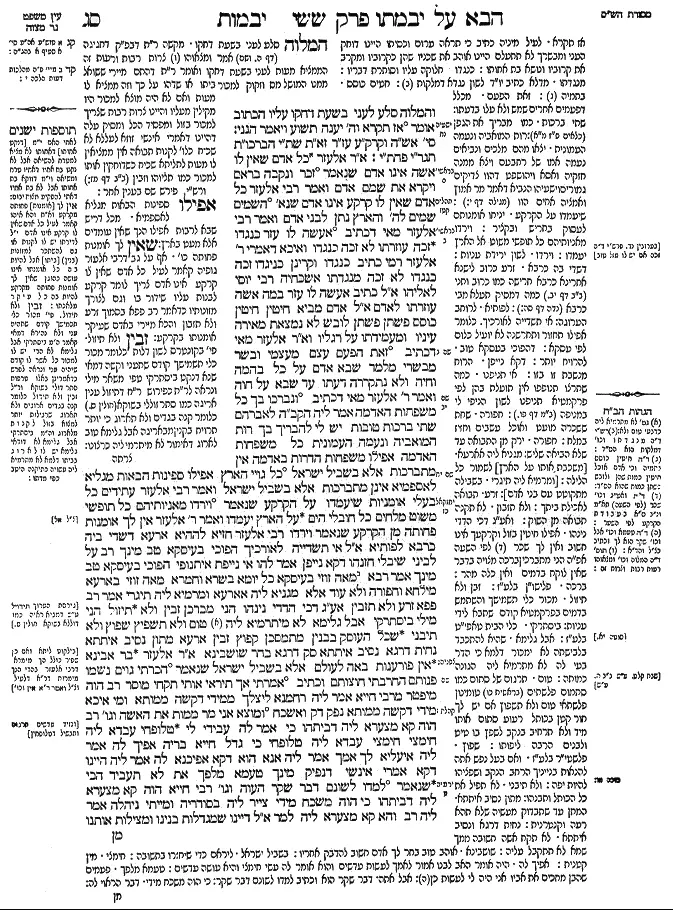
Yevamot 63a - Guemara
והמלוה סלע לעני בשעת דחקו עליו הכתוב אומר (ישעיהו נח, ט) אז תקרא וה' יענה תשוע ויאמר הנני:
סי' אש"ה וקרק"ע עז"ר זא"ת שת"י הברכו"ת תגר"י פחת"י:
א"ר אלעזר כל אדם שאין לו אשה אינו אדם שנאמר (בראשית ה, ב) זכר ונקבה בראם ויקרא את שמם אדם ואמר רבי אלעזר כל אדם שאין לו קרקע אינו אדם שנא' (תהלים קטו, טז) השמים שמים לה' והארץ נתן לבני אדם ואמר רבי אלעזר מאי דכתיב (בראשית ב, יח) אעשה לו עזר כנגדו זכה עוזרתו לא זכה כנגדו ואיכא דאמרי ר' אלעזר רמי כתיב כנגדו וקרינן כניגדו זכה כנגדו לא זכה מנגדתו אשכחיה רבי יוסי לאליהו א"ל כתיב אעשה לו עזר במה אשה עוזרתו לאדם א"ל אדם מביא חיטין חיטין כוסס פשתן פשתן לובש לא נמצאת מאירה עיניו ומעמידתו על רגליו וא"ר אלעזר מאי דכתיב (בראשית ב, כג) זאת הפעם עצם מעצמי ובשר מבשרי מלמד שבא אדם על כל בהמה וחיה ולא נתקררה דעתו עד שבא על חוה ואמר ר' אלעזר מאי דכתיב (בראשית יב, ג) ונברכו בך כל משפחות האדמה אמר ליה הקב"ה לאברהם שתי ברכות טובות יש לי להבריך בך רות המואביה ונעמה העמונית כל משפחות האדמה אפילו משפחות הדרות באדמה אין מתברכות אלא בשביל ישראל (בראשית יח, יח) כל גויי הארץ אפילו ספינות הבאות מגליא לאספמיא אינן מתברכות אלא בשביל ישראל ואמר רבי אלעזר עתידים כל בעלי אומניות שיעמדו על הקרקע שנאמר (יחזקאל כז, כט) וירדו מאניותיהם כל תופשי משוט מלחים כל חובלי הים על הארץ יעמדו ואמר ר' אלעזר אין לך אומנות פחותה מן הקרקע שנאמר וירדו רבי אלעזר חזיא לההיא ארעא דשדי ביה כרבא לפותיא א"ל אי תשדייה לאורכיך הפוכי בעיסקא טב מינך רב על לביני שיבלי חזנהו דקא נייפן אמר להו אי נייפת איתנופי הפוכי בעיסקא טב מינך אמר רבא מאה זוזי בעיסקא כל יומא בשרא וחמרא מאה זוזי בארעא מילחא וחפורה ולא עוד אלא מגניא ליה אארעא ומרמיא ליה תיגרי אמר רב פפא זרע ולא תזבין אע"ג דכי הדדי נינהו הני מברכן זבין ולא תיזול הני מילי ביסתרקי אבל גלימא לא מיתרמיא ליה טום ולא תשפיץ שפוץ ולא תיבני שכל העוסק בבנין מתמסכן קפוץ זבין ארעא מתון נסיב איתתא נחית דרגא נסיב איתתא סק דרגא בחר שושבינא א"ר אלעזר בר אבינא אין פורענות באה לעולם אלא בשביל ישראל שנאמר (צפניה ג, ו) הכרתי גוים נשמו פנותם החרבתי חוצותם וכתיב (צפניה ג, ז) אמרתי אך תיראי אותי תקחי מוסר רב הוה מיפטר מרבי חייא אמר ליה רחמנא ליצלך ממידי דקשה ממותא ומי איכא מידי דקשה ממותא נפק דק ואשכח (קהלת ז, כו) ומוצא אני מר ממות את האשה וגו' רב הוה קא מצערא ליה דביתהו כי אמר לה עבידי לי טלופחי עבדא ליה חימצי חימצי עבדא ליה טלופחי כי גדל חייא בריה אפיך לה אמר ליה איעליא לך אמך אמר ליה אנא הוא דקא אפיכנא לה אמר ליה היינו דקא אמרי אינשי דנפיק מינך טעמא מלפך את לא תעביד הכי שנאמר (ירמיהו ט, ד) למדו לשונם דבר שקר העוה וגו' רבי חייא הוה קא מצערא ליה דביתהו כי הוה משכח מידי צייר ליה בסודריה ומייתי ניהלה אמר ליה רב והא קא מצערא ליה למר א"ל דיינו שמגדלות בנינו ומצילות אותנו
Comments from Rashi on Masechet Yevamot Page 63a
אז תקרא . לעיל מיניה כתיב כי תראה ערום וכסיתו היינו דוחק העני ומבשרך לא תתעלם היינו אוהב את שכניו שהן כקרוביו ומקרב את קרוביו ונושא בת אחותו: כנגדו . חלוקה עליו וסותרת דבריו: מנגדתו . מדלא כתיב יו"ד לשון נגדא דמלקות: חטים כוסס . בתמיה: זאת הפעם . מכלל דפעמים אחרים שמש ולא עלו בדעתו: שתי ברכות . כמו מבריך את הגפן (כלאים פ"ז מ"א): רות המואביה ונעמה העמונית . יצאו מהם מלכים ונביאים נעמה אמו של רחבעם ויצא ממנה חזקיה ואסא ויהושפע דהוו צדיקים גמורים וישעיהו הנביא דאמר מר אמוץ ואמציה אחים הוו (מגילה דף י:): שיעמדו על הקרקע . יניחו אומנותם לעסוק בחריש ובקציר: וירדו מאניותיהם כל תופשי משוט אל הארץ יעמדו: וירדו . לשון ירידת עניות: דשדי בה כרבא . זרע כרוב. לישנא אחרינא כרבא חרישה כמו כרוב ותני (ב"ב דף יב.) כמה דמסיק תעלא מבי כרבא (נדה דף סה:): לפותיא . לרוחב הערוגה: אי תשדייה לאורכיך . כלומר אפילו תחזור ותחרשנה לא יועיל כלום לפי עסקא: דהפוכי בעסקא טוב . להרויח יותר: דקא נייפן . הרוח מנשבת זו בזו: אי תניפנו . כמה שתרצו תנופפו אין תועלת בהן לפי פרקמטיא. תניפנו לשון הניפי לי במניפה (ב"מ דף פו.): חפורה . שחת ששכרה מועט ואוכל עשבים וחזיז במלח: חפורה . ירק מן התבואה עד שלא הביאה שליש: מגניא ליה אארעא . [משכבת אותו על הארץ] לשמור כל הלילה: [ומרמיא ליה תיגרי . בשבילה מתקוטט עם בני אדם]: זרע . תבואה לאכילת ביתך: ולא תזבון . לא תקנה תבואה מן השוק: ואע"ג דכי הדדי נינהו . אפילו חיטין בזול וקרקעך אינו חשוב ואין לך שכר לפי השעה אפ"ה הני מתברכין. ברכה מצויה בדבר שאין לוקח בדמים ואין כלה מהר: ברכה . פוישו"ן בלע"ז: זבן ולא תיזול . מכור כלי תשמישך והשתמש בדמים בפרקמטיא קודם שתבא לידי עניות: ביסתרקי . כלי הבית טאפי"ט (טפי"ד: שטיח (ראה בספר זיהויים שונים. אני בחרתי את התעתיק הזה, הקרוב יותר לדף הגמרא שלנו. ד.ג.)) בלע"ז: אבל גלימא . שהיא להתכבד בלבישתה לא ימכור דלמא כי הדר בעי לה לא מתרמיא ליה הגונה כמותה: טום . תרגום של סתום כמו סתמום פלשתים (בראשית כו) טומינון פלשתאי. טום ולא תשפוץ אם יש לך חור קטן בכותל רעוע סתום אותו מיד ולא תרחיב בנקב לשפץ בו טיט ולבנים הרבה ליפותו: שפוץ . פלשטי"ר (פלשטי"ר: לטייח) בלע"ז. ואם בעל נפש אתה להנאות בנייניך הרחב הנקב ושפציהו להיות יפה: ולא תיבני . לא תפיל את כל הכותל ותבנהו: מתון נסיב איתתא . המתן עד שתבדוק מעשיה שלא תהא רעה וקנטרנית: נחית דרגא ונסיב איתתא . לא תקח אשה חשובה ממך שמא לא תתקבל עליה: שושבינא . אוהב טוב. בחר לך אדם חשוב להדבק אחריו: בשביל ישראל . ליראם כדי שיחזרו בתשובה: חימצי . מין קטנית: אפיך לה . היה אומר האב לבנו אמור לאמך לעשות עדשים והוא אומר לה עשי חימצי והיא עושה עדשים: טעמא מלפך . פעמים שהבן מחכים את אביו אני היה לי לעשות כן: אבל אתה . דבר שקר הוא וכתיב למדו לשונם דבר שקר: כי הוה משכח מידי . דבר הראוי לה:
Comments from Tosafot - Yevamot 63a
המלוה סלע לעני בשעת דחקו . מקשה ר"ת דבפ"ק דחגיגה (דף ה. ושם) אמר ומצאוהו צרות רבות ורעות זה הממציא מעות לעני בשעת דחקו ואומר ר"ת דהתם מיירי ששואל ממנו המושל מס וזקוק למכור ביתו או שדהו על כך וזה ממציא לו מעות ואם לא היה מוצא למכור היו מקילין מעליו והיינו צרות רבות שצריך למכור בזול ומפסיד הכל ומסיק עלה דהיינו דאמרי אינשי זוזא לעללא לא שכיח כלו' לקנות תבואה אין ממציאין לו מעות לתליתא שכיח כשדוחקין אותו למכור כמו תליוהו וזבין (ב"ב דף מז:) ורש"י פירש שם בענין אחר: אפילו ספינות הבאות מגליא לאספמיא . מכל דריש שבא לרבות אפילו הנך שאין עומדים אלא מעט בארץ: שאין לך אומנות פחותה כו' . אף על גב דרבי אלעזר גופיה קאמר לעיל כל אדם שאין לו קרקע אינו אדם צריך לומר קרקע לבנות עליו שידור בו וגם לצורך מזונותיו כדאמר רב פפא בסמוך זרע ולא תזבון והכא מיירי באדם שעיקר אומנותו בקרקע: זבין ולא תיזול . פי' בקונטרס לשון דלות כלומר מכור כלי תשמישך קודם שתעני וקשה דמאי שנא דנקט ביסתרקי טפי משאר מילי ונראה לר"ת כפירוש ר"ח דתיזול ענין אריגה כמו סתר זוללי בשוקא (חולין ס.) כלומר קנה בגדים ולא תארוג כי יותר תרויח בקנין מבאריגה אבל גלימא טוב לארוג דאימור לא מיתרמי ליה כרצונו:
Yevamot 63a - Mishnah translated into english
and who lends a sela to a pauper at his time of need, about him the verse states: “Then shall you call, and the Lord will answer; you shall cry, and He will say: Here I am” (Isaiah 58:9).
§ The Gemara provides a mnemonic device for a series of statements cited in the name of Rabbi Elazar: Woman; and land; helper; this; two; the blessings; merchants; lowly. The Gemara presents these statements: Rabbi Elazar said: Any man who does not have a wife is not a man, as it is stated: “Male and female He created them…and called their name Adam” (Genesis 5:2). And Rabbi Elazar said: Any man who does not have his own land is not a man, as it is stated: “The heavens are the heavens of the Lord; but the earth He has given to the children of men” (Psalms 115:16).
And Rabbi Elazar said: What is the meaning of that which is written: “I will make him a helpmate for him [kenegdo]” (Genesis 2:18)? If one is worthy his wife helps him; if he is not worthy she is against him. And some say a slightly different version: Rabbi Elazar raised a contradiction: It is written in the Torah with a spelling that allows it to be read: Striking him [kenagdo], and we read it as though it said: For him [kenegdo]. If he is worthy she is for him as his helpmate; if he is not worthy she strikes him.
The Gemara relates that Rabbi Yosei encountered Elijah the prophet and said to him: It is written: I will make him a helpmate. In what manner does a woman help a man? Elijah said to him: When a man brings wheat from the field, does he chew raw wheat? When he brings home flax, does he wear unprocessed flax? His wife turns the raw products into bread and clothing. Is his wife not found to be the one who lights up his eyes and stands him on his feet?
And Rabbi Elazar said: What is the meaning of that which is written: “This is now bone of my bones and flesh of my flesh” (Genesis 2:23)? This teaches that Adam had intercourse with each animal and beast in his search for his mate, and his mind was not at ease, in accordance with the verse: “And for Adam, there was not found a helpmate for him” (Genesis 2:20), until he had intercourse with Eve.
And Rabbi Elazar said: What is the meaning of that which is written: “And in you shall all the families of the earth be blessed [nivrekhu]” (Genesis 12:3)? The Holy One, Blessed be He, said to Abraham: I have two good shoots to graft [lehavrikh] onto you: Ruth the Moabite, the ancestress of the house of David, and Naamah the Ammonite, whose marriage with Solomon led to the ensuing dynasty of the kings of Judea. “All the families of the earth” means: Even families that live in the earth, i.e., who have land of their own, are blessed only due to the Jewish people. Similarly, when the verse states: “All the nations of the earth shall be blessed in him” (Genesis 18:18), it indicates that even ships that come from Galia to Hispania are blessed only due to the Jewish people.
And Rabbi Elazar said: All craftsmen are destined to stand upon and work the land, as it is stated: “And all that handle the oar, the mariners, and all the pilots of the sea, shall come down from their ships, they shall stand upon the land” (Ezekiel 27:29). And Rabbi Elazar said: There is no occupation lowlier than working the land, as it is stated: “And they shall come down,” implying that one who works the land is of lower stature than even a sailor. The Gemara similarly relates: Rabbi Elazar saw land that was plowed across its width. He said to it: Even if they plow you once more lengthwise, for further improvement, conducting business is better than farming with you, as the potential profits gained by selling merchandise are far greater than those from working the land.
The Gemara relates a similar incident: Rav entered between the sheaves in a field and saw them waving in the wind. He said to them: If you want to wave go ahead and wave, but conducting business is better than farming with you. Rava similarly said: One who has a hundred dinars that are invested in a business is able to eat meat and wine every day, whereas he who has a hundred dinars worth of land eats only salt and vegetables. And what is more, working the land causes him to lie on the ground at night in order to guard it, and it draws quarrels upon him with other people.
Rav Pappa said: Sow your own produce and do not buy it. Even though they are equal to each other in value, these that you sow will be blessed. Conversely, buy your clothes rather than weave [teizul] them yourself. The Gemara comments: This applies only to mats [bistarkei], but with regard to the cloak one wears, perhaps he will not find it precisely to his liking, and therefore he should make his own cloak, which fits his measurements.
Rav Pappa further advised: If there is a hole in your house, close it up and do not enlarge it and then plaster it, or at least plaster it and do not knock it down and build it again. As, whoever engages in construction becomes poor. Hurry to buy land so that you do not lose the opportunity. Be patient and marry a woman who is suitable for you. Descend a level to marry a woman of lower social status, and ascend a level to choose a friend [shushevina].
Rabbi Elazar bar Avina said: Calamity befalls the world only due to the sins of the Jewish people, as it is stated: “I have cut off nations, their corners are desolate; I have made their streets waste” (Zephaniah 3:6), and it is written: “I said: Surely you will fear Me, you will receive correction” (Zephaniah 3:7). This indicates that other nations were punished so that the Jewish people would mend their ways.
The Gemara cites more statements with regard to wives. When Rav was taking leave of his uncle and teacher, Rabbi Ḥiyya, upon his return from Eretz Yisrael to Babylonia, Rabbi Ḥiyya said to him: May the Merciful One save you from something that is worse than death. Rav was perplexed: Is there anything that is worse than death? He went, examined the sources, and found the following verse: “And I find more bitter than death the woman, etc.” (Ecclesiastes 7:26). Rabbi Ḥiyya was hinting at this verse, and indeed, Rav’s wife would constantly aggravate him. When he would say to her: Prepare me lentils, she would prepare him peas; if he asked her for peas, she would prepare him lentils.
When Ḥiyya, his son, grew up, he would reverse the requests Rav asked him to convey to her, so that Rav would get what he wanted. Rav said to his son Ḥiyya: Your mother has improved now that you convey my requests. He said to Rav: It is I who reverse your request to her. Rav said to him: This is an example of the well-known adage that people say: He who comes from you shall teach you wisdom; I should have thought of that idea myself. You, however, should not do so, i.e., reverse my request, as it is stated: “They have taught their tongue to speak lies, they weary themselves to commit iniquity, etc.” (Jeremiah 9:4). If you attribute such a request to me, you will have uttered a falsehood.
The Gemara relates a similar story. Rabbi Ḥiyya’s wife would constantly aggravate him. Nevertheless, when he would find something she would appreciate, he would wrap it in his shawl and bring it to her. Rav said to him: Doesn’t she constantly aggravate you? Why do you bring her things? Rabbi Ḥiyya said to him: It is enough for us that our wives raise our children and save us
Traduction : The William Davidson digital edition of the Koren Noé Talmud, with commentary by Rabbi Adin Even-Israel Steinsaltz.