 Talmud Bavli
Yevamot 101a : Youtube
Daf TubeYoutube
1 video class :
Yevamot Page 101a
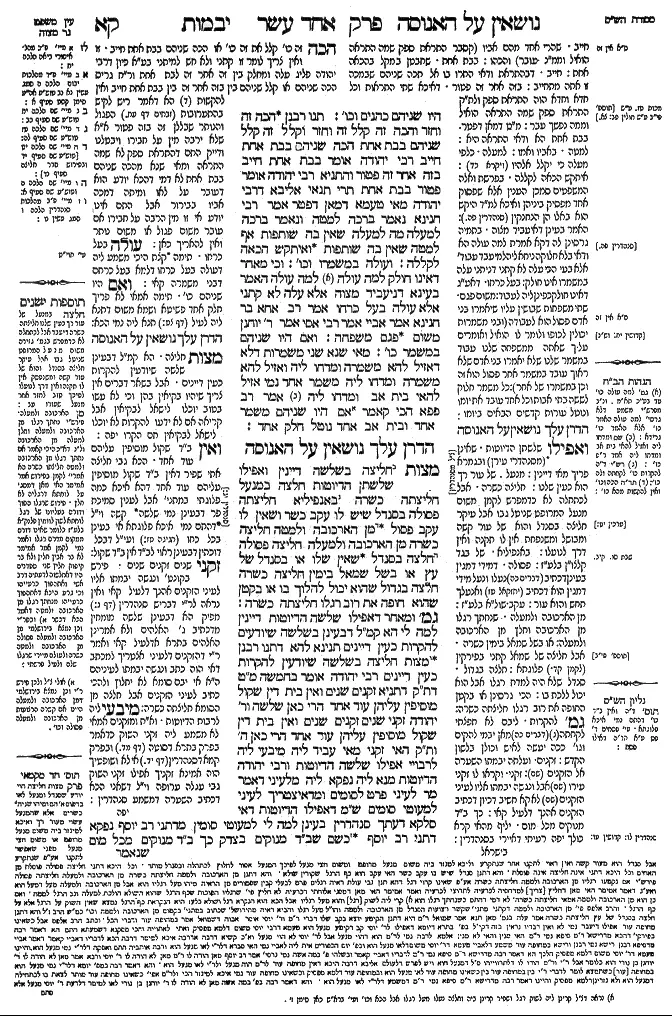
Yevamot 101a - Guemara
היו שניהם כהנים וכו':
תנו רבנן הכה זה וחזר והכה זה קלל זה וחזר וקלל זה קלל שניהם בבת אחת הכה שניהם בבת אחת חייב רבי יהודה אומר בבת אחת חייב בזה אחר זה פטור והתניא רבי יהודה אומר פטור בבת אחת תרי תנאי אליבא דרבי יהודה מאי טעמא דמאן דפטר אמר רבי חנינא נאמר ברכה למטה ונאמר ברכה למעלה מה למעלה שאין בה שותפות אף למטה שאין בה שותפות ואיתקש הכאה לקללה:
ועולה במשמרו וכו':
וכי מאחר דאינו חולק למה עולה למה עולה האמר בעינא דניעביד מצוה אלא עלה לא קתני אלא עולה בעל כרחו אמר רב אחא בר חנינא אמר אביי אמר רבי אסי אמר ר' יוחנן משום פגם משפחה:
ואם היו שניהם במשמר כו':
מאי שנא שני משמרות דלא דאזיל להא משמרה ומדחו ליה ואזיל להא משמרה ומדחו ליה משמר אחד נמי אזיל להאי בית אב ומדחו ליה אמר רב פפא הכי קאמר אם היו שניהם משמר אחד ובית אב אחד נוטל חלק אחד:
הדרן עלך נושאין על האנוסה
מתני׳ מצות חליצה בשלשה דיינין ואפילו שלשתן הדיוטות חלצה במנעל חליצתה כשרה באנפיליא חליצתה פסולה בסנדל שיש לו עקב כשר ושאין לו עקב פסול מן הארכובה ולמטה חליצה כשרה מן הארכובה ולמעלה חליצה פסולה חלצה בסנדל שאין שלו או בסנדל של עץ או בשל שמאל בימין חליצה כשרה חלצה בגדול שהוא יכול להלוך בו או בקטן שהוא חופה את רוב רגלו חליצתה כשרה:
גמ׳ ומאחר דאפילו שלשה הדיוטות דיינין למה לי הא קמ"ל דבעינן בשלשה שיודעים להקרות כעין דיינים תנינא להא דתנו רבנן מצות חליצה בשלשה שיודעין להקרות כעין דיינים רבי יהודה אומר בחמשה מ"ט דת"ק דתניא זקנים שנים ואין בית דין שקול מוסיפין עליהן עוד אחד הרי כאן שלשה ור' יהודה זקני שנים זקנים שנים ואין בית דין שקול מוסיפין עליהן עוד אחד הרי כאן ה' ות"ק האי זקני מאי עביד ליה מיבעי ליה לרבויי אפילו שלשה הדיוטות ורבי יהודה הדיוטות מנא ליה נפקא ליה מלעיני דאמר מר לעיני פרט לסומים ומדאיצטריך לעיני למעוטי סומים ש"מ דאפילו הדיוטות דאי סלקא דעתך סנהדרין בעינן למה לי למעוטי סומין מדתני רב יוסף נפקא דתני רב יוסף כשם שב"ד מנוקים בצדק כך ב"ד מנוקים מכל מום
Comments from Rashi on Masechet Yevamot Page 101a
חייב . שהרי אחד מהם אביו (קסבר התראת ספק שמה התראה הואיל וממ"נ עובר) והכהו: בבת אחת . שחבטן במקל בהכאה אחת: חייב . דבהתראת ודאי התרו בו אל תכה שניהם שבמכה זו אתה מתחייב: בזה אחר זה פטור . דאיכא שתי התראות וכל חדא וחדא הוה התראת ספק ולת"ק התראת ספק שמה התראה הואיל וממה נפשך עבר: מ"ט דמאן דפטר . בבת אחת הא ודאי התראה היא: למטה . באביו ואמו: למעלה . כלפי מעלה כי יקלל אלהיו (ויקרא כד): איתקש הכאה לקללה . בפרשת ואלה המשפטים סמכן הענין אלא שפסוק אחד מפסיק ביניהן ואיכא למ"ד היקש הוא באלו הן הנחנקין (סנהדרין פה.): האמר בעינן דאיעביד מצוה . בתמיה גרסינן לה דקא אמרת למה עולה הא ודאי בלא חלוקה ניחא ליה למיעבד עבוד' אלא בעי הכי עלה לא קתני דניתני עלה במשמרו אינו חולק: בעל כרחו . דאע"ג דאינו חולק כפינן ליה לעבוד: משום פגם . שתי משפחות שבושין עליו שיאמרו בני אדם פסול הוא לעבודה (ובני משמרות יכולין לכופו ולומר לו הואיל ואומרים עליך שאתה ממשפחה שלנו עבוד במשמר שלנו שלא יאמרו בני אדם שלא ראוך עובד במשמר אחר פסול הוא זה וכן במשמרו של אחר): כל משמר חלוק לששה בתי אבות וכל אחד עובד את יומו ונוטל עורות קדשים הבאים ביומו: מתני' ואפילו שלשתן הדיוטות . שאינן (מסנהדרי עירן). ובגמרא פריך מאי דיינין: מנעל . של עור רך הוא כעין שלנו: חליצה כשרה . אבל לכתחלה לא כדמפרש לקמן משום מנעל המרופט שניטל גבו אבל עיקר חליצה בסנדל והוא של עור קשה ומבושל ומשנפחת אין לו תקנה ואין דרך לנועלו: באנפיליא . של בגד קלצו"ן בלע"ז: פסולה . דמידי דמגין בעינן דכתיב (דברים כה) נעלו ונעל מידי דמגין הוא דכתיב (יחזקאל טז) ואנעלך תחש והוא עור: עקב . שול"א בלע"ז: מן הארכובה ולמעלה . שנחתך רגלו מן הארכובה וחלץ מן הארכובה ולמעלה: או בשל שמאל בימין כשרה . אבל חליצה של שמאל קתני בפירקין (לקמן יבמות קד.) פלוגתא: חלצה בגדול . סנדל שלא היה למדת רגלו אבל הוא יכול ללכת בו: הכי גרסינן או בקטן החופה את רוב רגלו חליצתה כשרה: גמ' להקרות . ליבם לא חפצתי לקחתה (דברים כה) מאן יבמי להקים וגו' ככה יעשה לאיש וכולן בלשון הקדש: זקנים . ועלתה יבמתו השערה אל הזקנים (שם): זקני . וקראו לו זקני עירו (שם). אבל ונגשה יבמתו אליו לעיני הזקנים (שם) לא קא חשיב דכיון דכתיב הזקנים אהנך דלעיל קאי: כך ב"ד מנוקים מכל מום . יליף מהאי קרא כולך יפה רעיתי דאיירי בסנהדרין:
Comments from Tosafot - Yevamot 101a
הכה זה כו' קלל את זה כו' או הכה שניהם בבת אחת חייב . זו ואין צריך לומר זו קתני ולא חש למיתני בע"א כיון דרבי יהודה פליג עלה ומחלק בין זה אחר זה לבת אחת ור"ח גריס הכה שניהם או קלל שניהם בין בזה אחר זה בין בבת אחת חייב ואין להקשות הא דאמר ריש לקיש בהתערובות (זבחים דף עח.) הפגול והנותר שבללן זה בזה פטור א"א שלא ירבה מין על חבירו ויבטלנו ודייק התם דהתראת ספק לא שמה התראה ומאי שנא מהכה שניהם בבת אחת לא דמי דהכא יודע הוא דעובר על לאו ומיתה דמכה אביו בבירור אבל התם אינו יודע אי זו מין הרבה על חבירו אם עובר משום פגול או משום נותר ואין להאריך כאן: עולה בעל כרחו . תימה קצת היכי משמע ליה דעולה בעל כרחו דלמא בעל כרחם דבני משמרה קאי: ואם היו שניהם כו' . תימה אמאי לא פריך חלק אחד פשיטא ושמא משום דתנא ליה לעיל (יבמות דף צט:) תנא ליה נמי הכא: מתני' מצות חליצה. הא קמ"ל דבעינן שלשה שיודעין להקרות כעין דיינים . אבל בשאר דברים אין צריך שיהיו בקיאין בהן וכי לא עשו בטוב יוכלו לישאל לבקיאין אבל קריאה אם לא ידעו להקרות לא יוכלו לישאל לבקיאין אם הקרו יפה: ואין ב"ד שקול מוסיפין עליהם עוד אחד . הכא גבי חליצה אתי שפיר דאין ב"ד שקול מוסיפין עליהם עוד אחד דהא איכא כמה פלוגתי במתני' אבל לענין סמיכת פר דבעינן נמי שלשה קשה וי"ל דהתם נמי איכא פלוגתא אי בעינן בכל כחו (חגיגה טז:) ועי"ל דבכל דוכתין דבעינן ראוי לב"ד אין ב"ד שקול: זקני שנים זקנים שנים . פירש בקונט' ונגשה יבמתו אליו לעיני הזקנים אהנך דלעיל קאי ואין נראה לר"י דבריש סנהדרין (דף ג:) מפיק הא דבעינן שלשה מומחין מדכתיב ג' האלהים ולא אמרינן האלהים בתרא אדלעיל קאי ואמר ר"י דהזקנים דלעיני אצטריך למכתב דאי הוה כתב ונגשה יבמתו לעיניהם ה"א אי יבם סומא לא יחלוץ ולהכי כתיב לעיני הזקנים אבל חלצה מן הסומא חליצתה כשרה: מיבעי ליה לרבות הדיוטות . וא"ת ומזקנים אמאי לא משמע ליה זקני השוק כדאמר בפרק בתרא דסוטה (דף מד.) ובפרק קמא דסנהדרין (דף יד.) אי לא ושופטיך הוה אמינא זקניך אפילו זקני השוק גבי עגלה ערופה וי"ל דשאני הכא דכתיב השערה דמשמע סנהדרין: ב"ד מנוקים מכל מום . בסנהדרין (דף לו: ושם) ובפ' בא סימן (נדה מט: ושם) דקאמר חדא לאתויי גר וחדא לאתויי ממזר אמתני' דאין הכל כשרים לדון דיני נפשות לא מצי למימר לאתויי בעלי מומין דבפסול יוחסין איירי כדקתני סיפא אין כשרים אלא כהנים לוים וישראלים המשיאים לכהונה:
Yevamot 101a - Mishnah translated into english
§ It is stated in the mishna that if both uncertain fathers were priests, the son is exempt from punishment for striking and for cursing them. The Sages taught: If he struck this uncertain father, and then struck that one, or if he cursed this one and then cursed that one, or if he cursed both of them simultaneously or struck both of them simultaneously, in all these cases he is liable to receive capital punishment, as one of them is certainly his father. Rabbi Yehuda says: Although if he struck or cursed both of them simultaneously he is liable, if he struck or cursed them one after the other, he is exempt.
The Gemara asks: But isn’t it taught in a baraita that Rabbi Yehuda says: He is exempt even if he struck or cursed them simultaneously? The Gemara answers: These are the opinions of two tanna’im, and they each expressed their opinion in accordance with that of Rabbi Yehuda.
The Gemara asks: What is the reasoning of the one who exempts the son from punishment? Rabbi Ḥanina said: Blessing is stated below (Leviticus 20:9), with regard to cursing parents, and blessing is stated above (Exodus 22:27), with regard to cursing God. The Sages used the word blessing as a euphemism for cursing, as it was their custom to avoid uncouth language. Just as the statement above, in Exodus, is referring to a curse that does not involve partnership, as God is One, so too the statement below, in Leviticus, is referring exclusively to a curse of a parent that does not involve partnership, i.e., when there is no doubt with regard to his identity. And striking is juxtaposed with cursing. Just as one is not liable for cursing when it is unclear who his father is, the same applies to striking.
§ It is stated in the mishna: And he ascends to the Temple service with the priestly watch of both uncertain fathers. However, he does not receive a share of the offerings of either watch. The Gemara asks: Since he does not receive a share, why does he ascend? The Gemara is puzzled by this question: Why does he ascend? Doesn’t he naturally say: I wish to perform a mitzva by serving as a priest? The Gemara explains: However, note that the mishna does not state: If he ascended, but rather: He ascends, in the present tense. Apparently he is obligated to ascend, even against his will.
Why is he under obligation to serve in the Temple? Rav Aḥa bar Ḥanina said that Abaye said that Rabbi Yoḥanan said: He is obligated due to the potential family flaw, i.e., harm to the family name. If he does not serve with these watches, people will infer that both families are unfit for the priesthood, which is not the case.
It is stated in the mishna: And if both uncertain fathers were in one priestly watch, he receives one share. The Gemara asks: What is different about the case in which the uncertain fathers belonged to two priestly watches, with regard to which the mishna states that the son does not receive a share, and the case in which they belonged to the same watch? Just as in the case where they belonged to two watches, he goes to this watch to receive a share and they reject him, claiming that he belongs to the other watch, and he goes to that watch and they reject him in the same manner, so too, where they belonged to one watch, he goes to this patrilineal family to receive a share on their day, and they reject him, and the other patrilineal family rejects him too, as his true patrilineal family is unknown.
Rav Pappa said that this is what the mishna is saying: If they were both in one priestly watch and one patrilineal family, he receives one share, as he cannot be rejected.
MISHNA: The mitzva of ḥalitza, the ritual through which the yavam frees the yevama of her levirate bonds, must be performed before three judges, and the ritual does not require the judges to be experts fit to adjudicate other matters, as even if all three are laymen, it is acceptable. If she performed ḥalitza while he was wearing a shoe made of soft leather that covers the whole foot, her ḥalitza is valid, but if she performed ḥalitza while he was wearing a soft shoe [anpileya] made of cloth, her ḥalitza is invalid, as it is not considered a real shoe. If ḥalitza was performed while he was wearing a sandal, i.e., footwear made of hard leather, that has a heel, it is valid; but if performed with a sandal without a heel, it is invalid ḥalitza.
If the leg of the yavam was amputated anywhere from the knee down and she performed ḥalitza as he wore a shoe on the stump of his leg, it is valid ḥalitza. If, however, the leg was amputated anywhere from the knee and above, and she performed ḥalitza as he wore a shoe on the stump of his leg, it is invalid ḥalitza. If she performed ḥalitza while the man was wearing a sandal that did not belong to him, or a sandal made of wood, or on the left shoe, which was being worn on his right foot, it is valid ḥalitza. If she performed ḥalitza as the man was wearing a shoe that was too large for him but which he can still walk in, or a shoe that was too small but that covered most of his foot, her ḥalitza is valid.
GEMARA: The Gemara asks: Now that the mishna says that even three laymen are qualified for ḥalitza, why do I need it to mention judges? It would be sufficient to say that the mitzva requires three people. The Gemara answers: This teaches us that we require three people who can at least dictate the verses read during the ḥalitza ritual to the participants like judges, as they are not complete laymen in that they are literate. The Gemara comments: We already learned this halakha in a baraita, as the Sages taught: The mitzva of ḥalitza is performed before three individuals who know how to dictate the verses like judges. Rabbi Yehuda says: Ḥalitza must be performed before five individuals acting as judges.
The Gemara discusses the dispute as to how many individuals must conduct the ḥalitza: What is the reason of the first tanna, who requires three? As it is taught in a baraita concerning ḥalitza: “His yevama shall ascend to the gate to the Elders” (Deuteronomy 25:7). Since the minimum number of the plural term “Elders” is two, and since, in order to prevent a paralyzing disagreement between an even number of judges, a court may not be composed of an even number of judges, one more is added to them. Therefore, there are three judges. And Rabbi Yehuda interprets the verse otherwise, for one verse states: “And the Elders of his city shall call him” (Deuteronomy 25:8), indicating a minimum of two judges, and it says in the following verse “Elders” another time, indicating an additional two people, and since a court may not be composed of an even number of judges, one more is added to them. Therefore, there are five judges.
The Gemara asks: And what does the first tanna do with this second appearance of the word “Elders”? The Gemara explains: He requires it for allowing the inclusion of even three laymen as presiding judges for ḥalitza. The word “Elders” would seem to limit ḥalitza to recognized judges, but since it is mentioned twice, it becomes an instance of the hermeneutic principle that one restrictive expression appearing after another restrictive expression comes to include some additional halakha. Therefore, repeating the restrictive term “Elders” twice actually comes to include laymen rather than exclude them.
The Gemara asks: From where does Rabbi Yehuda derive the halakha that ḥalitza can be done in the presence of laymen? The Gemara answers: He derives it from what is written: “Before the eyes of the Elders” (Deuteronomy 25:9), for the Master said: “Before the eyes of” excludes blind individuals from being the judges conducting the ḥalitza.
And since it was necessary to say “before the eyes of” to exclude blind individuals from being judges for ḥalitza, learn from here that even laymen are qualified to be judges for ḥalitza. For if it enters your mind to say that we require expert judges who are fit to sit on the high court of the Sanhedrin, then why do I need to exclude blind individuals? For that matter can be derived from a baraita that Rav Yosef taught, as Rav Yosef taught: Just as a court must be clean in righteousness, as they are careful to judge others justly, and are free of guilt and suspicion, likewise a court must be clean of any physical blemish, with judges who are physically complete.
Traduction : The William Davidson digital edition of the Koren Noé Talmud, with commentary by Rabbi Adin Even-Israel Steinsaltz.