 Talmud Bavli
The learning on the whole site is dedicated : L'ilui Nishmat אסתר בת חיים
The learning on the whole site is dedicated : L'ilui Nishmat יוסף בן מושה
The learning on the whole site is dedicated : L'ilui Nishmat Yaakov ben Myriam
Yevamot 77a : Youtube
Daf TubeYoutube
2 video classes :
Yevamot Page 77a
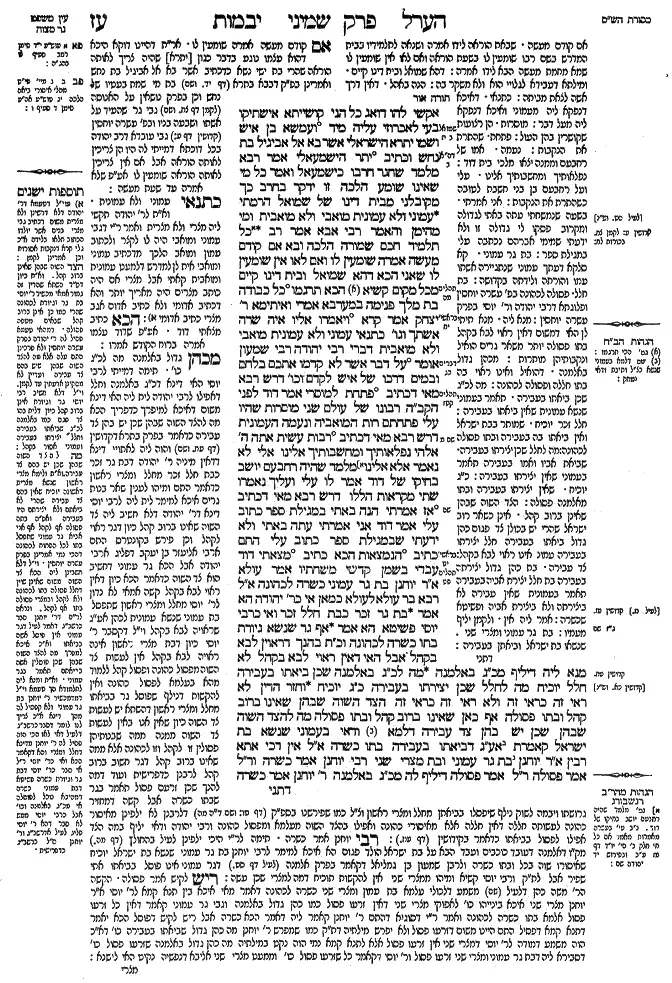
Yevamot 77a - Guemara
אקשי להו דואג כל הני קושייתא אישתיקו בעי לאכרוזי עליה מיד (שמואל ב יז, כה) ועמשא בן איש ושמו יתרא הישראלי אשר בא אל אביגיל בת נחש וכתיב (דברי הימים א ב, יז) יתר הישמעאלי אמר רבא מלמד שחגר חרבו כישמעאל ואמר כל מי שאינו שומע הלכה זו ידקר בחרב כך מקובלני מבית דינו של שמואל הרמתי עמוני ולא עמונית מואבי ולא מואבית ומי מהימן והאמר רבי אבא אמר רב כל תלמיד חכם שמורה הלכה ובא אם קודם מעשה אמרה שומעין לו ואם לאו אין שומעין לו שאני הכא דהא שמואל ובית דינו קיים מכל מקום קשיא הכא תרגמו (תהלים מה, יד) כל כבודה בת מלך פנימה במערבא אמרי ואיתימא ר' יצחק אמר קרא (בראשית יח, ט) ויאמרו אליו איה שרה אשתך וגו' כתנאי עמוני ולא עמונית מואבי ולא מואבית דברי רבי יהודה רבי שמעון אומר (דברים כג, ה) על דבר אשר לא קדמו אתכם בלחם ובמים דרכו של איש לקדם וכו' דרש רבא מאי דכתיב (תהלים קטז, טז) פתחת למוסרי אמר דוד לפני הקב"ה רבונו של עולם שני מוסרות שהיו עלי פתחתם רות המואביה ונעמה העמונית דרש רבא מאי דכתיב (תהלים מ, ו) רבות עשית אתה ה' אלהי נפלאותיך ומחשבותיך אלינו אלי לא נאמר אלא אלינו מלמד שהיה רחבעם יושב בחיקו של דוד אמר לו עלי ועליך נאמרו שתי מקראות הללו דרש רבא מאי דכתיב (תהלים מ, ח) אז אמרתי הנה באתי במגילת ספר כתוב עלי אמר דוד אני אמרתי עתה באתי ולא ידעתי שבמגילת ספר כתוב עלי התם כתיב (בראשית יט, טו) הנמצאות הכא כתיב (תהלים פט, כא) מצאתי דוד עבדי בשמן קדשי משחתיו אמר עולא א"ר יוחנן בת גר עמוני כשרה לכהונה א"ל רבא בר עולא לעולא כמאן אי כר' יהודה הא אמר בת גר זכר כבת חלל זכר ואי כרבי יוסי פשיטא הא אמר אף גר שנשא גיורת בתו כשרה לכהונה וכ"ת בהנך דראוין לבא בקהל אבל האי דאין ראוי לבא בקהל לא מנא ליה דיליף מכ"ג באלמנה מה לכ"ג באלמנה שכן ביאתו בעבירה חלל יוכיח מה לחלל שכן יצירתו בעבירה כ"ג יוכיח וחזר הדין לא ראי זה כראי זה ולא ראי זה כראי זה הצד השוה שבהן שאינו ברוב קהל ובתו פסולה אף כאן שאינו ברוב קהל ובתו פסולה מה להצד השוה שבהן שכן יש בהן צד עבירה דלמא ודאי בעמוני שנשא בת ישראל קאמרת אע"ג דביאתו בעבירה בתו כשרה א"ל אין דכי אתא רבין א"ר יוחנן בת גר עמוני ובת מצרי שני רבי יוחנן אמר כשרה ור"ל אמר פסולה ר"ל אמר פסולה דיליף לה מכ"ג באלמנה ר' יוחנן אמר כשרה
Comments from Rashi on Masechet Yevamot Page 77a
אם קודם מעשה . שבאת הוראה לידו אמרה ושנאה לתלמידיו בבית המדרש בשם רבו שומעין לו בשעת הוראה ואם לאו אין שומעין לו שמא מחמת מעשה הבא לידו אמרה: דהא שמואל ובית דינו קיים . ומילתא דעבידא לגלויי הוא ולא משקר בה: הנה באהל . דאין דרך אשה לצאת מביתה: כתנאי . דאיכא דנפקא ליה מעמוני ואיכא דנפקא ליה מעל דבר: מוסרות . הן רצועות שקושרין בהן העול: פתחת . שהתרת את הנקבות: נעמה . אמו של רחבעם וממנה יצאו מלכי בית דוד: נפלאותיך ומחשבותיך אלינו . עלי ועל רחבעם בן בני חשבת לטובה כשהתרת את הנקבות: אני אמרתי . בשעה שנמשחתי עתה באתי לגדולה ומקרוב פסקו לי גדולה זו ולא ידעתי שמימי אברהם נכתבה עלי במגילת ספר: בת גר עמוני . קא סלקא דעתך עמוני שנתגיירה אשתו עמו והורתה ולידתה בקדושה: בת חלל . פסולה לכהונה בפ' עשרה יוחסין ופלוגתא דרבי יהודה ור' יוסי בפרק עשרה יוחסין: מנא ליה . מנא תיתי לן האי דמשום דאין ראוי לבא בקהל בתו פסולה יותר משאר גרים הואיל ונקבותיהן מותרות: מכהן גדול באלמנה . דהואיל ואינו ראוי בה בתו חללה ופסולה לכהונה: מה לכ"ג שכן ביאתו בעבירה . תאמר בעמוני שנשא עמונית שאין ביאתו בעבירה: חלל זכר יוכיח . שמותר בבת ישראל ואין ביאתו בה בעבירה ובתו פסולה לכהונה: מה לחלל שכן יצירתו בעבירה שביאת אביו ואמו בעבירה תאמר בעמוני שאין יצירתו בעבירה: כ"ג יוכיח . שאין יצירתו בעבירה ובתו מאלמנה פסולה: הצד השוה שבהן שאינן ברוב קהל . אינן כשאר רוב ישראל שהרי יש בכולן צד פגום כהן גדול ביאתו בעבירה חלל יצירתו בעבירה עמוני אינו ראוי לבא בקהל: צד עבירה . בת כהן גדול יצירתה בעבירה בת חלל יצירת אביה בעבירה תאמר בעמונית שאין עבירה לא ביצירתה ולא ביצירת אביה ופשיטא שכשרה: אמר ליה . אין. ולקמן יליף מעמיו: בת גר עמוני ומצרי שני . שנשאו בת ישראל וביאתן בעבירה:
Comments from Tosafot - Yevamot 77a
אם קודם מעשה אמרה שומעין לו . אר"ת דהיינו דוקא היכא דהוא עצמו נוגע בדבר כגון יתרא שהיה צריך לאותה הוראה שהרי בת ישי נשא כדכתיב אשר בא אל אביגיל בת נחש ואמרינן בפ"ק דבבא בתרא (דף יד. ושם) בת מי שמת בעטיו של נחש וכן בפרק נושאין על האנוסה (לקמן יבמות דף צח. ושם) גבי גר שהעיד על אשתו ושבעה בניו ובפ' עשרה יוחסין (קדושין דף ע:) גבי עובדא דרב יהודה בכל דוכתא דמייתי לה היו הן צריכין לאותה הוראה אבל אם אין צריכין לאותה הוראה שומעין לו אע"פ שלא אמרה עד שעת מעשה: כתנאי עמוני ולא עמונית . וא"ת לר' יהודה תקשי ליה מצרי ולא מצרית ואמר ר"י דגבי עמוני ומואבי היה לו לקצר ולכתוב עמון ומואב הלכך מדכתיב עמוני ומואבי אית לן למדרש דלמעט עמונית ומואבית קאתי אבל מצרי אם היה כותב מצרים היה מאריך יותר והא דכתיב אדומי ולא כתיב אדום אגב מצרי כתיב אדומי: הכא כתיב מצאתי דוד . אע"פ שדוד עצמו אמרה ברוח הקודש אמרו: מכהן גדול באלמנה מה לכ"ג כו' . תימה דמייתי לרבי יוסי האי דינא דכ"ג באלמנה וחלל דאפילו לרבי יהודה לית ליה האי דינא משום דאיכא למיפרך כדפריך הכא מה להצד השוה שבהן שכן יש בהן צד עבירה כדאמר בפרק בתרא דקדושין (דף עח. ושם) והוה ליה לאתויי דינא דדאין מיניה ר' יהודה דבת גר זכר כבת חלל זכר מחלל ומצרי ראשון כדאמר התם ומיהו לענין שאר בנות גרים איכא למימר לית ליה לרבי יוסי דינא דר' יהודה דלא חשיב ליה צד השוה שאינו ברוב קהל כיון דגר ראוי לקהל וכן פירש בקונטרס התם ארבי אליעזר בן יעקב דפליג ארבי יהודה אבל הכא גר עמוני דחשיב הוא צד השוה כדאמר הכא כיון דאין ראוי לבא בקהל קשה אמאי לא נדון לר' יוסי מחלל ומצרי ראשון שתפסל בת עמוני שנשא עמונית לכהן אע"ג שראויה לבא בקהל וי"ל דקסבר ר' יוסי כיון דבת מצרי ראשון אינה ראויה לבא בקהל אין לעשות צד השוה מפסול כהונה ופסול קהל ללמוד מהא בעלמא לפסול כהונה ואין להקשות דנילף שפוסל גר בביאתו מחלל ומצרי ראשון דהשתא יש לעשות צד השוה כיון שאין אנו באין לעשות צד השוה ממנה ממה שבנותיהן פסולין זו לקהל וזו לכהונה אלא ממה שאינו ברוב קהל דגר חשוב ברוב קהל לרבנן כדפרישית ועוד דמה להנך שכן זרעם פסול תאמר בגר שבתו כשרה אבל קשה דמחזיר גרושתו ויבמה לשוק נילף שיפסלו בביאתן מחלל ומצרי ראשון וצ"ל כמו שפירשנו בספ"ק (דף טו: ושם ד"ה מה) דלרבנן לא ילפינן מאיסור כהונה לעשותה חללה דאין חללה אלא מאיסורי כהונה ואפילו בהצד השוה מעלמא ומפסול כהונה ורבי יהודה ודאי יליף במה הצד אפילו לפסול בביאתו כדאמר בקידושין (דף עח.): רבי יוחנן אמר כשרה . תימה לר"י היכי ילפינן לעיל בהחולץ (יבמות דף מה.) מק"ו דאלמנה דעובד כוכבים ועבד הבא על בת ישראל הולד פגום הא איכא למימר לרבי יוחנן בת גר עמוני שנשא בת ישראל יוכיח שאיסורו שוה בכל ובתו כשרה ולרבן שמעון בן גמליאל דקאמר בפרק אלמנה (לעיל יבמות דף סט.) דגר עמוני אינו פוסל בביאתו אתי שפיר אבל לת"ק ורבי יוסי קשיא ומיהו ממצרי שני אין להקשות תוכיח דמה למצרי שכן עשה: ריש לקיש אמר פסולה . הקשה הר' משה כהן דלעיל (שם) משמע דלכולי עלמא בת עמון ומצרי שני כשרה לכהונה דאמר מאי איכא בין תנא קמא לר' יוסי א"ר יוחנן מצרי שני איכא בינייהו כו' לאפוקי מצרי שני דאין זרעו פסול כמו כהן גדול באלמנה וגבי גר עמוני קאמר דאין כל זרעו פסול אלמא בתו כשרה לכהונה ואמר ר"י דסוגיא דהתם ר' יוחנן קאמר ליה דאמר הכא כשרה אבל ריש לקיש דפוסל הכא יאמר דתנא קמא דפסיל התם היינו משום דזרעו פסול ולא יפרש מילתיה דת"ק כמו שמפרש ר' יוחנן מה כהן גדול שביאתו בעבירה כו' דא"כ הוה משמע דמודה לר' יוסי דמצרי שני אין זרעו פסול אלא לתנא קמא נמי הוה נקט במילתיה מה כהן גדול באלמנה שזרעו פסול כו' דסבירא ליה דבת גר עמוני ומצרי שני זרעו פסול ור' יוסי דקאמר כל שזרעו פסול כו' וממעט מצרי שני אליבא דנפשיה נקיט האי לישנא:
Yevamot 77a - Mishnah translated into english
Doeg raised before them all those objections from the others who are disqualified from entering into the congregation, and they were silent, not knowing how to respond. Doeg then wanted to proclaim that David was disqualified from entering into the congregation. He was immediately answered. Here it says: “Now Amasa was the son of a man, whose name was Jithra the Israelite, that went into Abigal the daughter of Nahash” (II Samuel 17:25), and yet elsewhere it is written that Amasa’s father was named “Jether the Ishmaelite” (I Chronicles 2:17). Rava said: This teaches that he girded his sword like Ishmael, i.e., like an Arab, and said: Whoever does not accept this halakha and act accordingly shall be stabbed with the sword. This is the tradition that I received from the court of Samuel from Rama: An Ammonite man is prohibited from entering into the congregation, but not an Ammonite woman; a Moabite man is prohibited from entering into the congregation, but not a Moabite woman.
The Gemara asks about this incident: And is he trusted to offer such testimony? But didn’t Rabbi Abba say that Rav said: With regard to every Torah scholar who issues a halakhic ruling based on a tradition he claims to have received from his teacher, and that ruling has practical ramifications for himself as well, if he stated the ruling already before the incident, i.e., before it had a bearing on his own case, one listens to him; but if not, if he reported the tradition only after it was personally relevant to him, one does not listen to him, as he is an interested party. Since Amasa was the son of Jesse’s daughter Abigail, as stated in the aforementioned verse in Chronicles, the matter certainly affected his own status. The Gemara answers: Here it is different, as Samuel and the other members of his court were still living, and the truth of Amasa’s report could be easily verified.
The Gemara asks: In any case, the unanswered question raised by Doeg is difficult. The Gemara answers: Here, in Babylonia, they explained the matter based on the verse: “The king’s daughter is all glorious within” (Psalms 45:14), which indicates that it is unbefitting for a woman to venture outside at all, and therefore the Ammonite women would not have been expected to go forth to meet the Jewish women. In the West, Eretz Yisrael, they say, and some say it was Rabbi Yitzḥak who said: The verse states: “And they said to him: Where is Sarah your wife? And he said: Behold, in the tent” (Genesis 18:9), which teaches that it is praiseworthy for a woman to remain inside her home.
The Gemara comments that this disagreement with regard to the source of the halakha that it is permitted for an Ammonite or Moabite woman to enter into the congregation is like the following dispute between tanna’im: The verse states: “An Ammonite or a Moabite” (Deuteronomy 23:4); an Ammonite man is barred from entering into the congregation, but not an Ammonite woman, and similarly, a Moabite man is barred from entering into the congregation, but not a Moabite woman. This is the statement of Rabbi Yehuda, who derives the halakha from the masculine form of these two terms. Rabbi Shimon says: The verse states: “Because they did not meet you with bread and with water on the way” (Deuteronomy 23:5). Since it is the way of a man, but not the way of a woman, to go forth to meet guests, females were not included in the prohibition.
With regard to the same issue, Rava taught: What is the meaning of that which is written: “You have loosened my bands” (Psalms 116:16)? David said before the Holy One, Blessed be He: Master of the Universe, You have loosened the two bands that were on me, on account of which I and my entire family might have been disqualified, i.e., Ruth the Moabite woman and Na’ama the Ammonite woman. Owing to the allowance granted to Moabite and Ammonite women, we are permitted to enter the congregation.
Rava further taught: What is the meaning of that which is written: “Many things have You done, O Lord my God, Your wonders and Your thoughts are upon us” (Psalms 40:6)? Upon me is not stated, but rather “upon us,” which teaches that Rehoboam, son of Solomon and grandson of David, was sitting on the lap of David, who said to him: These two verses were stated about me and about you, as Rehoboam’s mother was Na’ama the Ammonite.
With regard to the same issue, Rava also taught: What is the meaning of that which is written: “Then I said: Behold, I have come; in the scroll of a book it is written about me” (Psalms 40:8)? David said: I had said that I have come only now; my life was created only recently, at the time of my birth. But I did not know that it was already written about me in the scroll of a book, that an ancient text already hints at my existence. There, with regard to the daughters of Lot, it is written: “And your two daughters that are found here” (Genesis 19:15), and here, with regard to David, it is written: “I have found David, My servant; I have anointed him with My holy oil” (Psalms 89:21). The lost article that was found among the daughters of Lot, the mothers of Ammon and Moab, is David and his royal house.
Ulla said that Rabbi Yoḥanan said: The daughter of an Ammonite convert is fit not only to marry an ordinary Israelite, but even to marry into the priesthood. Rava bar Ulla said to Ulla: In accordance with whose opinion did you state this halakha? If it is in accordance with the opinion of Rabbi Yehuda, didn’t he say that the daughter of a male convert is like the daughter of a male ḥalal, one rendered unfit for the priesthood, which means that the daughter of any convert should be disqualified from the priesthood? And if you spoke in accordance with the opinion of Rabbi Yosei, it is obvious that this is the case, as he said that even if a male convert marries a female convert, his daughter is fit to marry into the priesthood.
And if you would say that Rabbi Yosei spoke only of those converts who are fit to enter into the congregation, but with regard to this one, an Ammonite convert, who is not fit to enter into the congregation, his daughter is not fit to marry a priest, there is a difficulty: From where does he derive this distinction?
The Gemara answers: He derives this from the case of a High Priest who married a widow, a woman whom he is prohibited from marrying. Just as his daughter is disqualified from marrying into the priesthood, so too is the daughter of an Ammonite convert disqualified from marrying into the priesthood. However, an objection may be raised: What comparison can be made to a High Priest who married a widow, which is a stringent prohibition, as his intercourse involves a transgression? Can one say the same with regard to the daughter of an Ammonite convert, who could be born from a permitted relationship, e.g., from a male Ammonite convert who married a female Ammonite convert?
The Gemara answers: Let the case of a ḥalal prove that this is not relevant, as his intercourse does not involve a transgression and yet his children are also ḥalalim, who are prohibited from marrying into the priesthood. However, another objection may be raised: What comparison can be made to a ḥalal, seeing that his essential formation involved a transgression, and therefore it is understandable that his disqualification extends to his offspring. Can one say the same with regard to the daughter of an Ammonite convert who was not the product of a forbidden union?
The Gemara answers: Let the case of a High Priest who marries a widow prove that this is not relevant, as he was not the product of a forbidden union but nevertheless his daughter is disqualified from marrying into the priesthood. And the derivation has reverted to its starting point, and the discussion can go back and forth.
At this point, however, the halakha can be derived from a combination of the two sources: The aspect of this case, that of a High Priest, is not like the aspect of that case, that of a ḥalal, and the aspect of that case is not like the aspect of this case; their common denominator is that he is not included in the majority of the congregation, i.e., the man is governed by a halakha that differs from that of most Jews. The High Priest’s intercourse with a widow involves a transgression, and the ḥalal is the product of a forbidden union. And in each case, the man’s daughter is disqualified from marrying into the priesthood. So too, an Ammonite convert is not included in the majority of the congregation, as it is prohibited for him to enter the congregation of Israel, and so his daughter is also disqualified from marrying into the priesthood.
The Gemara objects: What is the common denominator between the case of the High Priest and that of the ḥalal that prevents one from utilizing it as a paradigm for other cases? Both of those cases include an aspect of transgression; the High Priest engaged in a forbidden act of intercourse, and the ḥalal is the product of a forbidden union. Perhaps that is the reason that the daughter in each of these cases is prohibited from marrying into the priesthood. In the case of the Ammonite convert, however, there is no transgression.
The Gemara answers: Perhaps you spoke of an Ammonite convert who married the daughter of a Jew, and Rabbi Yoḥanan wished to teach that although his intercourse involves a transgression, as it is prohibited for him to enter into the congregation, his daughter is nevertheless fit to marry into the priesthood. Ulla said to him: Yes, this was Rabbi Yoḥanan’s teaching.
As, when Ravin came from Eretz Yisrael to Babylonia, he said that Rabbi Yoḥanan said: With regard to the daughter of an Ammonite convert who is the offspring of his forbidden marriage with a woman of Jewish birth, and similarly, with regard to the daughter of a second-generation Egyptian convert from his forbidden marriage with a woman of Jewish birth, Rabbi Yoḥanan said that she is fit to marry into the priesthood, whereas Reish Lakish said that she is disqualified from marrying a priest. Reish Lakish said she is disqualified, as he derives from the halakha governing a High Priest who married a widow that the daughter of any forbidden union is disqualified from the priesthood. Rabbi Yoḥanan said she is fit,
Traduction : The William Davidson digital edition of the Koren Noé Talmud, with commentary by Rabbi Adin Even-Israel Steinsaltz.