 Talmud Bavli
Yevamot 54a : Youtube
Daf TubeYoutube
2 video classes :
Yevamot Page 54a
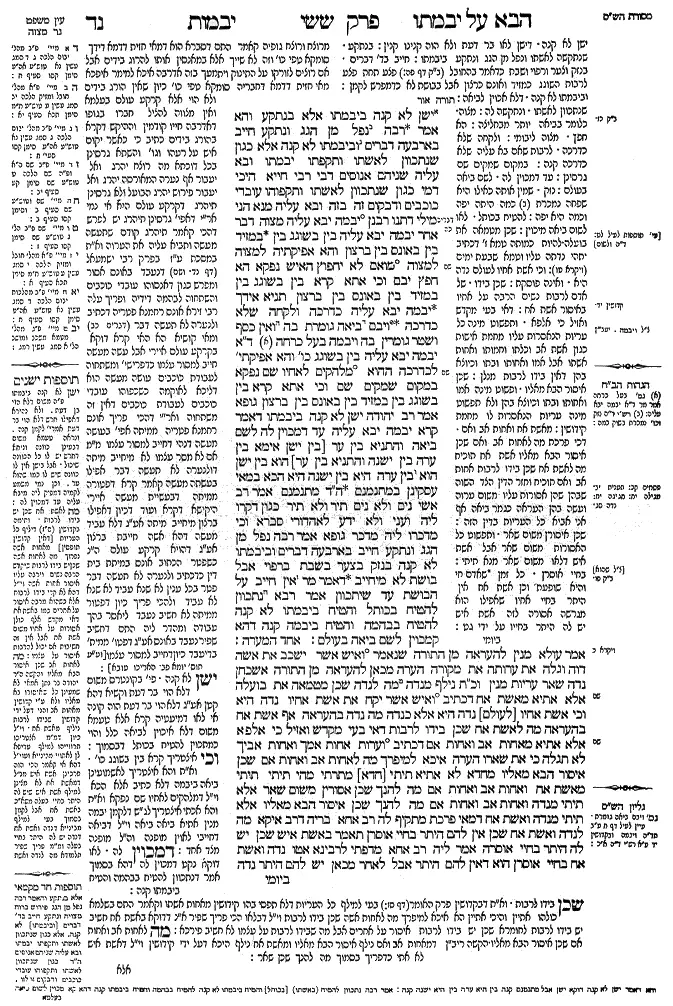
Yevamot 54a - Guemara
ישן לא קנה ביבמתו אלא בנתקע והא אמר רבה נפל מן הגג ונתקע חייב בארבעה דברים וביבמתו לא קנה אלא כגון שנתכוון לאשתו ותקפתו יבמתו ובא עליה שניהם אנוסים דבי רבי חייא היכי דמי כגון שנתכוון לאשתו ותקפוהו עובדי כוכבים ודבקום זה בזה ובא עליה מנא הני מילי דתנו רבנן (דברים כה, ה) יבמה יבא עליה מצוה דבר אחר יבמה יבא עליה בין בשוגג בין במזיד בין באונס בין ברצון והא אפיקתיה למצוה למצוה (דברים כה, ז) מואם לא יחפוץ האיש נפקא הא חפץ יבם וכי אתא קרא בין בשוגג בין במזיד בין באונס בין ברצון תניא אידך יבמה יבא עליה כדרכה ולקחה שלא כדרכה ויבם ביאה גומרת בה ואין כסף ושטר גומרין בה ויבמה בעל כרחה ד"א יבמה יבא עליה בין בשוגג כו' והא אפיקתי' לכדרכה ההוא (דברים כה, ז) מלהקים לאחיו שם נפקא במקום שמקים שם וכי אתא קרא בין בשוגג בין במזיד בין באונס בין ברצון גופא אמר רב יהודה ישן לא קנה ביבמתו דאמר קרא יבמה יבא עליה עד דמכוין לה לשם ביאה והתניא בין ער [בין ישן אימא בין ערה בין ישנה והתניא בין ער] הוא בין ישן הוא בין ערה היא בין ישנה היא הכא במאי עסקינן במתנמנם ה"ד מתנמנם אמר רב אשי נים ולא נים תיר ולא תיר כגון דקרו ליה ועני ולא ידע לאהדורי סברא וכי מדכרו ליה מדכר גופא אמר רבה נפל מן הגג ונתקע חייב בארבעה דברים וביבמתו לא קנה בנזק בצער בשבת ברפוי אבל בושת לא מיחייב דאמר מר אין חייב על הבושת עד שיתכוון אמר רבא נתכוון להטיח בכותל והטיח ביבמתו לא קנה להטיח בבהמה והטיח ביבמה קנה דהא קמכוין לשם ביאה בעולם:
אחד המערה:
אמר עולא מנין להעראה מן התורה שנאמר (ויקרא כ, יח) ואיש אשר ישכב את אשה דוה וגלה את ערותה את מקורה הערה מכאן להעראה מן התורה אשכחן נדה שאר עריות מנין וכ"ת נילף מנדה מה לנדה שכן מטמאה את בועלה אלא אתיא מאשת אח דכתיב (ויקרא כ, כא) ואיש אשר יקח את אשת אחיו נדה היא וכי אשת אחיו [לעולם] נדה היא אלא כנדה מה נדה בהעראה אף אשת אח בהעראה מה לאשת אח שכן בידו לרבות דאי בעי מקדש ואזיל כי אלפא אלא אתיא מאחות אב ואחות אם דכתיב (ויקרא כ, יט) וערות אחות אמך ואחות אביך לא תגלה כי את שארו הערה איכא למיפרך מה לאחות אב ואחות אם שכן איסור הבא מאליו מחדא לא אתיא תיתי [חדא] מתרתי מהי תיתי תיתי מאשת אח ואחות אב ואחות אם מה להנך שכן אסורין משום שאר אלא תיתי מנדה ואחות אב ואחות אם מה להנך שכן איסור הבא מאליו אלא תיתי מנדה ואשת אח דמאי פרכת מתקיף לה רב אחא בריה דרב איקא מה לנדה ואשת אח שכן אין להם היתר בחיי אוסרן תאמר באשת איש שכן יש לה היתר בחיי אוסרה אמר ליה רב אחא מדפתי לרבינא אטו נדה ואשת אח בחיי אוסרן הוא דאין להם היתר אבל לאחר מכאן יש להם היתר נדה
Comments from Rashi on Masechet Yevamot Page 54a
ישן לא קנה . דישן לאו בר דעת ולא הוה קנינו קנין: בנתקע . שנתקשה לאשתו ונפל מן הגג ונתקע ביבמתו: חייב בד' דברים . בנזק וצער ורפוי ושבת כדאמר בהחובל (ב"ק דף פה:) פצע תחת פצע לרבות השוגג כמזיד ואונס כרצון אבל בבושת לא כדמפרש לקמן: וביבמתו לא קנה . דלא אכוין לביאה: שנתכוון לאשתו . ונתקשה לה: מצוה . כלומר בביאה יותר מבחליצה: הא חפץ . מצוה ליבומי: ולקחה שלא כדרכה . לרבות שאם בא עליה שלא כדרכה קנה: במקום שמקים שם גרסינן: עד דמכוין לה לשם ביאה . בעולם: נזק . שמין אותה כאילו היא שפחה נמכרת כמה היתה יפה וכמה היא יפה: להטיח בכותל . לאו לשום ביאה מיכוין: שכן מטמאה את בועלה . להיות כמותה טמא ז' דכתיב ותהי נדתה עליו וטמא שבעת ימים (ויקרא טו): וכי אשת אחיו לעולם נדה היא . ואינה פוסקת: שכן בידו . של אדם לרבות נשים הרבה על אחיו באיסור אשת אח: דאי בעי מקדש ואזיל כי אלפא . ותפשוט מינה כל עריות הנאסרות עליו מחמת אישות כגון אשת אב וכלתו וחמותו ואחות אשתו אבל אמו ואחותו ובתו וכיוצא בהן דאין בידו לרבות מנלן: שכן איסור הבא מאליו . ופשוט מינה אמו ואחותו ובתו וכיוצא בהן ולא תפשוט מינה עריות הנאסרות לו מחמת קידושין: מאשת אח ואחות אב ואם . דכי פרכת מה לאחות אב ואם שכן איסור הבא מאליו אשת אח תוכיח מה לאשת אח שכן בידו לרבות אחות אב ואם תוכיח וחזר הדין הצד השוה שבהן שהן אסורות עליו משום ערוה ועשה בהן העראה כגמר ביאה אף אני אביא כל העריות בדין הזה: שכן איסורן משום שאר . ותפשוט כל האסורות משום שאר אבל אשת איש דלאו משום שאר מנא תיתי: בחיי אוסרן . כל זמן שאדם חי והיא שופעת וכן אשת אח אין היתר בחיי אחיו שאפילו הוא מגרשה אסורה לזה. אשת איש יש לה היתר בחייו על ידי גט:
Comments from Tosafot - Yevamot 54a
ישן לא קנה . פי' בקונטרס משום דלא הוי בר דעת וקשיא דהא קטן אע"ג דלא הוי בר דעת הוה קונה אי לאו דמיעטיה קרא אלא טעמא משום דלא איכוין לביאה כלל והוי כמתכוין להטיח בכותל דבסמוך: וכי איצטריך קרא בין בשוגג כו' . וא"ת והא איצטריך לאשמועינן ביאה ביבמה דלא כתיב אלא הכא וי"ל דמלהקים לאחיו שם נפקא וא"ת והא אכתי איצטריך לג"ש דלקמן יבמה מנין אתיא ביאה ביאה וי"ל דביאה דחייבי לאוין מופנה וה"ל מופנה מצד אחד: דמכוין לה . לאו דוקא נקט דמכוין לה דהא בסמוך אמר דנתכוון להטיח בבהמה והטיח ביבמתו קנה: שכן בידו לרבות . וא"ת דבקדושין פרק האומר (דף סז:) בעי למילף כל העריות דלא תפסי בהו קידושין מאחות אשתו וקאמר התם בשלמא כולהו אתיין והיכי אתיין הא איכא למיפרך מה לאחות אשה שכן בידו לרבות וי"ל דבלאו הכי פריך שפיר א"נ דדוקא באשת אח חשיב יש בידו לרבות לחומרא שכן יש בידו לרבות איסור על אחרים אבל מה שבידו לרבות על עצמו לא חשיב פירכא: מה לאחות אב ואחות אם שכן איסור הבא מאליו . הקשה ריב"ן דמאחות אב ואם נילף איסור הבא מאליו ומאשת אח נילף היכא דעל ידי קידושין וי"ל דאשת איש לא אתי כדפריך בסמוך מה להנך שכן שאר:
Yevamot 54a - Mishnah translated into english
a sleeping man has not acquired his yevama, as he did not intend to perform the act of intercourse at all? Rather, the mishna was referring to one who was inserted into his yevama by accident. But didn’t Rabba say: One who fell from a roof and was inserted into a woman due to the force of his fall is liable to pay four of the five types of indemnity that must be paid by one who damaged another: Injury, pain, medical costs, and loss of livelihood. However, he is not liable to pay for the shame he caused her, as he did not intend to perform the act, and if she is his yevama, he has not acquired her in this manner.
Rather, it is a case where he intended to have intercourse with his wife and became erect, and his yevama forcefully grabbed hold of him and he had intercourse with her. The Gemara further asks: If so, what are the circumstances of the case when both of them were coerced that was mentioned by the school of Rabbi Ḥiyya? The Gemara answers: It is a case where he intended to have intercourse with his wife, and gentiles grabbed hold of him and pressed him and his yevama against each other, and he thereby had intercourse with her.
§ The Gemara inquires as to the source of these halakhot: From where are these matters derived? As the Sages taught with regard to the verse “Her brother-in-law will have intercourse with her” (Deuteronomy 25:5), that this indicates that the act of intercourse in this circumstance is a mitzva, i.e., it is preferable to the alternative, which is ḥalitza. Alternatively, the verse “Her brother-in-law will have intercourse with her,” indicates that it does not matter how he had intercourse with her, whether unwittingly or intentionally, whether due to coercion or willingly.
The Gemara asks: Didn’t you derive from this phrase that the act of intercourse in this case is a mitzva? How can the same phrase also indicate that it does not matter what the intentions of the two parties were during the act of intercourse? The Gemara answers: The fact that it is a mitzva is derived from the verse: “And if the man does not wish to take his yevama” (Deuteronomy 25:7), which indicates that if he wishes, he performs levirate marriage, which is preferable to ḥalitza. Therefore, when the verse cited above came, it indicated that levirate marriage has occurred whether the parties acted unwittingly or intentionally, whether due to coercion or willingly.
It is taught in another baraita that the phrase: “Her brother-in-law will have intercourse with her” indicates that levirate marriage has been performed if they engage in typical sexual intercourse. The next phrase, “and take her,” includes even atypical, i.e., anal, sexual intercourse. The concluding phrase of the verse, “and consummate the levirate marriage,” indicates that sexual intercourse completes her acquisition, but money and a marriage document do not complete her acquisition to him as his fully betrothed wife, in contrast to the regular halakhot of marriage. By emphasizing “and consummate the levirate marriage with her,” the verse teaches that he acquires her even if he acted against her will. Alternatively: “Her brother-in-law will have intercourse with her” indicates that levirate marriage has occurred whether the parties acted unwittingly or intentionally, whether due to coercion or willingly.
The Gemara asks: Didn’t you derive from this phrase that levirate marriage has been performed if they engage in typical sexual intercourse? How can it also indicate that it does not matter what the intentions of the two parties were during the act of intercourse? The Gemara answers: That halakha is derived from a different verse: “To establish a name for his brother” (Deuteronomy 25:7), which indicates that intercourse must occur in the place where he establishes a name, i.e., where it can lead to childbirth. Therefore, when the verse cited above came, it indicated that levirate marriage has occurred whether the parties acted unwittingly or intentionally, whether due to coercion or willingly.
§ The Gemara addresses the matter itself cited in the previous discussion. Rav Yehuda said: A sleeping man has not acquired his yevama, as the verse states: “Her brother-in-law will have intercourse with her” (Deuteronomy 25:5), which indicates that he does not acquire her unless he intends to act for the sake of sexual intercourse. Since a sleeping man does not intend to engage in sexual intercourse, he does not acquire his yevama. The Gemara asks: Isn’t it taught in a baraita that one acquires his yevama through sexual intercourse regardless of whether he was awake or asleep? The Gemara answers: Say the baraita in the following emended form: Whether she was awake or asleep. The woman’s awareness is not a necessary component in order to perform levirate marriage.
The Gemara asks further: Wasn’t it taught in another baraita that one acquires his yevama through sexual intercourse regardless of whether he was awake or he was asleep and regardless of whether she was awake or she was asleep? The Gemara answers: With what are we dealing here when the baraita says that a sleeping man acquires his yevama? It is referring to a man who is dozing. The Gemara asks: What are the circumstances of dozing? Rav Ashi said: One is asleep but not asleep, awake but not awake, when, if they call him, he will answer, but he is unable to provide a reasonable answer. And when they later inform him of what happened, he remembers it.
The Gemara returns to the statement of Rabba cited earlier in order to discuss the matter itself that Rabba addressed. Rabba said: One who fell from a roof and was inserted into a woman due to the force of his fall is liable to pay four of the five types of indemnity that must be paid by one who damaged another, and if she is his yevama he has not acquired her in this manner. He is liable to pay for injury, pain, loss of livelihood, and medical costs. However, he is not liable to pay for the shame he caused her, as the Master said: One is not liable to pay for shame unless he intends to humiliate his victim. Consequently, one who fell from a roof accidentally is not liable to pay for the shame he caused the woman.
Rava said: If he intended to press his sexual organ into a wall, and he accidentally pressed it into his yevama, he has not acquired her, as he did not intend to engage in an act of sexual intercourse. However, if he intended to press his sexual organ into an animal, and he pressed it into his yevama, he has acquired her, as he at least intended to act for the purpose of sexual intercourse in general, i.e., for some form of sexual intercourse.
§ We learned in the mishna that both one who merely begins the act of intercourse and one who completes it has acquired the yevama through this act. Ulla said: From where is it derived that the initial stage of intercourse is considered an act of sexual intercourse by Torah law? As it is stated: “And if a man shall lie with a woman having her sickness and shall uncover her nakedness, he has made naked [he’era] her fountain” (Leviticus 20:18). The verse is referring to the first stage of intercourse, and from here it is derived that the initial stage of intercourse [ha’ara’a] is considered sexual intercourse by Torah law.
The Gemara asks: We have found a source for this halakha in the case of a menstruating woman, the subject of the verse cited above. From where is it derived that the initial stage of intercourse is considered sexual intercourse with regard to the rest of those with whom relations are forbidden? And if you say we should derive it from the halakha with regard to a menstruating woman, what comparison can be made to a menstruating woman, concerning whom the halakha is more stringent than others with whom relations are forbidden, in that she causes one who has intercourse with her to become ritually impure?
Rather, the halakha in other cases comes from a verse about a brother’s wife, as it is written: “And if a man shall take his brother’s wife, it is impurity [nidda]” (Leviticus 20:21). The word nidda generally refers to a menstruating woman, and so the Gemara asks: Is his brother’s wife always menstruating? Rather, it means that the halakha with regard to her is like that of a menstruating woman: Just as one is liable to receive punishment for violating the prohibition against engaging in sexual intercourse with a menstruating woman through the initial stage of intercourse, so too, one is liable to receive punishment for violating the prohibition against engaging in sexual intercourse with a brother’s wife through the initial stage of intercourse.
The Gemara asks: What comparison can be made between a brother’s wife and other women with whom relations are forbidden? The prohibition with regard to a brother’s wife is more stringent in that it is within his power to increase the number of women forbidden by this prohibition, as, if he wishes, he can go on betrothing a thousand women, all of whom would be forbidden to his brother. Consequently, the prohibition with regard to a brother’s wife cannot serve as a model for other prohibitions.
Rather, the halakha in other cases comes from a verse with regard to a father’s sister and a mother’s sister, as it is written: “And you shall not uncover the nakedness of your mother’s sister nor of your father’s sister; for he has made naked [he’era] his kin” (Leviticus 20:19). The Gemara asks: It is possible to refute this source as follows: What comparison can be made between other women with whom relations are forbidden and a father’s sister and a mother’s sister, which are unique in that they are prohibited due to a prohibition that comes on its own? The prohibition with regard to a father’s sister and a mother’s sister does not stem from marriage, but from the biological fact that she is his father’s or mother’s sister. It is therefore dissimilar to prohibitions that result from marriage.
The Gemara states: The principle that the initial stage of intercourse is considered sexual intercourse does not come from any one of the sources cited above. Let it come by deriving the halakha in any one other case from the common denominator of two of the sources mentioned above. The Gemara asks: From which two sources could this principle come to be derived? If you say it can come to be derived from the combination of the source with regard to a brother’s wife and the source with regard to a father’s sister and a mother’s sister, what comparison may be drawn from these cases, which are unique in that they are prohibited because they are kin?
Rather, let it come from the prohibition proscribing a menstruating woman and the prohibition with regard to a father’s sister and a mother’s sister, as a menstruating woman is not prohibited as a family relative. The Gemara raises a difficulty: What comparison may be drawn from these cases, which are each a prohibition that comes of its own accord, as neither one is created through marriage? Rather, let it come from the prohibition proscribing a menstruating woman and the prohibition proscribing a brother’s wife. As, what can you say to refute this teaching? These two cases do not share any unique features that might be cause for stringency.
Rav Aḥa, son of Rav Ika, strongly objects to this: What comparison may be drawn based upon the precedent of a menstruating woman and a brother’s wife, which are stringent in that they cannot be permitted to others for the duration of the existence of the factor that renders them prohibited? A menstruating woman is forbidden as long as she experiences a flow of menstrual blood, while a brother’s wife is forbidden for the duration of the brother’s lifetime. Can you say the same with regard to a married woman, who can become permitted during the lifetime of the one who renders her prohibited, i.e., if her husband divorces her?
Rav Aḥa of Difti said to Ravina: Is that to say that it is only during the existence of the factor that renders them prohibited that a menstruating woman and a brother’s wife cannot be permitted to others, but afterward, when the prohibiting factor has been resolved, they can be permitted? In the case of a menstruating woman,
Traduction : The William Davidson digital edition of the Koren Noé Talmud, with commentary by Rabbi Adin Even-Israel Steinsaltz.