 Talmud Bavli
Yevamot 104a : Youtube
Daf TubeYoutube
1 video class :
Yevamot Page 104a
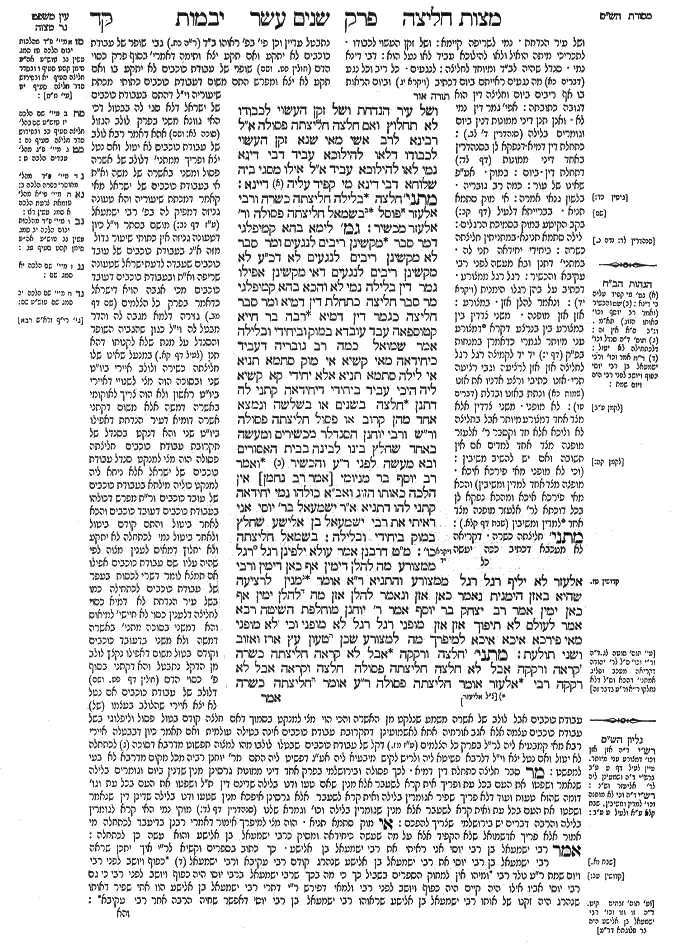
Yevamot 104a - Guemara
ושל עיר הנדחת ושל זקן העשוי לכבודו לא תחלוץ ואם חלצה חליצתה פסולה א"ל רבינא לרב אשי מאי שנא זקן העשוי לכבודו דלאו להילוכא עביד דבי דינא נמי לאו להילוכא עביד א"ל אילו מסגי ביה שלוחא דבי דינא מי קפיד עליה דיינא:
מתני׳ חלצה בלילה חליצתה כשרה ורבי אלעזר פוסל בשמאל חליצתה פסולה ור' אלעזר מכשיר:
גמ׳ לימא בהא קמיפלגי דמר סבר מקשינן ריבים לנגעים ומר סבר לא מקשינן ריבים לנגעים לא דכ"ע לא מקשינן ריבים לנגעים דאי מקשינן אפילו גמר דין בלילה נמי לא והכא בהא קמיפלגי מר סבר חליצה כתחלת דין דמיא ומר סבר חליצה כגמר דין דמיא רבה בר חייא קטוספאה עבד עובדא במוק וביחידי ובלילה אמר שמואל כמה רב גובריה דעביד כיחידאה מאי קשיא אי מוק סתמא תניא אי לילה סתמא תניא אלא יחידי קא קשיא ליה היכי עביד ביחידי דיחידאה קתני לה דתנן חלצה בשנים או בשלשה ונמצא אחד מהן קרוב או פסול חליצתה פסולה ור"ש ורבי יוחנן הסנדלר מכשירים ומעשה באחד שחלץ בינו לבינה בבית האסורים ובא מעשה לפני ר"ע והכשיר ואמר רב יוסף בר מניומי אמר רב נחמן אין הלכה כאותו הזוג ואב"א כולהו נמי יחידאה קתני להו דתניא א"ר ישמעאל בר' יוסי אני ראיתי את רבי ישמעאל בן אלישע שחלץ במוק ביחידי ובלילה:
בשמאל חליצתה כו':
מ"ט דרבנן אמר עולא ילפינן רגל (ויקרא יד, יד) רגל ממצורע מה להלן דימין אף כאן דימין ורבי אלעזר לא יליף רגל רגל ממצורע והתניא ר"א אומר מנין לרציעה שהיא באזן הימנית נאמר כאן אזן ונאמר להלן אזן מה להלן ימין אף כאן ימין אמר רב יצחק בר יוסף אמר ר' יוחנן מוחלפת השיטה רבא אמר לעולם לא תיפוך אזן אזן מופני רגל רגל לא מופני וכי לא מופני מאי פירכא איכא איכא למיפרך מה למצורע שכן טעון עץ ארז ואזוב ושני תולעת:
מתני׳ חלצה ורקקה אבל לא קראה חליצתה כשרה קראה ורקקה אבל לא חלצה חליצתה פסולה חלצה וקראה אבל לא רקקה רבי אלעזר אומר חליצתה פסולה ר"ע אומר חליצתה כשרה
Comments from Rashi on Masechet Yevamot Page 104a
ושל עיר הנדחת . נמי לשריפה קיימא: ושל זקן העשוי לכבודו . לתכריכי מיתה הואיל ולאו להילוכא עביד לאו נעל הוא: דבי דינא נמי . סנדל שהיה לב"ד ומיוחד לחליצה: לנגעים . כל ריב וכל נגע (דברים כא) מה נגעים ראייתם ביום דכתיב (ויקרא יג) וביום הראות בו אף ריבים ביום וחליצה דין הוא דגובה כתובתה: אפי' גמר דין נמי לא . ואנן תנן דיני ממונות דנין ביום וגומרים בלילה (סנהדרין ד' לב.): כתחלת דין דמיא . דנפקא לן בסנהדרין באחד דיני ממונות (דף לד:) דתחלת דין ביום: במוק . אע"פ שאינו של עור: כמה רב גובריה . בלשון גנאי אמרה: אי מוק סתמא תניא . בברייתא דלעיל (יבמות דף קב:) בקב הקיטע במוק בסמיכת הרגלים: לילה סתמא תנינא . במתניתין חליצתה כשרה: ביחידי יחידאה תני לה . במתני' דתנן ובא מעשה לפני רבי עקיבא והכשיר: רגל רגל ממצורע . דכתיב על בהן רגלו הימנית (ויקרא יד): ונאמר להלן אזן . במצורע: אזן אזן מופנה . משני צדדין בין במצורע בין בנרצע דקרא דמצורע עני מיותר לגמרי כדאמרן במנחות בפ"ק (דף י:) יד יד לקמיצה רגל רגל לחליצה אזן אזן לרציעה וגבי רציעה תרי אזנו כתיבי ורצע אדניו את אזנו (שמות כא) ונתת באזנו ובדלת (דברים טו): לא מופני . משני צדדין אלא מצד אחד דמצורע מיותר אבל בחליצה לא וליכא אלא חד וקסבר ר' אלעזר מופנה מצד אחד למדים אם אין תשובה ואם יש להשיב משיבין: וכי לא מופני מאי פירכא איכא . מופנה מצד אחד למדין ומשיבין והכא מאי פירכא איכא. ומהכא נפקא לן בכל דוכתא לר' אלעזר מופנה מצד אחד למדין ומשיבין (שבת דף קלא.): מתני' חליצתה כשרה . דקריאה לא מעכבא דכתיב ככה יעשה כל דבר שהוא מעשה מעכב דכי כתיב ככה דמשמע עיכובא אמעשה כתיב וקרייה דבורא בעלמא הוא:
Comments from Tosafot - Yevamot 104a
מר סבר חליצה כתחלת דין דמיא . לכך פסולה ובירושלמי בפרק אחד דיני ממונות גרסינן מנין שדנין ביום וגומרים בלילה שנאמר ושפטו את העם בכל עת ופריך אית קרא לשעבר אלא מנין שאם טעו ודנו בלילה שדינם דין ת"ל ושפטו את העם בכל עת וגו' דומה שהוא טעות ועוד דלא פריך שפיר אגומרין בלילה ואית קרא לשעבר אלא גרסינן איפכא מנין שטעו ודנו בלילה שדינן דין שנאמר ושפטו את העם בכל עת ואית קרא לשעבר אלא מנין שגומרין בלילה וכו' וגמרא שלנו (סנהדרין דף לד:) מוקי נמי האי קרא לגומרין בלילה והרבה דברים יש בירושלמי שצריך להפכם: אי מוק סתמא תניא . הוה מצי למיפרך אימור דאמרי רבנן בדיעבד לכתחלה מי אמור אלא פריך אדשמואל שלא הקפיד אלא על מה שעשה כיחידאה ומסיק כרבי ישמעאל בן אלישע והוא עשה כן לכתחלה: אמר רבי ישמעאל בן רבי יוסי אני ראיתי את רבי ישמעאל בן אלישע . כך כתוב בספרים וקשיא לר"י איך יתכן שראה רבי ישמעאל בן רבי יוסי את רבי ישמעאל בן אלישע שנהרג קודם רבי עקיבא ורבי ישמעאל כפוף ויושב לפני רבי ויום שמת ר"ע נולד רבי ומיהו אין למחוק הספרים בשביל כך כי מה בכך שרבי ישמעאל ברבי יוסי היה כפוף ויושב לפני רבי כי גם רבי יוסי אביו אילו היה קיים היה כפוף ויושב לפני רבי ולמאי דפירש ר"י דתרי רבי ישמעאל בן אלישע הוו אתי שפיר דאותו שנהרג היה זקנו של אותו רבי ישמעאל בן אלישע שראוהו רבי ישמעאל בן רבי יוסי דאפשר שחיה הרבה אחר רבי עקיבא:
Yevamot 104a - Mishnah translated into english
or a sandal belonging to an inhabitant of an idolatrous city, a city the majority of whose inhabitants committed idolatry, which stands to be destroyed with all of the city’s property; and likewise, the sandal of an Elder made in accordance with his dignity to be worn upon his death as part of his shroud, i.e., it is not meant for walking as a normal shoe, the yevama may not perform ḥalitza using any of these shoes. And if she did perform ḥalitza, her ḥalitza is invalid even after the fact, as these are not halakhically considered shoes.
Ravina said to Rav Ashi: What is different about the sandal of an Elder that is made in accordance with his dignity that one should say that even though it is the proper size for his foot, it is not valid because it was not made for walking, but merely for him to wear after his death. But the court’s sandal also was not made for walking, as the court kept a sandal that met all the other necessary qualifications for a sandal for ḥalitza and gave it to the yavam to be worn during the ḥalitza procedure. Since the yavam would return the ḥalitza sandal after the conclusion of the ḥalitza, therefore, the sandal was never used for walking and should be invalidated for ḥalitza just as the sandal made for the dignity of an Elder?
He said to him: If a messenger of the court had walked in the ḥalitza shoe used by the court, would the judge reprimand him? Although the court’s sandal was designed for the express purpose of ḥalitza, it may also be used for walking. A shoe designed for a dead person, on the other hand, is forbidden for any other use and is not made for walking at all, and it is consequently disqualified.
MISHNA: If a woman performed ḥalitza at night, her ḥalitza is valid, but Rabbi Elazar invalidates it. If she performed ḥalitza on the left foot, her ḥalitza is invalid, but Rabbi Elazar validates it.
GEMARA: Let us say that they disagree about this issue: One Sage, Rabbi Elazar, holds that we compare the halakhot governing monetary disputes, which category includes ḥalitza, as ḥalitza carries with it monetary ramifications and requires payment of the marriage contract to the yevama, with the halakhot of leprosy. Just as leprosy cases are judged only during the day (see Leviticus 13:14), likewise, monetary cases may take place only during the day. And one Sage, the first tanna, holds that we do not compare monetary disputes with leprosy.
The Gemara responds: No, everyone holds that we do not compare monetary disputes with leprosy, for if we would compare them fully, then even delivering the verdict of the court case could not be done at night, but it is permitted to complete monetary judgments and deliver the verdict at night, provided the proceedings began during the day. And here, with respect to performing ḥalitza at night they disagree about this issue: One Sage, Rabbi Elazar, holds that ḥalitza is considered like the commencement of judgment of monetary cases, and one Sage, the first tanna, holds that ḥalitza is considered like the verdict of a monetary judgment, and therefore it may also be conducted at night.
It is told: Rabba bar Ḥiyya Ketosfa’a, from Ctesiphon, conducted ḥalitza using a slipper that was not made of leather, and he did so in private, as he was the only judge, and by night. Shmuel said disparagingly: How great is the power of this master who follows an individual opinion, as in his practice he relied on individual opinions that are not accepted as halakha.
The Gemara asks: What is difficult for Shmuel about Rabba bar Ḥiyya’s actions? If it was the fact that he conducted ḥalitza using a slipper, an unattributed opinion is taught in a baraita stating that this is valid. As the opinion is unattributed, this indicates that it is not the view of one individual, but rather the opinion of the majority. If it was the fact that he performed ḥalitza at night, an unattributed opinion is taught in the mishna stating that it is valid as well.
Rather, it was difficult for him that Rabba bar Ḥiyya conducted ḥalitza in private, as the sole judge: How could he do so in private, as that is taught only in accordance with an individual opinion, as we learned in a mishna: If she performed ḥalitza before two or three judges and one of them is found to be a relative or disqualified, her ḥalitza is invalid. And Rabbi Shimon and Rabbi Yoḥanan the Cobbler validate the judge who is not a relative or disqualified. If there are two judges who are not relatives, then they hold that the ḥalitza is valid, as they validate a ḥalitza performed before two judges. And an incident occurred involving one who performed ḥalitza between him and her alone in prison, as there was no judge present at all, and the incident came before Rabbi Akiva and he validated it.
And Rav Yosef bar Minyumi said that Rav Naḥman said: The halakha does not follow that pair, i.e., Rabbi Shimon and Rabbi Yoḥanan the Cobbler. Evidently, Rabba bar Ḥiyya relied on the individual opinion of Rabbi Akiva, who permitted ḥalitza in private, and therefore Shmuel commented regarding Rabba bar Ḥiyya’s power to rule based on an individual’s opinion. And if you wish, say that not only does this detail follow an individual opinion, but rather all of these details are taught by an individual opinion. As it is taught in a baraita: Rabbi Yishmael, son of Rabbi Yosei, said: I saw that Rabbi Yishmael ben Elisha performed a ḥalitza using a slipper, in private, and at night. This statement implies that these details are all according to his individual opinion, contrary to the opinion of the rest of the Sages.
It was taught in the mishna that if ḥalitza was performed using his left foot, her ḥalitza is invalid, while Rabbi Elazar validates it. The Gemara asks: What is the reason of the Rabbis’ opinion? Ulla said: We derive a verbal analogy from the word “foot” stated here, and the word “foot” stated regarding the leper. Just as there, with respect to the leper, it is the right foot (Leviticus 14:14), so too here, with respect to ḥalitza, it is the right foot that must be used.
The Gemara notes: And this would seem to indicate that Rabbi Elazar does not derive “foot” with regard to ḥalitza from the word “foot” from the leper. But isn’t it taught in a baraita: Rabbi Elazar says: From where is it derived that piercing a Hebrew slave’s ear with an awl when the slave chooses to remain in servitude is done specifically on the right ear? “Ear” is stated here in the halakhot pertaining to a pierced slave, and “ear” is stated there in the halakhot of the leper. Just as there, with regard to leprosy, it is the right ear, as it is stated explicitly there, so too here, with regard to piercing the ear, it is the right ear. This statement of Rabbi Elazar implies that he does learn a verbal analogy about the word “right.”
Rav Yitzḥak bar Yosef said that Rabbi Yoḥanan said: The attribution of the opinions is reversed, meaning that it is Rabbi Elazar who invalidates ḥalitza on the left foot, as he learns an analogy from the halakha with regard to piercing the ear that the right must be used.
Rava said: Actually, do not reverse the opinions. The words “ear” and “ear” are free terms, i.e., they are superfluous in their context and therefore it is clear that the Torah included those terms for the express purpose of establishing the verbal analogy. A verbal analogy that is based on otherwise extraneous terms cannot be logically refuted. Therefore, the superfluous “ear” teaches that piercing is done on the right ear. However, the words “foot” and “foot” are not free, because the word “foot,” written with regard to the yavam, is necessary in its context and is not superfluous. Therefore, the verbal analogy of the word “foot” is incomplete.
The Gemara asks: And even if they are not both free to be used for exposition, what refutation is there? A verbal analogy that is free to be used for exposition in only one place is still valid, provided there is no reason to refute the comparison. The Gemara explains: It can be refuted, as the leper is unique in that there is a very specific process necessary for his purification: He requires that the blood of the offering be sprinkled upon him, and he requires cedarwood, hyssop, and scarlet thread. Therefore, it is possible to say that the Torah also specified the use of the right foot in the case of the leper. However, this would not necessarily be required with respect to ḥalitza, which lacks such specific halakhot. Consequently, ḥalitza performed using the left foot could be valid.
MISHNA: If she, i.e., the yevama, removed the shoe and spat in accordance with the halakha but did not recite the necessary text, her ḥalitza is valid. If she recited the text and spat but did not remove the shoe, her ḥalitza is disqualified. If she removed the shoe and recited the text but did not spit, Rabbi Elazar says: Her ḥalitza is disqualified, while Rabbi Akiva says: Her ḥalitza is valid.
Traduction : The William Davidson digital edition of the Koren Noé Talmud, with commentary by Rabbi Adin Even-Israel Steinsaltz.