 Talmud Bavli
The learning on the whole site is dedicated : L'ilui Nishmat Amram ben Itshak Loubaton
The learning on the whole site is dedicated : L'ilui Nishmat Yaakov ben Myriam
The learning on the whole site is dedicated : L'ilui Nishmat Jamila bat Chlomo Abensour
Yevamot 62a : Youtube
Daf TubeYoutube
2 video classes :
Yevamot Page 62a
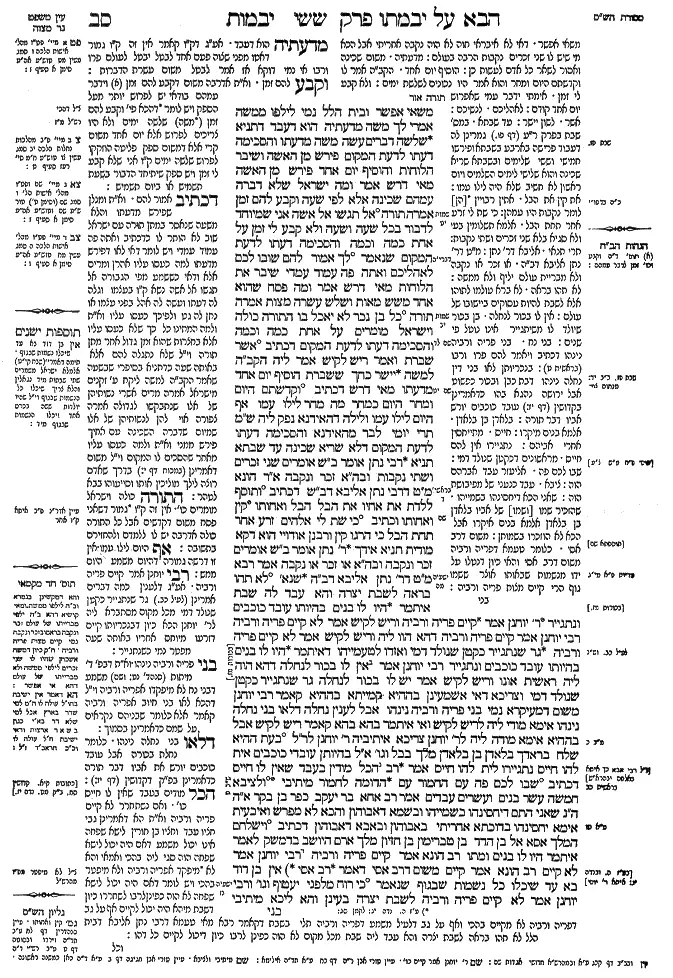
Yevamot 62a - Guemara
משאי אפשר ובית הלל נמי לילפו ממשה אמרי לך משה מדעתיה הוא דעבד דתניא שלשה דברים עשה משה מדעתו והסכימה דעתו לדעת המקום פירש מן האשה ושיבר הלוחות והוסיף יום אחד פירש מן האשה מאי דרש אמר ומה ישראל שלא דברה עמהם שכינה אלא לפי שעה וקבע להם זמן אמרה תורה (שמות יט, טו) אל תגשו אל אשה אני שמיוחד לדבור בכל שעה ושעה ולא קבע לי זמן על אחת כמה וכמה והסכימה דעתו לדעת המקום שנאמר (דברים ה, ל) לך אמור להם שובו לכם לאהליכם ואתה פה עמוד עמדי שיבר את הלוחות מאי דרש אמר ומה פסח שהוא אחד משש מאות ושלש עשרה מצות אמרה תורה (שמות יב, מג) כל בן נכר לא יאכל בו התורה כולה וישראל מומרים על אחת כמה וכמה והסכימה דעתו לדעת המקום דכתיב (שמות לד, א) אשר שברת ואמר ריש לקיש אמר ליה הקב"ה למשה יישר כחך ששברת הוסיף יום אחד מדעתו מאי דרש דכתיב (שמות יט, י) וקדשתם היום ומחר היום כמחר מה מחר לילו עמו אף היום לילו עמו ולילה דהאידנא נפק ליה ש"מ תרי יומי לבר מהאידנא והסכימה דעתו לדעת המקום דלא שריא שכינה עד שבתא תניא רבי נתן אומר ב"ש אומרים שני זכרים ושתי נקבות ובה"א זכר ונקבה א"ר הונא מ"ט דרבי נתן אליבא דב"ש דכתיב (בראשית ד, ב) ותוסף ללדת את אחיו את הבל הבל ואחותו קין ואחותו וכתיב (בראשית ד, כה) כי שת לי אלהים זרע אחר תחת הבל כי הרגו קין ורבנן אודויי הוא דקא מודית תניא אידך ר' נתן אומר ב"ש אומרים זכר ונקבה ובה"א או זכר או נקבה אמר רבא מ"ט דר' נתן אליבא דב"ה שנא' (ישעיהו מה, יח) לא תהו בראה לשבת יצרה והא עבד לה שבת איתמר היו לו בנים בהיותו עובד כוכבים ונתגייר ר' יוחנן אמר קיים פריה ורביה וריש לקיש אמר לא קיים פריה ורביה רבי יוחנן אמר קיים פריה ורביה דהא הוו ליה וריש לקיש אמר לא קיים פריה ורביה גר שנתגייר כקטן שנולד דמי ואזדו לטעמייהו דאיתמר היו לו בנים בהיותו עובד כוכבים ונתגייר רבי יוחנן אמר אין לו בכור לנחלה דהא הוה ליה ראשית אונו וריש לקיש אמר יש לו בכור לנחלה גר שנתגייר כקטן שנולד דמי וצריכא דאי אשמעינן בההיא קמייתא בההיא קאמר רבי יוחנן משום דמעיקרא נמי בני פריה ורביה נינהו אבל לענין נחלה דלאו בני נחלה נינהו אימא מודי ליה לריש לקיש ואי איתמר בהא בהא קאמר ריש לקיש אבל בההיא אימא מודה ליה לר' יוחנן צריכא איתיביה ר' יוחנן לר"ל (מלכים ב כ, יב) בעת ההיא שלח בראדך בלאדן בן בלאדן מלך בבל וגו' א"ל בהיותן עובדי כוכבים אית להו חייס נתגיירו לית להו חייס אמר רב הכל מודין בעבד שאין לו חייס דכתיב (בראשית כב, ה) שבו לכם פה עם החמור עם הדומה לחמור מיתיבי (שמואל ב ט, י) ולציבא חמשה עשר בנים ועשרים עבדים אמר רב אחא בר יעקב כפר בן בקר א"ה ה"נ שאני התם דיחסינהו בשמייהו ובשמא דאבוהון והכא לא מפרש ואיבעית אימא יחסינהו בדוכתא אחריתי באבוהון ובאבא דאבוהון דכתיב (מלכים א טו, יח) וישלחם המלך אסא אל בן הדד בן טברימון בן חזיון מלך ארם היושב בדמשק לאמר איתמר היו לו בנים ומתו רב הונא אמר קיים פריה ורביה רבי יוחנן אמר לא קיים רב הונא אמר קיים משום דרב אסי דאמר רב אסי אין בן דוד בא עד שיכלו כל נשמות שבגוף שנאמר (ישעיהו נז, טז) כי רוח מלפני יעטוף וגו' ורבי יוחנן אמר לא קיים פריה ורביה לשבת יצרה בעינן והא ליכא מיתיבי
Comments from Rashi on Masechet Yevamot Page 62a
משאי אפשר . דאי לא איבראי חוה לא הוה נקבה אחריתי אבל הכא מי שיש לו שני זכרים נקבות הרבה בעולם: מדעתיה . משום שכינה ואסור לשאר כל אדם לעשות כן: הוסיף יום אחד . הקב"ה אמר לו וקדשתם היום ומחר והוא אמר היו נכונים לשלשת ימים: ולא קבע לי זמן . אימתי ידבר עמי שאפרוש יום אחד קודם: לאהליכם . לנשיכם: אשר . לשון יישר: עד שבתא . במס' שבת בפרק ר"ע (דף פו.) גמרינן לה דעבוד פרישה בארבע בשבתא ופירשו חמישי וששי שלימים ובשבתא שריא שכינה והוא שלישי לימים השלמים ויום ראשון לא חשיב שלא היה לילו עמו: את קין את הבל . אתין רבויין [הן] לומר נקבות היו עמהן: כי שת לי זרע אחר תחת הבל . אלמא תשלומין בעי ולא סגיא בלא שני זכרים ושתי נקבות: תרי תנאי . אליבא דר' נתן: מ"ט דר' נתן אליבא דב"ה . או זכר או נקבה ולא מבריית עולם יליף ולא ממשה: לא תהו בראה . לא ברא עולמו לתוהו אלא לשבת להיות עסוקים ביישובו של עולם: אין לו בכור לנחלה . בן בכור שיולד לו משיתגייר אינו נוטל פי שנים: בני נח בני פריה ורביה נינהו . דכתיב ויאמר להם פרו ורבו (בראשית ט):
בנכריותן לאו בני דין נחלה נינהו דבת כבן ובכור כפשוט אבל ירושה נהגא בהו כדאמרינן בקדושין (דף יז:) עובד כוכבים יורש אביו דבר תורה: בלאדן בן בלאדן . אלמא בנים מיקרו: חייס . מתייחסין אחרי אביהם: נתגיירו אין להם חייס . מראשונים דכקטן שנולד דמי: שבו לכם פה . אליעזר עבד אברהם הוה: ציבא עבד כנעני של מפיבושת הוה: שאני הכא דיחסינהו בשמייהו . שהזכיר שמו [ושמו] של אביו בלאדן בן בלאדן אלמא בנים איקרו אבל הכא לא הוזכרו בשמותן: משום דרב אסי . כלומר טעמא דפריה ורביה משום דרב אסי והאי כיון דנטלו על ידו מנשמות שבאותו אוצר ששמו גוף הרי קיים מצות פריה ורביה:
Comments from Tosafot - Yevamot 62a
מדעתיה הוא דעבד . אע"ג דק"ו קאמר אין זה ק"ו גמור דאטו מפני שצוה פעם אחד לבטל יבטל לעולם פרו ורבו אי נמי דוקא אז אמר לבטל משום עשרת הדברות: וקבע להם זמן . וא"ת אדרבה משום דקבע להם זמן וידבר עמהם בודאי יש לפרוש יותר מעל הספק ויש לומר דהכא פי' וקבע להם זמן (משה) שלשה ימים ולא היו צריכים לפרוש אלא יום אחד משום קרי אלא דמשום ספק פליטה הוזקקו לפרוש שלשה ימים ק"ו אני שלא קבע לי זמן ויש ספק שיתיחד הדבור בשעת תשמיש או ביום תשמיש: דכתיב אמור להם . וא"ת ומנלן שפירש מדעתו והלא משעה שנאסר במתן תורה עם ישראל שוב לא הותר לו כדכתיב ואתה פה עמוד עמדי ויש לומר דאי לאו דפירש מדעתו למה כעסו עליו אהרן ומרים אלא ודאי כששמע מפי הגבורה אל תגשו אל אשה נשא ק"ו בעצמו וגלה לה דעתו ועשה לה אהל בפני עצמו או נתן לה גט ולפיכך כעסו עליו וא"ת ולמה המתינו כל כך שלא כעסו עליו אלא בחצרות שהוא זמן גדול אחר מתן תורה וי"ל שלא נתגלה להם אלא באותה שעה כדתניא בסיפרי שבשעה שאמר הקב"ה למשה ליקח ע' זקנים מישראל אמרה מרים אשרי נשותיהן של אלו שנתבקשו לגדולה אמרה צפורה אוי להן לנשותיהן של אלו שמיום שדברה השכינה עם אחיך פירש ממני וא"ת ולמה כעסו עליו מאחר שהסכים לו המקום וי"ל משום דאמרינן (במכות דף י:) בדרך שאדם רוצה לילך מוליכין אותו וסייעוהו בבא לטהר: התורה כולה וישראל מומרים כו' . אין זה ק"ו גמור דשאני פסח משום דקדשים אבל כל התורה כולה אדרבה יש לו ללמדם ולהחזירם בתשובה: אף היום לילו עמו . אין זו דרשה גמורה דהיום משמע היום ממש: רבי יוחנן אמר קיים פריה ורביה . אע"ג דלענין כמה דברים אמרינן (לעיל יבמות כב.) גר שנתגייר כקטן שנולד דמי מכל מקום מסתברא ליה לר' יוחנן הכא כיון דבנכריותו קיים דזרעו מיוחס אחריו באותה שעה מפטר נמי כשנתגייר: בני פריה ורביה נינהו . וא"ת דבפ' ד' מיתות (סנהד' נט: ושם) משמע דבני נח לא מיפקדו אפריה ורביה וי"ל דהכא לאו בני חיוב אפריה ורביה קאמר אלא כלומר שבניהם נקראים על שמם כדאמרינן בסמוך: דלאו בני נחלה נינהו . כלומר נחלת בכורה אבל עובד כוכבים יורש את אביו דבר תורה כדאמרינן בפ"ק דקדושין (דף יז:): הכל מודים בעבד שאין לו חייס כו' . ואם נשתחרר לא קיים פריה ורביה וא"ת הא דאמרינן גבי חציו עבד וחציו בן חורין לישא שפחה אינו יכול משמע דאם היה יכול לישא שפחה הוה סגי ליה בהכי ואמאי והא לא. מיפקד אפריה ורביה ולא מיפטר בהכי ויש לומר דאם היה יכול לישא שפחה לא הוה כפינן לרבו לשחררו כיון דשבת מיהא היה יכול לקיים אף על גב דפריה ורביה לא מקיים בהכי ואף על גב דלעיל משמע דפריה ורביה תלי בשבת דקאמר רבא מאי טעמא דרבי נתן אליבא דבית הלל לא תהו בראה לשבת יצרה והא עבד ליה שבת מכל מקום לא הוה כפינן לרבו כיון דיכול לקיים כל דהו:
Yevamot 62a - Mishnah translated into english
from one that is not possible. Mankind was initially created with a male and female because otherwise reproduction would not have been possible. However, this fact cannot serve as a source that the mitzva to be fruitful and multiply is fulfilled only once one has a son and a daughter. The Gemara asks: And Beit Hillel, let them also learn from Moses. Beit Hillel could say to you: Moses acted based on his own perception when he separated from his wife, but this does not mean that a man is permitted to neglect the mitzva to be fruitful and multiply after fathering two males, as it is taught in a baraita: Moses did three things based on his own perception, and his perception agreed with the perception of the Omnipresent: He separated from his wife, he broke the tablets, and he added one day to the days of separation before the revelation at Sinai.
The Gemara clarifies: When Moses separated from his wife after the revelation at Sinai, what did he interpret that led him to do so? He said: If in the case of Israel, with whom the Divine Presence spoke only temporarily and for whom God set a specific time for revelation, the Torah stated: “Do not approach a woman” (Exodus 19:15), I, Moses, who am set aside for divine speech all the time and for whom God did not set a specific time, all the more so I must separate from my wife. And his perception agreed with the perception of the Omnipresent, as it is stated after the revelation at Sinai: “Go say to them: Return to your tents; and you, stand here with Me” (Deuteronomy 5:26–27). This indicates that whereas others could return to their homes and normal married life after the revelation at Sinai, Moses was to stay with God and not return to his wife.
Moses broke the tablets following the sin of the Golden Calf. What did he interpret that led him to do so? Moses said: If in the case of the Paschal lamb, which is only one of 613 mitzvot, the Torah states: “No alien shall eat of it” (Exodus 12:43), excluding not only gentiles but apostate Jews as well, then here, in the case of the Golden Calf, where the tablets represent the entire Torah and where the Jewish people are apostates, as they are worshipping the calf, all the more so must they be excluded from receiving them.
And his perception agreed with the perception of the Omnipresent, as it is written: “The first tablets that you broke [asher shibbarta]” (Exodus 34:1), and Reish Lakish said: The word asher is an allusion to the fact that the Holy One, Blessed be He, said to Moses: May your strength be true [yishar koḥakha] that you broke the tablets.
When Moses added one day to the days of separation before the revelation at Sinai based on his own perception, what did he interpret that led him to do so? He reasoned that since it is written: “And sanctify them today and tomorrow” (Exodus 19:10), the juxtaposition of the words “today” and “tomorrow” teaches that today is like tomorrow: Just as tomorrow the men and women will separate for that day and the night preceding it, so too, today requires separation for the day and the night preceding it. Since God spoke to him in the morning, and the night of that day already passed, Moses said: Conclude from this that separation must be in effect for two days aside from now, i.e., not including the day of the command. Therefore, he extended the mitzva of separation by one day. And his perception agreed with the perception of the Omnipresent, as the Divine Presence did not rest upon Mount Sinai until Shabbat morning, as Moses had determined.
§ It is taught in a baraita that Rabbi Natan says that Beit Shammai say: The mitzva to be fruitful and multiply is fulfilled with two males and two females. And Beit Hillel say: A male and a female.
Rav Huna said: What is the reason of Rabbi Natan, in accordance with the opinion of Beit Shammai? It is as it is written: “And again she bore his brother [et aḥiv] Abel [et Hevel]” (Genesis 4:2). The use of the superfluous word “et” indicates that she gave birth to Abel and his sister, in addition to Cain and his sister. And it states: “For God has appointed me another seed instead of Abel; for Cain slew him” (Genesis 4:25). This indicates that one must have at least four children. And the Rabbis, how do they understand this verse? In their opinion, Eve was thanking God for granting her another child, but one is not obligated to have four children.
It is taught in another baraita that Rabbi Natan says that Beit Shammai say: The mitzva to be fruitful and multiply is fulfilled with a male and a female. And Beit Hillel say: Either a male or a female. Rava said: What is the reason of Rabbi Natan in accordance with the opinion of Beit Hillel? It is as it is stated: “He did not create it a waste; He formed it to be inhabited” (Isaiah 45:18), and one has made the earth inhabited to a greater degree by adding even one child to the world.
§ It was stated that amora’im disagreed over the following issue: If a man had children when he was a gentile and he subsequently converted, Rabbi Yoḥanan said: He has already fulfilled the mitzva to be fruitful and multiply, and Reish Lakish said: He has not fulfilled the mitzva to be fruitful and multiply. Rabbi Yoḥanan said he has fulfilled the mitzva to be fruitful and multiply, as he already had children. And Reish Lakish said he has not fulfilled the mitzva to be fruitful and multiply, as the legal status of a convert who just converted is like that of a child just born, and it is considered as though he did not have children.
The Gemara comments: And they follow their regular line of reasoning, as it was stated: If one had children when he was a gentile and he subsequently converted, Rabbi Yoḥanan said: He does not have a firstborn with regard to inheritance, i.e., the first son born to him after his conversion does not inherit a double portion, as this man already had “the first of his strength” (Deuteronomy 21:17), the Torah’s description of the firstborn in this context, before he converted. And Reish Lakish said: He does have a firstborn with regard to inheritance, as the legal status of a convert who just converted is like that of a child just born.
The Gemara adds: And it is necessary to state their opinions in both cases. As, had it only been taught to us with regard to that first case of the mitzva to be fruitful and multiply, one might have said that it is only in that case that Rabbi Yoḥanan said his opinion, because from the outset, gentiles are also subject to the mitzva to be fruitful and multiply. However, with regard to inheritance, since they are not subject to the halakhot of inheritance, one might say that Rabbi Yoḥanan concedes to Reish Lakish.
And conversely, if their dispute was stated only with regard to this issue of inheritance, I would have said that it is only in this case that Reish Lakish said his opinion, as the halakhot of inheritance do not apply to gentiles. But with regard to that case, the mitzva to be fruitful and multiply, one might say that he concedes to Rabbi Yoḥanan. Consequently, it is necessary for both disputes to be recorded.
Rabbi Yoḥanan raises an objection to Reish Lakish based upon the verse: “At that time Berodach-baladan, son of Baladan, king of Babylon, sent a letter” (II Kings 20:12), which indicates that gentiles are considered to be the children of their parents. Therefore, when they convert, they should already have fulfilled the mitzva to be fruitful and multiply. Reish Lakish said to Rabbi Yoḥanan: When they are gentiles they do have family lineage, but when they convert they do not have lineage, as they now belong to the family of the Jewish people and their previous lineage is disregarded.
Rav said: Everyone agrees with regard to a Canaanite slave, that he does not have lineage, as it is written that Abraham said to his slaves: “Remain here with the donkey” (Genesis 22:5). This verse is interpreted to mean that they are a nation comparable to a donkey, which has no lineage. The Gemara raises an objection based upon a verse pertaining to Jonathan’s Canaanite slave: “And Ziba had fifteen sons and twenty servants” (II Samuel 9:10), which indicates that a slave’s sons are in fact considered his sons. Rav Aḥa bar Ya’akov said: This is like the expression: A bullock, son of a bull. The word son in this context merely denotes progeny, not lineage.
The Gemara asks: If so, here too, with regard to gentiles, there is no proof from the verse about Berodach-baladan that they have family lineage. The Gemara answers: There it is different, as the Bible identified him by his name and by his father’s name, thereby emphasizing the family connection. But here, it does not specify the names of Ziba’s children. And if you wish, say instead that the Bible identified gentiles elsewhere by their father and their father’s father, as it is written: “And King Asa sent them to Ben-hadad, son of Tabrimmon, son of Hezion, king of Aram, who dwelled in Damascus, saying” (I Kings 15:18). This indicates that there is lineage for gentiles.
§ It was stated that amora’im disagreed over the following issue: If a man had children and they died, Rav Huna said: He has fulfilled the mitzva to be fruitful and multiply through these children. Rabbi Yoḥanan said: He has not fulfilled the mitzva.
The Gemara clarifies the reasons for their opinions: Rav Huna said he has fulfilled the mitzva due to a statement of Rav Asi, as Rav Asi said that the reason for this mitzva is that the Messiah, son of David, will not come until all the souls of the body have been finished, i.e., until all souls that are destined to inhabit physical bodies will do so, as it is stated: “For the spirit that enwraps itself is from Me, and the souls that I have made” (Isaiah 57:16). Consequently, once a child has been born and his soul has entered a body the mitzva has been fulfilled, even if the child subsequently dies. And Rabbi Yoḥanan said he has not fulfilled the mitzva, as we require “He formed it to be inhabited” (Isaiah 45:18), and this is not fulfilled when the children have passed away and no longer inhabit the earth.
The Gemara raises an objection with regard to the opinion of Rav Huna based upon the following baraita:
Traduction : The William Davidson digital edition of the Koren Noé Talmud, with commentary by Rabbi Adin Even-Israel Steinsaltz.