 Talmud Bavli
Yevamot 96a : Youtube
Daf TubeYoutube
1 video class :
Yevamot Page 96a
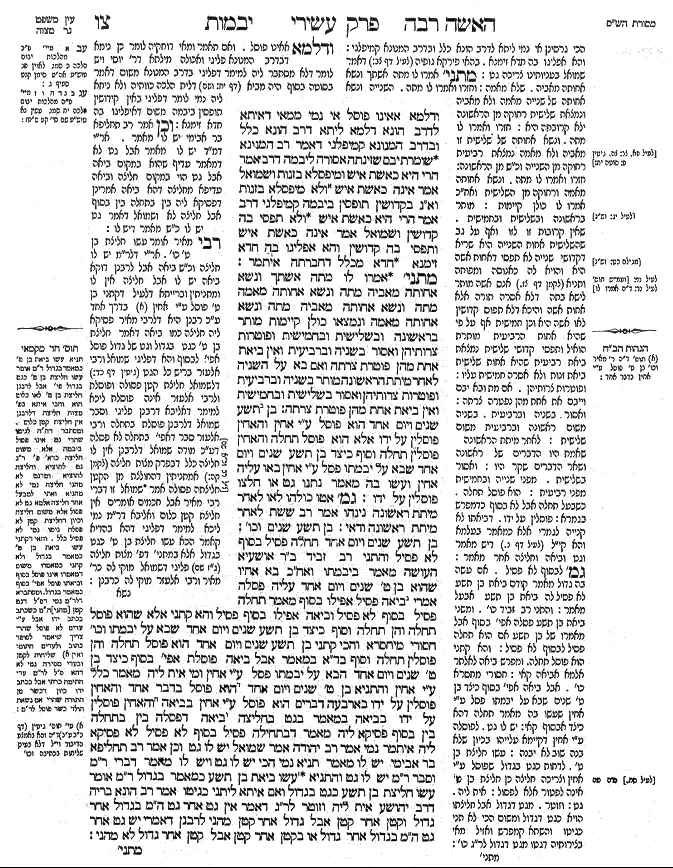
Yevamot 96a - Guemara
ודלמא אאינו פוסל אי נמי ממאי דאיתא לדרב הונא דלמא ליתא דרב הונא כלל ובדרב המנונא קמיפלגי דאמר רב המנונא שומרת יבם שזינתה אסורה ליבמה דרב אמר הרי היא כאשת איש ומיפסלא בזנות ושמואל אמר אינה כאשת איש ולא מיפסלא בזנות וא"נ בקדושין תופסין ביבמה קמיפלגי דרב אמר הרי היא כאשת איש ולא תפסי בה קדושין ושמואל אמר אינה כאשת איש ותפסי בה קדושין והא אפליגו בה חדא זימנא חדא מכלל דחברתה איתמר:
מתני׳ אמרו לו מתה אשתך ונשא אחותה מאביה מתה ונשא אחותה מאמה מתה ונשא אחותה מאביה מתה ונשא אחותה מאמה ונמצאו כולן קיימות מותר בראשונה ובשלישית ובחמישית ופוטרות צרותיהן ואסור בשניה וברביעית ואין ביאת אחת מהן פוטרת צרתה ואם בא על השניה לאחר מיתת הראשונה מותר בשניה וברביעית ופוטרות צרותיהן ואסור בשלישית ובחמישית ואין ביאת אחת מהן פוטרת צרתה:
בן תשע שנים ויום אחד הוא פוסל ע"י אחין והאחין פוסלין על ידו אלא הוא פוסל תחלה והאחין פוסלין תחלה וסוף כיצד בן תשע שנים ויום אחד שבא על יבמתו פסל ע"י אחין באו עליה אחין ועשו בה מאמר נתנו גט או חלצו פוסלין על ידו:
גמ׳ אטו כולהו לאו לאחר מיתת ראשונה נינהו אמר רב ששת לאחר מיתת ראשונה ודאי:
בן תשע שנים וכו':
בן תשע שנים ויום אחד תחלה פסיל בסוף לא פסיל והתני רב זביד ב"ר אושעיא העושה מאמר ביבמתו ואח"כ בא אחיו שהוא בן ט' שנים ויום אחד עליה פסלה אמרי ביאה פסיל אפילו בסוף מאמר תחלה פסיל בסוף לא פסיל וביאה אפילו בסוף פסיל והא קתני אלא שהוא פוסל תחלה והן תחלה וסוף כיצד בן תשע שנים ויום אחד שבא על יבמתו וכו' חסורי מיחסרא והכי קתני בן תשע שנים ויום אחד הוא פוסל תחלה והן פוסלין תחלה וסוף בד"א במאמר אבל ביאה פוסלת אפי' בסוף כיצד בן ט' שנים ויום אחד הבא על יבמתו פסל ע"י אחין ומי אית ליה מאמר כלל ע"י אחין והתניא בן ט' שנים ויום אחד הוא פוסל בדבר אחד והאחין פוסלין על ידו בארבעה דברים הוא פוסל ע"י אחין בביאה והאחין פוסלין על ידו בביאה במאמר בגט בחליצה ביאה דפסלה בין בתחלה בין בסוף פסיקא ליה מאמר דבתחילה פסיל בסוף לא פסיל לא פסיקא ליה איתמר נמי אמר רב יהודה אמר שמואל יש לו גט וכן אמר רב תחליפא בר אבימי יש לו מאמר תניא נמי הכי יש לו גט ויש לו מאמר דברי ר"מ וסבר ר"מ יש לו גט והתניא עשו ביאת בן תשע כמאמר בגדול ר"מ אומר עשו חליצת בן תשע כגט בגדול ואם איתא ליתני כגיטו אמר רב הונא בריה דרב יהושע אית ליה וזוטר לר"ג דאמר אין גט אחר גט ה"מ בגדול אחר גדול וקטן אחר קטן אבל גדול אחר קטן מהני לרבנן דאמרי יש גט אחר גט ה"מ בגדול אחר גדול או בקטן אחר קטן אבל קטן אחר גדול לא מהני:
Comments from Rashi on Masechet Yevamot Page 96a
הכי גרסינן אי נמי ליתא לדרב הונא כלל ובדרב המנונא קמיפלגי: והא אפליגו בה חדא זימנא . בהאי פירקא גופיה (לעיל יבמות דף צב:) דאמר שמואל בעניותינו צריכה גט: מתני' אמרו לו מתה אשתך ונשא אחותה מאביה . שלא מאמה: וחזרו ואמרו לו מתה . השנייה ונשא אחותה של שנייה מאמה ולא מאביה ונמצאת שלישית רחוקה מן הראשונה ולא קרובתה היא: חזרו ואמרו לו מתה . ונשא אחותה של שלישית זו מאביה ולא מאמה נמצאת רביעית רחוקה מן השנייה וכ"ש מן הראשונה: חזרו ואמרו לו מתה . ונשא אחותה מאמה ורחוקה מן השלישית ואח"כ אמרו לו כולן קיימות: מותר בראשונה ובשלישית ובחמישית . שאין קרובות זו לזו ואף על גב שהשלישית אחות השנייה היא שריא דקדושי שנייה לא תפסי דאחות אשה היא והויא לה כאנוסה ומפותה ותניא (לקמן יבמות דף צז.) אנס אשה מותר לישא בתה דלא אסרה תורה אלא אחות אשה והיכא דלא תפוס קדושין לאו אשה היא וכן חמישית אף על פי שהיא אחות הרביעית מותרת הואיל ותפסי קדושי שלישית נמצאת ביאת רביעית שהיא אחות שלישית ביאת זנות ולא אסרה חמישית עליו: ופוטרות צרותיהן . אם מת ובא יבם וייבם את אחת מהן נפטרה צרתה: ואסור בשניה וברביעית . בשניה משום ראשונה וברביעית משום שלישית: לאחר מיתת הראשונה . שאמת היו הדברים של ראשונה ושאר הדברים שקר היו: ואסור בשלישית . מפני שנייה ובחמישית מפני רביעית: הוא פוסל תחלה . כשבעל תחלה אבל לא בסוף כדמפרש בגמרא: פוסלין על ידו . דביאתו לא קנייה לגמרי אלא כמאמר בעלמא והא קי"ל (לעיל יבמות דף נ.) דיש מאמר וגט וביאה וחליצה אחר מאמר: גמ' לבסוף לא פסיל . אם עשה בה גדול מאמר קודם ביאת בן תשע לא פסיל לה ביאת בן תשע אבעל מאמר: והתני רב זביד כו' . ומשני ביאת בן תשע פסלה אפי' בסוף אבל מאמרו של בן תשע אם הוא תחלה פסיל לבסוף לא פסיל: והא קתני הוא פוסל תחלה . ומפרש ביאה לאלתר אלמא אביאה קאי: חסורי מחסרא כו' . אבל ביאה אפי' בסוף כיצד בן ט' שנים שבא על יבמתו פסל ע"י אחין שעשו בה מאמר תחלה דהא כיצד אבסוף קאי: יש לו גט . לפוסלה ע"י אחין דקיימא עלייהו בכיון שלא בנה שוב לא יבנה: עשו חליצת בן ט' . לדחות כגט בגדול שפוסל ע"י אחין וצריכה חליצה כן חליצת בן ט' אינה לפטור אלא לפסול: אית ליה . גט: וזוטר . מגט דגדול אבל חליצתו הויא כגט דגדול ומשום הכי לא תני כגיטו. והשתא קמפרש ואזיל מאי בצירותיה דגטו מגט דגדול לר"ג כו':
Comments from Tosafot - Yevamot 96a
ודלמא אאינו פוסל . ואם תאמר ומאי דוחקיה לומר כן נימא דבדרב המנונא פליגי ואכולה מילתא דר' יוסי ויש לומר דלא מסתבר ליה למימר דפליגי בדרב המנונא משום דאמר בסוטה בסוף היה מביא (דף יח: ושם) דלית הלכה כוותיה ולא ניחא ליה נמי לומר דפליגי באין קידושין תופסין ביבמה משום דאיפליגו בה חדא זימנא: וכן אמר רב תחליפא בר אבימי יש לו מאמר . אר"י דמ"ד יש לו מאמר אבל גט לא דמאמר עדיף שהוא במקום ביאה אבל גט הוי במקום חליצה וביאה עדיפא מחליצה דהא ביאה אמרינן דפסיקא ליה בין בתחלה בין בסוף אבל חליצה לא ושמואל דאמר גט יש לו כ"ש מאמר דיש לו: רבי מאיר אומר עשו חליצת בן ט' כו' . אר"י דלר"מ יש לו חליצה וכ"ש ביאה אבל לרבנן דוקא ביאה יש לו אבל חליצה אין לו ומתניתין וברייתא דלעיל דקתני בן ט' פוסל ע"י אחין בדרך אחד ע"כ רבנן היא דלרבי מאיר פסיקא ליה חליצה כמו ביאה דאמר חליצת בן ט' כגט בגדול וגט של גדול פוסל אפי' לבסוף והא דפליגי שמואל ורבי אלעזר בריש כל הגט (גיטין דף כד:) דלשמואל חליצת קטן פסולה ופוסלת ולרבי אלעזר אינה פוסלת ליכא למימר דאליבא דרבנן פליגי וסבר שמואל דלרבנן פוסלת בתחלה ורבי אלעזר סבר דאפי' בתחלה לא פסלה דע"כ מודה שמואל דלרבנן אין לו חליצה כלל דבפרק מצות חליצה (לקמן יבמות קה:) אמתניתין דהחולצת מן הקטן חליצתה פסולה אמר שמואל זו דברי רבי מאיר אבל חכמים אומרים אין חליצת קטן כלום ואליבא דר"מ נמי ליכא למימר דפליגי דהא בהדיא קאמר הכא עשו חליצת בן ט' כגט בגדול אלא במתני' דפ' מצות חליצה (ג"ז שם) פליגי דשמואל מוקי לה כר' מאיר ורבי אלעזר מוקי לה כרבנן:
Yevamot 96a - Mishnah translated into english
But perhaps Shmuel’s ruling in accordance with the opinion of Rabbi Yosei is referring to the ruling that he does not disqualify his brother-in-law’s wife to his brother-in-law, in a case where his wife and brother-in-law left. Alternatively, the contradiction can be resolved in the following manner: From where do we know that there is a reason to accept the explanation of Rav Huna with regard to the dispute between Rav and Shmuel? Perhaps there is no cause to agree with Rav Huna at all, and it can be explained that Rav and Shmuel disagree with regard to the statement of Rav Hamnuna. As Rav Hamnuna said: A widow waiting for her yavam who engaged in licentious sexual relations is forbidden to her yavam.
According to this interpretation, the dispute is as follows: As Rav said, she is like a married woman and she is therefore disqualified by licentious sexual relations. And Shmuel said that she is not like a married woman and is not disqualified by licentious sexual relations. And alternatively, one can explain that Rav and Shmuel disagree with regard to the issue of whether betrothal takes effect with a yevama: As Rav said, she is like a married woman with regard to all men other than her yavam, and therefore betrothal performed by anyone else does not take effect with her. And Shmuel said that she is not like a married woman, and this means that betrothal does take effect with her.
The Gemara asks with regard to this last answer: How can the dispute be explained in this manner? But Rav and Shmuel already disagreed over this once. The Sages would certainly not record the same dispute twice. The Gemara answers: It is possible that they did not in fact disagree twice with regard to the same case. Rather, one ruling was stated by inference from the other. In other words, their dispute was recorded in two different ways, the second time by inference from their original dispute.
MISHNA: Witnesses said to a husband: Your wife is dead, and he married her paternal sister, and witnesses subsequently told him that his second wife was dead and he married her maternal sister; afterward witnesses said that this one too was dead and he married her paternal sister; finally they told him that she was dead and he married the last woman’s maternal sister, and then they were all discovered to be alive. In this case he is permitted to his first wife, and to the third and to the fifth. Since these women are not sisters, his betrothal to them is effective. Consequently, if he died and one of them entered into levirate marriage, they exempt their rival wives.
But he is forbidden to the second and fourth wife, each of whom is the sister of his original wife. Therefore, if he passed away and the yavam had relations with one of them, his relations with any one of them does not exempt her rival wife, as she was forbidden to his brother, which means there was no mitzva of levirate marriage here at all.
And if he had relations with the second woman in the aforementioned list after the death of the first, i.e., the first one indeed died but the other rumors were all false, in that case he is permitted to the second and the fourth, who are his lawful wives, and they exempt their rival wives, and he is forbidden to the third and the fifth, the sisters of the women married to him, and the sexual relations of the brother with any one of them does not exempt her rival wife.
§ The mishna addresses a different issue: If a boy aged nine years and one day had relations with his yevama he thereby disqualifies his brothers from levirate marriage, despite the fact that as a minor he has not acquired the yevama through this act of intercourse, and the brothers likewise disqualify the woman from him if they have intercourse with the yevama. However, there is a difference between them, as he disqualifies them only if he engaged in relations with her first, and the brothers disqualify him whether they had relations first or last.
The mishna explains: How so? A boy aged nine years and one day who had relations with his yevama has disqualified his brothers, as they are no longer eligible to marry her. If his brothers had relations with her, or performed levirate betrothal with her, or gave her a bill of divorce, or performed ḥalitza with her, they permanently disqualify him from engaging in relations with her.
GEMARA: The mishna states: And if he had relations with the second after the death of the first. The Gemara asks: Is that to say that all of them, all the other cases in the mishna, are not dealing with a situation after the death of the first woman? The entire case starts with the report: Your wife is dead. Rav Sheshet said: After the definite death of the first one. In other words, the mishna means that this did not follow a mere rumor that she was dead, but it was positively established that she had actually died.
§ The mishna teaches that a boy aged nine years and one day who had relations with his yevama has disqualified her from his brothers. Throughout this discussion, whenever the Gemara refers to a nine-year-old boy, it is understood that he is actually nine years and one day old. The Gemara asks: Does a boy aged nine years and one day disqualify her to the brothers only if he had relations with her first, but if he had relations last he does not disqualify them? But didn’t Rav Zevid bar Rav Oshaya teach: One who performs levirate betrothal with his yevama, and afterward his brother, who is nine years and one day old, had relations with her, he has disqualified her. This indicates that the intercourse of a nine-year-old disqualifies his brother even if it occurred after that of his brother.
They say in response: The intercourse of a nine-year-old disqualifies his brothers even if it happens last; however, in the case of a boy who merely performed levirate betrothal with her, if he did so first he disqualifies his brothers, whereas if he was last, he does not disqualify his brothers. The Gemara asks: And do the sexual relations of a nine-year-old disqualify his brothers even when performed last? But isn’t it taught in the mishna: However, he disqualifies them only if he was first, and the brothers disqualify him whether they were first or last. How so? A boy aged nine years and one day who had relations with his yevama has disqualified his brothers. The example the mishna uses for a boy who disqualifies his brothers first is an act of intercourse.
The Gemara answers: The mishna is incomplete and this is what it is teaching: With regard to a boy aged nine years and one day, he disqualifies his brothers first, and they disqualify him first and last. In what case is this statement said? This is said with regard to levirate betrothal, i.e., if they performed levirate betrothal with her. However, if the minor had relations with her, he disqualifies them even if he did so last. How so? If a boy aged nine years and one day had relations with his yevama after his brother performed levirate betrothal with her, he has disqualified his brothers.
The Gemara asks: And does a nine-year-old boy have the ability to perform levirate betrothal at all that would have any effect with regard to the eligibility of his brothers in levirate marriage? But isn’t it taught in a baraita: With regard to a boy aged nine years and one day, he disqualifies the yevama to his brothers in one way, and the brothers disqualify him in four ways. How so? He disqualifies the brothers by relations, i.e., the yevama is forbidden to the other brothers if she has sexual relations with him, and the brothers disqualify him by relations, by levirate betrothal, by a bill of divorce, and by ḥalitza. The tanna does not mention the levirate betrothal of a minor at all.
The Gemara rejects this claim: No proof can be derived from that source, as with regard to the sexual relations of a minor, which disqualifies his brothers whether it came first or last, the tanna can teach a definite ruling, i.e., he can state this halakha in an unambiguous and unqualified manner. Conversely, with regard to the levirate betrothal of a minor, which if it occurred first disqualifies his brothers but if it happened last, after one of the brothers performed levirate marriage with her, it does not disqualify them, the tanna cannot teach it in a definite and unqualified manner, but would have to elaborate and explain the precise circumstances. Therefore he omitted this case entirely.
§ It was also stated by other amora’im: Rav Yehuda said that Shmuel said: A minor boy has the ability to give a bill of divorce in the case of a yevama, i.e., if he gave her a bill of divorce he has disqualified her to his brothers. And similarly Rav Taḥalifa bar Avimi said: He has the ability to perform levirate betrothal. The Gemara comments: This is also taught in a baraita: A minor has the ability to give a bill of divorce and he has the ability to perform levirate betrothal; this is the statement of Rabbi Meir.
The Gemara asks: And does Rabbi Meir hold that a minor boy has the ability to give a bill of divorce? But isn’t it taught in a baraita: They established the sexual relations of a nine-year-old like a levirate betrothal performed by an adult. Rabbi Meir says: They established the ḥalitza of a nine-year-old like a bill of divorce of an adult. The Gemara explains the difficulty: And if it is so, let Rabbi Meir teach: They established the ḥalitza of a nine-year-old like his own bill of divorce, as he too can give a yevama a bill of divorce. Rav Huna, son of Rav Yehoshua, said: He does have the ability to give a bill of divorce, but it is less powerful than the bill of divorce of an adult yavam, as explained by Rav Huna below.
Rav Huna, son of Rav Yehoshua, elaborates: According to the opinion of Rabban Gamliel, who said that there is no bill of divorce after a bill of divorce for a yevama, i.e., if one of the brothers gave her a bill of divorce, no bill of divorce given later by a different brother is of any significance, this applies only when the bill of divorce was given by an adult after an adult, or by a minor after a minor. However, if an adult gave a bill of divorce after a minor, the bill of divorce of the adult is effective and disqualifies the yevama, as the bill of divorce of a minor is of less importance.
According to the opinion of the Rabbis, who say that there is a bill of divorce after a bill of divorce, this applies only to the case of an adult after an adult, or to a minor after a minor. However, they too agree that the bill of divorce of a minor after an adult is not effective, as a minor’s bill of divorce is certainly weaker than that of an adult. For this reason Rabbi Meir said that they established the ḥalitza of a nine-year-old like a bill of divorce of an adult, to emphasize that a subsequent bill of divorce of a minor is of no account.
Traduction : The William Davidson digital edition of the Koren Noé Talmud, with commentary by Rabbi Adin Even-Israel Steinsaltz.