 Talmud Bavli
The learning on the whole site is dedicated : L'ilui Nishmat רינה בת לדיסיה
The learning on the whole site is dedicated : L'ilui Nishmat Ledicia bat David Banoun
The learning on the whole site is dedicated : L'ilui Nishmat Yechayahou ben Moche
Yevamot 76a : Youtube
Daf TubeYoutube
2 video classes :
Yevamot Page 76a
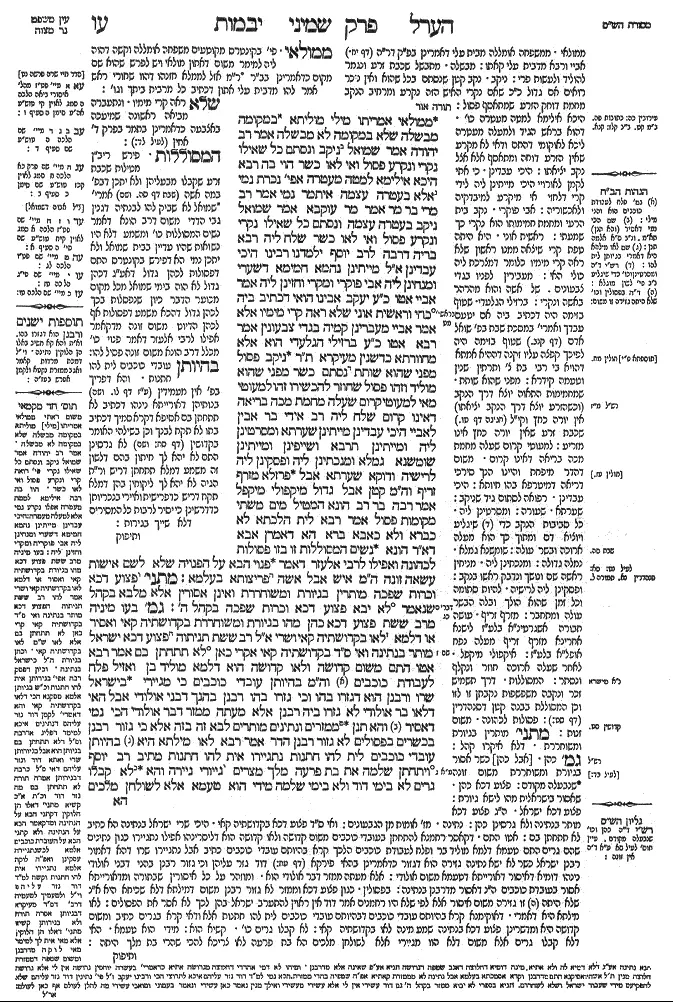
Yevamot 76a - Guemara
ממולאי אמריתו מילי מוליתא במקומה מבשלה שלא במקומה לא מבשלה אמר רב יהודה אמר שמואל ניקב ונסתם כל שאילו נקרי ונקרע פסול ואי לאו כשר הוי בה רבא היכא אילימא למטה מעטרה אפי' נכרת נמי אלא בעטרה עצמה איתמר נמי אמר רב מרי בר מר אמר מר עוקבא אמר שמואל ניקב בעטרה עצמה ונסתם כל שאילו נקרי ונקרע פסול ואי לאו כשר שלח ליה רבא בריה דרבה לרב יוסף ילמדנו רבינו היכי עבדינן א"ל מייתינן נהמא חמימא דשערי ומנחינן ליה אבי פוקרי ומקרי וחזינן ליה אמר אביי אטו כ"ע יעקב אבינו הואי דכתיב ביה (בראשית מט, ג) כחי וראשית אוני שלא ראה קרי מימיו אלא אמר אביי מעברינן קמיה בגדי צבעונין אמר רבא אטו כ"ע ברזילי הגלעדי הוא אלא מחוורתא כדשנין מעיקרא ת"ר ניקב פסול מפני שהוא שותת נסתם כשר מפני שהוא מוליד וזהו פסול שחוזר להכשירו זהו למעוטי מאי למעוטי קרום שעלה מחמת מכה בריאה דאינו קרום שלח ליה רב אידי בר אבין לאביי היכי עבדינן מייתינן שערתא ומסרטינן ליה ומייתינן תרבא ושייפינן ומייתינן שומשנא גמלא ומנכתינן ליה ופסקינן ליה לרישיה ודוקא שערתא אבל פרזלא מזרף זריף וה"מ קטן אבל גדול מיקפולי מיקפל אמר רבה בר רב הונא המטיל מים משתי מקומות פסול אמר רבא לית הלכתא לא כברא ולא כאבא ברא הא דאמרן אבא דא"ר הונא נשים המסוללות זו בזו פסולות לכהונה ואפילו לרבי אלעזר דאמר פנוי הבא על הפנויה שלא לשם אישות עשאה זונה ה"מ איש אבל אשה פריצותא בעלמא:
מתני׳ פצוע דכא וכרות שפכה מותרין בגיורת ומשוחררת ואינן אסורין אלא מלבא בקהל שנאמר (דברים כג, ב) לא יבא פצוע דכא וכרות שפכה בקהל ה':
גמ׳ בעו מיניה מרב ששת פצוע דכא כהן מהו בגיורת ומשוחררת בקדושתיה קאי ואסיר או דלמא לאו בקדושתיה קאי ושרי א"ל רב ששת תניתוה פצוע דכא ישראל מותר בנתינה ואי ס"ד בקדושתיה קאי אקרי כאן (דברים ז, ג) לא תתחתן בם אמר רבא אטו התם משום קדושה ולאו קדושה הוא דלמא מוליד בן ואזיל פלח לעבודת כוכבים וה"מ בהיותן עובדי כוכבים כי מגיירי בישראל שרו ורבנן הוא דגזרו בהו וכי גזרו בהו רבנן בהנך דבני אולודי אבל האי דלאו בר אולודי לא גזרו ביה רבנן אלא מעתה ממזר דבר אולודי הכי נמי דאסיר והא תנן ממזרים ונתינים מותרים לבא זה בזה אלא כי גזור רבנן בכשרים בפסולים לא גזור רבנן הדר אמר רבא לאו מילתא היא בהיותן עובדי כוכבים לית להו חתנות נתגיירו אית להו חתנות מתיב רב יוסף (מלכים א ג, א) ויתחתן שלמה את בת פרעה מלך מצרים גייורי גיירה והא לא קבלו גרים לא בימי דוד ולא בימי שלמה מידי הוא טעמא אלא לשולחן מלכים
Comments from Rashi on Masechet Yevamot Page 76a
ממולאי . ממשפחה אומללה מבית עלי דאמרינן בפ"ק דר"ה (דף יח.) אביי ורבא מדבית עלי קאתו: מבשלה . מתבשל שכבת זרע ונגמר להוליד ולעשות פרי: ניקב . נקב קטן שנסתם בכל שהוא ואין ניכר רואים אם גדול כ"כ שאם נקרי האיש הזה נקרע ומרחיב הנקב מחמת דוחק הזרע שמתאסף פסול: היכא אילימא למטה מעטרה כו' . דהוא בראש הגיד. ולמעלה מעטרה ליכא לאוקומי דהתם ודאי לא מקרע שאין הזרע דוחה ומתאסף אלא אצל נקב יציאתו: היכי עבדינן . כי אתי לקמן לאורויי היכי מייתינן ליה לידי קרי דלחזי אי מיקרע למיבדקיה ולאכשוריה: אבי פוקרי . נקב בית הרעי ומחמת חמימותו הוא נקרי כך שמעתי: ראשית אוני . היא היתה טפת קרי שיצאה ממנו ראשון שלא ראה קרי מימיו. כלומר דמצרכת ליה כולי האי: מעבירין לפניו בגדי צבעונים . של אשה והוא מהרהר באשה ונקרי: ברזילי הגלעדי . שטוף בזימה היה דכתיב ביה אם יטעם עבדך ואמרי' במסכת שבת בפ' שואל אדם (דף קנב.) שטוף בזימה היה לפיכך קפצה עליו זקנה דההיא אמתא דהויא בי רבי בת צ' ותרתין שנין וטעמה קידרא: מפני שהוא שותת . שמחמימות התאוה יוצא דרך הנקב (וכשהזרע יוצא דרך הנקב יציאתו) אין יורה כחץ וקי"ל (חגיגה דף טו.) שכבת זרע שאין יורה כחץ אינו מזריע: למעוטי קרום שעלה מחמת מכה בריאה דאינו קרום . משום דהדר מיפחת והיינו הנך סירכי דריאה דמיטרפא בהו חיותא: היכי עבדינן . רפואה לסתום גיד שניקב: שערתא . שעורה: ומסרטינן ליה . כל סביבות הנקב כדי שיגליע ויוציא דם ומתוך כך הוא מעלה ארוכה ובשר עולה: שומשנא גמלא . נמלה גדולה: ומנכתינן ליה . מניחין ראשה שם ונושך ונדבק ראשו בנקב: ופסקינן ליה לרישיה . להיות סתומה וכל זמן שהוא הולך ובלה הבשר עולה ומתחבר: מזרף זריף . עושה חבורה אשגרטינ"א בלע"ז לישנא אחרינא מזרף זריף מעלה נפח אופל"א בלע"ז: איקפולי מיקפל . לאחר שעלה ארוכה חוזר ונקלף ונסתר: המסוללות . דרך תשמיש זכר ונקבה משפשפות נקבתן זו לזו וכן המסוללת בבנה קטן דסנהדרין (דף סט:): פסולות לכהונה . משום זנות: מתני' מותרין בגיורת ומשוחררת . דלא איקרו קהל: גמ' כהן . [אבל כהן] כשר אסור בגיורת ומשוחררת משום זונה שנבעלה מקודם: פצוע דכא כהן . שאסור בישראלית מהו לישא גיורת: פצוע דכא ישראל . ה"ג פצוע דכא מותר בנתינה ולא גרסינן כהן: נתינה . מז' אומות מן הגבעונים: ואי ס"ד פצוע דכא בקדושתיה קאי . היכי שרי ישראל בנתינה הא כתיב לא תתחתן בם: אטו התם . דקאסר רחמנא להתחתן בעובדי כוכבים משום קדושה ולאו קדושה הוא דליסרינהו אפילו נתגיירו כגון נתינים שהם גרים התם טעמא דלמא מוליד בר ופלח לעבודת כוכבים הלכך קרא בהיותם עובדי כוכבים כתיב אבל נתגיירו שרו דהא דאמור רבנן ישראל כשר לא ישא נתינה גזירה הוא דגזור כדאמרינן בהאי פירקא (דף עח:) דוד גזר עליהן וכי גזור רבנן בהני דבני אולודי נינהו דומיא דאיסור דאורייתא דטעמא משום אולודי: אלא מעתה ממזר דבר אולודי הוא . ומוזהר על כל איסורין שבתורה ומדאורייתא אסור בעובדת כוכבים ה"נ דאסור מדרבנן בנתינה: בפסולין . כגון פצוע דכא וממזר לא גזור רבנן משום דמילתא דלא שכיחא היא. א"נ שלא היתה זו גזירה משום איסור אלא לפי שלא היו רחמנים אמר דוד אין ראוין להתערב ישראל בהן לכך לא אסר את הפסולים: לאו מילתא היא דאמרי . דאוקימנא קרא בהיותם עובדי כוכבים דבהיותם עובדי כוכבים לית להו חתנות אלא ודאי קרא בגרים כתיב ומשום קדושה היא ומדשרינן פצוע דכא בנתינה שמע מינה לאו בקדושתיה קאי: לא קבלו גרים כו' . קשיא הוא: מידי הוא טעמא . האי דלא קבלו גרים אלא משום דלא הוו מגיירי אלא לשולחן מלכים הא בת פרעה לאו צריכא להכי שהרי בת מלך היתה:
Comments from Tosafot - Yevamot 76a
ממולאי . פי' בקונטרס מקוטעים משפחה אומללה וקשה דהוה ליה למימר משום דאתון מולאי ויש לפרש שהוא שם מקום כדאמרינן בב"ר ר"מ אזל לממלא חזנהו דהוו שחורי ראש אמר להו מדבית עלי אתון דכתיב כל מרבית ביתך וגו': שלא ראה קרי מימיו . ונתעברה מביאה ראשונה שמיעכה באצבעה כדאמרינן בתמר בפרק ד' אחין (לעיל יבמות לד:): המסוללות . פירש ריב"ן מטילות שכבת זרע שקבלו מבעליהן ולא יתכן דבפ' במה אשה (שבת דף סה. ושם) אמרי' שמואל לא שביק להו לבנתיה דגנין גבי הדדי משום דרב הונא דאמר נשים המסוללות כו' ומשמע דלא היו נשואות שהיו עדיין בבית שמואל ולא יתכן נמי הא דפירש בקונטרס התם דפסולות לכהן גדול דאע"ג דכהן גדול לא הוה בימי שמואל מכל מקום מכוער הדבר כיון שנפסלות בכך לכהן גדול דהכא משמע דפסולות אף לכהן הדיוט משום זונה מדקאמר אפילו לרבי אלעזר דאמר פנוי כו' מכלל דרב הונא משום זונה פסיל להו: בהיותן עובדי כוכבים לית להו חתנות . והא דפריך בפ' אין מעמידין (ע"ז דף לו. ושם) בנותיהן דאורייתא נינהו דכתיב לא תתחתן בם אסיפא דקרא סמיך דכתיב בתו לא תקח לבנך וכן בשילהי האומר בקדושין (דף סח: ושם) לא גרסינן התם לא יהא לך חיתון בהם דלשון זה משמע דמלא תתחתן דריש ור"ת הגיה לא יהא לך ליקוחין בהן דמלא תקח דריש כדפרישית ואיירי בנכריותן כדדרשינן כי יסיר לרבות כל המסירים דלא שייך בגירות:
Yevamot 76a - Mishnah translated into english
from truncated [mimula’ei] people, as Rav Beivai’s family traced their lineage to the house of Eli, all of whose descendants were destined to be short-lived (see I Samuel 2:31), you speak truncated [mulayata] and unsound matters. When the semen passes through its proper place, it fertilizes; but if it does not pass through its proper place, it does not fertilize. Since he cannot father children, he is like one whose testicles have been crushed, and therefore he may not enter into the congregation.
Rav Yehuda said that Shmuel said: If a man’s member had been punctured and it later healed and the hole closed up with flesh, in any case where, if he would emit semen, it would tear open again, he is unfit to enter into the congregation; but if not, he is fit. Rava discussed this ruling and raised a question: Where is this perforation? If we say it is below the corona, at the end of the man’s member, why should this perforation render him unfit? Even if the member was entirely severed, he would also be fit. Rather, the hole is in the corona itself, that is, at the point where the corona meets the rest of the member. It was also stated explicitly that this is the case, as Rav Mari bar Mar said that Mar Ukva said that Shmuel said: If a man’s member had been punctured in the corona itself, and it later healed and the hole closed up with flesh, in any case where if he would emit semen it would tear open again, he is unfit; but if not, he is fit.
With regard to this issue, Rava, son of Rabba, sent the following question to Rav Yosef: Let our teacher teach us, what should we do to verify whether or not the perforation was adequately closed? Rav Yosef said to him: We bring warm barley bread and place it upon his anus [bei pukrei], and owing to the heat he emits semen, and we observe what happens and see whether or not the perforation remains closed.
Abaye said: Is that to say that everyone is like our Patriarch Jacob, with regard to whom it is written: “Reuben, you are my firstborn, my might and the first fruits of my strength” (Genesis 49:3), implying that Jacob never experienced an emission of semen in all his days, so that his eldest son Reuben was conceived from his first drop of seed, i.e., “the first fruits of my strength.” The implication is that there is certainly no need for such measures in order to bring a man to ejaculate.
Rather, Abaye said that a different method is used: We pass before him colorful garments of a woman, and thereby bring him to arousal, so that he will experience an emission. Rava said: Is that to say that everyone is like Barzilai the Gileadite, traditionally known for his licentious character? Not all men are brought to excitement when they merely see such clothes. Rather, the Gemara rejects this proposal and states that it is clear as we initially answered, that we follow the former procedure even though not all men require it.
The Sages taught in a baraita: If a man’s member was punctured, he is unfit to enter into the congregation of Israel because his semen is discharged gently and does not fertilize; if the perforation later closed up with flesh, he is fit, because now he can father children. And this is an instance of one who is unfit who returns to his previous state of fitness. The Gemara asks: What does the word this come to exclude? The Gemara explains that it comes to exclude a case involving an entirely different matter, that of a membrane that formed on the lung of an animal in the wake of a wound, which is not considered a proper membrane, as it is likely to rupture. If a puncture in the lung became covered with such a membrane the animal does not regain its former kosher status.
With regard to this issue, Rav Idi bar Avin sent the following question to Abaye: What should we do to expedite the healing of such a perforation? Abaye answered: We bring a sharp-edged grain of barley and lacerate the area around the hole with it. We then bring fat and rub it on the spot, and afterward we bring a large ant [shumshena] and let it bite inside the hole. This leads to bleeding and the formation of a scab, which eventually heals as new flesh grows there. We also cut off the ant’s head so that it should remain in place until the wound is fully healed. The Gemara comments: And this procedure must be done specifically with a grain of barley, but an iron tool would cause inflammation [zareif]. The Gemara adds: And this applies only to a small perforation, but a large one will eventually peel off and reopen.
Rabba bar Rav Huna said: One who passes water from two places, so that he appears to have a hole or some other blemish in his member, is unfit to enter into the congregation of Israel, as is a man with crushed testicles. Rava said: With regard to these matters, the halakha is in accordance neither with the opinion of the son nor with that of the father. The son, this refers to that opinion of Rabba bar Rav Huna, which we just stated. As for the ruling of the father, this is referring to that which Rav Huna said: Women who rub against one another motivated by sexual desire are unfit to marry into the priesthood, as such conduct renders a woman a zona, whom a priest is prohibited from marrying. It was about this that Rava said that the halakha is not in accordance with Rav Huna’s opinion.
And even according to the opinion of Rabbi Elazar, who said that an unmarried man who has intercourse with an unmarried woman not for the sake of marriage renders her a zona, a woman who has had sexual relations with a man forbidden to her by the Torah, this applies only to intercourse with a man, but lewd behavior with another woman is mere licentiousness that does not render her a zona, and therefore she is still permitted to marry into the priesthood.
MISHNA: A man with crushed testicles or with other wounds to his genitals and one whose penis has been severed are permitted to marry a female convert or an emancipated maidservant, and they are prohibited only from entering into the congregation and marrying a woman who was born Jewish, as it is stated: “A man wounded with crushed testicles or a severed penis shall not enter into the congregation of the Lord” (Deuteronomy 23:2).
GEMARA: They raised a dilemma before Rav Sheshet: What is the halakha governing a priest with crushed testicles with respect to a female convert or an emancipated maidservant? The Gemara clarifies the two sides of this dilemma: Does he retain his state of sanctity like any other priest and is therefore prohibited from marrying either one of these women, or perhaps he does not retain his state of sanctity and therefore is permitted to marry a convert, like an ordinary Israelite with crushed testicles?
Rav Sheshet said to them: You already learned the answer to this question in the following baraita: It is permitted for an ordinary Israelite with crushed testicles to marry a Gibeonite woman. Now, if it enters your mind that he retains his sanctity as a Jew, one should apply here the prohibition stated with regard to Canaanites: “You shall not marry them” (Deuteronomy 7:3). Apparently, then, one whose testicles have been crushed loses his former sanctity, and the same should apply to a priest.
Rava said: This is no proof, as is that to say that the prohibition there against marrying Canaanites is due to sanctity or lack of sanctity? Rather, the reason for the prohibition is that perhaps one will father a child from his Canaanite wife and that child will later go off and engage in idolatrous worship. Now, this concern applies only when they are still gentiles, but when they convert, as did the Gibeonites, they are permitted to Jews. And it is the Sages who decreed that Gibeonites are forbidden like mamzerim even after their conversion. And when the Sages decreed that one may not marry them, the decree was limited to those who are capable of having children, but with regard to this one, a man with crushed testicles who is incapable of having children, the Sages did not issue a decree.
The Gemara raises an objection against Rava: However, if that is so, then with regard to a mamzer, who is capable of having children, so too one would say that he is prohibited from marrying a Gibeonite. But didn’t we learn otherwise in a mishna (Kiddushin 69a): Mamzerim and Gibeonites are permitted to marry one another. Rather, retract this explanation and replace it with the following: When the Sages decreed that one may not marry a Gibeonite, they limited their decree to those who are fit, so as to prevent them from mingling with Gibeonites; but with regard to those who are unfit to enter into the congregation, the Sages did not issue a decree.
Rava then reconsidered and said that what he had previously argued, that the prohibition against marrying them applies only when they are gentiles, is not correct. The prohibition cannot be referring to gentiles, as when they are gentiles there can be no valid marriage with them at all. It is only after they have converted that there can be valid marriage with them, and therefore the prohibition against entering into marriage with them applies. Nevertheless, it is permitted for a man with crushed testicles to marry a Gibeonite woman.
Rav Yosef raised an objection from the verse that states: “And Solomon married the daughter of Pharaoh, king of Egypt” (I Kings 3:1), which indicates that there can, in fact, be valid marriage even with gentiles. The Gemara answers: Before Solomon took Pharaoh’s daughter as his wife, he converted her. The Gemara asks: But isn’t it so that they did not accept converts, neither in the days of David nor in the days of Solomon? The Gemara answers: But isn’t the reason that they did not accept converts during those periods only due to concern that the converts were not acting for the sake of Heaven but in fact desired the power of the table of kings, David and Solomon?
Traduction : The William Davidson digital edition of the Koren Noé Talmud, with commentary by Rabbi Adin Even-Israel Steinsaltz.