 Talmud Bavli
Yevamot 79a : Youtube
Daf TubeYoutube
2 video classes :
Yevamot Page 79a
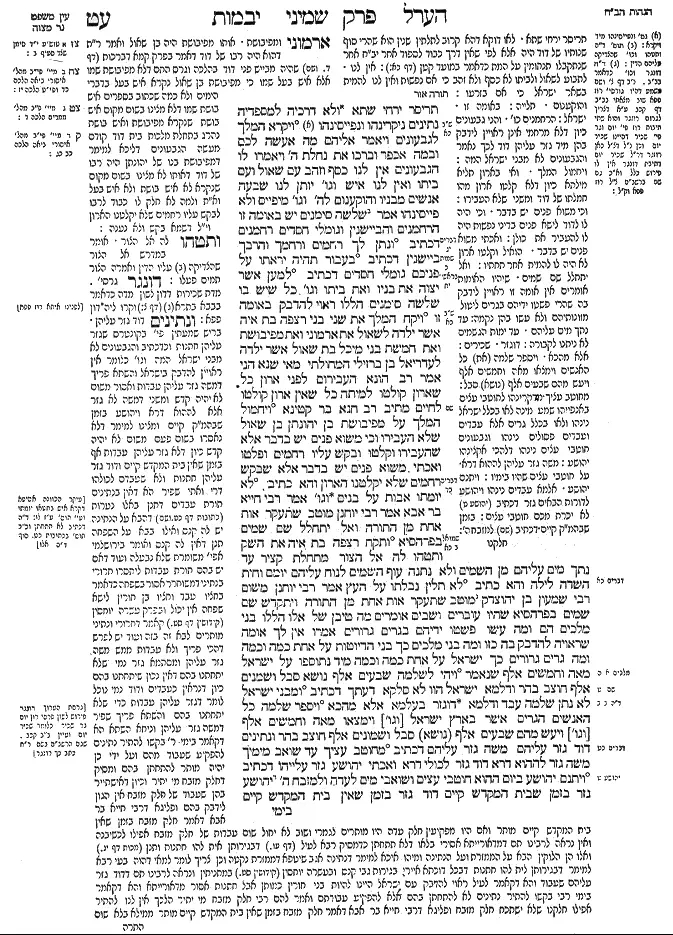
Yevamot 79a - Guemara
תריסר ירחי שתא ולא דרכיה למספדיה נתינים ניקרינהו ונפייסינהו (שמואל ב כא, ב) ויקרא המלך לגבעונים ויאמר אליהם מה אעשה לכם ובמה אכפר וברכו את נחלת ה' ויאמרו לו הגבעונים אין לנו כסף וזהב עם שאול ועם ביתו ואין לנו איש וגו' יותן לנו שבעה אנשים מבניו והוקענום לה' וגו' מיפייס ולא פייסינהו אמר שלשה סימנים יש באומה זו הרחמנים והביישנין וגומלי חסדים רחמנים דכתיב (דברים יג, יח) ונתן לך רחמים ורחמך והרבך ביישנין דכתיב (שמות כ, כ) בעבור תהיה יראתו על פניכם גומלי חסדים דכתיב (בראשית יח, יט) למען אשר יצוה את בניו ואת ביתו וגו' כל שיש בו שלשה סימנים הללו ראוי להדבק באומה זו (שמואל ב כא, ח) ויקח המלך את שני בני רצפה בת איה אשר ילדה לשאול את ארמוני ואת מפיבושת ואת חמשת בני מיכל בת שאול אשר ילדה לעדריאל בן ברזילי המחולתי מאי שנא הני אמר רב הונא העבירום לפני ארון כל שארון קולטו למיתה כל שאין ארון קולטו לחיים מתיב רב חנא בר קטינא (שמואל ב כא, ז) ויחמול המלך על מפיבושת בן יהונתן בן שאול שלא העבירו וכי משוא פנים יש בדבר אלא שהעבירו וקלטו ובקש עליו רחמים ופלטו ואכתי משוא פנים יש בדבר אלא שבקש רחמים שלא יקלטנו הארון והא כתיב (דברים כד, טז) לא יומתו אבות על בנים וגו' אמר רבי חייא בר אבא אמר רבי יוחנן מוטב שתעקר אות אחת מן התורה ואל יתחלל שם שמים בפרהסיא (שמואל ב כא, י) ותקח רצפה בת איה את השק ותטהו לה אל הצור מתחלת קציר עד נתך מים עליהם מן השמים ולא נתנה עוף השמים לנוח עליהם יומם וחית השדה לילה והא כתיב (דברים כא, כג) לא תלין נבלתו על העץ אמר רבי יוחנן משום רבי שמעון בן יהוצדק מוטב שתעקר אות אחת מן התורה ויתקדש שם שמים בפרהסיא שהיו עוברים ושבים אומרים מה טיבן של אלו הללו בני מלכים הם ומה עשו פשטו ידיהם בגרים גרורים אמרו אין לך אומה שראויה להדבק בה כזו ומה בני מלכים כך בני הדיוטות על אחת כמה וכמה ומה גרים גרורים כך ישראל על אחת כמה וכמה מיד נתוספו על ישראל מאה וחמשים אלף שנאמר (מלכים א ה, כט) ויהי לשלמה שבעים אלף נושא סבל ושמנים אלף חוצב בהר ודלמא ישראל הוו לא סלקא דעתך דכתיב (מלכים א ט, כב) ומבני ישראל לא נתן שלמה עבד ודלמא דוגזר בעלמא אלא מהכא (דברי הימים ב ב, טז) ויספר שלמה כל האנשים הגרים אשר בארץ ישראל [וגו'] וימצאו מאה וחמשים אלף [וגו'] ויעש מהם שבעים אלף (נושא) סבל ושמונים אלף חוצב בהר ונתינים דוד גזר עליהם משה גזר עליהם דכתיב (דברים כט, י) מחוטב עציך עד שואב מימיך משה גזר לההוא דרא דוד גזר לכולי דרא ואכתי יהושע גזר עלייהו דכתיב (יהושע ט, כז) ויתנם יהושע ביום ההוא חוטבי עצים ושואבי מים לעדה ולמזבח ה' יהושע גזר בזמן שבית המקדש קיים דוד גזר בזמן שאין בית המקדש קיים
Comments from Rashi on Masechet Yevamot Page 79a
תריסר ירחי שתא . לאו דוקא דהא קרוב לתלתין שנין הוא שהרי סוף שנותיו של דוד היה אלא לפי שאין דרך כבוד לספוד אחר יב"ח אחר שנתקבלו תנחומין על המת כדאמר במועד קטן (דף כא:): אין לנו . לתבוע לשאול ולביתו לא כסף ולא זהב כי אם נפשות ואין לנו להמית בשאר ישראל כי אם בזרעו: והוקענום . תלייה: באומה זו . ישראל: הרחמנים כו' . והני גבעונים כיון דלא מרחמי אינן ראויין לידבק בהן מיד גזר עליהן דוד לכך נאמר והגבעונים לא מבני ישראל המה: ויחמול המלך . ואי בארון תליא מילתא כיון דלא קלטו ארון מהו חמלתו של דוד. ומשני שלא העבירו: וכי משוא פנים יש בדבר . וכי היה לו לדוד לישא פנים בדיני נפשות היה לו להעביר את כולן: ואכתי משוא פנים יש בדבר . הואיל וקלטו ארון לא היה לו להמית אחר תחתיו: ואל יתחלל שם שמים . שיהיו האומות אומרים אין אומה זו ראויין לידבק בה שהרי פשטו ידיהם בגרים ליטול מזונותיהם ולא עשו בהן נקמה: עד נתך מים עליהם . עד ימות הגשמים לא ניתנו לקבורה: דוגזר . שכירים: אלא מהכא ויספר שלמה (את) כל האנשים וימצאו מאה וחמשים אלף ויעש מהם שבעים אלף (נושא) סבל: מחוטב עציך . מדקרינהו לחוטבי עצים באנפייהו שמע מינה לאו בכלל ישראל נינהו ולאו בכלל גרים אלא עבדים ועבדים פסולים נינהו וגבעונים חוטבי עצים נינהו דלהכי אקצינהו יהושע: משה גזר עליהן לההוא דרא . על חוטבי עצים שהיו בימיו: ויתנם יהושע . אלמא עבדים נינהו ויהושע לדורות הבאים גזר דכתיב (יהושע ט) לא יכרת מכם חוטבי עצים: בזמן שבהמ"ק קיים . דכתיב (שם) למזבח ה':
Comments from Tosafot - Yevamot 79a
ארמוני ומפיבושת . אותו מפיבושת היה בן שאול ואמר ר"ת דהוא היה רבו של דוד דאמר בפרק קמא דברכות (דף ד. ושם) שהיה מבייש פני דוד בהלכה וגרס התם דלא מפיבושת שמו אלא איש בעל שמו כי מפיבושת בן שאול נקרא איש בעל בדברי הימים ולא כמה שכתוב בספרים איש בושת שמו דלא מצינו בשום מקום איש בושת שנקרא מפיבושת ואיש בושת נהרג בתחלת מלכות בית דוד קודם מעשה הגבעונים דליכא למימר דמפיבושת בנו של יהונתן היה רבו של דוד דאותו לא מצינו בשום מקום שנקרא לא איש בושת ולא איש בעל וא"ת ולמה לא חלק לו כבוד לרבו לבקש עליו רחמים שלא יקלטנו הארון וי"ל דשמא בקש ולא נענה: ותטהו לה אל הצור . אומר במדרש אל הצור שהצדיקה עליו הדין ואמרה הצור תמים פעלו: דונגר גרסי' . מדת שכירות דדון לשון מדה כדאמר בבבא בתרא (דף צ:) וקרו ליה דון פפא: ונתינים דוד גזר עליהן . בריש שמעתין פי' בקונטרס שגזר עליהן חתנות וכדכתיב והגבעונים לא מבני ישראל המה וגו' כלומר אין ראויין להדבק בישראל והשתא פריך דמשה גזר עליהן עבדות ואסור משום לא יהיה קדש ומשני דמשה לא גזר אלא לההוא דרא ויהושע בזמן שבהמ"ק קיים ומצינו למימר דלא נאסרו בשום פעם משום לא יהיה קדש כיון דלא גזר עליהן עבדות אף בזמן שאין בית המקדש קיים ודוד גזר עליהן חתנות ולא שעבדם לכולהו דרי ואתי שפיר הא דאין בנתינים תורת עבדים דתנן באלו נערות (כתובות דף כט. ושם) דהבא על הנתינה יש לה קנס ואילו בבא על השפחה תנן דאין לה קנס ואומר בירושלמי אפי' משומרת שלא נבעלה ועוד דאם יש בהם תורת עבדות ליתסרו חרורי בנתיני דמשוחרר אסור בשפחה כדאמר בחציו עבד וחציו בן חורין לישא שפחה אין יכול ובפרק עשרה יוחסין (קידושין דף סט.) קאמר דחרורי ונתיני מותרים לבא זה בזה ועוד יש לפרש דהכי פריך ולא עבדות ממש משה גזר עליהן ומסתמא גזר נמי שלא יתחתנו בהם דאין נכון שיתחתנו בהם כיון דנראין כעבדים ודוד נמי נוכל לומר דגזר עליהן עבדות כדי שלא יתחתנו בהם והשתא פריך שפיר דמשה גזר עליהן וניחא השתא הא דקאמר בימי ר' בקשו להתיר נתינים להפקיע שעבוד מהם ועל ידי כן יהיה מותר להתחתן בהם ומסיק דחלק מזבח מי יתיר וכיון דאישתייר בהן שעבוד של חלק מזבח אין הגון לידבק בהם ופליגא דרבי חייא בר אבא דאמר חלק מזבח בזמן שאין בית המקדש קיים מותר ואם היו מפקיעין חלק עדה היו מותרים לגמרי ושוב לא יחול שום עבדות של חלק מזבח אפילו לכשיבנה ואין נראה לרבינו תם דמדאורייתא אסירי בלאו דלא תתחתן כדמסיק רבא לעיל (יבמות דף עו.) דבגירותן אית להו חתנות ותנן (מכות דף יג.) ואלו הן הלוקין הבא על הממזרת ועל הנתינה ומיהו איכא למימר דנתינה אגב שיטפא דממזרת נקטה וכן צריך לומר למאי דהוה בעי רבא למימר דבגירותן לית להו חתנות דבכל דוכתא איירי בגירות גבי קנס ובעשרה יוחסין (קידושין סט.) במתניתין ונראה לרבינו תם דדוד גזר עליהם שעבוד והא דקאמר לעיל ראוי להדבק עם ישראל היינו להיות בני חורין כמותן אבל חתנות אסור מדאורייתא והא דקאמר בימי רבי בקשו להתיר נתינים לא להתחתן בהם אלא להפקיע עבודתם ואמר להם רבי חלק מזבח מי יתיר הלכך אין לנו להתיר אפילו חלקנו שלא ישתכח חלק מזבח ופליגא דרבי חייא בר אבא דאמר חלק מזבח בזמן שאין בית המקדש קיים מותר ממילא בלא שום התרה ואם היה מופקע מהם שעבוד לגמרי שוב לא היה חל עוד עליהן וא"ת וכיון דנתיני אסירי מדאורייתא מלא תתחתן מאי שנא דמשוחרר מותר בהן ובשפחה אסור משום לא יהיה קדש וי"ל דלאו דלא תתחתן איכא למילף משאר פסולי קהל כגון ממזר עמוני ומואבי דשרו בקהל גרים אבל לאו דלא יהיה קדש לא שייך למילף דהא לא תפסי קדושין בשפחה ולא הוי דומיא דשאר פסולים ואם תאמר ומ"ש דממזר מותר בשפחה דתנן בהאומר בקידושין (דף סט.) ממזר נושא שפחה אפי' לכתחלה כדמוכח התם בגמרא ואמר ר"ת דלא שייך לא יהיה קדש בממזר דעיקרו בא מקדישות מאיסור דלא תפסי בו קידושין ואין להאריך:
Yevamot 79a - Mishnah translated into english
the twelve months of the year of mourning, i.e., several years have elapsed since the twelve-month mourning period for Saul, and it is not the proper way to eulogize after such a long time.
As for the Gibeonites, let us call them and appease them. Consequently, the verse states: “And the king called the Gibeonites and said to them…What shall I do for you, and with what shall I make atonement that you may bless the inheritance of the Lord? And the Gibeonites said to him: It is not a matter of silver or gold between us and Saul or his house; neither is it for us to put any man to death in Israel…Let seven men of his sons be delivered to us, and we will hang them up to the Lord…” (II Samuel 21:1–6). He tried to appease them in other ways, but they would not be appeased.
David said: There are three distinguishing marks of this nation, the Jewish people. They are merciful, they are shamefaced, and they perform acts of kindness.
They are merciful, as it is written: “And He will give you mercy, and have mercy upon you and multiply you” (Deuteronomy 13:18); not only will God have mercy upon you, but He will bestow the attribute of mercy upon you.
They are shamefaced, as it is written: “And that His fear shall be upon your faces” (Exodus 20:17), and the fear that is on one’s face is his shame.
They perform acts of kindness, as it is written: “For I have known him, to the end that he may command his children and his household after him, that they may keep the way of the Lord, to practice righteousness and justice” (Genesis 18:19), i.e., to perform acts of kindness.
Whoever has these three distinguishing marks is fit to cleave to this nation. Those who lack these qualities, however, are unfit to be part of the Jewish people. When David saw the cruelty of the Gibeonites, he decreed that they may never enter into the congregation of Israel.
The Gemara continues with its understanding of the incident: “And the king took the two sons of Rizpah, daughter of Aiah, whom she bore unto Saul, Armoni and Mephibosheth, and the five sons of Michal, daughter of Saul, whom she bore to Adriel the son of Barzillai the Meholathite” (II Samuel 21:8). The Gemara asks: What is different about these sons that David chose them from among all the descendants of Saul? Rav Huna said: He passed all of Saul’s descendants before the Ark of the Covenant. Whoever was held back by the Ark, so that he could not move on, was condemned to death; whoever was not held back by the Ark was set apart for life.
Rav Ḥana bar Ketina raised an objection: The verse states: “And the king had pity on Mephibosheth, son of Jonathan, son of Saul, because of the Lord’s oath that was between them, between David and Jonathan, son of Saul” (II Samuel 21:7). If the seven men were condemned by the Ark, how did the king’s pity affect their sentence? The Gemara answers: It means that he did not pass Mephibosheth before the Ark at all, so that he would not be in danger of being held back at all.
The Gemara questions this behavior: May favoritism be shown in this matter? Once the decision was placed in the hand of Heaven, how could David have intervened in matters of life and death and not pass Mephibosheth before the Ark? Rather, what happened was that David passed Mephibosheth before the Ark and the Ark held him back, but David immediately asked for mercy on his behalf, and the Ark released him. The Gemara asks: But the difficulty still remains: May favoritism be shown in this matter? Once the Ark condemned Mephibosheth to death, how could David have intervened so that another would have to die in his place? Rather, David asked for mercy on his behalf, that the Ark should not hold him back and performed no other action.
The Gemara raises a difficulty with regard to the story as related by the Bible: But isn’t it written: “The fathers shall not be put to death for the children; neither shall the children be put to death for the fathers” (Deuteronomy 24:16)? As Saul’s sons had not sinned, why were they put to death? Rabbi Ḥiyya bar Abba said that Rabbi Yoḥanan said: It is better that one letter and one mitzva be uprooted from the Torah in this manner and thereby the name of Heaven not be desecrated in public [parhesya]. The killing of the Gibeonites by the Jewish people constituted a desecration of God’s name. In order to repair the damage, David acquiesced to the Gibeonites’ demands, even though they contradicted Torah law.
The Gemara continues with its analysis of the incident. The verse states: “And Rizpah, daughter of Aiah, took sackcloth and spread it for her upon the rock, from the beginning of harvest until water was poured upon them from heaven; and she allowed neither the birds of the air to rest on them by day, nor the beasts of the field by night” (II Samuel 21:10). The Gemara raises a difficulty: How could they have left Saul’s executed sons unburied all that time? Isn’t it written: “His body shall not remain all night upon the tree; but you shall surely bury him the same day” (Deuteronomy 21:23)?
Rabbi Yoḥanan said in the name of Rabbi Shimon ben Yehotzadak: It is better that one letter be uprooted from the Torah and thereby the name of Heaven be sanctified in public. How so? As the gentile passersby would say: What is the nature of these people who have been left hanging here for so long? They were told that these are sons of kings. And what did they do to deserve such a fate? They had laid their hands upon and caused harm to calculating converts who had converted for personal gain and were never permitted to enter into the congregation. Those passersby said: There is no nation as worthy of cleaving to it as this one. If the sons of kings who harmed converts are treated in this manner, all the more so would the sons of ordinary people [hedyotot] be. And if calculating converts are related to in this way, all the more so would this apply to members of the Jewish people themselves.
Immediately, one hundred and fifty thousand converts joined the Jewish people, as it is stated: “And Solomon had seventy thousand that bore burdens and eighty thousand that were hewers in the mountains” (I Kings 5:29), all of whom were converts. The Gemara asks: But perhaps these carriers and hewers were Jews? The Gemara answers: This cannot enter your mind, as it is written: “But of the children of Israel Solomon made no slaves” (I Kings 9:22).
The Gemara raises another difficulty: But from where may it be inferred that these men were slaves? Perhaps they were merely workers employed [dogzar] in the ranks of public service, in which case they could have been born Jews and not converts. Rather, the matter is derived from here: “And Solomon counted all the converted men that were in Eretz Yisrael…and they were found to be one hundred and fifty thousand…and he made seventy thousand of them to bear burdens, and eighty thousand to be hewers in the mountains” (II Chronicles 2:16–17). It is apparent from here that these carriers and hewers were in fact converts. These large numbers of converts had been influenced by the sanctification of God’s name in the wake of the punishment meted out to the descendants of Saul.
The Gemara returns to the main issue under discussion. As for the Gibeonites, was it David who issued a decree against them that they may not enter the congregation? Wasn’t it Moses who issued a decree against them, as it is written: “From the hewer of your wood to the drawer of your water” (Deuteronomy 29:10), which indicates that there was a distinct class of wood hewers and water drawers already in the time of Moses. This class must have been composed of insincere converts who constituted a separate group unto themselves, apart from the rest of the Jewish people. The Gemara answers: Moses issued a decree only with regard to that generation that they must remain separate, whereas David decreed for all generations.
The Gemara raises another difficulty: But still, it was Joshua who issued a decree against the Gibeonites, as it is written: “And Joshua made them that day hewers of wood and drawers of water, for the congregation and for the altar of the Lord” (Joshua 9:27). The Gemara answers: Joshua issued a decree for the period when the Temple is standing, as indicated by the phrase “for the altar of the Lord,” whereas David issued a decree even for the period when the Temple is not standing.
Traduction : The William Davidson digital edition of the Koren Noé Talmud, with commentary by Rabbi Adin Even-Israel Steinsaltz.
Yevamot 79a : Significance
Next step
Finished studying Yevamot 79a? Carry on with the rest of the tractate.
Study Yevamot 79bFrequently asked questions: Yevamot 79a
Where is Yevamot 79a in tractate Yevamot?
Yevamot 79a is page 155 of 242 in tractate Yevamot (Seder Nashim).
When is daf 79 of Yevamot studied in Daf Yomi?
Daf Yomi covers one daf a day, both sides. Daf 79 of Yevamot will be studied on October 26, 2029.
Is there a video class on Yevamot 79a?
Yes, by Daf Tube, Rabbi Dr. Moshe Weisblum. These classes were published on YouTube by their authors and are gathered on this site.
What is tractate Yevamot about?
The Masechet Yebamot (or Yevamot) is the first tractate of the Seder Nashim. The Yebamot gemara is the study of the laws of Yibboum (marriage by levirate) and conversion to Judaism. The Yebamot tractate is a gemara which contains 16 chapters.
Your study is also dedicated to them
- L'ilui Nishmat Jamila bat Chlomo Abensour
- L'ilui Nishmat Amram ben Itshak Loubaton
- L'ilui Nishmat אליעזר בן רחל