 Talmud Bavli
The learning on the whole site is dedicated : L'ilui Nishmat רינה בת לדיסיה
The learning on the whole site is dedicated : L'ilui Nishmat Reuven ben Rivka SEBBAG
The learning on the whole site is dedicated : L'ilui Nishmat Ledicia bat David Banoun
Yevamot 103a : Youtube
Daf TubeYoutube
1 video class :
Yevamot Page 103a
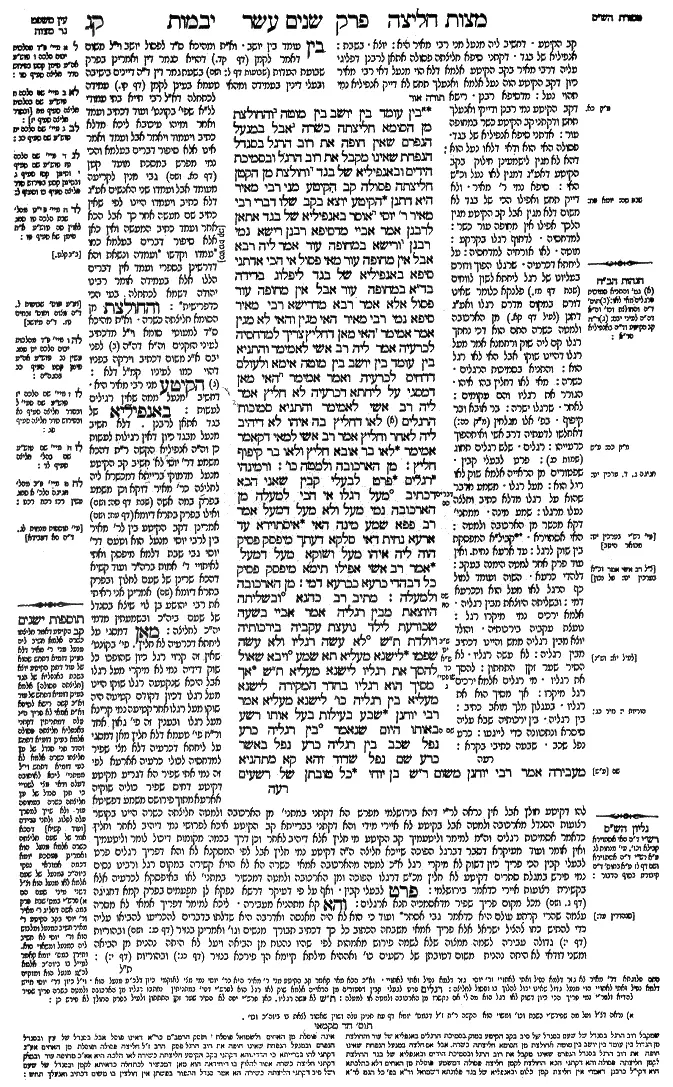
Yevamot 103a - Guemara
בין עומד בין יושב בין מוטה והחולצת מן הסומא חליצתה כשרה אבל במנעל הנפרם שאין חופה את רוב הרגל בסנדל הנפחת שאינו מקבל את רוב הרגל ובסמיכת הידים ובאנפיליא של בגד וחולצת מן הקטן חליצתה פסולה קב הקיטע מני רבי מאיר היא דתנן הקיטע יוצא בקב שלו דברי רבי מאיר ר' יוסי אוסר באנפיליא של בגד אתאן לרבנן אמר אביי מדסיפא רבנן רישא נמי רבנן ורישא במחופה עור אמר ליה רבא אבל אין מחופה עור מאי פסול אי הכי אדתני סיפא באנפיליא של בגד ליפלוג בדידה בד"א במחופה עור אבל אין מחופה עור פסול אלא אמר רבא מדרישא רבי מאיר סיפא נמי רבי מאיר האי מגין והאי לא מגין אמר אמימר האי מאן דחליץ צריך למדחסיה לכרעיה אמר ליה רב אשי לאמימר והתניא בין עומד בין יושב בין מוטה אימא ולעולם דדחיס לכרעיה ואמר אמימר האי מאן דמסגי על ליחתא דכרעיה לא חליץ אמר ליה רב אשי לאמימר והתניא סמוכות הרגלים לאו דחליץ בה איהו לא דיהיב ליה לאחר וחליץ אמר רב אשי למאי דקאמר אמימר לאו בר אובא חליץ ולאו בר קיפוף חליץ:
מן הארכובה ולמטה כו':
ורמינהי רגלים פרט לבעלי קבין שאני הכא דכתיב (דברים כה, ט) מעל רגלו אי הכי למעלה מן הארכובה נמי מעל ולא מעל דמעל אמר רב פפא שמע מינה האי איסתוירא עד ארעא נחית דאי סלקא דעתך מיפסק פסיק הוה ליה איהו מעל ושוקא מעל דמעל אמר רב אשי אפילו תימא מיפסק פסיק כל דבהדי כרעא ככרעא דמי:
מן הארכובה ולמעלה:
מתיב רב כהנא (דברים כח, נז) ובשליתה היוצאת מבין רגליה אמר אביי בשעה שכורעת לילד נועצת עקביה בירכותיה ויולדת ת"ש (שמואל ב יט, כה) לא עשה רגליו ולא עשה שפמו לישנא מעליא תא שמע (שמואל א כד, ד) ויבא שאול להסך את רגליו לישנא מעליא ת"ש (שופטים ג, כד) אך מסיך הוא רגליו בחדר המקירה לישנא מעליא בין רגליה כו' לישנא מעליא אמר רבי יוחנן שבע בעילות בעל אותו רשע באותו היום שנאמר (שופטים ה, כז) בין רגליה כרע נפל שכב בין רגליה כרע נפל באשר כרע שם נפל שדוד והא קא מתהניא מעבירה אמר רבי יוחנן משום ר"ש בן יוחי כל טובתן של רשעים
Comments from Rashi on Masechet Yevamot Page 103a
סמיכות הידים . שעושה לידיו בתים של עור מפני שמכניסם בטיט וסומך עליהן וגורר את רגליו: קב הקיטע . דחשיב ליה מנעל מני רבי מאיר היא: יוצא . בשבת: אנפיליא של בגד . דקתני סיפא חליצתה פסולה אתאן לרבנן דפליגי עליה דרבי מאיר בקב הקיטע אלמא דלא הוי מנעל דאי רבי מאיר כיון דקב הקיטע הוה נעל אלמא ואנעלך תחש לא דייק אנפיליא נמי תהוי נעל: מדסיפא רבנן . רישא דקב הקיטע נמי רבנן ודייקי ואנעלך תחש ודקתני קב הקיטע כשר במחופה עור: אדתני סיפא אנפיליא של בגד . פסולה האי הוא ודאי דלאו נעל הוא דהא לא מגין לישמעינן חילוק בקב הקיטע דאע"ג דמגין לאו נעל וכ"ש האי: סיפא נמי ר' מאיר . ולא דייק תחש ואפילו הכי של בגד לא משום דלא מגין אבל קב הקיטע מגין הלכך אפילו אין מחופה עור כשר: למדחסיה . לדחוף רגלו בקרקע: מוטה . לאו אורחיה למדחסיה: על ליחתא דכרעיה . שרגלו הפוך ודורס בעליונו של רגל. ליחתא לשון לווחים (שבת דף מז.) פלנקא. כלומר שאינו דורס במקום מדרס רגלו. ואע"ג דתנן (לעיל יבמות דף קא.) מן הארכובה ולמטה כשרה התם הוא דכי נחתך רגלו קם ליה שוק ורחמנא אמר מעל רגלו דהיינו שוקו אבל האי לאו רגל הוא: והתניא בסמיכות הרגלים . כשרה: מאי לאו דחליץ בהו איהו . הגורר את רגליו והם עקומים: לאחר . שרגלו ישרה: בר אובא ובר קיפוף . בפ' אלו מגלחין (מ"ק כה:) דאחלשו לדעתיה דרב אשי ואיתהפוך כרעייהו: רגלים . שלש רגלים תחוג (שמות כג): פרט לבעלי קבין . שפטורים מן הראייה. אלמא שוק לאו רגל הוא: מעל רגלו . משמע מדבר שהוא על רגלו מדלא כתיב וחלצה נעלו מרגלו: שמע מינה . ממתני' דקא מכשר מן הארכובה ולמטה: האי אסתוירא . קביל"א המפסקת בין שוק לרגל: עד ארעא נחית . ואין עוד פרק אחר למטה הימנה בעקב: דלהדי כרעא . השוה ועומד למול כף הרגל לאו מעל הוא וככרעא דמי: ובשליתה היוצאת מבין רגליה . אלמא ירכים נמי מיקרו רגל: נועצת עקביה בירכותיה . והולד יוצא מבין רגליה ממש והיינו דכתיב מבין רגליה: לא עשה רגליו . לא הסיר שער זקן התחתון: להסך את רגליו . מי רגלים. אלמא ירכים רגל מיקרו: אך מסיך הוא את רגליו . בעגלון מלך מואב כתיב: בין רגליה . בין ירכותיה שבא עליה סיסרא ונתכוונה כדי לייגעו: כרע נפל שכב . שבעה כתיבי בקרא:
Comments from Tosafot - Yevamot 103a
בין עומד בין יושב . וא"ת ומהיכא ס"ד לפסול יושב וי"ל משום דאמר לקמן (יבמות דף קד.) דהויא כגמר דין ואמרינן בפרק שבועת העדות (שבועות דף ל: ושם) בשעת גמר דין ד"ה דיינים בישיבה ובעלי דינין בעמידה ומהאי טעמא בעינן לקמן (יבמות דף קו.) עמידה לכתחלה דא"ל רבי חייא בתי עמודי לל"א שפי' בקונט' ועוד דכתיב ועמד ואמר ומיהו עיכובא ליכא מדלא כתיב ויעמוד ויאמר אבל ועמד ואמר אינו אלא סיפור דברים בעלמא והכי נמי מפרש במסכת מועד קטן (דף כא. ושם) גבי מנין לקריעה מעומד אבל ועמדו שני האנשים אע"ג דלא כתיב ויעמדו היינו לפי שאין כתיב שם מעשה אחר כך אבל הכא אחר ועמד כתיב המעשה ואין כאן אלא סיפור דברים בעלמא כמו עמדו וקדשו ועמדה ונשאת והא דדרשינן בספרי ועמד אין דברים הללו אלא בעמידה אומר רבינו יהודה דשמא לכתחלה בעי הכי כדפרישית: והחולצת מן הסומא חליצתה כשרה . וא"ת מהיכא ס"ד למעוטי סומא וי"ל מדכתיב לעיני הזקנים וה"א דה"ה לפני יבם א"נ משום דכתיב וירקה בפניו דהוי כמו לעיניו קמ"ל דלא: הקיטע מני רבי מאיר היא . דחשיב מנעל ממה שאין רגילים לעשות: באנפיליא של בגד אתאן לרבנן . דלא חשיב מנעל מבגד כיון דאין רגילות לעשות כן וה"ה אנפיליא הקשה ר"ת דהכא משמע דר' יוסי לא חשיב קב הקיטע מנעל מדמוקי ברייתא דמכשרא ליה לחליצה כר' מאיר דוקא וכן משמע בפרק במה אשה (שבת דף סה: ושם) ואילו בפרק בתרא דיומא (דף עח: ושם) אמרינן דקב הקיטע בין לר' מאיר בין לרבי יוסי מנעל הוא וטעם דר' יוסי גבי שבת דלמא מיפסק ואתי לאיתויי ד' אמות ברה"ר ועוד קשיא דהכא שרינן של שעם לחלוץ ובפרק בתרא דיומא (שם) אמרינן אני ראיתי את רבי יהושע בן לוי שיצא בסנדל של שעם ביה"כ ובשמעתין מדמי יה"כ לחליצה: מאן דמסגי על ליחתא דכרעיה לא חליץ . פי' בקונט' שאין זה קרוי רגל כיון שהופכו כל שוק דידיה נמי לא מיקרי מעל רגלו אבל היכא שנקטעה רגלו שוקו היינו מעל רגלו דכיון דקודם קטיעה היה שוקו מעל רגלו אחר קטיעה נמי קרינא מעל רגלו ובענין זה פי' גאון אחד ור"ח פי' טעמא דלא חליץ מאן דמסגי על ליחתא דכרעיה דלא מצי שפיר למדחסיה לכולי כרעיה אארעא לפי זה נמי אתי שפיר הא דגריע מקיטע דקיטע דחיס שפיר כוליה שוקיה אארעא מתוך פירושם משמע דפשיטא להו דקיטע חולץ אבל אין נראה לר"י דהא בירושלמי מפרש הא דקתני במתני' מן הארכובה ולמטה חליצתה כשרה היינו בקושר רצועות הסנדל מארכובה ולמטה אבל בקיטע לא איירי מידי והא דקתני בברייתא קב הקיטע איכא לפרושי נמי דיהיב לאחר וחליץ כדאמר אסמיכות רגלים וה"מ למימר וליטעמיך קב הקיטע מי חליץ אלא דיהיב לאחר וכן דרך בכמה מקומות דיכול לומר וליטעמיך ואין אומר ועוד מעיקרא דסבר דברגל הפוכה שייכא חליצה ה"ה דקיטע נמי חליץ אבל לפי המסקנא לא והא דפריך רגלים פרט לבעלי קבין הכי פריך כיון דשוק לא מיקרי רגל א"כ למטה מהארכובה אמאי כשרה הא לא הויא קשירה במקום רגל ורבינו נסים נמי פירש במגלת סתרים דקיטע לא חליץ מכ"ש דרגלו הפוכה ומן הארכובה ולמטה דמכשיר במתני' לאו באיפסקא לכרעיה אלא בקשירת רצועות איירי כדאמר בירושלמי: פרט לבעלי קבין . ואף על פי דעיקר דרשא נפקא לן מפעמים בפרק קמא דחגיגה (דף ג. ושם) מכל מקום פריך שפיר מדאסמכיה תנא ארגלים: והא קא מתהניא מעבירה . ליכא למימר דפריך אמאי לא מסרה עצמה שהרי קרקע עולם היא כדאמר גבי אסתר ועוד כי הוא לא היה מאנסה ואדרבה היא שדלתו בדברים להכריעו להביאו עליה כדי להתיש כחו להציל ישראל אלא פריך אמאי משבחה הכתוב כל כך דכתיב תבורך מנשים וגו' ואמרינן בנזיר (דף כג: ושם) ובהוריות (דף י:) גדולה עבירה לשמה ממצוה שלא לשמה פירוש מאמהות לפי שהיו נהנות מן הביאה ויעל לא היתה נהנית מן הביאה ומשני דודאי לא היתה נהנית משום דטובתן של רשעים כו' ואההיא מילתא קיימא הך פירכא בנזיר (דף כג:) ובהוריות (דף י:):
Yevamot 103a - Mishnah translated into english
whether the yavam is standing or sitting or leaning; and a woman who performs ḥalitza on a blind yavam; in all of these cases her ḥalitza is valid. But if she performs ḥalitza when he is wearing a shoe that is so torn that it does not cover most of the foot; or using a broken sandal that does not hold most of the foot; or using a hand blanket that the amputee wears on his hands, similar to a leather shoe, in order to drag himself using them; or using a soft shoe [anpileya] made of cloth; or a woman who performs halitza with a yavam who is a minor; in all these cases her ḥalitza is disqualified.
The Gemara comments: Who is the tanna who holds that an amputee’s prosthetic is considered a shoe? It is Rabbi Meir, as we learned in a mishna (Shabbat 65b): One with an amputated leg may go out on Shabbat with his wooden leg, as it has the legal status of a shoe; this is the statement of Rabbi Meir. He reasons that the prosthesis functions like the shoe of any other person, indicating that Rabbi Meir is not especially concerned about the material from which the shoe is made. And Rabbi Yosei, on the other hand, prohibits the amputee from going out on Shabbat with his wooden leg, as he does not consider it a shoe that is being worn, but rather a wooden object that is being carried.
The Gemara asks how Rabbi Meir can be the tanna of the baraita, as the continuation of the baraita states ḥalitza is disqualified if performed with an anpileya made of cloth, as this cloth shoe is not to be considered a shoe. If so, have we come to the opinion of the Rabbis, who rule in accordance with Rabbi Yosei, and render it prohibited to use any shoes for ḥalitza that are not made of leather?
In an attempt to resolve the contradiction Abaye said: Since the latter clause of the baraita is in accordance with the Rabbis, who rule like Rabbi Yosei, the first clause is also in accordance with the Rabbis. And therefore the first clause, which permits the amputee’s prosthesis, is referring to a prosthetic foot covered in leather, as it constitutes a shoe due to its leather exterior.
Rava said to him: But according to your explanation, if the prosthesis is not covered in leather, what would its status be? It would be unfit. If so, rather than teaching in the latter clause: Anpileya made of cloth is invalid for ḥalitza, let it distinguish within the matter itself and say: In what case is this statement that a wooden prosthesis is fit said? It is in the case of a prosthetic leg covered in leather, but if it is not covered in leather, it is unfit.
Rather, the fact that the baraita was not taught in that manner indicates that Abaye’s explanation is incorrect. Therefore, Rava said that the contradiction should be reconciled in another way: Since the first clause of the baraita is in accordance with the opinion of Rabbi Meir, that the shoes need not be made of leather, the latter clause is also taught in accordance with the opinion of Rabbi Meir, and the distinction between a wooden prosthetic and an anpileya of cloth is: This prosthesis protects the foot, and that soft shoe does not protect the foot, as it does not have a hard sole. Rabbi Meir does not require that the shoe be of leather, but he does require that it be protective footwear.
With regard to the statement in the baraita that indicates that ḥalitza may be performed even if the yavam is not standing, Ameimar said: The one who performs ḥalitza by having his yevama remove his shoe must press his foot to the ground, and while in this position the yevama will remove his shoe.
Rav Ashi said to Ameimar: But isn’t it taught in the baraita above: She may perform ḥalitza whether he was standing or sitting or leaning? One who is leaning cannot easily press his foot into the ground. He answered him: Say that the man may perform ḥalitza while in any of these positions, but that actually this is true only if he presses his foot to the ground, which is admittedly more difficult to do while leaning.
And Ameimar also said about this issue: Someone who walks on the backs of his feet, meaning he is clubfooted and his foot is twisted upside down, cannot perform ḥalitza. Rav Ashi said to Ameimar: But isn’t it taught in a baraita: Leg supports can be used for ḥalitza. Does this not mean that this lame individual performs ḥalitza using these supports on his knees? This would indicate that even one with twisted feet can perform ḥalitza. The Gemara answers: No, the intention is that if he gave these supports to another whose foot is shaped normally and he wore them while performing ḥalitza, it is valid. That other one is allowed to perform ḥalitza while wearing these supports because they are also considered shoes, but one whose foot is misshapen may not perform ḥalitza with them, as it functions for him as a foot, not a shoe.
Rav Ashi said: According to what Ameimar said, bar Uva cannot perform ḥalitza and bar Kipof cannot perform ḥalitza, as these two, who were famous eulogizers in Rav Ashi’s generation, had feet that became so crooked that they were unable to walk normally.
It was taught in the mishna that if one’s leg was amputated from the knee down and his yevama performed ḥalitza with him, the ḥalitza is valid. The Gemara raises a contradiction from a baraita that comments on the pilgrimage one makes to Jerusalem during a Festival. The Torah states: “Three Festivals [regalim] you shall celebrate for Me in the year” (Exodus 23:14). The baraita comments on the verse: Festivals are referred to in the verse as regalim, which literally means feet, indicating that one must actually make the pilgrimage to Jerusalem by foot [regel] during the Festival, which comes to exclude people who have prostheses. This indicates that a prosthetic foot is not called a regel, which seems to contradict the mishna that allows ḥalitza on a prosthetic from the knee down.
The Gemara answers: It is different here, with respect to ḥalitza, as it is written: “She removes the shoe from on his foot [me’al raglo]” (Deuteronomy 25:9), which indicates that not only can his actual foot be used for performing ḥalitza, but also the part above it, i.e., the calf. The Gemara objects: If that is so, that one may use a part of his leg above his foot to perform ḥalitza, then if one’s leg was amputated from above the knee, he should also be eligible for ḥalitza; and yet, the same mishna taught that only one with a leg amputated from below the knee is eligible for ḥalitza. The Gemara answers that the verse states: “From on his foot,” meaning above his foot, but not: From on that which is on his foot; the wording indicates that it can be above his foot until the knee, but not any further above that.
Rav Pappa said: Learn from here that the heel bone [istavira] reaches to the ground where it connects to the foot, for if it enters your mind to say that it is separate and divided, and there is another bone in between, then that ankle bone is “from on the foot” and the calf would be prohibited for ḥalitza, as it would be considered: From on that which is on his foot. Rav Ashi said: Even if you say that it is separate and divided from the calf, because anything that is connected with the sole of the foot is considered like the foot, then the ankle is certainly part of the foot, making the calf the area that is “from on the foot.”
It was taught in the mishna that if one’s legs were amputated from the knee and above, the ḥalitza is invalid. This implies that the regel includes the calf but not the thigh. Rav Kahana raised an objection from the verse: “And against her afterbirth that emerges from between her legs [ragleha]” (Deuteronomy 28:57), implying that regel includes even the thighs. Abaye said: The verse actually means between her feet, as when a woman crouches to give birth, she pushes her heels into her thighs and she gives birth, so it appears as if the fetus emerges from between her feet.
The Gemara continues its challenge. Come and hear another verse: “He had neither dressed his feet [raglav], nor trimmed his beard” (II Samuel 19:25). The phrase “dressed his feet [raglav]” is referring to treating his pubic hair, implying that even the area around the thigh is referred to as regel. The Gemara answers: This is a euphemism. The Gemara attempts another challenge: Come and hear from another verse: “And Saul went in to cover his feet [raglav]” (I Samuel 24:3), meaning: To urinate, implying that regel refers even to the thighs. The Gemara answers: This is also a euphemism.
Come and hear the meaning of: His feet, from the following verse regarding the Moabite king, Eglon, which states: “Surely he is covering his feet [raglav] in the cabinet of the cool chamber” (Judges 3:24). The Gemara answers: This is a euphemism. The Gemara attempts another proof from a verse regarding Sisera’s encounter with Yael: “At her feet [ragleha] he sunk, he fell” (Judges 5:27), which indicates that they had sexual intercourse, and implies that regel includes the thigh. The Gemara answers: This is also a euphemism.
The Gemara elaborates on what happened when Sisera was in Yael’s tent. Rabbi Yoḥanan said: That wicked man, Sisera, had sexual intercourse with Yael seven times that day, as it is stated: “At her feet he sunk, he fell, he lay; at her feet he sunk, he fell; where he sunk, there he fell down dead” (Judges 5:27). Each instance of the terms “sunk,” “fell,” or “lay” in the verse indicates an act of intercourse, as Yael sought to tire and weaken Sisera to enable her to kill him. The Gemara asks: But how could Yael do this even for the noble purpose of killing the wicked Sisera, as she derived pleasure from the transgression of licentious sexual relations with a gentile? Rabbi Yoḥanan said in the name of Rabbi Shimon ben Yoḥai: Every act that is a benefit for the wicked
Traduction : The William Davidson digital edition of the Koren Noé Talmud, with commentary by Rabbi Adin Even-Israel Steinsaltz.