 Talmud Bavli
Yevamot 68a : Youtube
Daf TubeYoutube
2 video classes :
Yevamot Page 68a
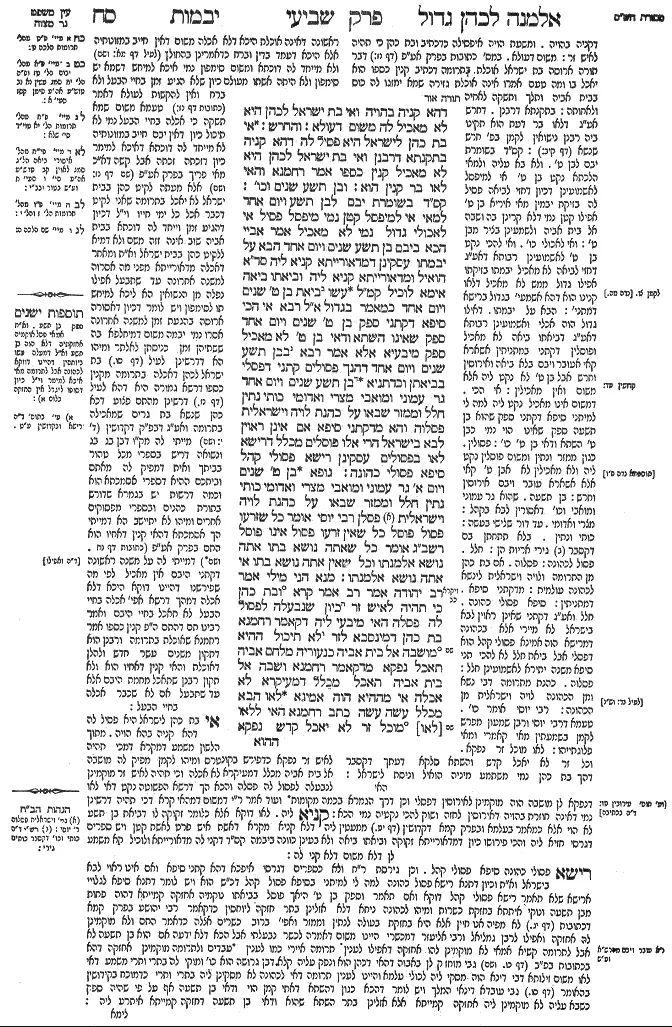
Yevamot 68a - Guemara
דהא קניה בהויה ואי בת ישראל לכהן היא לא מאכיל לה משום דעולא:
והחרש:
אי בת כהן לישראל היא פסיל לה דהא קניה בתקנתא דרבנן ואי בת ישראל לכהן היא לא מאכיל קנין כספו אמר רחמנא והאי לאו בר קנין הוא:
ובן תשע שנים וכו':
קס"ד בשומרת יבם לבן תשע ויום אחד למאי אי למיפסל קטן נמי מיפסל פסיל אי לאכולי גדול נמי לא מאכיל אמר אביי הכא ביבם בן תשע שנים ויום אחד הבא על יבמתו עסקינן דמדאורייתא קניא ליה סד"א הואיל ומדאורייתא קניא ליה וביאתו ביאה אימא לוכיל קמ"ל עשו ביאת בן ט' שנים ויום אחד כמאמר בגדול א"ל רבא אי הכי סיפא דקתני ספק בן ט' שנים ויום אחד ספק שאינו השתא ודאי בן ט' לא מאכיל ספק מיבעיא אלא אמר רבא בבן תשע שנים ויום אחד דהנך פסולים קתני דפסלי בביאתן וכדתניא בן תשע שנים ויום אחד גר עמוני ומואבי מצרי ואדומי כותי נתין חלל וממזר שבאו על כהנת לויה וישראלית פסלוה והא מדקתני סיפא אם אינן ראוין לבא בישראל הרי אלו פוסלים מכלל דרישא לאו בפסולים עסקינן רישא פסולי קהל סיפא פסולי כהונה:
גופא בן ט' שנים ויום א' גר עמוני ומואבי מצרי ואדומי כותי נתין חלל וממזר שבאו על כהנת לויה וישראלית פסלן רבי יוסי אומר כל שזרעו פסול פוסל כל שאין זרעו פסול אינו פוסל רשב"ג אומר כל שאתה נושא בתו אתה נושא אלמנתו וכל שאין אתה נושא בתו אי אתה נושא אלמנתו:
מנא הני מילי אמר רב יהודה אמר רב אמר קרא (ויקרא כב, יב) ובת כהן כי תהיה לאיש זר כיון שנבעלה לפסול לה פסלה האי מיבעי ליה דקאמר רחמנא בת כהן דמינסבא לזר לא תיכול ההיא (ויקרא כב, יג) מושבה אל בית אביה כנעוריה מלחם אביה תאכל נפקא מדקאמר רחמנא ושבה אל בית אביה תאכל מכלל דמעיקרא לא אכלה אי מההיא הוה אמינא לאו הבא מכלל עשה עשה כתב רחמנא האי ללאו [לאו] (ויקרא כב, י) מוכל זר לא יאכל קדש נפקא
Comments from Rashi on Masechet Yevamot Page 68a
דקניה בהויה . ומשעת הויה איפסילה כדכתיב ובת כהן כי תהיה לאיש זר: משום דעולא . במס' כתובות בפרק אע"פ (דף נז:) דבר תורה ארוסה בת ישראל אוכלת בתרומה דכתיב קנין כספו הוא יאכל בו ומה טעם אמרו אינה אוכלת גזירה שמא ימזגו לה כוס בבית אביה ותלך ותשקה לאחיה ולאחותה: בתקנתא דרבנן . דחרש אע"ג דלאו בר דעת הוא תקינו ביה רבנן נישואין לקמן בפ' חרש שנשא (יבמות דף קיב:): קס"ד בשומרת יבם לבן ט' . ולא בא עליה. ולמאי הלכתא נקט בן ט' אי למיפסל לאשמועינן דכיון דחזי לביאה פסיל לה בזיקת יבמין מאי איריא בן ט' אפילו קטן נמי דלא קרינן בה ושבה אל בית אביה ולשמעינן בציר מבן ט': ואי לאכולי כו' . ואי להכי נקט בן ט' לאשמועינן רבותא דאע"ג דחזי לביאה לא מאכיל יבמתו בזיקתו אפילו גדול ממש לא מאכיל דלאו קנינו הוא דהא אשמעי' בגדול ברישא דמתני': הבא על יבמתו . דאילו גדול הוה אכלי ואשמועינן רבותא דאע"ג דביאתו ביאה לא מאכיל ופוסלין דקתני במתניתין אשארא קאי אעובר ויבם בלא ביאה ואירוסין וחרש אבל בן ט' לא נקט ליה אלא משום ואין מאכילין: אי הכי . דמשום אינו מאכיל נקט ליה למה לי למיתני סיפא דקתני ספק שהוא בן תשעה ספק שאינו הוי נמי כבן ט' השתא ודאי בן ט' כו': פסולין . כגון ממזר ונתין ומשום פוסלין נקט ליה ולא מאכילין לא אבן ט' קאי אלא אשארא עובר ויבם אירוסין וחרש: בן תשעה . שהוא גר עמוני ומואבי וכו' דאסורין לבא בקהל: מצרי ואדומי . עד דור שלישי בעשה: כותי ונתין . בלא תתחתן בם דקסבר גירי אריות הן: חלל . פסול לכהונה: פסלוה . אם בת כהן מן התרומה ולויה וישראלית לינשא לכהונה עולמית: מדקתני סיפא . דמתניתין: סיפא פסולי כהונה . חלל. ואע"ג דקתני שאינן ראוין לבא בישראל לא מיירי אלא בכהונה דמרישא הוה אמינא פסולי קהל הוא דפסלי אבל ביאת חלל לא להכי תני סיפא משנה יתירא לאשמועינן חלל: פסלוה . כהנת מתרומה דבי נשא ומן הכהונה לויה וישראלית מן הכהונה: רבי יוסי אומר כו' . טעמא דרבי יוסי ורבן שמעון מפרש לקמן בשמעתין מאי קאמרי ומאי פלוגתייהו: לאו מוכל זר נפקא . וכל זר לא יאכל קדש והשתא סלקא דעתך דקסבר דהך בת כהן נמי משתמע מיניה הואיל וניסת לישראל:
Comments from Tosafot - Yevamot 68a
אי בת כהן לישראל היא פסיל לה דהא קניה בהא הויה . מתוך הלשון משמע דמקרא דמכי תהיה לאיש זר נפקא כדפירש בקונטרס ומיהו לקמן מפיק לה מושבה אל בית אביה מכלל דמעיקרא לא אכלה וכי תהיה לאיש זר מוקמינן לנבעלה לפסול לה פסלה והכא הך דרשא הפשוטה נקט דאי לאו דנפקא לן מושבה הוה מוקמינן לאירוסין דפסלי וכן דרך הגמרא בכמה מקומות ועוד אמר ר"י דמשום דמהאי קרא דכי תהיה דרשינן נמי דאינה חוזרת בהויה דאירוסין לחזה ושוק להכי נקטיה נמי הכא: קניא ליה . לאו דוקא אלא כלומר זקוקה לו דביאת בן תשע לא הוי אלא כמאמר בעלמא ובפרק קמא דקדושין (דף יט.) ממעטין ליה דלא קניא מקרא דאשת איש פרט לאשת קטן ויש ספרים דגרסי חזיא ליה והכי פירושו כיון דמדאורייתא זקוקה וביאתו ביאה ולא בעינן כוונה ביבמה קס"ד דקני לה מדאורייתא ולוכיל קא משמע לן דלא משום דלא קני לה: רישא פסולי כהונה סיפא פסולי קהל . וכן גירסת ר"ח ולא כספרים דגרסי איפכא דהא קתני סיפא ואם אינו ראוי לבא בישראל וא"ת וכיון דתנא רישא פסול כהונה למה לי למיתני בסיפא פסול קהל דכ"ש הוא ויש לומר דתנא סיפא לגלויי ארישא שלא תאמר רישא פסולי קהל דוקא ואם תאמר וספק בן ט' היאך פוסל בביאתו נוקמיה אחזקה קמייתא דהוה פחות מבן תשעה ונוקי איתתא בחזקת כשרות ומיהו לכהונה ניחא דלא אזלינן בתר חזקה ליוחסין כדקאמר רבי יהושע בפרק קמא דכתובות (דף יג.) לא מפיה אנו חיין אלא היא בחזקת בעולה לנתין וממזר ואפי' ברוב כשרים אצלה כדאמר התם ולא מוקמינן לה אחזקה ואפילו לרבן גמליאל ורבי אליעזר דמכשרי היינו משום דאמרה לכשר נבעלתי אבל הכא דלא ידעה אם הוא בן תשעה לא אבל לתרומה קשיא אמאי לא מוקמינן להו אחזקה דאפילו לענין תרומה איירי כמו לענין. עבדים ולתרומה מוקמינן אחזקה דהא בכתובות בפ"ב (דף כו. ושם) גבי מוחזק לן באבוה דהאי דכהן הוא ונפק עליה קלא דבן גרושה הוא כו' ומוקי לה בתרי ותרי משמע דאי לאו משום זילותא דבי דינא הוה מסקי ליה לכולי עלמא והיינו לענין תרומה דאי לכהונה לא מסקינן ליה בתרי ותרי כדמוכח בקידושין בהאומר (דף סו.) גבי עובדא דינאי המלך ויש לומר דהכא כגון דהשתא דאתי קמן הוי ודאי בן תשעה אף על פי שהיה ספק כשבא עליה לא מוקמינן ליה אחזקה קמייתא אלא אזלינן בתר השתא שהוא ודאי בן תשעה דחזקה קמייתא איתרע ליה:
Yevamot 68a - Mishnah translated into english
as he acquired her by means of betrothal. And if she is an Israelite woman betrothed to a priest, he does not enable her to partake of teruma due to the reason given by Ulla: Although by Torah law a priest’s betrothed partakes of teruma, the Sages rendered it prohibited for her to do so, lest she allow other members of her family to eat it.
It is also taught in the mishna that a deaf-mute disqualifies a woman from partaking of teruma and does not enable her to do so. The Gemara elaborates: If she is the daughter of a priest married to a deaf-mute Israelite, he disqualifies her, as he acquired her through marriage sanctioned by an ordinance of the Sages. Although the marriage of a deaf-mute is invalid by Torah law, the Sages instituted an ordinance validating this type of marriage. And if she is an Israelite woman married to a deaf-mute priest, he does not enable her to partake of teruma, as the Merciful One states in the Torah: “The purchase of his money, he may eat of it” (Leviticus 22:11), and this deaf-mute is not capable of acquisition by Torah law, as he is not legally competent.
§ It is also taught in the mishna that a nine-year-old boy disqualifies a woman from partaking of teruma and does not enable her to partake. It enters our mind that the mishna is referring to a widow waiting for her yavam, who is nine years and one day old. The Gemara therefore inquires: With regard to what is this taught? If it is with regard to disqualifying her from partaking of teruma, a younger yavam also disqualifies her, as a levirate bond was created and she cannot return to her father’s house. And if it was with regard to enabling her to partake of teruma, an older yavam does not enable her to partake either, as discussed above.
Abaye said: Here we are dealing with a nine-year-and-one-day-old yavam who already engaged in intercourse with his yevama, as she was thereby acquired by him by Torah law. It might enter your mind to say that since by Torah law she was acquired by him, as the legal status of his act of intercourse is that of intercourse, perhaps he enables her to partake of teruma. The mishna therefore teaches us that the Sages rendered the legal status of the intercourse of a nine-year-and-one-day-old boy like that of levirate betrothal by means of money or a document performed by an adult man, which is not sufficient for her to partake of teruma. Since levirate betrothal is effective only by rabbinic law, the yevama is not considered the acquisition of his money by Torah law and may not partake of teruma.
Rava said to him: If so, consider the latter clause of the mishna, which teaches that a boy with regard to whom there is uncertainty whether he is nine years and one day old and uncertainty whether he is not, disqualifies a woman from partaking of teruma, and he does not enable her to partake. Now that, according to your explanation, one who is definitely nine years old does not enable her to partake of teruma, is it necessary to teach the same concerning a boy with regard to whom there is uncertainty as to whether or not he reached that age?
Rather, Rava said that the mishna is teaching this halakha with regard to a nine-year-and-one-day-old boy who is one of those unfit males listed in a baraita, who disqualify a woman from marrying a priest by their intercourse, as they are unfit to enter the assembly of Israel through marriage, as it is taught in a baraita: A nine-year-and-one-day-old boy who is an Ammonite or a Moabite convert; or who is an Egyptian or an Edomite convert; or who is either a Samaritan [kuti], a Gibeonite, a ḥalal, or a mamzer, when he engaged in intercourse with a priestess, i.e., the daughter of a priest, a Levite, or an Israelite, he thereby disqualified her from marrying a priest, and, in the case of the daughter of a priest, from partaking of teruma.
The Gemara raises a difficulty from the fact that the latter clause, the next mishna (69a), teaches that if men who are unfit to enter the assembly of Israel by marriage engage in extramarital intercourse with women, they disqualify them from marrying into the priesthood: It may be inferred that in the first clause, the mishna above, we are dealing not with unfit individuals but with men fit to marry Jews of unflawed lineage. The Gemara answers: That inference is incorrect. The first clause of the mishna is dealing with those unfit to enter the assembly of Israel by marriage, while the latter clause is dealing with those who are merely unfit for the priesthood. That is why the mishna is referring to them separately. Accordingly, Rava’s explanation that the mishna is referring to an unfit nine-year-old boy is viable.
§ The Gemara addresses the matter itself and cites the complete baraita. A nine-year-and-one-day-old boy who is an Ammonite or a Moabite convert; or who is an Egyptian or an Edomite convert; or who is either a Samaritan, a Gibeonite, a ḥalal, or a mamzer, when he engaged in intercourse with a priestess, or a Levite, or an Israelite, he thereby disqualified her from marrying into the priesthood.
Rabbi Yosei says: Of the individuals mentioned above, anyone whose offspring is unfit to enter the assembly of Israel, disqualifies a woman with whom he engaged in intercourse from marrying into the priesthood. However, anyone whose offspring is not unfit does not disqualify a woman through intercourse. Rabban Shimon ben Gamliel says: Anyone whose daughter you may marry, you may marry his widow, even if you are a priest. Anyone whose daughter may marry a Jew of unflawed lineage does not disqualify a woman with whom he engaged in intercourse from marrying into the priesthood. And anyone whose daughter you may not marry, you may not marry his widow if you are a priest.
The Gemara asks: From where are these matters derived, that intercourse with an unfit man renders a woman unfit to partake of teruma and marry a priest? Rav Yehuda said that Rav said: The verse states: “And if a priest’s daughter be married to a common man [ish zar], she shall not eat of that which is set apart from the sacred” (Leviticus 22:12). It may be derived that since she engaged in intercourse with one who is unfit for her, he disqualified her from marrying into the priesthood, as the literal meaning of the expression ish zar is a man who is excluded.
The Gemara asks: That verse is necessary to teach the halakha that the Merciful One says: The daughter of a priest who marries a non-priest, even one that she is permitted to marry, may not partake of teruma. Therefore, it cannot be the source for the halakha that intercourse with an unfit man renders a woman unfit to partake of teruma and marry a priest.
The Gemara answers: That prohibition is derived from the verse “But if a priest’s daughter be a widow, or divorced, and have no child, and is returned to her father’s house, as in her youth, she may eat of her father’s bread” (Leviticus 22:13). From the fact that the Merciful One says: “And is returned to her father’s house…she may eat,” it may be inferred that initially, while married to a non-priest, she was not permitted to eat. Therefore, the prohibition against a woman who engaged in intercourse with an unfit man partaking of teruma may be derived from the former verse, as it is not necessary for this halakha.
The Gemara rejects this answer: If the prohibition against the daughter of a priest who married a non-priest partaking of teruma had been derived only from that latter verse, I would have said that it is a prohibition that stems from a positive mitzva, as it is stated in positive form, and according to the principle that a prohibition that stems from a positive mitzva is a positive mitzva, she would not be liable to receive a court-imposed punishment. The Merciful One therefore writes that former verse, to establish an explicit prohibition. The Gemara counters: The prohibition against the wife of a non-priest partaking of teruma is derived from a different verse: “No common man may eat of the sacred” (Leviticus 22:10).
Traduction : The William Davidson digital edition of the Koren Noé Talmud, with commentary by Rabbi Adin Even-Israel Steinsaltz.